William Franklin Keys

William Franklin Keys (September 27, 1879–1969) was a rugged American frontiersman, rancher, and miner who became a notable figure in the history of the Mojave Desert, particularly in what is now Joshua Tree National Park, California.

William F. Keys reenacts the scene of the fatal shooting of Worth Bagley - Photo NPS
William F. Keys reenacts the scene of the fatal shooting of Worth Bagley – Photo NPS

Early Life and Background

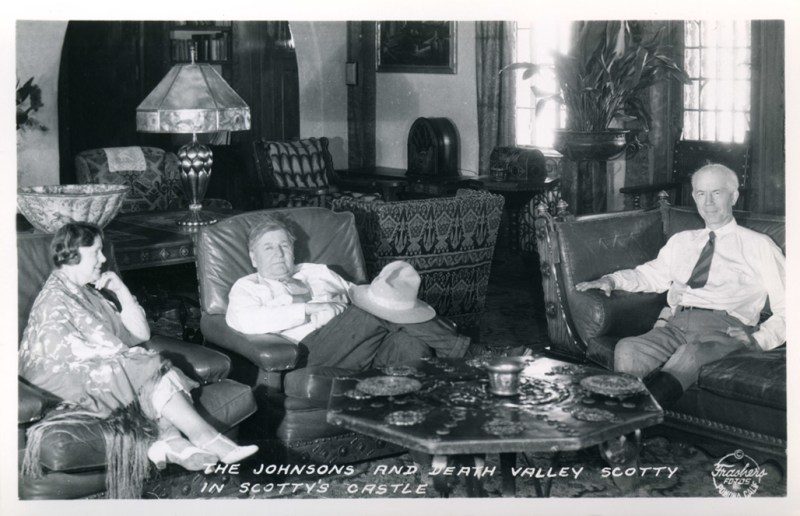
William Franklin Keys was born on September 27, 1879, in Palisade, Nebraska, to parents of Russian descent. In the early 1890s, his family relocated to Nebraska, where a young Bill began his journey into a rugged, self-reliant life. At age 15, he left home to work as a ranch hand, smelter worker, and miner, honing skills that would define his later years. His early adventures took him to Arizona, where he served as a deputy sheriff in Mohave County, and to Death Valley, where he befriended the colorful prospector Walter “Death Valley Scotty” Scott. Their association led to involvement in the infamous “Battle of Wingate Pass,” a swindle that added to Keys’ reputation as a tough frontiersman. By 1910, Keys arrived in the Twentynine Palms area of California, drawn to the harsh yet promising Mojave Desert.

Life in the Mojave Desert

In 1910, Keys took a job as custodian and assayer at the Desert Queen Mine in what is now Joshua Tree National Park. When the mine’s owner died, Keys was granted ownership of the mine as payment for back wages. In 1917, he filed for an 80-acre homestead under the Homestead Act, establishing the Desert Queen Ranch. He married Frances May Lawton in 1918, and together they raised seven children, three of whom tragically died in childhood and were buried on the ranch. The couple built a self-sufficient life, constructing a ranch house, schoolhouse, store, sheds, a stamp mill, an orchard, and irrigation systems, including a cement dam and windmill. Keys supplemented ranching with mining, operating a stamp mill to process ore for other miners and digging for gold and gypsum. His resourcefulness made the Desert Queen Ranch a symbol of early desert settlement.

The Wall Street Mill Dispute and Shootout

On May 11, 1943, a long-simmering feud with neighbor Worth Bagley, a former Los Angeles deputy sheriff, culminated in a fatal confrontation near the Wall Street Mill in what is now Joshua Tree National Park. The dispute centered on a property line and Keys’ use of a road that crossed Bagley’s land. Bagley, resentful of Keys’ access to the road for hauling ore to his mill, had posted a threatening sign: “KEYS, THIS IS MY LAST WARNING. STAY OFF MY PROPERTY.” On that fateful day, Keys, aware of the serious nature of such threats in the untamed desert, stopped his car to assess the situation. According to Keys, Bagley ambushed him, firing first. In self-defense, Keys returned fire, fatally shooting Bagley. Hours later, Keys turned himself in to authorities in Twentynine Palms, claiming he acted to protect his life.

Trial and Imprisonment

Keys was charged with murder and faced a contentious trial. The desert community was divided, with some viewing Keys as a hardworking homesteader defending his rights, while others saw him as an aggressor in a property dispute. The court convicted him, and he was sentenced to ten years at San Quentin Prison. During his incarceration, Keys utilized the prison library to educate himself, maintaining his sharp mind, which had been honed by years of navigating the desert’s challenges. His time in prison was marked by resilience, as he adapted to confinement with the same determination that had sustained him in the harsh Mojave.

Exoneration and Later Life

Keys’ conviction sparked controversy, and his wife, Frances, sought help from Erle Stanley Gardner, the renowned author of the Perry Mason novels and a frequent visitor to Joshua Tree. Gardner, moved by Keys’ story and convinced of his innocence, took up the case through his “Court of Last Resort,” a project dedicated to overturning wrongful convictions. Gardner’s investigation highlighted inconsistencies in the trial and supported Keys’ self-defense claim. In 1950, Keys was paroled, and in 1956, he received a full pardon, largely due to Gardner’s efforts. After his release, Keys returned to the Desert Queen Ranch, where he lived quietly until his death in 1969. To mark the site of the 1943 shootout, Keys placed a stone inscribed, “Here is where Worth Bagley bit the dust at the hand of W.F. Keys, May 11, 1943.” The original stone, vandalized in 2014, is now preserved in the Joshua Tree National Park museum, with a metal replica at the site.

Legacy

Bill Keys’ life embodies the tenacity and resourcefulness of early desert settlers. His Desert Queen Ranch, now part of Joshua Tree National Park, is preserved as a historic site, with park rangers offering guided tours from October to May to share his story. The ranch, with its array of buildings and mining equipment, stands as a testament to Keys’ ability to thrive in an unforgiving environment. The 1943 shootout, while a tragic chapter, underscores the challenges of frontier life, where disputes over land and resources could escalate to deadly confrontations. Keys’ exoneration, facilitated by Erle Stanley Gardner, highlights his enduring fight for justice. Today, the dirt road where the shootout occurred is a tourist attraction, and Keys’ story remains a compelling part of the Mojave Desert’s history.

Articles Related to Bill Keys

Albert Mussey Johnson

 Albert Mussey Johnson – Death Valley Ranch Owner

Albert Mussey Johnson Albert Mussey Johnson (1872 - 1948) was a businessman and investor who received notoriety as the millionaire, who built “Scotty's Castle” in…

Bill Keys Gunfight – May 11, 1943

In the desolate expanse of California's Mojave Desert, a violent clash unfolded on May 11, 1943, that would echo through the history of Joshua Tree…
The Battle of Wingate pass as reports by Los Angeles herald (Los Angeles [Calif.]), March 21, 1906

The Battle of Wingate Pass – February 26, 1906

The Battle of Wingate pass as reports by Los Angeles herald (Los Angeles [Calif.]), March 21, 1906 The so-called "Battle" of Wingate Pass, which occurred…
Walter Scott (1872 - 1954)

Walter Edward Perry Scott – “Death Valley Scotty”

Walter Edward Perry Scott  (September 20, 1872 – January 5, 1954), also known as "Death Valley Scotty", was a miner, prospector and conman who operated…

Warner Elmore Scott

Warner Elmore Scott (1865–1950) was a Kentucky native from a horse farming family who became entangled in his brother Walter "Death Valley Scotty" Scott's infamous…

Atolia California – San Bernardino County Ghost Town

Atolia, California, is a ghost town in the Mojave Desert near Randsburg in northwestern San Bernardino County. Once a bustling tungsten mining hub, Atolia’s history is tied to the discovery of tungsten and its critical role in global industrial demands, particularly during World War I.

Atolia and mine in the Mojave Desert, circa 1908 postcard.

Origins and Discovery (1904–1906)

Atolia’s story began in 1904–1905 when prospectors Charles Taylor and Tom McCarthy discovered veins of scheelite, a tungsten ore, east of the Randsburg gold mine. Initially, miners in the nearby Randsburg and Johannesburg areas struggled with a creamy white substance called “heavy spar” in their placer gold operations, which was later identified as scheelite, a calcium tungstate mineral (CaWO4). In 1905, McCarthy found a 40-pound chunk of tungsten ore, sparking interest in the region’s tungsten potential. The Atolia Mining Company was established in 1906, funded partly by financier Bernard Baruch and operated by the Atkins-Kroll Company. The town’s name, Atolia, is a contraction of the surnames of two key figures, Atkins and DeGolia, who also oversaw the construction of a tungsten mill in 1907.

Boom Years and World War I (1906–1918)

Atolia’s growth accelerated during World War I (1914–1918) due to surging global demand for tungsten, a critical component in hardening steel alloys for armaments. The town became the world’s largest tungsten producer, with the Papoose Mine leading global scheelite production from 1908 to 1911. Ore grades in the Atolia Mining District ranged from 3.5wt% to 8.5wt% WO3, with some veins, such as those in the Papoose and Mahood mines, reaching up to 15.3wt% WO3. The value of tungsten ore skyrocketed from $6 for 30 pounds to over $1 per pound, fueling economic activity.

By 1916, Atolia’s population swelled to over 2,000. The town boasted a vibrant community with four restaurants, three general stores, three rooming houses, four pool rooms, two stationery stores, an ice cream parlor, a garage, three butcher shops, a dairy, a movie theater, a schoolhouse for 60 pupils, and a saloon named the “Bucket of Blood.” The Atolia News, a weekly newspaper edited by Erwin Lehmann, began publication in May 1916. The Randsburg Railway connected Atolia to nearby towns, facilitating the transport of goods and people.

A notable event during this period was the 1916 shipment of tungsten ore to Germany via the German cargo submarine Deutschland. With English naval blockades cutting off Germany’s tungsten supply, Atolia’s ore was transported under guard from the town’s depot to Barstow, then to Baltimore via the Santa Fe’s California Limited, and loaded onto the Deutschland for delivery. This operation underscored Atolia’s global significance during the war. However, the town also faced challenges, including illegal activities. In an undated raid, San Bernardino County Sheriff McMinn targeted Atolia’s gambling dens, confiscating a faro wheel and significant quantities of alcohol, aiming to curb its reputation as a “frontier town of ’49.”

Decline and Post-War Period (1919–1922)

The end of World War I in 1918 led to a collapse in tungsten prices, severely impacting Atolia’s economy. The Atolia Mining Company shipped no tungsten ore from 1920 to 1922, and the town’s post office closed in 1922. Many residents left, and businesses shuttered, leaving Atolia a shadow of its former self. The nearby California Rand Silver Mine, which saw a silver boom in 1919 with production exceeding $3 million in 1921, temporarily overshadowed Atolia’s tungsten operations.

Revival and Later Years (1923–1940s)

Tungsten mining resumed in the 1920s, with the Union Mine, the district’s chief producer, reopening in 1924. Production increased significantly, reaching nearly $250,000 in 1925 and surpassing that in 1926 and 1927. Between 1923 and 1939, the Atolia Mining Company sold over $3 million worth of ore, demonstrating the town’s resilience. During World War II, Atolia’s mines were reactivated, but open-pit methods and heavy machinery replaced thelabor-intensive underground mining of earlier years. Mining continued sporadically into the 1940s and possibly as late as 2007, though the town itself remained largely abandoned.

Geological Context

Atolia’s tungsten deposits are associated with hydrothermal vein systems in the Atolia quartz monzonite, an Upper Jurassic orthoclase-biotite tonalite. The mineral assemblage includes high-grade scheelite with quartz, carbonates (calcite, dolomite, siderite), and minor pyrite, stibnite, and cinnabar. The deposits were influenced by the Garlock Fault and subparallel fracture zones, part of the San Andreas rift system, which facilitated the intrusion of Mesozoic granites and the formation of lode deposits. Scheelite’s weathering resistance, similar to quartz, also led to placer tungsten deposits in the region. From 1904 to 1950, Atolia produced nearly 90% of North America’s high-grade tungsten, totaling over 20 million pounds.

Legacy and Current State

Today, Atolia is a ghost town with remnants of its mining past, including open shafts, a few headframes, and a ball mill, located just off Highway 395. The Union #1 Mine’s headframe, a 100-foot-tall structure built in 1916, was a notable landmark until it collapsed and burned in a fire on October 27, 2014, alongside a pickup truck found in the debris. The site is marked by private property signs, and visitors are cautioned about open mine shafts. Atolia’s story reflects the boom-and-bust cycle typical of mining towns, driven by global demand for a critical resource. Its historical significance is preserved through photographs and records at the Rand Desert Museum and geological studies of the Atolia Mining District.

Conclusion

Atolia, California, rose from obscurity to global prominence as a tungsten mining hub, driven by the demands of World War I. Its brief but vibrant history, marked by economic booms, international intrigue, and eventual decline, encapsulates the transient nature of resource-driven communities in the Mojave Desert. Though now a ghost town, Atolia’s legacy endures in its contribution to North America’s tungsten production and its place in California’s mining history.

Atolia Town Map

Town Summary

NameAtolia California
LocationMojave Desert, San Bernardino County, California
Latitude, Longitude35.3147387,-117.6170878
GNIS1660280
Elevation3,280 Feet
Population2,000
Post Office1906 – 1922, 1927 – 1944

References

Elias Jackson Baldwin “Lucky Baldwin”

Elias Jackson Baldwin, known as “Lucky” Baldwin, was born on April 3, 1828, in Hamilton, Butler County, Ohio, the fourth of 14 children in a modest farming family. His parents, Isaac Baldwin and Melinda Jackson, relocated to a farm near New Paris, Indiana, in 1834, where Baldwin spent his childhood. With limited formal education, he developed a sharp, self-reliant character early on. At 18, he eloped with Sarah Ann Unruh, and the couple had a daughter, Clara, in 1847. By his early twenties, Baldwin demonstrated entrepreneurial flair, operating a general store in Valparaiso, Indiana, and later a hotel, which laid the foundation for his business acumen.

Elias Jackson Baldwin, known as "Lucky" Baldwin. April 3, 1828- April 3, 1828 – March 1, 1909
Elias Jackson Baldwin, known as “Lucky” Baldwin. April 3, 1828- April 3, 1828 – March 1, 1909

Journey to California and Early Ventures (1853–1860s)

In 1853, drawn by the California Gold Rush, Baldwin joined a wagon train from Indiana to San Francisco, a perilous six-month journey across the continent. Rather than prospecting for gold, he capitalized on the journey by trading goods like brandy, cigars, and tobacco, turning a profit before even reaching California. He narrowly escaped attacks by Native Americans, showcasing his resilience. Upon arriving in San Francisco, Baldwin avoided mining, instead investing in more stable ventures: a livery stable, a brick manufacturing business, and hotel properties. His foresight in focusing on infrastructure and services during the Gold Rush boom set him apart from speculative miners.

By the early 1860s, Baldwin’s investments expanded into the stock market, particularly shares in Nevada’s Comstock Lode, a major silver mining region. His nickname “Lucky” was cemented during this period due to a fortuitous incident. While traveling abroad, he instructed his broker to sell his Norcross mining stock if it fell below $800 per foot. Unable to access his safe due to a forgotten key, the sale was delayed, and the stock rebounded dramatically, earning Baldwin millions—equivalent to approximately $87 million in 2024. This windfall transformed him into one of San Francisco’s wealthiest figures.

Rise to Prominence in San Francisco (1860s–1875)

Using his mining wealth, Baldwin diversified his portfolio in San Francisco. He acquired the Montgomery Block, a prominent commercial building, and built the luxurious Baldwin Hotel and Theatre in 1876, which became a social hub until it burned down in 1898. His business ventures included real estate, shipping, and speculative investments, establishing him as a leading figure in California’s post-Gold Rush economy. Baldwin’s charisma and bold decision-making earned him both admiration and notoriety, as he navigated the city’s competitive business landscape.

Acquisition and Initial Development (1873–1874)

In 1873, Baldwin acquired a promising gold claim from brothers Barney and Charley Carter, who had discovered a gold-bearing quartz ledge on what they called “Carters’ Quartz Hill” (later Gold Mountain) near Baldwin Lake. Baldwin purchased the claim for $30,000 (approximately $750,000 in 2024), renaming it the Gold Mountain Mine. His investment sparked a second gold rush in the Big Bear area, fueled by exaggerated reports, such as one in The Guardian (September 12, 1874), which hailed the site as a “mineralogical miracle.” To support operations, Baldwin’s company built a road from Cactus Flats to Big Bear and began transporting heavy machinery.

Gold Mountain Mine and Bairdstown (1874–1875)

Baldwin invested $250,000 (about $6.5 million in 2024) to construct a 40-stamp mill at the base of Gold Mountain, designed to process 100 tons of ore daily. This steam-powered mill was a significant engineering feat for the remote region. By late 1874, a boomtown called Bairdstown emerged near Baldwin Lake to support the mine, boasting saloons, a blacksmith, boarding houses, and, by 1875, additional amenities like stores, hotels, a bakery, and a Chinese wash house.

The mill began operations on March 6, 1875, employing 180 workers. However, the ore proved low-grade, yielding insufficient gold to cover costs. After two months, Baldwin reduced operations to 20 stamps, and by October 1875, he shut down the mill entirely, just eight months after its launch. A fire destroyed the mill in August 1876, and Bairdstown was abandoned, becoming a ghost town.

Later Attempt with J.R. DeLaMar (1899–1900s)

In 1899, J.R. DeLaMar, a mining entrepreneur, proposed reviving the Gold Mountain Mine using the cyanide process to extract gold from low-grade ore. Baldwin, still owning the claim, agreed, and a new 40-stamp mill was built higher on Gold Mountain. Despite optimism, the operation again yielded poor results, and mining ceased after limited activity. The site saw sporadic efforts by other companies into the 1940s but never achieved significant production.

Geological and Historical Context

The Gold Mountain Mine, located in the Baldwin Lake District at approximately 7,251 feet elevation, featured gold-bearing quartz veins in quartzite and schist. San Bernardino County hosted over 3,000 mines, with gold as a primary commodity in 1,585. Baldwin’s venture was part of a shift from placer to corporate quartz mining, often employing diverse labor, including Chinese workers. The region’s challenges—limited water and low ore quality—hindered profitability.

Horse Racing and Santa Anita Park (1870s–1909)

Baldwin’s passion for thoroughbred horse racing defined much of his legacy. In the 1870s, he began breeding and racing horses, establishing the Santa Anita Stable. He developed the original Santa Anita Park racetrack on his rancho, which became a premier venue for horse racing in California. His horses, including stars like Volante, Emperor of Norfolk, and Los Angeles, won major races, including the American Derby in 1885, 1886, 1888, and 1894. Baldwin’s dedication to the sport earned him a posthumous induction into the National Museum of Racing and Hall of Fame in 2018 as a Pillar of the Turf.

His racing ventures were not without controversy. Baldwin’s competitive nature and willingness to bet heavily on his horses drew scrutiny, and he faced accusations of manipulating races. Nevertheless, his contributions elevated California’s status in national racing circles, and his legacy inspired the modern Santa Anita Park, reestablished by his daughter Anita in 1934.

Personal Life and Scandals

Baldwin’s personal life was as colorful as his business ventures. He married four times: Sarah Ann Unruh (1846–1865), Mary Cochran (1865–1876), Jane Virginia “Jennie” Dexter (1876–1881), and Lillie Bennett (1884–1909). His marriages were often tumultuous, and he faced multiple lawsuits from women alleging breach of promise or seduction. In 1876, 16-year-old Louise Perkins sued him for $75,000, claiming he reneged on a marriage promise; the case was settled out of court. In 1883, Baldwin survived a shooting at his Baldwin Hotel by Lillian Ashley, who accused him of misconduct. A decade later, her sister Vinnie Ashley shot at him again, seeking revenge, but Baldwin escaped unharmed.

Despite these controversies, Baldwin remained a charismatic figure, known for his charm, poker-playing prowess, and lavish lifestyle. He was a regular at San Francisco’s elite social clubs and maintained a reputation as a shrewd yet approachable magnate.

Later Years and Financial Decline (1890s–1909)

By the 1890s, Baldwin’s fortune began to wane due to economic downturns, poor investments, and the costs of maintaining his vast properties. The Panic of 1893 and the destruction of his Baldwin Hotel in 1898 further strained his finances. Nevertheless, he remained active in horse racing and continued to manage his rancho, often spending evenings playing poker with friends. His health declined in the early 1900s, and he contracted pneumonia in early 1909. Baldwin died on March 1, 1909, at his Santa Anita ranch, leaving an estate valued at approximately $25 million (about $750 million in 2024).

Legacy and Impact

Baldwin’s estate was divided primarily between his daughters, Clara Baldwin Stocker and Anita Baldwin McClaughry. Anita used her inheritance to reestablish Santa Anita Park in 1934, cementing the family’s racing legacy. Baldwin’s land subdivisions spurred the growth of Los Angeles County, and his agricultural innovations boosted California’s citrus and wine industries. Place names like Baldwin Hills, Baldwin Park, Baldwin Avenue, and the city of Arcadia reflect his enduring influence.

Baldwin’s life embodied the spirit of the American West: bold, opportunistic, and resilient. His ability to navigate the Gold Rush, mining booms, and California’s land development made him a transformative figure. Despite personal scandals and financial setbacks, his contributions to real estate, agriculture, and horse racing left a lasting mark on California’s history.

Key Achievements

  • Mining Wealth: Amassed millions through Comstock Lode investments, earning the “Lucky” nickname.
  • Land Development: Acquired and developed over 63,000 acres, founding Arcadia and Monrovia.
  • Horse Racing: Established the original Santa Anita Park and won multiple American Derbies, earning a 2018 Hall of Fame induction.
  • Agricultural Innovation: Developed Rancho Santa Anita into a model for citrus and wine production.

Sources

  • San Francisco Chronicle archives (1870s–1909)
  • National Museum of Racing and Hall of Fame records
  • Los Angeles County Arboretum and Botanic Garden historical documents
  • California State Historical Society records on Rancho Santa Anita
  • Biographical accounts from “Arcadia: City of the Santa Anita” by Robert F. Walsh

Goldome Mill

The heavily vandalized Goldome Mill outside of Ivanpah, California.  Photo by James L Rathbun
The heavily vandalized Goldome Mill outside of Ivanpah, California. Photo by James L Rathbun

The Goldome Mill is an abandoned modern mill site in the New York mountains of San Bernardino, California just off of the Ivanpah Road. The site was abandoned in the 1998 following the formation of the Mojave National Preserve by the California Desert Protection Act in 1994 and has slowly fallen into a state of decay. The mill site is currently classified as a Superfund Site by the Environmental Protection Agency which means that the site is known to contain hazardous waste which is improperly contained.

  Photo by James L Rathbun
Photo by James L Rathbun

The mill was named Goldome, meaning “an abnormal growth of gold” out of an optimism as to the fortunes of those who invested in this venture. The construction of the site is very modern and industrial in appearance. All of the buildings are of metal construction and probably built during the late 1970s or early 1980s. All of the milling equipment, such as the trommel and sluice boxes appear to silently rest in state. This site was likely the mill site of choice for near by mines of its era, such as the Morning Start Mine

Establishment and Operations

The Goldome Mill was constructed in the late 1970s or early 1980s, during a period of renewed interest in gold mining driven by economic factors and technological advancements. The mill’s modern, industrial design featured metal buildings, a stark contrast to the wooden stamp mills of earlier eras, such as the Lost Horse Gold Mill in Twentynine Palms. The facility was equipped with advanced processing equipment, including an ore dump and grizzly, a long conveyor to a giant ball mill, froth flotation cells, filters, and large cyanidation tanks for gold extraction. A control panel with a mimic board in the mill office allowed operators to oversee the entire operation.

The milling process began with ore being fed into the grizzly, transported via conveyor to the ball mill for grinding, and then processed through froth flotation to separate gold-bearing minerals. The resulting slurry was treated in cyanidation tanks, where cyanide leached gold from the ore, a common method in modern gold mining despite its environmental risks. The mill’s capacity was significant, making it one of the largest and most advanced milling operations in the region, capable of processing large volumes of ore. However, specific production figures for the Goldome Mill are not well-documented, likely due to its short operational period.

The mill was operated by a company, likely a corporate entity such as those common in San Bernardino County’s mining landscape (e.g., Castle Mountain Venture or PAN American Minerals Inc.), though exact ownership details are scarce. The name “Goldome,” meaning “an abnormal growth of gold,” reflected the optimism of investors hoping to capitalize on the region’s mineral wealth. The mill processed ore from nearby gold claims in the New York Mountains, an area with a history of small-scale prospecting but limited large-scale success.

Environmental and Regulatory Challenges

The Goldome Mill’s operations were curtailed by environmental and regulatory factors. The establishment of the Mojave National Preserve in 1994 restricted mining activities, as new claims were prohibited, and existing operations faced increased scrutiny. By 1998, the mill was abandoned, likely due to a combination of declining ore quality, rising operational costs, and regulatory pressures. The site’s designation as a Superfund Site by the Environmental Protection Agency (EPA) indicates that it contains hazardous waste, likely from cyanide used in gold extraction, which was improperly contained. The presence of half-full cyanidation tanks and other hazardous materials has made the site a concern for environmental cleanup efforts.

The harsh Mojave Desert environment has also contributed to the site’s deterioration. While the metal structures remain intact, the mill has been heavily vandalized and looted, with graffiti and scattered debris marking the site. Explorers have noted hazards such as a large beehive in the main building, which has deterred some from fully investigating the interior. Despite these challenges, the mill’s open layout and intact equipment make it a compelling site for historians and urban explorers.

Decline and Abandonment

The Goldome Mill ceased operations by 1998, a mere two decades after its construction, reflecting the transient nature of modern mining ventures in the region. Several factors contributed to its closure. First, the quality of gold ore in the New York Mountains may have been insufficient to sustain large-scale milling, as many San Bernardino County mines struggled with low-grade deposits. Second, the economic viability of the operation was likely undermined by fluctuating gold prices and high maintenance costs for the sophisticated equipment. Finally, the creation of the Mojave National Preserve imposed strict regulations, limiting access to new claims and increasing environmental compliance costs.

After abandonment, the mill fell into disrepair, with its tunnels sealed but the milling operation left accessible. The site’s isolation and lack of fencing have made it vulnerable to vandalism, yet its robust construction has preserved much of the infrastructure, including the ball mill, flotation cells, and cyanidation tanks. The absence of gates or fences along the access road has allowed explorers to visit, though the EPA’s Superfund designation underscores the need for caution due to hazardous materials.

Graffitti on a wash plant at the Goldome Mill.    Photo by James L Rathbun
Graffitti on a wash plant at the Goldome Mill. Photo by James L Rathbun

In 2017, political vandals posing as “street artists” decided on their own to deface the site as part of their environmental message and forever changed the face of this site. The mill at Goldmine is heavily vandalized and at the time of our visit during the riots following the murder of George Floyd gave the site an uneasy felling. It is not too far a reach to understand that they vandals who defaced this site could be burning our cities down.

At the Goldome Mill, the work of vandals is undone by the harsh Mojave Desert.  Photo by James L Rathbun
At the Goldome Mill, the work of vandals is undone by the harsh Mojave Desert. Photo by James L Rathbun

During our visit to the site, a large swam of bees built a hive in the main building. This prevented me from entering and exploring further, however, I will return to do so, at some point.

Goldome Mill Map

Recently, I discovered that a youtube channel called Jessie’s Drone Adventures referenced our site in the video 10 ABANDONED Places in California….You should NEVER Explore! in Jessie video, Golddoom is referenced as number four on this list.

Additional Reading

Panamint News

Panamint City, California, was a fleeting silver mining boomtown in the rugged Panamint Valley, established in 1873 following the discovery of silver in Surprise Canyon. At its peak in 1874–1875, the town housed approximately 2,000 residents and boasted saloons, stores, a post office, and a newspaper, the Panamint News. This report examines the history, purpose, and significance of the Panamint News within the context of Panamint City’s brief existence, relying on limited historical records and secondary sources.

Historical Context

Panamint City emerged during a wave of mining excitement in the American West, spurred by silver discoveries in the Panamint Mountains. Founded by prospectors, including Richard C. Jacobs and William L. Kennedy, the town grew rapidly after the formation of the Panamint Mining District in 1873. By 1874, the town featured a mile-long main street, a Wells Fargo office, and several mills to process silver ore. The boom was driven by speculative investment, notably from Nevada senators John P. Jones and William M. Stewart, who promoted the region’s potential.

However, Panamint City’s prosperity was short-lived. The remote location, coupled with declining ore quality and a devastating flash flood in 1876, led to the town’s rapid decline. By 1877, most residents had abandoned Panamint City, leaving it a ghost town. In this transient environment, the Panamint News served as a critical tool for communication and community cohesion.

The Panamint News

Origins and Operations

The Panamint News was established in November 1874, during Panamint City’s peak. Published by T.S. Harris and edited by E.M. Boyle, the newspaper operated as a weekly or semi-weekly publication, though exact publication frequency is unclear due to scarce records. Its office was located in Panamint City’s bustling commercial district, likely near the main street where businesses like the Oriental Saloon thrived.

As a frontier newspaper, the Panamint News was likely printed on a small, hand-operated press, a common setup for mining town publications. The newspaper’s staff probably consisted of a small team, with Harris and Boyle handling writing, editing, and printing. No complete surviving copies of the Panamint News are known to exist in major archives, such as the California Digital Newspaper Collection or Chronicling America, but references to the paper appear in historical accounts of Panamint City and contemporary newspapers like the Inyo Independent.

Content and Purpose

Drawing on the conventions of 19th-century mining town newspapers, the Panamint News likely included:

  • Mining Updates: Reports on the Panamint Mining District, including production figures, new claims, and developments at major mines like the Wyoming and Hemlock.
  • Local News: Announcements of town events, such as meetings of the miners’ union, openings of new businesses, or activities at the local school.
  • Advertisements: Promotions for saloons, general stores, stagecoach services, and mining-related businesses, such as assay offices or equipment suppliers.
  • Editorials: Commentary on local issues, such as infrastructure needs, law enforcement (Panamint City had a reputation for lawlessness), or the town’s economic prospects.
  • Regional News: Reprinted stories from larger newspapers in San Francisco or Los Angeles, providing context on national events or mining trends.

The Panamint News aimed to foster a sense of community among Panamint City’s diverse population, which included miners, merchants, and speculators. It also served as a promotional tool, boosting the town’s image to attract investment and settlers. Editorials may have reflected the optimistic tone of the boom years, downplaying challenges like the town’s isolation or the volatility of silver mining.

Challenges and Decline

Operating a newspaper in a remote desert town posed significant challenges. The Panamint News faced high costs for printing supplies, which had to be transported over rugged terrain from coastal cities like Los Angeles or San Francisco. Distribution was limited to Panamint City and nearby mining camps, constraining subscription and advertising revenue. The town’s transient population further complicated efforts to maintain a stable readership.

The Panamint News ceased publication by late 1875 or early 1876, as Panamint City’s economy collapsed. The flash flood of July 1876, which destroyed much of the town’s infrastructure, likely marked the final blow. The newspaper’s short lifespan reflects the broader instability of boomtowns, where media outlets depended on the fleeting prosperity of mining.

Significance

The Panamint News played a vital role in Panamint City’s brief history. It documented the town’s aspirations, promoted economic activity, and provided a platform for local discourse. In a lawless and isolated community, the newspaper likely helped establish a sense of order and identity, even if only temporarily. Its existence underscores the ambition of Panamint City’s residents to build a lasting settlement, despite the harsh realities of the desert environment.

The Panamint News also reflects the broader role of newspapers in the American West, where print media served as both a record of frontier life and a tool for speculative boosterism. While the newspaper’s content is largely lost, its presence in historical accounts highlights its importance to Panamint City’s social fabric.

Sources and Limitations

This report relies on secondary sources, including historical accounts of Panamint City from websites like DesertUSA and the Death Valley National Park archives, as well as books like Mines of the Mojave by Ronald Dean Miller. References to the Panamint News appear in passing in regional histories and contemporary newspapers, such as the Inyo Independent, which noted the paper’s launch in 1874. No primary sources, such as original issues of the Panamint News, were located in digital archives or regional collections.

The lack of surviving copies poses significant limitations. Details about the newspaper’s content, circulation, and staff are speculative, based on patterns observed in similar mining town publications. Future research could involve exploring archives at the Inyo County Historical Society or the Bancroft Library at UC Berkeley for potential fragments or references to the Panamint News. Physical surveys of Panamint City’s ruins, though unlikely to yield intact newspapers, might uncover related artifacts.

Conclusion

The Panamint News was a short-lived but significant institution in Panamint City, California, operating during the town’s silver mining boom of 1874–1875. As a source of news, promotion, and community identity, it reflected the optimism and challenges of a frontier boomtown. Its disappearance, likely by 1876, mirrors the rapid decline of Panamint City itself, a casualty of economic and environmental hardships. While the Panamint News remains an obscure chapter in California’s media history, its story illuminates the fleeting vitality of the American West’s mining frontier. Further archival research is needed to uncover additional details about this elusive publication.