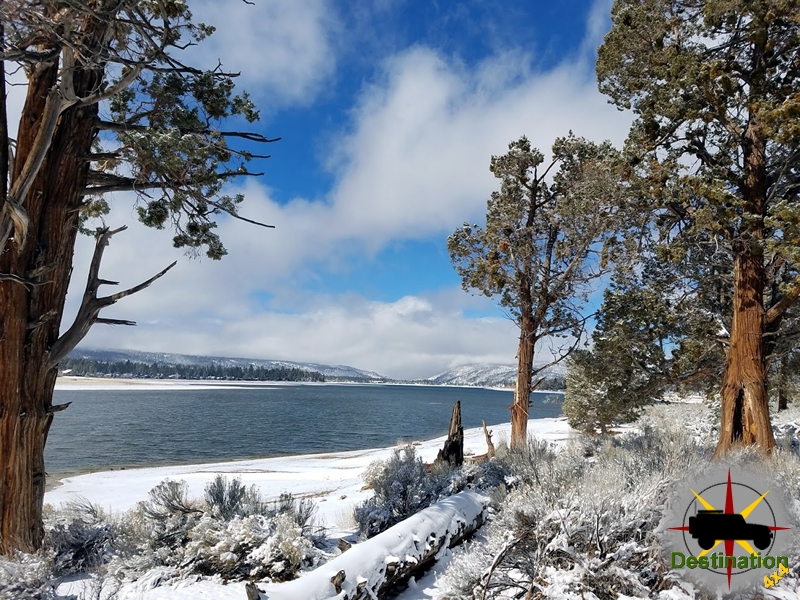
Big Bear, CA
I quiet mountain community full of back country adventure.
The Journey is the destination
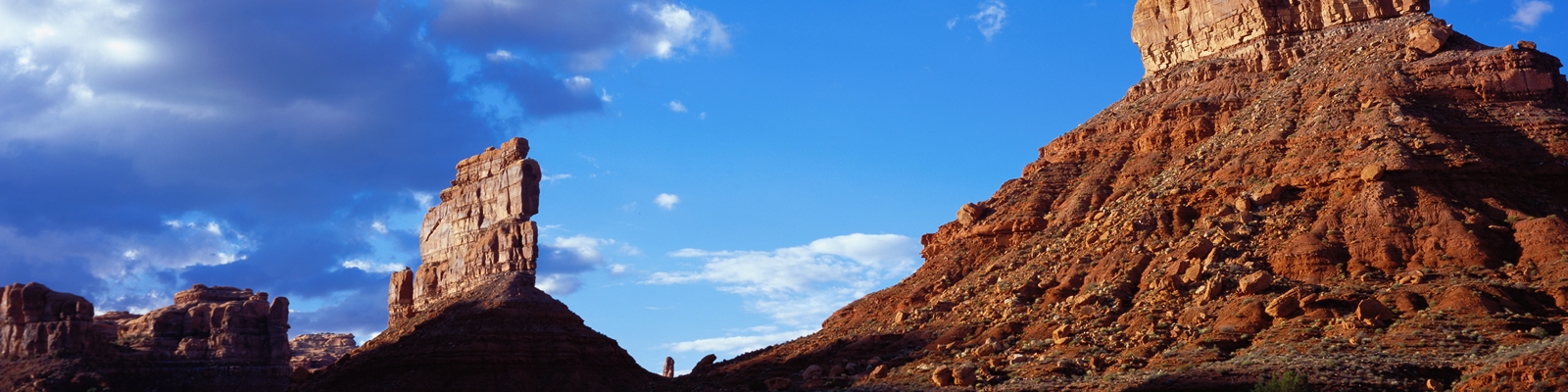
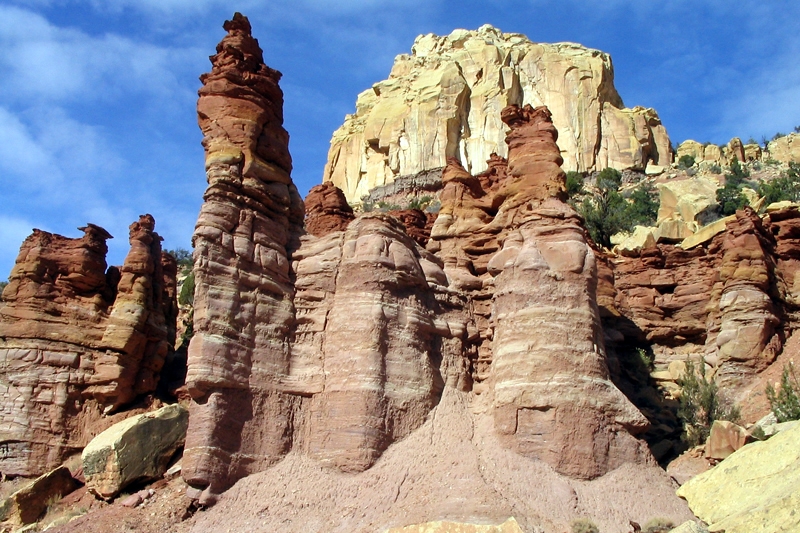
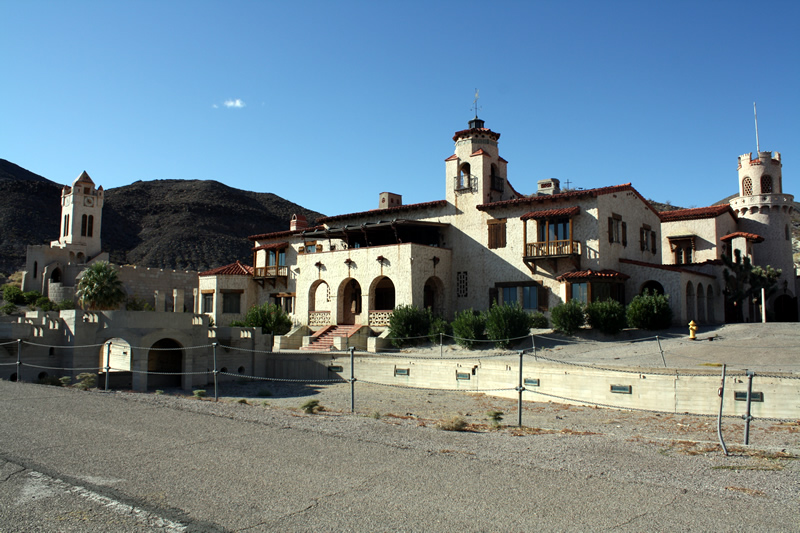
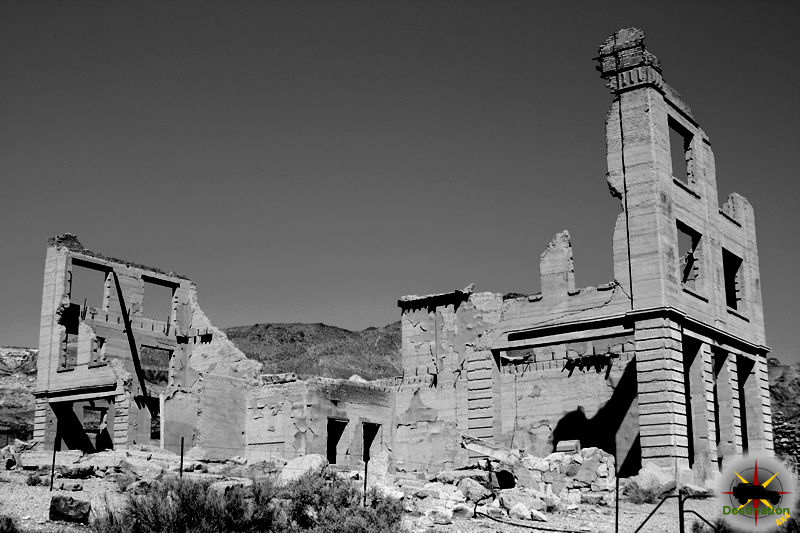
Located in the Ivanpah Mountains, the Morning Star Mine is a gold / silver mine located near to California / Nevada border near Mountain Pass. The mining district enjoys amazing views and lots of wild life and wild flowers during the spring of each year, which are easily accessible from a grade dirt road. Numerous lower traffic side trails will allow access of other places to explore.

The location was first worked in 1907 and was known as the Clansman mine. Operations were initially quite small and in 1931 only two miners were on location. In 1937 the owner J. B. Mighton and Brown optioned the property to Richard Malik, who worked the location significantly until 1938.

Erle P. Halliburton worked the mine with ten men, starting in April of 1939. Halliburton known today, as the founder of his name sake company, Halliburton Oil. Mr. Halliburton made his fortune in Duncan Oklahoma where he borrowed a wagon, a team of mules and a pump, he built a wooden mixing box and started an oil well cementing business. The Halliburton efforts at this site where forced closed in 1942 by the War Productions Board order to close gold mining for the war effort.

Following Halliburton’s death in 1957, the property was acquired by the Vanderbilt Gold Corporation in 1964, where upon the location was drilled and sampled. Fifteen years later, in 1979 the company finally complete a capital raise the in Morning Star mine was again on operation as an underground mine utilizing trackless mining equipment and the ore processed in nearby Vanderbilt, California. Due to the time period, this was probably the Goldome Mill and not within the town of Vanderbilt.

After just three years of operations, mining operations were again halted in 1983, due to the dropping price of Gold, however underground explorations continued with long hole drilling and testing. From 1984 – 1993 saw increased gold and silver production to the amount of about 75,000 tons per month. Water supply problems plagued the operation, however, with the price of gold between $350 and $500 per once the Vanderbilt operation made a return.

The mine was finally closed in 1993 after the gold prices dropped and several environmental violations and animal deaths caused by cyanide poisoning. With the creation of the Mojave Nation Preserve in 1994 from the California Desert Protection act, the NPS inherited an environmental problem and it slowly continues to clean up the site. At this point, access to the location is blocked with a locked gate. It was noted that several building and a milling foundations remain from this relatively modern mining endeavor.

The Black-tailed Jackrabbit (Lepus californicus), a swift and adaptable lagomorph of the American West, is often mistaken for a rabbit but is technically a hare, known for its enormous ears, powerful hind legs, and distinctive black-tipped tail. This species thrives in open, arid environments, where its speed—reaching up to 40 mph (64 km/h)—and evasive maneuvers make it a master of survival against predators like coyotes and eagles. With a mottled gray-brown coat providing camouflage against dusty landscapes, the black-tailed jackrabbit plays a key role in ecosystems as both prey and herbivore, influencing vegetation dynamics across its range.

The Black-tailed Jackrabbit is classified within the kingdom Animalia, phylum Chordata, class Mammalia, order Lagomorpha, family Leporidae, and genus Lepus. Its scientific name, Lepus californicus, reflects its association with California, though its range extends far beyond. It is one of several North American hares, distinguished from true rabbits by its larger size, longer ears, and precocial young (born fully furred and mobile). Subspecies include variations adapted to different regions, such as L. c. californicus in coastal areas and L. c. deserticola in deserts. Fossil records trace its lineage to the Pleistocene, highlighting evolutionary adaptations to open habitats post-Ice Age.
Adult Black-tailed Jackrabbits measure 47–63 cm (18–25 inches) in body length, with ears extending 10–13 cm (4–5 inches), and weigh 1.4–3.6 kg (3–8 lbs), with males typically larger than females. Their fur is grizzled gray-brown on the upper body with white underparts, providing effective camouflage in scrubby terrain. The namesake black tail is white underneath, flashed as a warning signal during flight. Oversized ears, richly vascularized, aid in thermoregulation by dissipating heat, while large eyes positioned on the sides of the head offer nearly 360-degree vision for detecting threats. Long, powerful hind legs enable explosive leaps up to 3 meters (10 feet) high and 6 meters (20 feet) long, complemented by furred soles for traction on varied surfaces. Juveniles resemble adults but are smaller and fluffier at birth.

Black-tailed Jackrabbits are primarily crepuscular and nocturnal, active during dawn, dusk, and night to avoid midday heat and predators, though they may forage diurnally in cooler weather. They are solitary except during breeding, maintaining home ranges of 0.1–1 square km (25–250 acres) that overlap with others. When threatened, they rely on speed and zigzag running patterns to evade pursuit, often freezing in place first to blend into surroundings before bolting. They spend much of the day in shallow depressions called “forms,” often under shrubs for shade and cover, emerging to forage. Communication is limited, involving thumping hind feet as alarm signals and scent marking with chin glands. In extreme heat, they pant and use their ears to cool blood; in cold, they huddle to conserve warmth. Populations fluctuate cyclically every 7–10 years, influenced by food availability, disease, and predation.
As herbivores, Black-tailed Jackrabbits have a diet dominated by grasses, forbs, and shrubs, adapting seasonally: green grasses and herbaceous plants in spring and summer, and woody twigs, bark, and dried vegetation in fall and winter. Favorites include alfalfa, clover, sagebrush, and mesquite, with agricultural crops like wheat and lettuce targeted in farmlands, sometimes making them pests. They obtain most water from food, rarely drinking, and can consume up to 1 kg (2.2 lbs) of vegetation daily. Their caecotrophic digestion—re-ingesting soft feces (cecotropes)—allows extraction of additional nutrients like proteins and vitamins from low-quality forage. This adaptation is crucial in nutrient-poor arid environments.
Breeding in Black-tailed Jackrabbits is promiscuous and occurs year-round in southern ranges, peaking from December to September in northern areas, triggered by rainfall and food abundance. Females, or does, reach sexual maturity at 7–8 months, males slightly later. Courtship involves chasing and “boxing” displays where pairs rear up and strike with forepaws. Gestation lasts 41–47 days, with litters of 1–8 leverets (average 3–4), born in shallow forms lined with fur. Precocial young are born with open eyes, full fur, and mobility, weaning at 3–4 weeks and independent by 1–2 months. Females can produce 3–4 litters annually, leading to high reproductive rates that offset heavy predation.
Black-tailed Jackrabbits inhabit open, arid to semi-arid landscapes including desert scrub, prairies, grasslands, farmlands, dunes, and shrub-steppe, preferring areas with short vegetation and minimal dense understory for easy escape routes. They avoid closed-canopy forests and high elevations above 3,000 meters (9,800 feet). Their range spans the western United States from central Washington eastward to Missouri, southward through the Great Plains and Southwest to Baja California Sur and Zacatecas in Mexico, with introductions in some eastern states. Populations are non-migratory but may shift locally with food availability. Human activities, like agriculture, have expanded suitable habitats, though habitat loss and fragmentation pose threats in some areas.

Las Vegas Bay Campground is one of several campgrounds in Lake Mead National Recreation Area and its situation on top of a bluff offers great views of Lake Mead and the Lava Butte Wash wildlife refuge
The first come, first serve campground offers 84 sites with plenty of sites for RV, trailer and tent camping. No Hook ups. The campground is secluded enough to enjoy a peaceful campout under the stars. There is no lake access, however the nearby Las Vegas Wash offers trails for hiking and picnic areas.
This campground is at low elevation in the Mojave Desert, which means possible freezing temperatures in the winter months and hot, Hot, HOT in the summer months. The spring and fall should offer the best weather, but regardless of time of year, plan ahead. Due to record low water levels, access to Lake Mead is several miles from the campground.
| Name | Las Vegas Bay Campground |
| Location | Lake Mead, Clark County, Nevada |
| Latitude,Longitude | 36.127401, -114.868940 |
| Elevation | 1,277 Feet |
| Number of Sites | 84 |
| Amenities | BBQ Grills, Campground Host, Tables, Water, Dump Station, Fire Pit, Fire Rings, Firewood Available, Grills, Pets OK, Restrooms (Flush Toilets) |
Named for the now submerged two of Callville, Callville Bay Campground offers a unique and amazing place to strike your camp. The campground is situated from Las Vegas along the northern edge of the Boulder Basin of Lake Mead. It’s open year-round and features paved sites that can accommodate tents or RVs, along with tables, fire pits and/or grills. Restrooms and water spigots are located throughout the campsite.
The desert climate affords temperatures well over 100F (37C) degrees June-August. In May and September, daytime highs are around 90F (32C). October-April, temperatures are much cooler. The winter months can see the lows can dip to freezing temps. The desert area averages just four inches of rain each year. There is lush vegetation that provides shade. A few of the campsites provide views of the lake.
Although Lake Mead water levels are low at the moment, the campground offers close proximity to boat ramps and boat and house boat rentals to allow further exploration of the Lake Mead National Recreation Area.
| Name | Callville Bay Campground |
| Location | Lake Mead, Clark County, Nevada |
| Longitude,Latitude | 36.138337,-114.727649 |
| Elevation | 1,249 feet |
| Number of Sites | 80 Total, 52 R V sites |
| Ammenities | BBQ Grills, Boat Launch/Ramp, Boat Rental, Campground Host, Tables, Drinking Water, Dump Station, Electrical Hookup, Fire Pit, Firewood Available, Grills, Ice, Marina, Pay Phone,Pets OK, Picnic Tables, Restrooms (Flush Toilets), RV Hookups, WiFi |

A member of the sunflower family, the Mojave-aster ( Xylorhiza tortifolia ) boasts a delicate lavender flower in the harsh desert environment. Also known as the Mojave Woodyaster, the plant commonly reaches about 30 inches in height. The green-grey colored stems hold a solitary flower which is about two inches in diameter. The plant gathers sun with three inch long silver-green leaves and an individual plant may offer dozens to purple hued flowers.

The Mojave Aster typically blooms between March and May, and again in October when the monsoon season allows. It in commonly found between 2000 and 3500 feet in elevation, however in California it is know to thrive between 700 and 6500 feet. The flowers of this plant are attractive to bees, butterflies and birds.
The aster is known to grown in the Great Basin and Sonora deserts and thrives in the Mojave. Like many other desert adapted plants, this plant thrives in sandy dry, well drained soil and common on desert slopes and washes.
The Havasupai people used this plant and its flowers as a fragrence to mask body odors and as an incense. Dried leaves where commonly carried in clothes by the tribal members.