Charles Ferge “Seldom Seen Slim” – A Ballarat Prospector

Charles Ferge "Seldom Seen Slim"
Charles Ferge “Seldom Seen Slim”

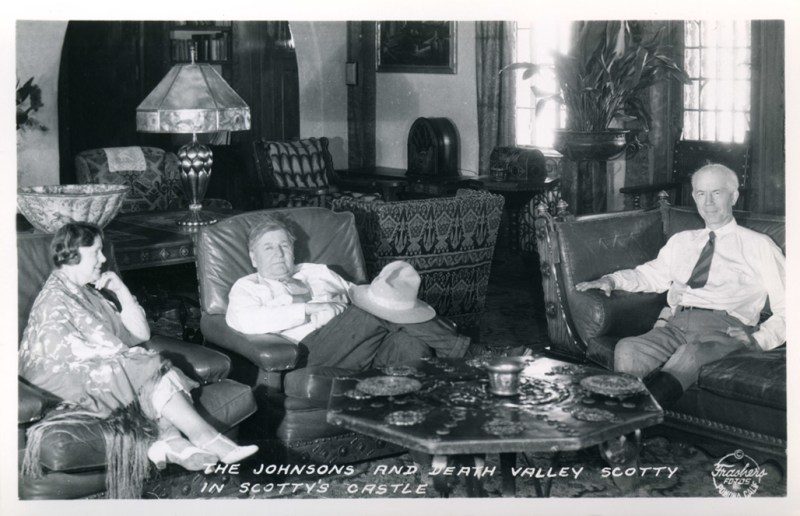
Charles Ferge “Seldom Seen Slim” is the last of the known prospectors who lived in the town of Ballarat located in Death Valley National Park, California.

Seldom Seen Slim, named Charles Ferge, was born in Illinois on October 21st 1881. Slim came to Ballarat sometime between 1913 and 1917 not long after the town was abandoned by the miners seeking their fortunes elsewhere.

Ferge became the last resident of Ballarat and had a reputation as a recluse with a cantankerous side. He survived in one of the harshest landscapes living on his own in his town of Ballarat. It is said that he lived in every remaining building of the ghost town. His focus was mining and he just needed enough money to survive as a desert prospector. Slim only needed enough money to buy necessities of food, tobacco for his pipe, water, gas for his car and clothes.

When the water source in Ballarat dried up due to a dropping water table, Slim would haul water into the town using jugs from other sources miles away. The scarcity of water would only allow the man to bathe a few times per year.

While is is the sole citizen of Ballarat, the town had no running water, no electricity or any other services He became an unofficial curator for the ghost town. Slim would often tell stories to visitors and sell them souvenirs of gold ore.

Seldom Seen Slim died of cancer in 1968 in Trona, California. He is buried on “Boot Hill” in Ballarat and his greave is a popular place to stop.

Me lonely? Hell no! I’m half coyote and half wild burro.

Charles Ferge “Seldom Seen Slim”

References

Keane Wonder Mine – “King of the Desert”

The Keane Wonder Mine is perhaps the most visited gold mining facility in Death Valley National Park in eastern California. Mining operations began in December 0f 1903 by Jack Keane. Keane and his partner Domingo Etcharren while Keane was prospecting in the Chloride Cliffs of the Funeral mountains. The names was originally called “Keane’s Wonder” when gold and silver were found.

Keane Wonder Mine - 1916 - Quartz mill. Mine said to have produced $1,000,000. Closed May 1916 as the developed ore bodies were worked out.
Keane Wonder Mine – 1916 – Quartz mill. Mine said to have produced $1,000,000. Closed May 1916 as the developed ore bodies were worked out.

Trying to raise capital, Keane and Etharren sold options to Joseph DeLamar from New York. Despite modest gold production, DeLamar quite his claims. It was not until 1906 when Homer Wilson and John Campbell bought into the mine that operations really starting producing. Homer Wilson was also involved in founding nearby Chloride City.

1907 saw the full operations in place. Operationally, the mine build a tramway up into the mountains, which was used to haul 70 tons of gold rich ore each day. The tramway climbed into the mountains over 1500 feet in elevation and was over one mile long.

The Keane Wonder mine survived the Panic of 1907. Operationally, the lack of water and high desert heat caused the mine to operated in the cooler air of the desert night. The mine continued until 1912, when it was sold and subsequently closed.

The Keane Wonder Mine was included in the founding of Death Valley National Monument. The popular site was closed to visitors by the NPS in 2008 over fears of collapse of underground tunnels, toxins and the structural stability of the cables used in the tramway. The location was opened to the public again in 2017.

Today, the aerial tramway, stamp mill, storage containers and assorted artifacts litter the grounds.

Resources

Keane Wonder Mine Trail Map

Christian Brevoort Zabriskie

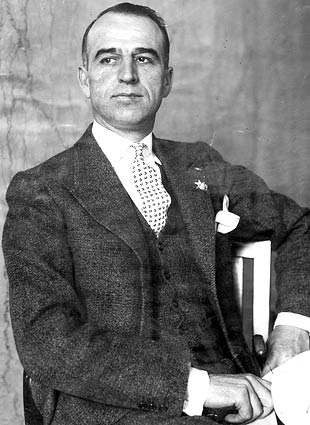
Christian Brevoort Zabriskie was a vice president and general manager Pacific Coast Borax Company located in Death Valley National Park. Zabriske served the Pacific Coast Borax Company for some thirty six years, and due to this activity is honored by the naming an Zabriske Point.

Christian Brevoort Zabriskie

Christian Brevoort Zabriskie (1864–1936) was born at Fort Bridger in the Wyoming Territory. After schooling, he worked for the Virginia & Truckee Railroad located in Carson City, Nevada. For a time, he relocated to Candelaria, Nevada at work for the Esmeralda County Bank. He briefly venture into the mortuary business with a partnership formed with a local cabinet maker. His lack of knowledge in the art of embalming was not considered a liability as burial speed was a huge priority.

In 1885, at the age of twenty one, Zabriske was hired by Francis Marion “Borax” Smith to supervise the Chinese laborer’s. These men worked for the Pacific Coast Borax Company is the Columbus Marsh located near Candelaria. During his thirty six year tenure with the Pacific Coast Borax Company, the company closed up Candelaria operations and relocated to Death Valley to increase production. The company also expanded into the Calico Mountains and Trona, California

Zabriskie Point named for Christian Brevoort Zabriskie - Photo by James L Rathbun
Zabriskie Point named for Christian Brevoort Zabriskie – Photo by James L Rathbun

Zabriske retired from the Pacific Coast Borax Company in 1933 as Vice President and General Manager. All of his work in Death Valley took place before the area was designated National Monument. He passed away just three years later, on February 8thm 1936 at the age of 71. He is buried in Carson City, Nevada.

Zabriske Point is named to honor the man for his many years of service to the Pacific Coast Borax Company.

References

Artist Drive

Artist Drive is perhaps one of the most popular and scenic drives through a colorful palette of geology, located in Death Valley National Park, California. Artist drive is a one way road about nine miles long which takes just about two hour to complete provided you take the time to hike a few of the short trails. The road is a popular destination for hikers and bikers as well as motor vehicles. From the drivers perspective, the road can be quite fun to drive and it twists and turns up and down the colorful hillside.

The hills which contain burst of color were formed by volcanic deposits of different compounds such as iron oxides and chlorite, which creates a rainbow effect of color. There is no bad time to visit, however, the photographer will appreciate the warm afternoon sunlight enhancing the natural colors in the soil. The best features are on a westward facing slope which really benefits from the late hours in the day.

While the colors of the location are amazing, do not forget to turn around the allow the scenic vistas of Death Valley to take your breath away. On a visit during a three day weekend in February 2022, I was surprised by the volume of people on the route. All of the parking lanes were full and it became quite difficult photographically due to the visitors. I will say, that during this time the COVID pandemic was relaxing and it was really nice seeing people enjoying themselves outside.

Prior to becoming a National Park, Assist’s Drive and some of the nearby valley’s were a filming location for the movie Star Wars.

Artist Drive Map

The multicolored rock formations along Artist’s Drive (particularly at the famous Artist’s Palette viewpoint) in Death Valley National Park create one of the most striking natural displays in the American Southwest. These vibrant hues result from ancient volcanic activity over 5 million years ago, when eruptions deposited ash, metals, and minerals that were later altered by hydrothermal processes, chemical weathering, and oxidation.

Here are the main rock colors you’ll see splashed across the hillsides, along with the primary minerals responsible for each:

Reds, Pinks, and Oranges

These warm, fiery tones dominate many areas and often appear as bold streaks or bands. They come from iron oxides (especially hematite), which form through the oxidation of iron-rich compounds in the volcanic rocks

Yellows and Golds

Bright mustard, golden, and sunny yellow patches blend beautifully with the reds. These are also produced by various iron oxides in different stages of oxidation and weathering.

Purples and Lavenders

The cooler, softer purple and lavender shades create a dreamy contrast. These colors are caused by manganese minerals that oxidize to produce these distinctive hues.

Greens

Vivid green sections stand out dramatically against the warmer tones. The green primarily comes from the decomposition of tuff-derived mica or weathered volcanic tuff, sometimes involving chlorite.

Overall Landscape Views

The full palette comes alive especially in late afternoon or sunset light, when the low sun angle intensifies the colors and creates dramatic shadows.

The result is a surreal, painterly landscape that looks almost too vivid to be natural — truly living up to its name as Artist’s Palette! The colors can shift subtly depending on the time of day, weather, and lighting, making every visit feel unique.

References

Zabriskie Point

Zabriskie Point is perhaps one of the best known and popular overlooks in the entire Death Valley National Park, California. The landmark is named for Christian Brevoort Zabriskie who was the Vice President of the Pacific Coast Borax Company.

Zabriskie Point bathed in warm afternoon light in Death Valley National Park - Photo by James L Rathbun
Zabriskie Point bathed in warm afternoon light in Death Valley National Park – Photo by James L Rathbun

The elevated overlook of a huge area of yellow-brown-black ancient mud lands composed of sediments from the ancient Furnace Creek Lake. A short hike from the parking lot allows is a visitor to see the expanse of the badlands. A longer hike will take the explorer down through Golden Canyon to the floor of Death National National Park. The site is best visited during the “golden hours” of warm light in the evening and mornings. The best viewing occurs at sunrise.

Zabriskie Point - Photo by James L Rathbun
Zabriskie Point – Photo by James L Rathbun

The site was made famous in popular culture by a movie from 1970 of the same name. For those of us who grew up in the 1980s, the cover of the U2 Album, The Joshua Tree features a photograph by Anton Corbijn at Zabriskie Point.

The cover of The Joshua Tree by U2 was taken in Death Valley - photograph by Anton Corbijn
The cover of The Joshua Tree by U2 was taken in Death Valley – photograph by Anton Corbijn

The only draw back with visiting this location is that it is almost always crowded during the prime months.

Zabriskie Point Map

References