Rawhide Nevada – Mineral County Ghost Town

Rawhide, Nevada. 1908.

Rawhide Nevada was a mining town in Mineral County. The town site is located approximately 55 miles south of Fallon, and 22 miles down a dirt road south of highway 50.  The town was founded in 1906 when gold and silver deposits were discovered by prospector Jim Swanson in the hills surrounding Rawhide.  Charles  B. Holman and Charles “Scotty” A. McLeod soon join him and also found gold on nearby Holligan Hill.

Rawhide, Nevada - 1915
Rawhide, Nevada – 1915

Rawhide is an example of a town that existed on the promise and promotion of gold rather than the production of gold.    Fueled by rampant speculation the population swelled.  Rawhide boasts four churches, three banks, twelve hotels, twenty eight restaurants, thirty seven saloons, a theater and a school to support a population of 7,000 in 1908.  However, the over promise and under delivery of gold doomed the town, at its glory began to fade.

The city of Rawhide was already in decline, when in September 1908 a fire tore through the town.  In August 1909 the town flooded and destroyed much of the town as described in this excerpt from a Colorado newspaper.

Sept. 4, 1908. Devastating fire in Rawhide Nevada. Over $1 million in property damage and thousands were left homeless.

NEVADA TOWN SWEPT FROM MAP BY CLOUDBURST

Ten-Foot Wall of Water Overwhelms Squattertown, Near Rawhide, in the Night.

SIX REPORTED MISSING

300 Families Rendered Homeless and Property Piled in Tangled Heap by the Flood.

Rawhide, Nev., Aug. 31.  “Squattertown”, a settlement just south of Rawhide, was swept by a ten-foot wall of water, following a cloudburst in the hills to the north tonight, and 130 buildings were partially or completely destroyed.

It is reported that two women and four children are missing, but up to a late hour tonight it was impossible to obtain verification of this report.
The cloudburst occurred on the summit of the low hills to the north of the camp. In a few moments a three-foot wall of water was pouring down the slope, covering the three miles from the summit to Main street with the speed of a railway train. The flood rushed into the street, which lies in a hollow and forms a general drainage canal, and every business house on the east side was flooded to a depth of from one to four feet.
Several structures were torn from their foundations and floated some distance down the street, while the crest of the flood was covered with furniture, animals and debris.

Gathering force as is poured down the channel, the flood swept into and over Squattertown, half a mile further down. The water formed a wall 10 feet high as it crashed into the frame structures, inhabited for the most part by miners and their families, and buildings were overturned and demolished at the first blow.

Darkness had fallen and the worst of devastation went on in the night.
Before the wave had passed 500 persons were homeless and their property piled up a tangled heap in the basin at the foot of National hill.
Several daring rescues were made. Mrs. Hobeloff and her two children clung to the wreckage of their home as it floated down the street and were rescued by Emil Gutt and P. R. Whyteck.

The Fountain Bar, a saloon located in a small frame building was swept from its foundations and carried five blocks down the street to be landed high and dry on a low bank, with its fixtures little disturbed.

Colorado Spring Gazette, Colorado Springs, CO 1 Sept 1909

Streets of Rawhide, Nevada 1908

The town survived but was never the same.  The twin tragedies gave the citizens more than enough reason to leave and the over promise of gold gave them little reason to stay.  In 1941 the post office closed and the town ceased to be.  Mining is still alive and well in Nevada, and sadly a modern mining operation has destroyed the town site.

Rawhide Town Summary

NameRawhide
LocationMineral County, Nevada
NewspaperRawhide Rustler Jan 16, 1907 – Apr 17, 1909
Rawhide Times Jan 16, 1908
Rawhide News Mar 7 – Aug 1, 1908
Rawhide Press-Times Feb 1, 1908 – Jan 20, 1911
Rawhide Miner (The) Apr 1, 1908

Rawhide Trail Map

Resources

Chicalote (Argemone munita)

Chicalote (Argemone munita)

A species of prickly poppy, Chicalote (Argemone munita) is also known as the flatbud prickly poppy. A native of California, the Chicalote is also found in Nevada and Arizona. This hearty wildflower dereives its name from the Latin work “Minuta” which means armed, in reference the the small sharr spines commonly found on its lobed leaves.

The flower consists of sixe crinkly looking white petals and feature many bright yellow stamen. The delicate looking flowers can reach and overall diameters of up to fie inches. Overall, the plant commonly reaches about three feet in height.

The leaves of Argemone munita are mint green in color, dry in appearance and quite lobed. Each leaf is armed and features a small short spike for protection.

Chicalote (Argemone munita) on the roadside into Bodie, CA

The Chicalote poppy commonly grows in dry rocky areas and found at elevations up to 10,000 feet. The flower typically grows in chaparral, or northern slopes of Transverse ranges and desert mountains. The plant typically puts its flower in bloom in June through August.

It is quite common to find this little gem of a flower in San Diego, the areas surrounding Los Angeles up the High Sierra and into Mono County.

Mustang (Equus ferus caballus)

The Wild Mustang (Equus caballus), an enduring symbol of the American frontier, roams the vast, arid expanses of the desert southwest United States as a feral horse population descended from domesticated Spanish horses introduced in the 16th century. These hardy equines, often romanticized in folklore and media, have adapted through natural selection to survive in harsh environments, exhibiting remarkable resilience amid sparse resources and extreme conditions. With populations managed by the U.S. Bureau of Land Management (BLM) to balance ecological sustainability, mustangs embody a complex interplay of history, biology, and conservation in regions like Nevada, Arizona, and New Mexico.

A lone mustang is the symbol of wild, power and freedom

Classification

The Wild Mustang is classified within the kingdom Animalia, phylum Chordata, class Mammalia, order Perissodactyla, family Equidae, genus Equus, and species caballus. Though often referred to as “wild,” mustangs are technically feral horses, descendants of domesticated equines rather than a truly wild subspecies like the extinct North American horses that evolved on the continent millions of years ago. Their ancestry traces primarily to Colonial Spanish horses from the Iberian Peninsula, with mitochondrial DNA studies confirming high frequencies of Iberian haplotypes, though admixtures from other breeds like Thoroughbreds, Quarter Horses, and drafts have occurred over time. Distinct strains, such as the Spanish Mustang or Kiger Mustang, retain stronger Spanish bloodlines, while isolated herds in the desert southwest may exhibit unique genetic traits shaped by geographic separation and natural selection.

Physical Description

Mustangs are compact, medium-sized horses, typically standing 14 to 15 hands high (56 to 60 inches or 142 to 152 cm at the withers) and weighing around 800 pounds (360 kg). They possess a light-riding build with muscular bodies, strong bone structure, and exceptional hardiness, featuring flat or slightly convex head profiles, broad foreheads tapering to fine muzzles, and eyes set slightly higher on the face. Necks are well-defined and attach smoothly to sloping shoulders, with moderately narrow chests, short strong backs, deep heart girths, well-sprung ribs, and smooth round hindquarters. Legs are straight and sound, supported by durable hooves with thick walls, ideal for rugged terrain. Coat colors vary widely, including bay, sorrel, dun, appaloosa, paint patterns, and primitive markings like stripes, though some registries exclude certain patterns like tobiano. Movement is smooth and rhythmic, with the ability to gallop at 25–30 mph (40–48 km/h), and up to 55 mph (88 km/h) in short bursts. In the desert southwest, natural selection favors traits like surefootedness, endurance, and agility for navigating arid landscapes.

Behavior

Wild mustangs are social animals that form structured groups known as bands or herds, typically comprising one dominant stallion (over 6 years old), around eight mares, and their young, led by a head mare who guides the group to safety in threats while the stallion defends from behind. Stallion leadership is dynamic, with challenges from rivals promoting genetic diversity. Communication relies on body language, such as ear positioning, tail swishing, and vocalizations, to convey emotions and maintain hierarchy. They exhibit intelligence, curiosity, and a strong fight-or-flight response honed by survival in harsh environments, making them cautious yet resilient. In the desert southwest, mustangs travel long distances for resources, adapting foraging strategies and mixing with other herds during dangers. Isolated populations may show unique behaviors, like gaited movements or curly coats in Nevada herds, influenced by genetic admixtures. Without significant predators, populations can grow rapidly, leading to overgrazing if unmanaged.

A mustang taking in some shade next to a pool of water.

Food Sources

As herbivores and hindgut fermenters, mustangs primarily consume grasses, brush, shrubs, and other native vegetation, extracting nutrients from low-quality forage via their cecum—a adaptation allowing survival in arid regions where ruminants like cattle struggle. In the desert southwest, they graze close to the ground on sparse plants, ranging 5–10 times farther than cattle to access food and water, often digging for hydration in dry areas. Their diet requires about 1.5 animal units (AUM) of forage, focusing on soluble fiber while avoiding excess sugars to prevent digestive issues. An average mustang needs around 16 pounds of grass daily, supplemented by minerals and salts in harsh environments. This opportunistic foraging supports their easy-keeper nature, enabling them to thrive on limited resources in deserts and grasslands.

Breeding

Mustangs are viviparous, with mares carrying foals for an 11-month gestation period, typically giving birth in spring (April to June) to align with milder weather and abundant forage for growth. Breeding occurs within isolated herds, where dominant stallions mate with mares, and dynamic challenges ensure genetic diversity, though inbreeding in small populations can lead to issues like reduced heterozygosity and diseases such as PSSM Type 1. Unmanaged herds can grow by up to 20% annually, prompting BLM interventions like fertility control to prevent overpopulation and starvation. Foals are born precocial, able to stand and nurse shortly after birth, and remain with the herd for protection. In the desert southwest, breeding success ties to resource availability, with natural selection favoring resilient offspring in arid conditions. Lifespans in the wild reach up to 36 years, shorter than in captivity.

Two will fed mustangs near Cold Creek, Nevada

Habitat and Range

Wild mustangs inhabit arid and semiarid public rangelands west of the Continental Divide, including deserts, grasslands, and mountainous terrains, where they adapt to extreme temperatures, scarce water, and sparse vegetation. In the desert southwest United States, populations thrive in states like Nevada (hosting over half of North America’s free-roaming mustangs), Arizona, New Mexico, Utah, and California, managed across 26.9 million acres in Herd Management Areas (HMAs) by the BLM. These areas encompass ecosystems from the Great Basin to the Colorado Plateau, with herds digging for water and migrating seasonally for forage. Total free-roaming numbers exceed 72,000, protected under the 1971 Wild Free-Roaming Horses and Burros Act as living symbols of the West, though overpopulation challenges lead to roundups and adoptions.

BLM Mustang Range Map

Resources

Classification

Kingdom:Animalia
Phylum:Chordata
Class:Mammalia
Order:Perissodactyla
Family:Equidae
Genus:Equus
Species:E. ferus
Subspecies:E. f. caballus

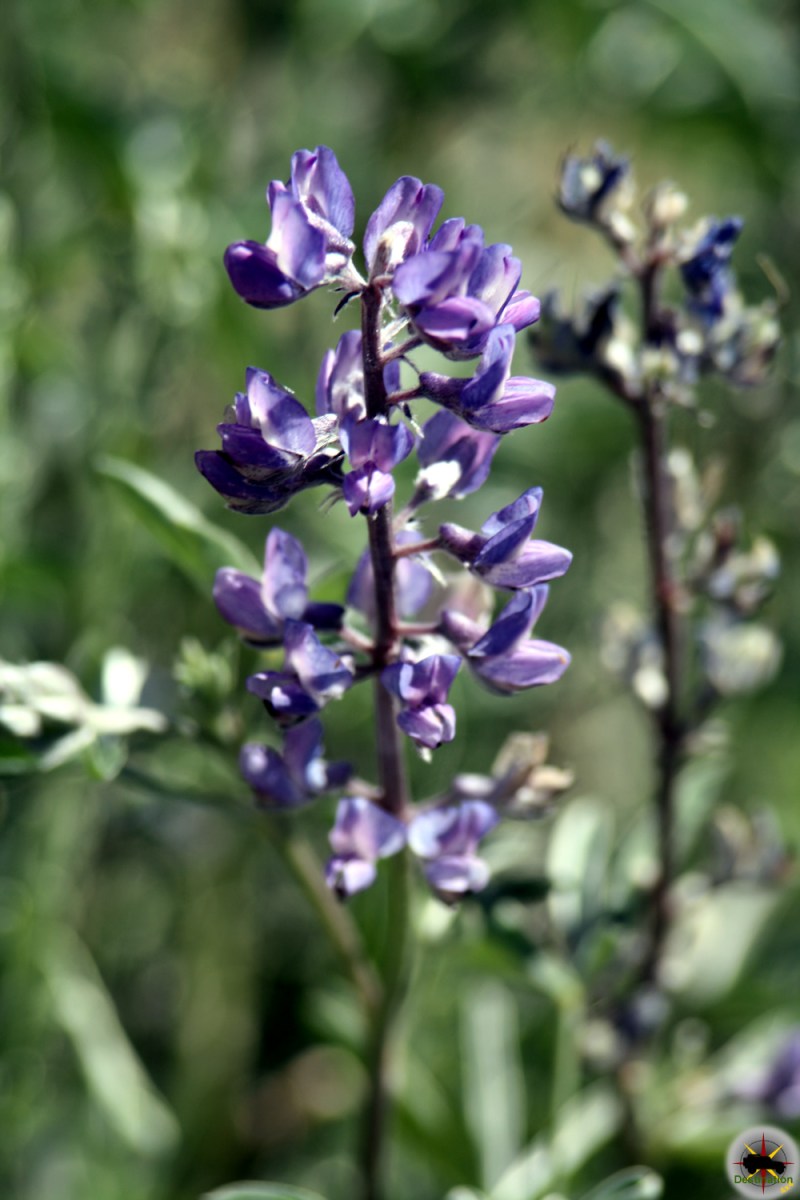
Silvery Lupine (Lupinus argenteus)

Silvery Lupine (Lupinus argenteus)

Silvery Lupine (Lupinus argenteus) is a fairly common vibrant purple wild flower and is common in much of Western North America including Arizona, California, Nevada and Utah. Deriving its name from the fine silvery hair found on its stalks, which are reddish in color.

Lupine is a stalked plant which grows up to four feet tall. The Lupine thrives in higher elevations and may be commonly found between 3,300 and 10,000 feet. It is quite common for the flower to be found along roadways, stream valleys, rocky prairies and in open pine woods.

The Lupine typically blooms in June to October, however like many wild flowers, this period will vary dependent upon water and location. The violet colored flowers are typically arranged around a spike which may reach up to eight inches in length.

The Silvery Lupine grows quickly and in bunches and considered a member of the pea family. Although toxic to humans, this beautiful flowering plant is known to attach butterflies, birds and hummingbirds.

The Navajo people used the Silvery Lupine as a natural treatment for Poison Ivy blisters. The Lupine is commonly found in clearings in the countries of Apache, Coconino, and Mohave, and Navajo in Arizona.

Mojave Yucca (Yucca schidigera)

The Mojave Yucca is a small evergreen tree which flourishes in the Mojave and Sonoran deserts of California, Arizona and Nevada. The Yucca’s most noticeable characteristic is its large branches and bayonet like leaves. The rigid leaves are typically dark green in color and can reach up to 4 feet in length. I can also personally attest that they are sharp at the pointy end.

Mojave Yucca guarding the Ring Trail, Mojave National Preserve.

The Mojave Yucca can reach a height of 16 feet and that mass is supported by a trunk which is up to 12 inches in diameter. The Yucca is typically found on rocky slopes and below 4,000 feet in elevation. The plant blooms are very similar the Joshua Tree and it will send up a cluster of white bell shaped flowers from the top of the stem. This cluster is short lived, but can reach and additional 120 cm in length.

Also like the Joshua Tree, the Mojave Yucca depends upon the white pronuba moth for pollination. This moth will deposit its eggs in the ovary of the Yucca Flower and there by cross pollinate the tree. The moth lavae hatch and consume some the the seeds in a wonderful example of natures balance.

The Mojave Yucca also provided utilitarian purpose for the Native Americans. They utilized the leaves as a source of cordage, which could be woven into blankets, rope, hats and mattresses. The roots of the Yucca contains high levels of saponin, and could be made into a pulp and used as soap The flowers and fruit were a food source and could be eaten both raw and roaster. The black seeds could be ground into flour.

The yucca, with its sharp pointed leaves offer wonderful defensive habitat for snakes, lizards, rabbits, birds and other desert animals.