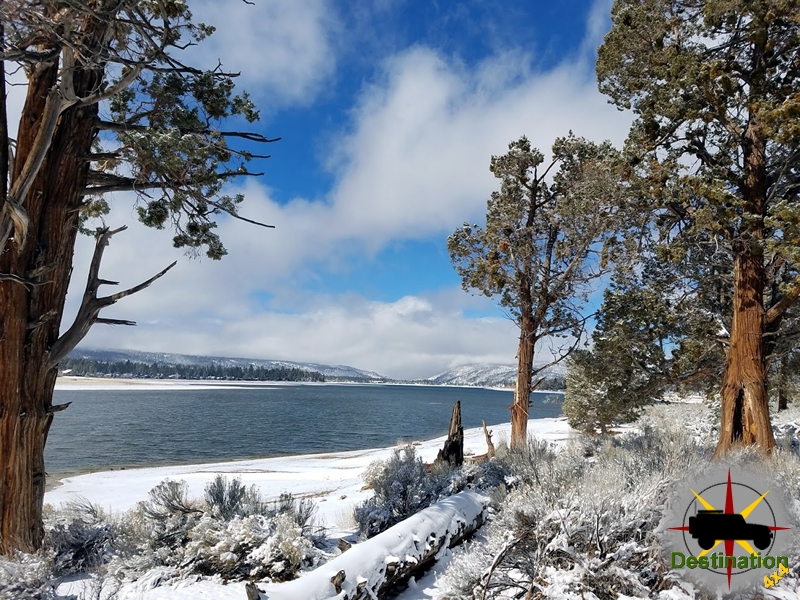
Big Bear, CA
I quiet mountain community full of back country adventure.
The Journey is the destination
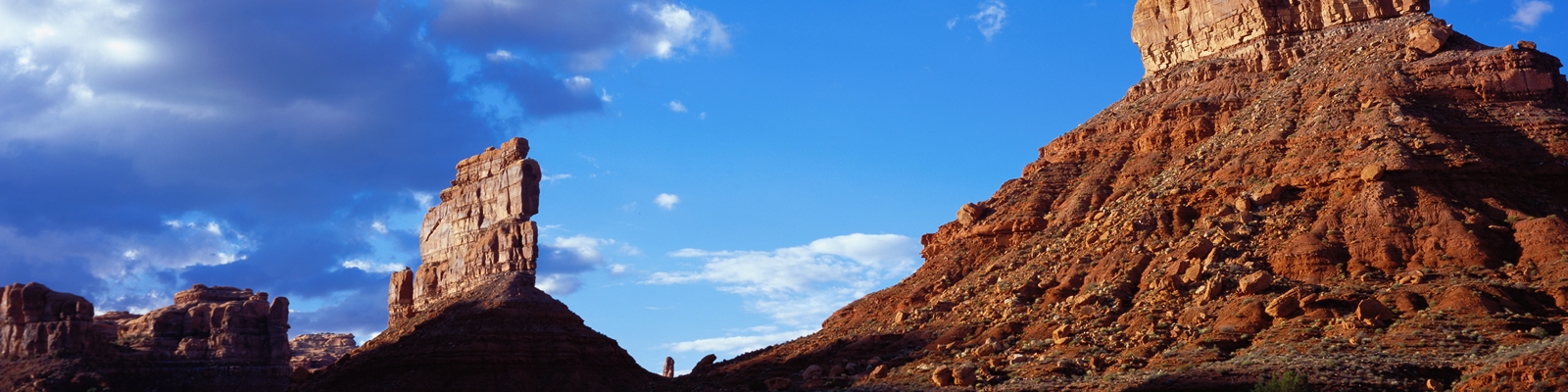
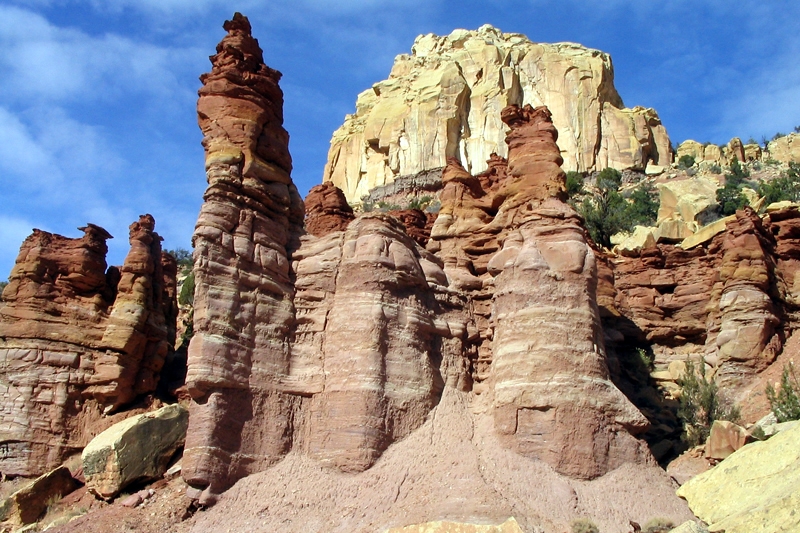
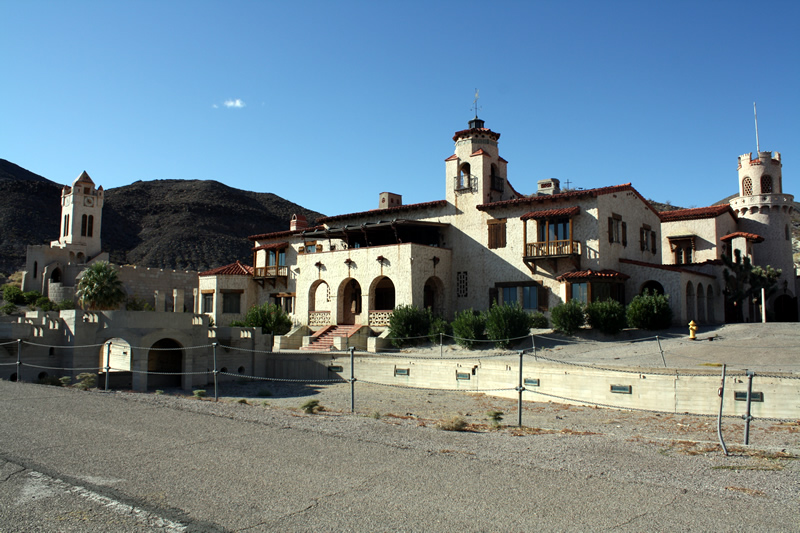
Located near Lone Pine, CA the Alabama Hills are an awesome spot to visit and explore in Inyo County. Large boulder formations erupt from the ground and create a maze of canyons, trails and roads. This feature in itself, is more than enough fun to justify a trip to this area, however add to the equation that the Alabama Hills has appeared in more Hollywood movies than one person can name and you have the perfect combination of terrain and nostalgic history.

The location are featured in many “Western” movies and is the birth place of the Lone Ranger, Star Trek and Iron Man. A final punctuation mark is the area is located in the foothills of Mount Whitney (14,505 ft), the tallest mountain in the lower 48 states.
Access to the locations is extremely easy, just follow Whitney Portal Road west out of Lone Pine, and take a right turn on Movie Road. From here the possibilities are almost endless. The BLM publishes the “Movie Road Touring Brochure” which gives directions on how to find the film locations of some of your favorite movies.

There is an over-abundance of camping locations within this location. I would love to camp in this site, with the only draw back being the number of tourists driving the trails. This is actually a big draw back for me. Most of the trails are easily accessible by almost any vehicle on the market. My last trip, we saw a brand new Porsche driving movie road.

The routes are short and easy traisl, however, there are a labyrinth of roads and canyons to explore and get lost. The fun can be search for and finding the filming locations of some of your favorite movies or televisions shows..
The area is managed by BLM. Camping is allowed by the BLM, however camping should follow all rules, regulations and the leave no trace principles in order to protect this resource and camping destination. Personally, my preference is to camp at the nearby Tuttle Creek, Lone Pine, or Mt. Whitney campgrounds.
Take your time and enjoy.
Johnnie, Nevada, is a small, sparsely populated community in Nye County, located approximately 15 miles north of Pahrump in the Amargosa Valley, near the Spring Mountains. Named after a Paiute guide known as “Indian Johnnie,” the town emerged in the early 1890s as a gold mining camp tied to the legend of the Lost Breyfogle Mine. Its history reflects the boom-and-bust cycle typical of Nevada’s mining towns, marked by brief periods of prosperity, challenges with water scarcity, and eventual decline into a near-ghost town. This report traces Johnnie’s historical development from its founding to the present day, drawing on available sources to provide a comprehensive overview.
The Johnnie Mining District, also known as Montgomery, Mount Sterling, or Timber Mountain, was established around 1890 when a group of five prospectors, guided by a Paiute named “Indian Johnnie,” discovered gold while searching for the fabled Lost Breyfogle Mine. The legend of Charles Breyfogle, a prospector who in the 1860s claimed to have found a rich gold deposit but could not relocate it, fueled exploration in the region. In January 1891, George Montgomery and his party struck gold on the east slope of Mount Montgomery, sparking a rush to the area. The Johnnie and Chispa (later renamed Congress) Mines became the district’s primary operations, with outcropping quartz veins yielding significant gold.
By May 1891, the camp, initially called Montgomery, had grown to about 100 residents, supporting houses, stores, saloons, and other amenities typical of a boomtown. Water scarcity posed a significant challenge, as the nearest springs were four miles away, requiring water to be transported by donkey in canvas bags. A post office, named “Montgomery,” operated briefly in 1891, though some sources suggest a “Johny Post Office” existed from June 1898 to April 1899. The shallow veins were quickly exhausted, leading to a decline by 1893–1894, with many miners abandoning the camp.
A revival began in 1898 when new investors acquired the Johnnie and Congress Mines, the district’s largest operations. The discovery of placer gold and renewed interest in lode mining revitalized the area, particularly after 1904, when regional mining excitement around Goldfield and Bullfrog swept through southern Nevada. In May 1905, a new townsite was platted closer to the mines, and a post office named “Johnnie” opened, reflecting the area’s growing identity. By 1907, the town reached its peak population of approximately 300, supported by saloons, stores, restaurants, hotels, stage lines, fire hydrants, and tree-lined streets. A 16-stamp mill was erected at the Johnnie Mine to process ore, contributing to production estimates ranging from $382,681 to over $1 million by 1913.
The Johnnie Mine, located four miles northeast of the townsite at an elevation of 4,045 feet, primarily extracted gold from limestone and quartzite host rocks. Underground workings included a 900-foot, 45-degree inclined shaft, with placer mining occurring in gulches below the mine. Placer gold discoveries in 1920 and 1921, particularly by Walter Dryer, triggered a short-lived boom, with drywashing and sluicing techniques used to extract gold from gravels. However, legal disputes, including a violent gun battle, disrupted operations, and production waned by 1914, leading to the post office’s closure in December 1914.
After 1914, Johnnie’s population and activity declined sharply, with the camp becoming nearly deserted by the late 1930s, housing fewer than 10 residents. The Johnnie Post Office reopened briefly from April 1916 to November 1935, and a separate Johnnie Mine Post Office operated from September 1937 to June 1942, reflecting sporadic mining efforts. Placer gold discoveries in the gulches below the Congress and Johnnie Mines occurred intermittently, with small-scale operations in 1935, 1949, and the early 1960s. Approximately 20 itinerant miners worked the placers in 1935, using drywashers, but total placer gold production likely did not exceed $20,000.
Mining continued sporadically during World War II, with figures like Alva Meyers, a prominent Goldfield miner, and J. Ross Clark, after whom Clark County is named, associated with the district. Unverified claims suggest that outlaw Butch Cassidy (Robert LeRoy Parker) worked and lived in Johnnie during the 1930s and 1940s, possibly dying there in 1944, though no definitive evidence supports this. By the 1960s, the district was largely inactive, with only occasional prospecting.
The Johnnie Mining District spans the northwestern Spring Mountains, encompassing Mount Montgomery, Mount Schader, and parts of Mount Sterling. The area features a 13,000-foot-thick section of upper Precambrian to Middle Cambrian rocks, including the Johnnie Formation, Stirling Quartzite, Wood Canyon Formation, Zabriskie Quartzite, and Carrara and Bonanza King Formations. These were deformed by the Late Cretaceous Sevier orogeny and later Basin-and-Range faulting, creating high-angle fractures and quartz veins that hosted gold deposits. Placer gold was concentrated in the six inches of gravel overlying bedrock, with values ranging from $6 to $30 per cubic yard in some areas.
In November 2013, the Bunker family donated four mines—April Fool, Johnnie, Teddys, and Teddys Terror, covering 72 acres—to the Pahrump Valley Museum and Historical Society for preservation, with a transfer tax value of $712,500. The donation included a large headframe, a 16-stamp mill remnant, a mine shaft with pulleys, and a cabin. The museum plans to restrict public access to guided tours to protect the site, installing gates and no-trespassing signs to prevent unauthorized entry. The donation agreement prohibits future mining, ensuring the site’s historical integrity.
As of 2023, Johnnie remains a sparsely populated area, with estimates suggesting a population of around 21,169 in the broader region, though this figure likely reflects Nye County data rather than the townsite itself, which is nearly deserted. The median household income is approximately $21,582, and the median age is 24.7, with homes valued at $78,800, significantly below Nevada’s average. The site, now part of the Toiyabe National Forest, retains historical significance but shows little evidence of the original townsite, with only rock foundations, mine shafts, and scattered debris remaining.
The legend of the Lost Breyfogle Mine is central to Johnnie’s history. Charles Breyfogle, a prospector of German descent, reportedly found a rich gold lode in the 1860s, assaying at $4,500 per ton, but could not relocate it after surviving an Indian attack. After his death in 1870 in Eureka, Nevada, others, including George Montgomery and “Indian Johnnie,” continued the search, with some believing the Johnnie Mine was Breyfogle’s lost lode. A 1964 article by Burr Belden, citing Yount family descendants, supported this theory, noting similarities between Breyfogle’s ore samples and Johnnie Mine ore. However, some historians argue the Lost Breyfogle Mine remains undiscovered, adding to Johnnie’s mystique.
Johnnie, Nevada, embodies the transient nature of Nevada’s mining frontier, rising from a gold discovery in 1890 to a bustling camp by 1907, only to fade into obscurity by the mid-20th century. Its history, intertwined with the Lost Breyfogle legend and the contributions of figures like “Indian Johnnie,” reflects the optimism and hardship of the American West. Today, preserved by the Pahrump Valley Museum, Johnnie’s remnants serve as a testament to its brief but vibrant past, offering a glimpse into Nevada’s mining heritage for historians and visitors on guided tours.
In May 1867, prospector Alexander Beatty worked the the Grant Mountain range when he discovered silver and founded the town site of Troy, in Nye County, Nevada. Beatty quickly stacked five different claims in the valley. In 1868, Beatty started the Troy Mining District.

In 1868, the town attracted a group of investors from England. After prospecting and exploring the area, these investors purchased Beattys mining claims and The Troy Silver Mining Company was founded in 1870.
The little town of Troy, in 1871 was home to seventy miners and their families. Their needs were meet with two general stores, a school, blacksmith shop, boarding house and an unofficial post office. The Troy Silver Mining company invested some $500,000.00 into the mining facilities and built a modern 20-stamp mill and furnaces.
Despite fund raising, the new mining company was not destined to be the next great boom town. The mines never produced as anticipated and by 1872 the company was on the verge of going under. In 1873 a new manager was able to get silver production up to keep the mines open. Flooding in the mines and the speculation from the flooding caused the stock prices to plummet. Despite this news, the stock holders voted to keep mining operations in place.
In 1876, the end finally came for Troy when the mines were closed and the assets sold and moved including the mills and furnaces. In December of that year, the Troy Silver Mining Company was dissolved.
George Sharp, a nearby rancher, purchased the mine site for back taxes in 1902. He demolished one of the two furnace chimneys for the raw materials for his ranch. Sharp sold the claims to the Birdno family.
The mining camp saw various revivals over the next 50 years. The population would teeter back and forth between 1904 – 1920. The Birdo Family sold out the claims and divested in 1936.
The final operations in the valley started in 1946 when the Locke Mine was opened above the town of Troy by Joseph Hafen. The Locke Mine produced gold and pipe delivered to water up to the mine to produce electricity for a mill which was assembled. The Locke Mined operated until the mid 1960s.
| Name | Troy Nevada |
| Location | Nye County, Nevada |
| Latitude, Longitude | 38.34578302126987, -115.57371331915309 |
| Elevation | 6000 feet |
| Population | 100 |
Bullionville, Nevada, is a ghost town in Lincoln County, located approximately one-quarter mile east of U.S. Route 93, one mile north of Panaca, and ten miles south of Pioche. This report explores the history of Bullionville, a short-lived but significant milling town that thrived from 1870 to 1882, driven by its strategic water resources and proximity to the silver mines of Pioche. Drawing from historical records, this account details its establishment, growth, decline, and lasting remnants.

Bullionville was founded in February 1870 when John H. Ely and W.H. Raymond relocated a five-stamp mill from Hiko to a site selected for its reliable water supply from Meadow Valley Creek, a northern tributary of the Colorado River. Initially named Ely City, the settlement was renamed Bullionville later that year. The availability of water made it an ideal location for milling operations, prompting the construction of additional mills to process ore from nearby Pioche mines. Between 1870 and 1872, most of Pioche’s mills were established in Bullionville due to this advantage. The 1870 Federal Census recorded 96 residents, indicating early growth.
In 1872, construction began on the Pioche and Bullionville Railroad, a 21-mile narrow-gauge line costing $255,000, designed to transport ore from Pioche mines to Bullionville’s mills. Completed in 1873, the railroad facilitated efficient ore processing and spurred further development.
Bullionville experienced rapid growth between 1872 and 1875, reaching a population of approximately 500 by 1875. The town boasted five mills with a total of 110 stamps, making it a regional hub for ore processing. It also housed the first iron foundry in eastern Nevada, reflecting its industrial significance. The community supported a range of businesses, including hotels, stores, multiple saloons, blacksmith shops, and a daily stage service to Pioche. A post office opened in April 1874, further solidifying its status as a burgeoning settlement.
The Panaca Summit Charcoal Kilns, built in the mid-1870s, supported Bullionville’s mills by producing charcoal, a critical fuel for smelting silver ore. Constructed by skilled stone masons using rhyolitic tuff and operated by Swiss and Italian woodcutters known as “Carbonari,” these kilns processed up to 50 cords of wood per cycle, yielding enough charcoal to smelt one ton of ore per 30 bushels. The kilns, located near Panaca, operated until the late 1890s, outlasting Bullionville’s peak.
The construction of a water system connecting Bullionville to Pioche in 1875 marked the beginning of the town’s decline. This system enabled Pioche to support its own milling operations, reducing the need for Bullionville’s facilities. Between 1875 and 1877, most mills were relocated to Pioche, and the Pioche and Bullionville Railroad ceased operations by 1880. The 1880 Federal Census reported only 68 residents, a sharp decline from the town’s peak.
In 1880, an attempt was made to sustain Bullionville by erecting a plant to process tailings left by the former mills. However, this effort failed to reverse the town’s fortunes. The post office closed in November 1886, briefly reopened from October 1892 to July 1898, and closed permanently thereafter. By 1900, the Federal Census recorded only two families, the Morgans (3 members) and the Clarks (10 members), residing in Bullionville. The town was effectively abandoned by the early 20th century.
Today, Bullionville is a ghost town with few physical remnants. The Bullionville Cemetery, accessible via a short trail at Cathedral Gorge State Park, is one of the primary surviving features, documented in the 1980s as part of the Civic Historical Research Project led by Paul Vance. The cemetery offers insight into the lives of early residents, though no original buildings remain. The Nevada State Historical Marker No. 203, located along U.S. Route 93 one mile north of Panaca, commemorates Bullionville’s history.
Photographic evidence from the Nevada Historical Society, including images of mining operations circa 1910–1912, provides visual documentation of Bullionville’s industrial past. The Panaca Summit Charcoal Kilns, still standing, serve as a testament to the region’s mining heritage.
Bullionville, Nevada, was a fleeting but vital component of Lincoln County’s mining economy in the 1870s. Its strategic location and water resources fueled a brief period of prosperity, marked by industrial innovation and community growth. However, the development of infrastructure in Pioche led to its rapid decline, leaving Bullionville as a ghost town by the late 19th century. Its cemetery, historical marker, and nearby charcoal kilns preserve its legacy, offering a glimpse into Nevada’s boom-and-bust mining history.
Buillionville is located about 10 miles south of Pioche, near the intersection of the 319 and 93, Great Basin Highway. The Bullionville cemetary is located after a short hike in the Cathedral Gorge State Park.
| Town | Bullionville |
| Latitude, Longitude | 37.803333, -114.406944 |
| Elevation | 5220 |
| Post Office | April 1874 – November 1886 October 1892 – July 1898 |
| Nevada State Historic Marker | 203 |
| Population | 500 |
Bullionville began early in 1870 when John H. Ely and W.H. Raymond removed their five-stamp mill at Hiko and placed it at this point. The enterprise prospered and during the next two years most of nearby Pioche’s mills were located here because of the proximity to water. A twenty-one mile narrow gauge railroad, the Pioche and Bullionville, was completed in 1873 at a cost of $255,000 to haul ore from the Pioche mines to the reduction mills. Bullionville grew rapidly and by 1875 it had five mills, a population of 500 and the first iron foundry in eastern Nevada. During the same year a water works was constructed at Pioche which eventually led to the relocation of the mills. Although a plant was erected here in 1880 to work the tailings deposited by the former mills, this failed to prevent the decline of Bullionville.
Nevada State Historic Marker
Hole in the Wall campground is found deep in the Mojave National Preserve in San Bernardino County, California. The Campground is a popular location for hikers, star gazers and explorers of the Old Mojave Road.

The campground is nestled up against a small hillside and offers access to the Ring Trail which is a short and very fun hike around a mesa of sharp sculpted volcanic rock. The Hole-in-the-Wall Information Center is located nearby and offers a book store, bathrooms and ranger programs. The campsites are suitable for RV’s, trailer and tent camping and does have 2 sites dedicated for walk in camping.
The campground is at a reasonable higher elevation, which offers mild weather in the spring and falls months. Winter will be cold and obviously the summer months will allow a visitor to experience the harsh, hot, arid Mojave.
From I-40: Exit Essex Road and drive north 10 miles to the junction with Black Canyon Road. Hole-in-the-Wall is 10 miles north on Black Canyon Road.
| Campground Name | Hole in the Wall Campground |
| Latitude, Longitude | 35.0484172,-115.3963526 |
| Sites | 35 |
| Elevation | 4,400 ft |
| Amenities | Pit toilets, trash receptacles, fire rings, picnic tables; no utility hookups. Firewood is not available in the park. |