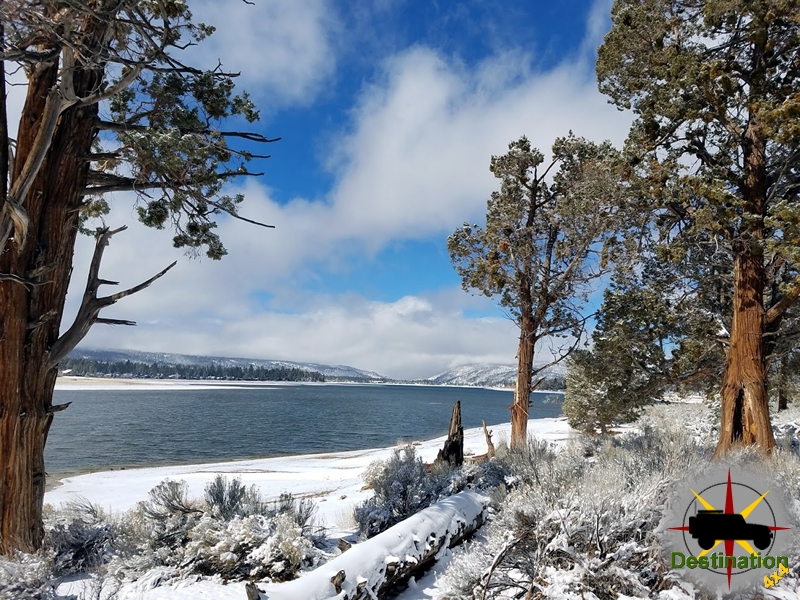
Big Bear, CA
I quiet mountain community full of back country adventure.
The Journey is the destination
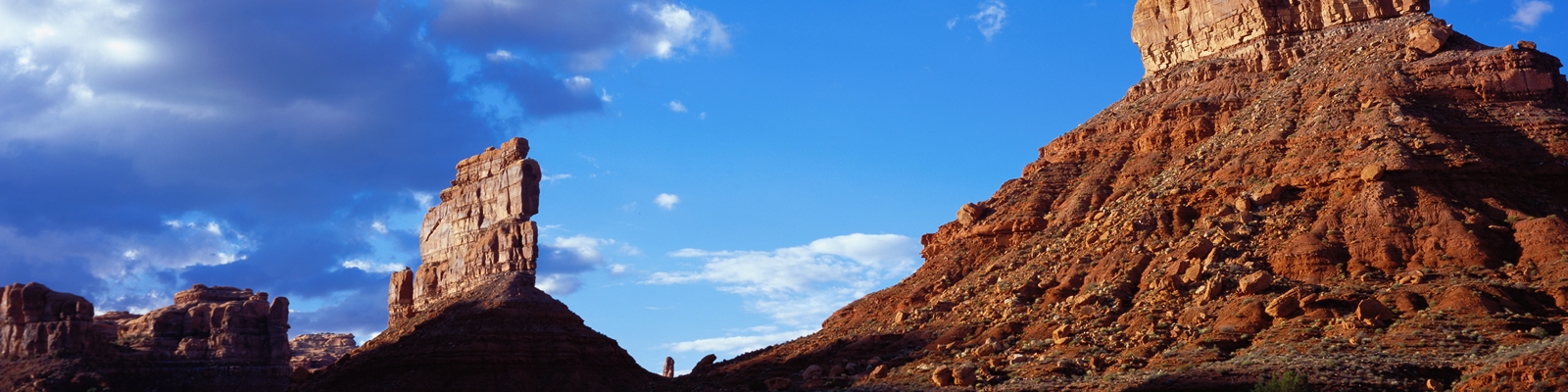
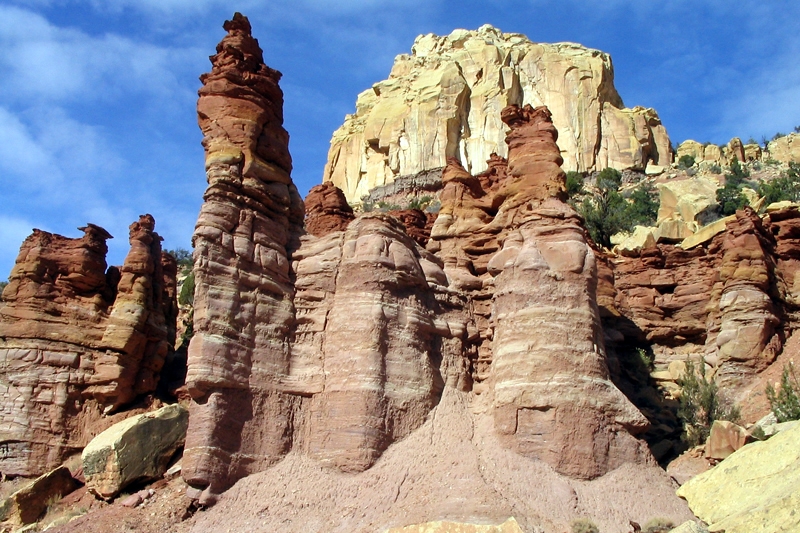
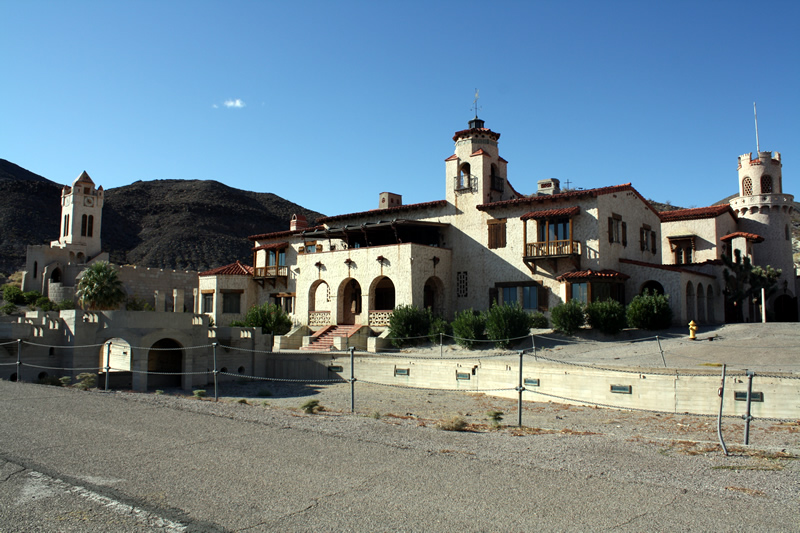
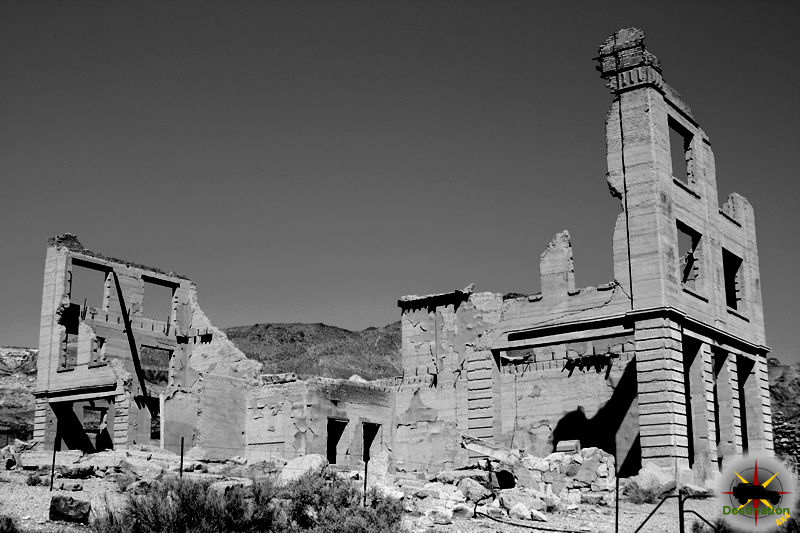
Skidoo, California, once a bustling gold mining town in the early 20th century, now stands as a ghost town within Death Valley National Park. Located in Inyo County at an elevation of 5,689 feet, Skidoo epitomized the boom-and-bust cycle of mining communities in the American West. Its history, marked by rapid growth, innovative engineering, and eventual decline, offers a glimpse into the challenges and ambitions of desert mining during the gold rush era. This report explores Skidoo’s origins, development, key events, and legacy, drawing on historical records and contemporary accounts.

Skidoo’s story began in January 1906, when prospectors John Ramsey and John “One-Eye” Thompson, en route to the gold strike at Harrisburg, were halted by a rare fog near Emigrant Spring. When the fog lifted, they discovered promising gold-bearing ledges, leading them to file claims for what became the Gold Eagle Group. News of their find spread, and Bob Montgomery, a prominent mining figure from Rhyolite, purchased these claims for $100,000, fueling the rapid development of the area. Initially named Hoveck after Matt Hoveck, the Skidoo Mine’s manager, the town was renamed Skidoo in 1907, inspired by the popular slang phrase “23 skidoo,” meaning to leave quickly or take advantage of an opportunity. Local lore suggests the name also referenced the 23 miles of pipeline bringing water to the town, though this remains speculative.
Right here on the border line between California and Nevada, just a few miles from arid within speaking distance of Nevada’s big, bonanza gold camps of Goldfield, Rhyolite, Tonopah, California promises to give birth to the most wonderful gold mines America has yet produced . . . . Here the golden goddess is again singing her siren song of enchantment and California is again beckoning to the world with a finger of gold: and the world is listening, and looking, and coming–TO SKIDOO!
Rhyolite Herald, 4 January 1907
Skidoo quickly grew into a thriving community, peaking at around 700 residents by mid-1907. The town boasted advanced amenities for its time, including a post office (established as Hoveck in 1906 and renamed Skidoo in 1907), a telephone exchange, the Skidoo News newspaper, a school with 29 students, four saloons, three restaurants, and the Southern California Bank of Skidoo. Stagecoach connections to Rhyolite and Ballarat, along with private automobiles, linked Skidoo to nearby settlements, while a telephone line to Rhyolite facilitated communication.
The Skidoo Mine, operated by the Skidoo Mines Company, was the town’s economic backbone, producing approximately 75,000 ounces of gold—valued at over $1.5 million at the time—between 1906 and 1917. The mine’s success was bolstered by two remarkable engineering feats. First, Skidoo hosted the only milling plant in the Death Valley region powered almost entirely by water, using a gravity-feed system to separate gold from ore. Second, a 23-mile pipeline, constructed by Bob Montgomery, transported water from springs near Telescope Peak to the mill, an extraordinary achievement given the desert’s harsh terrain. The pipeline’s scar remains visible today, and watering stations along its route supported prospectors exploring the region.
By 1907, over 100 men were employed at the Skidoo mines, and development costs exceeded $300,000. The town’s prosperity attracted attention, with the Rhyolite Herald proclaiming in January 1907, “California promises to give birth to the most wonderful gold mines America has yet produced… TO SKIDOO!” However, the national financial panic of 1907 strained the town, particularly impacting the Southern California Bank of Skidoo, which faced creditors and operated out of cramped quarters in a grocery store.

Skidoo was relatively peaceful compared to other mining camps, but it was not without incident. In April 1908, Joe Simpson, a gambler with a notorious reputation, attempted to kill the Southern California Bank’s cashier, Dobbs, and murdered James Arnold, a popular local butcher. With no jail in Skidoo, Simpson was held in a cast-iron building under guard. An armed mob demanded his release and lynched him from a telephone pole, an event that underscored the town’s rough justice.
Another challenge came in 1913, when the pipeline froze and burst, followed by a fire that destroyed much of the original stamp mill. The Skidoo Mines Company swiftly rebuilt a ten-stamp mill, adding five more stamps by 1915, but these setbacks foreshadowed the town’s decline.
The Skidoo Mine is located 65 miles north of Trona, California, at 6500 ft. elevation. The property was established in 1906; the mill erected in 190?. The mill burned and was reconstructed in 1913. Owner: Skidoo Mines Co., Skidoo, CA. C. W. Cross, president, and Crynski , superintendent .
Two systems of quartz veins occur in a pegmatite granite. The main vein system strikes M-SE and the other E~W. The veins average from 18″ to 2 ‘ in width, with a maximum of 4’.
The ore is free milling and values average about $15.00 per ton. Ore is hauled to the mill through tunnels. The mill equipment consists of: ten 850-lb. stamps, five 1150-lb. stamps and amalgamation tables. Table tailings run to the cyanide plant and precipitated in zinc boxes. The mill is operated by water conveyed in an 8″ pipeline 21 miles
California State Mining Bureau’s “Report of State Mineralogist,” 1915-16, Report XV:
from Telescope Peak. The pipe was installed at a cost of over $200,000, 35 men were employed at the mine mill. Total production to date over $1,500,000,

Skidoo’s fortunes waned as its gold veins diminished. By early 1909, the town’s population began to decline, and the school district closed in September 1909. In July 1909, the Los Angeles Mining Review reported that the Skidoo Mine was California’s second-most productive, clearing all debts and paying a $50,000 dividend. However, the town itself was depleting, and by 1917, the rich vein had “pinched out,” leading to the mine’s permanent closure. The post office shut down the same year, and the mill and pipeline’s iron and steel components were dismantled and sold.
Sporadic mining resumed in the 1920s and 1930s under new ownership, and a tungsten boom in the early 1950s brought renewed activity, though the ore was low-grade. These efforts left behind shafts, cuts, and tailings, but the townsite itself was abandoned, with the last buildings gone by the 1980s. Today, Skidoo is listed on the National Register of Historic Places, with the Skidoo Stamp Mill—stabilized by cables and maintained by the National Park Service—standing as the most prominent remnant.
Skidoo’s brief existence encapsulates the transient nature of mining boomtowns, driven by the allure of gold and undone by the exhaustion of resources. Its innovative water-powered mill and pipeline highlight the ingenuity required to sustain life and industry in the unforgiving Mojave Desert. The ghost town, accessible via an 8-mile unpaved road off Wildrose Road, attracts visitors who explore its mining relics, including the stamp mill, adits, and scattered debris like rusty cans and glass fragments. The surrounding hills, with over 1,000 mine entrances, evoke the frenetic activity of Skidoo’s heyday.
Tripadvisor reviews reflect mixed visitor experiences. Some find the site underwhelming, noting the absence of town structures and the challenge of the rugged road, recommending high-clearance vehicles. Others praise the stamp mill and the sense of history, emphasizing the need to continue past the townsite to reach the mill. The site’s remoteness and stark landscape amplify its haunting appeal, inviting reflection on the ambition and impermanence of Skidoo’s past.
Skidoo, California, rose and fell within a decade, leaving behind a legacy of resilience and adaptation in one of America’s harshest environments. From its accidental discovery in 1906 to its abandonment by 1917, Skidoo embodied the hope and hardship of the gold rush era. Its engineering achievements, preserved ruins, and place on the National Register of Historic Places ensure its story endures, offering a window into the fleeting dreams of a desert boomtown.
| Name | Skidoo |
| Location | Inyo County, California |
| Latitude, Longitude | 36.4355016, -117.1475604 |
| GNIS | 1656631 |
| Elevation | 5689 ft / 1734 m |
| Newspaper | Skidoo News |
| National Register of Places | 74000349 |

Nevada Ghost Towns and Mining Camps is a wonderful book written by Stanley W. Paher and published by Nevada Publications. The book is Copyright 1970 and contains 492 pages of “Brillantly illustrated with 700 historic and modern photographs; with numerous maps, complete index, appendix and bibliography.” This book contains information and stories from more than 575 mining sites and ghost towns in Nevada.
My copy of this book was purchased by my father for $15 at a thrift store. The pages are dog eared and well worn and covered in yellow post-it notes for later reference. The book is wonderfully organized, the source of a lot of great information about the early days of Nevada mining. The stories, photographs paint a fantastic picture of the rough and rugged individuals who settled my new home state. In many ways, the enjoyment and knowledge that I have, is based and builds upon the great work of Mr. Paher.
Stanley Paher grew up in Las Vegas, Nevada and jeeped thousands of miles over the rough roads of back country Nevada. He graduated from Sacramento State with a B.A. in English. He continued his educations at the University of Nevada, where, in 1969 he earned a Masters Degree in Political Science.
The book is available for purchase from Amazon and quite a hefty price on this writing, however you can find it much cheaper at various other online stores.
Anyone who is at all interested in ghost towns, mining or Nevada history really needs a copy of this book in his/her library.
700 photographs and maps both historic and modern make a fascinating detailed and accurately researched history of nearly 600 towns and camps. A must for collectors.

| Title | Nevada Ghost Towns and Mining Camps |
| Author | Stanley Paher |
| Publisher | Howell North |
| Edition | |
| Pages | 492 Pages |
| ISBN-13: 978-0913814048 | |
| ISBN-10: 0913814040 |
George Lovelock (March 11, 1824–1904) was an English-born American pioneer who played a significant role in the development of the American West. A carpenter by trade, he immigrated to Australia in the 1840s, worked in copper mines, and survived a shipwreck en route to Hawaii. Arriving in San Francisco in 1850, he built homes in California, established a store in Butte Creek (named Lovelock in his honor), and engaged in placer mining. In 1860, he settled in Nevada, purchasing land that became the foundation for the town of Lovelocks, Nevada. In 1867, he donated land to the Southern Pacific Railroad, which named the town Lovelocks. A skilled mineralogist and entrepreneur, Lovelock’s legacy includes founding two towns named after him in California and Nevada, reflecting his contributions to frontier settlement and community-building.
George Lovelock was born on March 11, 1824, in England, where he was raised and educated. Little is known about his early years, but his upbringing in England equipped him with practical skills, including carpentry, which would prove invaluable in his later endeavors. In his youth, he married Mary Forest, marking the beginning of a life filled with adventure and resilience.
Shortly after their marriage, George and Mary embarked on a perilous four-and-a-half-month voyage to Australia. During this journey, their first child, Fred Lovelock, was born at sea. In Australia, George worked in the copper mines for over two years, gaining experience in labor-intensive industries. Seeking new opportunities, the family set sail for the Sandwich Islands (now Hawaii). Tragically, their ship wrecked on a reef seven miles from the islands during a storm, and their infant daughter died. The surviving family members reached land, where Mary and Fred remained while George continued his journey.
In April 1850, George sailed to San Francisco aboard the schooner Starlin. During the voyage, he overheard a plot by stowaway pirates to seize the ship and kill the passengers. Alerting the captain, George helped thwart the scheme, ensuring the pirates were subdued and held until the ship reached San Francisco, though they escaped upon arrival. In San Francisco, George initially worked as a carpenter, building houses in Happy Valley. By May 1850, he moved to Sacramento, where he was joined by Mary and Fred in June. The family relocated to Brown’s Valley and then to Feather River, where George constructed the second house in what would become Oroville, California. His son Thomas was born there in September 1851, noted as the first child born in the settlement.
In 1852, seeking a healthier environment for his family, George moved to Marysville, California. He later settled in Butte Creek, where he built a small store, and the area was named Lovelock in his honor—a testament to his growing influence. By 1855, George blazed a wagon road over the mountains to Honey Lake Valley, engaging in placer mining at Meeker’s Flat, where he extracted $80 to $100 daily. He also took up teaming, transporting goods. In 1859, he built a sawmill in Lovelock, California, but the onset of the Civil War in 1861 halted lumber demand, prompting him to abandon his California ventures.
In 1860, George relocated to Nevada, initially settling at the mouth of Rocky Canyon in Humboldt County. By 1866, he purchased 320 acres of land, including the oldest water right on the river, for $2,250 from two squatters. This land became the foundation for the town of Lovelocks, Nevada. In 1867, as the Southern Pacific Railroad was constructed, George donated 85 acres for a town site, which the railroad named Lovelocks. In exchange, he was promised a block in the town and a free pass on the railroad, though the company later reneged, forcing him to pay $500 for half a block and granting him only one free ride. George continued prospecting and mining, becoming a skilled mineralogist, while managing his extensive real estate holdings.
George and Mary had eight children in Nevada, five of whom survived to adulthood. Fred settled in Tonopah, while their daughters and their husbands remained in Lovelocks, living on lands George had acquired. Mary died in 1882, and George remarried Mrs. Evans, who tragically drowned in 1885 while fishing near their home. George’s large family, including grandchildren and great-grandchildren, cherished him as a beloved patriarch. Known for his independence, he never joined any societies, forging his path through determination and ingenuity. His contributions to the development of Lovelocks, Nevada, and his earlier efforts in California left a lasting mark, with two towns bearing his name.
George Lovelock died in 1904, respected as a pioneer who shaped the American West. His life, spanning 80 years, was marked by bold migrations, entrepreneurial ventures, and community-building. From surviving shipwrecks and pirate plots to founding towns and navigating the challenges of frontier life, George’s story embodies the spirit of resilience and adaptability. The town of Lovelocks, Nevada, remains a testament to his legacy, a symbol of his enduring impact on the region.
The Daily Inland Empire was a short-lived but significant newspaper published in Hamilton, Nevada, during the late 1860s and early 1870s, a period marked by the White Pine mining boom. Operating from March 27, 1869, to November 9, 1870, the newspaper served as a vital source of information for a burgeoning mining community. This report examines the newspaper’s history, its role in Hamilton, its publishers, and its legacy, drawing on historical records from the Library of Congress and other sources.
The Daily Inland Empire was established in Hamilton, Nevada, a town founded in 1868 during the White Pine silver rush. Located in White Pine County, Hamilton grew rapidly as prospectors flocked to the region following significant silver discoveries. By 1869, the town was the county seat, boasting a population of several thousand and a vibrant economy driven by mining. The need for a local newspaper to report on mining developments, local events, and political affairs led to the founding of the Daily Inland Empire.
The newspaper began publication on March 27, 1869, under the partnership of Ayers & Putnam. It was published daily, except Mondays, reflecting the fast-paced nature of the mining boom. The Inland Empire also appeared under the title Inland Empire from May 18 to at least December 18, 1869, indicating a brief variation in its masthead. The newspaper was published in political opposition to the White Pine News, a rival publication initially based in nearby Treasure City and later moved to Hamilton.
The Daily Inland Empire was a typical frontier newspaper, featuring four pages of local news, mining reports, advertisements, and national stories. Its political stance shifted from independent to Democratic in 1870, reflecting changes in ownership and the contentious political climate of the era. The newspaper’s rivalry with the Republican-leaning White Pine News fueled editorial battles, adding to the lively discourse in White Pine County.
The Daily Inland Empire played a critical role in Hamilton during its brief existence, serving a community of miners, merchants, and speculators. Key aspects of its coverage included:
The Inland Empire was a voice for Hamilton’s diverse population, documenting the optimism and challenges of a mining boomtown. Its daily publication schedule underscores the urgency of communication in a rapidly changing community.
The Daily Inland Empire faced significant challenges, typical of frontier newspapers. The newspaper’s suspension from April 17 to October 4, 1870, likely resulted from financial difficulties or logistical issues, such as a shortage of paper or labor. The frequent changes in publishers—Ayers & Putnam to Brier & Putnam, then to Cassidy—suggest instability in management or funding.
The newspaper’s decline was tied to the broader fortunes of Hamilton. By late 1870, the White Pine mining boom began to wane as easily accessible silver deposits were depleted. The population dwindled, and businesses struggled, reducing the need for a daily newspaper. The Inland Empire ceased publication on November 9, 1870, outlasted by its rival, the White Pine News, which continued in Hamilton until 1872 before relocating. The Inland Empire’s demise marked the end of an era for Hamilton’s early press.
Surviving issues of the Daily Inland Empire are preserved in limited quantities, reflecting the rarity of frontier newspapers. Key archival details include:
Researchers can access these materials through library subscriptions or in-person visits, though incomplete runs and fragile originals limit availability. The Nevada Digital Newspaper Project, led by UNLV and the Nevada State Library, continues to digitize historic newspapers, potentially increasing access to Inland Empire issues in the future.
The Daily Inland Empire remains an important historical artifact, offering insights into the White Pine mining boom and the life of Hamilton, Nevada, during its peak. Its pages capture the excitement, ambition, and volatility of a frontier mining town, as well as the political and economic dynamics of the era. The newspaper’s rivalry with the White Pine News highlights the role of the press in shaping public opinion in the American West.
Hamilton itself declined rapidly after the 1870s, suffering a devastating fire in 1873 and losing its county seat to Ely in 1887. Today, it is a ghost town, with only ruins remaining. The Inland Empire’s brief run encapsulates this fleeting moment of prosperity, preserving stories of a community that thrived and faded with the silver boom.
As part of Nevada’s rich newspaper heritage, the Daily Inland Empire contributes to the state’s historical narrative, documented through efforts like the Nevada Digital Newspaper Project. Its surviving issues are a valuable resource for historians, genealogists, and those interested in the American West, ensuring that Hamilton’s story endures.
The Daily Inland Empire (1869–1870) was a product of its time, born from the fervor of the White Pine silver rush and extinguished as Hamilton’s fortunes waned. Despite its short lifespan, the newspaper played a pivotal role in documenting the rise and fall of a Nevada boomtown. Through its coverage of mining, politics, and community life, the Inland Empire offers a window into the challenges and aspirations of frontier society. Preserved in archives and microfilm, its legacy continues to inform our understanding of Nevada’s mining history and the vibrant press that chronicled it.
The Zebra-Tailed Lizard is a medium sized lizard which features a long black and white striped tail and commonly found in California, Arizona and Nevada. Additional coloring includes two rows of brown / bray spots down the middle of the back, and is often marked with cream colored spots. The males boast belly bars which range in color from blue to yellow and orange. The females belly bars are often much more muted or lacking completely.

This animal is commonly between 4 and 6 inches in length from snout to vent and its regenerative tail may double to overall length of this animal. The female lays a clutch of up to 15 eggs, however the more common number is between 2 and 8 eggs. A healthy population will host between 4 and 6 lizards per acre, however the number seems much higher when they are darting around you in the Mojave, Great Basin or Sonaran deserts
The Zebra tails are frequently found at elevations up to 5,000 feet. The are usually found in areas which have sandy soils and open spaces in which they can run. An ambush predator, the lizard will often lie in way for its dinner to walk by and is known to feed on bees, wasps, beetles, caterpillars, ants and grasshoppers. Additionally it is known to consume other small lizards and spiders.
Very tolerant of the high heat of the desert in which it lives, the feisty lizard is known to be active during the high temperatures of the summer sun when most animals seek shade and go underground. These lizards are know to alternately stand on opposing feet and alternate between then two stances as a means of protection from the harsh landscapes in which it lives. During the cooler nights, the lizard may burrow down into fine sane, however is also known to sleep on the surface on warm nights.
When spotted by a predator, the reptile will curl its boldly stripped tail over its head which may serve notice to the predator that it was spotted. When needed a quick burst of speed will serve as the best prevention to being a meal to larger animals.
