Ryan California – Inyo County Ghosttown

Perched precariously on the steep eastern flanks of the Amargosa Range at an elevation of 3,045 feet (928 meters), Ryan, California—once a thriving borax mining outpost—clings to the rugged edge of Death Valley National Park like a faded photograph from the early 20th century. This unincorporated community in Inyo County, just 8 miles northeast of Dante’s View and 15 miles southeast of Furnace Creek, embodies the stark contrasts of the American desert frontier: blistering heat by day, bone-chilling nights, and the relentless pursuit of mineral wealth amid isolation. Founded as a company town by the Pacific Coast Borax Company in 1914, Ryan served as the nerve center for extracting the “white gold” of the Mojave, fueling industries from glassmaking to detergents. Today, as a meticulously preserved ghost town under private stewardship, it offers a rare, unvarnished glimpse into the lives of borax miners and the pivot to tourism that briefly extended its lifespan. Though closed to casual visitors, Ryan’s 2025 designation on the National Register of Historic Places underscores its enduring significance as a cultural relic of industrial ambition and human resilience in one of North America’s harshest landscapes.

Postcard showing a panoramic view of Ryan, a mining camp in the Death Valley, California, ca.1920 - Photo Credit “University of Southern California. Libraries” and “California Historical Society” as the source. Digitally reproduced by the USC Digital Library.
Postcard showing a panoramic view of Ryan, a mining camp in the Death Valley, California, ca.1920 – Photo Credit “University of Southern California. Libraries” and “California Historical Society” as the source. Digitally reproduced by the USC Digital Library.

Early Prospecting and Settlement (1880s–1913)

The saga of Ryan unfolds against the backdrop of Death Valley’s borax boom, a chapter in the broader narrative of California’s mineral rushes that followed the silver frenzies of the Comstock Lode. Borax, a sodium borate compound essential for soap, ceramics, and fireproofing, was first discovered in the region in 1872 near Furnace Creek. By 1882, prospector Isadore Daixel had staked claims in the Funeral Mountains, identifying rich deposits of colemanite—a hydrated calcium borate—at what would become the Lila C Mine. Named after Lila C. Coleman, daughter of borax magnate William Tell Coleman, the Lila C site emerged as a modest camp by the early 1900s, drawing hardy laborers to its sun-scorched slopes where temperatures routinely exceeded 120°F (49°C) and water was hauled in by mule teams.

In 1907, the Pacific Coast Borax Company (PCB), under the visionary leadership of figures like Stephen Mather (later the first director of the National Park Service), formalized operations. A post office opened that year at Lila C, marking the camp’s transition from tent city to semblance of permanence. Miners, a mix of American, Mexican, and European immigrants, toiled in hand-dug adits, extracting colemanite via shallow pits and rudimentary ore chutes. The air hummed with the clatter of picks and the lowing of burros, while sagebrush-dotted arroyos carried faint echoes of multilingual banter around campfires fueled by creosote branches. Yet, the site’s remoteness—over 100 miles from the nearest railhead at Ludlow—hampered efficiency, prompting PCB to envision a more ambitious hub.

Boomtown Ascendancy and Industrial Might (1914–1927)

The year 1914 heralded Ryan’s explosive rebirth. To streamline logistics, PCB relocated operations 11 miles northwest of Lila C, constructing a new camp initially dubbed “Devar” (an acronym for Death Valley Railroad, later mangled to “Devair” on maps). Renamed Ryan in tribute to John Ryan (1849–1918), the company’s steadfast general manager who oversaw its expansion from San Francisco’s borax refineries to the Mojave’s veins, the site burgeoned into a model company town. By 1916, it boasted 54 buildings: bunkhouses for 300 workers, a two-story hospital with steam heat, a schoolhouse for the children of miners, a post office-cum-general store stocked with canned goods and patent medicines, assay offices, machine shops, and a recreation hall—originally a church shipped intact from the ghost town of Rhyolite, Nevada, in 1919.

At its core pulsed the mining infrastructure: the Lila C Mine, joined by the Jumbo, Biddy, and Widow complexes, yielded thousands of tons of colemanite annually, processed via a web of aerial tramways that whisked ore 1,000 feet down the canyon to loading platforms. The “Baby Gauge,” a narrow-gauge mine railroad snaking south from Ryan, shuttled loaded skips, while the full Death Valley Railroad—PCB’s 3-foot-gauge marvel—linked Ryan to the borax works at Death Valley Junction 20 miles east, ferrying passengers and freight through tunnel-pocked canyons. Electricity from a hydroelectric plant at Navel Spring illuminated the nights, refrigeration preserved perishables, and a tennis court hinted at leisure amid the grind. Population swelled to around 2,000 at peak, a polyglot mosaic where Cornish pumpmen rubbed shoulders with Mexican muleteers, all sustained by PCB’s paternalistic ethos of fair wages, medical care, and communal suppers under star-pricked skies. Ryan’s streets, graded dirt ribbons flanked by adobe and frame structures, thrummed with the rhythm of shift changes, the whistle of locomotives, and the distant rumble of ore cars—a desert symphony of progress.

Photograph of the "Baby Gauge" (aka "Baby Gage") mine train at the mining camp of Ryan, Death Valley, ca.1900-1950. A car with one headlight can be seen at center on tracks pulling a platform with four benches upon it. Someone can be seen driving the car, while four men and women sit on the benches. A small wooden shack with a portion of the roof missing can be seen behind the platform, while a ladder, wooden planks, and more tracks are visible at left. A valley and mountains can be seen in the background. - “University of Southern California. Libraries” and “California Historical Society” as the source. Digitally reproduced by the USC Digital Library.
Photograph of the “Baby Gauge” (aka “Baby Gage”) mine train at the mining camp of Ryan, Death Valley, ca.1900-1950. A car with one headlight can be seen at center on tracks pulling a platform with four benches upon it. Someone can be seen driving the car, while four men and women sit on the benches. A small wooden shack with a portion of the roof missing can be seen behind the platform, while a ladder, wooden planks, and more tracks are visible at left. A valley and mountains can be seen in the background. – “University of Southern California. Libraries” and “California Historical Society” as the source. Digitally reproduced by the USC Digital Library.

Decline and Reinvention (1928–1950s)

As with many Mojave outposts, Ryan’s fortunes waned with depleting veins and shifting markets. By 1927, high-grade colemanite reserves dwindled, and PCB shuttered the mines in 1928, idling the tramways and silencing the Baby Gauge. Undeterred, the company pivoted to tourism, rebranding Ryan as the Death Valley View Hotel in 1927—a plush resort with 20 guest rooms, a dining hall, and scenic overlooks drawing Hollywood elites and Eastern sightseers via the Tonopah & Tidewater Railroad. The Death Valley Railroad extended its life, offering excursion trains into the ghost mines until its decommissioning in 1930 amid the Great Depression’s grip.

The hotel limped on as overflow lodging for Furnace Creek’s inns through the 1940s, hosting episodes of Death Valley Days radio broadcasts and even serving as a Cold War fallout shelter in the 1950s. Yet, by the mid-1950s, patronage faded, leaving Ryan in caretaker status: a skeletal ensemble of weathered bunkhouses and rusting rail sidings, patrolled by lone watchmen amid encroaching creosote and jackrabbits. The 1933 creation of Death Valley National Monument (upgraded to national park in 1994) encircled but spared the private enclave, preserving its isolation.

Current Status (As of November 2025)

In a twist of serendipitous stewardship, Ryan’s nadir became its salvation. After decades under U.S. Borax (formed by PCB’s 1956 merger) and subsequent owner Rio Tinto (acquired 1967), the site was donated to the newly formed Death Valley Conservancy (DVC) on May 6, 2013—complete with 640 acres, 22 buildings, 16 archaeological sites, and mineral rights, bolstered by endowments for upkeep. This act, championed by Rio Tinto’s Preston Chiaro and spurred by National Park Service overtures since 2005, averted decay and positioned Ryan as a living laboratory for preservation.

Today, Ryan stands as one of the West’s best-preserved mining camps, its adobe walls and timber frames stabilized per the Secretary of the Interior’s standards. The Ryan Rec Hall’s multi-year restoration, ongoing since 2019, exemplifies efforts to blend education with conservation, supporting research in archaeology, industrial history, and desert ecology. The Ryan Historic District—encompassing rail remnants, mine complexes, and trails—was nominated in 2024 and listed on the National Register of Historic Places on January 27, 2025, honoring its multifaceted legacy from borax extraction to mid-century media outpost.

Public access remains tightly controlled for safety—unstable shafts and seismic risks abound—with no roads or services on-site. Visitors must enter a lottery for guided tours via the DVC website, typically limited to small groups exploring the schoolhouse’s chalk-scarred blackboards or the hotel’s faded lobby. Recent 2025 initiatives include enhanced water harvesting at Navel Spring and interpretive signage, while social media whispers of drone-captured sunsets over the bunkhouses fuel #DeathValleyGhostTown fervor. Amid Death Valley’s 2025 tourism surge—bolstered by cooler monsoons—Ryan endures not as a relic, but a resilient echo: where the wind through abandoned tram towers carries the ghosts of gandy dancers and the promise of rediscovery for those who draw the tour ticket. For bookings and updates, consult the Death Valley Conservancy at dvconservancy.org.

Town Summary

NameRyan California
Also Known AsColemanite,
Devair,
New Ryan
LocationDeath Valley National Park, San Bernardino County, California
Latitude, Longitude36.3213, -116.6697
Elevation928 meters / 3045 feet
GNIS1661348

Ryan Town Map

References

The Battle of Wingate Pass – February 26, 1906

The Battle of Wingate pass as reports by Los Angeles herald (Los Angeles [Calif.]), March 21, 1906

The so-called “Battle” of Wingate Pass, which occurred on February 26, 1906, in the rugged terrain of Death Valley, California, was not a genuine conflict but a staged hoax orchestrated by the infamous con artist Walter Edward Perry Scott, better known as “Death Valley Scotty.” This incident stemmed from Scotty’s elaborate schemes to defraud investors by promoting nonexistent gold mines in the desert. What followed the event was a chaotic sequence of retreats, media scrutiny, arrests, lawsuits, and jurisdictional disputes that exposed the fraud and led to short-lived legal repercussions. Below is a detailed chronological account of the events leading up to the “battle,” the incident itself, and the immediate aftermath, with a focus on the court actions that unfolded in the weeks and months following.

Background on Death Valley Scotty

Walter Scott (1872 - 1954)
Walter Scott (1872 – 1954)

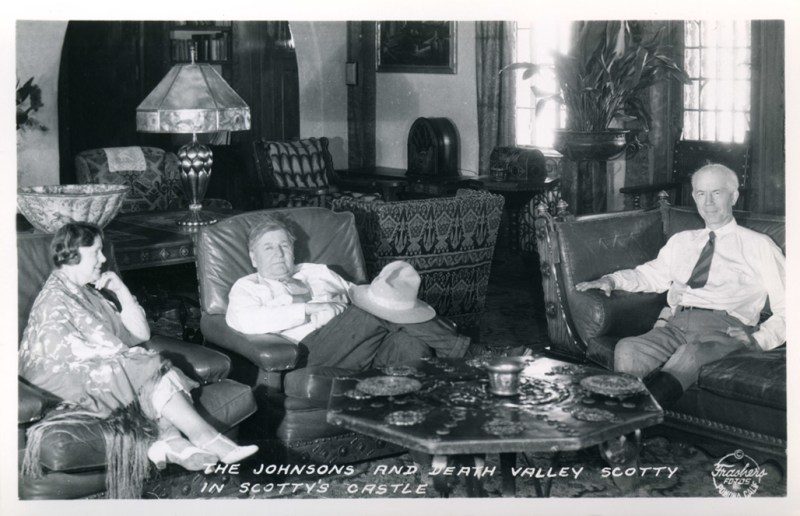
Walter Edward Perry Scott (1872–1954), famously dubbed “Death Valley Scotty,” was born in Cynthiana, Kentucky, and rose to prominence as one of the American West’s most colorful con artists. Scotty began his career as a performer in Buffalo Bill’s Wild West Show in the 1890s, where he honed his skills in showmanship and tall tales. By the early 1900s, he had relocated to California and began promoting himself as a wealthy gold prospector with secret mines in Death Valley, often flashing rolls of cash (later revealed to be “upholstered” with newspaper) to lure investors. His schemes involved “grubstakers”—investors who funded his expeditions in exchange for shares in supposed riches. Scotty’s charisma and exaggerated stories attracted figures like Chicago businessmen Albert M. Johnson and Edward A. Shedd, who invested $2,500 for a two-thirds stake in his fictional mine. However, as investors demanded proof, Scotty’s deceptions escalated, leading to elaborate hoaxes to maintain the illusion. His persona became synonymous with Death Valley, and he later lived at the opulent Scotty’s Castle (built by Johnson), perpetuating myths of hidden wealth until his death.

Events Leading Up to the “Battle”

Newspaper cartoon of "Death Valley Scotty", around 1905
Newspaper cartoon of “Death Valley Scotty”, around 1905

By early 1906, Scotty’s investors were growing suspicious. New England mining promoter A.Y. Pearl had introduced Scotty to Eastern bankers and businessmen eager to inspect his claimed gold properties in Death Valley. They insisted on an evaluation by Daniel E. Owen, a reputable Boston mining engineer based in Nevada. Fearing exposure—since Scotty had no real mine—he persuaded his associate Bill Keys (a prospector and half-Cherokee Indian) to allow the group to view Keys’ modest Desert Hound Mine as a stand-in. Still anxious that Owen would deem it unworthy, Scotty hatched a plan for a staged ambush to make the area seem too dangerous for further exploration.

On February 23, 1906, the party departed from Daggett, California, equipped with two wagons, mules, horses, provisions, and whiskey. The group included Scotty, Owen, Pearl, Albert M. Johnson (president of the National Life Insurance Company of Chicago), Scotty’s brothers Bill and Warner Scott, Bill Keys, A.W. DeLyle St. Clair (a Los Angeles miner), and Jack Brody (a local desert character). Keys and Brody were sent ahead to prepare the ambush, possibly with help from an Indian named Bob Belt. The party camped at Granite Wells on February 24 and proceeded toward Lone Willow Spring the next day, leaving Bill Scott behind to guard extra animals.

Description of the “Battle”

The hoax unfolded on February 25, 1906, as the group approached Wingate Pass near Dry Lake. Shots rang out from behind stone breastworks (five of which still exist today as historical remnants), simulating an attack by claim jumpers or bandits. An ex-deputy sheriff from Goldfield, Nevada, reported being ambushed earlier, causing his pack train to stampede, adding to the chaos. Scotty fired two warning shots, startling the mules and tipping Owen from his wagon. Then, a rifle shot from the hidden assailants struck Warner Scott in the groin, an accidental injury likely due to the ambushers’ drunkenness (possibly Bob Belt). Scotty galloped toward the “attackers,” yelling for them to stop, which inadvertently exposed the ruse to the suspicious Owen.

The “battle” was brief and one-sided, with no return fire from the party. Panic ensued, and the group retreated hastily to Daggett, abandoning provisions in the desert. Warner was rushed to Los Angeles for medical treatment, where he survived after surgery. The staged nature became evident through Scotty’s over-the-top reaction and the lack of pursuit by the “ambushers.” The event involved real bullets, turning a planned scare tactic into a near-tragedy due to poor execution.

Death Valley Scotty and the Johnsons

Immediate Events Following the “Battle” (Late February to March 1906)

The group’s return to civilization sparked immediate chaos. Los Angeles newspapers sensationalized the story, with Pearl initially claiming it was a genuine fight against four outlaws who were “claim jumpers” guarding Scotty’s mine. However, Owen, suspecting foul play, reported the true details to the San Bernardino County sheriff and the press, asserting that Scotty had orchestrated the ambush in an attempt to kill him and cover up the fraud. This led to a public unraveling of the hoax, as investors like Johnson realized they had been duped—though Johnson would later reconcile with Scotty and fund the construction of Scotty’s Castle in Death Valley.

The sheriff’s investigation uncovered incriminating evidence: abandoned provisions at Scotty’s “Camp Holdout” and a witness statement from the Nevada lawman who spotted Keys fleeing the scene. Media coverage intensified, portraying Scotty as a swindler and the “battle” as a farce. Scotty, ever the showman, initially denied involvement but soon faced mounting pressure.

Court Actions and Legal Proceedings (March to April 1906)

The legal fallout began swiftly. On March 14, 1906, just over two weeks after the incident, the San Bernardino County District Attorney issued arrest warrants for Scotty, Bill Keys, and Jack Brody on charges of assault with a deadly weapon. Scotty was arrested in Seattle on March 24 and released on $500 bail. He was rearrested two days later on March 26 but again released. On April 7, Scotty pleaded not guilty to two counts of assault in San Bernardino County Court and was freed on $2,000 bail.

Meanwhile, Warner Scott, seeking compensation for his injury, filed a civil lawsuit on or around April 1906 in Los Angeles County Court against Walter Scott, Bill Scott, Bill Keys, A.Y. Pearl, and a “John Doe” (likely Brody or another accomplice). The suit demanded $152,000 in damages for his wounds and related suffering.

Keys was apprehended on April 10 at Ballarat, a mining camp near Death Valley, and pleaded not guilty before being jailed in San Bernardino. On April 13, Scotty, Pearl, and Bill Scott were arrested once more and briefly jailed in San Bernardino. However, they were released the next day after a successful habeas corpus petition challenged their detention.

The cases collapsed on April 27, 1906, when all criminal charges were dismissed by the San Bernardino County Court due to a jurisdictional error: the “battle” had occurred in Inyo County, not San Bernardino County. Inyo County authorities declined to pursue the matter, possibly due to lack of evidence or interest. Scotty later boasted that he had moved a county boundary marker to create this confusion, though this claim remains unverified.

Warner eventually agreed to drop his damage suit on the condition that Scotty pay over $1,000 in medical bills owed to Dr. C.W. Lawton in Los Angeles. Scotty consented but never paid, leading to a default judgment against him—though he had no attachable assets at the time. This unresolved debt would resurface years later, culminating in Scotty’s 1912 contempt-of-court jailing and public confession to the hoax, but the immediate 1906 proceedings ended without convictions.

Broader Implications and Legacy

The “Battle” of Wingate Pass marked a turning point in Scotty’s career, exposing his deceptions to a wider audience and costing him most investors—except Johnson, who ironically became his lifelong patron. The event highlighted the lawlessness of the California desert frontier, where jurisdictional ambiguities often allowed scams to evade justice. While no one was ultimately prosecuted in 1906, the hoax cemented Scotty’s legend as a colorful charlatan, and Wingate Pass remains a footnote in Death Valley lore.

Participants of the Battle

Albert Mussey Johnson

 Albert Mussey Johnson – Death Valley Ranch Owner

Albert Mussey Johnson Albert Mussey Johnson (1872 - 1948) was a businessman and investor who received notoriety as the millionaire, who built “Scotty's Castle” in…
Walter Scott (1872 - 1954)

Walter Edward Perry Scott – “Death Valley Scotty”

Walter Edward Perry Scott  (September 20, 1872 – January 5, 1954), also known as "Death Valley Scotty", was a miner, prospector and conman who operated…

Warner Elmore Scott

Warner Elmore Scott (1865–1950) was a Kentucky native from a horse farming family who became entangled in his brother Walter "Death Valley Scotty" Scott's infamous…
William F. Keys reenacts the scene of the fatal shooting of Worth Bagley - Photo NPS

William Franklin Keys

William Franklin Keys (September 27, 1879–1969) was a rugged American frontiersman, rancher, and miner who became a notable figure in the history of the Mojave…

Big Pine Canyon Group – Inyo National Forest

Big Pine Canyon Group Campground (also known as Big Pine Canyon Recreation Area group sites) is a scenic group camping destination in Inyo National Forest, near Big Pine, California. It sits at approximately 7,500–7,700 feet elevation in the dramatic Big Pine Canyon along Big Pine Creek in the Eastern Sierra Nevada.

The area is renowned for its stunning alpine scenery, including views of the Palisade Glacier and Clyde Glacier—the southernmost and among the largest glaciers in the Sierra Nevada. The two group campsites, Clyde Glacier Group Site and Palisade Glacier Group Site, are named after these glaciers and offer a peaceful, nature-immersed base for larger gatherings. The sites are located along Big Pine Creek, just above Upper Sage Flat Campground, about 9 miles up Glacier Lodge Road from Big Pine.

This location serves as an excellent trailhead for adventures into the John Muir Wilderness and provides a serene setting surrounded by Jeffrey pine, aspen, cottonwood, and sagebrush. It is seasonal (typically open late spring through fall, weather-dependent) and ideal for those seeking a rustic mountain experience with access to high-country hiking, climbing, and fishing.

Amenities

  • Clyde Glacier Group Site: Accommodates up to 25 people. Features paved parking for 2 vehicles up to 35 feet and 6 vehicles up to 20 feet. Includes multiple camping areas, campfire rings, grills, and picnic tables.
  • Palisade Glacier Group Site: Accommodates up to 25 people. Tent camping only, with paved parking for up to 5 vehicles (max 20 feet). Also includes campfire rings, grills, and tables.
  • Shared facilities in the recreation area: Vault toilets, potable drinking water, bear-proof food lockers, and trash service.
  • No hookups or electrical sites; no cell service.
  • Reservations are required/recommended through Recreation.gov; fees are around $90 per night for group sites.

Activities

  • Hiking and Backpacking — Excellent access to trails leading to the Big Pine Lakes, Palisade Glacier, and high alpine meadows. Popular routes include the Big Pine Creek North Fork Trail.
  • Fishing — Big Pine Creek offers good trout fishing (rainbow, brown, and brook trout). Nearby lakes also provide opportunities.
  • Climbing — The steep, glacier-carved canyon walls attract rock climbers.
  • Horseback Riding — Equestrian trails are available in the area.
  • Wildlife Viewing, Bird Watching, and Photography — Prime for observing nature in a beautiful mountain setting.
  • Picnicking, Stargazing, and Nature Exploration — Mountain biking on suitable trails and relaxing by the creek are also popular.

Wildlife in the Area

The Eastern Sierra Nevada around Big Pine Canyon supports diverse wildlife typical of the region:

  • Mammals: Mule deer (commonly seen), black bears (food storage required), coyotes, bobcats, marmots, and possibly mountain lions or Sierra Nevada bighorn sheep in the higher rugged terrain.
  • Birds: Various songbirds, raptors (including golden eagles), and species like mountain quail or chickadees.
  • Fish: Rainbow trout, brown trout, brook trout (and occasionally golden trout in higher waters).
  • Other: Smaller mammals like squirrels, chipmunks, and pikas in higher elevations. Be cautious of bears and follow proper food storage protocols.

The area is part of a beautiful, ecologically rich zone with potential for encounters with iconic Sierra wildlife, though many species are elusive. Always practice Leave No Trace principles and respect wildlife distances.

Big Pine Canyon Group sites offer a fantastic base for group adventures in one of California’s most majestic mountain landscapes. Check Recreation.gov or the Inyo National Forest website for current conditions, reservations, and seasonal closures (it is often closed in winter).

Onion Valley Campground – Inyo National Forest

Onion Valley Campground is a scenic, high-elevation campground in the Inyo National Forest, located in the eastern Sierra Nevada Mountains near Independence, California.

At approximately 9,200 feet (about 2,800 meters) in elevation, it offers a pristine alpine setting tucked near the end of Onion Valley Road. The campground sits alongside a creek (Independence Creek), surrounded by lodgepole pines, aspens, rugged granite peaks, wildflower meadows in early summer, and nearby waterfalls.

Its proximity to the John Muir Wilderness and the Kearsarge Pass Trailhead (just ¼ mile away) makes it a popular basecamp for backpackers, hikers, and those seeking solitude in one of California’s most dramatic mountain landscapes. The campground typically operates from mid-May to mid-October, depending on snow conditions.

Detailed Amenities

Onion Valley Campground has 29–30 single-family campsites (some sources list slight variations), which are generally private with scenic views. Key amenities include:

  • Campsites: Picnic tables and fire rings/grills at each site. Sites can accommodate tents and smaller RVs/trailers (up to about 25–30 feet).
  • Bear Safety: Mandatory bear-proof food storage lockers at every site due to high bear activity. Bear-proof trash receptacles are also provided.
  • Restrooms: Vault toilets (no flush toilets or showers).
  • Water: Potable water is available in some descriptions, though official Forest Service info often notes it may not be (confirm current status when reserving).
  • Firewood: Available for sale in the campground.
  • Other: No hookups, no dump station, no cell service. Campsites are primitive but well-maintained.

Reservations are recommended and can be made through Recreation.gov, especially during peak summer months.

Activities

The area is ideal for outdoor enthusiasts:

  • Hiking & Backpacking — Primary draw. The Kearsarge Pass Trail leads into the John Muir Wilderness and connects to the Pacific Crest Trail. Popular destinations include Robinson Lake, Gilbert Lake, Flower Lake, and beyond to Kings Canyon/Sequoia areas. Day hikes and multi-day trips are common.
  • Fishing — Excellent trout fishing (rainbow, brown, brook, and others) in nearby Independence Creek, Robinson Lake, and other alpine lakes.
  • Wildlife Viewing & Photography — Stunning mountain scenery, wildflowers, waterfalls, and dark skies for stargazing.
  • Horseback Riding — Equestrian-friendly trails in the area.
  • Other — Nature viewing, relaxing by the creek, mountain biking (on select routes), and exploring the surrounding Sierra Nevada landscape.

Wildlife in the Area

The high Sierra environment supports diverse wildlife. Campers should practice proper food storage and bear awareness.

  • Mammals: Black bears (frequent visitors—use lockers!), mule deer, mountain lions (rarely seen), pine martens, and pikas (cute, rabbit-like animals common in rocky talus slopes).
  • Birds: Various species typical of alpine and subalpine forests.
  • Fish: Trout in streams and lakes.
  • Other: Occasional smaller mammals and reptiles; wildflowers attract pollinators in summer.

Tips: Bring layers for cool nights even in summer, prepare for afternoon thunderstorms, and follow Leave No Trace principles. The drive up Onion Valley Road is steep and winding but offers beautiful views.

This campground provides a peaceful, immersive high-country experience perfect for nature lovers and adventurers. Always check Recreation.gov or the Inyo National Forest website for current conditions, fees, and alerts before your trip.

Grays Meadows Campground

Grays Meadows Campground (often referred to as part of the Grays Meadows complex) is a scenic campground in Inyo National Forest, located in the Onion Valley area of the eastern Sierra Nevada Mountains.

It sits at an elevation of about 6,100 feet along Independence Creek, roughly 6 miles west of the small town of Independence, California. The campground offers a beautiful mix of sunny and shaded sites in a high-desert landscape dominated by oak groves, with the dramatic peaks of Mt. Williamson and Mt. Whitney (the highest in the contiguous U.S.) providing stunning backdrops.

Lower Grays Meadows features 52 campsites (the overall Grays Meadows complex includes an adjacent Upper section with additional sites). It is popular with hikers, anglers, and those seeking a peaceful base for exploring the nearby John Muir Wilderness. The campground typically operates seasonally from late April through mid-October, though dates can vary with weather.

Amenities

  • Campsites: Individual sites with picnic tables, fire rings/grills, and bear-proof food storage lockers (essential due to frequent bear activity).
  • Restrooms: Vault toilets (generally kept clean by camp hosts).
  • Water: Potable water available seasonally (confirm current status before visiting).
  • Other: Camp hosts on-site, firewood for purchase, and parking for vehicles (most sites accommodate smaller RVs or trailers up to about 40 feet; not ideal for large RVs). No showers, hookups, or dump stations.
  • Pets are allowed (two per site, must be leashed).
  • Some sites are reservable via Recreation.gov; others may be first-come, first-served.

Activities

  • Fishing — Independence Creek is regularly stocked with trophy-size rainbow trout. The early trout season (starting in March) is a big draw.
  • Hiking & Backpacking — Excellent access to trails into the John Muir Wilderness. The challenging Shepherd Pass Trail (leading to alpine lakes and high peaks) is nearby. Other options include day hikes and longer backpacking trips.
  • Wildlife Viewing & Nature Appreciation — Abundant opportunities to observe local animals and birds.
  • Other — Picnicking, photography, mountain biking (on certain roads/trails), and relaxing by the creek. In spring, it can serve as a base for skiers and snowboarders accessing higher terrain.

Wildlife in the Area

The eastern Sierra location supports diverse wildlife:

  • Mammals — Black bears (common; proper food storage is mandatory), mule deer, mountain lions, pine marten, and pika.
  • Birds — Numerous species typical of the Sierra Nevada and high-desert transition zone.
  • Fish — Rainbow trout in Independence Creek, plus other native and stocked species.
  • Other — Occasional sightings of smaller mammals and reptiles. Raccoons are also reported by campers.

Bear safety is emphasized: always use provided lockers, keep a clean camp, and never leave food unattended.

This campground is ideal for those who enjoy a semi-primitive experience with easy access to town (Independence is about 15 minutes away) while being immersed in dramatic mountain scenery. Reservations are highly recommended during peak summer months. Always check Recreation.gov or the Inyo National Forest website for current conditions, fire restrictions, and availability.