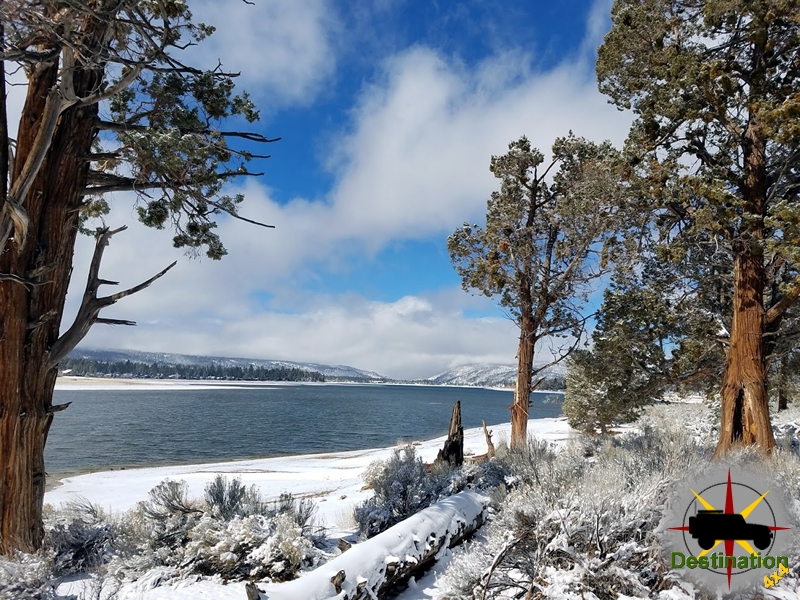
Big Bear, CA
I quiet mountain community full of back country adventure.
The Journey is the destination
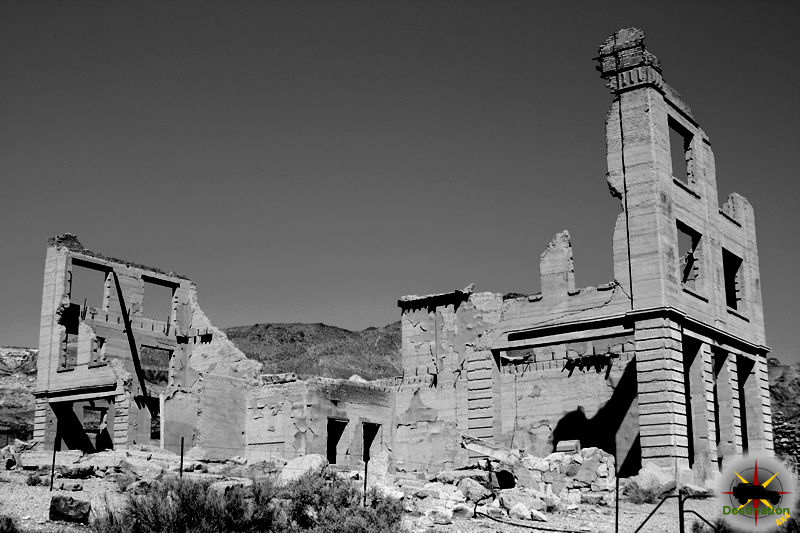
Charleston, Arizona, now a ghost town in Cochise County, was a short-lived but vibrant settlement in the Arizona Territory from the late 1870s to the late 1880s. Situated on the west bank of the San Pedro River, approximately 9 miles southwest of Tombstone, Charleston thrived as a milling and residential hub for workers processing silver ore from Tombstone’s prolific mines. Its economy, culture, and notoriety were shaped by its proximity to the silver boom, its lawless reputation, and its association with infamous figures like the Clanton family and other outlaws. This report explores Charleston’s founding, development, decline, and lasting legacy, drawing on historical accounts and archaeological insights.

Charleston was founded in 1878 to support the milling operations of Tombstone’s silver mines, which lacked sufficient water for ore processing. On October 28, 1878, Amos Stowe claimed 160 acres on the west bank of the San Pedro River, opposite the milling site of Millville, where two stamp mills were constructed to process silver ore. Stowe’s strategic claim capitalized on the need for a residential and commercial center for mill workers. He laid out the town in a grid of 26 blocks with 16 lots each, implementing an attractive leasing system that drew businesses rapidly. By May 1879, Charleston boasted about 40 buildings, including a post office established on April 17, 1879, named after its first postmaster, Charles D..
Millville, on the east bank, was purely functional, with the Tombstone Mining and Milling Company’s 10- and 20-stamp mills powered by the San Pedro’s water. Charleston, however, became the social and economic hub, housing workers and their families. The 1880 U.S. Census recorded a population of 350, though estimates suggest it peaked at over 400 during its busiest period. The town featured four general stores, a meat market, a drug store, two restaurants, two Chinese-operated laundries, Mrs. Hughes’ Boarding House, the Eagle and Royal Hotels, and between 13 and 15 saloons, reflecting its bustling, rough-and-tumble character.

Charleston’s economy was tethered to Tombstone’s silver production. Miners earned $4 per day, while mill workers and mechanics made $5 to $7, with the smallest currency in circulation being a quarter (“two bits”), as nickels were unknown. The mills processed a steady stream of ore, and the town’s prosperity attracted diverse residents, including stockmen, prospectors, and soldiers from nearby Fort Huachuca, who frequented Charleston’s saloons. The town’s adobe structures, described as utilitarian rather than ornamental, lined the riverbank alongside prospectors’ camps and Sonoran workers’ shacks.
Socially, Charleston was lively but volatile. The “crack of the revolver” was common, and coroner’s juries frequently convened to investigate shootings. The town’s nightlife featured the “dolorous chant” of Mexican workers and the braying of mules, dubbed “Arizona canaries.” Saloons, including one owned by outlaw Frank Stilwell until he sold it to Jacob W. Swart in 1881, were central to the town’s culture. Ike Clanton operated an early canvas “hotel,” one of the first boarding houses, underscoring the Clanton family’s influence.
Charleston earned a wild and lawless reputation, amplified by East Coast newspapers that sensationalized its violence. The Clanton Ranch, located 5 miles south and operated by Newman “Old Man” Clanton and his sons John, Phin, Ike, and Billy, was a hub for notorious figures, including Johnny Ringo, “Curly Bill” Brocius, Pete Spence, and Frank and Tom McLaury. These men, linked to cattle rustling and stagecoach robberies, frequented Charleston, cementing its image as a “nest of outlaws”.
Despite its reputation, Charleston never experienced a successful robbery of silver or money, a testament to the vigilance of mill security. However, a notable incident occurred on March 25, 1882, in Millville, when outlaws Zwing Hunt and Billy Grounds attempted to rob the Tombstone Mining Company, killing mining engineer M. Robert Peel. The bandits fled, leaving a white Stetson and boot prints that identified them. Hunt later escaped custody with help from his brother Hugh but was killed by Apaches in the Chiricahua Mountains.
Justice in Charleston was idiosyncratic, embodied by Justice of the Peace Jim Burnett, who ran his court with unchecked authority. Burnett imposed eclectic fines—cash, cattle, or even nine cords of wood for theft—pocketing the proceeds. In one case, he fined saloon owner Jacob Swart $1,000 for a fatal shooting, reinforcing his role as Charleston’s de facto dictator. Burnett’s methods, while corrupt, maintained a semblance of order until the town’s decline. He later served as Justice of the Peace in Pearce but was killed in Tombstone in 1897 by rancher William Greene, who falsely believed Burnett caused his daughter’s death by blowing up a dam.
Charleston’s fate was tied to Tombstone’s silver mines, which began flooding in the mid-1880s, reducing ore production. A miners’ strike in 1884 further disrupted operations, and by 1885–1886, parts of the mills were dismantled and relocated to Tombstone to cut shipping costs. The Sonoran Earthquake of May 3, 1887, measuring 7.6 on the Richter scale, devastated Charleston, leaving most adobe structures in ruins. By October 24, 1888, the post office closed, and by 1889, both Charleston and Millville were ghost towns.
In the 1890s, Mexican immigrants briefly occupied Charleston, using wooden structures for kindling, hastening the town’s decay. During World War II, Fort Huachuca soldiers used the site, dubbed “Little Tunisia” for its resemblance to North African terrain, for urban combat training with live ammunition, further damaging the ruins. Erosion from the San Pedro River also ate away at the adobe foundations, leaving only scattered remnants.
Today, Charleston is part of the San Pedro Riparian National Conservation Area, managed by the Bureau of Land Management (BLM), which protects its archaeological remains. Accessible only by hiking a ¾-mile trail from East Charleston Road, the site consists of adobe fragments and stone foundations hidden among mesquite and thorny brush. The Friends of the San Pedro River offer guided tours, highlighting Charleston’s role in Arizona’s mining history.
Charleston’s legacy endures as a symbol of the Arizona Territory’s volatile boom-and-bust cycle. Its association with the Clantons and other outlaws ties it to the lore of Tombstone and the Gunfight at the O.K. Corral. Historians like Thomas E. Sheridan, in Arizona: A History, contextualize Charleston within the broader narrative of the American West, where mining towns shaped economic and cultural landscapes before fading into obscurity. The town’s ruins, though sparse, evoke the rugged spirit of a frontier defined by opportunity and lawlessness.
Charleston, Arizona, was a fleeting but significant chapter in the American West, born from Tombstone’s silver boom and extinguished by its decline. Its role as a milling and social hub, its infamous residents, and its rapid rise and fall encapsulate the transient nature of frontier towns. While little remains of Charleston today, its story—preserved in historical records and the sparse ruins along the San Pedro—offers a window into the economic, social, and cultural dynamics of Arizona’s territorial era. As a protected site, Charleston continues to draw historians, hikers, and adventurers seeking to uncover its hidden past.
| Name | Charleston, Arizona |
| Location | Cochise County, Arizona |
| Also Known As | Charleston Station |
| Latitude, Longitude | 31.6358, -110.1725 |
| Elevation | 1216 meters / 3990 feet |
| GNIS | 24360 |
| Population | 400 |
| Post Office | April 17, 1879 – October 24, 1888 |
Charleston is located about 9 miles southwest of Tombstone, Arizona. Charleston and Millville are not accessible by car and can only be reached by hiking up the San Pedro River. The Bureau of Land Management has begun maintaining trails to and from the area.
 Joseph Isaac ClantonJoseph Isaac Clanton, commonly knows as "Ike" Clanton was a notable figure in the American Old West, primarily recognized for his involvement in the notorious… |
 Newman Haynes ClantonNewman Haynes Clanton was a central figure in the tumultuous period of the American frontier, representing the complex interplay of law, crime, and social dynamics… |
 Robert Findley McLauryThe only known portrait photo of Frank McLaury of Tombstone. Robert Findley McLaury, known as Frank McLaury (1857–1881) was a notable figure in the American… |
 Thomas McLauryThomas McLaury of Tombstone in 1879 Tom McLaury, born as Thomas McLaury, was a key figure in the tumultuous environment of the American frontier during… |
 William BrociusWilliam "Curly Bill" Brocius William Brocius, better known as "Curly Bill" Brocius, was a notorious outlaw of the American Old Old West, born around 1845, though… |
Henry Wickenburg was a pioneering figure in the American mining industry during the mid-19th century. Known for his role in discovering the Vulture Mine, one of the richest gold mines in Arizona, Wickenburg’s tenacity, and entrepreneurial spirit left an indelible mark on the development of the region and a town which bears his name.

Henry Wickenburg was born on November 21, 1819, in the town of Crefeld, Prussia, in what is now Germany. Crefeld is known for coal mines, and he and his brother worked these mines as children. Following the reclamation of the families minueral rights on their land by the Prussian Government, In 1847, Henry Wickenburg arrived in the United States and settled in California during the height of the Gold Rush. He immediately recognized the potential for wealth and decided to try his luck in the goldfields. Wickenburg spent several years working as a miner, gaining experience and honing his skills in prospecting.

In 1862, Henry Wickenburg embarked on a journey that would change his life and the future of Arizona. He led an expedition into the Arizona Territory, hoping to find gold and silver deposits. It was during this expedition that Wickenburg stumbled upon what would later be known as the Vulture Mine, situated in the harsh and rugged terrain of the Vulture Mountains.
The Vulture Mine turned out to be an extraordinary find, with vast deposits of gold. Wickenburg quickly recognized its potential and staked his claim, sparking a gold rush in the region. His discovery attracted prospectors from far and wide, leading to the establishment of the town that would later bear his name, Wickenburg, as a center of mining activity.
Establishing and operating the Vulture Mine was not without its challenges. Wickenburg faced numerous obstacles, including hostile Native American tribes, harsh living conditions, and technical difficulties in extracting the gold. However, his determination and resourcefulness allowed him to overcome these hurdles and develop the mine into a prosperous operation.
The Vulture mine is named “the largest and richest gold in in Arizona.” In 1866, Wickenburg sold 80% interest in the mine the the sum of $85,000.00. A down payment is made in the amount of $20,000 with the balance being maintained with a promissory note. Following the sale, Wickenburg relocated and started a ranch near another town which bears his name.
The Vulture Mine suffered repeated problems caused by its remote location, poor financial standing and mismanagement. Despite being the largest gold mine in the territory, a title dispute caused Henry to be unable to collect on the promissory note.
On May 14th, 1905, Henry Wickenburg is found dead of the gun shot wound to the head. A coroners report ruled the death a suicide and that Henry “had melancholy due to old age”.

Subscribe to get access to the rest of this post and other subscriber-only content.
Junction House, located in what is now Reno, Nevada, holds a significant place in the state’s history as one of the earliest permanent settlements in the Truckee Meadows area. Established in the mid-19th century, it served as a critical crossroads for emigrants, miners, and travelers traversing major toll roads during Nevada’s formative years. This report explores the history, significance, and legacy of Junction House, drawing on historical records and accounts to provide a comprehensive overview.
By 1853, the intersection of several key routes in the Truckee Meadows was known as Junction House, marking it as the first permanent settlement in the region. The site was a natural convergence point for emigrants traveling westward from the eastern United States, particularly during the California Gold Rush and subsequent migrations. The Truckee Meadows, a fertile valley along the Truckee River, provided a vital resting point for travelers before they continued over the Sierra Nevada or toward other destinations.
Junction House emerged as a critical hub due to its strategic location at the crossroads of several major toll roads in the 1860s. These included:
These routes connected burgeoning mining communities, agricultural regions, and trade networks, making Junction House a bustling stopover for thousands of travelers, including emigrants, miners, and merchants.
Initially known as Junction House, the settlement was later referred to as Andersons, likely after a prominent local figure or property owner. It functioned as a stage station and rest stop, offering lodging, supplies, and services to travelers. The station was integral to the toll road system, which facilitated commerce and communication across Nevada and into California during the 1860s. The presence of Junction House supported the region’s growth as a transportation and economic hub, contributing to the development of nearby Reno.
The site’s importance was further underscored by its role in supporting the mining boom in nearby Virginia City, where the Comstock Lode attracted thousands of prospectors. The Geiger Road, in particular, linked Junction House to Virginia City, enabling the flow of goods and people to one of the richest silver mining districts in the United States. Similarly, the Henness Pass route connected Nevada to California, facilitating trade and migration.
In the late 1890s, Junction House came under the ownership of Governor John Sparks, a prominent Nevada politician and rancher who served as the state’s governor from 1903 to 1908. Sparks’ acquisition of the property reflects its continued relevance as a valuable piece of land in the growing region. More recently, the site was owned by cattleman William Moffat, indicating its transition from a transportation hub to a property used for agricultural purposes.
As transportation methods evolved and new infrastructure, such as railroads and modern highways, emerged, the importance of Junction House as a stage station diminished. By the 20th century, the settlement’s role as a crossroads faded, and its physical structures largely disappeared. Today, the historical significance of Junction House is commemorated by a Nevada Centennial Marker (No. 4), located on South Virginia Street near the main entrance to the Atlantis Casino Resort Spa in Reno.
It is important to distinguish the Junction House in Reno from other locations with the same name in Nevada. For example, another Junction House is noted in Nevada County, California, at an elevation of 4,363 feet, near the Washington USGS quad map. This site is unrelated to the Reno Junction House and is associated with different historical contexts, such as the Gold Rush-era roads in California. Additionally, a Junction House in Placer County, California, served as a hotel and stage station and was associated with notable figures like Mary Eulalie Shannon, California’s first woman poet, and the outlaw “Rattlesnake Dick.” These distinctions ensure clarity when discussing the Reno-based Junction House.
Junction House’s legacy lies in its role as a foundational settlement in the Truckee Meadows, contributing to the growth of Reno as a major city in Nevada. Its function as a crossroads facilitated the movement of people and goods during a transformative period in the American West, particularly during the mining booms of the 1860s. The site’s historical marker serves as a reminder of its importance, though its modern surroundings—large buildings and parking lots near the Atlantis Casino—make it less prominent to casual visitors.
The Nevada Historical Society and other regional organizations, such as the Nevada County Historical Society, continue to preserve and document the history of sites like Junction House through digitized records, photographs, and maps. These efforts ensure that the stories of early Nevada settlements remain accessible to future generations.
Junction House, Nevada, represents a pivotal chapter in the state’s history, serving as a vital crossroads for emigrants and miners in the 19th century. Its strategic location, role in supporting major toll roads, and later ownership by notable figures like Governor Sparks highlight its significance. While the physical remnants of Junction House have largely vanished, its story endures through historical markers and preservation efforts, offering insight into the rugged, dynamic history of Nevada’s Truckee Meadows.
Nevada State Historical Markers identify significant places of interest in Nevada’s history. The Nevada State Legislature started the program in 1967 to bring the state’s heritage to the public’s attention with on-site markers. These roadside markers bring attention to the places, people, and events that make up Nevada’s heritage. They are as diverse as the counties they are located within and range from the typical mining boom and bust town to the largest and most accessible petroglyph sites in Northern Nevada Budget cuts to the program caused the program to become dormant in 2009. Many of the markers are lost or damaged.
One of the busiest crossroads of pioneer Nevada converged at this point, serving many major toll roads of the area. The earliest emigrants from the east crossed through Truckee Meadows at this point, and by 1853, the intersection was known as Junction House, was the first permanent settlement in this valley and a stopping place for thousands.
Junction House, later called Andersons, was a station for toll roads of the 1860s including the turnpike to Washoe City, the Myron Lake Road to Oregon, the Geiger Road to Virginia City and the important Henness Pass route to California.
Governor Sparks bought the property in the late 1890s, and most recently it belonged to cattleman William Moffat.
CENTENNIAL MARKER No. 4
STATE HISTORIC PRESERVATION OFFICE
| Name | Junction House – The First Settlement |
| Location | Washoe County, Nevada |
| Latitiude, Longitude | 39.4884, -119.7943 |
| Nevada State Historic Marker No | 4 |
Founded in 1876, Tip Top Arizona is a old Silver Mining town and ghost town located in Yavapai County, Arizona. The town site is located west of Black Canyon City, in the southern foothills of the Bradshaw Mountains.

In the late 1870s, gold and silver were discovered in the Bradshaw Mountains, attracting prospectors and miners seeking their fortune. In 1876, the Tip Top Mining District was established by two men, Jack Moore and Bill Corning, and the town of Tip Top sprung up around it. Initially, nearby Gillett served as the milling town.
The district quickly gained a reputation for its rich ore deposits and attracted significant investment and development. The first mining claims were staked, and a stamp mill was constructed to process the ores. With the arrival of the railroad in nearby Phoenix, Tip Top saw an influx of miners, merchants, and entrepreneurs, leading to its rapid growth. A Post Office is established on August 12, 1880
During the boom times, Tip Top boasted six saloons, a brewery, two restaurants, a Chinese laundry, a feed yard, a blacksmith shop, a shoe store, and many residences. The Post Office is closed February 14, 1895.

During is heyday, the silver mines of Tip Top produced over $4,000,000 from its ore deposits.
| Name | Tip Top, Arizona |
| Location | Yavapai County, Arizona |
| Latitude, Longitude | 34.0508662, -112.2468296 |
| Elevation | 765 meters / 2510 feet |
| GNIS | 1669455 |
| Population | 1200 |
| Post Office | August 12, 1880 – February 14, 1895 |
According to Dangerous Roads the trail into Tip Top Arizona is closed and and the area is undergoing land changes. Other resources state that the road was closed in 2009.

