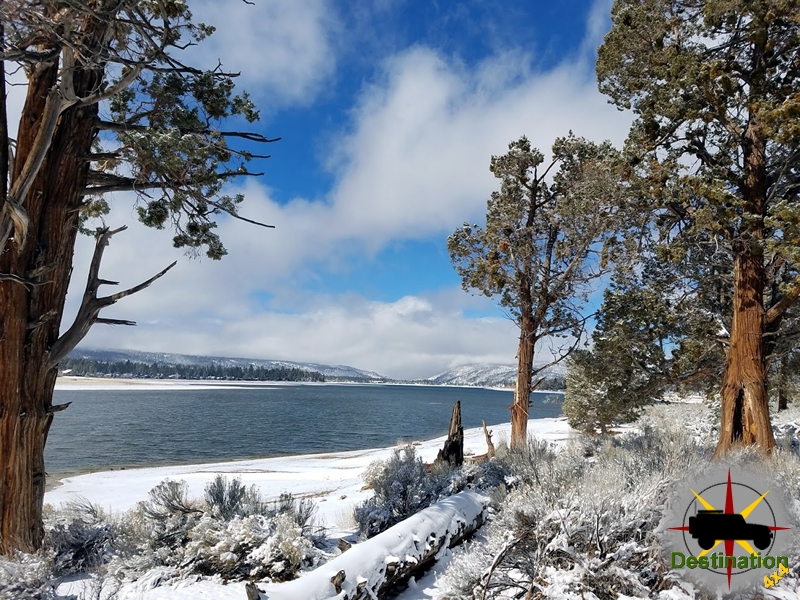
Big Bear, CA
I quiet mountain community full of back country adventure.
The Journey is the destination
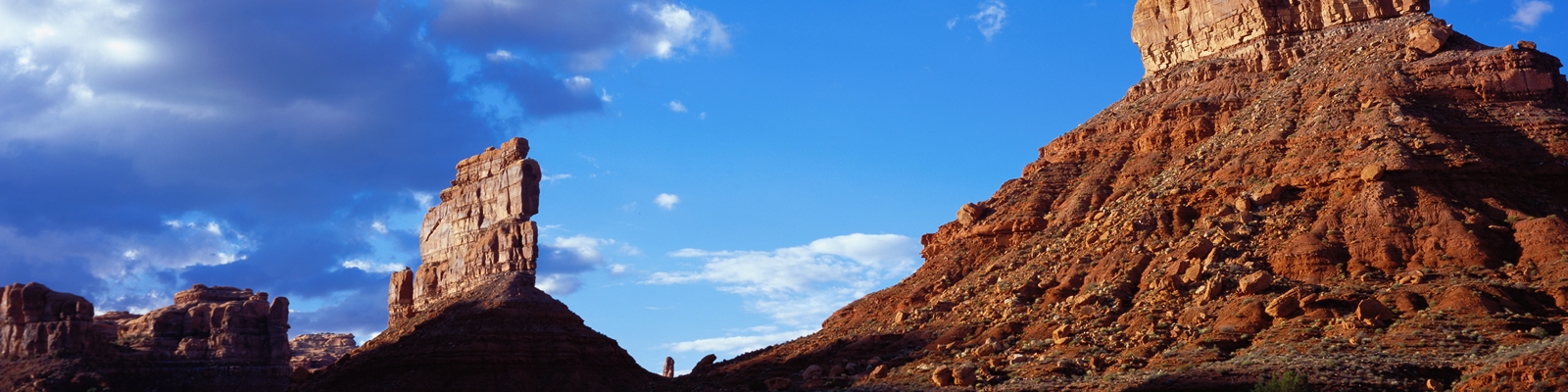
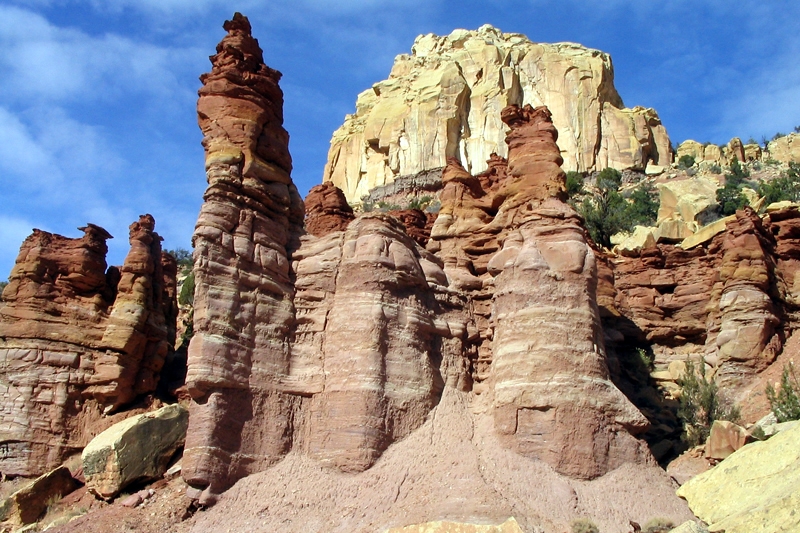
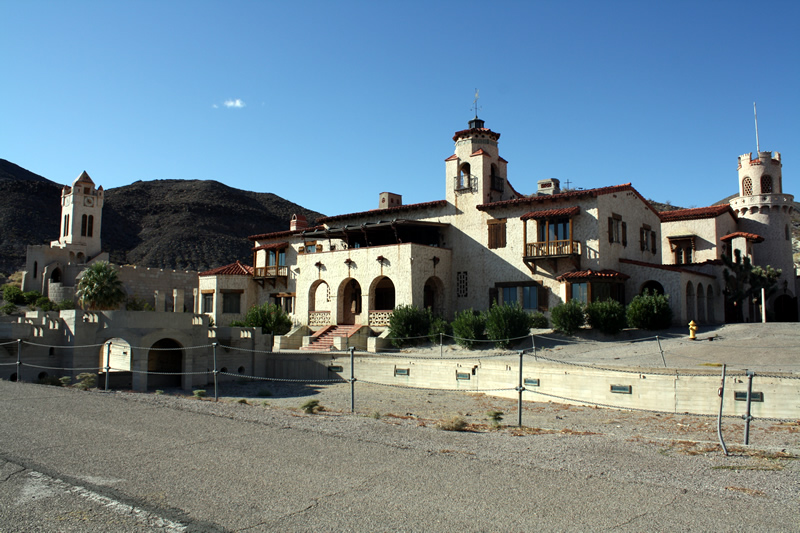
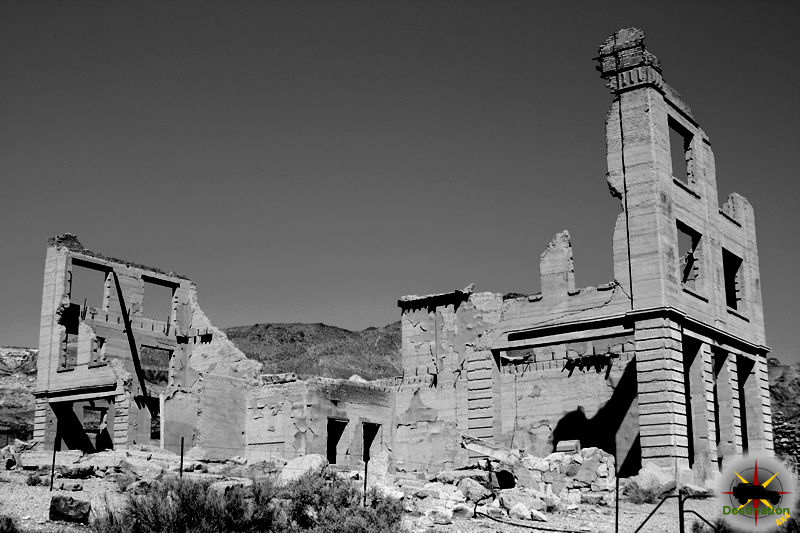
Potholes California is a former gold mining camp and ghost town located in Imperial County, California. The town is located on the western side of the Colorado River near the present day Laguna Dam. The location was first mined by Spanish Miners in 1871. These early workings and miners were lost during the Yuma War, 1850 – 1853.

From 1852 through 1909, Colorado Steamships ferried people and supplies up and down the Colorado River to mining camps and outposts. Following the discovery of gold in California, westward expansion of the United States was on the mind of most people seeking their fortune of livelihood. Wagon trains, horses and trains all brought people deep into the new county seeking their fortune. Lesser known is the role of the steamships, which brought supplies and people up the Colorado River from Baja California to the Green River in Wyoming.
There has been some little excitement in this part of the, country, caused by the discovery of new gold fields on the Rio Colorado, some fifteen miles above Fort Yuma, on the California side. I have just returned from the diggings, and find, after a careful examination of three days, that gold exists there in paying quantities, for many miles on both sides of the river. While at the newly discovered diggings, a considerable quantity of the oro has been taken out, considering the short time- they have been worked. From the claim of Messrs. Crandell & Co., $200 per day have been dug daily for the past six days. The manner of working is the same at at Jila city, heretofore described. The earth must be carried on the back a distance of one mile, and washed in a cradle. It is said that the total amount of the gold taken from Crandell & Co ‘s claim is about $4,000. – They have now constructed a cart-road from the mine to the river, and hereafter will be able to work at better advantage. Several other claims in the vicinity are paying from $10 to $16 per day; but most of the claims — for a good manner have been located — will not pay more than $2 per day to the hand, by the present process of working. If water could be obtained and sluice* used, from $40 to $100 per day might be washed. [We had news of these diggings in oar San Diego correspondence, published this morning, and the corroborating testimony of .our Fort Yuma correspondent is of much value, as confirmatory of the reports from San Diego. — Eds. Alta.]
I think, however, that the Gila mines are much more valuable, or will yield much more gold than these new diggings on the Colorado. Th« former have the advantage of being easily supplied with water, works for that purpose being now in progress.
Mining operations resumed again in 1859 with the rediscovery of gold. Placier mining operations proved successful in the 19th century. A steamship landing was established to ferry people and supplies to the location 15 miles up river from Yuma, Arizona.
The town of Potholes California was established during the building of the All American Canal and Laguna Dam.
Daily Alta California, Volume XI, Number 42, 12 February 1859
| Name | Potholes, California |
| Location | Imperial County, California |
| Latitude, Longitude | 32.8289329, -114.5046713 |
| Elevation | 160 feet |
| GNIS | 247730 |
| Post Office | 1905 – 1909, 1920 – 1922 |
In 1907, Gold was discovered at the town site which would be known as Nivloc Nevada by a Native American prospector. The town derived its name from for the former owners “Colvin” who operated the site in 1923. The name spelled backwards was Nivloc and such is the haste in the Nevadan desert.

The original mining operations were short lived. The town experienced a bit of a resurgence in the 1930s. The town never amounted to much boasting only one saloon. At its height of operation from 1940 to 1943 the town could claim a post office. Between 1937 and 1943 the small town produced between $2 and $3 million dollars of Gold and Silver. The 400,000 tons of ore was pulled from mines reaching depths 440 feet and 600 feet of below the surface. During this time, the mines of Nivloc ranked as Nevada’s number one silver producer.
We have not made a trip to Nivloc, however the townsite is very high on my ghost town “to do” list. There are several standing structures and buildings intact. The mine headframe is still standing at and a rail trestle bridge which is one hundred and twenty feet in length and forty feet tall.
| Town | Nivloc, Nevada |
| Location | Esmeralda County, Nevada |
| Latitude, Longitude | 37.71583, -117.75722 |
| Elevation | 6,170 feet |
| GNIS | 851592 |
| Post Office | October 1940 to November 1943 |
Charles Milles Maddox AKA Charlie Manson was a serial killer and most of the bad parts of the Old Testament sort of criminal. He briefly lived in the Panamint Mountains on the western edge of Death Valley National Park.

As a preface, I would like to say that I have been extremely reluctant to include Maddox on my website. I do not wish to glorify him in anyway. Growing up in the 1970s, just a few miles from the La Bianca house, I can not remember when I first heard of Manson. Our family loved the 395 highway and knew some law enforcement officers in Lone Pine, Inyo County.
Most books and movies of Manson tend correctly focas on the Tate-La Bianca murders. In summary, Manson, a career criminal, is release from prison. He meets young women and uses the girls to attack young men with sex a drugs. Over the coarse of about two years, he forms them in a cult of followers who live at Spahn movie ranch.. On August 9th and 10th, 1969, Manson orders these followers to slaughter 7 people in their homes.
After the murders, the family cult moves to Barker Ranch in Goler Wash, in Death Valley. It is here that he is captured for vandalizing some earth moving equipment and auto theft. Once captured, he is connected to the murders in Los Angles, tried and convicted by Vincent Bug

Mansons original destination is the Myers Ranch in the Panamint Range. In October, 1968, he started to look for a desert location to move his “brood”. He choose the desert because “Out there, things aren’t so crazy”. (Ironic) One of his followers is Cathy (Cappy) Gilles is a grand daughter of Bill and Barbara Myers. “Cappy” obtained permission from the family matriarch for her and some girls to come up and stay at the ranch. One can not help to wonder if the true purpose of moving them to the Panamint mountains is to further isolate his followers from society.
Additionally, Manson supposedly discussed operating out of Barker Ranch with the owner Arlene. He convinced her he was a musician working on a record and would maintain the property for her. He gave her a Beach Boys gold album in payment, which would undoubtably prove his claims of being a musician. Between 40 acres at Myers Ranch and 5 acres at Barker, he had control over 45 acres of property in the sparsely populated Panamint Mountains.
The family stayed in Goler Wash from October 1968 to about January 1969. The family of nineteen people travelled using a school bus to the mouth of Goler wash, and would hike in with supplies up the ranch house. During this time, they made regular trips back down to Los Angeles or over to Las Vegas. The family would regularly shop for supplies in Ballarat which still had a small population and general store.
In the winter months of 1969, Manson and his followers returned to Los Angeles. They stayed at several other locations beside the infamous Spahn movie ranch. During this time, they continued to steal cars, deal drugs, probably prostitution and all in all anything to make money and “acquire” supplies.

After the Tate-La Bianca murder in August of 1969, Charles Milles Maddox and his cult travelled back up to Goler Wash. This time he setup operations around Barker Ranch. Paul Watkins was a former follower who left the family before the murders. His book is fascinating.
Prior to Charlies arrival, Watkins and some prospectors where living at Barker Ranch. Watkins received guidance from a prospector named Crockett who helped Watkins leave the family. Manson knew of Crockett’s influence over Watkins and recognize an adversary. Upon his arrival, Manson asked permission to enter the area. As Watkins et al where living in Barker Ranch, the Manson Cult moved into the Myers Ranch.
Over the next few weeks, Charlie Manson continued his mental downward spiral. At the time, the neighbors at Barker Ranch knew Charlie was dangerous, however did not know about his guilt in the Los Angeles Murders. Crockett would have philosophical conversations and push the boundaries of Manson. This prompted the unstable Manson to come visiting the occupants at Barker ranch in the middle of the night. On at least two attempts he was caught trying to sneak into the ranch house while the occupants slept. He was greeted with the muzzle of a shotgun and left into the night.
Manson is said to have driven around the area of the Panamint mountains and Death Valley looking for a hole in the earth. These excursions opened the door into the capture of the psychopath. During this time he continued to prepare for a racial war he thought was coming.

The beginning of the end for Manson started with a report of a fire on a Michigan front loader out at Racetrack valley. The front loader was moved to the playa in Race Track Valley to repair damage to the playa surface by off-roaders. On September 19th, 1969, Manson ordered the some family members to burn the machine because he construed it to be the device of environmental damage. Oddly enough, it was there to repair environmental damage…. This decision by Manson set in place a series of events which led to his capture and a life time in jail.
Inyo County officials were extremely upset about the loss of their newly acquired $35,000 earth moving equipment. They quickly dispatch officers and launched an investigation.
Park Rangers arrived at the scene of the fire sometime later. They noted several tire tracks leading away from the fire. One set of tire tracks belonged to a Toyota Land Cruiser. Follow up investigation included reports of a Red Toyota Land Cruiser driving around in the area. It was reported this Red Land Cruiser is driven by some hippies who lived up at Barker Ranch.
On October 9th, CHP Officer Jim Pursell and Park Ranger Dick Powell drove up to Barker Ranch approaching from Mengel Pass. They ran into two of Mason’s girls and lacking evidence moved on down Goler Wash. In doing so, the came across Brooks Poston and Paul Crocket. When questioned why he was hauling supplies for the groupd Crocket replied, ‘‘I think my life might depend on it.’
The two men are instructed to return to Barker Ranch. On questioning about Manson, Brooks and Crocket told the two men about the families activity. According to Paul Watkins, Crocket left the ranch for fear of Manson was going to attract law enforcement. This event s probably because Crockett told law enforcement. Pursell noted that a VW was hidden beneath a purple nylon parachute beneath a trash heap. nd recorded the VIN number.
The two men left the ranch again and travelled down Goler Wash they stopped at a draw. Dick Powell started up the draw and was soon within a group of naked young women, one of who is Squeaky Fromme. Fromme claimed to be part of a girl scout troup from San Francisco and with no other evidence, the two officers continued down the valley.
Enroute to Trona, the two law enforcement officers found out over the radio that the car was stolen and a predawn raid is slated for the following morning. Looking forward to a long night, the two men hand dinner in Ballarat before parking at the mouth of Goler Wash.
The first raid took place on October 10th, 1969. Just before dawn, a small task force made up of officers from the California Highway Patrol, Inyo County Sheriff’s Department, and the National Parks Service maneuvered into position around Barker Ranch. The cult members had pilled rocks up along the road, which necessitated the officers travel on foot.
At first, it seemed the operation was a success. The task forced found several stolen cars and dune buggies. Weapons suchs a pistol, knives, food, gasoline, and other survivalist supplies confirmed that the cult was building a stronghold in the desert for the long haul. They arrested three men, ten girls, and two babies, one of them just a few weeks old. A count of the number of sleeping bags informed the task force they had not captured everyone involved.
On the evening of October 12, the small force of park rangers headed back to Barker Ranch. From an observation point, the witnessed four people walking towards the cabin and entering the building. One of the people is covered head to tow in a buck skin outfit and obviously the leader.
The task forced stormed the ranch with guns drawn. The ordered the occupants inside to raise their hands. They met no resistance. The man dressed buckskin is nowhere to be found.

Following the raid, Jim Pursell search for the buckskin man. He enters the bathroom where is sees a very small cabinet. The door is slightly open and he notices a few long hairs sticking out. In the failing evening light, armed with a candle and a .357 revolver, Pursell noticed some fingers wiggling inside.
Pursell later recounted “I put the candle way down, and this figure starts unwinding and coming out. How he got into that cupboard, I’ll never know. He’s not big. I’ve had a lot of people ask me, ‘Why didn’t you shoot the son of a bitch?’ But again, we really didn’t know what we had, and you can’t just shoot somebody that climbs out of a little cupboard, and says [cheerily], ‘Hi! I was pointing the gun at him and told him exactly what I wanted him to do, and what not to do. ‘Make one wrong move and I’ll blow your head off.’ I ask his name, and he said, simply, ‘Charlie Manson.’ Right off. I led him out to the guys outside”
The raid of October 12th lead to arrest of six males and three more females. All in all the bravery of the CHP, INYO Sheriffs and Park Rangers led to the apprehension, conviction and sentencing of one of the worlds most notorious people, Charles Milles Maddox. The cult or family that Manson started literally killed many and ruined the lives of hundreds of people. The story of Mansons life in the Panamint Mountains of Death Valley is more fascinating that the typical most people will understand and his activities in Death Valley are far larger than “Barker Ranch.”
 Ballarat California – Inyo County Ghost TownBallarat, California, is a near-ghost town and unincorporated community in Inyo County, located in the Panamint Valley at the base of the Panamint Range, west… |
 Barker RanchThomason/Barker Ranch is a five-acre property within Death Valley National Park. This historic site is located off of Goler Wash in the southern Panamint Range… |
 Myers RanchMyers Ranch is a privately owned ranch located in Goler Wash in the Panamint Mountains of Death Valley National Park, California. The forty acre ranch… |
 Racetrack ValleyTeaKettle Junction lets you know you are starting to get close to the Racetrack. Racetrack valley is a rough graded road which departs the Ubehebe… |
 Warm Springs RoadA short side trip from the Saline Valley Road to the Saline Valley Warm Springs in Death Valley National Park, California. The road is used… |
Gideon Roberts was a minor but notable figure in the legend of the Lost Dutchman Gold Mine, a fabled gold deposit hidden in Arizona’s Superstition Mountains. Little is known about his personal life, as historical records provide sparse details, and he is primarily referenced in connection to the events surrounding Jacob Waltz’s death in 1891.
The Lost Dutchman Gold Mine is a legendary treasure shrouded in mystery, believed to be hidden in the rugged Superstition Mountains of Arizona. The tale originates from Jacob Waltz, a German immigrant known as “the Dutchman,” who allegedly discovered a rich gold vein in the mid-19th century but took its precise location to his grave in 1891. Over the years, the mine has become a focal point of American folklore, with countless prospectors, adventurers, and treasure hunters scouring the treacherous terrain for clues, guided by vague maps, cryptic stories, and supposed landmarks like Weaver’s Needle. Despite extensive searches, no verified evidence of the mine’s existence has been found, leading some to dismiss it as a myth, while others believe it remains concealed, protected by the mountains’ harsh conditions and the secrecy of its original discoverer. The legend persists, fueled by tales of danger, betrayal, and untold riches.
Virtually no verifiable information exists about Gideon Roberts’ birth, upbringing, or early life. Some accounts suggest he was a Phoenix local and possibly a miner by trade, as he owned a lot in Phoenix near Julia Thomas’ property around 1891. One source indicates he hailed from Trinidad, Las Animas County, Colorado, and spent winters in Phoenix, but this lacks corroboration. His age is also unclear, though some narratives describe him as significantly older than his associate, Dick Holmes, and possibly closer in age to Jacob Waltz, who was around 80 at the time of his death.
Gideon Roberts is most prominently mentioned in connection to the deathbed scene of Jacob Waltz, the German immigrant known as “the Dutchman,” who allegedly discovered the mine. In October 1891, Waltz was gravely ill with pneumonia and was being cared for by Julia Thomas in Phoenix. According to accounts, Thomas left to find a doctor and encountered Roberts and Dick Holmes, a young prospector, on the street. She brought them to her home to watch over Waltz. That night, on October 25, 1891, Waltz reportedly shared the location of his mine and bequeathed a box containing 48 pounds of rich gold ore to Holmes, with Roberts present as a witness.
Roberts’ presence during this pivotal moment lends credibility to Holmes’ claim to the gold and the mine’s clues, as he corroborated Holmes’ story. However, unlike Holmes, who spent years searching for the mine, there is no definitive record of Roberts actively pursuing it himself. Some sources speculate he may have been too old or lacked the means to undertake such a quest.
Details about Gideon Roberts’ life after 1891 are scarce. It is generally reported that he died shortly after Waltz’s death, though no specific date or cause is provided in most accounts. This lack of information has led to speculation about his role and even his existence, with some modern researchers questioning whether he was a distinct individual or conflated with other figures in the legend. For example, one source references a “Gideon O. Roberds” (note the spelling variation) as a possible identity, but this remains unverified.
Roberts’ legacy is overshadowed by more prominent figures like Dick Holmes and Julia Thomas, and he is often omitted from detailed retellings of the Lost Dutchman story. His brief role as a witness to Waltz’s final moments remains his primary contribution to the legend, adding a layer of intrigue to the conflicting narratives surrounding the mine’s location.
The scarcity of information about Gideon Roberts reflects the broader challenges of the Lost Dutchman legend, which is riddled with contradictory accounts and unverifiable details. Most books on the subject focus on Waltz, Holmes, or later treasure hunters, leaving Roberts as a footnote. His fleeting presence underscores the elusive nature of the mine itself, which has captivated treasure hunters for over a century but remains undiscovered.
Mineral Park is a ghost town located in Mohave County Arizona founded in 1870. Once started, operations continued until 1912. The journey was tough just to them to get into the area due to the remove location. Prospectors would travel up the Colorado River by steamship and disembark in Hardyville which is overrun by modern Bullhead City, Arizona. Once offloaded, they would need to find their way north about 40 miles across the hot dry desert.
Today, the town site is now covered by a modern mining operation.

The post office was founded on December 31, 1872 and shortly after its formation the town was the county seat for Mohave County. Once mining operations came online, the little town supported a variety of businesses to service operations and the needs of its citizens including lawyers, doctors, blacksmiths, carpenters, hotels, assay offices, smelters saloons and dining halls.

The railroards helped boost activity for Mineral Park, when in 1883 rails were installed just 20 miles to the south by the “Atlantic and Pacific” Railroad. The new rail line shortened the distance to transport materials and ore to the location and reduced costs.
Operations continued until 1887 when mine production declined. The county seat was moved to nearby Kingman and the town failed completely in 1912.
The cemetery and some buildings are on private property of the modern mines operations and permission should be sought prior to exploration.
| Name | Mineral Park |
| Location | Mohave County, Arizona |
| Latitude, Longitude | 35.3708275, -114.1530103 |
| GNIS | 8104 |
| Elevation | 4,252 Feet |
| Post Office | December 31, 1872 – June 15, 1912 |
| Newspaper | The Mohave County Miner |