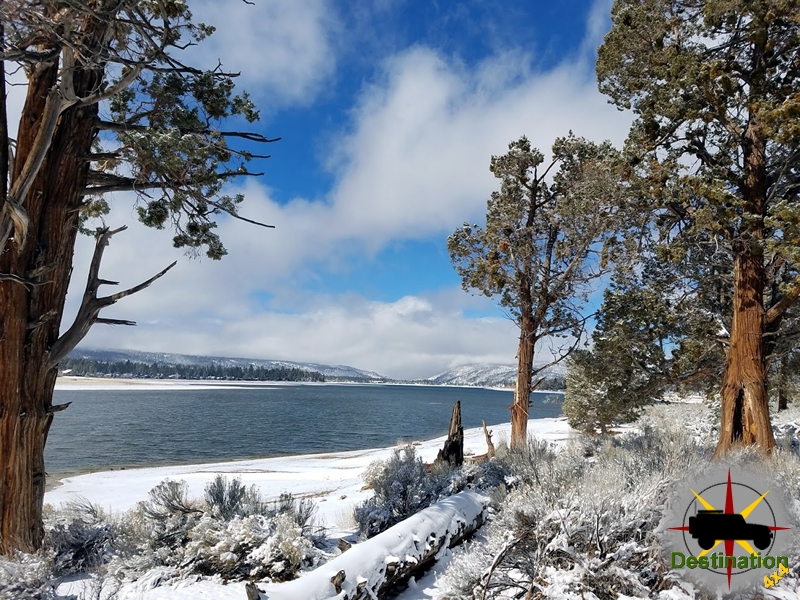
Big Bear, CA
I quiet mountain community full of back country adventure.
The Journey is the destination
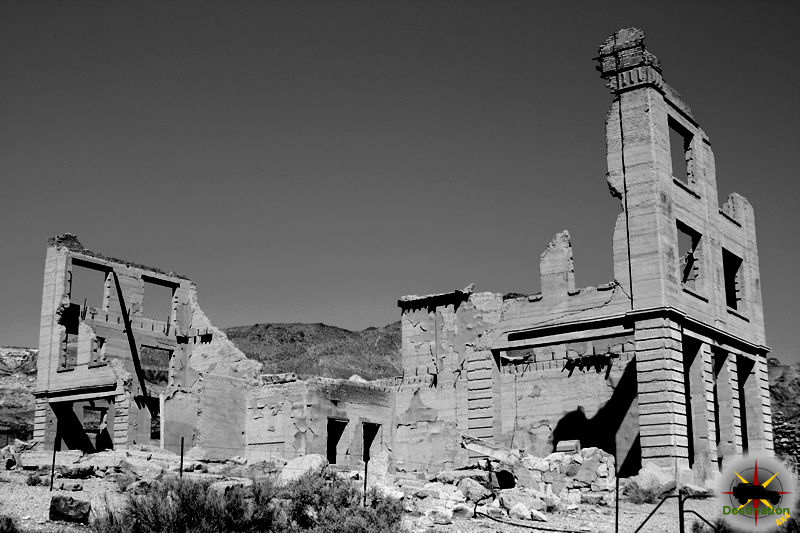
Gleeson is a classic semi-ghost town in southeastern Cochise County, Arizona, nestled on the southern slopes of the Dragoon Mountains at an elevation of approximately 4,924 feet. Located about 16 miles east of Tombstone along a dusty historic route, it exemplifies the rise and fall of Arizona’s mining communities in the late 19th and early 20th centuries. Today, with virtually no permanent downtown population (estimated at zero in recent counts, though a handful of residents and ranchers live nearby), Gleeson preserves its legacy through evocative ruins, a restored jail museum, and its prominent position on the Ghost Town Trail—a scenic driving loop that connects it with the nearby former boomtowns of Courtland and Pearce.

Long before Anglo settlement, the area was home to the Chiricahua Apache, who mined decorative turquoise from the hills for jewelry and trade. Navajo traders occasionally negotiated access to these deposits. After Geronimo’s surrender and the relocation or subduing of Apache bands in the 1880s, white prospectors moved in. The site was first known as Turquoise, with a post office operating from October 22, 1890, to September 17, 1894. Tiffany & Company of New York even operated a turquoise mine briefly, but the camp faded when richer gold strikes elsewhere (notably at Pearce’s Commonwealth Mine) drew miners away. The original Turquoise settlement sat a few miles uphill; it later relocated downhill nearer reliable water.
In 1900, Irish miner John Gleeson (from nearby Pearce) prospected the old Turquoise claims, discovered rich copper deposits, and patented the Copper Belle Mine. Other claims quickly followed: Silver Belle, Brother Jonathan (or Silver Bill), Pejon, and Defiance. The new camp officially became Gleeson when its post office opened on October 15, 1900. The town boomed as miners extracted copper, lead, silver, and zinc. Population swelled from about 500 (mostly mine workers) in the early years to over 1,000 at its peak in the 1910s–1920s, with some accounts noting up to 2,000 residents across a spread-out layout stretching north for over a mile.
A devastating fire on June 8, 1912, destroyed 28 buildings (starting at the B.A. Taylor warehouse), but the resilient community rebuilt using more durable adobe, brick, and concrete. Copper production surged during World War I to meet wartime demand. A railroad spur connected Gleeson to the Arizona & Colorado line by 1909 (abandoned in 1932). However, post-war copper price collapses, the Great Depression, and depleting ore bodies led to decline. Mines largely ceased by the late 1930s–1940 (some activity lingered until 1958). The post office closed permanently on March 31, 1939, and the school shut in 1945 (students bused to Tombstone). Gleeson faded into ghost-town status, though a few holdouts remained.
Notable events included numerous shootouts (including the last gunfight involving Cochise County Sheriff Harry Wheeler), bootlegging during Prohibition (the jail once stored confiscated whiskey), a 1938 filming of the Zane Grey adaptation The Mysterious Rider (using the jail in a lynch-mob scene), and colorful tales of bandits, con-men, and fugitive train robbers.
Gleeson’s surviving (or ruined) architecture vividly illustrates its mining heyday. Many structures are on private land—view respectfully from public roads or during open museum hours.

Southeast Arizona Ghost Town Visit Gleeson Down by the River Bed and Breakfast
These structures highlight the shift from makeshift wooden camps to more permanent concrete and adobe builds after the 1912 fire.

Gleeson’s residents were a diverse mix of miners, ranchers, merchants, and families. Founder John Gleeson (Irish immigrant) drove the copper boom before selling out in 1914. Charles M. Renaud operated key stores. Yee Wee, a Chinese restaurateur, ran a downtown eatery for decades and is buried in the cemetery. The Martinez family was the last to reside in “downtown” proper until around 2003; their tilting, multi-stage home lacked running water but hosted family reunions.
Joe Bono stands out as a living link to the past: born in Gleeson in 1948, a Vietnam veteran and Douglas High School graduate, he purchased much of the historic core (including the jail in 2014) to preserve it for his family and visitors. His father ran the family store/saloon; Joe maintains the museum and offers tours. Other colorful figures include bootleggers, deputies, and transient miners. Community life featured a theater, multiple restaurants/bars, a bank, and social events—yet also violence, as reflected in gunfight lore.
The Ghost Town Trail (also called the Gleeson–Courtland–Pearce route) is a historic driving path beginning east of Tombstone on Gleeson Road, highlighting Cochise County’s mining heritage amid stunning Dragoon Mountain scenery. Gleeson serves as the first (or gateway) stop after ~16 miles from Tombstone—visitors encounter its ruins and jail immediately upon arrival. Continuing north on the unpaved Ghost Town Trail Road leads ~3.5 miles to Courtland (larger boomtown with ~2,000 peak population, now mostly foundations and a ruined twin jail) and then ~10.5 miles to Pearce (best-preserved of the trio, with an operating post office and restored general store on the National Register). The trail blends ghost-town exploration with ranchland vistas, drawing history buffs, photographers, and off-road enthusiasts. Gleeson’s accessibility and restored jail make it a highlight, symbolizing the shared boom-and-bust fate of these copper/gold towns.
Gleeson remains a quiet, evocative place with a few energetic residents maintaining private properties and the jail museum. The last commercial venture (a rattlesnake products shop) closed in 2014. It attracts respectful visitors seeking authentic Old West atmosphere rather than tourist traps. Preservation efforts by locals like Joe Bono ensure its stories—of turquoise, copper, fire, flu, and frontier grit—endure. Gleeson stands as a poignant reminder of Arizona’s mining past and the impermanence of boomtowns, yet its spirit persists along the Ghost Town Trail.
For visits: Respect private property; check gleesonarizona.com or local sources for museum hours. The site offers a walking-tour map highlighting key stops. Gleeson’s ruins, museum, and trail context provide an immersive window into Arizona’s rugged history.
Courtland is a classic example of an Arizona ghost town, born from the rapid boom-and-bust cycle typical of early 20th-century mining communities in the American Southwest. Located in Cochise County at the foot of the Dragoon Mountains, approximately 15 miles northeast of the famous town of Tombstone, Courtland played a brief but significant role in the region’s copper mining industry.

The area’s mineral wealth dates back further than the town itself. Mining claims in the broader district (now known as the Turquoise Mining District or Courtland-Gleeson Mining District) were first discovered and located in the early 1890s. The region had even earlier significance, with Native American groups like the Navajo and Apache mining turquoise in the Dragoon Mountains for centuries, trading it for jewelry and other items. In the late 19th and early 20th centuries, turquoise mining gained prominence, particularly after a fad boosted by retailers like Tiffany & Co. in the 1890s. Nearby Gleeson (originally called Turquoise) was tied to this activity, but turquoise production declined when the fashion waned.
The shift to copper transformed the area. In 1908, rich copper ore veins were discovered in the hills, with assays showing exceptionally high grades—around 7.5% copper in some deposits, far above the typical 2-3% that made large-scale operations viable elsewhere.

Courtland was officially founded in 1909 amid a copper mining boom. It was named after Courtland Young, one of the owners of the Great Western Mining Company (his brother W.J. Young was more actively involved in establishing the town). The Young brothers, lumber magnates from Clinton, Iowa, capitalized on the rich ore discoveries by acquiring significant land holdings.
Four major mining companies quickly entered the scene:
These operations drew hundreds of settlers almost overnight, turning the site into a bustling tent city that rapidly grew into a proper town. At its peak, Courtland had a population of over 2,000 residents.
To support the influx, two railroads extended lines to the town:
These rail connections linked Courtland northward to Cochise and helped transport ore and supplies, making it a key hub in the local mining network.
The post office opened on March 13, 1909, reflecting the town’s rapid establishment and official recognition.
Courtland’s heyday was marked by typical boomtown activity: mining operations, general stores, hotels, cafes (such as the Crescent Cafe documented in 1909 photos), a jail, and community infrastructure. It formed part of the “Ghost Town Trail” alongside nearby Gleeson and Pearce, a string of mining settlements in the Sulphur Springs Valley.
While no major violent events like those in Tombstone are prominently recorded, the town experienced the standard challenges of mining camps, including labor demands and economic fluctuations tied to copper prices. Some later remnants include concrete structures from copper precipitation (cementation) processes near the Mame Mine, though these post-date the initial boom.
Major activity in the district peaked around 1919, after which production declined.
The copper boom was short-lived. As ore quality diminished and market conditions changed, mining operations wound down. The population dwindled rapidly, and the post office closed on September 30, 1942, marking the end of Courtland as an active community. By 1938 or the early 1940s, it had largely been abandoned, with the bust completing the classic boom-to-bust cycle seen in many Arizona mining towns.
Today, Courtland is a true ghost town with no permanent residents (though some ranches occupy the broader area). Scattered ruins remain, including remnants of buildings, a jail, sidewalks, old mine sites, and a cemetery. It attracts off-road enthusiasts, history buffs, and those exploring the Ghost Town Trail. Some turquoise mines in the vicinity are still privately operated for collecting and sales by appointment.
Courtland served as an important satellite in southeastern Arizona’s copper mining economy during the early 20th century, complementing larger operations in nearby Bisbee (Copper Queen) and contributing to the region’s output of copper, along with some base metals, manganese, and turquoise. Its railroads made it a transportation node connecting remote mines to broader rail networks. Part of Cochise County’s mining heritage—tied to the post-Apache Wars settlement boom—Courtland exemplified how mineral discoveries could spawn instant communities in the desert, supporting the growth of southern Arizona as a key U.S. copper-producing area.
Though short-lived, Courtland’s story highlights the transient nature of resource-based towns in the American West, leaving behind a legacy of ruins that preserve Arizona’s mining history for modern visitors.
The Baldwin Lake-Bear Valley Mining District (also referred to as the Baldwin Lake District or encompassing parts of the broader Bear Valley area) is located in the northern San Bernardino Mountains of San Bernardino County, California, east of Baldwin Lake and in the vicinity of Big Bear Valley and Holcomb Valley. This high-elevation region (around 6,700–7,000 feet) saw episodic gold mining activity, primarily from the mid-19th century through the early 20th century, with some intermittent prospecting later.

The district features a complex geologic setting typical of the San Bernardino Mountains, including metamorphic rocks such as mica schist, quartzite, and limestone, intruded by granite. Ore deposits primarily consist of irregular quartz-calcite veins hosting free gold, along with scheelite (tungsten mineral) and various sulfides (e.g., pyrite and others). Gold occurs in lode (vein) systems, with some associated placer deposits in alluvium from erosion of these veins. The area lacks a major “mother lode” but has numerous small to medium quartz veins and stringers, often fault-controlled. The region’s rugged terrain, with colluvial and alluvial processes, has influenced deposit exposure and mining challenges.
Gold mining in the broader San Bernardino Mountains dates to reports of placer activity by Mexican miners possibly as early as the 1800s (or 1850s in some accounts), but the district’s main activity began around 1860. The nearby Holcomb Valley gold rush (triggered by William F. “Grizzly Bill” Holcomb’s 1860 discovery) drew prospectors to the region, leading to boom towns, violence, and short-lived placer operations. The Baldwin Lake area saw lode quartz mining emerge later.
The Rose Mine was active by 1860, marking early lode efforts. Activity increased in the 1870s with quartz vein discoveries. In 1873, Elias Jackson “Lucky” Baldwin—a wealthy investor known for prior mining successes elsewhere—purchased claims (including what became the Gold Mountain Mine, originally Carters Quartz Hill) for around $30,000. He formed the Gold Mountain Mining Company, shifting toward larger-scale quartz operations.
The area transitioned from individual placer prospecting to company-driven lode mining. Towns like Doble (also called Bairdstown) boomed briefly in the 1870s–1890s near the mines, supporting miners with stores, saloons, and mills. Belleville (in nearby Holcomb Valley) rivaled San Bernardino in population during peak rushes but declined quickly.
Mining peaked in the 1890s–early 1900s, with renewed interest in the 1930s (e.g., at some properties during the Great Depression). The district never produced at the scale of major California districts, lacking rich bonanzas, and activity waned by the 1920s–1940s as high-grade ore depleted and economics shifted.
No large towns or extensive mills were permanent fixtures solely in the Baldwin Lake sub-district; support came from nearby Holcomb Valley/Big Bear settlements. Small stamp mills or arrastres processed ore locally, but details on major mills are limited.
Specific district-wide totals are sparse in records, as much activity was small-scale and unreported. The broader San Bernardino Mountains gold region (including Holcomb/Bear Valleys) yielded modest placer and lode output compared to Sierra Nevada districts—likely in the low hundreds of thousands of dollars total (at historical gold prices of ~$20–$35/oz).
Today, remnants (e.g., Gold Mountain Mine ruins) are visible along trails like the Gold Fever Trail, and the area is part of recreational and ecological reserves near Baldwin Lake. Mining claims persist (some active), but commercial production ceased decades ago.
Desert Chicory (Rafinesquia neomexicana), also known as New Mexico plumeseed or plumeseed, is a delicate annual wildflower native to the arid deserts of the southwestern United States and northwestern Mexico. This grayish-green plant features sparse foliage, weak zigzag stems that often climb through or lean on nearby shrubs for support, and exudes a milky sap when broken. Its basal leaves are pinnately lobed with narrow segments, while upper leaves are smaller and reduced. The most striking feature is its large, showy white flower heads—resembling dandelion-like blooms with strap-shaped ray florets often tinged with faint purplish streaks on the undersides—blooming in spring (typically March to May or June) after sufficient winter rains, brightening sandy or gravelly desert landscapes in habitats like creosote bush scrub and Joshua tree woodlands.

Scientific Name: Rafinesquia neomexicana A. Gray Common Names: Desert Chicory, New Mexico Plumeseed, California Chicory, Desert Chickory
Taxonomic Hierarchy (based on standard botanical classification):
This species belongs to the tribe Cichorieae within Asteraceae (the chicory tribe), characterized by flower heads composed entirely of ligulate (strap-shaped) ray florets with milky sap — traits shared with common chicory (Cichorium intybus) and dandelions. It is a native annual herbaceous forb (herb), completing its life cycle in one season from a taproot. It is not a true chicory but earns the common name from its superficial resemblance to chicory flowers. Synonyms include Nemoseris neomexicana.
Desert Chicory is a delicate, grayish-green annual forb growing 6–24 inches (15–61 cm) tall, typically reaching up to 2 feet. The stems are weak, purplish at the base, zigzag-shaped, glabrous (completely hairless), and often climb or lean on neighboring shrubs for support. All parts exude a milky sap when broken. Leaves are sparse and alternate along the stems: lower (basal) leaves are larger (2–8 inches or 5–20 cm long), pinnately lobed with narrow, teeth-like lobes; upper leaves are reduced to small, bract-like appendages. The entire plant has a sparse, upright appearance adapted for arid conditions.
The showy, bright white flower heads measure about 1½ inches (3.8 cm) across and appear solitary or in small clusters at the tips of branches. Each head consists exclusively of ligulate ray florets (no central disk florets), giving it a dandelion- or chicory-like appearance. The rays are strap-shaped, with 5 small teeth at the tips and often purplish streaks or veins on the undersides or midribs. The phyllaries (bracts enclosing the head) are ½–1 inch (1.5–2.5 cm) long and feature purple-streaked midribs. Flowers open in response to adequate winter rainfall and close at night or in cloudy weather. The overall effect is a starburst of pure white against the desert backdrop.
Fruit: A cypsela (achene) with a pappus of dark gray bristles (hence “plumeseed”).
Desert Chicory thrives in arid, dry-climate environments with sandy, gravelly, or rocky well-drained soils. It is commonly found in creosote bush scrub, Joshua tree woodland, arid plains, mesas, bajadas, moderate slopes, washes, and lower desert flats. It often grows nestled among or supported by other desert shrubs. Elevation range: 200–4,500 feet (61–1,067 m), primarily in lower to upper desert zones.
Native Range: Southwestern United States and northwestern Mexico.
It occurs across the Mojave Desert and Sonoran Desert (including the Colorado Desert subregion). In California, it is native and found in creosote bush scrub and Joshua tree woodland communities. Distribution is concentrated in southeastern California, southern Nevada, and central/western/northeastern Arizona. It is absent from the eastern United States (where “Carolina desert-chicory” refers to the unrelated Pyrrhopappus carolinianus).
Bloom Period: February–June (primarily March–May), peaking as a conspicuous spring bloomer following adequate winter rainfall.
Ecologically, it provides nectar and pollen for butterflies, moths, native bees, and other insects. Seeds and plants may attract hummingbirds, rodents, granivorous birds, and even red-eared blister beetles (which feed on petals). It is an important early-season wildflower in desert ecosystems. Similar species include Rafinesquia californica (smaller heads, more restricted in Arizona) and Calycoseris wrightii (tackstem, with glandular herbage).
This native desert annual plays a key role in post-rainfall displays across the Southwest, including areas around Las Vegas, Nevada, where it brightens sandy washes and slopes each spring.
Coppereid, also known as White Cloud City, is a historic ghost town and mining camp in Churchill County, Nevada, located in White Cloud Canyon on the western slope of the Stillwater Range. The site lies approximately 35 miles southeast of Oreana (or roughly 20–25 miles south/southeast of Fallon, depending on the route), accessible via dirt roads off Stillwater Road into the canyon. Coordinates are approximately 39.849°N, 118.189°W. It is a remote, scenic location with a seasonal stream, wildlife, and remnants of stone and adobe structures, including building foundations and smelter ruins.
Copper ore was first discovered in White Cloud Canyon in 1868 by Frederick Smith and Major B.B. Bee. Initial small-scale work occurred in the early 1870s (around 1871–1873), with a copper smelter erected near the mouth of the canyon at what was then called White Cloud City or the White Cloud mining area. Operations were limited due to transportation challenges, low-grade ore, and the remote desert setting. Further intermittent activity took place in 1889–1896, particularly in 1893–1896, focusing on copper with some associated iron, lead, and other minerals.
In the early 1890s, the area saw renewed interest under the name Clemens (with a post office established October 29, 1892, and discontinued June 26, 1895). Mining remained modest, reflecting the boom-and-bust cycle typical of small Nevada mining districts in the Great Basin.
A more substantial camp emerged around 1907 when the site was redeveloped as Coppereid. A new townsite formed adjacent to the Coppereid Mine, featuring a steam hoisting plant, air compressor, and several buildings to support underground mining. By 1908, the camp included infrastructure for processing ore. A 3,790-foot aerial tramway was constructed to transport ore from mines higher in the canyon down to a smelter near the mouth.
The Coppereid post office opened on April 8, 1907, and operated until June 15, 1914, serving a small population that peaked at around 40 residents. The settlement supported miners, their families, and support workers in a typical early-20th-century mining camp layout. Ore production remained relatively small overall, with copper as the primary commodity alongside iron. The mine is classified in the Copper Kettle Mining District (or associated with the White Cloud/White Cloud Canyon area).
Like many small Nevada mining operations, Coppereid struggled with economic viability. High transportation costs, fluctuating metal prices, and the challenges of water and isolation contributed to its decline after the post office closed in 1914. The site was largely abandoned by the 1910s–1920s, transitioning into a ghost town.
A final attempt to revive the mine occurred from 1948 to 1952. Workers recovered nearly $10,000 in ore, but operations ended abruptly when a flash flood—caused by water issuing from the main adit—damaged equipment and infrastructure. No significant production has occurred since, and the mine is now closed with no known plans for reopening.
Coppereid/White Cloud City remains a popular destination for ghost town enthusiasts, historians, and off-road explorers. Visible ruins include stone building foundations, smelter remnants, mine workings, and scattered debris from the mining era. The canyon setting provides a picturesque contrast of desert landscape, riparian vegetation along the stream, and rugged mountain terrain.
The site is on public land (likely Bureau of Land Management) and is accessible but requires high-clearance or 4WD vehicles for the final approach. Visitors are encouraged to practice “leave no trace” principles, avoid disturbing structures or artifacts, and be prepared for remote conditions with no services. It is sometimes visited alongside other nearby Churchill County sites like those in the Stillwater Range.
Coppereid exemplifies the small-scale, speculative copper mining that occurred across rural Nevada in the late 19th and early 20th centuries. Unlike larger silver or gold rushes (such as those in Austin or Tonopah), it never developed into a major boomtown but left tangible ruins that illustrate the optimism, hardship, and transience of frontier mining life in the Great Basin. Its history ties into broader patterns of mineral exploration in Churchill County, which has seen varied but generally modest production compared to neighboring counties.