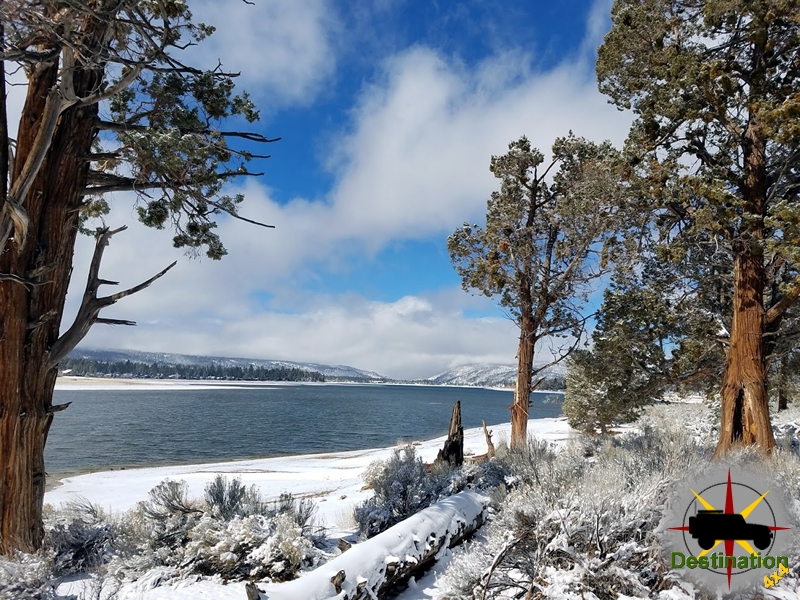
Big Bear, CA
I quiet mountain community full of back country adventure.
The Journey is the destination
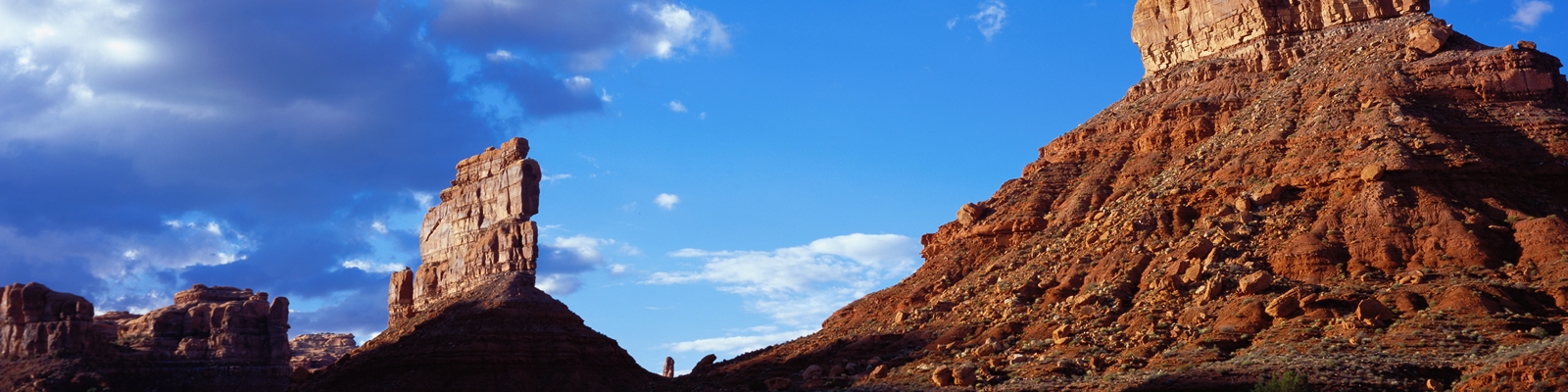
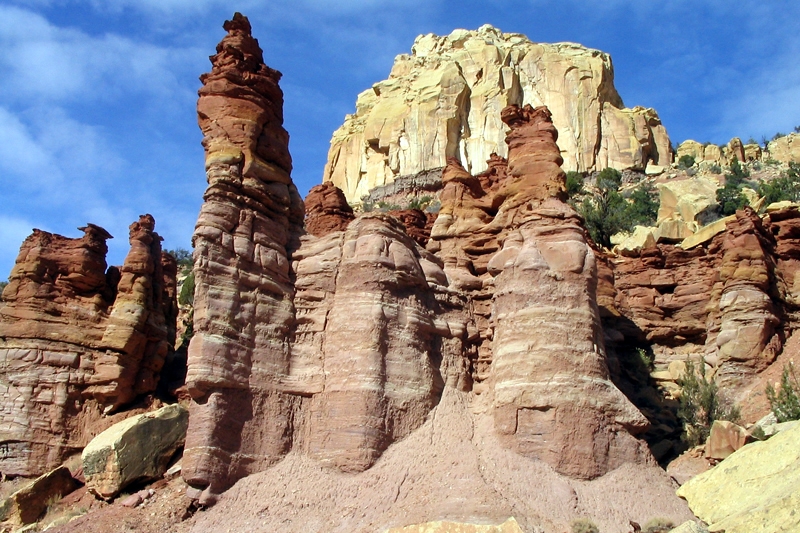
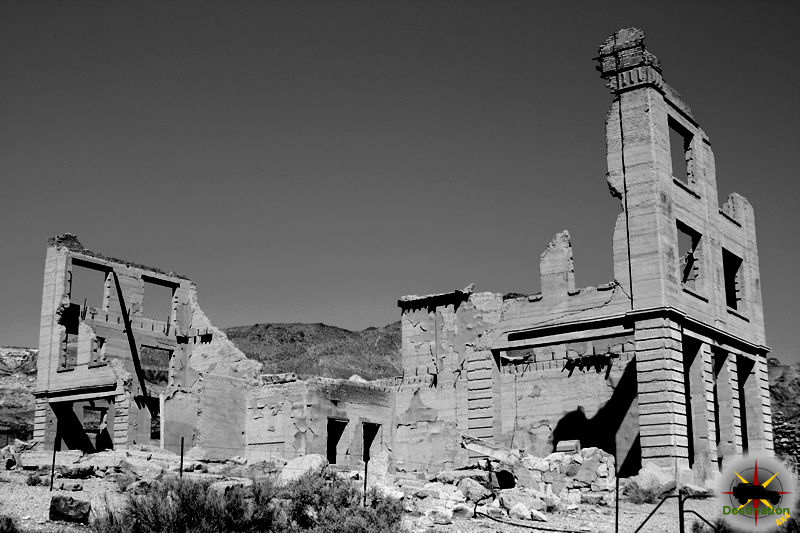
Nevada’s First State Park is Valley of Fire State Park and Nevada State Historic Marker number 150. The Valley of Fire derives its name from red sandstone formations, formed from great shifting sand dunes during the age of dinosaurs, 150 million years ago. Complex uplifting and faulting of the region, followed by extensive erosion, have created the present landscape.

Other important rock formations include limestones, shales, and conglomerates. Prehistoric users of the Valley of Fire included the Basket Maker people and later the Anasazi Pueblo farmers from the nearby fertile Moapa Valley. The span of approximate occupation has been dated from 300 B.C. to 1150 A.D. Their visits probably involved hunting, food gathering, and religious ceremonies, although scarcity of water would have limited the length of their stay. Fine examples of rock art left by these ancient peoples can be found at several sites within the park.
Nevada State Historical Markers identify significant places of interest in Nevada’s history. The Nevada State Legislature started the program in 1967 to bring the state’s heritage to the public’s attention with on-site markers. These roadside markers bring attention to the places, people, and events that make up Nevada’s heritage. They are as diverse as the counties they are located within and range from the typical mining boom and bust town to the largest and most accessible petroglyph sites in Northern Nevada Budget cuts to the program caused the program to become dormant in 2009. Many of the markers are lost or damaged.
Along with most Americans, Nevadans by the 1920’s began to demand greater access to the outdoors, precipitating early efforts on the part of the legislature to designate state lands for recreational use. Building on those efforts, a 1931 land exchange transferred 8760 acres of federal land to the state at Nevada.
In 1934, that land was officially dedicated as Valley of Fire, Nevada’s first state park. The following year, Nevada’s legislature established this and three other parks at Beaver Dam, Cathedral Gorge and Kershaw-Ryan. These parks owe much of their early infrastructure to the work of Civilian Conservation Corps crews led by Thomas W. Miller of Reno, who also served as the first chairman of the State Parks Commission.
By 2015, Valley of Fire State had grown fourfold, and is recognized internationally for its outstanding scenic, geologic, and archaeological features.
STATE HISTORICAL MARKER NO. 150
STATE HISTORIC PRESERVATION OFFICE
| Name | Nevada’s First State Park |
| Location | Valley of Fire State Park, Clark County, Nevada |
| Latitude, Longitude | 36.4303, -114.5140 |
| Nevada State Historic Marker No | 150 |
Nevada State Historic Marker number 150 is located at the visitors center in the Valley of Fire State Park.
Crystal Springs, Lincoln County, Nevada is an old watering stop, townsite and Nevada State Historic Marker number 205. The Nevada State Marker is location just west of the junction between Nevada State Highway 93 and Nevada State Highway 375, also known as “The Extraterrestrial Highway.”

Prior to settlement of Crystal Springs in 1865, the springs served as a valuable water source for a nearby Native American village for generations. Beginning in the middle of the 1800s, the site becomes a watering stop for western travelers before traversing the hot desert climates to the south west.
In 1865, silver discovery in the Pahranagat Valley caused the formation of Lincoln County and Crystal Springs is designated the county seat in 1866. Nevada’s first elected governor, Henry G. Blasdel, nearly lost in life in efforts to establish Lincoln County. To reach Pahranagat, the governor travelled to the location by way of Death Valley. This route was not common at the time, the the expedition soon found themselves running low on supplies after passing through Ash Meadows. Lacking the supplies to complete his journey, Blasdel and the State Geologist, a man named White, rushed into Logan City to obtain additional supplies. Blasdel and White organized a wagon train to resupply the expedition foundering in the desert to the south east. One man did die during this expedition, the travelers exist on lizards and other small animals while waiting for a resupply.

When the Blasdel expedition eventually arrived in Crystal Springs, he learned that the town did not have the population of voters to support the organization of Lincoln County Seat. This event happened the following year in Hiko, Nevada. The town of Crystal Springs is only in existence for about five or six years.
Today, the town of Crystal Springs is little more than a footnote in Nevada’s history. No remains of the town exist.
Crystal Spring was used as a watering place and campsite on an alternate route of the Mormon Trail in the mid-nineteenth century. The town site was designated as the provisional County Seat for Lincoln County in 1866. With the intention of organizing the new county, Governor Henry G. Blasdel left Carson City in April 1866, accompanied by over 20 people. After a perilous journey through Death Valley, California, they ran out of supplies and food. One man died; the others survived on lizards and other desert animals. The Governor and another man raced to Logan City to obtain supplies and returned lathe party so they reached Crystal Spring. The Governor found that the region lacked the number of voters necessary to meet the requirements to become a county. A year later the county government was organized at Hiko.
STATE HISTORICAL MARKER NO. 205
STATE HISTORIC PRESERVATION OFFICE
| Name | Crystal Springs |
| Location | Lincoln County, Nevada |
| Latitude, Longitude | 37.5317, -115.2338 |
| Elevation | 6,161 Feet |
| GNIS | 858593 |
| Nevada State Historic Marker | 205 |
The Nevada State Marker is location just west of the junction between Nevada State Highway 93 and Nevada State Highway 375, also known as “The Extraterrestrial Highway.” The marker is located on the south side of Highway 375.
Located at stop 3 along the Gold Fever Off Road trail is the supposed location of Two Gun Bill’s Saloon in Holcomb Valley, California. The Gold Fever Off Road Trail is a back country drive by some historical sites in Holcomb Valley, in the San Bernardino Mountains. Holcomb Valley located just west of Big Bear, California is the site of the largest gold rush in Southern California.

Two Gun Bill’s Saloon was a famous saloon, dance hall and bordello which offered a place to relax and unwind in the Holcomb Valley during the gold rush. The saloon exists off the wages from a population of about 2000 people during its hey day. The trailhead starts a very short 100 yard hike to the location of a very large cabin which is known to be occupied as late as the 1930s.
The “white lie” which is explained the Gold Fever Trail self guided auto tour pamphlet, is that the cabin at the destination of this hike is not the actual site of the notorious saloon. The actual site of the saloon is found about 1.5 miles to the west, if the south east corner of the junction of 3N16 and 3N12.
| Name | Two Gun Bill’s Saloon |
| Location | Holcomb Valley, San Bernardino County, California |
| Latitude, Longitude | 34.3055, -116.8970 |
| Gold Fever Orr Road Trail Marker | 3 |
Stop number four along the Gold Fever Off Road Trail is Holcomb Valley, is Jonathon Tibbets Grasshopper Quartz Mill. The Gold Fever Off Road Trail is a back country drive by some historical sites in Holcomb Valley, in the San Bernardino Mountains. Holcomb Valley located just west of Big Bear, California is the site of the largest gold rush in Southern California.

The location marker is the start of a short hike of about 300 yards past mounds of sand and the remains of a water pump. There is nothing remaining of the mill itself.
Located in the “center of activity” was a high piece of ground known as “Chinamen’s Knoll” in Holcomb Valley. Here Tibbetts operated a Pico Steam Engine powered stamp mill. Heavy iron heads rose and fell pulverizing ore from John Bull’s seven mammoth ledges of honeycombed quartz. The sand mound are old tailings from processing of gold ore by the mill.
| Name | Jonathon Tibbets Grasshopper Quartz Mill |
| Location | Holcomb Valley, San Bernardino County, California |
| Latitude, Longitude | 34.3041, -116.8924 |
| Gold Fever Off Road Trail Marker | 4 |
The Gunfight at the O.K. Corral, one of the most famous shootouts in the American Old West, took place on October 26, 1881, in Tombstone, Arizona Territory. The confrontation involved lawmen Virgil, Wyatt, and Morgan Earp, along with Doc Holliday, against the outlaw Cochise County Cowboys, including Ike and Billy Clanton, Tom McLaury, and Frank McLaury. Tensions had been building for months between the Earps and the Cowboys, stemming from political differences, law enforcement disputes, and personal grudges. The actual gunfight lasted only about 30 seconds, with the Earps and Holliday emerging victorious, killing Tom and Frank McLaury and Billy Clanton.
Although the gunfight was relatively brief and took place in a small alley near the O.K. Corral, its impact on American folklore and the mythos of the Wild West has been significant. The shootout was later romanticized in literature, film, and popular culture, often portraying the Earps and Holliday as heroic figures standing up against lawlessness. However, the events leading up to and following the gunfight were complex, involving legal battles, public opinion, and ongoing violence, reflecting the broader conflicts of power and law in the tumultuous frontier society.

in the Preliminary Hearing in the Earp-Holliday Case,
Heard before Judge Wells Spicer
November 9-15, 1881
On this ninth day of November, 1881, on the hearing of the above entitled cause, on the examination of Wyatt Earp, and J. H. Holliday; Joseph I. Clanton, a witness of lawful age, being produced and sworn, deposes and says as follows
My name is Joseph I. Clanton. I reside four miles above Charleston, on the San Pedro River. My occupation is stock raising and cattle dealer.
(Q) Where were you on the 26th [of] October, 1881?
(A) I was here in Tombstone.
(Q) Do you know Virgil Earp, Morgan Earp, Wyatt Earp, and J. H. Holliday?
(A) I do.
(Q) Did you know Frank and Tom McLaury and Billy Clanton?
(A) Yes sir.
(Q) Are they living or dead, and if so, when did they die?
(A) They are dead. They died on the 26th of October, 1881, on Fremont Street, between Third and Fourth Streets, in Tombstone, Cochise County, Arizona Territory.
(Q) Did they die a natural death or a violent death?
(A) A violent death, they were killed.
(Q) Were you present at the time they were killed?
(A) I was.
(Q) Who else was present at the time that you saw?
(A) There was Holliday, Morgan, Virgil and Wyatt Earp, Sheriff Behan, and William Claiborne. No [one] else, that I can remember, at the time they were killed.
(Q) Who was engaged in the killing of these parties?
(A) Wyatt, Morgan and Virgil Earp, and Holliday.
(Q) Now you begin at the commencement of the difficulty and tell all you saw about. [As written in the original]
(A) Well, I and the McLaury brothers and William Clanton, and a young fellow named Billy Claiborne were standing in a vacant space talking, west of the photograph gallery on Fremont Street-between that and the building next to it and the Sheriff Johnny Behan came down and told us he would have to arrest us and disarm us.
[The defense moves that the witness be instructed not to detail conversation without the hearing of the defendants. Objection overruled. Counsel for the defense then asks that the Court give the ground for his ruling, which the Court refuses to do, because the law does not require it, and it would be objectionable to encumber the deposition of the witnesses with the opinion of the Court.]

(A) I asked the Sheriff, “What for?” The Sheriff told me, “To preserve the peace.” I told him I had no arms. Then William Clanton told him he was just leaving town. The Sheriff then said, if he was leaving town, “all right.” He then told Frank and Tom McLaury he would have to take their arms. Tom McLaury told him he had none. Frank McLaury said he would go out of town, but did not want to give his arms up until after the party that hit his brother was disarmed. The Sheriff told him that he should do it, and take his arms to his, the sheriff’s office, and lay them off. Then Frank McLaury said he had business in town that he would like to attend to, but he said he would not layoff his arms and attend to his business unless the Earps were disarmed. The Sheriff then put his arms around me and felt if I was armed. Tom McLaury remarked to the Sheriff, “I am not armed, either.” and opened his coat by taking hold of the lapels and throwing it open, this way [witness shows how]. The Sheriff looked up Fremont Street, and ordered us to stay there ’til he came back.
[Defense moves that the entire conversation above be stricken out on the ground that it forms no part of the “res gestae”-that it did not transpire in the presence of the defendants or in their hearing and that it is making testimony for the prosecution. Objected to by the prosecution. Objection sustained on the ground that such conversations are hearsay, and not strictly “res gestae,” and all conversations in the foregoing testimony shown as included in brackets are stricken out. Prosecution objects to the ruling of striking out the testimony.]
(A) And started up that way. Just as he started up the street, the Earp party and Holliday appeared on the sidewalk and were coming down.
(Q) When the Sheriff started up the street from where the McLaurys and the Clan tons were standing, did you remain there, and if so, why did you remain?
[Defense objects to witness giving reason for doing an act or refraining from doing an act. Objection overruled, and defense asks for the grounds of the ruling.]
(A) We all remained there because the Sheriff had ordered us to.
[Defense moves to have the answer stricken out because the prosecution has obtained indirectly, what the court refused directly. Motion overruled by the Court.]
(Q) When Mr. Behan went up the street, who did he meet coming down, and what did he do or say?
(A) He met Virgil Earp, Morgan Earp, Wyatt Earp, and Holliday coming down Fremont Street. He held up his hands and told them to stop, that he had our party in charge.
(Q) State what they did, whether they stopped, and if they did not, what did they do?
(A) They did not stop, but passed by him and came down where we were.
(Q) How far was it from where you were standing to the point where Sheriff Behan met the Earps and Holliday?
(A) I should judge it to be about twenty paces?
(Q) You say the Earps and Holliday came on down to where you were-what did they do when they got here, and what did they say?
(A) They pulled their pistols as they got there, and Wyatt Earp and Virgil Earp said, “You sons-Of-bitches, you have been looking for a fight!” and at the same time ordered us to throw up our hands. And they said, “You have been looking for a fight!” and commenced shooting.
(Q) Who commenced the shooting?
(A) The first two shots were fired by Holliday and Morgan Earp. Wyatt Earp and Virgil Earp fired the next shots, immediately afterward. Virgil Earp shot before Wyatt did.
(Q) How close together were the two first shots that were fired by Holliday and Morgan Earp?
(A) They were fired so close together I could not tell which one shot first.
(Q) How long after that was it that Virgil Earp fired?
(A) It was almost immediately, perhaps a couple of seconds afterwards.
(Q) State, if you know, at whom Mr. Holliday and Morgan Earp fired?
(A) Morgan Earp shot William Clanton, and I don’t know which one of the McLaury boys Holliday shot at. He shot at one of them.
(Q) How do you know that Morgan Earp shot Billy Clanton?
(A) Because I seen his pistol pointed within two or three feet of his bosom, saw him fire and saw William Clanton stagger and fall up against the house and put his hands onto his breast.
(Q) In what position were Billy Clanton’s hands at the time Morgan Earp fired at him, and you saw him stagger and fall up against the house?
(A) His hands were thrown up about even with the level of his head-his hands in front of him.
(Q) When those first shots were fired, in what position were the hands of Frank and Tom McLaury and yourself?
(A) Frank McLaury had his hands up [witness shows how he held up his hands, by holding his hands up, with the palms open, his fingers about level with the top of his head]. I was holding my hands the same way and Tom McLaury took hold of the lapels of his coat, threw them open, and showed that he had no arms on.
(Q) Were you or not at any time during the shooting, armed; and if not, where were your arms, if you know?
(A) I was not at any time during the shooting armed. I understood Virgil Earp had taken my arms a short time before that and left them behind the Grand Hotel bar.
(Q) What sort of arms did Virgil Earp take from you, and leave behind the bar?
(A) A Colt .45 caliber pistol, and a Winchester carbine.
(Q) State, if you know, whether at any time during the shooting, Tom McLaury was armed?
(A) I never saw him with any arms during the shooting.
(Q) Do you know where his arms were or any of them at the time of the shooting?
(A) His Winchester was in the stable on Fremont Street below where the shooting occurred [West End Corral]. I don’t know where his other arms were.
(Q) Did you come into town with Tom McLaury, and if so, how long before the shooting?
(A) Yes sir, I came into town with him on the day previous to the shooting; it was about 11 o’clock in the forenoon. We came in in a spring wagon.
(Q) Now state, if you know, how many arms he brought in with him, and what kind they were? [Objected to by the Defense as having no pertinency to the issue. Objection overruled.]
(A) He brought in with him, a Winchester carbine and a six-shooter. [Here, Andrew J. Mehan, who has formerly testified, produces the pistol he had in court at the time of his examination, which pistol is handed to the witness, who says, “This is the same pistol that Tom McLaury brought into town the day before the shooting. I know it by the guard being sprung and by its general appearance.”]
(Q) State, if you please, now, whether or not the Winchester carbine of Tom McLaury’s that you say he brought in with him the day before, was the same one that was at the stable on the day of the shooting.
(A) It was.
(Q) At the time the Earp party and Holliday came up to where you and the McLaurys and Bill Clanton were standing, what, if anything, did Wyatt Earp do?
(A) He shoved his pistol up against my belly and told me to throw up my hands. He said, “You son-of-a-bitch, you can have a fight!” I turned on my heel, taking Wyatt Earp’s hand and pistol with my left hand and grabbed him around the shoulder with my right hand and held him for a few seconds. While I was holding him he shot. I pushed him around the corner of the photograph gallery and then I jumped into the door. I went right on through the hall and out of the back way. I then went on across Allen Street and into the dance hall on that street. As I jumped into the door of the photograph gallery, I heard some bullets pass my head. As I went by an opening, I heard some more bullets pass by me.
(Q) In passing from Fly’s photograph gallery towards Allen Street, state whether or not you passed by a house to the right of the Fly’s photograph gallery, and if so, state whether or not you heard any shots strike it.
(A) I heard some bullets strike the building ahead of me.
(Q) How many shots were fired by the Earp party before you left the ground where the shooting occurred?
(A) To the best of my belief, there were four or five. There were four, and I think five.
(Q) Up to that time, had there been any shots fired by either of the Clantons or the McLaurys?
(A) There had not.
(Q) Up to that time, did you see any weapon of any kind drawn by or in the hands of either of the Clantons or McLaurys?
(A) No sir. They all had their hands up, up to that time. Tom McLaury had his hands up, holding his coat open.
(Q) Did you see any weapons in the hands of Frank or Tom McLaury or Billy Clanton while you remained on the ground?
(A) No sir, I did not.
(Q) Did you or not, at any time during the shooting, see a horse or horses on the ground where the shooting occurred? If so, state who, if anybody had them.
(A) Yes sir, there were two horses there. Frank McLaury was holding a horse; Billy Clanton had a horse also, and standing right by him.
(Q) What became of those horses, while you remained there, as far as you could see?
(A) I never noticed the horses after the shooting commenced.
(Q) Were there or not, any arms on those horses, and if so, what kind were they?
(A) Yes sir, there were arms on them. They were Winchester carbines. There was one on each horse, in the gun scabbards.
(Q) State whether or not those arms were drawn from their scabbards while you stayed there.
(A) No sir, they were not, while I stayed there.
(Q) How come you and Billy Clanton and the McLaurys to be there? [Objected to on the ground that reasons permitted to be entered into would exonerate all persons charged with crime. Objection overruled.]
(A) My reason for going there was to get mine and Tom McLaury’s team. By mutual understanding Billy Clanton and Frank McLaury had given orders to have our team hitched up.
[Defense Counsel moves to strike out the foregoing answer. Motion overruled.]
(Q) At the time the Earp party approached the Clantons and McLaurys on Fremont Street, at the place where the shooting occurred, was the latter party making any noise or disturbance, or were they peaceable and quiet?
[Question objected to on the ground that inference and deductions of acts are called for instead of the acts themselves. Objection overruled.]
(A) They were making no disturbance or noise and they were peaceable and quiet.
(Q) State if there was any previous difficulty between you and the defendants or either of them; and if yes, when and where?
(A) Yes sir, there was a difficulty between Holliday and Morgan Earp and I, the night before at a lunch stand in this town near the Eagle Brewery Saloon, on the north side of Allen Street. As well as I remember, it was about 1 o’clock in the morning. I went in there to get a lunch. While sitting down at the table, Doc Holliday came in and commenced cursing me and said I was, “A son-of-a-bitch of a cowboy,” and told me to get my gun out and get to work. I told him I had no gun. He said I was a damned liar and had threatened the Earps. I told him I had not, to bring whoever said so to me and I would convince him that I had not. He told me again to pull out my gun and if there was any grit in me, to go to fighting. All the time he was talking, he had his hand in his bosom and I supposed on his pistol. I looked behind me and saw Morgan Earp with his feet over the lunch counter. He has his hand in his bosom also, looking at me. I then got up and went out on the sidewalk. Doc Holliday said, as I walked out, “You son-of-a-bitch, if you ain’t heeled, go and heel yourself.” Just as I stepped out, Morgan Earp stepped up and said, “Yes, you son-of-a-bitch, you can have all the fight you want now!” I thanked him and told him I did not want any of it now, I was not heeled. Virgil Earp stood off about 10 or 15 feet from us on the sidewalk. Just about this time, or perhaps a minute later, Wyatt Earp came up where I was. Wyatt did not say anything. Morgan Earp told me if I was not heeled, when I came back on the street to be heeled. I walked off and asked them not to shoot me in the back.
[COURT HERE ADJOURNED UNTIL THURSDAY, NOVEMBER 10, 1881, AT 9 O’CLOCK A.M.]
[THURSDAY, NOVEMBER 10, 1881, EXAMINATION OF JOSEPH I. CLANTON RESUMED]
I did not see Morgan Earp or Doc Holliday any more to speak to them that night. A half hour after that, I presume, I came back to the next saloon on the west, called the Occidental. I sat down in this saloon and played poker all night, until daylight. Tom Corrigan was tending bar there in that saloon. Virgil Earp and Tom McLaury and another gentleman, I don’t know his name, and Johnny Behan, were playing the game. While the row was going on, on the sidewalk, just as I walked away, Virgil Earp told Morgan Earp and Holliday to let me along while Jim was there.
(Q) To whom did Virgil Earp refer when he told Morgan Earp and Holliday to let you alone while Jim was there?
(A) Jim Flynn the policeman, the only person that I know there by that name. When the poker game broke up in the morning at daylight, I saw Virgil take his six-shooter out of his lap and stick it in his pants. I got up and followed him out of doors on the sidewalk. He was going down Allen Street towards the Cosmopolitan Hotel. I walked up to him and told him in regard to what he said to the policeman the night before and playing poker with a six-shooter in his lap, that I thought he stood in with those parties that tried to murder me the night before. I told him if that was so, that I was in town. He said he was going to bed. I went back and passed my chips into the poker game and had no more talk with Virgil that morning. I think it was about half-past one o’clock, as I was walking up on Fourth Street from Fremont to Allen Street, Virgil and Morgan Earp came up behind-don’t know where they came from. Virgil Earp struck me on the side [of] the head behind the ear with a six-shooter and knocked me up against the wall. Morgan Earp cocked his pistol and stuck it at me. Virgil Earp took my six-shooter and Winchester from me. I did not see or know that they were about there, until I [was] struck. I did not know who struck me until after I recovered from my fall against the house. They pulled me along and said, “You damned son-of-a-bitch, we’ll take you up here to Judge Wallace’s.”
When I got there and was put behind the railing, Wyatt Earp came in and told me I could have all the shooting I wanted, and cursed me. I did not see Doc Holliday there. He called me a thief and son-of-a-bitch, and told me I could have all the shooting I wanted, to name my style of fighting, or something like that. Virgil Earp spoke up and told me he would pay my fine if I would fight them. I told him that I would. Wyatt Earp offered me my rifle, told me to take it. He handed it to me muzzle first, the muzzle pointed down as he presented it. I saw Virgil Earp put his hand in his bosom, this way, [shows the motion]. Morgan Earp stood over me and behind me on the bench in the rear. Wyatt Earp stood to the right and in front of me, and then I told them I did not want any of it, that way. Wyatt Earp asked me where I wanted to fight and as well as I remember, I told him I would fight him anywhere or any way. This conversation occurred in the Courthouse while I was a prisoner. I am not positive whether Judge Wallace was present or not. I don’t think he was, as we waited there sometime for something or other before he imposed the fine. There were others there. The front of the building was full. I was fined and paid it and was released. This occurred about one o’clock, I think or just before. This all occurred on the day of the killing, I should judge about an hour and a half, as well as I can calculate the time.
(Q) At the time you were released, who if anybody had your arms?
(A) Virgil took them in charge when I was arrested and I hadn’t got them.
(Q) When, after that time, and where did you get your arms?
(A) I got them a couple of days after that from William Soule, the jailer.
(Q) Had you, at the time you state that Doc Holliday charged you with having threatened the Earps ever in fact threatened the Earps or Doc Holliday?
(A) No sir. I never threatened the Earps or Doc Holliday.
[HERE THE EXAMINATION OF WITNESS WAS SUSPENDED UNTIL SATURDAY, NOVEMBER 12, 1881, AT 10 O’CLOCK A.M.]
[SATURDAY, NOVEMBER 12, 1881, EXAMINATION OF JOSEPH I. CLANTON RESUMED]
(Q) On what day and at what time of day did you arrive in Tombstone from your ranch prior to the 26th of October, 1881?
(A) I came in town on the 25th [day] [of] October. I think it was about between 10 or 11 o’clock in the morning. I did not come from my ranch. I came from Sulphur Spring valley. I left my ranch three days before that.
(Q) Who went with you from your ranch to Sulphur Spring valley?
(A) I went by myself, alone.
(Q) Who came in with you from Sulphur Spring valley?
(A) Tom McLaury.
(Q) Did you or did Tom McLaury, to your knowledge, on the night of the 25th, or at any time during the 25th or 26th [of] October, send, or cause to be sent, a telegraphic dispatch from the office here to Charleston or any other point, to William Clanton or Frank McLaury or to any person or persons, directing Frank McLaury or William Clanton to come to Tombstone?
(A) I did not, and I know that Tom did not, for we had taken breakfast with Frank McLaury and William Clanton the day we came into town, at Jack Chandler’s milk ranch, which is ten miles from here, at the foot of the Dragoon Mountains.
(Q) Do you know a man by the name of Neil Boyle, the saloon keeper at the Oriental?
(A) I know a man named Ned Boyle.
(Q) Were you in the Oriental Saloon about 8 o’clock the morning of the day of the difficulty?
(A) I don’t remember being there.
(Q) Did you not say, in the presence of this Boyle at about that time, in the Oriental Saloon, that as soon as the Earps came on the street, they had to fight?
(A) I don’t remember seeing Ned Boyle that day.
(Q) Did you make that remark, or one of similar import, at about that time in the Oriental Saloon, and in the presence of this Boyle?
(A) I don’t remember making any such remark in that saloon.
(Q) Were you in that saloon at or about that time with a pistol in your hand?
(A) I don’t remember being in the saloon on that day.
(Q) Were you in Kelly’s Saloon at or about the hour of 10 A.M. on the morning of the day of the difficulty?
(A) I was.
(Q) Did you not make the remark in Kelly’s Saloon in [the] presence of’ Jo Stump and Kelly, and in answer to the question of Kelly to YOU’ “What was the matter?” [That] the Earp crowd had insulted you the night before when you were unarmed,-“I have fixed,” or “heeled” myself now and they have got a fight on sight, or language of like import?
(A) I remember that there was very near that conversation in Kelly’s Saloon. It was about 10 A.M., I think.
(Q) Did not Kelly say to you, you meant to shoot if you said so?
[Objected to by prosecution on the ground that it is not ”res gestae.” Objection sustained.]
(Q) Did you not at the time, have a Winchester rifle in your hand, and a six-shooter in your belt?
(A) I had no belt on. I had a Winchester and a six-shooter, which I had for self-defense.
(Q) Do you not know William Daly, commonly known as Farmer Daly?
(A) Yes sir, I know him.
(Q) Do you remember, about four weeks ago, that you and Frank McLaury rode up in front of Hafford’s Saloon in this city and that you or Frank McLaury called Daly out of the saloon and that either you or Frank McLaury said, “We understand they have formed a Vigilance Committee against us?” That Daly said there was some talk about the matter, but he did not know much about the matter. One of you said-you or Frank McLaury-“Can you deny but that man in there [meaning Morgan Earp, who was in the saloon] belongs to the committee?” Daly said, “He does not belong to it.” One of you said, “We don’t believe it. Even if it were so, it don’t make any difference, they [meaning the Earps] are in our way, anyway, and will have to be got out.” Did not that conversation ensue between you and Frank McLaury and Daly at or about the time indicated, at the place specified, and under the circumstances, or conversation of similar import, and was not Morgan Earp In Hafford’s Saloon and within your vision?
[Objected to by [the] prosecution. Objection sustained, on the ground that it assumes facts that have not been stated or proven by the witness or relates conversation of persons who were not the defendants or the persons injured. ]
(Q) Do you not remember riding up with Frank McLaury about four weeks ago to Hafford’s Saloon?
[Question objected to. Sustained on same ground.]
(Q) Did you at or about four weeks ago or not, ride up to Hafford’s Saloon in company with Frank McLaury?
(A) I don’t remember ever riding up to that saloon in company with Frank McLaury.
(Q) Do you, or do you not, recollect the conversation detailed in the previous question, transpiring between you and Daly or between Frank McLaury and Daly, within the hearing of you three, at the time and place specified in that question?
[Question objected to by prosecution. Objection sustained on same grounds given above.]
(Q) Did you ever, at any time or place in this city, within the last two months, and prior to October 26, 1881, say to any person whatever, “They [meaning the Earp brothers] are in our way, anyway, and will have to be got out,” or language of similar import?
[Objected to by prosecution upon the ground that the person is not named in the question to whom the remark, if made, was made. Defense does not press the question.]
(Q) You made, did you not, the sworn complaint in this case?
(A) I did.
(Q) Have you or not, employed counsel to prosecute in this case?
(A) Yes sir.
(Q) Where, precisely, is your ranch and the McLaury ranch?
(A) My ranch is about 14 miles from Tombstone, about four miles from Charleston, on the San Pedro River, and McLaury’s ranch is about 30 miles from mine, in Sulphur Spring valley. It is located 25 miles from this place.
(Q) Did you ever see this telegram before? [Here witness is presented with a paper purporting to be a telegram, reading as follows “San Francisco, June 7, 1881. Received at [blank] June 7, 1881, 4 o’clock P.M., To Marshall Williams. Yes we will pay rewards for them dead or alive. L. F. Rowell.”]
(A) I never saw it before.
(Q) The night of the difficulty or controversy between you and Doc Holliday, in what language did Doc Holliday first approach you?
(A) He first said I had been using his name. He did not say in what way.
(Q) To what did he refer to in making use of that language?
(A) He said I had threatened the Earps.
(Q) Was that all?
(A) I told him I had not threatened the Earps or had not used his name. I did not know what he referred to about using his name.
(Q) Were you, up to that time, friendly with the Earps?
(A) Yes sir.
(Q) Did you know Billy Leonard, Harry Head and Jim Crane?
(A) I knew Billy Leonard and Jim Crane, and had seen Harry Head a few times, but was not acquainted with him.
(Q) Did not these persons often stop at your ranch?
(A) They sometimes stopped at a ranch I had over in New Mexico, and Billy Leonard often had stopped at my ranch four miles above Charleston before this trouble of killing Bud Philpot.
(Q) Were these parties supposed to be connected with the attempt to rob the stage and the killing of Bud Philpot?
(A) I don’t know anything, only what Doc Holliday, Wyatt, Virgil, and Morgan Earp, and others told me about it.
[Objected to. Objection overruled subjected to a reserved ruling as to whether they shall be stricken out for failure to show their relevancy and materiality]
(Q) Did not Wyatt Earp approach you, Frank McLaury and Joe Hill for the purpose of getting you three parties to give said Leonard, Head and Crane away-in the Arizona parlance-so that he, Wyatt Earp, could capture them?
(A) Wyatt Earp approached me, but I do not [know] that he ever approached Frank McLaury or Joe Hill. I met him in the Eagle Brewery Saloon one night and he asked me to take a drink with him, and while they were mixing our drinks, he told me that he wanted a long private talk with me. After we had drank, he stepped out into the middle of the street with me. He then told me he would put me on a scheme to make six thousand dollars. I asked him what it was. He told me he would not tell me unless I would promise to do it, or if I would not promise to do it, not to mention our conversation to anyone else. He then made me promise on my honor as a gentleman not to repeat the conversation if I did not like the proposition. I asked him what it was. He told me it was a legitimate transaction. He then made me promise the second time that I would not mention it any more. He told me he wanted me to help put up a job to kill Crane, Leonard and Head. He said there was between four and five thousand reward for them, and he said he would make the balance of the six thousand dollars up out of his own pocket. I then asked him why he was anxious to capture these fellows. He said that his business was such that he could not afford to capture them. He would have to kill them or else leave the country. He said he and his brother, Morgan, had piped off to Doc Holliday and William Leonard, the money that was going off on the stage,10 and he said he could not afford to capture them, and he would have to kill them or leave the country, for they [were] stopping around the country so damned long that he was afraid some of them would be caught and would squeal on him. I then told him I would see him again before I left town. I never talked to Wyatt Earp any more about it.
(Q) Where were you born sir?
(A) I was born in Missouri.
(Q) At what time of the day of the shooting did Frank McLaury and Billy Clanton arrive in town?
(A) They arrived in town about half an hour before they were killed.
(Q) Where did they come from?
(A) They came from Antelope Springs. They are east of here and about 13 miles from town.
(Q) Did you have four or five conversations with Wyatt Earp in the yard connected with the Oriental Saloon in reference to the arrest of Leonard, Head, and Crane?
[Question objected to by the Prosecution. Objection sustained on the ground that no limit of time is mentioned.]
(Q) Did he not tell you in some of these conversations he had with you, or in some other conversation, that he expected to run for sheriff at the next election; that he would like to capture these men if he could; that he would give you and your party all the reward that had been offered if, Wyatt, could catch them; [that] he, Wyatt, would rather have the glory than the money; and that you and Frank McLaury and Joe Hill agreed to give up, or capture those parties, or to lead them to a place where Wyatt could capture them, provided the reward was paid dead or alive; and did not this conversation take place in the yard connected with the Oriental Saloon, in this city, between Wyatt, yourself, and some one or more of the parties I have indicated,-Virgil Earp, Wyatt Earp, yourself, Frank McLaury, and Joe Hill-about six weeks after the Philpot killing?
(A) I had never any conversation with him in company with Joe Hill or Frank McLaury or Virgil Earp, in the yard of the Oriental Saloon. I never heard him say anything about running for sheriff and I never heard him say that he wanted to capture them.
(Q) Did you not have a conversation or conversations of like import and about the time and at the place mentioned in the proceeding interrogatory, with Wyatt Earp?
(A) I never had no conversation with Wyatt Earp in regard to that in the Oriental yard.
(Q) Did you say in such conversation that these parties would make a fight, and that Wells Fargo & Company were not in the habit of paying rewards except upon conviction, and that you would not consent to ambuscade them unless Wells Fargo & Company would pay the reward dead or alive?
[Objection made by prosecution and withdrawn.]
(A) I never had but one conversation with Wyatt Earp upon that subject, and did not talk anything about Wells Fargo’s business, only that he said that Wells Fargo would give between four and five thousand dollars.
(Q) And did not Wyatt Earp, either upon his own or your suggestion, upon some one of the conversations, tell you that he would have Wells Fargo & Company telegraph if they would pay the reward dead or alive?
(A) I never heard anything about the telegram to Wells Fargo before today, and I made no suggestion in the conversation and had only one conversation with Wyatt Earp on that subject.
(Q) Did not Wyatt Earp, during these conversations, show you that document, in front of the Alhambra, four or five days after he had the first conversation? [Shows witness the telegram.] [Here, after argument, the paper shown to the witness and called a copy of the telegram, is here to attached and marked, “Exhibit A.”]
(A) I never heard of, or saw that telegram before, and do not know what conversation is alluded to, as I never had but one.
(Q) Did you not, in some one of these conversations, tell Wyatt Earp that you knew where Leonard, Head and Crane were concealed?
(A) I did not, in the conversation I had with him, for I did not know where they were concealed.
(Q) Did not these three parties frequent, about the time of these conversations, your or your father’s cattle ranch?
(A) What conversations do you mean?
(Q) The conversations about which I have interrogated you.
(A) I had no conversations. I had but one conversation, at the time of that conversation with Wyatt Earp, I don’t know, as I was not there.
(Q) Were not these parties, up to that time, frequent visitors at your and McLaury’s ranches?
(A) As regards McLaury’s ranch, I don’t know. They sometimes came to my place before I had this talk with Wyatt Earp.
(Q) Did you not, in concert or agreement with Wyatt Earp, dispatch Joe Hill, from Tombstone, to bring these parties to McLaury’s ranch for the purpose of having them arrested by Wyatt Earp?
(A) I never had no talk with Joe Hill about this business and, consequently, never dispatched Joe and had no arrangement with Wyatt Earp and Joe Hill to act in concert about.
(Q) And were you not present when Joe Hill deposited his watch and money with Virgil Earp, before departing on this expedition?
[In protection to the witness, question is overruled by [the] court on its own motion, on the ground that it is assuming certain facts that have not been proved or testified to by witness.]
(Q) Have you not frequently, you and Frank McLaury, charged Wyatt Earp, Virgil and Morgan Earp, with having given you two away to Marshall Williams and Doc Holliday, in making them confidant in your effort at surrendering Leonard, Head, and Crane to justice-your particular friends and associates?
[Counsel for the prosecution objects to the words, “Your particular friends and associates,” as being an assumption of facts not established or testified to by witness. Objection sustained on the ground the words objected to assume a state of facts not testified to by the witness.]
(Q) Omitting [the] words in the last question, “your particular friends and associates,” answer the question.
(A) In regard to Frank McLaury, I don’t know whether he ever charged anything of the kind or not, and as to my part, I had nothing to do with bringing them to justice, consequently I could not charge the Earp brothers with giving me away to anybody.
(Q) Did you not so state to several parties, and if so, to whom, and at what time?
[Objected to on the ground that it is not proper cross-examination, that it does not state the time, place, and persons to whom the statement was made, if made at all. Question not pressed.]
(Q) What were the first words addressed to you by Doctor Holliday on the first intercourse, of which you have spoken on the night of the day preceding the difficulty in which these parties were killed? Did he not say to you, “I understand that you say the Earp brothers have given you away to me and that you have been talking about me.”
(A) I don’t recollect exactly what his first words were-they were not those, though. He said to me that I had been using his name and had threatened the Earp brothers.
(Q) Did you not, sometime during the day of the difficulty and preceding the difficulty, telegraph to Charleston for William and Phin Clanton to come to Tombstone?
(A) No sir.
(Q) In what position upon your person were the Winchester rifle and pistol at the time you encountered Virgil and Morgan Earp-I mean, at the time you were disarmed, on the day of the difficulty?
(A) My pistol was stuck in the waistband of my pants. The handle was exposed to view, but under my coat; I was packing the Winchester in my hand.
(Q) Where, precisely, did they encounter you?
(A) On Fourth Street, between Fremont Street and Allen, on the left-hand sidewalk, going from Fremont to Allen. I was just leaving the Capitol Saloon-Moses and Mehan keeps it-I was going to the Pima County Bank. I had those weapons about my person for self-defense.
(Q) In the conversation that transpired between you and the Earp boys in Wallace’s Court Room, is it not a fact that Virgil Earp did not participate herein, but that he was absent in pursuit of Justice Wallace?
(A) In the commencement of the abuse by Morg and Wyatt Earp, I do not think that Virgil Earp was there. He was there in the latter part of the time they were cursing me, and remarked that they would “give it to me now!” or something to that effect.
(Q) Did you see William or Billy Clanton as he is called, with a pistol in his hands during the fight?
(A) No sir.
(Q) Are you aware, from any source, that he did have a pistol during the fight, and what is your source of information?
(A) I never saw him have any pistol at that time, and don’t know that he had any, only from hearsay.
(Q) Do you know where he got the weapon?
[Question objected to on the ground that it assumed he had a weapon. Objection sustained on the ground that the witness has already answered that he did not know that Billy Clanton had a weapon, and the question assumes that he did. The question is still pressed by the defense and refused by the court.]
(Q) How long after you retreated, as you have stated, from the scene of the firing, and how long after the shooting ceased, did you return to the scene of the firing, if you returned at all?
(A) I did not return at all to the scene of the firing, only I passed by there eight or ten days after it was done, and then was back there two or three days ago.
(Q) Was Billy Clanton a brother of yours?
(A) He was.
(Q) During the lifetime of Frank McLaury, were you not with them in close business and friendly relations?
(A) I was.
(Q) How many cattle have you sold during the past year, or about how many, if any, and how many of those cattle had you procured by legitimate means?
[Objected to by [the] prosecution. Objection withdrawn.]
(A) To the best of my recollection in the neighborhood of 700 head. I raised and purchased in connection with the McLaury boys, about 700 head. I got them honestly by raising and purchasing them.
(Q) When you took hold of Wyatt Earp’s arm at some stage of the shooting, as you say, did he not say to you, “This fight has commenced, and you must either fight or get away!”?
(A) No sir, he made no such remark. The only thing he said was to, “throw up your hands!” and stuck his pistol against my belly.
(Q) How many shots had been fired at the time he made that observation to you?
(A) There had not been any fired.
(Q) Is Charleston directly upon the route between your ranch and Tombstone, or is that the route, or do you generally take Charleston in your route?
(A) There is a nearer road to my ranch than going by the way of Charleston, I sometimes take Charleston in my route and sometimes take the nearer road.
(Q) Do you know Ned Boyle, who keeps bar at the Oriental Saloon?
(A) Yes sir.
(Q) Did you not, about the hour of 8 A.M. on the day of the shooting somewhere in Tombstone, say to Ned Boyle, that as soon as the Earps showed themselves on the street, they had to fight-having at the same time, a pistol in your hand? If so, state the precise point where this remark was made.
[Objected to as not being sufficiently definite as to place. Objection overruled. ]
(A) I don’t remember speaking to Ned Boyle about it. I think I saw him, but don’t remember saying anything to him about it. I don’t think I said the Earps had a fight when they came on the street. There were three of them that I never had an unpleasant word with in my life, up to that time. I don’t remember having any pistol in my hand.
(Q) How long preceding the shooting were you and Tom McLaury and Billy Clanton and Frank McLaury in the gun shop on Fourth Street? [Question withdrawn.]
(Q) Were you, William Clanton, Frank and Tom McLaury in the gun shop on Fourth Street during the day of the shooting, and if so, how long before the shooting commenced?
(A) I was in the gun shop. William Clanton came there after me. I don’t know whether he came in the shop or not. I am very sure that Tom McLaury was not there; Frank McLaury came in the shop and asked where Tom was.
(Q) Is it not a fact that Billy Clanton and Tom and Frank McLaury were there and that you came there subsequently as the fourth party?
(A) I was the first party that was there.
(Q) Do you remember Wyatt Earp moving a horse belonging to one of your party from the pavement into the street, and that at that time you seized hold of a gun in the gun shop?
[Objected to on the ground that it assumed that he had or took hold of a gun, without such fact being proved, and that it assumed that there was a horse on the pavement and removed into the street by Wyatt Earp, and no such fact has been proved. Objection sustained on the ground that the question assumed facts to exist that have not been proven or testified to by the witness. Counsel for [the] Defense presses the question, and the Court refuses.]
(Q) Did not Virgil Earp tell you where he had deposited your Winchester and pistol sometime after he had taken them from you?
(A) He did not, in Wallace’s Court Room. He told me where he would leave them at, while under arrest. He said he would leave them at the Grand Hotel Bar.
(Q) At what period of the shooting did you run?
(A) There had been four or five shots fired.
(Q) Knowing, as you say, that those shots proceeded from the Earp party, was not your attention directed entirely upon the Earp party?
(A) No sir, not entirely upon the Earp party. I was looking at my brother and the McLaury brothers too.
(Q) How much time was consumed from the expression, “Hold up your hands!”, and the first four shots?
(A) It was done as quickly as it could be done. I suppose in five, or six, or ten seconds.
(Q) Did you run into the door of the photograph gallery facing Fremont Street?
(A) I did.
(Q) Where was Claiborne, or the Kid, at the time you commenced running?
(A) I don’t know where he was when I commenced running.
(Q) Where were you precisely, in reference to the comer of the photograph gallery when Wyatt Earp thrust, as you say, his pistol against your belly, and made use of the remark, “Hold up your hands!”?

(A) I was standing almost at the northwest comer of the photograph gallery. Wyatt Earp was standing north of the northwest comer, and I was standing west of the same comer. Doc Holliday was standing near the outer edge of the sidewalk, and about opposite the comer. I cannot locate exactly, where Virgil Earp was, but I think he was to the left of Doc Holliday, on the sidewalk. Frank McLaury was standing in front of the vacant lot and tolerable close to the comer of the building west of the photograph gallery, as well as I can judge, he was about four feet east of the comer, and four feet in front of it. Tom McLaury was standing just to the left of Frank on the sidewalk, right behind him almost. Billy Clanton was standing in the vacant lot, about four [feet] east of the building, and about two feet in from the sidewalk, as well as I can judge the distance.
(Q) Were you frightened at all sir?
(A) Well sir, I cannot say that I was frightened when they first came there, because I had no idea they intended to murder the boys and me. But when I came to see them shooting the boys with their hands up, and knew I was disarmed, and while Wyatt Earp was trying to murder me, I knew I would be killed if I did not get away.
(Q) Where did you retreat from? State the course of your retreat.
(A) I ran through the front door of Fly’s lodging house, through the hall to the open space between the lodging house and the daguerrean gallery, thence into the open space west of the daguerrean gallery, thence southerly to Allen Street-going past the door of a house standing southwest of the daguerrean gallery, I don’t think I entered the O.K. Corral in going to Allen Street, I don’t remember exactly how the buildings are located there.
(Q) Did you not, before you reached Allen Street, draw from your person and throw on the ground, a loaded pistol that you had procured from the gun shop on Fourth Street?
(A) No sir. I had procured no pistol from the gun shop or no other place after I was disarmed by Virgil Earp.
(Q) Who started to run first, you or Claiborne?
(A) I never noticed Claiborne after the shooting commenced, and don’t know.
(Q) If you know, state where Billy Clanton procured the pistol he used during the melee.
[Objected to because it assumed that Billy Clanton had a pistol, and used it at the shooting, when such fact has not been proved by this witness. Objection sustained on the ground that it assumed facts to exist not proven nor testified to by the witness. Question pressed by the Defense and the Court refuses to have the same put.]
(Q) Who was with you when you were knocked up against the building and disarmed on Fourth Street, between Fremont and Allen, on the day of the shooting, if any person?
[Question objected to as the subject matter was entered into by the prosecution and should have been exhausted by the prosecution and is not a legitimate subject of rebuttal. Objection overruled.]
(A) There was a gentleman with me by the name of William Stillwell.
(Q) At the time stated in the question propounded to you in your cross-examination about a conversation with Ned Boyle, state if Thomas McLaury, Frank McLaury, or Billy Clanton or either of them were with you at 8 o’clock of that day?
(A) I don’t remember of any conversation with Ned Boyle at 8 o’clock of that day, or about that time. Tom and Frank McLaury and Billy Clanton were not with me.
(Q) What were you doing in the gun shop on Fourth Street, between Fremont and Allen on the day of the shooting, and before the shooting, and what was your physical condition at that time?
(A) I often frequent the gun shop everyday that I am in town, almost. I went there and asked for a pistol. The gentleman that runs the shop remarked that my head was bleeding, that I had been in trouble, and he would not let me have it. My physical condition was that from the blow I received from Virgil Earp, I felt very sick. The blow was just over the ear, on the side of my head.
[Counsel for defense moves that the answer on his physical condition be stricken out, as it was a matter entered into by the prosecution, fully explained, and is not a subject of re-examination for the prosecution. Objection overruled. The defense asked the Court [to] give its reasons for its ruling. Court rules that the defense has no right to ask it on a question of this kind.]
(Q) You were asked, in your cross-examination, if Billy Leonard, Jim Crane, and Harry Head were supposed to be connected with the attempt to rob the stage at the killing of Bud Philpot and to which you answered, “I don’t know anything about it but what Virgil Earp, Morgan Earp, Wyatt Earp and Doc Holliday and others told.” Please state what Doc Holliday told you upon the subject, and when you have answered as to him, state what Morgan Earp told you, then state what Virgil Earp told you, then state what Wyatt Earp told you.
[Objected to by defense on the ground that the question by the defense was generic in character, and neither sought nor asked source of his information, if he had any; never enquired of any conversation between him and other parties, and therefore, such unsolicited conversations are not subject to extra-action by the prosecution in rebuttal. Objection overruled. ]
(A) To the best of my recollection, what Doc Holliday told me was this: I came into town a few days after Bud Philpot was killed. Doc Holliday asked me if I had seen William Leonard and his party. I told him I had, I had seen them the day before and they told me to tell Doc Holliday they were going to the San Jose Mountains. He asked me if I had a talk with them. I told him only for a moment or two. He told me then that he would see me later in the evening. This was in front of the Cosmopolitan Hotel. Later I met him at Jim Vogan’s place, and after talking with him a while, he asked me if Leonard told me how he came to kill Bud Philpot. I told him that Leonard told me nothing about it. He, Doc Holliday, then told me that Bob Paul, the messenger, had the line, and that Bud Philpot had the shotgun, and that Philpot made a fight and got left. About that time, someone came along and our conversation ended. I told Doc Holliday not to take me into his confidence, as I did not want to know anything more about it. Doc Holliday told me he was there at the killing of Bud Philpot-at the time he told me Bud Philpot made a fight and got left, he told me that he, Doc Holliday, shot him through the heart. [Witness says, “Scratch that out and put it down just as Doc Holliday said.”] He said he saw, “Bud Philpot, the damned son-of-a-bitch, tumble off the cart!” That was the last conversation concerning that affair I had with Doc Holliday. He has often told me that if I saw Bill Leonard, Crane and Harry, to tell them that he was all right.
Sometime in June I came in here, as well as I remember, I met Wyatt Earp in the Eagle Brewery Saloon. He asked me to take a drink with him, and while the barkeeper was mixing our drinks, he told me he wanted a long private talk with me. After our drink, he stepped out into the middle of the street. He told me then he could put me on a scheme to make six thousand dollars. I asked him what it was. He told me he would not tell me unless I would either promise to do it, or to promise not to mention our conversation again. He then told me it was legitimate, and we then had the same conversation I have heretofore related on my cross-examination.
The morning after my conversation with Wyatt Earp, I met Morg Earp in the Alhambra Saloon and he asked me what conclusion I had come to in regard to my conversation with Wyatt. I told him I would let him know before I left town. He approached me again on the same subject about four or five days afterwards and we had considerable talk about it at that time, and I only remember that he told me that 10 or 12 days before Bud Philpot was killed, that he piped off $1400 to Doc Holliday and Bill Leonard, and that his brother Wyatt, had given away a number of dollars to Doc Holliday and Bill Leonard that was going away on the stage the night Bud Philpot was killed. We talked a while longer, but I don’t know what was said, only that I told him I was not going to have anything to do with helping to kill Bill Leonard, Crane and Harry Head.
[At the time of stating the above sentence, the witness first said, “capture,” and then corrected it to “kill.” of which correction and change, Counsel for Defense asked a memorandum be made, which is here done. [Signed] Wells Spicer, Justice of the Peace.]
Virgil told me to tell Bill Leonard at one time, not to think he was trying to catch him when they were running him, and told me to tell Billy that he [had] thrown Paul and the posse that was after him off of his track, the time he left Helm’s ranch at the foot of the Dragoon Mountains, and that he had taken them on to a trail that went down into New Mexico, and that he had done all he could for him, and that he wanted them to get those other fellows that were with him-Crane and Head-out of the country, for he was afraid that one of them might get captured and get all of his friends into trouble. In that conversation he said they had quit their trail of three horses and taken a trail of fifteen horses. He was sending this to assure Billy Leonard that he was not trying to catch him and was not going back on him. He stated that Leonard, Head and Crane’s trail had gone south toward [the] San Jose Mountains. He said they followed the other trail that led into New Mexico.
(Q) Why have you not told what Doc Holliday, Wyatt Earp, Virgil Earp, and Morgan Earp said about the attempted stage robbery and the killing of Bud Philpot before you have told it in this examination.
(A) Before they told me, I made a sacred promise not to tell it, and never would have told it, had I not been put on the stand. And another reason is, I found out by Wyatt Earp’s conversation that he was offering money to kill men that were in the attempted stage robbery, his confederates, for fear that Bill Leonard, Crane and Head would be captured and tell on him, and I knew that after Leonard, Crane and Head was killed that some of them would murder me for what they had told me.
(Q) Did you relate these conversations or the substance of these conversations with Doc Holliday, Virgil Earp, or Morgan Earp, to any of the counsel for the prosecution, or any person, before coming upon the stand this afternoon?
(A) I did not communicate this to my counsel until after I was put on the stand. Yes, I did relate it prior to this afternoon. I did not relate it to any person prior to being put on the stand.
[COURT TOOK RECESS UNTIL TUESDAY, NOVEMBER 15, 1881, AT 9 O’CLOCK A.M.] [TUESDAY, NOVEMBER 15, 1881, 9 O’CLOCK A.M.]
[CROSS-EXAMINATION OF JOSEPH I. CLANTON RESUMED:]
(Q) Did you not, on Sunday last, in this city, in the presence of County Recorder Jones and his Deputy; repeat the substance of what you have testified to here concerning the alleged disclosures to you by the Earps and Holliday, concerning the killing of Bud Philpot and attempted robbery of the stage?
(A) I did.
(Q) Is the gentleman named Stillwell, to use your language, who you say was with you when you were disarmed on the day of the shooting, the same gentleman recently committed at Tucson on a charge of robbing the Bisbee stage?
(A) No sir. It was William Stillwell.
(Q) Where and when did you meet Leonard, Head and Crane, at the time they told you to tell Holliday they were going to the San Jose Mountains?
(A) I don’t remember exactly; what day it was, I only remember it was a few days after Bud Philpot was killed-it was close to Hereford on the San Pedro River.
(Q) Did Leonard, Head, and Crane, then or at any time, tell you that Holliday was with them when Bud Philpot was killed?
(A) He did not tell me then that Doc Holliday was with them. But he, Leonard, afterwards told me that if Doc Holliday had not been there, and drunk, that Philpot would not have been killed.
(Q) How many days after Bud Philpot was killed, was it before you had the interview with Holliday at the Cosmopolitan Hotel?
(A) I don’t remember exactly how many days it was-to the best of my recollection, I think it was five or six days.
(Q) Did Holliday give you any reason why he told you that he was the man that fired the shot that killed Philpot?
(A) He did not give me any reason why he told me, only afterwards in his conversation he told me he knew Bill Leonard had told me about it.
(Q) Did he put you under any pledge of secrecy?
(A) Yes, I promised him I would never say anything about it-the promise was exacted by Holliday.
(Q) Did you have any conversation with Wyatt Earp upon the subject of giving away Leonard, Head and Crane, except the one you have testified to?
(A) I never had but the one conversation with him in regard to killing them, Leonard, Head, and Crane.
(Q) Did you ever have any conversation with Wyatt Earp in the yard of the Oriental Saloon?
[Objected to by prosecution. Objection sustained on the ground that the question is too general and sweeping, irrelevant and not admissible as cross examination at this time.]
(Q) Where did you hold the first conversation with Morgan Earp, to which you have testified?
(A) In the Alhambra Saloon.
(Q) Where the second?
(A) In the Alhambra Saloon.
(Q) Where did Morgan tell you that Holliday shot Philpot?
[Objection by the prosecution. Objection sustained on the ground that the question assumed facts to exist not proven or testified to by the witness. Question reiterated by defense. The court refuses to put the question.]
(Q) When and where did you hold the conversation with Virgil Earp you have testified to?
(A) I don’t remember-it was in one of the saloons on the right hand side of Allen Street between Fourth and Fifth Streets.
(Q) Was I correct in my understanding that you stated on your redirect examination that one reason why you did not tell before this, of what Doc Holliday, Wyatt Earp, Virgil Earp, or Morgan Earp said or either of them said about the attempted stage robbery and the killing of Philpot, was that you feared for your own life if you did so?
[Objected to by prosecution for the reason that the witness is asked to testify as to the correctness of counsel and not as to his own understanding and correctness. Objection sustained on the ground that the witness is not asked to relate facts or circumstances, but [is] interrogated as to the understanding of counsel. Question pressed and refused by the Court.]
(Q) About what time did you hear of the killing of Philpot and Holliday’s participation in it?
(A) I heard of it the night it was done, [but] I did not hear of Doc Holliday’s being implicated in it until several days afterwards.
(Q) Did you rely upon the information which you received in reference to Doc Holliday’s participation in said killing?
(A) I said that after Leonard, Crane and Head were killed, I was afraid I would be murdered.
(Q) Do you still entertain that fear?
(A) Well, after the attempt to murder me the other day, I do.
(Q) Did anybody else beside Doc Holliday, Wyatt Earp, Virgil Earp, and Morgan Earp, or anyone of them, confess to you that they were confederates in stopping the stage and murdering Bud Philpot?
[Question objected to on the ground that it is immaterial.]
(Q) Did not Marshall Williams, the agent of the Express Company at Tombstone, state to you, and if at Tombstone, and if so, where, that he was personally concerned in the attempted stage robbery and the murder of Philpot?
[Question objected to by prosecution.]
(Q) Did not James Earp, a brother of Virgil, Morgan and Wyatt, also confess to you that he was [a] murderer and stage robber?
[Objected to by prosecution, objection sustained on the ground that it is immaterial and irrelevant.]
[Signed] Joseph I. Clanton