Jedediah Strong Smith – Nevada State Historic Marker 84

Jebediah Strong Smith was an early frontiersman, hunter, trapper, author, cartographer, mountain man and explorer of the western United States and the subject of Nevada State Historic Marker number 84.

Drawing of Jedediah Strong Smith (1799–1831), created around 1835 after his death by a friend from memory. It is the only contemporary image of Smith.

Born in 1799 in Jericho, New York, Jedediah Strong Smith would grow up to become one of the most significant figures in the exploration of the American West during the early 19th century. His life was a testament to the indomitable spirit of discovery that characterized the era of westward expansion.

From a young age, Jebediah Smith exhibited an insatiable curiosity and an adventurous spirit that set him apart from his peers. Raised in a family of modest means, he received only limited formal education. However, his voracious appetite for learning and his natural inclination for exploration propelled him beyond the confines of the classroom.

Fur Trapping and the Path to the West

At the age of 21, Smith embarked on his first western expedition as a fur trapper, a career choice that would shape the course of his life. He joined the Rocky Mountain Fur Company and ventured into the untamed wilderness of the Rocky Mountains, determined to carve his own path in uncharted territories. His experiences during this period honed his survival skills and deepened his connection to the natural world.

The First Overland Expedition to California:

In 1826, Smith led a pioneering expedition that would take him and his small band of explorers on an arduous journey from the Great Salt Lake to California. This remarkable feat marked the first documented overland journey from the United States into California. Smith’s exploration helped to map previously unknown regions and establish crucial trade routes.

Mapping the West and Bridging Cultures

Jebediah Smith’s exploration efforts were not limited to geography alone. His interactions with various Native American tribes and his ability to communicate across cultural divides showcased his adaptability and diplomacy. He valued the knowledge and insights of the indigenous peoples he encountered, contributing to a more nuanced understanding of the American West.

Jebediah Strong Smith’s legacy is imprinted on the landscapes he traversed and the narratives he helped to shape. His meticulous journaling and mapping laid the groundwork for further expeditions, encouraging subsequent generations of explorers to continue pushing the boundaries of the known world. Smith’s untimely death at the hands of Comanche warriors in 1831, at the age of 32, underscored the risks and sacrifices inherent in his chosen path.

Jebediah Strong Smith’s life epitomized the restless spirit of exploration that defined the era of westward expansion in the United States. His contributions to mapping the American West, fostering cross-cultural connections, and inspiring future adventurers are enduring testaments to his remarkable journey. As a trailblazer who ventured into the unknown with courage and determination, Smith’s legacy continues to inspire individuals to seek new horizons and embrace the thrill of discovery.

Jedediah Strong Smith Nevada State Historic Marker 84 Text

Nevada State Historical Markers identify significant places of interest in Nevada’s history. The Nevada State Legislature started the program in 1967 to bring the state’s heritage to the public’s attention with on-site markers. These roadside markers bring attention to the places, people, and events that make up Nevada’s heritage. They are as diverse as the counties they are located within and range from the typical mining boom and bust town to the largest and most accessible petroglyph sites in Northern Nevada Budget cuts to the program caused the program to become dormant in 2009. Many of the markers are lost or damaged.

From May to June 1827, explorer and trapper Jedediah Smith found a route from California’s central valley to the Great Salt Lake Valley in Utah.  He became the first European American to completely cross what is now Nevada.

Because Smith’s journal and map have never been found, his exact route is unknown.  Based on Smith’s own statements about his difficult trip, modern historians and geographers have pieced together the most plausible route.  Smith crossed the Sierra Nevada at Ebbetts Pass, swung southeast along or across the headwaters and middle reaches of the Walker River, and passed into central Nevada’s open spaces south of Walker Lake.

Smith entered Smoky Valley on its southwest side in June 1827 and crossed the valley in a northeasterly direction.  He then paralleled the future Simpson survey, route of the Pony Express and Overland Stage, along modern U.S. Highway 50.

He entered Utah at Ibapah.

STATE HISTORICAL MARKER NO.  84
STATE HISTORIC PRESERVATION OFFICE
WHITE PINE PUBLIC MUSEUM, INC.

Nevada State Historic Marker 84 Map

Nevada State Historic Marker number 84 is located near Ely, Nevada, in White Pine County. The marker is on U.S. Highway 93, on the east side of the highway. It is found in rest area, four miles north of Ely. 

Nevada State Historic Marker 84 Summary

NamedJedediah Strong Smith
LocationWhite Pine County, Nevada
Latitude, Longitude39.2771, -114.8463
Nevada State Historic Marker84

References

Ely Forging The Link – Nevada State Historic Marker

The “Forging the Link” historical marker in Ely, Nevada, encapsulates the story of a town that became a vital hub in the American West due to its strategic location and economic contributions. The marker, part of Nevada’s historical marker program overseen by the State Historic Preservation Office (SHPO), commemorates Ely’s role in connecting the region through mining, transportation, and community development.

Early Exploration and Mapping (1859)

James H. Simpson (1813–1883)

The story of Ely begins with its placement on the map by James H. Simpson during his 1859 exploration of the Great Basin. As a U.S. Army officer, Simpson conducted surveys to identify potential routes for communication and travel across the vast, arid region. His work highlighted Ely’s strategic position, laying the groundwork for its future development as a regional center. This initial mapping was critical, as it introduced Ely to the broader narrative of westward expansion and connectivity in the United States.

Mining Boom and Economic Growth (1860s–1890s)

In the 1860s, the discovery of silver and gold deposits in the nearby Robinson Mining District spurred interest in the area. These discoveries attracted prospectors and settlers, transforming Ely into a burgeoning hub. By 1887, Ely had grown sufficiently to become the county seat of White Pine County, solidifying its administrative importance. The real economic surge came in the early 1890s with the discovery of significant copper deposits. Copper mining became the backbone of Ely’s economy, drawing investment and labor to the region and necessitating infrastructure to support the industry.

The Nevada Northern Railway (1900s)

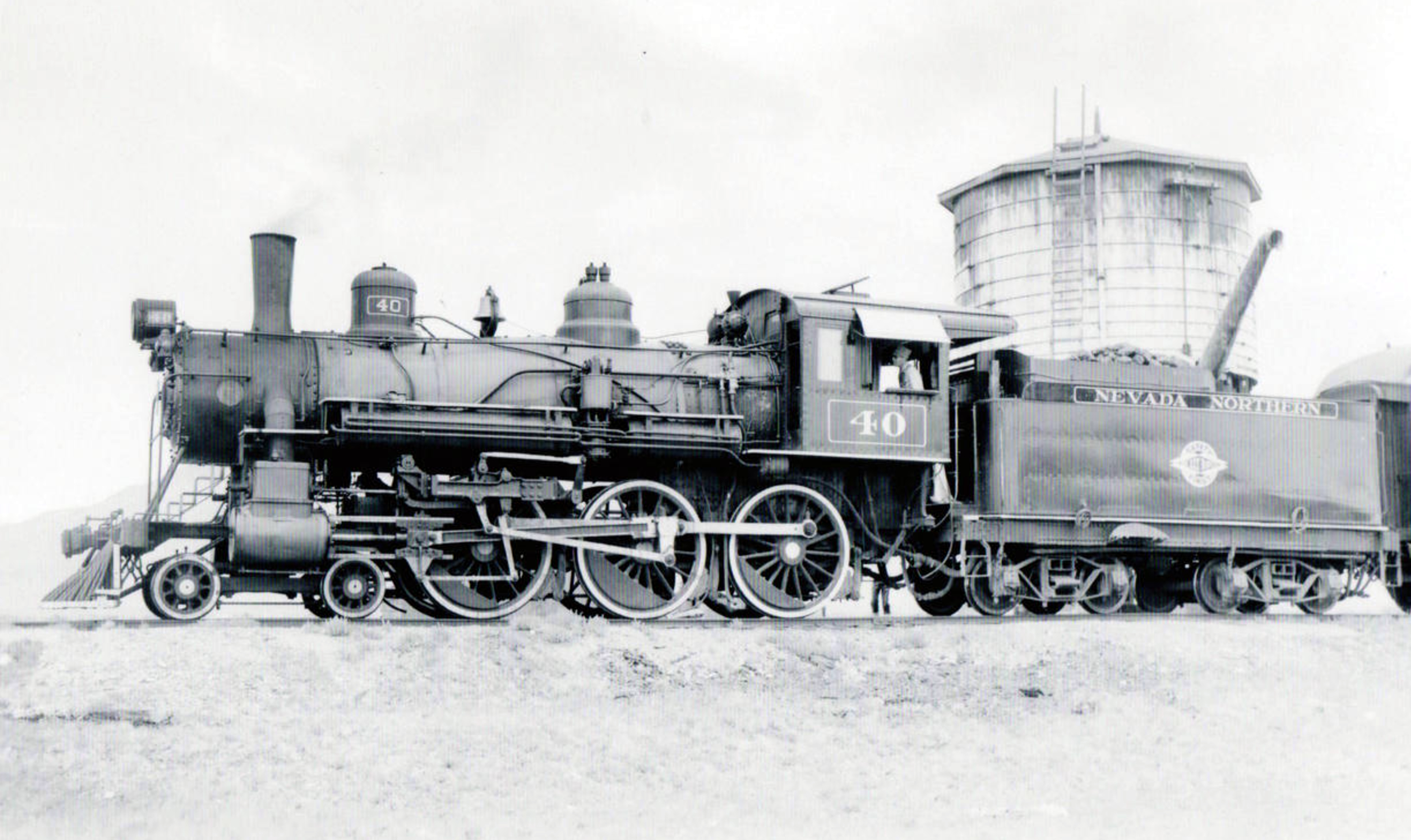
A pivotal development in Ely’s history was the establishment of the Nevada Northern Railway, headquartered in East Ely. Completed in the early 20th century, this 150-mile railway connected Ely’s mines in Ruth to a smelter in McGill and linked the town to the transcontinental railroad to the north. The railway was instrumental in transporting copper ore and other goods, effectively “forging the link” between Ely and national markets. This connectivity not only boosted Ely’s economy but also positioned it as a critical node in the supply chain of the American West, facilitating trade and communication across vast distances.

Nevada Northern Railway

The Lincoln Highway and Road Networks (1913–1922)

Ely’s role as a transportation hub was further cemented in 1913 when the transcontinental Lincoln Highway, one of America’s first coast-to-coast automobile routes, was routed through the town. Although the road was not paved until 1922, its inclusion of Ely underscored the town’s importance as a stopping point for travelers crossing the Great Basin. By the late 19th century, Ely was already connected by a network of wagon roads, but the Lincoln Highway elevated its status. Additionally, two other major roadways—U.S. Route 6 (designated in 1937, formerly the Midland Trail) and U.S. Route 93—converged at Ely, making it a crossroads for travelers moving between Canada, southern California, and beyond. With over 2,000 residents by the early 20th century, Ely offered essential services, making it an ideal stop for weary travelers.

The Historical Marker’s Creation

The “Forging the Link” marker, erected by the Nevada State Historic Preservation Office, was designed to capture Ely’s multifaceted role in connecting the Great Basin through exploration, mining, and transportation. While the exact date of the marker’s installation is not specified in available records, it is part of a broader initiative to document Nevada’s history through physical markers. The marker’s title, “Forging the Link,” reflects Ely’s historical significance as a connector—geographically, economically, and socially—in a region characterized by its isolation.

The marker likely emerged from a collaborative effort involving local historians, community members, and the SHPO, which oversees Nevada’s historical marker program. Such markers are typically proposed by local groups or agencies, such as the Bureau of Land Management’s Ely District, to highlight significant historical narratives. The content of the marker emphasizes Simpson’s exploration, the mining boom, the Nevada Northern Railway, and the Lincoln Highway, weaving together the threads of Ely’s development into a cohesive story of regional importance.

Significance and Legacy

The “Forging the Link” marker serves as both an educational tool and a point of pride for Ely’s residents. It highlights the town’s resilience and adaptability, from its origins as a mapped point in the Great Basin to its growth into a mining and transportation hub. The marker also underscores Ely’s enduring role as a service center for travelers, a legacy that continues with its position at the intersection of major highways. For visitors, the marker offers a glimpse into the challenges and triumphs of life in the American West, particularly in a region as remote as White Pine County.

Today, the marker stands as a testament to Ely’s historical contributions and its ongoing relevance. It invites reflection on how infrastructure and economic activity can transform a small town into a vital link in a larger network, a theme that resonates with Nevada’s broader history of connectivity and development.

James H. Simpson put the future site of Ely on the map during his 1859 exploration through the Great Basin.  In the 1860s, silver and gold deposits were discovered nearby in what became the Robinson Mining District.  Ely developed as a regional center, becoming the White Pine County seat in 1887.  The area grew dramatically in the early 1890s with major copper discoveries.  The Nevada Northern Railway, headquartered in East Ely, carried ore from the mines in Ruth to the McGill smelter, as well as connecting Ely to the world on its 150 mile route north to the transcontinental railroad.

The towns of eastern Nevada were joined during the late nineteenth century by a network of wagon roads.  In 1913, the road through Ely was incorporated into the transcontinental Lincoln Highway, though it was not paved until 1922.  Ely had over 2,000 residents and offered many services, making it an excellent stopping place on the long road across the Great Basin.  When the copper industry declined after World War I, the struggling town turned to travelers for income.

The Lincoln Highway was designated U.S. 50 in 1926.  By mid-century the popularity of the Victory Highway, now Interstate 80, reduced U.S. 50 to the status of “The Loneliest Road in America.”

In addition to the Lincoln Highway, two other major national roadways converge at Ely.  The Midland trail, designated Route 6 in 1937, was an early coast to coast automobile road that also connected Ely to Tonopah and southern California.  U.S 93, which passes north-south through Ely takes travelers from Canada almost to the Mexican border.

STATE OF NEVADA HISTORIC PRESERVATION OFFICE

AT&T

Land Services, Inc.

MACTEC Engineering and Consulting, Inc.

Ely Renaissance Society

Bureau of Land Management, Ely District

Nevada State Historic Marker 269 Map

Nevada State Historic Marker Summary

NameEly Forging The Link
LocationEly, White Pine County, Nevada
Latitude, Longitude39.2488, -114.8902
Nevada State Historic Marker269

Timothy H. O’Sullivan – Photographer

CDV of Timothy H. O'Sullivan with imprint of F.G. Ludlow, Carson City, Nevada Territory on verso. Taken between 1871–74 while O'Sullivan was the official photographer for the Wheeler Expedition.
CDV of Timothy H. O’Sullivan with imprint of F.G. Ludlow, Carson City, Nevada Territory on verso. Taken between 1871–74 while O’Sullivan was the official photographer for the Wheeler Expedition.

Timothy H. O’Sullivan (c. 1840 – January 14, 1882) was a photographer best known for of the Civil War and the western United States. O’Sullivan began his photography career as an apprentice in Mathew Brady’s Fulton Street gallery in New York City. He moved on to the Washington, D.C., branch managed by Alexander Gardner. In 1861. At the age of twenty-one, O’Sullivan joined Brady’s team of Civil War photographers.

Little is known about his early life. He was either born in Ireland or New Work City. As a teenager, Timothy was employed by Matthew Brady where he learn the newly invented craft of photography. When the Civil War broke out, he is commission as a first lieutenant in the Union Army, in 1861.

After the was, in 1867, Timothy H. O’Sullivan is hired by Clarence King to accompany the Geological Exploration of the Fortieth Parallel as a photographer. O’Sullivan was with the Survey for the seasons of 1867, 1868, 1869 and 1872.

During these expeditions, he is known to carry two or possibly three camera outfits which include a 9″x12″ and 8″x1O” plates and for stereoscopic views. He developed the plates in the field, as was necessary with the wet plate process, and worked in either a photographic tent or a mule-drawn ambulance wagon. The negatives were usually sent back to the Survey offices in Washington D.C. where they are printed.

In 1871, O’Sullivan join the geological surveys west of the one hundredth meridian, under the command of Lieutenant George M. Wheeler of the U.S. Corps of Engineers. Wheeler would caption O’Sullivan’s photographs with practical information useful in the later establishment of roads and rail routes and emphasized the west’s suitability for settlement.

In 1873, on another Wheeler expedition, O’Sullivan photographed the Zuni and Magia pueblos and the Canyon de Chelly and its remnants of a cliff-dwelling culture. He returned to Washington, D.C., in 1874 and made prints for the Army Corps of Engineers. Soon after being made chief photographer for the United States Treasury in 1880, O’Sullivan died of tuberculosis at age forty-one.

Sand dunes, 1867, Carson Desert Western Nevada RG 77 Records of the Office of the Chief of Engineers, 1789-1988 Photographic Album of the Geological Exploration of the Fortieth Parallel – The King Survey, 1867-1872 ARC ID 519530 77KS-3-160

Timothy H. O’Sullivan Portfolio

Gold Hill, Nevada Circa 1867, 1868 Photographer Timothy H. O'Sullivan
Gold Hill, Nevada Circa 1867, 1868 Photographer Timothy H. O’Sullivan

References

Ward Charcoal Ovens

The Ward Charcoal Ovens, located in the Ward Mining District of White Pine County, Nevada, approximately 11 miles south of Ely, are a remarkably preserved set of six beehive-shaped stone kilns built in 1876 to produce charcoal for the region’s silver smelting industry. Listed on the National Register of Historic Places in 1978, these ovens represent a critical component of Nevada’s 19th-century mining boom and remain a significant historical and cultural landmark.

Background and Construction (1872–1876)

The Ward Mining District was established in 1872 following the discovery of silver by prospectors, leading to the founding of the town of Ward, named after prospector William Ward. By 1875, the district’s silver mines, including the Paymaster and Martin White mines, required substantial charcoal to fuel smelting furnaces, as wood alone was insufficient for the high temperatures needed to process ore. In 1876, the Martin White Company, a San Francisco-based firm, constructed six conical charcoal ovens in Willow Creek Canyon, seven miles south of Ward, to meet this demand. Designed by Italian masons (likely Swiss-Italian stonemasons from nearby communities), the ovens were built using locally quarried tuff, a lightweight volcanic rock, bonded with lime mortar.

Each oven stands 30 feet tall and 27 feet in diameter at the base, with walls 2 feet thick at the bottom, tapering to 1 foot at the top. The beehive shape, a common design for 19th-century charcoal kilns, maximized heat retention and airflow. Each oven featured a large arched doorway at the base for loading wood and unloading charcoal, a smaller upper door for air regulation, and internal iron rods for structural support. The ovens were strategically placed near pinyon pine and juniper forests, which provided the necessary timber, and close to Willow Creek for water access during construction.

Operation and Peak Use (1876–1880)

The Ward Charcoal Ovens operated primarily from 1876 to 1880, during the height of Ward’s silver mining boom. The charcoal production process involved loading each oven with 35 cords of wood (approximately 4,480 cubic feet), sealing the door with brick and mortar, and igniting the wood through the upper vent. Controlled burning over 12 to 14 days reduced the wood to charcoal, which was then cooled, removed, and transported by mule to Ward’s smelters. Each oven could produce up to 1,750 bushels of charcoal per cycle, with the six ovens collectively supporting the smelting of millions of dollars’ worth of silver ore.

At its peak in 1877, Ward was Nevada’s largest town, with a population of 1,500, boasting a post office, hotels, saloons, stores, a Wells Fargo office, and the White Pine News. The ovens were central to this prosperity, enabling the Martin White Company’s smelter to process ore efficiently. The district produced approximately $4 million in silver (about $120 million in 2025 dollars) during its active years, with the ovens playing a critical role in sustaining the smelting industry.

Decline and Abandonment (1880–1900)

By 1880, Ward’s silver deposits began to deplete, and the completion of the Nevada Northern Railway in 1906 shifted mining focus to copper in nearby Ely, diminishing the need for charcoal. The ovens fell into disuse as smelters adopted coke (derived from coal) and other fuels, which were more cost-effective and accessible via rail. By the late 1880s, Ward’s population had plummeted, and the town was largely abandoned by 1900. The ovens, no longer needed, stood idle but were remarkably preserved due to their remote location and sturdy construction.

During their post-mining years, the ovens served various secondary purposes. Local lore describes them as shelters for prospectors, hideouts for stagecoach bandits, and gathering spots for social events like dances. One tale recounts a family living in an oven during a harsh winter, surviving by burning fires inside. These uses, while anecdotal, highlight the ovens’ enduring presence in the landscape.

Connection to Nevada Northern Railway

Although the Ward Charcoal Ovens predate the Nevada Northern Railway (completed in 1906 under Mark Requa’s leadership, as noted in prior conversation), their operation was indirectly tied to the broader mining economy that the railway later supported. The railway’s Ore Line, connecting Ely to Ruth and McGill, facilitated the transport of copper and other minerals, marking a shift from silver to copper as White Pine County’s economic driver. While the ovens were no longer active by the time the railway was built, their legacy as part of the region’s mining infrastructure complements the railway’s role in sustaining White Pine County’s mining heritage.

Preservation and Modern Significance (1971–Present)

In 1956, local residents advocated for the ovens’ preservation, leading to their designation as a Nevada State Historic Site in 1969 and inclusion in Ward Charcoal Ovens State Historic Park in 1994. The ovens were listed on the National Register of Historic Places on September 28, 1978, for their significance in Nevada’s mining and industrial history. Restoration efforts in 1971 and the 1990s repaired mortar and stabilized the structures, ensuring their longevity. The Nevada Division of State Parks has maintained the site, adding interpretive signs, a picnic area, and restrooms to enhance visitor access.

Today, the ovens are a popular destination, located 11 miles south of Ely via U.S. Highway 93 and a graded gravel road (at coordinates 39°02’05.8″N, 114°50’52.8″W). Their picturesque setting in Willow Creek Canyon, near Great Basin National Park, attracts tourists, historians, and photographers. The ovens’ excellent condition—owing to the arid climate and durable tuff construction—makes them a rare surviving example of 19th-century charcoal kilns, often compared to similar structures in Death Valley and Utah.

Conclusion

The Ward Charcoal Ovens stand as a testament to White Pine County’s silver mining boom and the technological ingenuity of the 1870s. Built to fuel Ward’s smelters, they supported a vibrant community that briefly rivaled Nevada’s largest towns. Their decline mirrored the region’s shift to copper mining, facilitated by infrastructure like the Nevada Northern Railway. Preserved as a state historic park and National Register site, the ovens offer a tangible link to Nevada’s mining past, drawing visitors to explore their unique architecture and historical significance.

Nevada State Historic Marker 184

Nevada State Historical Markers identify significant places of interest in Nevada’s history. The Nevada State Legislature started the program in 1967 to bring the state’s heritage to the public’s attention with on-site markers. These roadside markers bring attention to the places, people, and events that make up Nevada’s heritage. They are as diverse as the counties they are located within and range from the typical mining boom and bust town to the largest and most accessible petroglyph sites in Northern Nevada Budget cuts to the program caused the program to become dormant in 2009. Many of the markers are lost or damaged.

Most of the markers across the state are large blue metal markers. However, there are a variety of other marker styles out there. For this guide they have been simplified into a few categories (blue, blue small, concrete, and stone). Sometimes, the markers are on buildings, fences, or metal stands.

These ovens were constructed during the mid 1870’s and are larger and of finer construction than most other ovens found in Nevada.  They are 27 feet in diameter and 30 feet high with a capacity of about 35 cords of wood which was burned for a period of 12 days to produce about 50 bushels of good solid charcoal per cord.

The charcoal was used in the smelters at nearby Ward, about 30 to 50 bushels being required to reduce one ton of ore.

Each filling of one of these ovens required the total tree crop from 5 or 6 acres of land.  During the late 1870’s the hills and mountains around many mining camps were completely stripped of all timber for a radius of up to 35 miles.

As railroads penetrated the west charcoal was replaced by coke made from coal, and the charcoal industry faded.

“The real worth of the old charcoal ovens is their historical function in reminding present day Americans of a now-vanished industry, without which the great silver and lead bonanzas of the early west could not have been harvested.” Nell Murbarger.

STATE HISTORICAL MARKER No. 184

NEVADA STATE PARK SYSTEM

Nevada State Historic Marker 184 Map

Nevada State Historic Marker Summary

NameWard Charcoal Ovens
LocationWhite Pine County, Nevada
Latitude, Longitude39.0369, -114.8463
Nevada State Historic Marker184

Sources

  • Nevada State Historical Marker No. 96, Ward Charcoal Ovens, Nevada Division of State Parks.
  • Nevada Ghost Towns & Mining Camps by Stanley W. Paher (Nevada Publications, 1970).
  • Romancing Nevada’s Past: Ghost Towns and Historic Sites of Eureka, Lander, and White Pine Counties by Shawn Hall (University of Nevada Press, 1994).
  • National Register of Historic Places, Ward Charcoal Ovens, NRIS #78001724.
  • Nevada State Parks, Ward Charcoal Ovens State Historic Park, parks.nv.gov.
  • Roadside History of Nevada by Richard Moreno.
  • Western Mining History, Ward, Nevada.

Cherry Creek Nevada – Nevada State Historic Monument

The Cherry Creek area, located in northern White Pine County, Nevada, has a rich history tied to its mineral wealth and strategic location in the Steptoe Valley. Native Americans mined gold in nearby Egan Canyon as early as 1850, marking the region as one of Nevada’s oldest mining areas. In 1859, Major Howard Egan established a stage station in Egan Canyon for Woodward and Chorpenning’s California Mail Company. By 1860, the Pony Express used this station as a change point, and from 1861 to 1869, it served as an Overland Stage station. In 1863, soldiers from Fort Ruby discovered gold in Egan Canyon, leading to the formation of the Gold Canyon Mining District. By 1864, a five-stamp mill—the first in eastern Nevada—was built to process ore, and a small mining camp emerged.

Founding and First Boom (1872–1875)

Cherry Creek was officially founded on September 21, 1872, when prospectors Peter Corning and John Carpenter staked the Tea Cup claims, rich in gold and silver, at the mouth of Cherry Creek Canyon. The ore was assayed at over $6,000 per ton, sparking a rush of prospectors from the nearby White Pine district. By spring 1873, the town had a population of about 400, with a livery stable, blacksmith shop, a $2,000 hotel, boarding houses, restaurants, and over 20 saloons. Wells Fargo opened a station, and a post office began operating on June 11, 1873. The Thompson mill, with five stamps and a 25-ton capacity, was erected at the Tea Cup mine, and the Flagstaff mill soon followed. At its peak, the town may have had up to 6,000 residents, though estimates vary. However, by early 1874, the initial mineral claims began to play out, and by 1875, most mines and mills had closed, leading to a sharp decline in population and economic activity.

Second Boom and Peak Prosperity (1880–1883)

In 1880, new gold and silver discoveries revitalized Cherry Creek, triggering its most prosperous period. By the end of 1881, major mines like the Tea Cup and Star each employed over 200 workers, and Cherry Creek became the largest voting precinct in White Pine County. In 1882, the population reportedly reached 7,800, with 6,000 being transient mine workers. The town boasted 28 saloons, five mercantile stores, two clothing stores, a drug store, and a stagecoach route to Toano in Elko County. One mine alone produced over $1 million in gold bullion. Fraternal organizations, including the Odd Fellows (1880) and Masons (1882), established lodges, reflecting the town’s growth. However, the financial crash of 1883 halted operations, and a fire at the Star Mine in 1884, followed by another devastating fire in 1888 that destroyed much of the business district, deepened the decline. By 1890, only about 350 residents remained.

Revivals and Declines (1897–1940s)

Cherry Creek experienced several revivals. In 1897, renewed mining activity brought a modest boom that lasted into the early 1900s. In 1905, the Tea Cup (renamed Biscuit), Exchequer, and Star mines reopened, and the Nevada Northern Railway extended to Cherry Creek in 1906, boosting the population to around 450. However, this revival faded by 1910. Further activity occurred from 1917 to 1923, with a 100-ton flotation mill built in 1919, and from 1924 to 1940, when mines were intermittently active. Total production for the district from 1872 to the 1940s is estimated at $15–20 million, with significant output of gold, silver, and later tungsten. During World War II, mining slowed, and the town gradually declined.

Modern Era (Post-1940s)

Since the 1940s, Cherry Creek’s population has dwindled, with only 72 residents recorded in the 2010 census. The Barrel Saloon, the last operating business, closed in July 2010. Despite this, Cherry Creek remains a living community, not a true ghost town, with a small year-round population. Historic structures, including the 1872 schoolhouse (now a museum open by appointment), the post office building, and several cemeteries with wooden and marble tombstones, still stand alongside modern homes. A log cabin labeled “Jail” near the cemeteries adds to the town’s historic charm. The Cherry Creek Mining District continues to see occasional activity by leaseholders, and the town’s well-preserved remnants make it a prime destination for those exploring Nevada’s mining heritage. Visitors are urged to respect private property and avoid trespassing.

Nevada State History Marker 52

Cherry Creek

The town of Cherry Creek before you was part of a network of mining districts that operated in the nineteenth and twentieth centuries, including the Gold Canyon district in Egan Canyon, five miles to the south.

Peter Corning and John Carpenter helped start the town of Cherry Creek when they staked the Tea Cup gold claim in 1872, resulting in a boom and the development of a town.  At the town’s peak in 1882, it boasted a population of over 1,800.  While production fluctuated, Cherry Creek continued to produce gold and silver ore into the 1940s.

Egan Canyon to the south was part of the 1855 route established by Howard Egan and the Mormon Battalion, and surveyed for use in 1859 by the U.S. Army.  By 1860, the Pony Express placed a change station at the west opening of the canyon.  Between 1861 and 1869, Butterfield’s Overland Mail and Stage established a station here that grew into a small temporary town.

In 1863, soldiers from Fort Ruby discovered gold in the canyon, leading to the creation of the town of Egan and a mining district.  By 1865 there were three stamp mills in Egan processing ore from the district.  Like Cherry Creek, to the north, Egan boomed and busted into the 1920s before mining ceased.

STATE HISTORICAL MARKER No. 52

STATE HISTORIC PRESERVATION OFFICE

WHITE PINE PUBLIC MUSEUM INC.

Nevada State Historic Marker 52 Map

Summary

NameCherry Creek
LocationWhite Pine County, Nevada
Latitude, Longitude39.9008, -114.8851
Nevada State Historic Marker 52

Legacy

Cherry Creek exemplifies Nevada’s cyclical mining history, with its dramatic booms and busts driven by gold and silver discoveries. Its strategic location near Egan Canyon’s transportation routes and its enduring historic structures, such as the museum and cemeteries, preserve its legacy as one of White Pine County’s most significant mining towns. The town’s story is one of resilience, with periods of prosperity and decline shaping a community that remains a vital link to Nevada’s Old West past. For more information, visit the Cherry Creek Museum (775-289-3720) or http://www.greatbasinheritage.org/cherry-creek-nevada.