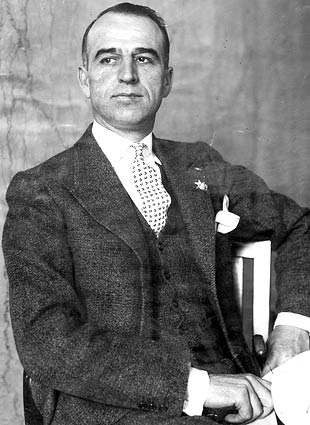
John Henry Holliday – Doc Holliday


John Henry “Doc” Holliday (1851โ€“1887)

John Henry Holliday, commonly known as Doc Holliday, was an American gambler, gunfighter, and dentist who became a legendary figure of the Old West. Born on August 14, 1851, in Griffin, Georgia, Holliday graduated from the Pennsylvania College of Dental Surgery in 1872. However, his career as a dentist was short-lived due to his struggle with tuberculosis, which drove him west in search of a drier climate.

Photograph of John Henry Holliday  taken by photographer D.F. Mitchell in Prescott, Arizona, 1879-80.
Photograph of John Henry Holliday taken by photographer D.F. Mitchell in Prescott, Arizona, 1879-80.

Early Life

John Henry Holliday, famously known as “Doc” Holliday, was born on August 14, 1851, in Griffin, Georgia, to Henry Burroughs Holliday and Alice Jane McKey. Raised in a well-to-do Southern family, Holliday enjoyed a privileged upbringing despite the turmoil of the Civil War. His mother taught him refined manners, and he received a classical education, excelling in academics. Hollidayโ€™s early life was marred by the death of his mother from tuberculosis in 1866, a disease that would later shape his own fate. After her passing, his father remarried, causing familial tension.

Holliday pursued higher education at the Pennsylvania College of Dental Surgery, graduating in 1872 with a degree in dentistry at the age of 20. He returned to Georgia to practice dentistry in Atlanta but was soon diagnosed with tuberculosis, the same illness that claimed his mother. Advised to seek a drier climate for his health, Holliday moved west in 1873, beginning a new chapter that would define his legacy.

Life in the West

In the American West, Hollidayโ€™s declining health and restless spirit led him to abandon dentistry for a life of gambling, drinking, and gunslinging. Settling first in Dallas, Texas, he earned a reputation as a skilled card player but also became embroiled in disputes, showcasing his quick temper and proficiency with firearms. His tuberculosis, coupled with heavy drinking, gave him a gaunt appearance and a fatalistic outlook, earning him the nickname “Doc” from his dental background.

Holliday drifted through towns like Denver, Cheyenne, and Deadwood, surviving on gambling winnings and occasional dental work. In 1877, in Fort Griffin, Texas, he met Wyatt Earp, a deputy marshal, forming a lifelong friendship that would cement his place in Western lore. Hollidayโ€™s loyalty to Earp and his brothers would lead him to Tombstone, Arizona, by 1880, where he became entangled in the regionโ€™s volatile conflicts.

His notoriety grew further due to his association with famous figures of the Old West, including the Earp brothersโ€”Wyatt, Virgil, and Morgan Earp. Holliday’s most famous involvement came during the infamous Gunfight at the O.K. Corral in Tombstone, Arizona, on October 26, 1881.

Tensions had been escalating between the Earps and the Clanton-McLaury gang for several months. The conflict stemmed from various disputes, including accusations of cattle theft and the gang’s attempts to undermine the authority of the Earps, who were lawmen in Tombstone. The situation reached a boiling point when a confrontation seemed inevitable.

On the day of the gunfight, the Earps, including Wyatt, Virgil, and Morgan, along with their ally Doc Holliday, confronted the Clanton-McLaury gang. The dispute was partly provoked by the gang’s refusal to disarm in accordance with the town’s regulations and their ongoing threats against the Earps.

Standing by the Earps’ side, Holliday’s courage and marksmanship were instrumental in the confrontation with the Clanton-McLaury gang, a pivotal event that solidified his place in Western folklore.

Holliday’s life was marked by violence, legal entanglements, and his relentless struggle with tuberculosis. Despite his reputation as a gunfighter, many of his confrontations were linked to his defense of his friends and his own self-preservation. He was also known for his sharp wit and his ability to engage in both verbal and physical duels.

Doc Holliday died on November 8, 1887, in Glenwood Springs, Colorado, at the age of 36. His health had deteriorated significantly in the years leading up to his death, and he spent his final days in the area seeking relief for his illness. Despite his relatively short life, Holliday left an indelible mark on American history and folklore, remembered as one of the most iconic and enigmatic figures of the Old West.

Later Years and Death

By 1882, Hollidayโ€™s tuberculosis and hard-living lifestyle had taken a severe toll. He parted ways with Earp after the vendetta ride and drifted through Colorado, living in towns like Leadville and Denver. His gambling and drinking habits led to multiple arrests, and his reputation as a dangerous man followed him. Despite his declining health, Holliday remained defiant, often staring down death with a sardonic wit.

In 1887, Holliday arrived in Glenwood Springs, Colorado, hoping the townโ€™s hot springs would alleviate his tuberculosis. However, his condition worsened. On November 8, 1887, at the age of 36, John Henry Holliday died in a sanatorium, reportedly looking at his bare feet and remarking with surprise that he was not dying “with his boots on,” defying his expectation of a violent end.

Articles Related to Doc Holliday

Contention City, Arizona, circa 1880. The Contention Mill - twenty-five stamps and thirty men - was one of three stamp mills that reduced the silver ore from the Tombstone mines.

Contention City, Arizona

Contention City (also known simply as Contention) was a short-lived boomtown and ghost town in Cochise County, southeastern Arizona. Located along the banks of the…
Photograph of John Henry Holliday taken by photographer D.F. Mitchell in Prescott, Arizona, 1879-80.

Doc Holliday – Death Announcement by the Denver Republican

Photograph of John Henry Holliday taken by photographer D.F. Mitchell in Prescott, Arizona, 1879-80. Doc Holliday, born John Henry Holliday, died on November 8, 1887,…
Frank Stilwell

Frank Stilwell

Frank Stilwell was a businessman, lawman, and outlaw in Arizona Territory, and was murdered by Wyatt Earp after the Gunfight at the O K Coral.…
Frank Stilwell

Grand Jury Indictment for the Killing of Frank Stilwell

Frank Stilwell The following is the Grand Jury Indictment for the Killing of Frank Stilwell which charges Doc Holliday, Wyatt Earp, Warren Earp, Sherman McMasters…
The first Tucson depot was a 200-foot long Victorian structure built in 1880. The depot accommodated passenger and freight trains. University of Arizona Libraries, Special Collections, Arizona, Southwestern and Miscellaneous Photograph Collection, Tucson (Ariz.)

Killing of Frank Stilwell

Frank Stilwell Frank C. Stilwell (1856โ€“March 20, 1882) was a complex figure in the American Old West, known as an outlaw, sometime deputy sheriff, and…

Mary Katherine Horony

Mary Katherine Horony, better known as Big Nose Kate, was a Hungarian-born figure of the American Old West, renowned for her independence, resilience, and her…
Morgan Earp historical photo, 1881. Probably taken by C.S. Fly.

Morgan Seth Earp

Morgan Seth Earp, born on April 24, 1851, in Pella, Iowa, was a notable figure of the American Old West, primarily recognized for his association…
The Tombstone Epitaph, Marth 27, 1882 headlined with the murder of Frank Stillwell by Wyatt Earp et all

The Tombstone Epitaph – March 27, 1882

Frank Stilwell On March 27, 1882, The newspaper the Tombstone Epitaph announced the murder of Frank Stilwell in Tucson Arizona. Frank Stilwell was an outlaw…
The Arizona Historical Newspaper, the Tombstone Epitaph announces the gunfight at the O K Coral.

The Tombstone Epitaph, October 27, 1881

The following is the original transcript of The Tombstone Epitaph published on October 27, 1881 on the infamous gun fight at the O K Corral…
Tombstone, Arizona in 1881 photographed by C. S. Fly. An ore wagon at the center of the image is pulled by 15 or 16 mules leaving town for one of the mines or on the way to a mill. The town had a population of about 4,000 that year with 600 dwellings and two church buildings. There were 650 men working in the nearby mines. The Tough Nut hoisting works are in the right foreground. The firehouse is behind the ore wagons, with the Russ House hotel just to the left of it. The dark, tall building above the Russ House is the Grand Hotel, and the top of Schieffelin Hall (1881) is visible to the right.

Tombstone Arizona

Tombstone Arizona is a historical point of interest, and the location of the O K Corral Gunfight, located in Cochise County, Arizona. The history and…
Virgil Earp 1843 -1905

Virgil Walter Earp

Virgil Walter Earp ( July 18, 1843 โ€“ October 19, 1905) was born in Lincoln County, Kentucky, was a prominent lawman and frontier figure known for his…
Wyatt Berry Stapp Earp - Aged 39

Wyatt Berry Stapp Earp

Wyatt Berry Stapp Earp (March 19, 1848 โ€“ January 13, 1929) was an American lawman and gambler who became a legendary figure of the Old…

John Peters “Johnny” Ringo

Johnny Ringo was an American gunfighter and outlaw most commonly associated with the infamous happenings in Tombstone, Arizona. He was often portrayed as the hired gun of the Clanton faction, an antagonist to Doc Holiday, and could be responsible for the kill of Morgan Earp. Although not formally educated, he supposedly quoted Shakespeare and cultivate an image of the refined gunman. Although in Tombstone at the time, and quarreled with Doc Holiday, he did not participate in the gunfight or every mince more than words with Holiday.

John Peters "Johnny" Ringo ( May 3, 1850 โ€“ July 13, 1882 )
John Peters “Johnny” Ringo ( May 3, 1850 โ€“ July 13, 1882 )

John Peters “Johnny” Ringo is born May 3, 1850 to Martin and Mary Peters Ringo in Greens Fork, Indiana. On July 30, 1864, when Johnny was 14, his family was relocation from Wyoming to California. While en route, Martin Ringo, Johnny’s father was killed when he stepped off their wagon holding a shotgun, which accidentally discharged. The head wound was gruesome and the family if forced to bury him on a hillside next to the trail. On their arrival in California, the family settled in San Jose.

Mason County War

In 1869, Johnny aged 19, left San Jose and moved to Mason County, Texas. While in Texas be befriended a former Texas Ranger Scott Cooley, who was the adoptive son of Rancher Tim Williamson. Williamson is arrested by a hostile mob and killed by Peter “Bad Man” Bader on May 13th, 1875. Following, Ringo and Colley rage a war of terror of those they felt guilty to Williamson’s murder. This became locally know as the “Hoodoo War” or the “Mason County Ware”.

On August 19th, 1875, Scott Cooley and Ringo killed Charley Bader when they mistook him for his brother Pete. The two men are jailed for the murder in Burnet, Texas, but soon escaped.

The Mason County War is over in November 1876 with about a dozen lives lost.

Ringo in Tombstone

Johnny found his way to Tombstone in the winter of 1880. He had a reputation of a bad temper and an alcoholic. He becomes associated with the Cochise County Cowboys alongs with the Clanton’s and may have participated in some of their “activities”. Ringo did not participate in the famous gunfight, however, on January 17th, 1882, he and Doc Holiday traded words and almost had a gunfight before both men were arrested.

Ringo was a fine man any way you look at him. Physically, intellectually, morally. He was six feet tall, rather slim in build, although broad-shouldered, medium fair as to complexion with gray-blue eyes and light brown hair. His face was somewhat long. He was what might be called an attractive man. His attitude toward all women was gentlemanly. He must have been a gentleman born. Sometimes I noticed something wistful about him, as if his thoughts were far away on something sad. He would say, โ€˜Oh, well,โ€™ and sigh. Then he would smile, but his smiles were always sad. There was something in his life that only he, himself, knew about โ€ฆ. He was always neat, clean, well dressed, showed that he took good care of himself. He never boasted of his deeds, good or bad, a trait I have always liked in men. Johnโ€ฆwas a loyal friend. And he was noble, for he never fought anyone except face to face. Every time I think of him, my eyes fill with tears.

Mary Katherine Horony Cummings – Big Nose Kate

Following the attacks on Virgil and Morgan Earp, Wyatt Earp blamed Ringo for the ambush and murder of Morgan on March 18th, 1882. Morgans death prompted a “vendetta” ride which sees Wyatt hunting those whom he blamed for Morgan’s death. March 20th, 1882, Wyatt killed Frank Stillwell in Tucson, Arizona. Following, Johnny Ringo is deputized into a possse to search for the Wyatt and Holiday, although they never find them.

Mysterious Death

During Tombstone’s Fourth of July festivities, Ringo drank heavily. Two days letter he left Tombstone with several bottles of liquor. On July 8th, Deputy Billy Breakenridge ran into Ringo at Dial’s Ranch in the South Pass of the Dragoon Mountains. During this encounter “Ringo was very drunk, reeling in the saddle.” He encouraged Ringo to follow him back to the Goodrich Ranch. But, “he was drunk and stubborn and went on his way. I think this was the last time he was seen alive.”

At about 3pm on July 13, ranch hands at a nearby ranch heard a shot.

On July 14th, 1882, Ringo’s lifeless body is discovered by Teamster James Yoast, Ringo is found dead among “a bunch of five large black jack oaks growing up in a semicircle from one root, and in the center of them was a large flat rock which made a comfortable seat.” 

On discovery, Ringos body is already blacked from the hot Arizona sun.

His feet were wrapped in strips of cloth torn from his undershirt. Ringo had lost his horse with his boots tied to the saddle. The coroner’s report noted that “He had evidently traveled but a short distance in this foot gear.” A bullet hole is found at his right temple and an exit wound at the back of his head. The fatal wound was upward at a 45-degree angle between the right eye and ear. His Colt Single Action Army .45 revolver was still in his right hand with the hammer rested on the empty chamber. A knife cut was found at the base of his scalp, as if “someone had cut it with a knife.” His horse was found eleven days later about 2 miles away with Ringo’s boots still tied to the saddle. 

Despite the later claims by Wyatt Earp to have killed him, or movie depictions of Doc Holiday dispatching him and a show down, it is not difficult to image a very drunk Johnny Ringo committing suicide, after falling off and loosing his horse.

Summary

NameJohn Peters Ringo
Also Know ASJohnny Ringo, Johnny Ringgold
Birth / DeathMay 3, 1850 โ€“ July 13, 1882
Cause of DeathSuicide, Cochise County, Ariona
Side armColt Single Action Army .45 revolver
VictimsJames Cheyney – Killed – September 25, 1875 – Mason County, Texas
Charley Bader – Killed – August 19th, 1875 – Mason County, Texas
Louis Hancock – Wounded – December 1879 – Safford Arizona

References

Courtney Chauncey Julian

Courtney Chauncey Julian
C. C. Julian

Courtney Chauncey Julian, C. C. Julian, was a businessman and shameless promoter who’s business dealings forced him to flee to California for China. He is noteworthy in his dealing in Death Valley National Park for his promotion of the town of Leadfield. After numerous court battles, he fled to Shanghai, China where he is poisoned or committed suicide.

C.C. Julian launched a newspaper blitz promoting his Julian Petroleum Corporation in 1923. The promotional blitz formed the basis for a ponzi scheme for investment into the JPC. The scandal became known as the “Julian Pete Scandal”. By 1927, it is estimated that Julian sold four million dollars in stock, which was stolen from his investors. Others estimate the value of the scheme at over eight million.

Drama followed the man, as he received death threats, however the nature of this threat is never resolved. It was reported by the United Press on Jan 4, 1924, that gun shots are fired threw the windows of his $100,000.00 house in Hollywood.

Perhaps one of his wierdest altercations came with famed film star Charles Chaplin. Just weeks after the shooting, Julian literally bumped into a table where Chaplin was eating at Club Petrouschka in Hollywood. A fight ensured and Chaplin got the better of Julian and knocked him out.

As one would expect from a thief, Julian had assets seized, by Collector of Internal Revenue, of $250,000.00 in cash and securities for failure to file is earnings from 1919-1923. He is able to maintain his house because it is deeded by his wife.

Julian at the Western Lead Mine located in Leadfield, California - Photo Los Angeles Times
Julian at the Western Lead Mine located in Leadfield, California – Photo Los Angeles Times

The end of Julian Petroleum Corporation stated in 1925. Julian sold his interest in the company to Sheridan C. (S.C.) Lewis and Jacob Berman for the sum on $500,000.00. The following year the company merged with California-Eastern Oil Company. An internal audit revealed the company had issued 4,200,000 unauthorized shares of stock. On May 5, 1927, the Los Angeles Stock Exchange halted trading in Julian Petroleum.

In 1931, Julian was charged with conspiracy to commit fraud in Oklahoma. He jumped bail and fled to country for Shanghai, China. Courtney Chauncey Julian is found dead of suicide in March, 1934.

"The Last Days of C. C. Julian," Los Angeles Times, 29 Sept. 1935
“The Last Days of C. C. Julian,” Los Angeles Times, 29 Sept. 1935

This town was the brain child of C. C. Julian, who could have sold ice to an Eskimo. He wandered into Titus Canyon with money on his mind. He blasted some tunnels and liberally salted them with lead ore he had brought from Tonopah. Then he sat down and drew up some enticing, maps of the area. He moved the usually dry and never deep Amargosa River miles from its normal bed.

He drew pictures of ships steaming up the river hauling out the bountiful ore from his mines. Then he distributed handbills and lured Eastern promoters into investing money. Miners flocked in at the scent of a big strike and dug their hopeful holes. They built a few shacks. Julian was such a promoter he even conned the U. S. Government into building a post office here. 

Desert Magazine – 1971 – Betty J. Tucker

References

Jackson Lee Davis “Diamondfield Jack”

Jackson Lee “Diamondfield Jack” Davis who was pardoned for murder in Idaho and moved to Nevada where he founded several mining camps. Davis was a hired gun who worked for the cattlemen “protecting” cattle herds and their grazing land from sheep famers.

Jackson Lee "Diamondfield Jack" Davis (12 Aug 1863โ€“2 Jan 1949)
Jackson Lee “Diamondfield Jack” Davis (12 Aug 1863โ€“2 Jan 1949)

In 1895, Davis is hired by the Sparks-Harrell cattle company to keep the sheepherders off of the grazing lands. After an altercation where Davis wounded Bill Tolman in a shooting. Following this incident, he fled south to Nevada to star or of sight. While in Nevada, Davis is known to brad about his exploits.

In February, 1896, Davis returned to Idaho and returned to work for Sparks-Harrell in Idaho. During this time, two sheepherders, Daniel Cummings and John Wilson, are shot and killed. Due to he previous bragging and his being in the area at the time, Davis became a suspect. Davis fled to Arizona and is eventually captured. Upon his capture, he is returned to Idaho, tried, found guilty and sentenced to death for of the shooting.

DiamondField Nevada  - 1904 - Paher
DiamondField Nevada – 1904 – Paher

keep the sheep back. Donโ€™t kill but shoot to wound if necessary. Use what measures you think best. If you have to kill, the company will stand behind you โ€“ regardless what happens.

While “Diamondfield Jack” is waiting his execution, two other men, James Bower and Jeff Gray, confess to the killing. During their trial, the two men are found not guilty. Regardless, this trial raised doubt as to the trial and Davis is reprieved one day before his scheduled execution.

Following a series of appeals, Davis is again scheduled for execution on July 3rd, 1901. At this point in time, public opinion no longer supported the death penalty. His execution is rescheduled until the Board of Pardons commutes his sentence to life in prisons. Davis is eventually pardoned on December 17th, 1902.

Following his release, Davis moved south into Nevada. In the spring of 1903, when news of promising gold strikes in Goldfield, Davis travelled to the town. After exploring and prospecting he uncovered promising ore ledges on McMahon Ridge northeast of town.

Within weeks of his discovery, prospectors flooded into the area. “Diamondfield Jack”, ever the opportunist plotted a townsite for the location and build a toll road to the new town from Goldfield. In the fall of 1904, the town reached its apex. At that time, it boasted a Post Office, three saloons, restaurants, general stores, schools, church, livery, butcher shop, blacksmith and union hall for the miners, which is impressive for a town just six months old. Public servants such as a sheriff, notary public and lawyer also maintained offices in the new formed district.

Nevada State Historic Marker #251 Text

This historical marker commemorates the lasting notoriety of flamboyant western gunman Jackson Lee Davis (1870-1949), who was better known by the colorful name, “Diamondfield Jack.” As a young man, after unsuccessfully prospecting for diamonds in the nearby hills, Davis was jokingly called “Diamondfield Jack,” a nickname that he carried the rest of his life.

In the late 1890’s, Davis gained a measure of fame as a gunman for the cattle interests, including rancher John Sparks, who would later become a Nevada governor, that were attempting to restrict sheep ranchers from southern Idaho and northeastern Nevada rangelands. Following a sensational trial in 1896, Davis was convicted of murdering two sheepherders. He was sentenced to be hanged, even after others confessed to the murders.

In 1902, Davis was finally pardoned for the crimes. He moved to the central Nevada mining towns of Tonopah and Goldfield, where he became a successful mine operator. He also helped found several mining camps, including one called Diamondfield. In later years, he drifted into obscurity and died in Las Vegas in 1949 after being struck by a car.

Nevada State Historic Marker #251 Summary

Nevada State Historic Marker251
NameDiamondfield Jack Davis
LocationElko County, Nevada
Latitude, Longitude41.9847, -114.6720

Resources