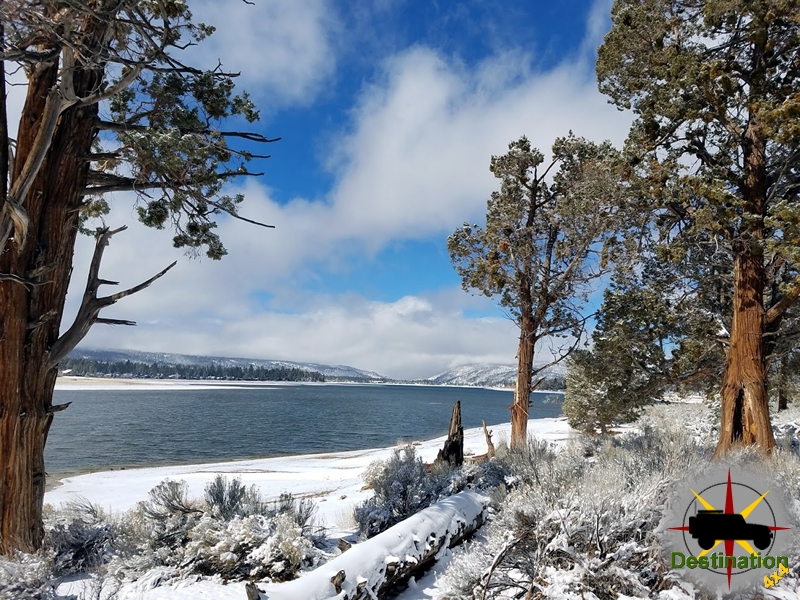
Big Bear, CA
I quiet mountain community full of back country adventure.
The Journey is the destination
The Argus was a weekly newspaper published in Holbrook, Navajo County, Arizona, from 1895 to 1900. Serving the rural community during Arizona’s territorial period, it provided local news, advertisements, and insights into the social, economic, and political life of the region. This report explores its history, content, and significance, using digitized records from the Library of Congress’ Chronicling America and the Arizona Memory Project.
The Argus began on December 12, 1895, in Holbrook, a town along the Atlantic and Pacific Railroad. Published by the Arizona State Library, Archives and Public Records, it ran until December 1900 (LCCN: sn 94051341, OCLC: 25084608). Digitized issues from 1895–1900 are available through the Arizona Historical Digital Newspapers collection. Holbrook was a hub for ranching and trade, and The Argus succeeded The Holbrook News (1890–1891), later transitioning to The Holbrook Argus (1900–1913).
The Argus covered:
Details on editors or publishers are limited, but local business or railroad figures likely ran the newspaper. Printed in Holbrook, it served Navajo County and nearby areas, with digitization credited to the Arizona State Library.
Published during Arizona’s territorial period (1863–1912), The Argus operated amid railroad expansion and population growth. Holbrook’s role as a trade hub shaped its focus on local concerns, with some coverage of statehood debates and Native American relations.
The Argus fostered community cohesion in Holbrook, documenting daily life and commerce. Its digitized archives (1895–1900) are a genealogical and historical resource, accessible via Chronicling America. Its successor, The Holbrook Argus, continued its legacy until 1913, reflecting the importance of local journalism.
The Argus (1895–1900) was a vital newspaper in Holbrook, capturing Navajo County’s territorial history. Its coverage of local events and commerce offers a window into rural Arizona life. Preserved through digitization, it remains a key resource for researchers studying Arizona’s early settlers.
Sources: Library of Congress Chronicling America, Arizona Memory Project.

. The tale, rooted in mystery and intrigue, has captivated treasure hunters and historians for over a century. The legend of the Lost Dutchman’s Gold Mine is set against the backdrop of the American expansion westward during the 19th century. Following the California Gold Rush of 1849, prospectors flocked to the West in search of fortune, transforming the region’s demographics and economy. The Arizona Territory, with its rugged landscape and mineral wealth, became a focal point for these adventurers.

The central figure in the legend is Jacob Waltz, a German immigrant often referred to as “The Dutchman,” a term that mistakenly identified his German origin. Waltz was born on September 20, 1810, in Württemberg, Germany, and emigrated to the United States in the 1830s. After participating in the California Gold Rush, he moved to the Arizona Territory in the 1860s, where he gained a reputation as a skilled prospector.
Jacob Waltz lived out his later years in Phoenix, Arizona. The Dutchman lived in an adobe houses located in the northeast corner of section 16, Township 1 North, Range 3 East. The site is located today near the southwest corner of 16th Street and Buckeye.
On February 19th, 1891, his adobe home is abandoned when the Salt Creek flooded over running its’s banks. The flooding is severe and local papers at the time, do not mention Watlz, yet did headline “SEVERAL PEOPLE PROBABLY LOST”.
Waltz died on October 25, 1891 at the home of a black woman Julia Thomas after months of illness. Thomas had be housing the old man since . When the Dutchman passed, a candle box under his bed contained 48 pounds of the rich gold ore. The source of the gold is believed to be a “lost” gold mine of Jacob Waltz, the Dutchman, the Lost Dutchman Goldmine.
Unfortunately, the facts of the gold mine end with the death of Jacob Waltz, and the legends spring to life with rumor and tall tales.
On his deathbed in the early morning of October 25, 1891, Waltz is said to have revealed the location of the mine to Julia Thomas, a local woman who had cared for him during his final illness. Unfortunately, the old prospector was suffering from pneumonia, so, at best communication would be labored and difficult.
When the old man passed, Holmes and Thomas were in possession of a incredible secret and 48 pounds of rich gold ore. According to historians Tom Kollenborn, the Dick Homes took possession of the gold ore and took it to Goldman’s Store in Phoenix were it was assayed. The assay report stated the ore to be worth $110,000 a ton in 1890’s dollars.
Whatever was said a few things came from the events to the Dutchman’s death. Dick Holmes, Julia Thomas and Reiney Petrasch were the only people around when the old miner passed. Weather or not the true story of his last mine is the subject of debate from multiple factions from these two parties.
After Waltz’s death, Julia Thomas was convinced of the mine’s existence and its potential to transform her life. She, along with her adopted son Rhinehart Petrasch and his brother Hermann set out for the Superstition Mountains on August 11, 1892. They hoped to find the mine based on the directions supposedly provided by Waltz. However, the harsh and rugged terrain of the mountains, coupled with the elusive nature of Waltz’s descriptions, made the search extremely challenging. August in Arizona was probably not a good choice.
Despite her determination, Julia Thomas never found the Lost Dutchman’s Gold Mine. Her repeated failures and the high cost of the expeditions depleted her resources. Eventually, she was forced to abandon the search and return to her life in Phoenix Later in life, she would tell her story and sell maps to the Lost Dutchman’s gold mine. It remains confusing why someone would purchase a map to a gold mine from someone who didn’t find it, is also a mystery.
Following her search, Julia sold her story to Pierpont C. Bicknell who first published the tail in The San Francisco Chronicle on January 13th, 1895.
Published in The Saturday Review, November 17th 1894
“In a gulch in the Superstition Mountains, the location of which is described by certain landmarks, there is a two room house in the mouth of a cave on the side of the slope near the gulch. Just across the gulch, about 200 yards, opposite the house in the cave, is a tunnel, well covered up and concealed in the bushes. Here is the mine, the richest in the world on the side of the mountains, is a shaft or incline that is not see steep but one can climb down. This, too, is covered carefully. The shaft goes right down in the midst of a rich gold ledge, where it can be picked off in big flakes of almost pure gold”

The lost Dutchman Mine makes natioanl attention following the search for and death of Adolph Ruth.
Adolph Ruth was born in the mid-19th century and worked as a government employee in Washington, D.C. His passion for adventure and treasure hunting led him to explore various parts of the American Southwest in search of lost mines and legendary treasures. Ruth was particularly captivated by the tale of the Lost Dutchman’s Gold Mine, a legendary gold mine purportedly hidden in the Superstition Mountains of Arizona.
Ruth lost his life by following a map he acquired and then initiated his search in the middle of June, 1931. His remains are found near Weavers Needle, by an investigation reported on by the Arizona Republic. His skull is found with a large hole which may have been caused by a firearm or scavenging animals. Regardless, the news paper published the story and the Lost Dutchman Gold mine is a national story.
Following the death of Jacob Waltz, the location of the Lost Dutchman’s mine was lost forever. The dying miner may have shared the location of his mine with three people, Julia Thomas, Dick Holmes and Herman Petrasch. However, even this claim is unclear. All three of these people searched for the lost mine, and all three passed into history penniless, or with no apparent success.
The Legend of the Lost Dutchman’s gold mine is grown by the stories of these three people and those who listened to them. The tale over time becomes sensationalized, expanded, convoluted, romanticized and even led to the death of some. In 1832, The Coolidge Examiner claimed that nine people including Adolph Ruth had lost their lives searching for the treasure. The original tale has been expanded to include murders, apaches, mexican bandits and the Peralta.
Obviously, anyone would be interested in a map to the Lost Dutchman’s Gold Mine. Sadly, you need to keep looking… In the meantime, here is a map of locations associated with the lore of the lost mine.
 Adolph RuthThe disappearance and death of Adolph Ruth in the Superstition Mountains of Arizona in 1931 is one of the most enduring mysteries associated with the… |
 George ‘Brownie’ HolmesGeorge "Brownie" Holmes (April 11, 1892 – April 11, 1980) was a notable figure in Arizona history, best known for his lifelong pursuit of the… |
Gideon RobertsGideon Roberts was a minor but notable figure in the legend of the Lost Dutchman Gold Mine, a fabled gold deposit hidden in Arizona’s Superstition… |
 Herman PetraschHerman Petrasch ( April 6 1864 - 23 Nov 23, 1953 ), Photo by Desert Magazine January 1954 Issue Herman Petrasch of Phoenix, Arizona, is… |
 Jacob Waltz the “Dutchman”Photograph take of Jacob Waltz after his arrival in New York. Jacob Waltz, often referred to as "Dutchman," was a German immigrant whose life became… |
 Julia ThomasJulia Thomas (c. 1862–1917) was a pivotal figure in the enduring legend of the Lost Dutchman’s Mine, a tale of hidden gold in Arizona’s Superstition… |
 Pierpont Constable BicknellPierpont Constable Bicknell (c. 1836 – March 31, 1904) was a notable figure in Arizona's frontier history as a prospector, mining enthusiast, newspaperman, and writer… |
 Rhinehart PetraschRhinehart Petrasch of Phoenix, Arizona, is best known for prospecting and ranching, and was said to have spent considerable time searching for the Lost Dutchman… |
Arizona Republic – June 26, 1931The disappearance of Adolph Ruth in the Superstition Mountains as reported by the Arizona Republic on June 26, 1931. Adolph Ruth was a 66-year-old veterinarian… |
 Mesa Free Press – A Curious FindMesa Free Press. (Mesa, AZ) 9 Nov. 1894, p. 1. Retrieved from the Library of Congress, www.loc.gov/item/sn95060636/1894-11-09/ed-1/. A Curious Find. P. C. Bicknell is back… |
 San Francisco Chronicle – Jan. 13, 1895On January13th, 1895, an article from the San Francisco Chronicle entitled A Mine in the Superstition Mountains announced to the world, Jacob Waltz and what… |
San Francisco Chronicle newspaper of Jan. 13, 1895San Francisco Chronicle newspaper of Jan. 13, 1895 The San Francisco Chronicle article published on January 13, 1895, titled something along the lines of "A… |
 The Coolidge Examiner – Lookout Station on Superstition MountainLost Dutchman Mine searcher Adolph Ruth Adolph Ruth was a nove treasure hunter whose pursuit of the legendary Lost Dutchman Mine led to his mysterious… |
 The Coolidge Examiner – Search for Adolph Ruth in the Superstition MountainsThe Search for Adolph Ruth in the Superstition Mountains ends it tragedy as reported by the Coolidge Examiner on December 18, 1931. After months of… |
 The Coolidge Examiner – Search for Ruth SuspendedLost Dutchman Mine searcher Adolph Ruth The Coolidge Examiner of August 7, 1931 announces the Search for Rush Suspended due to heat in the Superstition… |
 The Coolidge Examiner – The Search for Ruth Still FutileLost Dutchman Mine searcher Adolph Ruth The Coolidge Examiner of July 17, 1931 headlines the "Search for Ruth Still Futile" as he is lost looking… |
 The Kansas City Journal, Sunday February 17, 1895The Kansas City Journal, Sunday February 17, 1895 outlines the initial legend of the Lost Dutchman Gold Mine. The Kansas City Journal, Sunday February 17,… |
 The Saturday Review, November 17, 1894A Mythical Mine Headline in The Saturday Review, November 17, 1894 J.C. Bicknell's newspaper articles on the Lost Dutchman Mine, published in the late 19th… |
 The Curse of the Dutchman’s Gold by Helen CorbinThe Curse of the Dutchman's Gold by Helen Corbin Helen Corbin's The Curse of the Dutchman's Gold is the first book I have read on… |
The Humboldt Canal, often referred to as the Old French Canal, was an ambitious engineering project conceived in 1862 by A. Gintz and Joseph Ginaca in Humboldt County, Nevada. The canal was designed to harness water from the Humboldt River to serve multiple purposes: powering over 40 stamp mills for mining operations near Mill City, enabling barge traffic, and providing irrigation for agricultural development. The planned waterway was to stretch 66 miles from Preble, near Golconda, southwestward to Mill City, with dimensions of 15 feet wide, 3 feet deep, and a fall of 35 feet to facilitate water flow. The estimated cost was $160,000, largely funded by French capital, reflecting the significant involvement of French immigrants in the project.
Construction began in 1863, with Louis Lay, a French emigrant from California, subcontracting the initial segment. Frank Baud, a key figure in Winnemucca’s founding, contributed as a teamster. Approximately $100,000 was spent to extend the canal to the Winnemucca area. However, the project faced significant obstacles due to engineering miscalculations and environmental challenges. Severe seepage issues, particularly at Rose Creek Pass where water disappeared into the sandy soil, prevented the canal from being completed or used between Winnemucca and Mill City. These technical difficulties ultimately rendered the canal non-functional for its intended purposes.
Despite its failure to reach Mill City, the Humboldt Canal played a crucial role in stimulating early economic growth in Winnemucca. The construction effort attracted workers and investment, contributing to the town’s development as a regional hub. Remnants of the canal remain visible today in the Golconda area, various sections of Winnemucca, and at Rose Creek, south of the city, serving as historical markers of this 19th-century endeavor. The project is commemorated by Nevada Historical Marker No. 21, which highlights its significance and the challenges that led to its abandonment.
The Humboldt Canal was part of a broader wave of infrastructure projects in Nevada during the 1860s, driven by the mining boom and the need for water management in the arid Great Basin. While the canal itself was not successful, it reflects the era’s optimism and ambition to transform the desert landscape for industrial and agricultural purposes. The Humboldt River, which the canal was meant to tap, was a vital lifeline for explorers, emigrants, and settlers, guiding the California Trail and later the transcontinental railroad and Interstate 80. The canal’s story underscores the challenges of water management in Nevada, a theme that continues to resonate in contemporary debates over groundwater and surface water use in the Humboldt River Basin.
Nevada State Historical Markers identify significant places of interest in Nevada’s history. The Nevada State Legislature started the program in 1967 to bring the state’s heritage to the public’s attention with on-site markers. These roadside markers bring attention to the places, people, and events that make up Nevada’s heritage. They are as diverse as the counties they are located within and range from the typical mining boom and bust town to the largest and most accessible petroglyph sites in Northern Nevada Budget cuts to the program caused the program to become dormant in 2009. Many of the markers are lost or damaged.
The Humboldt Canal, sometimes termed the Old French Canal, coursed southwestward from Preble, near Golconda, toward Mill City. The present highway crossed it at this point, from whence it ran southerly toward the Humboldt County Courthouse on Bridge and West Fifth Streets.
The canal was conceived in 1862 by A. Gintz and Joseph Ginaca. The waterway with a projected cost of $160,000 was to be sixty-six miles long, fifteen feet wide and three feet deep, and with a fall of thirty-five feet. Its primary purpose was to supply water for over forty stamp mills planned at and above Mill City, but it was also designed for barge traffic and some irrigation water supply.
Construction of the canal began in 1863. Louis Lay, a French emigrant from California, sub-contracted the first segment. Winnemucca city founder Frank Baud, another Frenchman, came on the project as a teamster.
About $100,000, largely French capital, was expended in building the Humboldt Canal to the Winnemucca area. Because of engineering errors and severe seepage problems between Winnemucca and Mill city, that section was never finally completed or used.
| Name | The Humboldt Canal |
| Location | Humboldt County, Nevada |
| Latitude, Longitude | 40.9817, -117.7269 |
| Nevada State Historic Marker | 21 |
Jacob Waltz, often referred to as “Dutchman,” was a German immigrant whose life became legendary due to his association with the fabled Lost Dutchman’s Gold Mine. “Dutchman” was a common American term for a German. “Dutch” was the the English cognate to the German demonym “Deutsch”.
Born on September 20, 1810, in the Kingdom of Württemberg, part of present-day Germany, Waltz grew up during a time of economic and social upheaval in Europe, prompting him to seek a better life in the United States.
In the 1830s, Jacob Waltz emigrated to the United States, settling initially in New York before moving to the Midwest. He worked various jobs, including farming and carpentry, skills that would serve him well in his later adventures. By the 1840s, Waltz had joined the wave of settlers heading westward, spurred by the promise of land and opportunity.
Waltz’s life took a significant turn during the California Gold Rush of 1849. Like many others, he headed to California in search of fortune. Although records of his successes during this period are sparse, it’s clear that Waltz gained valuable experience in prospecting and mining.
In the 1860s, Waltz moved to the Arizona Territory, a region rich in mineral resources. He became a naturalized U.S. citizen in 1861 and established himself as a respected prospector and miner. Waltz was known to have worked claims in the Bradshaw Mountains and other areas, gradually building a modest reputation and some wealth.
By the 1870s, Waltz had established a homestead in Phoenix, where he lived modestly despite his alleged wealth. He owned a small farm along the Salt River, raising chickens and tending crops, which provided a cover for his prospecting activities. Waltz was known to be solitary but maintained a few key relationships. One significant connection was with Julia Thomas, a German-born woman who ran a bakery in Phoenix. Thomas cared for Waltz in his later years, particularly during his final illness, and some accounts suggest she hoped to inherit knowledge of the mine’s location.
Another figure in Waltz’s orbit was Richard J. Holmes, a local rancher and prospector who claimed to have known Waltz and received clues about the mine. Holmes’ account, passed down through his son Brownie and the controversial Holmes Manuscript, alleges Waltz entrusted him with 48 pounds of gold ore and vague directions to the mine on his deathbed. However, competing narratives, including those from Thomas and her associates, dispute Holmes’ claims, suggesting he may have taken the ore without permission.
The most enduring and enigmatic chapter of Waltz’s life began in the late 19th century with his alleged discovery of a rich gold mine in the Superstition Mountains, east of Phoenix, Arizona. According to legend, Waltz found a vein of gold so abundant that it defied belief. However, he kept the location of the mine a closely guarded secret until his death.
Waltz’s reticence and the scant details he provided about the mine contributed to the mystery. He was reputedly evasive about the mine’s location, sharing cryptic clues and maps with only a few trusted friends. This secrecy fueled speculation and stories about the mine’s existence, especially after Waltz’s death.

In his later years, Waltz lived a relatively quiet life in Phoenix, Arizona. He never married and had no known children. Waltz’s health began to decline in the 1890s. On February 19th, 1891, the Salt River flooded to its highest known levels at the time, and forced Waltz, along with many other families, to flee his homestead. In 1891, he moved in with Julia Thomas, a local woman who had befriended him and cared for him during his illness.
Jacob Waltz died on October 25, 1891. On his deathbed, he purportedly revealed the location of the mine to Julia Thomas, but subsequent searches by Thomas and countless others have failed to definitively uncover the fabled treasure. At the time of his death, Waltz was in possession of 48 pounds to rich gold ore, said to be in a box under his bed. Questions about the source of this gold lead many to speculate of the existence of a rich lost gold mine.
Jacob Waltz’s legacy is intertwined with the enduring legend of the Lost Dutchman’s Gold Mine. The tale has inspired countless expeditions, books, movies, and a mystique that continues to draw adventurers to the Superstition Mountains. While the exact truth of Waltz’s discovery remains elusive, his story symbolizes the enduring allure of hidden treasure and the American frontier spirit.
Waltz’s life and the legend of his mine highlight the era of American expansion and the human fascination with untold wealth. Despite the passage of time, the mystery of the Lost Dutchman’s Gold Mine ensures that Jacob Waltz’s name remains etched in the annals of American folklore.
Burial: Jacob Waltz, the legendary “Lost Dutchman” associated with the famous Lost Dutchman’s Mine in Arizona, is buried in Phoenix. He died on October 25, 1891, and his final resting place is in the Pioneer and Military Memorial Park, specifically in the City/Loosley Cemetery section, located in Phoenix, Arizona. This cemetery is part of a larger collection of seven historic cemeteries that date back to the early days of the city’s establishment.
Homestead: Jacob Waltz settles on a 160 acre homestead described as the North East quarter of Section 16, Township 1 North, Range 3 East. The Waltz property is bordered on the north by Buckeye Road. 16th Street served as the Eastern boundary. The western edge is marked by present day 12th Street and on the South by the Salt River bottomland.
The Curse of the Dutchman’s Gold by Helen CorbinThe Curse of the Dutchman's Gold by Helen Corbin Helen Corbin's The Curse of the Dutchman's Gold is the first book I have read on… |
On March 27, 1882, The newspaper the Tombstone Epitaph announced the murder of Frank Stilwell in Tucson Arizona.
Frank Stilwell was an outlaw and a member of the Cochise County Cowboys, a group of rustlers and bandits who operated in southern Arizona during the late 19th century. Stilwell’s life took a fatal turn after he was implicated in the murder of Morgan Earp, the younger brother of lawman Wyatt Earp. On March 18, 1882, Morgan Earp was ambushed and killed in Tombstone, Arizona, while playing billiards. Wyatt Earp, seeking revenge for his brother’s murder, believed that Stilwell was one of the men responsible. Stilwell was known for his criminal activities, including cattle rustling, robbery, and involvement in various violent conflicts, which made him a prime target for Earp’s vendetta.
Just two days after Morgan’s death, Wyatt Earp and his posse tracked Stilwell to the train station in Tucson, Arizona, on March 20, 1882. Stilwell had been trying to flee, likely aware that Earp was on his trail. Earp and his men confronted Stilwell at the train station, and in a swift and brutal act of retribution, they shot and killed him. Stilwell’s body was found riddled with bullets, with some reports suggesting as many as five or six gunshots were fired into him at close range. This killing marked the beginning of Wyatt Earp’s infamous “Vendetta Ride,” a bloody campaign of vengeance against those he believed responsible for the death of his brother, further cementing Earp’s legend in the American West.
The following is a copy of the article from The Tombstone Epitaph, March 27, 1882 announcing the killing of Frank Stillwell.

Special Dispatch to the Epitaph.
Tucson, March 21. This morning at daylight the track-man at the Southern Pacific railroad depot found the body of Frank Stilwell about one hundred yards north of Porter’s hotel, at the side, of the track, riddled with bullets.
The circumstances of the case, so far as learned, are as follows: Stilwell arrived here Sunday to appear before the grand jury on a charge of stage robbery near Bisbee last November. He was under bonds for his appearance. Last night when the west bound passenger train arrived, it brought the REMAINS OF MORGAN EARP, who had been killed Saturday night at Tombstone, and his three brothers, accompanied by Sherman McMasters, Doc Holliday and a man known as Johnson, all heavily armed with shotguns and revolvers. A few moments before the train started, Stilwell and lke Clanton (brother to W.M.-Clanton, who was killed in Tombstone by the Earps) went to the depot to meet a man by name of McDowell was to have come in witness before the grand jury. On their arrival at the depot they saw the Earp party walking on the platform. Stilwell advised Clanton to leave at once, saying they wanted to kill him. Clanton left a few moments later.
Stilwell was Seen WALKING DOWN THE TRACK in the direction where his body was found. Four of the armed men who were on the platform soon followed. One was described as a slender, light complexioned man wearing a white hat. Just as the train, was leaving, six shots wore heard in the locality of the assassination, but attracted no particular attention, and nothing was known of the tragedy until this morning whop the body was discovered. Six shots went into his body four rifle balls and two loads of buckshot.
Both legs were shot through and A CHARGE OP BUCKSHOT to his left thigh, and a charge through his breast, which must have been delivered close, as the coat was powder burnt, and six buckshot holes within a radius of three inches. Stilwell had a pistol on his person which was not discharged. He evidently was taken unawares, as he was desperate in a, fight and a quick shot. His watch was taken, in the hurry of which a part of the chain was left. There is much excitement here concerning the assassination, and many speculations are rife.
Some say that he was DECOYED TO THE SPOT where he fell as ho possessed strong evidence against certain stage robbers. Others think he was trying to get away from the Earp party and was overtaken, while it is thought by some that he went down the track to shoot one or more of the Earp party as the train was moving out, two of them being on board. The killing is thought to have been done by four of the party who accompanied the Earps here, as the four men who followed the deceased down the track WERE NOT SEEN AGAIN. This morning at one o’clock as the east bound freight train approached Papago, nine miles east of here, it was flagged and four armed men got on the train. They are strongly suspected.
The deceased was 27 years of age; was a native of Texas; is a brother to the famous scout Jack Stilwell. He has been in Arizona four years; was a teamster at Signal for some time and lately has been keeping a livery stable at Charleston and Bisbee, and was an ex deputy sheriff of Cochise county. Yesterday, Ike Clanton received several dispatches from Tombstone, warning him to look out that a party were coming down to put him out of the way, which put him on his GUARD. The authorities here are determined to get to the bottom of this matter, and if the parties are apprehended there will be no sham examination, but a trial on merits, and the guilty parties, whoever they may be, will suffer the penalty of the law.

