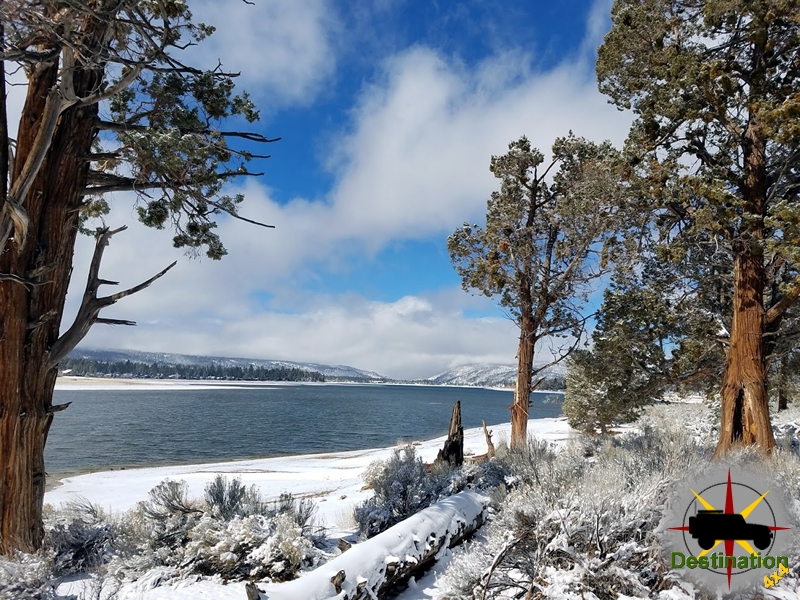
Big Bear, CA
I quiet mountain community full of back country adventure.
The Journey is the destination
The Humboldt River, Nevada’s longest river, stretches approximately 330 miles from its headwaters in the Ruby, Jarbidge, and Independence Mountains in northeastern Nevada to its terminus in the Humboldt Sink, a dry lakebed in the Great Basin. For centuries before European contact, the river was a vital lifeline for Indigenous peoples, including the Northern Paiute, Western Shoshone, and Bannock tribes. These groups relied on the river for water, fishing, and supporting vegetation in an otherwise arid region. Archaeological evidence suggests human habitation along the river dating back thousands of years, with the river serving as a critical resource for survival in the Great Basin’s harsh environment.

The Humboldt River first came to the attention of European-American explorers during the early 19th century. In 1828–1829, British fur trader Peter Skene Ogden, working for the Hudson’s Bay Company, explored parts of the river during his expeditions in the Great Basin. However, it was American explorer John C. Frémont who named the river in 1845 during his mapping expeditions, honoring German naturalist Alexander von Humboldt, though Humboldt himself never visited the region. Frémont’s surveys highlighted the river’s role as a natural corridor through Nevada’s desert landscape, guiding early explorers and trappers.
The Humboldt River became a cornerstone of westward expansion during the mid-19th century, serving as a primary route for the California Trail. From the 1840s through the 1860s, tens of thousands of emigrants, including those bound for the California Gold Rush, followed the river’s course across Nevada. The river provided essential water and forage for livestock, though its alkaline waters and unpredictable flow—ranging from floods in spring to near-dry conditions in late summer—posed challenges. Emigrant diaries frequently describe the Humboldt as both a salvation and a hardship, with its marshy sink offering little relief at the journey’s end. The river’s path also influenced the placement of trading posts and early settlements, such as Elko, Winnemucca, and Lovelock.
The discovery of silver and gold in Nevada during the 1860s, particularly the Comstock Lode and other regional deposits, elevated the Humboldt River’s importance. The river supported mining operations by providing water for mills and irrigation for agriculture to feed growing mining communities. Efforts like the Humboldt Canal (1863–1870s), an ambitious but ultimately unsuccessful project to divert river water for mining and irrigation, underscored the river’s economic potential. The arrival of the transcontinental railroad in 1869, which closely followed the river’s route, further cemented its role as a transportation and economic corridor, with towns like Winnemucca emerging as key hubs.
In the 20th century, the Humboldt River continued to shape Nevada’s development, particularly through irrigation projects that supported alfalfa, hay, and cattle ranching in the river’s basin. Dams, such as the Rye Patch Reservoir (completed in 1936), were constructed to manage the river’s variable flow and provide water for agriculture. The river’s ecological and cultural significance persists, though it faces challenges from over-allocation, groundwater pumping, and climate change, which have reduced flows and impacted the Humboldt Sink’s wetlands. The river remains central to debates over water rights in Nevada, reflecting its enduring role in the state’s history.
The Humboldt River is often called the “lifeblood of northern Nevada,” guiding human activity from Indigenous times through the present. Its path, paralleled today by Interstate 80, remains a defining feature of Nevada’s geography and history. The river’s story encapsulates the challenges of harnessing water in the arid West, shaping exploration, migration, and economic growth while serving as a reminder of the delicate balance between human ambition and environmental limits.
Nevada State Historical Markers identify significant places of interest in Nevada’s history. The Nevada State Legislature started the program in 1967 to bring the state’s heritage to the public’s attention with on-site markers. These roadside markers bring attention to the places, people, and events that make up Nevada’s heritage. They are as diverse as the counties they are located within and range from the typical mining boom and bust town to the largest and most accessible petroglyph sites in Northern Nevada Budget cuts to the program caused the program to become dormant in 2009. Many of the markers are lost or damaged.
The Humboldt River
Peter Skene Ogden encountered the Humboldt River on November 9, 1828 during his fifth Snake Country expedition. Entering Nevada near present-day Denio, Ogden came southward along the Quinn River and the little Humboldt River. Emerging on the Humboldt main stem near this site, Ogden explored hundreds of square miles of the Humboldt’s course, left records of his trailblazing in his journal, and drafted the first map of the area.
Ogden gave the name “Unknown River” to the Humboldt at this time, as he was unsure where it went. After the death of his trapper Joseph Paul, Ogden renamed the stream Paul’s River, then Swampy River, and finally Mary’s River, after the Native American wife of one of his trappers. In 1833, the Bonneville-Walker fur party named it Barren River.
Ogden’s or Mary’s River were commonly used names for the Humboldt prior to the 1848 publication of a map of John C. Frémont.
The Humboldt was the only natural arterial across the Great Basin. It funneled thousands of emigrants along its valley enroute to the Pacific Coast during the period 1841-1870.
HISTORICAL MARKER NO. 22
STATE HISTORIC PRESERVATION OFFICE
NORTHEASTERN NEVADA MUSEUM COMMITTEE
| Name | The Humboldt River |
| Location | Humboldt County, Nevada |
| Latitude, Longitude | 41.0159, -117.5731 |
| Nevada State Historic Marker | 22 |

Robert Findley McLaury, known as Frank McLaury (1857–1881) was a notable figure in the American Old West, primarily remembered for his involvement in the infamous Gunfight at the O.K. Corral in Tombstone, Arizona. Born in 1857 in the town of Belton, Texas, McLaury, whose birth name was Frank McLowery, was the youngest of four siblings. His family moved to Arizona Territory in the early 1870s, seeking new opportunities.
In Tombstone, Frank, along with his brothers Tom and an associate, Ike Clanton, became known for their involvement in various outlaw activities. The McLaury brothers were cattle ranchers and occasionally engaged in rustling, which contributed to their controversial reputation.
The most notable event in Frank McLaury’s life was the Gunfight at the O.K. Corral, which occurred on October 26, 1881. This 30-second shootout between the Earp brothers (Wyatt, Virgil, and Morgan) and their ally Doc Holliday against the Clanton-McLaury faction is one of the most famous confrontations in Western history. The clash was fueled by longstanding tensions between the two groups, primarily over control of the town and its surrounding cattle interests.
During the gunfight, Frank McLaury, who was armed and prepared for confrontation, was killed alongside his brother Tom McLaury. Frank’s death, along with the broader context of the Gunfight at the O.K. Corral, played a significant role in shaping the legendary status of Tombstone and its associated figures.
Frank McLaury’s legacy is largely defined by this dramatic episode in Western history, contributing to the enduring mythology of the American frontier. His life and death continue to be subjects of fascination and speculation in both historical accounts and popular culture.
References

The image of 20 mules hauling a train of wagons was once as popular as the golden arches are today. Everyone knew what it meant. It was the trademark of Pacific Coast Borax’s most famous product, a laundry additive called Twenty Mule Team Borax. The company’s advertising was dependent on one important fact: the connection between the Twenty Mule Team and America’s most notorious desert, Death Valley. From 1883 to 1888, teams of mules and wagons hauled borax out of the famed valley on the California-Nevada border. During those years, the teams were not famous; they were just a common means of transportation. After all, it was not the first time 20 mules hauled borax and it was not the longest or the most treacherous path. So what happened? How did this common form of transportation (the big-rig truck of its day) become transformed into an American icon? That is the story of this book.
Ted Faye is a documentary filmmaker whose company, Gold Creek Films, specializes in stories of the West. Ted develops touring information, including audio CDs, signage, and brochures. He also helps communities to find and tell their stories. Ted was the historian to US Borax, and many images from this book are from the Borax collection at Death Valley National Park.

| Title | The Twenty Mule Team of Death Valley (Images of America) |
| Author | Ted Faye |
| Publisher | Arcadia Publishing |
| Pages |

William Harrison Clanton also known as Billy Clanton was an American outlaw known for his involvement in the infamous Gunfight at the O.K. Corral. Born in 1856 in the Arizona Territory, he was the son of a Confederate veteran, which shaped much of his early life and affiliations.
Clanton’s family, including his brothers Frank and Ike, were cattle ranchers and became involved in various conflicts with local law enforcement and other groups. Billy Clanton, along with his brothers and their associates, became entangled in the intense and often violent disputes that characterized the lawless frontier era of the American West.
The most notable event in Clanton’s life was his participation in the Gunfight at the O.K. Corral on October 26, 1881, in Tombstone, Arizona. This legendary shootout was a pivotal confrontation between the Clanton gang and the Earp brothers, along with Doc Holliday. The conflict emerged from longstanding tensions between the two groups, who clashed over issues of law and order and local influence.
During the gunfight, Billy Clanton, Frank Clanton, and Tom McLaury, who were associated with the Clanton faction, faced off against the Earp brothers and Holliday. The shootout lasted only about 30 seconds but resulted in the deaths of Billy Clanton, Tom McLaury, and Frank McLaury. The incident cemented the Earps’ and Holliday’s reputations as legendary figures in the Old West and marked a significant moment in the history of law enforcement in the region.

Billy Clanton’s life was cut short at the age of 25, but his legacy lives on as a symbol of the tumultuous and often violent nature of frontier life in the American West. The Gunfight at the O.K. Corral remains one of the most famous events in Western history, and Clanton’s role in it continues to be a subject of interest and debate among historians and enthusiasts.
References
Newman Haynes Clanton was a central figure in the tumultuous period of the American frontier, representing the complex interplay of law, crime, and social dynamics in the late 19th century. His activities, reputation, and eventual death were key factors in the broader historical context of the American West, particularly in the notorious events surrounding Tombstone and the O.K. Corral.

Newman Haynes Clanton, often known as “Old Man Clanton,” was born in 1816 in North Carolina. He grew up in a period of significant change and migration in the United States. His early life was characterized by the hardship and instability common to many families of the era, which influenced his later life decisions and actions.
Clanton migrated westward to Texas in the 1840s, where he began to build a life as a rancher. The challenges of frontier life and the opportunities presented by the burgeoning cattle industry were significant factors in shaping his future.
In the 1870s, Clanton moved to Arizona Territory, settling in the area around Tombstone. He became a prominent rancher and cattleman, managing large herds of cattle and establishing a reputation as a significant local figure. His move to Arizona was part of the larger westward expansion and settlement that characterized the American frontier.
Clanton’s involvement in criminal activities was well-known in the region. He and his family, including his sons Ike, Billy, and Phineas, became notorious for their involvement in cattle rustling and other illicit activities. Clanton was believed to be the leader of a group known as the “Cowboys,” which was involved in various criminal enterprises, including robbery and smuggling.
His criminal activities and the subsequent conflicts with law enforcement and rival groups significantly impacted the social and political landscape of the region. The tension between Clanton’s Cowboys and the law enforcement officials, including the Earp brothers, was a central issue leading up to the infamous Gunfight at the O.K. Corral.
Newman Haynes Clanton’s family was deeply involved in the activities of the Cowboys. His sons, particularly Ike Clanton and Billy Clanton, were key figures in the confrontations with the Earps and their allies. The Clanton family’s reputation for lawlessness made them a focal point of the conflicts in Tombstone.
Clanton’s legacy is closely tied to the infamous Gunfight at the O.K. Corral, which took place shortly before his death. Clanton himself was not present at the gunfight, but his influence and actions were critical in the events leading up to it.
On August 13, 1881, Newman Haynes Clanton was killed by a group of Mexicans in a gunfight near Bonita, Arizona. The circumstances of his death remain somewhat mysterious, but it is widely believed that it was related to his ongoing conflicts and the animosity he faced due to his criminal activities.
Clanton’s death marked the end of an era of intense lawlessness in the region. His life and actions had a lasting impact on the history of the American West, particularly in relation to the law enforcement efforts in Tombstone and the broader narrative of frontier justice.