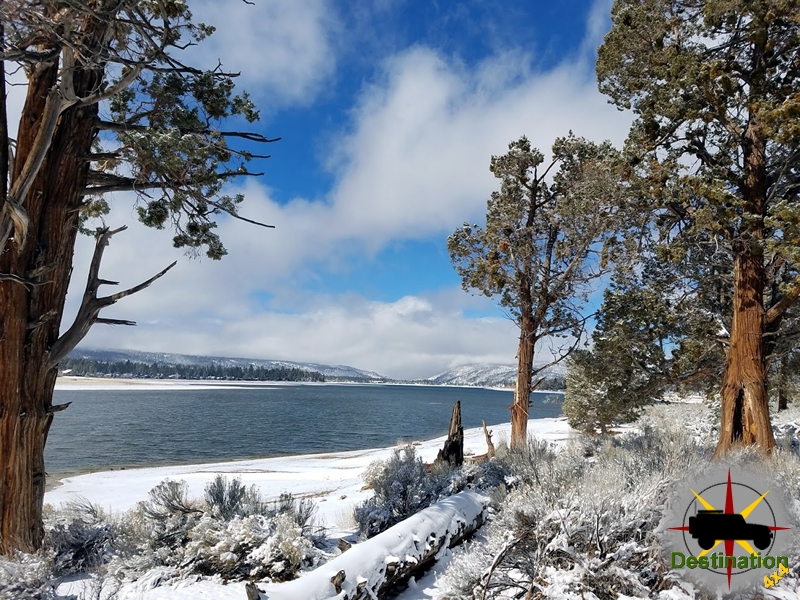
Big Bear, CA
I quiet mountain community full of back country adventure.
The Journey is the destination
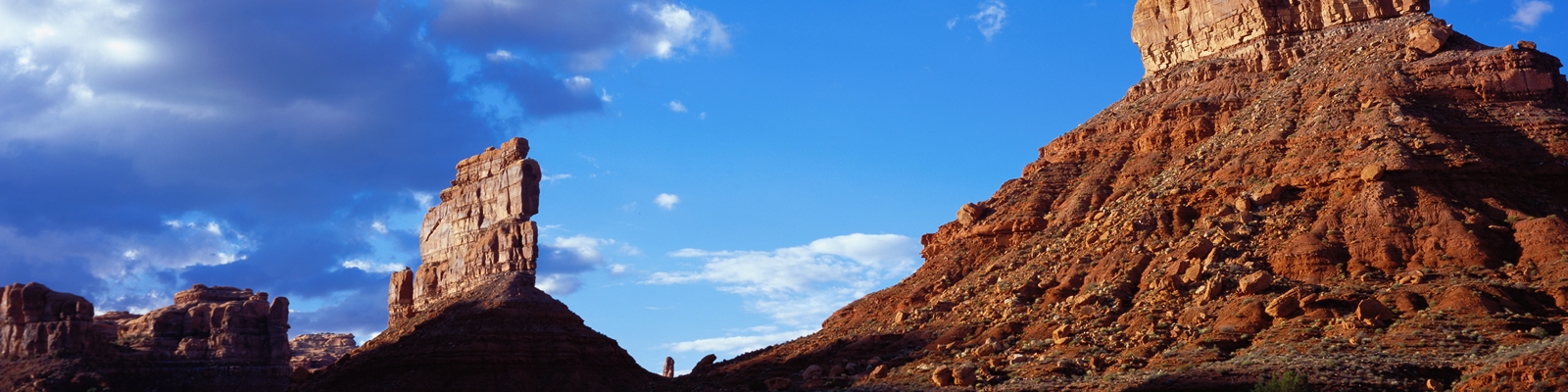
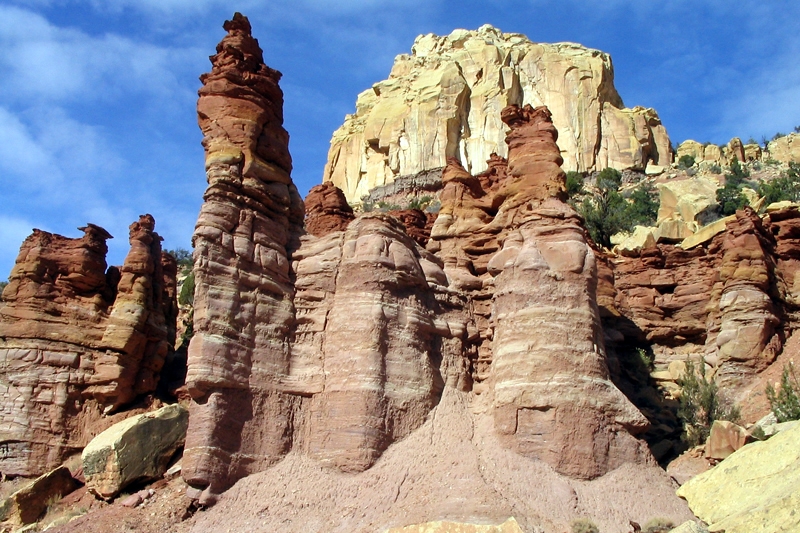
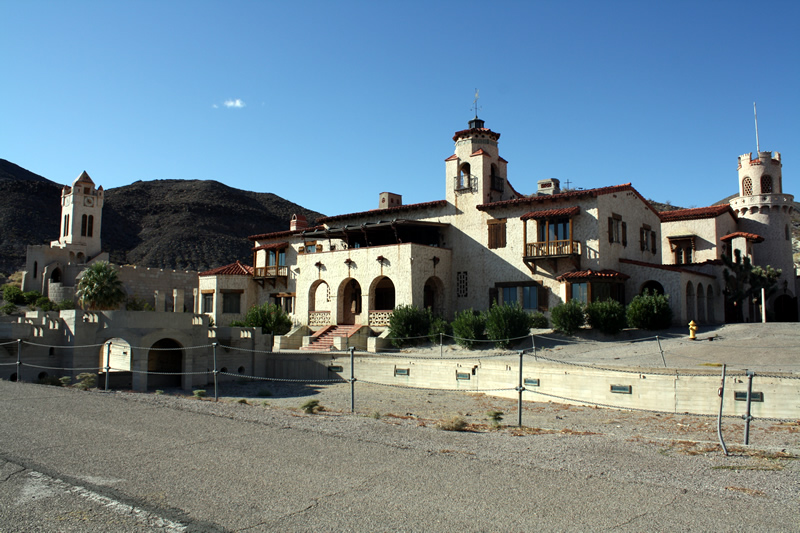
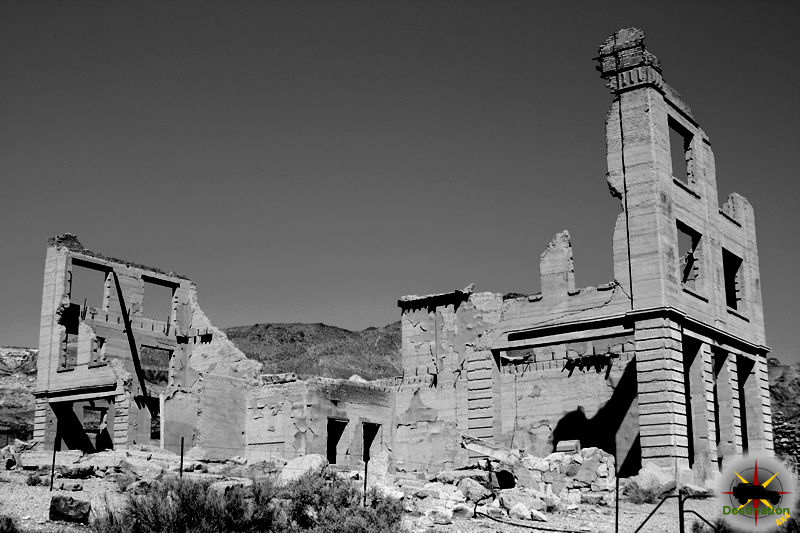

From the mid-19th century to the 1930s, no place in America was more feared or mysterious than the stretch of desert on the California-Nevada border known as Death Valley.
While today Death Valley National Park is seen as a place of natural beauty and scenic wonders, there were once rumors of vaporous gases so toxic that birds flying overhead would drop dead instantly. One of the first Americans to encounter this dreaded land was William Lewis Manly, who left his Wisconsin home for California’s 1849 Gold Rush and who heroically saved those lost pioneers who would give Death Valley its name. Other pioneers in the early 20th century were Frank “Shorty” Harris, who made Death Valley’s biggest gold strike; the Hoyt brothers, who, in 1908, struck it rich in a place called Skidoo; and in the 1920s, a con man named C.C. Julian, who used the valley’s reputation to scam naive investors. There was a time when the entire country seemed to be consumed with news and tales of the Death Valley Gold Rush.
Ted Faye is a documentary filmmaker, exhibit curator, and historical researcher on stories and people of the Death Valley region. Faye has worked with tourism boards on both the state and local levels to develop materials that tell the stories of their communities. He was a historian at US Borax, and many images from this book are from the Borax collection at Death Valley National Park.

| Title | Death Valley Gold Rush (Images of America) |
| Author | Ted Faye |
| Publisher | Arcadia Publishing |
| Pages | 128 Pages |
Virgil Walter Earp ( July 18, 1843 – October 19, 1905) was born in Lincoln County, Kentucky, was a prominent lawman and frontier figure known for his role in the American Old West. As the eldest of the Earp siblings, Virgil took on a leadership role within the family, guiding his younger brothers Wyatt, Morgan, and James. A seasoned law enforcement officer, Virgil served as a deputy U.S. marshal and, later, as the town marshal of Tombstone, Arizona. His most notable moment came during the infamous Gunfight at the O.K. Corral on October 26, 1881, where he, alongside Wyatt and Doc Holliday, confronted a group of outlaws known as the Cowboys. Despite surviving the gunfight, Virgil’s tenure in Tombstone was marred by violence and personal loss, including the assassination attempt that severely injured him and ultimately led to the death of his brother Morgan. Virgil’s resilience and sense of justice left a lasting imprint on the lore of the Old West.

Virgil Walter Earp was born on July 18, 1843, in Hartford, Kentucky. He was the second of Nicholas and Virginia Ann Cooksey Earp’s five sons. The Earp family moved frequently during Virgil’s childhood, eventually settling in Pella, Iowa. Growing up in a large and adventurous family, Virgil, along with his brothers James, Wyatt, Morgan, and Warren, developed a strong sense of camaraderie and loyalty that would shape their future endeavors.
In 1861, at the age of 18, Virgil enlisted in the Union Army during the American Civil War. He served with the 83rd Illinois Infantry Regiment and later transferred to the 17th Illinois Cavalry. His service was marked by bravery and resilience, traits that would later define his career as a lawman. After the war, Virgil returned to civilian life, married his first wife, Ellen, and started a family. Unfortunately, Ellen died shortly after the birth of their daughter.
Virgil’s career as a lawman began in the 1870s. He held various positions across different towns, working as a constable in Prescott, Arizona, and as a deputy U.S. marshal. His reputation for enforcing the law with determination and fairness quickly spread. In 1879, Virgil moved to Tombstone, Arizona, where he would play a crucial role in one of the most famous events in Western history.
Virgil Earp’s most notable moment came on October 26, 1881, in Tombstone. As the city marshal of Tombstone, Virgil, along with his brothers Wyatt and Morgan, and their friend Doc Holliday, faced off against the Clanton and McLaury brothers in what became known as the Gunfight at the O.K. Corral. The confrontation, which lasted only about 30 seconds, resulted in the deaths of three outlaws and left Virgil seriously wounded. Despite his injuries, Virgil’s leadership and bravery during the gunfight cemented his place in the annals of the American West.
Following the gunfight, Virgil is held for a preliminary trail for his role in the gunfight which led to the death of three men. On November 19th, 1881, Virgil Earp, still seriously injured from the gunfight, testified from his bedside at the Cosmopolitan Hotel. He is exonerated on November 30, 1881 with the finding on Judge Wells Spicer.
Virgil’s troubles were far from over. In December 1881, he was ambushed and shot by unknown assailants, leaving him with a permanently crippled left arm. Despite this setback, Virgil continued to serve as a lawman, moving to California, where he worked as a law enforcement officer in various capacities, including city marshal of Colton and constable in Vanderbilt.
Virgil Earp passed away on October 19, 1905, in Goldfield, Nevada, at the age of 62. He was buried in the Riverview Cemetery in Portland, Oregon. His life, marked by courage, resilience, and a commitment to justice, left a lasting legacy in the history of the American West. Virgil Earp’s story, along with those of his brothers, continues to captivate the imaginations of those fascinated by the era of the Old West.
 Los Angeles Daily Herald – December 30, 1882On December 30, 1881 the Los Angles Daily Herald broke the news of the Assassination attempt on Marshall Virgil Earp The Los Angles Daily Herald… |
 The Tombstone Epitaph, October 27, 1881The following is the original transcript of The Tombstone Epitaph published on October 27, 1881 on the infamous gun fight at the O K Corral… |
 Tombstone Daily Nugget, October 27, 1881The Tombstone Daily Nugget, October 27, 1881 described the the infamous Gunfight at the O K Corral between the Earps and the Clanton faction in… |
 James Cooksey EarpJames Cooksey Earp ( June 28, 1841 - January 25, 1926 ) James Cooksey Earp ( June 28, 1841 - January 25, 1926 ) was… |
 Morgan Seth EarpMorgan Seth Earp, born on April 24, 1851, in Pella, Iowa, was a notable figure of the American Old West, primarily recognized for his association… |
 Virgil Walter EarpVirgil Walter Earp ( July 18, 1843 – October 19, 1905) was born in Lincoln County, Kentucky, was a prominent lawman and frontier figure known for his… |
 Warren Baxter EarpWarren Baxter Earp ( March 9, 1855 - July 6, 1900 ), the youngest of the Earp brothers, was born into a family that would… |
 Wyatt Berry Stapp EarpWyatt Berry Stapp Earp (March 19, 1848 – January 13, 1929) was an American lawman and gambler who became a legendary figure of the Old… |

Albert Bilicke became a successful hotelier and entrepreneur. He is best known for his role as a key business leader in Tombstone, particularly through his involvement in the development and management of the famous Tombstone Grand Hotel.
Bilicke’s connection to Tombstone began in the 1880s when he partnered with George R. Watt to establish the Grand Hotel, which opened in 1880. This luxurious establishment quickly became a social and economic hub in the town, attracting notable figures of the time, including lawmen like Wyatt Earp and Doc Holliday. The hotel was a symbol of the prosperity brought by the silver mining boom that had put Tombstone on the map.
Under Bilicke’s management, the Grand Hotel thrived until the decline of the silver mines led to economic hardships in the region. Despite these challenges, Bilicke remained an influential figure in Tombstone’s business community, known for his sharp business acumen and commitment to the town’s development.
Albert Clay Bilicke’s legacy in Tombstone is remembered as one of entrepreneurship, resilience, and a deep connection to the town’s early history. His contributions helped shape Tombstone during its most vibrant years, leaving an indelible mark on the community.
On this twenty-eighth day of November, 1881, on the hearing of the above entitled cause, on the examination of Wyatt Earp and J. H. Holliday; Albert Billickie, a witness of lawful age, being produced and sworn, deposes and says as follows:
Albert Billickie, Cosmopolitan Hotel, 409 Allen Street, Tombstone, Arizona, hotel keeper.
In response to questions:
[I] knew Tom McLaury by sight, and saw him on October 26th last, “walking down the south side of Allen Street and enter Everhardy’s butcher shop, and very shortly come out again, walk down the street a few steps further, cross Allen Street obliquely to the corner of Fourth Street. This was probably about 2 o’clock.”
(Q) State if you observed what change if any occurred between the time of his going into the butcher shop and the time of his coming out, with respect to his possession of any arms.
(A) I saw no arms on him, neither when he went into the butcher shop nor when he came out.
(Q) What was his appearance when he went in, and what was his appearance when he came out; with respect to the possession of concealed arms?
(A) When he went into the butcher shop his right-hand pants pocket was flat and appeared as if nothing was in it. When he came out, his pants pocket protruded, as if there was a revolver therein.
CROSS-EXAMINATION
(Q) You say in your examination in chief, that you only knew Tom McLaury by sight and had no personal acquaintance with him. How did it happen that you watched him so closely the different places he went and the exact position of his right-hand pants pocket when he went into the butcher shop and the exact form of a revolver in the same right-hand pocket when he came out?
(A) Every good citizen in this city was watching all those cowboys very closely on the day the affray occurred, and as he was walking down the street my attention was called to this McLaury by a friend and so it happened that I watched him very closely.
(Q) Do you know every good citizen in Tombstone, or did you on that day?
(A) I know not all of them, but a great many.
(Q) Do you know what the opinions of all good citizens of Tombstone were on that day by conversation or conversations with them about watching Thomas McLaury in this city, and if so, tell us who they were. [Question crossed, without comment.]
(Q) About how long did he stay in the butcher shop, and was he in your sight while in there?
(A) He was in the butcher shop but a few moments and was out of my sight from the time he entered until he again appeared. He then walked a few feet down Allen Street and crossed to the corner of Fourth and Allen and walked down Fourth Street. I did not see him alive anymore that day. Everhardy’s butcher shop is directly opposite the Cosmopolitan Hotel, and I was standing on the sidewalk in front of the hotel when I saw what I have related.
[Signed] Albert Billickie
Pierpont Constable Bicknell (c. 1836 – March 31, 1904) was a notable figure in Arizona’s frontier history as a prospector, mining enthusiast, newspaperman, and writer known for his colorful storytelling and pursuit of legendary lost mines.
Born around 1836 in Syracuse, New York, Bicknell received a solid education in Eastern schools. He arrived in Arizona Territory around 1870, during a time of active mining booms and frontier development. Initially, he contributed as a writer to the Salt River Herald in the early 1870s, but he preferred the adventurous life of prospecting and hunting for lost mines over steady journalism. He was often called “Bick” by friends and signed many articles simply as “Bick.”
Bicknell lived frugally despite being quite wealthy, showing little interest in material comforts. He resided in Phoenix until the late 1880s, then moved to Prescott, where he spent his later years focusing more on writing than exploration. He was renowned on the Arizona frontier for his tall tales, jokes, and imaginative narratives, which often blended fact with embellishment.

Bicknell is widely credited with shaping and popularizing the modern legend of the Lost Dutchman Mine (also called the Dutchman’s Lost Gold Mine), one of America’s most enduring treasure tales. The mine is associated with German immigrant Jacob Waltz, who died in Phoenix on October 25, 1891, allegedly after revealing clues to a rich gold deposit in the Superstition Mountains east of Phoenix.
After Waltz’s death, his caregiver Julia Thomas (along with others like the Petrasch brothers) searched unsuccessfully for the mine and shared details with Bicknell around late 1892. Drawing from these accounts, Bicknell’s fertile imagination, and possibly other regional lore, he wove a compelling narrative.
His key contributions appeared in articles such as:
In these, Bicknell introduced or emphasized elements that became central to the legend, including:
Historians often describe Bicknell as a master of “prevarication” during the era’s golden age of sensational journalism and lost-mine stories. He blended Julia Thomas’s accounts with other yarns (possibly including the Doc Thorne Mine, Lost Soldier’s Mine, or Lost Frenchman Mine, which he also pursued in the Superstitions). While Jacob Waltz’s story had roots in real prospecting rumors, Bicknell’s embellishments and vivid writing transformed scattered tales into a cohesive, nationally intriguing legend.
The story faded somewhat after the 1890s but revived dramatically in 1931 with the mysterious death of treasure hunter Adolph Ruth in the Superstitions (his fate tied to maps echoing Bicknell’s clues), which reignited interest through national headlines.
Beyond the Lost Dutchman, Bicknell prospected extensively in the Superstition Mountains and wrote about Arizona’s mining lore, lost treasures, and frontier life. His articles appeared in newspapers and magazines nationwide, contributing to the romantic image of the Wild West and Arizona’s mineral-rich wilderness. He embodied the archetype of the educated Easterner turned rugged prospector, using his writing skills to fund and fuel his adventures.
Bicknell died in Prescott, Arizona, on March 31, 1904, at age 68. He left behind a legacy of wealth to heirs but is remembered more for his role in myth-making than for any proven discoveries. His work helped immortalize Arizona’s Superstition Mountains as a hotspot for treasure hunters and adventurers, influencing books, searches, and popular culture for over a century.
The Barnwell and Searchlight Railroad was a twenty three miles long railroad which connected Searchlight, Nevada to Barnwell California and the larger rail network of the Mojave Desert. Between 1907 and 1910, the gold mines of Searchlight produced $7 million dollars in gold and boasted a population of 1,500. Ore is shipped to Barnwell via the Barnwell and Searchlight rail service. In order to reduce costs, the Quartette company constructed a twenty-stamp mill on the Colorado River. The new mill utilized a 15 mile narrow gauge rail is constructed down to the mill in an attempt to further reduce costs.

Following the discovery of gold in Searchlight in 1897 a gold rush brought industry into the high desert of the Mojave. In 1900, the Quartette Mining Company formed and within a short years a population of 5000 people works the area.
The Barnwell and Searchlight Railroad is formed in April 1906 at the height of the gold rush in Searchlight, Nevada. The twenty three miles of track are laid down between May 1st, 1906 and March 31st, 1907. On April 7, 1907, just seven days after construction is completed the railway was leased by the California, Arizona and Santa Fe Railway

By 1919 trains travelled over the B. and S. Railroad only twice a week. A severe washout on September 23, 1923, halted traffic completely. Train service was never restored when the track is abandoned February 18, 1924. By this point, the population of Searchlight plummeted to just fifty people. Like many railroads, the valuable track was removed and recycled in other lines across the county.
Today, the rail route is a popular route for Mojave explorers and mountain bikers. The townsite is Juan is located along the route at the base of the Castle Mountains.
| Name | Barnwell and Searchlight Railroad |
| Location | San Bernardino, California Clark County, Nevada |
| Length | 23 miles |
| Gauge | Standard Gauge – 4 feet 8.5 inches (1,435 mm) |
| Date of Operation | April 16, 1906–December 28, 1911 |
 Hart California – San Bernardino County Ghost townHart, California, was a fleeting gold mining settlement in the remote northeastern corner of San Bernardino County, nestled in the Mojave Desert on the northeastern… |
 Barnwell CaliforniaIn the sun-scorched expanse of the eastern Mojave Desert, where the New York Mountains rise like jagged sentinels against the relentless blue sky, lies the… |
 Barnwell and Searchlight RailroadThe Barnwell and Searchlight Railroad was a twenty three miles long railroad which connected Searchlight, Nevada to Barnwell California and the larger rail network of… |
 Searchlight NevadaSearchlight Nevada is a unincorporated town with a history in mining. The small town in Clark County is located south of Las Vegas in Clark… |