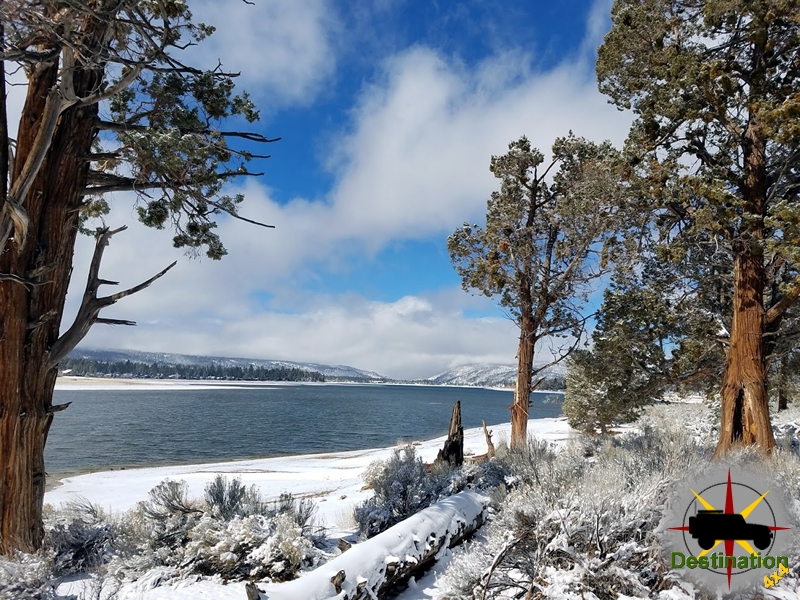
Big Bear, CA
I quiet mountain community full of back country adventure.
The Journey is the destination
John Henry Holliday, commonly known as Doc Holliday, was an American gambler, gunfighter, and dentist who became a legendary figure of the Old West. Born on August 14, 1851, in Griffin, Georgia, Holliday graduated from the Pennsylvania College of Dental Surgery in 1872. However, his career as a dentist was short-lived due to his struggle with tuberculosis, which drove him west in search of a drier climate.

John Henry Holliday, famously known as “Doc” Holliday, was born on August 14, 1851, in Griffin, Georgia, to Henry Burroughs Holliday and Alice Jane McKey. Raised in a well-to-do Southern family, Holliday enjoyed a privileged upbringing despite the turmoil of the Civil War. His mother taught him refined manners, and he received a classical education, excelling in academics. Holliday’s early life was marred by the death of his mother from tuberculosis in 1866, a disease that would later shape his own fate. After her passing, his father remarried, causing familial tension.
Holliday pursued higher education at the Pennsylvania College of Dental Surgery, graduating in 1872 with a degree in dentistry at the age of 20. He returned to Georgia to practice dentistry in Atlanta but was soon diagnosed with tuberculosis, the same illness that claimed his mother. Advised to seek a drier climate for his health, Holliday moved west in 1873, beginning a new chapter that would define his legacy.
In the American West, Holliday’s declining health and restless spirit led him to abandon dentistry for a life of gambling, drinking, and gunslinging. Settling first in Dallas, Texas, he earned a reputation as a skilled card player but also became embroiled in disputes, showcasing his quick temper and proficiency with firearms. His tuberculosis, coupled with heavy drinking, gave him a gaunt appearance and a fatalistic outlook, earning him the nickname “Doc” from his dental background.
Holliday drifted through towns like Denver, Cheyenne, and Deadwood, surviving on gambling winnings and occasional dental work. In 1877, in Fort Griffin, Texas, he met Wyatt Earp, a deputy marshal, forming a lifelong friendship that would cement his place in Western lore. Holliday’s loyalty to Earp and his brothers would lead him to Tombstone, Arizona, by 1880, where he became entangled in the region’s volatile conflicts.
His notoriety grew further due to his association with famous figures of the Old West, including the Earp brothers—Wyatt, Virgil, and Morgan Earp. Holliday’s most famous involvement came during the infamous Gunfight at the O.K. Corral in Tombstone, Arizona, on October 26, 1881.
Tensions had been escalating between the Earps and the Clanton-McLaury gang for several months. The conflict stemmed from various disputes, including accusations of cattle theft and the gang’s attempts to undermine the authority of the Earps, who were lawmen in Tombstone. The situation reached a boiling point when a confrontation seemed inevitable.
On the day of the gunfight, the Earps, including Wyatt, Virgil, and Morgan, along with their ally Doc Holliday, confronted the Clanton-McLaury gang. The dispute was partly provoked by the gang’s refusal to disarm in accordance with the town’s regulations and their ongoing threats against the Earps.
Standing by the Earps’ side, Holliday’s courage and marksmanship were instrumental in the confrontation with the Clanton-McLaury gang, a pivotal event that solidified his place in Western folklore.
Holliday’s life was marked by violence, legal entanglements, and his relentless struggle with tuberculosis. Despite his reputation as a gunfighter, many of his confrontations were linked to his defense of his friends and his own self-preservation. He was also known for his sharp wit and his ability to engage in both verbal and physical duels.
Doc Holliday died on November 8, 1887, in Glenwood Springs, Colorado, at the age of 36. His health had deteriorated significantly in the years leading up to his death, and he spent his final days in the area seeking relief for his illness. Despite his relatively short life, Holliday left an indelible mark on American history and folklore, remembered as one of the most iconic and enigmatic figures of the Old West.
By 1882, Holliday’s tuberculosis and hard-living lifestyle had taken a severe toll. He parted ways with Earp after the vendetta ride and drifted through Colorado, living in towns like Leadville and Denver. His gambling and drinking habits led to multiple arrests, and his reputation as a dangerous man followed him. Despite his declining health, Holliday remained defiant, often staring down death with a sardonic wit.
In 1887, Holliday arrived in Glenwood Springs, Colorado, hoping the town’s hot springs would alleviate his tuberculosis. However, his condition worsened. On November 8, 1887, at the age of 36, John Henry Holliday died in a sanatorium, reportedly looking at his bare feet and remarking with surprise that he was not dying “with his boots on,” defying his expectation of a violent end.
 Contention City, ArizonaContention City (also known simply as Contention) was a short-lived boomtown and ghost town in Cochise County, southeastern Arizona. Located along the banks of the… |
 Doc Holliday – Death Announcement by the Denver RepublicanPhotograph of John Henry Holliday taken by photographer D.F. Mitchell in Prescott, Arizona, 1879-80. Doc Holliday, born John Henry Holliday, died on November 8, 1887,… |
 Frank StilwellFrank Stilwell was a businessman, lawman, and outlaw in Arizona Territory, and was murdered by Wyatt Earp after the Gunfight at the O K Coral.… |
Grand Jury Indictment for the Killing of Frank StilwellFrank Stilwell The following is the Grand Jury Indictment for the Killing of Frank Stilwell which charges Doc Holliday, Wyatt Earp, Warren Earp, Sherman McMasters… |
 Killing of Frank StilwellFrank Stilwell Frank C. Stilwell (1856–March 20, 1882) was a complex figure in the American Old West, known as an outlaw, sometime deputy sheriff, and… |
 Mary Katherine HoronyMary Katherine Horony, better known as Big Nose Kate, was a Hungarian-born figure of the American Old West, renowned for her independence, resilience, and her… |
 Morgan Seth EarpMorgan Seth Earp, born on April 24, 1851, in Pella, Iowa, was a notable figure of the American Old West, primarily recognized for his association… |
 The Tombstone Epitaph – March 27, 1882Frank Stilwell On March 27, 1882, The newspaper the Tombstone Epitaph announced the murder of Frank Stilwell in Tucson Arizona. Frank Stilwell was an outlaw… |
 The Tombstone Epitaph, October 27, 1881The following is the original transcript of The Tombstone Epitaph published on October 27, 1881 on the infamous gun fight at the O K Corral… |
 Tombstone ArizonaTombstone Arizona is a historical point of interest, and the location of the O K Corral Gunfight, located in Cochise County, Arizona. The history and… |
 Virgil Walter EarpVirgil Walter Earp ( July 18, 1843 – October 19, 1905) was born in Lincoln County, Kentucky, was a prominent lawman and frontier figure known for his… |
 Wyatt Berry Stapp EarpWyatt Berry Stapp Earp (March 19, 1848 – January 13, 1929) was an American lawman and gambler who became a legendary figure of the Old… |

Nestled amongst the sage-covered, windswept hills of California’s Eastern Sierra is the site of one of the most notorious mining towns of the Old West. In 1859, gold was discovered in the treeless hills northeast of Mono Lake. By 1879, Bodie was a metropolis of nearly 10,000 souls and was briefly the third-largest city in California. Excitement was short-lived, however, and word soon spread that the mines had reached peak production. An exodus began, but contrary to popular belief, Bodie was never totally abandoned. People continued living in this curious and beautiful place throughout the 1950s, and in 1962, the California State Parks system purchased the town site. Now stabilized against the elements, Bodie is today known as the largest unrestored ghost town in the West.
Author Terri Lynn Geissinger, a local historian, tour guide, and interpreter at Bodie State Historic Park, collects the oral histories of Bodie’s denizens. With extensive experience in educational lectures, she is dedicated to preserving this town’s past for future generations. Geissinger collected the stirring images in this volume from the Bodie State Historic Park Archive, the Mono County Museum, and various families with roots in this remarkable place.

| Title | Bodie: 1859-1962 (Images of America) |
| Author | Terri Lynn Geissinger |
| Publisher | Arcadia Publishing |
| Pages | 128 Pages |

In Farewell to Manzanar, Jeanne Wakatsuki Houston recalls her childhood at a Japanese incarceration camp in this engrossing memoir that has become a staple of curriculum in schools and on campuses across the country. This special 50th-anniversary edition features a new cover, a foreword by New York Times bestselling and acclaimed author Traci Chee, and photographs of life at the camp by Toyo Miyatake.
During World War II the incarceration camp called Manzanar was hastily created in the high mountain desert country of California, east of the Sierras. Its purpose? To house thousands of Japanese Americans.
In Farewell to Manzanar, Jeanne Wakatsuki Houston recalls life at Manzanar through the eyes of the child she was and the experiences of her family. She relays the mundane and remarkable details of daily life during an extraordinary period of American history: The wartime imprisonment of civilians, most native-born Americans, in their own country, without trial, and by their fellow Americans.
She tells of her fear, confusion, and bewilderment as well as the dignity and resourcefulness of people in oppressive and demeaning circumstances. Jeanne delivers a powerful first-person account that reveals her search for the meaning of Manzanar.
| Title | Farewell to Manzana |
| Author | Jeanne Wakatsuki Houston, James D. Houston |
| Publisher | Clarion Books; Reprint edition (December 12, 2023) |
| Pages | 224 Pages |
Explorers of the Mojave Desert in southern California are bound to have heard the stories of the Tonopah and Tidewater Railroad. The Tonopah and Tidewater flanks the western edge of the Mohave National Preserve as travels south to north from Ludlow, California to Beatty, Nevada and up to Tonopah, Nevada utilizing the Bullfrog Goldfield Railroad. Many of the off ramps, sites and historic monuments along Interstate 15 are associated with the standard gauge railroad.


In the early 1900’s, owner of the Pacific Coast Borax Works, Francis Marion Smith owned the largest Borax mine in the world, which is located in Borate, CA. Corporate expansion found him looking into old Borax claims located in the Black Mountains, east of Death Valley. Originally, “Borax” smith used a steam tractor to haul the ore one hundred and thirty seven miles into Ivanpah, CA. The harsh desert proved too much and the plan is soon abandoned.
In 1904, Smith conceived a plan to connect a railroad from his mines to the nearest points of the Santa Fe. He hoped to connect up north to Tonopah to exploit a mining boom in the region, which include Rhyolite, Goldfield and Beatty Nevada. On July 19, 1904, Francis Marion Smith had incorporated the Tonopah & Tidewater Railroad Company in New Jersey. Smith served as president, and associates DeWitt Van Buskirk as vice-president with C.B. Zabriskie as secretary-treasurer, and John Ryan as superintendent and general manager.
Originally, Smith worked with William A. Clark who was a Senator from Montana. Clark headed the Los Angeles and Salt Lake Railroad and proposed that Smith build the Tonopah and Tidewater out of Las Vegas as a cost effective solution to haul his Borax. In 1905, Smith sent personnel and soon discovered that he would not be allow to connect to the Los Angles and Salt Lake Railroad. This right of way is probably due to the fact that Clark is planning his own rail to Beatty, which would become the Las Vegas & Tonopah Railroad.
Following this disappoint, Borax Smith sold his assets and holdings after negotiating with Atchison, Topeka and Santa Fe Railroad and settings up a terminus is Ludlow, CA.
The Tonopah and Tidewater Railroad covered a distance of approximately 230 miles, traversing the challenging terrain of the Mojave Desert.. Many stops along the railroad were named for associates of Borax Businessman Francis Marion Smith. Sections of the route runs through the Death Valley National Park, and certain sections of it have been made into hiking trails for tourists. Other parts of the route are easily accessible to back road explorers, and much of the former railroad bed parallels California State Route 127 between Baker and Death Valley Junction, California.


| Name | Tonopah and Tidewater Railroad |
| Location | San Bernardino, California Nye County, Nevada |
| Gauge | Standard Gauge – 4 feet 8.5 inches (1,435 mm) |
| Operational | 1904 – 1940 |
 Beatty Nevada State Historic Marker #173Beatty NSHM 173 is Nevada State Historical Marker number one hundred and seventy three five and is located just off of highway 95 in the… |
 Bonnie Claire Nevada – Nye County Ghost TownBonnie Claire (sometimes spelled Bonnie Clare) is a historic ghost town in Nye County, Nevada, situated on the edge of Sarcobatus Flat along Nevada State… |
 Bradford Siding – Tonopah and TidewaterThe Tonopah and Tidewater Railroad (T&T) was a standard-gauge shortline railroad that operated from 1907 to 1940, primarily serving the remote mining regions of eastern… |
Broadwell Station – Tonopah and TidewaterBroadwell Station was a minor but strategically located siding and water stop on the Tonopah and Tidewater Railroad (T&T), a historic narrow-gauge line that operated… |
 Bullfrog Nevada – Nye County Ghost TownIn the scorching summer of 1904, amid the rugged Bullfrog Hills at the northern edge of the Amargosa Desert in Nye County, Nevada, two prospectors… |
Crucero Station – Tonopah and TidewaterThe Tonopah and Tidewater Railroad (T&T), often abbreviated as T&T, was a historic class II railroad that operated from 1907 to 1940, primarily serving regions… |
 Death Valley JunctionDeath Valley Junction, often still referred to by its original name Amargosa (Spanish for "bitter," referencing the local water sources), is a remote, unincorporated community… |
 Goldfield NevadaGoldfield is Nevada State Historical Marker number fourteen and is located in Esmeralda County, Nevada. Goldfield was a boomtown between 1903 and 1940. Goldfield's mines produced… |
 Lila CaliforniaIn the sun-scorched folds of the Greenwater Range, on the eastern fringe of California's Inyo County, the ghost town of Lila C—also known as Ryan… |
 Rhyolite Nevada – Nye County Ghost TownRhyolite is a ghost town location just outside of the Eastern edge of Death Valley National monument in Nye country, Nevada. Founded in 1904 by… |
Shoshone Station – Tonopah and TidewaterThe Tonopah and Tidewater Railroad (T&T) was a significant historical railroad that operated in eastern California and southwestern Nevada from 1907 to 1940. Primarily built… |
 Tecopa Inyo CountyNestled in the stark, sun-scorched expanse of the Mojave Desert in southeastern Inyo County, California, Tecopa stands as a resilient outpost shaped by ancient indigenous… |
Valjean Station – Tonopah and TidewaterValjean (sometimes spelled Val Jean) was a minor station and siding on the Tonopah and Tidewater Railroad (T&T) line in San Bernardino County, California, in… |
 Zzyzx Road – Soda springsLocated south of Baker, CA on the edge of a large soda dry lake bed in the Mojave, Zzyzx Road is a short road which… |
Wyatt Berry Stapp Earp (March 19, 1848 – January 13, 1929) was an American lawman and gambler who became a legendary figure of the Old West. Born in Monmouth, Illinois, he was the fourth of five children in the Earp family. His early life was marked by a series of moves and financial struggles, leading him into various jobs and ventures as a young man.

Wyatt Earp was born on March 19, 1848, in Monmouth, Illinois, to Nicholas Porter Earp and Virginia Ann Cooksey. He was the fourth of eight children, with four brothers (James, Virgil, Morgan, and Warren) and three sisters. Wyatt grew up in a family with a strong sense of duty and justice, values instilled in him by his father, who had served in the Mexican-American War.
In 1864, the Earp family moved to California, traveling by wagon train across the Great Plains. They settled in San Bernardino, where Wyatt spent his teenage years. During this time, he worked on the family farm and occasionally took on odd jobs, developing the skills that would later serve him well as a frontiersman and lawman.

After the Civil War ended, Wyatt’s older brothers, Newton, James, and Virgil, returned home, and the family relocated to Lamar, Missouri, in 1868. Here, Wyatt’s father became the local constable, and in 1869, Wyatt followed in his father’s footsteps, becoming a constable himself at the age of 21.
However, Wyatt’s early career in law enforcement was marred by controversy. In 1870, he was accused of horse theft in Arkansas, along with two others. The charges were later dropped, but the incident left a stain on his reputation. This experience taught Wyatt the importance of keeping on the right side of the law, but it also gave him insight into the harsh realities of frontier justice.
In 1870, Wyatt married Urilla Sutherland, the daughter of a local hotel owner. Tragically, Urilla died of typhoid fever just months after their marriage, leaving Wyatt devastated. This loss marked a turning point in his life, as he left Missouri and began drifting westward.
Over the next few years, Wyatt worked various jobs, including as a buffalo hunter, teamster, and railway worker. He spent time in the Kansas cattle towns of Wichita and Dodge City, where he first became involved in law enforcement. These towns were known for their lawlessness, and Wyatt quickly gained a reputation for his toughness and ability to maintain order.
Wyatt Earp’s first significant role as a lawman came in Wichita, Kansas, in 1874. He was appointed as a deputy city marshal and quickly made a name for himself by enforcing the law with a firm hand. However, his tenure in Wichita was cut short after a dispute with a fellow officer led to his dismissal in 1876.
Undeterred, Wyatt moved to Dodge City, Kansas, another rough-and-tumble cow town where he found work as an assistant marshal. Dodge City was a key stop on the cattle drives from Texas, and it attracted its share of gamblers, outlaws, and drifters. Wyatt’s skill in handling these rough elements earned him respect, and he became known for his ability to keep the peace without resorting to unnecessary violence.
During his time in Dodge City, Wyatt formed alliances with other well-known lawmen of the era, including Bat Masterson and Charlie Bassett. These relationships would prove valuable throughout his career.
In 1878, Wyatt Earp left Dodge City and drifted westward again, this time ending up in the silver mining town of Las Vegas, New Mexico, where he briefly served as a lawman. From there, he traveled to various boomtowns in search of fortune, including the gold rush town of Deadwood in the Dakota Territory. His travels eventually took him to Colorado, where he reunited with his brothers.
By 1879, Wyatt and his brothers, Virgil and Morgan, decided to seek new opportunities in the booming silver mining town of Tombstone, Arizona. Along the way, Wyatt stopped in Prescott, Arizona, where he briefly worked as a lawman before continuing on to Tombstone.
By the time he reached Tombstone in 1879, Earp was already a seasoned lawman with a reputation for being tough and unafraid to take action.
Earp arrived in Tombstone with his brothers Virgil, Morgan, and James, along with their wives. Tombstone was a booming silver mining town, full of opportunities and danger. The Earp brothers quickly became prominent figures in the community, with Virgil serving as Deputy U.S. Marshal.
Tombstone in the late 1870s and early 1880s was a lawless place, with tensions running high between various factions. The most notorious of these were the Cowboys, a loosely organized group of outlaws and rustlers, many of whom had connections to powerful local interests. The Earps, as lawmen, inevitably clashed with the Cowboys, who saw them as threats to their way of life.


The Cowboys, including Ike Clanton, Tom McLaury, and Frank McLaury, were involved in various illegal activities, from cattle rustling to stagecoach robbery. The Earps, along with their friend John “Doc” Holliday, sought to bring law and order to Tombstone, leading to a simmering feud with the Cowboys.

The most famous event in Wyatt Earp’s time in Tombstone was the Gunfight at the O.K. Corral, which took place on October 26, 1881. The confrontation was the culmination of escalating tensions between the Earps and the Cowboys.
On the day of the gunfight, Virgil Earp, as Deputy U.S. Marshal, decided to disarm the Cowboys, who had been making threats against the Earps and Holliday. Wyatt, Virgil, Morgan Earp, and Doc Holliday confronted Ike and Billy Clanton, and Tom and Frank McLaury near the O.K. Corral. The standoff quickly turned violent, and in just 30 seconds, the exchange of gunfire left Billy Clanton and the McLaury brothers dead. Wyatt Earp, famously, was unharmed.
The gunfight became an instant sensation, with newspapers across the country reporting on the event. While the Earps were hailed as heroes by some, they were also criticized by others who saw the Cowboys as victims of excessive force.
The O.K. Corral gunfight did not end the violence in Tombstone. In December 1881, Virgil Earp was ambushed and severely wounded by unknown assailants, likely Cowboys. A few months later, in March 1882, Morgan Earp was shot and killed while playing billiards. These attacks enraged Wyatt Earp, who was determined to seek revenge.
Wyatt assembled a posse and embarked on what became known as the “Earp Vendetta Ride.” Over the course of several weeks, Wyatt and his men hunted down and killed several individuals suspected of being involved in the attacks on his brothers. This extrajudicial campaign of retribution further cemented Wyatt Earp’s reputation as a relentless enforcer of frontier justice.
Following the famous Gunfight at the O.K. Corral in 1881 and the subsequent events that led to the deaths of his brothers Morgan and Virgil being seriously injured, Wyatt Earp embarked on a vendetta ride against the cowboys he believed were responsible. This culminated in the Earp Vendetta Ride, where Wyatt, alongside a small group of loyalists, pursued and killed several of those he held accountable. By 1882, Earp was wanted for murder in Arizona and had to flee the state to avoid prosecution.

For the next few years, Wyatt and his common-law wife, Josephine “Josie” Marcus, wandered throughout the West. They spent time in Colorado, Idaho, Nevada, and California. During these years, Wyatt dabbled in various ventures, including law enforcement, mining, and gambling. His reputation as a lawman allowed him to find work in towns where law and order were needed, but he was also involved in several confrontations that further sullied his reputation.
By the late 1880s, Wyatt and Josie had settled in San Diego, California. San Diego was in the midst of a real estate boom, and Wyatt capitalized on this by investing in properties and operating saloons and gambling halls. He became involved in several legal disputes, and his involvement in the city’s gambling scene was controversial.
In 1897, the Klondike Gold Rush lured Wyatt and Josie to Alaska. They traveled to Nome, where Wyatt once again ran saloons, gambling halls, and even a small brothel. Earp became a deputy U.S. Marshal in Alaska, though this was primarily a title he used to protect his business interests rather than an active law enforcement role. Wyatt’s time in Alaska was marred by legal troubles and accusations of corruption, but he managed to make a small fortune before returning to the lower 48 states.
After leaving Alaska, Wyatt and Josie returned to California, where they spent the remainder of their lives. They lived in several cities, including San Francisco and Los Angeles. Earp attempted to cash in on his reputation as a lawman, working as a consultant for early Hollywood Westerns and even trying his hand at gold mining in the Mojave Desert.
However, his later years were not as glamorous as his legend might suggest. Wyatt struggled with financial instability and was involved in numerous lawsuits. He also tried to shape his legacy, working with various authors to create a favorable version of his life story, though many of these attempts failed during his lifetime.

Wyatt Earp spent his final years in Los Angeles, where he lived modestly with Josie. Although he was not widely known to the public during his later years, Earp’s legend began to grow, fueled by dime novels and early Hollywood films. He became friends with some early Western actors and filmmakers, who were intrigued by his life story.
Wyatt died on January 13, 1929, at the age of 80 in Los Angeles. Wyatt Berry Stapp Earp was were buried in the Hills of Eternity Cemetery in Colma, California, where Josie later joined him and was buried beside him.
Earp’s fame truly skyrocketed after his death, as authors and filmmakers began to romanticize his life and the events in Tombstone. His image as a quintessential Western lawman, despite the many controversies and morally ambiguous actions in his life, became deeply ingrained in American popular culture. Over the decades, Wyatt Earp has been portrayed as both a hero and a flawed anti-hero in countless books, movies, and television shows, solidifying his place as one of the most iconic figures of the American West.
Doc Holliday – Death Announcement by the Denver RepublicanPhotograph of John Henry Holliday taken by photographer D.F. Mitchell in Prescott, Arizona, 1879-80. Doc Holliday, born John Henry Holliday, died on November 8, 1887,… |
 San Francisco Examiner – August 9, 1896The following is an article written by famous U. S. Marshall Wyatt Earp, which is printed by the San Francisco Examiner on August 9th, 1896.… |
The Tombstone Epitaph – March 27, 1882Frank Stilwell On March 27, 1882, The newspaper the Tombstone Epitaph announced the murder of Frank Stilwell in Tucson Arizona. Frank Stilwell was an outlaw… |
 The Tombstone Epitaph, March 20, 1882The Tombstone Epitaph, March 20, 1882 reports of the murder of Tombstone Resident Morgan Earp while playing pool in Tombstone, Arizona. This event followed the… |
The Tombstone Epitaph, October 27, 1881The following is the original transcript of The Tombstone Epitaph published on October 27, 1881 on the infamous gun fight at the O K Corral… |
 Tombstone Daily Nugget, October 27, 1881The Tombstone Daily Nugget, October 27, 1881 described the the infamous Gunfight at the O K Corral between the Earps and the Clanton faction in… |
 James Cooksey EarpJames Cooksey Earp ( June 28, 1841 - January 25, 1926 ) James Cooksey Earp ( June 28, 1841 - January 25, 1926 ) was… |
Morgan Seth EarpMorgan Seth Earp, born on April 24, 1851, in Pella, Iowa, was a notable figure of the American Old West, primarily recognized for his association… |
Virgil Walter EarpVirgil Walter Earp ( July 18, 1843 – October 19, 1905) was born in Lincoln County, Kentucky, was a prominent lawman and frontier figure known for his… |
 Warren Baxter EarpWarren Baxter Earp ( March 9, 1855 - July 6, 1900 ), the youngest of the Earp brothers, was born into a family that would… |
Wyatt Berry Stapp EarpWyatt Berry Stapp Earp (March 19, 1848 – January 13, 1929) was an American lawman and gambler who became a legendary figure of the Old… |