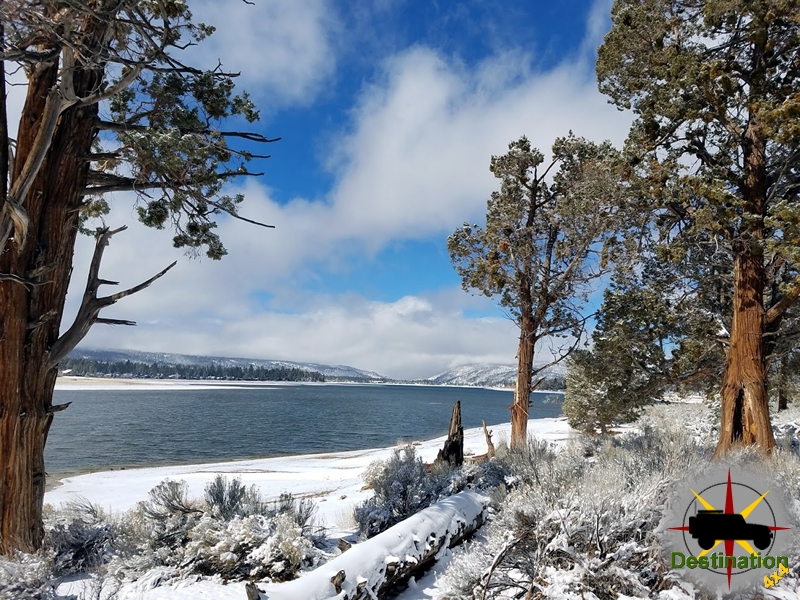
Big Bear, CA
I quiet mountain community full of back country adventure.
The Journey is the destination
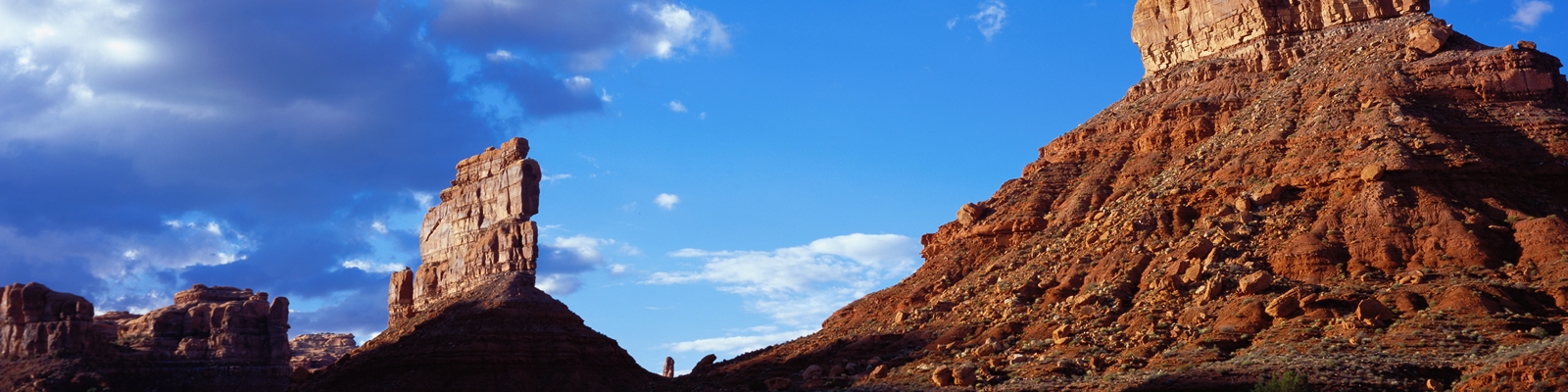
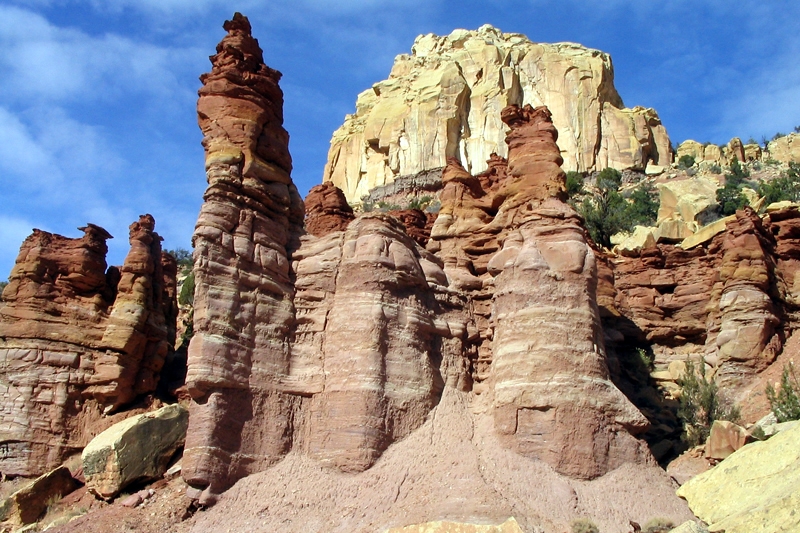
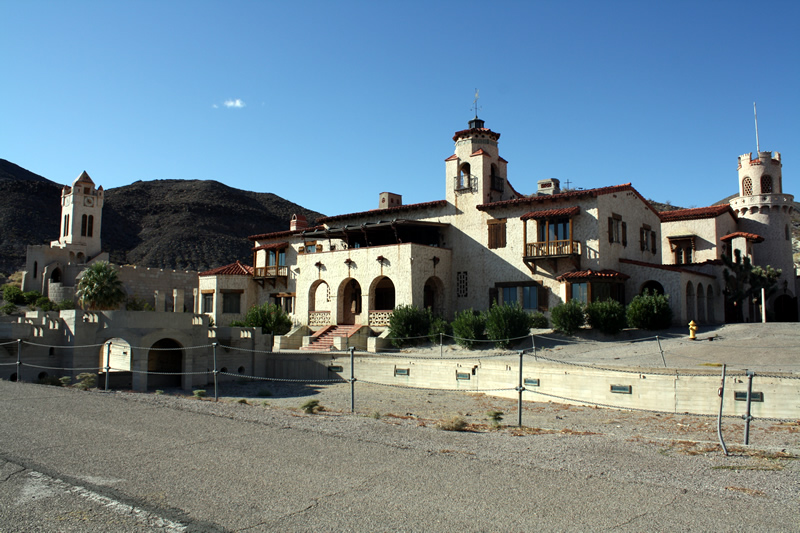
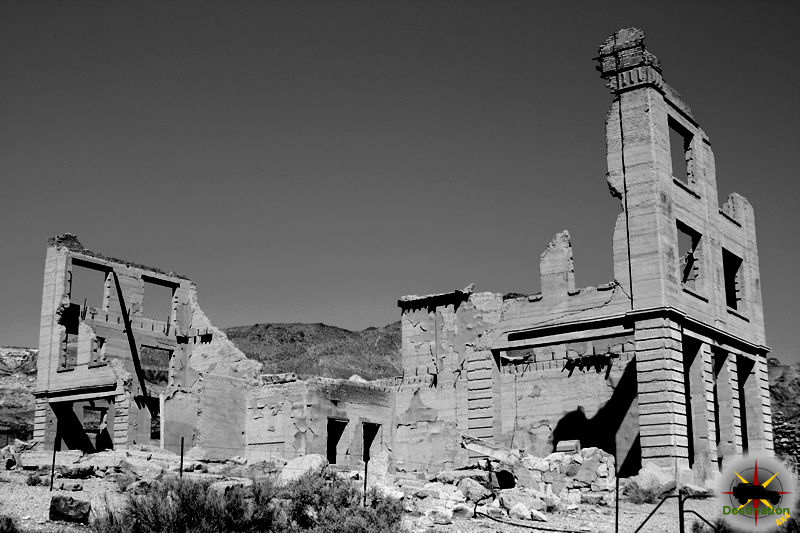
Located in White Pine County, Nevada is Copper Country, Nevada State Historic Marker number 9.

The history of copper mining in White Pine County, Nevada, is a rich and storied tale that spans over a century. Copper mining in this region played a significant role in shaping the local economy and history. Copper was initially discovered in White Pine County during the late 1800s as miners and prospectors explored the vast wilderness of Nevada. Native Americans had long been aware of the presence of copper in the area, but it was the arrival of European settlers that led to more systematic exploration.
The town of Ely, founded in 1878, became a focal point for copper mining in White Pine County. The first significant copper deposit was discovered near Ely in the Robinson Mining District. These early mining operations were relatively small-scale and used traditional mining techniques.
In the early 20th century, advancements in mining technology and infrastructure development spurred the growth of the copper mining industry in the region. The Nevada Consolidated Copper Company (NCC) and Kennecott Copper Corporation became major players in the area.
The Kennecott Copper Corporation, which was owned by the Guggenheim family, acquired extensive copper mining interests in White Pine County. They developed the Bingham Canyon Mine near Ruth, which became one of the largest open-pit copper mines in the world.
Nevada State Historical Markers identify significant places of interest in Nevada’s history. The Nevada State Legislature started the program in 1967 to bring the state’s heritage to the public’s attention with on-site markers. These roadside markers bring attention to the places, people, and events that make up Nevada’s heritage. They are as diverse as the counties they are located within and range from the typical mining boom and bust town to the largest and most accessible petroglyph sites in Northern Nevada Budget cuts to the program caused the program to become dormant in 2009. Many of the markers are lost or damaged.
The famed open-pit copper mines of eastern Nevada, including the Liberty Pit, largest in the state, are located two miles south of this point. Through the first half of the twentieth century, this area produced nearly a billion dollars in copper, gold, and silver. The huge mounds visible from here are waste rock, which was removed to uncover the ore.
Two miles east of here, near Lane City, was the Elijah, the first mine discovered in the Robinson Mining District. Lane City, originally called Mineral City, was settled in 1869 and had a population of 400. At Mineral City was the Ragsdale Station, one hotel, and a stage station.
CENTENNIAL MARKER No. 9
STATE HISTORIC PRESERVATION OFFICE
| Name | Copper Country |
| Location | White Pine County, Nevada |
| Latitude, Longitude | 39.2831, -114.9636 |
| Nevada State Historic Marker | 9 |
Nestled in the heart of Carson City, Nevada, the Bliss Mansion stands as a testament to the state’s rich history and the enduring legacy of its early pioneers. This elegant mansion, with its Italianate architectural style and storied past, has played a pivotal role in the development of Nevada and remains a cherished symbol of the state’s heritage. With a history spanning over a century, the Bliss Mansion’s story is a compelling narrative of wealth, culture, and community that has left an indelible mark on the Silver State.

Nestled in the heart of Carson City, Nevada, the Bliss Mansion stands as a testament to the state’s rich history and the enduring legacy of its early pioneers. This elegant mansion, with its Italianate architectural style and storied past, has played a pivotal role in the development of Nevada and remains a cherished symbol of the state’s heritage. With a history spanning over a century, the Bliss Mansion’s story is a compelling narrative of wealth, culture, and community that has left an indelible mark on the Silver State.
Duane Leroy Bliss was born in Connecticut in 1820 and was a man of considerable ambition. After spending some time in the Midwest, he ventured westward to California during the Gold Rush of 1849, but soon shifted his focus to Nevada as the Comstock Lode began to yield unprecedented silver deposits. Recognizing the immense potential of the region, Bliss established himself as a shrewd entrepreneur in the burgeoning mining industry.
By the early 1860s, Bliss had accumulated substantial wealth from his mining ventures and saw an opportunity to further solidify his legacy by constructing an opulent residence in Carson City. He hired architect Henry M. Bennet to design the mansion, opting for an Italianate style that was popular during the Victorian era.
Construction of the Bliss Mansion began in 1879 and took nearly two years to complete. The mansion was designed to reflect the grandeur and affluence of its owner, with ornate features such as intricate ironwork, decorative balconies, and a distinctive tower. The building’s sandstone façade added to its elegance, and it quickly became a local marvel.
The interior of the mansion was equally impressive, boasting lavish woodwork, stunning chandeliers, and luxurious furnishings. Bliss spared no expense in creating a residence that would not only serve as his family home but also as a statement of his success and stature in the community.
Upon its completion in 1881, Bliss Mansion became a hub of social activity in Carson City. Duane Bliss and his wife, Ella, were renowned for their hospitality, hosting grand parties, receptions, and events attended by the city’s elite. The mansion’s extensive gardens and well-manicured lawns provided a picturesque backdrop for these gatherings.
The Bliss family’s influence extended beyond their social engagements, as Duane Bliss was actively involved in various civic and philanthropic endeavors. He played a pivotal role in the development of Carson City, contributing to the construction of churches, schools, and other public institutions.
After Duane L. Bliss passed away in 1913, the mansion changed hands several times. It briefly served as the Nevada Governor’s Mansion in the early 1920s before being sold to private individuals. Over the years, the property was repurposed for various uses, including a restaurant, apartments, and even a fraternity house.
Despite these changes, Bliss Mansion managed to retain much of its original charm and architectural integrity. In 1964, the mansion was listed on the National Register of Historic Places, cementing its status as a historic landmark and emphasizing its significance to the state of Nevada.
In the late 20th century, a concerted effort was made to restore Bliss Mansion to its former glory. A community-driven initiative, led by the Carson City Historical Society, raised funds to undertake extensive restoration work. The project aimed to meticulously preserve the mansion’s historic features, ensuring that future generations could appreciate its architectural and cultural significance.
Today, Bliss Mansion stands as a shining example of historic preservation, a monument to the dedication of those who recognized its value and worked tirelessly to protect it. It serves as a museum, offering visitors a glimpse into the opulent lifestyle of the Bliss family and the history of Carson City.
Nevada State Historical Markers identify significant places of interest in Nevada’s history. The Nevada State Legislature started the program in 1967 to bring the state’s heritage to the public’s attention with on-site markers. These roadside markers bring attention to the places, people, and events that make up Nevada’s heritage. They are as diverse as the counties they are located within and range from the typical mining boom and bust town to the largest and most accessible petroglyph sites in Northern Nevada Budget cuts to the program caused the program to become dormant in 2009. Many of the markers are lost or damaged.
BUILT BY DUANE L. BLISS
LUMBER & RAILROAD MAGNATE
1879
In its time the most modern & largest home in Nevada. Entirely constructed of clear lumber & square nails. First home in Nevada entirely piped for gas lighting.
STATE HISTORICAL MARKER No. 70
STATE HISTORICAL PRESERVATION OFFICE
NEVADA LANDMARK SOCIETY
| Name | Bliss Masion |
| Location | Carson City, Nevada |
| Latitude, Longitude | 39.1671, -119.7723 |
| Nevada State Historic Marker Number | 70 |
Fort Halleck Military Reservation is nestled in the remote northeastern corner of Nevada in Elko County, and stands as a testament to the turbulent history of the American West. This modest military outpost, established during the height of the Civil War, played a crucial role in safeguarding emigrant routes, maintaining peace with Native American tribes, and protecting the interests of the Union. With a history spanning over a century, Fort Halleck’s story reflects the changing tides of American expansion, conflict, and settlement.

Long before Fort Halleck’s establishment, this region was inhabited by Native American tribes, including the Shoshone and Northern Paiute. Their presence in the area dates back thousands of years, with these indigenous peoples adapting to the harsh conditions of the Great Basin. As Euro-American settlers pushed westward during the 19th century, they came into contact with these native communities.
The first significant wave of Euro-American exploration in the region occurred in the 1820s and 1830s, with famed frontiersmen like Jedediah Smith and Peter Skene Ogden leading expeditions through what would become Nevada. However, it was the discovery of gold and silver in the 1850s that truly transformed the area. Thousands of prospectors and settlers flooded into Nevada, searching for their fortune.
With the influx of settlers came an increase in tension and conflict. As mining camps and trading posts sprang up, conflicts between the newcomers and native populations escalated. This prompted the need for a military presence to maintain order and protect the interests of the United States government.
In 1860, Captain Thomas Duncan was tasked with establishing a military post in the Ruby Valley, where Fort Halleck would later be built. The fort was named in honor of Major General Henry W. Halleck, who served as the Union Army’s chief of staff during the Civil War. Construction began in the spring of 1862, with soldiers and civilian laborers working tirelessly to erect the fort’s wooden structures.
The Civil War was in full swing when Fort Halleck was established. Although the conflict primarily raged in the eastern United States, its effects were felt across the nation, including in the remote reaches of Nevada. Fort Halleck served as an important link in the western chain of forts that helped maintain control over the vast expanse of territory.
During the Civil War, Fort Halleck’s primary role was to protect the emigrant routes and telegraph lines that passed through the region. These routes were vital for communication and transportation, and their security was essential for maintaining Union control of the Western frontier. Additionally, Fort Halleck served as a supply depot for other forts in the area, including Fort Ruby and Fort Churchill.
Life at Fort Halleck was challenging, reflecting the harsh realities of frontier military outposts. Soldiers stationed there faced extreme weather conditions, from blistering summer heat to bitter winter cold. They also had to contend with the isolation of the fort, which was located far from major population centers.
Despite the challenges, Fort Halleck offered some amenities. The fort boasted a hospital, a commissary, officer quarters, and barracks for enlisted men. It also had a small cemetery where soldiers and their families were laid to rest.
One of the most significant challenges faced by Fort Halleck was its proximity to Native American tribes, including the Shoshone and Northern Paiute. Tensions between these tribes and Euro-American settlers often flared, leading to skirmishes and conflicts.
In 1865, the Snake War erupted, pitting the U.S. Army against the Shoshone tribes of the Great Basin. Fort Halleck played a critical role in this conflict, serving as a base of operations for military expeditions into the surrounding areas. The war was marked by violence and tragedy on both sides, but it ultimately resulted in the suppression of Native American resistance in the region.
With the conclusion of the Civil War in 1865, the need for military outposts like Fort Halleck diminished. Troop numbers were reduced, and the fort’s role shifted to that of a supply depot and administrative center for the surrounding region. Fort Halleck continued to play a vital role in maintaining order on the frontier, as tensions with Native American tribes persisted.
In 1880, the fort underwent significant renovations, with many of its wooden structures replaced with more durable stone and brick buildings. This renovation effort was a testament to the enduring importance of Fort Halleck in the region.
As the 19th century drew to a close, the American West underwent rapid changes. Railroads crisscrossed the region, making transportation more accessible, and settlements expanded. With these changes, the need for remote military outposts like Fort Halleck waned.
In 1886, Fort Halleck was officially closed, and its remaining personnel were transferred to other posts. The fort’s structures were abandoned, and the land was eventually sold off to private individuals.
Nevada State Historical Markers identify significant places of interest in Nevada’s history. The Nevada State Legislature started the program in 1967 to bring the state’s heritage to the public’s attention with on-site markers. These roadside markers bring attention to the places, people, and events that make up Nevada’s heritage. They are as diverse as the counties they are located within and range from the typical mining boom and bust town to the largest and most accessible petroglyph sites in Northern Nevada Budget cuts to the program caused the program to become dormant in 2009. Many of the markers are lost or damaged.
On July 26, 1867, Captain Samuel Smith established what became Fort Halleck twelve miles to the south near Soldier Creek. In concert with Fort Ruby fifty miles further south, the Army intended the Fort to protect the California Emigrant Trail, the Overland mail route and construction work on the Central Pacific Railroad during conflicts with Goshute and Western Shoshone in that decade.
The camp was named for Major General Henry Wager Halleck, a prominent general who served as general-in-chief to the Army from 1862 to 1865. In May 1868, Camp Halleck became a two-company post and the headquarters for the Nevada Military District when Fort Churchill, near Yerington, was abandoned. By 1877, the Fort contained about 20 buildings of wood, adobe, and stone arranged around a rectangular parade ground.
Troops from the Fort participated in action against the Modoc Indians in Northern California in 1873; against the Nez Perce uprising in Idaho in 1877; against the Bannocks in Oregon in 1878; and against the Apaches in Arizona in 1885. However, by the 1880s, the need for military stations throughout the American West was much diminished and the Army closed the Fort in December 1886.
STATE HISTORICAL MARKER No. 47
NEVADA STATE PARK SYSTEM
NORTHEASTERN NEVADA HISTORICAL SOCIETY

| Name | Fort Halleck Military Reservation |
| Also Known | Camp Halleck |
| Location | Elko County, Nevada |
| Longitude, Latitude | 40.9561, -115.4655 |
| Nevada State Historic Marker | 47 |
Jebediah Strong Smith was an early frontiersman, hunter, trapper, author, cartographer, mountain man and explorer of the western United States and the subject of Nevada State Historic Marker number 84.

Born in 1799 in Jericho, New York, Jedediah Strong Smith would grow up to become one of the most significant figures in the exploration of the American West during the early 19th century. His life was a testament to the indomitable spirit of discovery that characterized the era of westward expansion.
From a young age, Jebediah Smith exhibited an insatiable curiosity and an adventurous spirit that set him apart from his peers. Raised in a family of modest means, he received only limited formal education. However, his voracious appetite for learning and his natural inclination for exploration propelled him beyond the confines of the classroom.
At the age of 21, Smith embarked on his first western expedition as a fur trapper, a career choice that would shape the course of his life. He joined the Rocky Mountain Fur Company and ventured into the untamed wilderness of the Rocky Mountains, determined to carve his own path in uncharted territories. His experiences during this period honed his survival skills and deepened his connection to the natural world.
In 1826, Smith led a pioneering expedition that would take him and his small band of explorers on an arduous journey from the Great Salt Lake to California. This remarkable feat marked the first documented overland journey from the United States into California. Smith’s exploration helped to map previously unknown regions and establish crucial trade routes.
Jebediah Smith’s exploration efforts were not limited to geography alone. His interactions with various Native American tribes and his ability to communicate across cultural divides showcased his adaptability and diplomacy. He valued the knowledge and insights of the indigenous peoples he encountered, contributing to a more nuanced understanding of the American West.
Jebediah Strong Smith’s legacy is imprinted on the landscapes he traversed and the narratives he helped to shape. His meticulous journaling and mapping laid the groundwork for further expeditions, encouraging subsequent generations of explorers to continue pushing the boundaries of the known world. Smith’s untimely death at the hands of Comanche warriors in 1831, at the age of 32, underscored the risks and sacrifices inherent in his chosen path.
Jebediah Strong Smith’s life epitomized the restless spirit of exploration that defined the era of westward expansion in the United States. His contributions to mapping the American West, fostering cross-cultural connections, and inspiring future adventurers are enduring testaments to his remarkable journey. As a trailblazer who ventured into the unknown with courage and determination, Smith’s legacy continues to inspire individuals to seek new horizons and embrace the thrill of discovery.
Nevada State Historical Markers identify significant places of interest in Nevada’s history. The Nevada State Legislature started the program in 1967 to bring the state’s heritage to the public’s attention with on-site markers. These roadside markers bring attention to the places, people, and events that make up Nevada’s heritage. They are as diverse as the counties they are located within and range from the typical mining boom and bust town to the largest and most accessible petroglyph sites in Northern Nevada Budget cuts to the program caused the program to become dormant in 2009. Many of the markers are lost or damaged.
From May to June 1827, explorer and trapper Jedediah Smith found a route from California’s central valley to the Great Salt Lake Valley in Utah. He became the first European American to completely cross what is now Nevada.
Because Smith’s journal and map have never been found, his exact route is unknown. Based on Smith’s own statements about his difficult trip, modern historians and geographers have pieced together the most plausible route. Smith crossed the Sierra Nevada at Ebbetts Pass, swung southeast along or across the headwaters and middle reaches of the Walker River, and passed into central Nevada’s open spaces south of Walker Lake.
Smith entered Smoky Valley on its southwest side in June 1827 and crossed the valley in a northeasterly direction. He then paralleled the future Simpson survey, route of the Pony Express and Overland Stage, along modern U.S. Highway 50.
He entered Utah at Ibapah.
STATE HISTORICAL MARKER NO. 84
STATE HISTORIC PRESERVATION OFFICE
WHITE PINE PUBLIC MUSEUM, INC.
Nevada State Historic Marker number 84 is located near Ely, Nevada, in White Pine County. The marker is on U.S. Highway 93, on the east side of the highway. It is found in rest area, four miles north of Ely.
| Named | Jedediah Strong Smith |
| Location | White Pine County, Nevada |
| Latitude, Longitude | 39.2771, -114.8463 |
| Nevada State Historic Marker | 84 |
Pioche, Nevada is a silver mining town and Nevada State Historic Marker 5 located in Lincoln County, Nevada. Pioche was founded in 1864, during the height of the American Civil War. The town’s name is derived from François Louis Alfred Pioche, a Frenchman who was a prominent financier in the mining industry. Pioche’s location was strategic, situated in eastern Nevada near the Utah border. The discovery of silver and other minerals in the nearby mountains led to a rapid influx of miners and settlers.

The town’s initial growth was driven by the discovery of silver deposits in the surrounding hills. The rich ore deposits attracted prospectors and mining companies, leading to a significant boom in silver production during the late 1860s and early 1870s. Pioche became a bustling mining town with saloons, businesses, and a diverse population.
Pioche’s prosperity was not without its challenges. The town faced lawlessness and violence typical of many mining settlements during that era. Shootouts, brawls, and clashes between different groups were not uncommon. The presence of rowdy elements earned Pioche the nickname “The Baddest Town in the West.” The local cemetery, Boot Hill, serves as a somber reminder of the violence that marked the town’s early days.
Like many mining towns, Pioche experienced a decline in silver production as the richest deposits were exhausted. By the late 1870s, the boom had faded, leading to a significant decrease in population. However, Pioche managed to survive by diversifying its economy. Agriculture and ranching became important components of the local economy, helping the town weather the decline in mining activity.
In the 20th century, Pioche’s population continued to fluctuate as mining activities occasionally experienced brief revivals. The town’s historic charm and mining heritage began to attract tourists, contributing to its economy. Pioche’s well-preserved historic buildings and its status as a relic of the Old West drew visitors interested in its colorful past.
Today, Pioche remains a small community with a population that hovers around several hundred residents. The town’s history is celebrated through events, museums, and historic sites that showcase its mining heritage and the challenges its early settlers faced. Pioche’s quiet streets and preserved architecture stand as a testament to its enduring spirit and the importance of adapting to changing economic circumstances.
Nevada State Historical Markers identify significant places of interest in Nevada’s history. The Nevada State Legislature started the program in 1967 to bring the state’s heritage to the public’s attention with on-site markers. These roadside markers bring attention to the places, people, and events that make up Nevada’s heritage. They are as diverse as the counties they are located within and range from the typical mining boom and bust town to the largest and most accessible petroglyph sites in Northern Nevada Budget cuts to the program caused the program to become dormant in 2009. Many of the markers are lost or damaged.
Silver ore was discovered in this range of mountains in 1864, but no important development took place until 1869 when mines were opened and the town of Pioche was founded. Pioche soon became the scene of a wild rush of prospectors and fortune seekers. It gained a reputation in the 1870s for tough gunmen and bitter lawsuits. Miners had retrieved over five million dollars in ore by 1872, but by 1900, Pioche was nearly a ghost town.
Designated as the seat of Lincoln County in 1871, Pioche survived hard times as a supply and government center for a vast area. Beginning in 1937, Pioche enjoyed two decades of profitable lead-zinc mining.
CENTENNIAL MARKER No. 5
STATE HISTORIC PRESERVATION OFFICE
table
| Name | Pioche |
| Location | Lincoln County, Nevada |
| Latitude, Longitude | 37.9265, -114.4487 |
| Nevada State Historic Marker Number | 5 |