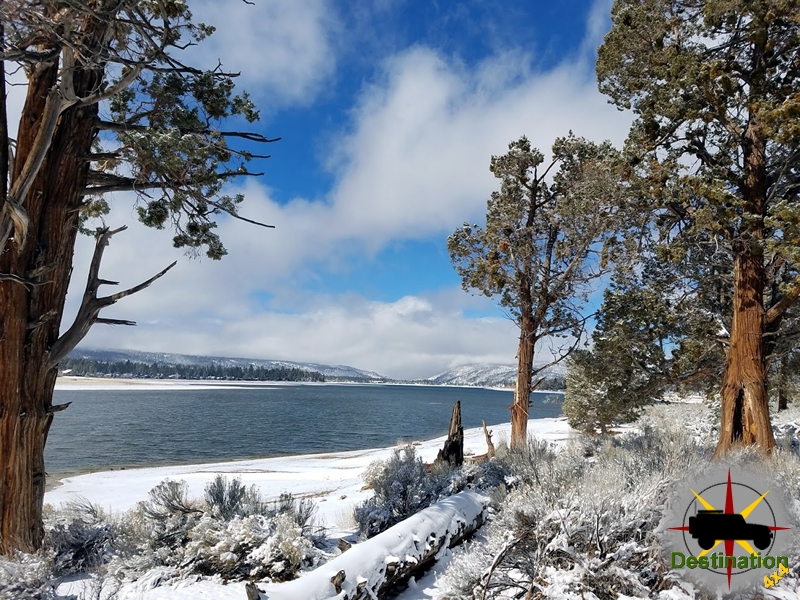
Big Bear, CA
I quiet mountain community full of back country adventure.
The Journey is the destination
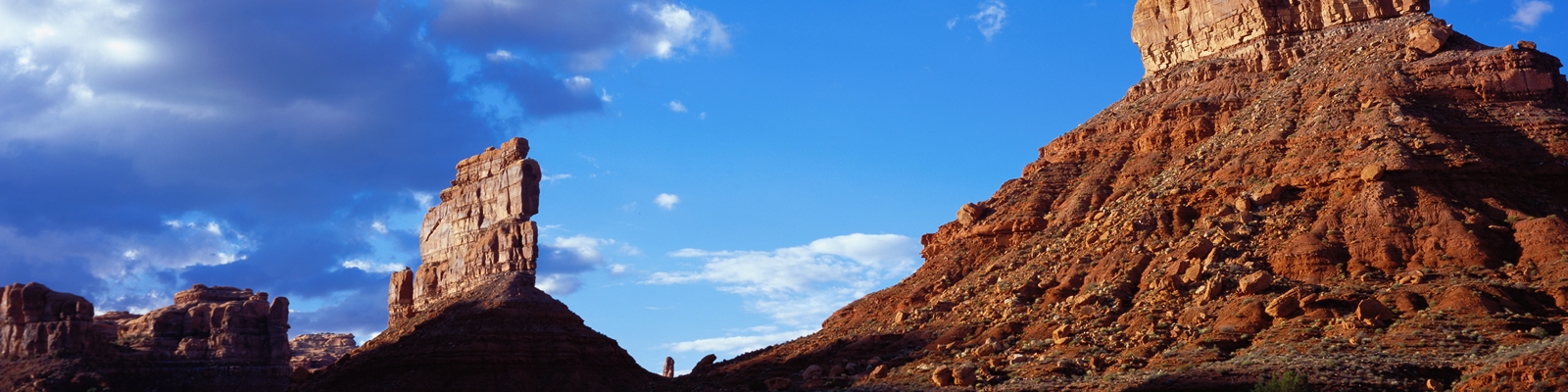
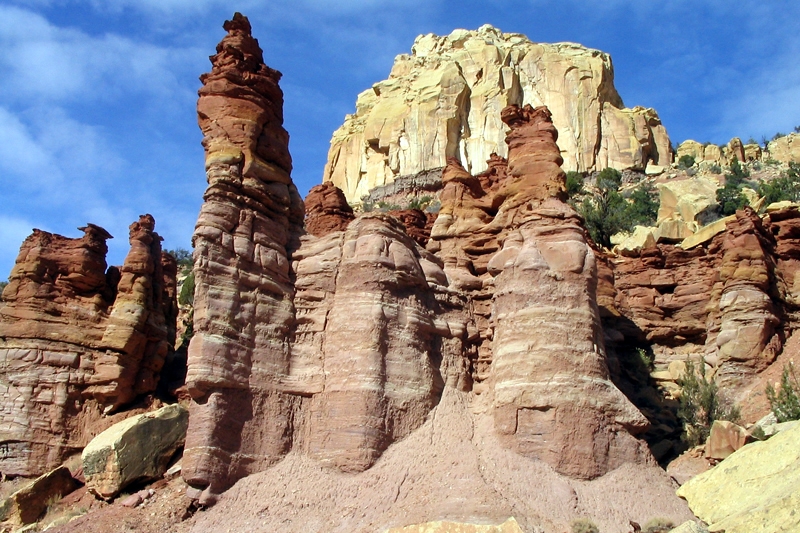

Murphy Campground is a remote backcountry camping area along the White Rim Trail in Canyonlands National Park’s Island in the Sky district. It consists of three designated sites (Murphy A, B, and C), each accommodating up to three vehicles and 15 people, designed to offer privacy with sites spaced to reduce visibility and noise from one another. Located at approximately 4,800 feet elevation, the campground sits atop Murphy Hogback, a prominent ridge offering spectacular 360-degree views of the surrounding desert landscape, including red rock canyons, buttes, and the distant La Sal and Henry Mountains. The sites are primitive, with no potable water, shade, or wind protection, requiring campers to bring all supplies, including at least 1 gallon (4 liters) of water per person per day. A vault toilet is shared among the sites, though some campers note it can be odor-prone in warmer months. The terrain is rocky and hard-packed, suitable for tents but challenging for securing stakes due to the exposed, windswept conditions. Stargazing is exceptional due to the high elevation and minimal light pollution, with visitors describing the night sky as “awe-inspiring.” Access requires a high-clearance 4×4 vehicle, as the trail to Murphy, particularly the steep climb up Murphy Hogback, is rugged and unsuitable for standard vehicles or large trucks with oversized campers (e.g., Ford F-350 with large campers). Overnight permits are required, costing $36 for the reservation plus $5 per person per night, and are highly competitive, especially in spring and fall. Murphy’s dramatic location makes it a highlight for White Rim Trail adventurers seeking iconic views.
The White Rim Trail is a legendary 100-mile loop in Canyonlands National Park’s Island in the Sky district, renowned for its challenging terrain and stunning desert scenery. This high-clearance 4×4 route, also popular among mountain bikers, follows the “white rim” ledge between the mesa top and the Green and Colorado Rivers below, offering sweeping views of red rock canyons, towering buttes, and river valleys. Key highlights include Gooseneck Overlook, Musselman Arch, White Crack (with vistas of the Maze and Needles districts), and Murphy Hogback, where the campground is located, known for its breathtaking 360-degree panoramas. The trail features a mix of wide dirt roads, sandy stretches, and technical jeep trails with cliff exposure, particularly at Shafer Trail, Lathrop Canyon Road, Murphy Hogback, Hardscrabble Hill, and Mineral Bottom switchbacks. With an elevation gain of approximately 9,160 feet, the route is moderately difficult for vehicles and strenuous for cyclists, typically taking 2-3 days to complete, though experienced bikers may attempt it in one day. Permits are required for both day-use and overnight trips, with 20 designated campsites across 10 areas, including Murphy Campground. No potable water is available, and high water on the Green River (May-June) can flood western sections, potentially preventing a full loop. The best seasons are spring (March-May) and fall (September-November) for milder temperatures and stable weather, as summer brings extreme heat and winter may bring closures.
Labyrinth Campground is a remote, primitive backcountry camping area along the White Rim Trail (also known as White Rim Road) in the Island in the Sky district of Canyonlands National Park, Utah. Situated at approximately 4,300 feet elevation near the Green River, it offers stunning panoramic views of red rock cliffs, deep canyons, winding river bends, and the surrounding desert landscape. The two designated sites (Labyrinth A and Labyrinth B) sit about 100 yards apart with elevation differences that provide natural privacy, minimizing visibility and noise between them.
This campground serves as a popular overnight stop for 4×4 drivers, mountain bikers, and adventurous visitors tackling the full White Rim route. Its location near the river (though not directly on the water’s edge at all spots) makes it especially appealing, with opportunities for scenic views, potential wildlife watching, and a sense of deep isolation in one of the park’s most iconic landscapes. Sites are spacious enough for tent camping and vehicle-based setups, but the environment is rugged and exposed to desert conditions—expect dramatic sunsets, clear night skies for stargazing, and significant temperature swings.
Labyrinth Campground is fully primitive with minimal facilities, as is typical for backcountry sites in Canyonlands. Campers must be fully self-sufficient:
A backcountry permit is required for overnight stays and can be reserved in advance through Recreation.gov. Permits are competitive, especially in spring and fall.
The White Rim Trail is a roughly 100-mile unpaved 4×4 route that loops around and below the Island in the Sky mesa, following the top of the prominent White Rim Sandstone formation. This light-colored sandstone, deposited along ancient coastal dunes and shorelines about 280 million years ago during the Permian period, gives the trail its name.
Human presence in the region dates back thousands of years, with evidence of Ancestral Puebloan (Anasazi) rock art, dwellings, and artifacts scattered throughout the canyons and mesas. Later, white settlers used the area for winter cattle grazing, and ranching families left their mark on many geographic names along the route.
The modern White Rim Road itself was primarily constructed in the 1950s by the Atomic Energy Commission (and associated uranium prospectors) during the Cold War uranium boom. The goal was to provide access for mining operations in hopes of supplying uranium for America’s nuclear weapons program. While large uranium deposits were found elsewhere in the region, the mines along the White Rim produced very little, and most were quickly abandoned. The roads built for this effort—including what became the White Rim Trail—were later incorporated into Canyonlands National Park when it was established in 1964. Today, the route sees thousands of visitors annually for its challenging terrain, breathtaking scenery, and sense of adventure, serving as a premier destination for high-clearance 4×4 vehicles and supported mountain bike trips.
Note: High-clearance, low-range 4WD vehicles are required for the White Rim Trail. Always check current road and weather conditions with the National Park Service, as flash floods, mud, and rockslides can occur. Leave No Trace principles are essential to protect this fragile desert environment.

This expanded Second Edition of Aurora, Nevada 1860-1960 chronicles the history of one of Nevada’s earliest and most important mining boomtowns. It is a reference-oriented book, which includes hundreds of edited and annotated newspaper clippings and other firsthand accounts about Aurora’s buildings, businesses, major mines, social life, Paiute citizens, ghost town days, and final destruction over the entire length of its century-long history. This new edition has 98 additional pages with a new section on violence at Aurora during 1863 and 1864, more information about the Daly gang, complete directories for the boom years 1864, 1880, and 1915, and an annotated list of residents from 1861-1864 and 1880. The book now includes 14 maps and over 200 photographs.

A “Second Edition” (ISBN 978-1979848862) and newer hardcover “Second Color Edition” (ISBN 979-8507081967) of this book are now available on Amazon., Despite a century of history, and the valiant efforts of all those who believed the town would last forever, Aurora, Nevada, is now and forevermore a “Colossal Wreck” slowly returning to its beginnings-a sagebrush and pinyon pine covered valley home to jackrabbits and a few ghosts from the past. While Aurora is gone, its historical record remains, thus providing us the opportunity to reconstruct the town and its society if only in our imagination. Most historical accounts about Aurora have focused on the town during its early 1860s mining boom. However, Aurora’s rich and colorful history deserves a closer look. This new reference-oriented publication includes hundreds of edited and annotated newspaper clippings and other firsthand accounts about Aurora’s buildings, businesses, major mines, social life, Paiute citizens, ghost town days, and final destruction over the entire length of its century-long history. It also includes directories for the boom years 1864, 1880, and 1915, as well as 6 maps and over 150 photographs, many of which are “then and now” comparisons of the same view., Author’s Note: This book is the original edition but there is also a new revised and expanded “Second Edition” (search ISBN 978-1979848862) of this book now available on Amazon for the same price on a different Amazon page. The Second Edition has 98 additional pages that include 50 new photographs, 6 more maps, an expanded 1864 directory, and a new list of Aurora residents from 1861-1864.
| Title | Aurora, Nevada 1860-1960: Mining Camp, Frontier City, Ghost Town (Second Edition) |
| Author | Clifford Alpheus Shaw |
| Publisher | CreateSpace Independent Publishing Platform |
| Edition | 2nd Edition |
| Pages | 488 Pages |

Belleville is a historic community located in the Holcomb Valley region of San Bernardino County, California. The area’s history dates back to the mid-19th century when it played a significant role in the California Gold Rush.
Holcomb Valley, where Belleville is situated, was discovered to be rich in gold deposits in 1860. The news quickly spread, and a gold rush ensued as prospectors from all over flocked to the area in search of their fortunes. The population of the valley boomed, and various mining camps and settlements sprang up, including Belleville.
Belleville was founded in 1860 and named after James V. Belleville, one of the early prospectors in the area. The town rapidly grew and became a central hub for the Holcomb Valley mining district. It served as a supply center for nearby mining operations, providing essential goods and services to miners and their families.
The town boasted several businesses, including general stores, saloons, hotels, and blacksmith shops. It also had a post office, which opened in 1863. Belleville’s population reached its peak during the 1860s, with estimates ranging from a few hundred to over a thousand residents.

Mining was the primary economic activity in Belleville and the surrounding Holcomb Valley. Miners used various methods to extract gold from the area, including placer mining and hydraulic mining. Placer mining involved using pans, rockers, and sluices to separate gold from the gravel and sand of the valley floor. Hydraulic mining utilized high-pressure water jets to wash away hillsides and expose gold-bearing gravels.
However, the gold production in Holcomb Valley began to decline in the late 1860s, and by the 1870s, many miners had moved on to other gold fields. As the gold rush subsided, so did the population of Belleville. The town gradually declined, and most of its buildings were dismantled or moved to other locations.
Today, little remains of Belleville and the once-thriving mining operations of Holcomb Valley. Some remnants of mining structures, such as mine shafts and tunnels, can still be found in the area. The site of Belleville itself is marked by a historical marker, providing a glimpse into the region’s rich mining heritage.

| Name | Belleville |
| Location | Holcomb Valley, San Bernardino, CA |
| Latitude, Longitude | 34.3012, -116.8857 |
| Elevation | 7,355 Feet |
| GNIS | |
| Population | 1,500 |
| Gold Fever Trail Marker | 7 |

Holcomb Valley Ranch is a historic region located in the San Bernardino Mountains of Southern California, United States. It has a rich history that dates back centuries and has played a significant role in the development of the region.
Holcomb Valley Ranch is a picturesque and historic destination nestled in the heart of the San Bernardino Mountains in Southern California. This sprawling ranch, encompassing an area of breathtaking natural beauty, offers visitors a glimpse into the rich cultural heritage and rustic charm of the region.
Surrounded by towering pine trees and rugged mountain peaks, Holcomb Valley Ranch provides a tranquil and idyllic retreat from the hustle and bustle of city life. The ranch’s landscape is characterized by rolling hills, expansive meadows, and meandering streams, creating a serene and captivating atmosphere.
Steeped in history, the ranch holds a significant place in the annals of the American West. It was originally settled during the mid-1800s as a bustling mining community during the California Gold Rush. Today, remnants of the past can still be found in the form of restored log cabins, mining equipment, and other artifacts that serve as a testament to the area’s rich mining heritage.
Visitors to Holcomb Valley Ranch have the opportunity to immerse themselves in a variety of outdoor activities. The surrounding wilderness offers ample opportunities for hiking, horseback riding, and mountain biking, allowing visitors to explore the rugged beauty of the San Bernardino Mountains. Fishing enthusiasts can cast their lines in the nearby streams and lakes, while nature lovers can indulge in birdwatching and wildlife spotting.
For those seeking a taste of the Old West, the ranch offers a range of authentic experiences. Guests can saddle up and embark on guided horseback rides, traversing scenic trails and taking in panoramic views. They can also try their hand at gold panning, reliving the excitement of the Gold Rush era.
Accommodations at Holcomb Valley Ranch cater to a variety of preferences. Rustic cabins provide a cozy and comfortable retreat, complete with modern amenities, while campsites allow visitors to fully immerse themselves in the natural surroundings. The ranch also offers facilities for hosting weddings, corporate retreats, and other special events, providing a charming and memorable setting.
Whether seeking a peaceful getaway, an adventure in the great outdoors, or a journey back in time, Holcomb Valley Ranch is a place where nature, history, and relaxation converge. It offers a unique opportunity to experience the beauty of the San Bernardino Mountains while embracing the spirit of the Old West.
| Name | Hidden Valley Ranch |
| Location | Holcomb Valley, Big Bear, San Bernardino, California |
| Latitude, Longitude | 34.2976, -116.9123 |
| Number of Sites |