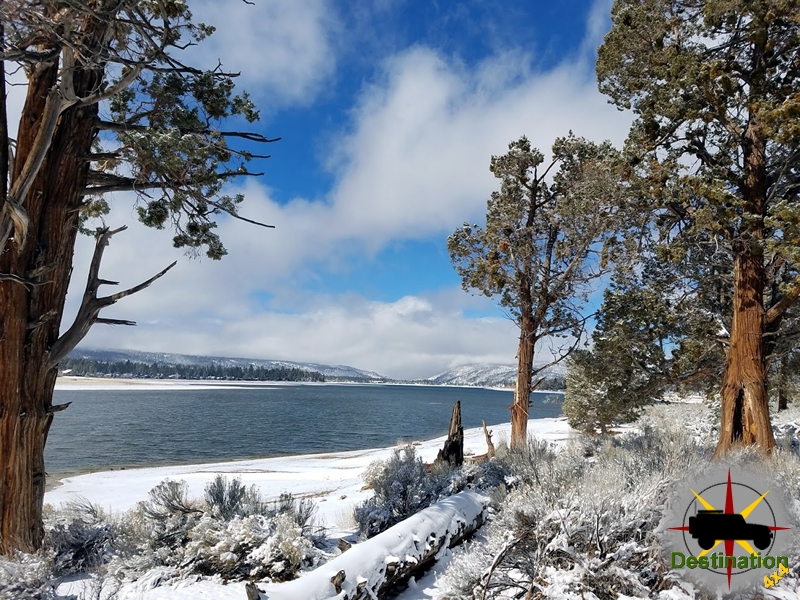
Big Bear, CA
I quiet mountain community full of back country adventure.
The Journey is the destination
Carson City Nevada State Historic Marker Number 44 is located at the State Capital of Nevada in Carson City.

Nevada State Historical Markers identify significant places of interest in Nevada’s history. The Nevada State Legislature started the program in 1967 to bring the state’s heritage to the public’s attention with on-site markers. Budget cuts to the program caused the program to become dormant in 2009. Many of the markers are lost of damaged.
In 1851, Frank and Warren L. Hall, George Follensbee, Joe and Frank Barnard and A.J. Rollins established one of the state’s oldest communities, Eagle Station, a trading post and ranch on the Carson Branch of the California Emigrant Trail. The station and surrounding valley took their name from an eagle skin stretched on the wall of the trading post.
In 1858, Abraham Curry purchased much of the Eagle Ranch after finding that lots in Genoa were too expensive. Together with his friends, Jon Musser, Frank Proctor and Ben Green, Curry platted a town he called Carson City. Curry left a plaza in the center of the planned community for a capitol building should a territorial state seat of government eventually be located in his town.
In March 1861, Congress created the Nevada Territory. Seven months later in November, Carson City became the capital of the territory due to the efforts of Curry and William M. Stewart, a prominent lawyer. When Nevada became a state three years later, Carson City was selected as the state capital, and by 1871, the present capitol building was completed in the plaza Curry had reserved for it.
STATE HISTORICAL MARKER No. 44
STATE HISTORIC PRESERVATION OFFICE
CARSON CITY HISTORIC COMMISSION
| Name | Carson City, Nevada State Historic Marker |
| Location | Carson City, Nevada |
| Nevada State Historic Marker Number | 44 |
| Latitude, Longitude | 39.1639, -119.7670 |
This Nevada State Historic Marker can be reached from South Carson Street (U.S. 395/50) near East Musser Street. The marker is located on the grounds of the Nevada State Capitol Plaza on the main walkway to the Capitol building. Marker is at or near this postal address: 149 South Carson Street, Carson City NV 89701, United States of America
Christopher Houston Carson (December 24, 1809 – May 23, 1868), also known as “Kit” Carson, was a nineteenth century American Frontiersman, Army Officer and Politician and the namesake of Carson City, Nevada. During his lifetime, he achieved notoriety for his exploits as an Indian Fighter, Fur Tapper, Mountain man
Carson was born on December 24, 1809 in Madison County, Kentucky to Lindsey Carson and Rebecca Robinson Carson. He is a cousin to Danial Boone on his mothers’ side. The family moved to Missouri two years later. Survival being the priority, Carson never learned to read or write. At the age of 16, he signed up with a large caravan of merchants headed west towards Santa Fe.
In 1854, a change encounter with the explorer John C. Frémont, made Carson an active participant in the clash of empires that eventually extended the boundaries of the continental United States to its present. The two men met aboard a steamboat on the Missouri River. He served as a guide to for Fremont on three expeditions for a sum of $100 per month. These expeditions found the Oregon Trail and opened to west for the settlers who followed.
In 1842, during the first expedition, Carson guided Frémont across the Oregon Trail to South Pass, Wyoming. The purpose of this expedition was to map and describe the Oregon Trail as far as South Pass. It is during this trip, that the two men produced a guidebook, maps, and other paraphernalia would be printed for westward-bound migrants and settlers. After the completion of the five-month expedition, Frémont wrote his government reports, which made Carson’s name known across the United States, and spurred a migration of settlers westward to Oregon via the Oregon Trail.
In 1843, Carson agreed to join Frémont’s again during his second expedition into the west. Carson guided Frémont across part of the Oregon Trail to the Columbia River in Oregon. The purpose of the expedition was to map and describe the Oregon Trail from South Pass, Wyoming, to the Columbia River. They also ventrured towards the Great Salt Lake in Utah, using a rubber raft to navigate the waters.
On the way to California, the party is held up during bad weather in the Sierra Nevada Mountains. Fortunately, Carson’s good judgement and his skills as a guide and they found some American settlers who fed them. The expedition turned towards California. This ventures is illegal, at the time, and dangerous because California was Mexican territory.
During the expedition, the expedition arrive in the Mojave Desert. His party met a Mexican man and boy, who informed Carson that Native Americans had ambushed their party. The Native Americans killed the men, and the women are staked to the ground, sexually mutilated, and killed. The murderers then stole the Mexicans’ 30 horses. Carson and a mountain man friend, Alexis Godey, went after the murderers. It took the two men, two days to find the culprits. The pair rushed into their camp and killed and scalped two of the murderers. The horses were recovered and returned to the Mexican man and boy. This act brought Carson even greater reputation and confirmed his status as a western hero in the eyes of the American people.
The Mexican government ordered Frémont to leave. Frémont returned to Washington, DC and filed his reports. He but did not mention the California trip. The government liked his reports but ignored his illegal trip into Mexico. Frémont was made a captain. The newspapers nicknamed Fremont, “The Pathfinder.”
In 1845, Carson lead Frémont on a third expedition. Leaving Westport Landing, Missouri, they crossed the Rockies, passed the Great Salt Lake, and down the Humboldt River to the Sierra Nevada of California and Oregon. The third expedition is more political in nature. Frémont may have been working under secret government orders. US President Polk wanted Alta California, which includes parts of California, Arizona, Nevada, Utah and parts of Wyoming.
Once in California, Frémont set out to rouse American settlers into a patriotic fervor. The Mexican General Jose Castro at Monterey ordered him to leave. On Gavilan Mountain, Frémont erected a makeshift fort and raised the American Flag in defiance to these orders. While in Oregon, while camped near Klamath Lake, a messenger from Washington, DC, caught up with Fremont and made it clear that Polk wanted California.
On 30 March 1846, while traveling north along the Sacramento Valley, Fremont’s expedition met a group of Americans Settlers. The settlers claimed that a band of Native Americans was planning to attack them. Frémont’s party set about searching for Native Americans. On April 5 1846, Frémont’s party spotted a Wintu village and launched a vicious attack, which resulted in the deaths of approximately 120 to 300 men, women, and children and the displacement of many more. This act of savagery became known as the Sacramento River massacre. Carson, later stated that “It was a perfect butchery.
Kit Carson accepted a commission as a colonel in the U.S. Army in 1861, Carson fought against Native American and Confederate forces in several actions.
His fame was then at its height,… and I was very anxious to see a man who had achieved such feats of daring among the wild animals of the Rocky Mountains, and still wilder Indians of the plains…. I cannot express my surprise at beholding such a small, stoop-shouldered man, with reddish hair, freckled face, soft blue eyes, and nothing to indicate extraordinary courage or daring. He spoke but little and answered questions in monosyllables.
Northern Civil War General William Tecumseh Sherman
Chief Tecopa – Peacemaker of the Paiutes is Nevada State Historic Marker number 171 and located in Nye County, Nevada. The monument is located at his graveside in Chef Tecopa Cemetery in Pahrump, Nye County, Nevada. Tecopa (c. 1815–1904) was a Native American leased of the Southern Nevada tribe of the Paiute of the Ash Meadows and Pahrump areas.
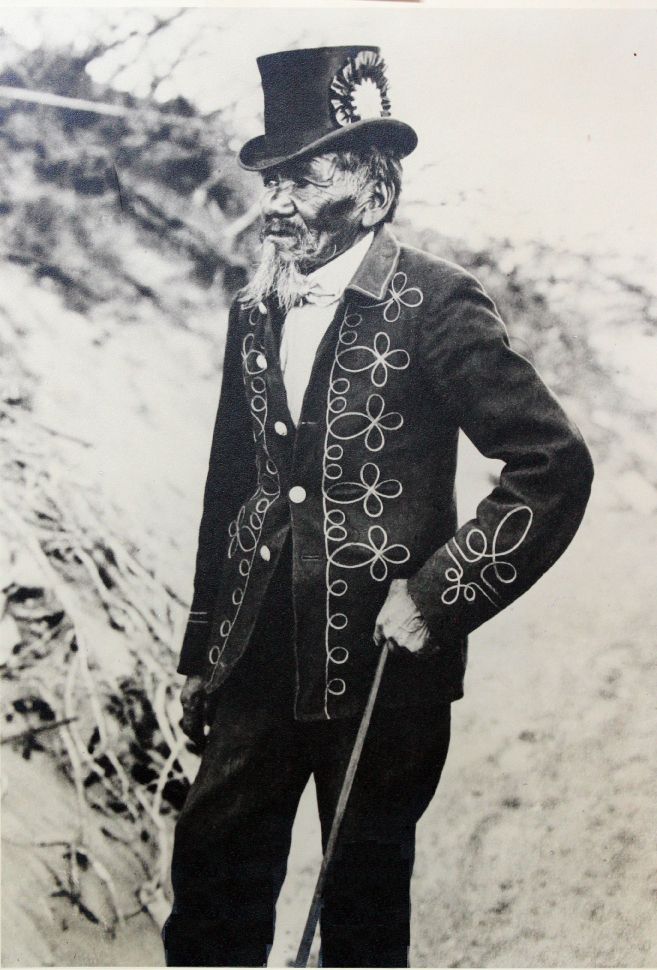
Tecopa, who’s name means wildcat, along with several other warriors joined Kit Carson and John C. Fremont in the battle of Resting Springs which lasted for three days.
Tecopa maintained peaceful relations with the white settlers to the region and was known as a peacemaker. He often wore a bright red band suit with gold braid and a silk top hat. These clothes are replaced by local white miners when the clothes wore out. This gesture is in gratitude for Tecopa’s help in maintaining peaceful relations with the Paiute.
Tecopa is buried with his son and grandson at the Chief Tecopa Cemetery in the Pahrump Valley, Nevada.
Chief Tecopa – Peacemaker of the Paiutes
Chief Tecopa was a young man when the first European Americans came to Southern Nevada. As a leader among the Southern Paiutes, he fought with vigor to save their land and maintain a traditional way of life. He soon realized if his people were to survive and prosper, he would have to establish peace and live in harmony with the foreigners.
During his life, which spanned almost the entire nineteenth century, his time and energy were devoted to the betterment of his people until his death here in Pahrump Valley.
Chief Tecopa is honored for the peaceful relations he maintained between the Southern Paiutes and the settlers who came to live among them.
STATE HISTORICAL MARKER NO. 171
STATE HISTORIC PRESERVATION OFFICE
CALIFORNIA & NEVADA DEVELOPMENTORGANIZATION
| Name | Chief Tecopa – Peacemaker of the Paiutes |
| Location | Pahrump, Nye County, Nevada |
| Nevada State Historic Marker | 171 |
| Latitude, Longitude | 36.2091, -115.9895 |
The Old Spanish Trail was a historic trade route that linked Santa Fe, New Mexico to Los Angeles, California. The trail was established in the early 19th century and was primarily used for the transportation of goods, such as furs, horses, and mules.
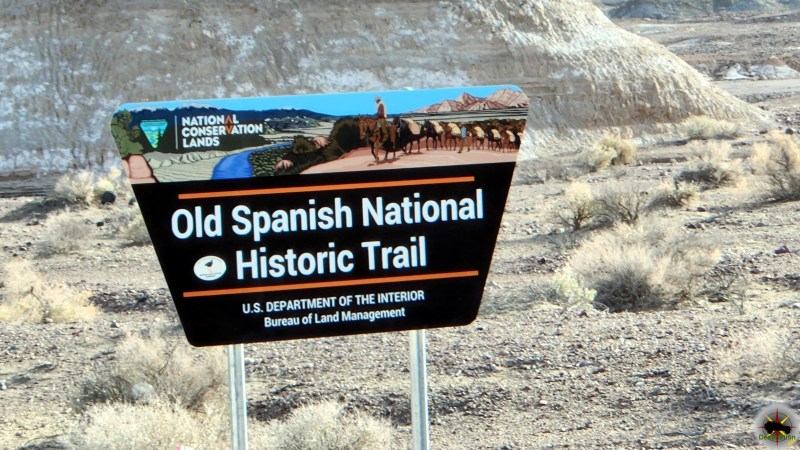
The trail began as a network of routes used by Native American tribes, who traded goods such as salt, obsidian, and turquoise. In the late 18th century, Spanish traders began to use these routes to transport goods between Santa Fe and California. These traders were known as the “Comancheros” and were primarily focused on trading with the Ute and Navajo tribes in the area.
The route became known as the Old Spanish Trail in the early 19th century, when American traders began using the trail to transport furs and other goods to California. The trail was difficult to traverse, with harsh deserts, steep mountains, and treacherous canyons, but it was a vital link between the Southwest and the West Coast.
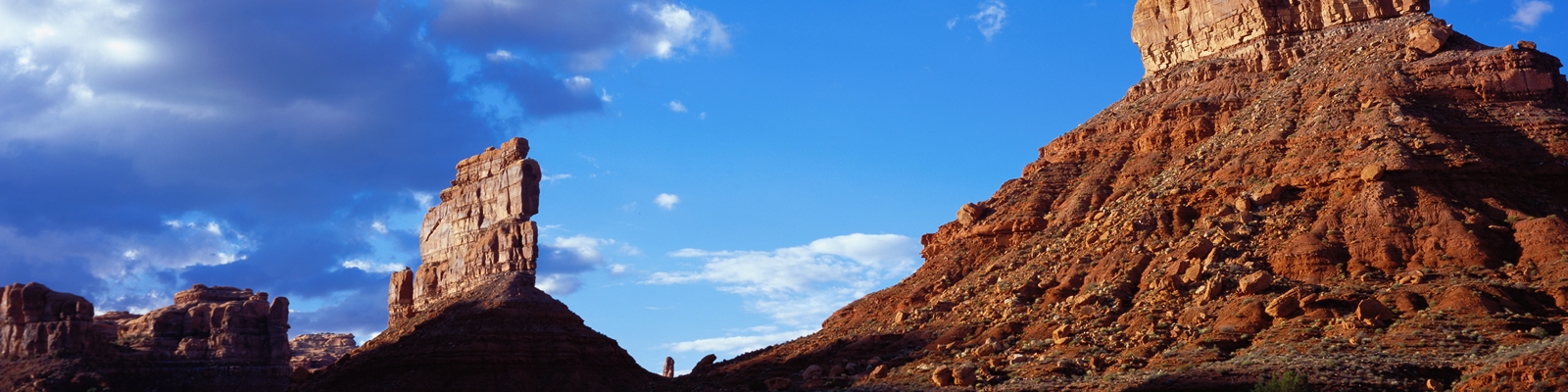
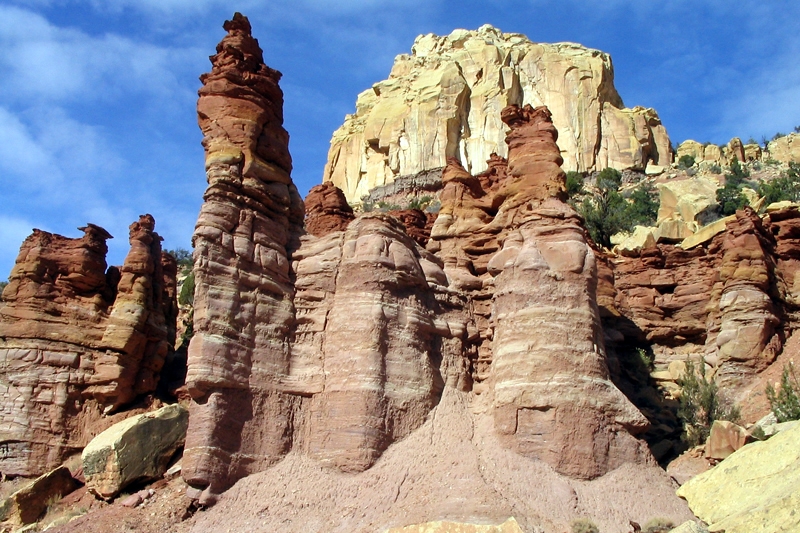
The trail was not a single route, but rather a network of different paths that crossed the desert and mountains of the Southwest. The most popular route followed the Virgin River in Utah, crossed the Colorado River at the mouth of the Virgin River, and then passed through the Mojave Desert to Los Angeles. Another route followed the Gila River in Arizona and crossed the Sonoran Desert to California.
The Old Spanish Trail played an important role in the development of the American West, as it provided a direct link between the remote and isolated communities of the Southwest and the growing cities of California. The trail was also a source of conflict, as American traders often clashed with Native American tribes over access to resources and trading rights.
In the mid-19th century, the discovery of gold in California brought thousands of settlers to the West Coast, and the Old Spanish Trail became a major thoroughfare for travelers and goods. The trail was also used by the Mormon pioneers, who traveled to California in the late 1840s and early 1850s.
In the late 19th century, the construction of railroads and highways made the Old Spanish Trail less important as a trade route. However, the trail remained an important part of the cultural history of the American Southwest, and efforts were made to preserve the trail and its landmarks.
Today, several sections of the Old Spanish Trail have been designated as National Historic Trails by the National Park Service, including sections in Utah, Colorado, New Mexico, and California. These trails allow visitors to experience the beauty and history of the Old Spanish Trail and to appreciate the legacy of the traders, Native Americans, and settlers who traveled its rugged terrain.
All routes came together at Fork of Roads, east of present-day Barstow in the Mojave desert, and then crossed Cajon Pass between the San Gabriel and San Bernadino Mountains to Coastal California. After negotiating the pass, traders had an easy two to three days travel to the San Gabriel Mission and beyond to Los Angeles.

The first complete trip across the trail began in Abiquiú, northwest of Santa Fe. The Armijo party followed well-known trails northwest to the San Juan River, then nearly due west to the Virgin River. They used the Crossing of the Fathers, cut into rock canyon wall some 75 years earlier by the Domínguez-Escalante party. Armijo’s caravan went down the Muddy River and across
the Mojave Desert to the Amargosa and Mojave Rivers, through Cajon Pass and down to Mission San Gabriel.
The Armijo and Northern Route diverge from each other on the east bound trail near the town of Tecopa, California.
First blazed by William Wolfskill and George C. Yount in 1831, this route veered northwest from Abiquiú through Southern Colorado and central Utah. It avoided the rugged canyons of the Colorado River that the Armijo party had encountered and took advantage of the better water and pasture resources across central Utah before returning to the Colorado River and Armijo’s route not far from Las Vegas.
This route followed well-known trapper and trade routes north through the Rio Grande gorge to Taos and into southern Colorado. It then went west through Cochetopa Pass, largely open during the winter when other passes were snowed in and up the Gunnison River valley, rejoining the Northern Route near present-day Green River, Utah.

The Mojave Road is a 188-mile crossing of the Mojave Desert long used by area Indians and by Spanish explorers and missionaries, it was first traveled by Jedediah Smith, an American trapper, in 1826.
 Old Mojave RoadThe Old Mojave Road (Government Road) is an east-west route that enters the Mojave National Preserve off the highway 95 in Nevada, and Afton Canyon… |
 Old Spanish TrailThe Old Spanish Trail was a historic trade route that linked Santa Fe, New Mexico to Los Angeles, California. The trail was established in the… |
 Old Spanish Trail (Garces Expedition)Old Spanish Trail (Garces Expedition) is a Nevada State Historic Marker Number 140 located in Clark County, Nevada. This marker is one of several which… |
 Old Spanish Trail (Journey of the Dead Man)Old Spanish Trail (Journey of the Dead Man) is a Nevada State Historic Marker Number 139 located in Clark County, Nevada. This marker is one… |
 Old Spanish Trail Mountain Springs Pass – Nevada State Historic MarkerOld Spanish Trail Mountain Springs Pass is located along highway 160 and Nevada State Historic Marker No. 142 in Clark County, Nevada. The Old Spanish… |
 Tecopa Inyo CountyNestled in the stark, sun-scorched expanse of the Mojave Desert in southeastern Inyo County, California, Tecopa stands as a resilient outpost shaped by ancient indigenous… |
 The Old Spanish Trail 1829-1850 – Nevada State Historic Marker 33Old Spanish Trail 1829-1850 is Nevada State Historic Marker Number 33, located in the town of Blue Diamond, in Clark County, Nevada. The Old Spanish… |
 The Old Spanish Trail 1829-1850 – Nevada State Historic Marker 34Old Spanish Trail 1829-1850 is Nevada State Historic Marker Number 33, located in the town of Mountain Springs, in Clark County, Nevada. Old Spanish Trail… |
Old Spanish Trail Mountain Springs Pass is located along highway 160 and Nevada State Historic Marker No. 142 in Clark County, Nevada. The Old Spanish Trail is a 700 mile long historical trade route that connected the northern New Mexico settlements near Santa Fe, New Mexico with those of Los Angeles, California.

The trail began as a network of routes used by Native American tribes, who traded goods such as salt, obsidian, and turquoise. In the late 18th century, Spanish traders began to use these routes to transport goods between Santa Fe and California. These traders were known as the “Comancheros” and were primarily focused on trading with the Ute and Navajo tribes in the area.
The route became known as the Old Spanish Trail in the early 19th century, when American traders began using the trail to transport furs and other goods to California. The trail was difficult to traverse, with harsh deserts, steep mountains, and treacherous canyons, but it was a vital link between the Southwest and the West Coast.
The Old Spanish Trail played an important role in the development of the American West, as it provided a direct link between the remote and isolated communities of the Southwest and the growing cities of California. The trail was also a source of conflict, as American traders often clashed with Native American tribes over access to resources and trading rights.
Nevada State Historical Markers identify significant places of interest in Nevada’s history. The Nevada State Legislature started the program in 1967 to bring the state’s heritage to the public’s attention with on-site markers. Budget cuts to the program caused the program to become dormant in 2009. Many of the markers are lost of damaged.
This portion of the Old Spanish Trail was discovered in January 1830, by Antonio Armijo during his first trip from Santa Fe to Los Angeles. The springs just north of this marker provided excellent water and fed meadows of luxuriant grass for draft animals. Two days were required to travel between Las Vegas and Mountain Springs Pass. The trip was broken at Cottonwood Springs, the site of Blue Diamond, where an early start was usually made in order to climb the pass by nightfall. Early travelers often referred to the area as Piute Springs, but the present title has been used for over a century. The altitude made Mountain Springs one of the favorite camping spots on the trail.
STATE HISTORICAL MARKER No. 142
NEVADA STATE PARK SYSTEM
NORTHERN NEVADA HISTORICAL SOCIETY
| Name | Old Spanish Trail – Mountain Springs Pass |
| Location | Highway 160, Clark County, Nevada |
| Nevada State Historic Marker | 142 |
| Latitude, Longitude | 35.9983, -115.4484 |