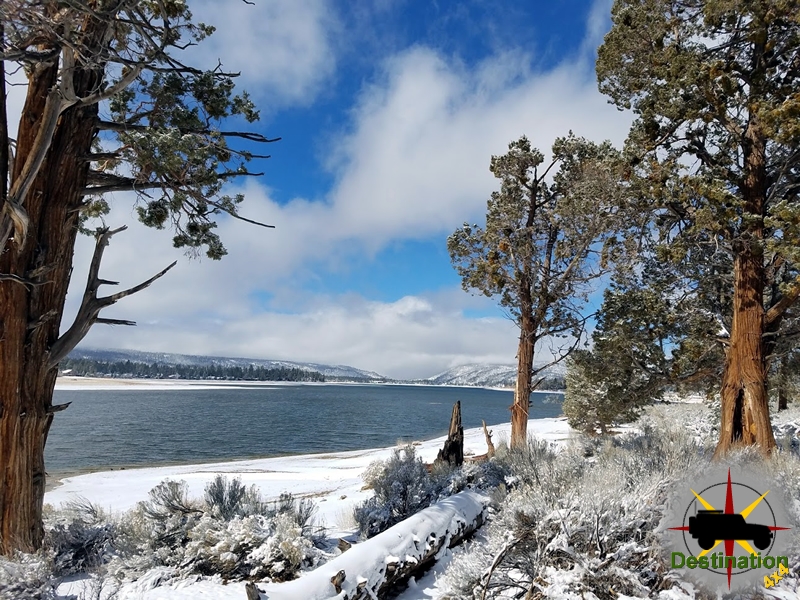
Big Bear, CA
I quiet mountain community full of back country adventure.
The Journey is the destination
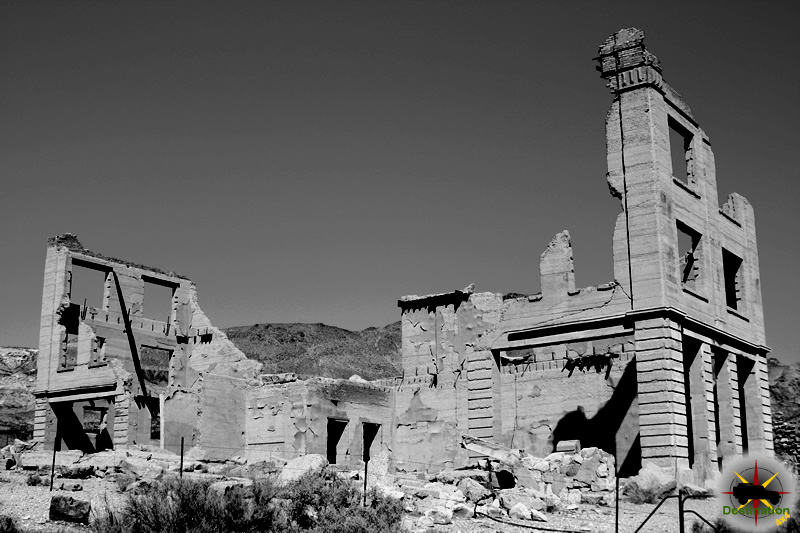

The Cherry Creek area, located in northern White Pine County, Nevada, has a rich history tied to its mineral wealth and strategic location in the Steptoe Valley. Native Americans mined gold in nearby Egan Canyon as early as 1850, marking the region as one of Nevada’s oldest mining areas. In 1859, Major Howard Egan established a stage station in Egan Canyon for Woodward and Chorpenning’s California Mail Company. By 1860, the Pony Express used this station as a change point, and from 1861 to 1869, it served as an Overland Stage station. In 1863, soldiers from Fort Ruby discovered gold in Egan Canyon, leading to the formation of the Gold Canyon Mining District. By 1864, a five-stamp mill—the first in eastern Nevada—was built to process ore, and a small mining camp emerged.
Cherry Creek was officially founded on September 21, 1872, when prospectors Peter Corning and John Carpenter staked the Tea Cup claims, rich in gold and silver, at the mouth of Cherry Creek Canyon. The ore was assayed at over $6,000 per ton, sparking a rush of prospectors from the nearby White Pine district. By spring 1873, the town had a population of about 400, with a livery stable, blacksmith shop, a $2,000 hotel, boarding houses, restaurants, and over 20 saloons. Wells Fargo opened a station, and a post office began operating on June 11, 1873. The Thompson mill, with five stamps and a 25-ton capacity, was erected at the Tea Cup mine, and the Flagstaff mill soon followed. At its peak, the town may have had up to 6,000 residents, though estimates vary. However, by early 1874, the initial mineral claims began to play out, and by 1875, most mines and mills had closed, leading to a sharp decline in population and economic activity.
In 1880, new gold and silver discoveries revitalized Cherry Creek, triggering its most prosperous period. By the end of 1881, major mines like the Tea Cup and Star each employed over 200 workers, and Cherry Creek became the largest voting precinct in White Pine County. In 1882, the population reportedly reached 7,800, with 6,000 being transient mine workers. The town boasted 28 saloons, five mercantile stores, two clothing stores, a drug store, and a stagecoach route to Toano in Elko County. One mine alone produced over $1 million in gold bullion. Fraternal organizations, including the Odd Fellows (1880) and Masons (1882), established lodges, reflecting the town’s growth. However, the financial crash of 1883 halted operations, and a fire at the Star Mine in 1884, followed by another devastating fire in 1888 that destroyed much of the business district, deepened the decline. By 1890, only about 350 residents remained.
Cherry Creek experienced several revivals. In 1897, renewed mining activity brought a modest boom that lasted into the early 1900s. In 1905, the Tea Cup (renamed Biscuit), Exchequer, and Star mines reopened, and the Nevada Northern Railway extended to Cherry Creek in 1906, boosting the population to around 450. However, this revival faded by 1910. Further activity occurred from 1917 to 1923, with a 100-ton flotation mill built in 1919, and from 1924 to 1940, when mines were intermittently active. Total production for the district from 1872 to the 1940s is estimated at $15–20 million, with significant output of gold, silver, and later tungsten. During World War II, mining slowed, and the town gradually declined.
Since the 1940s, Cherry Creek’s population has dwindled, with only 72 residents recorded in the 2010 census. The Barrel Saloon, the last operating business, closed in July 2010. Despite this, Cherry Creek remains a living community, not a true ghost town, with a small year-round population. Historic structures, including the 1872 schoolhouse (now a museum open by appointment), the post office building, and several cemeteries with wooden and marble tombstones, still stand alongside modern homes. A log cabin labeled “Jail” near the cemeteries adds to the town’s historic charm. The Cherry Creek Mining District continues to see occasional activity by leaseholders, and the town’s well-preserved remnants make it a prime destination for those exploring Nevada’s mining heritage. Visitors are urged to respect private property and avoid trespassing.
Nevada State History Marker 52
Cherry Creek
The town of Cherry Creek before you was part of a network of mining districts that operated in the nineteenth and twentieth centuries, including the Gold Canyon district in Egan Canyon, five miles to the south.
Peter Corning and John Carpenter helped start the town of Cherry Creek when they staked the Tea Cup gold claim in 1872, resulting in a boom and the development of a town. At the town’s peak in 1882, it boasted a population of over 1,800. While production fluctuated, Cherry Creek continued to produce gold and silver ore into the 1940s.
Egan Canyon to the south was part of the 1855 route established by Howard Egan and the Mormon Battalion, and surveyed for use in 1859 by the U.S. Army. By 1860, the Pony Express placed a change station at the west opening of the canyon. Between 1861 and 1869, Butterfield’s Overland Mail and Stage established a station here that grew into a small temporary town.
In 1863, soldiers from Fort Ruby discovered gold in the canyon, leading to the creation of the town of Egan and a mining district. By 1865 there were three stamp mills in Egan processing ore from the district. Like Cherry Creek, to the north, Egan boomed and busted into the 1920s before mining ceased.
STATE HISTORICAL MARKER No. 52
STATE HISTORIC PRESERVATION OFFICE
WHITE PINE PUBLIC MUSEUM INC.
| Name | Cherry Creek |
| Location | White Pine County, Nevada |
| Latitude, Longitude | 39.9008, -114.8851 |
| Nevada State Historic Marker | 52 |
Cherry Creek exemplifies Nevada’s cyclical mining history, with its dramatic booms and busts driven by gold and silver discoveries. Its strategic location near Egan Canyon’s transportation routes and its enduring historic structures, such as the museum and cemeteries, preserve its legacy as one of White Pine County’s most significant mining towns. The town’s story is one of resilience, with periods of prosperity and decline shaping a community that remains a vital link to Nevada’s Old West past. For more information, visit the Cherry Creek Museum (775-289-3720) or http://www.greatbasinheritage.org/cherry-creek-nevada.

Table Mountain Campground is situated in the beautiful San Gabriel Mountains of Southern California. The campground is surrounded by a beautiful and serene forest environment, with stunning views of the mountain range. It is the perfect place to escape the hustle and bustle of city life and enjoy a peaceful camping experience.
The campground offers a variety of camping options, including tent sites, RV sites, and cabins. The tent sites are situated on a grassy area, with fire rings, picnic tables, and access to water nearby. The RV sites offer full hookups, including water, electricity, and sewage. The cabins are well-equipped with modern amenities, including kitchen facilities, bathrooms, and heating.
One of the best things about the campground is its location. It is situated near several hiking trails, offering visitors the chance to explore the mountain range and the surrounding forests. The trails range in difficulty, from easy strolls to challenging hikes. Some of the most popular trails include the Pacific Crest Trail, which runs through the campground, and the Table Mountain Trail, which offers stunning views of the valley below.
In addition to hiking, the campground offers plenty of other activities for visitors to enjoy. There is a playground for children, a volleyball court, and a horseshoe pit. There is also a campfire area, where visitors can gather around the fire and enjoy the peace and quiet of the forest.
The campground is well-maintained, with clean and modern facilities. There are restrooms and showers available, as well as a laundry facility. The staff are friendly and helpful, and are always on hand to answer any questions or provide assistance.
Table Mountain Campground is a great place to visit for anyone looking for a peaceful and relaxing camping experience. Its beautiful surroundings, modern amenities, and variety of activities make it the perfect destination for families, couples, and solo travelers alike. Whether you are looking to hike, explore, or simply relax in nature, this campground has something for everyone.
| Name | Table Mountain Campground |
| Location | San Gabriel Mountains, Los Angeles County, California |
| Latitude, Longitude | 34.3863, -117.6894 |
| Open | Spring – Fall |
| Elevation | 7,261 Feet |
| Number of Sites | 111 single site(s), 2 double site(s) |
| Ammenities | Vault Toilets, Potable Water |
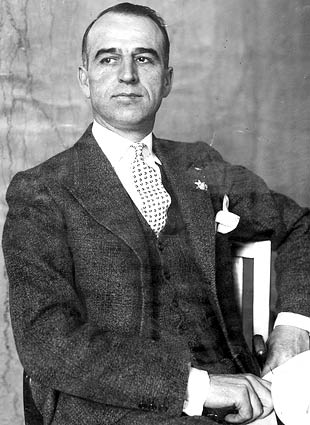
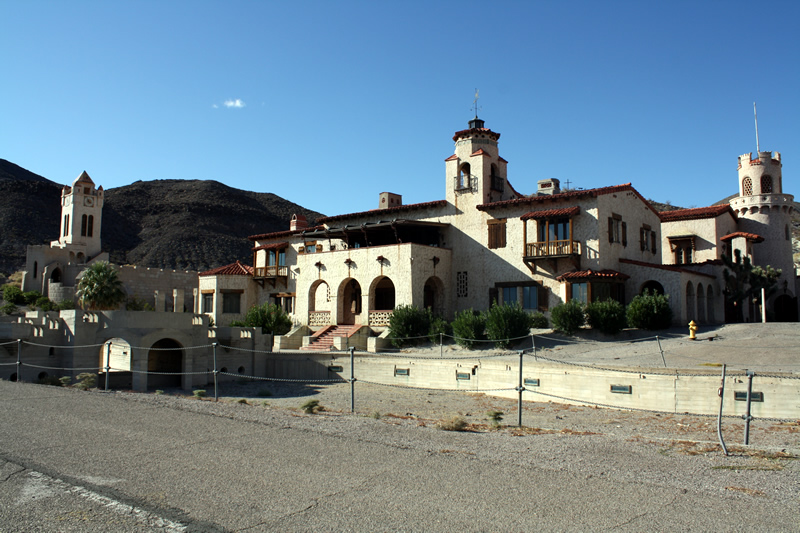
Courtney Chauncey Julian, C. C. Julian, was a businessman and shameless promoter who’s business dealings forced him to flee to California for China. He is noteworthy in his dealing in Death Valley National Park for his promotion of the town of Leadfield. After numerous court battles, he fled to Shanghai, China where he is poisoned or committed suicide.
C.C. Julian launched a newspaper blitz promoting his Julian Petroleum Corporation in 1923. The promotional blitz formed the basis for a ponzi scheme for investment into the JPC. The scandal became known as the “Julian Pete Scandal”. By 1927, it is estimated that Julian sold four million dollars in stock, which was stolen from his investors. Others estimate the value of the scheme at over eight million.
Drama followed the man, as he received death threats, however the nature of this threat is never resolved. It was reported by the United Press on Jan 4, 1924, that gun shots are fired threw the windows of his $100,000.00 house in Hollywood.
Perhaps one of his wierdest altercations came with famed film star Charles Chaplin. Just weeks after the shooting, Julian literally bumped into a table where Chaplin was eating at Club Petrouschka in Hollywood. A fight ensured and Chaplin got the better of Julian and knocked him out.
As one would expect from a thief, Julian had assets seized, by Collector of Internal Revenue, of $250,000.00 in cash and securities for failure to file is earnings from 1919-1923. He is able to maintain his house because it is deeded by his wife.

The end of Julian Petroleum Corporation stated in 1925. Julian sold his interest in the company to Sheridan C. (S.C.) Lewis and Jacob Berman for the sum on $500,000.00. The following year the company merged with California-Eastern Oil Company. An internal audit revealed the company had issued 4,200,000 unauthorized shares of stock. On May 5, 1927, the Los Angeles Stock Exchange halted trading in Julian Petroleum.
In 1931, Julian was charged with conspiracy to commit fraud in Oklahoma. He jumped bail and fled to country for Shanghai, China. Courtney Chauncey Julian is found dead of suicide in March, 1934.

This town was the brain child of C. C. Julian, who could have sold ice to an Eskimo. He wandered into Titus Canyon with money on his mind. He blasted some tunnels and liberally salted them with lead ore he had brought from Tonopah. Then he sat down and drew up some enticing, maps of the area. He moved the usually dry and never deep Amargosa River miles from its normal bed.
He drew pictures of ships steaming up the river hauling out the bountiful ore from his mines. Then he distributed handbills and lured Eastern promoters into investing money. Miners flocked in at the scent of a big strike and dug their hopeful holes. They built a few shacks. Julian was such a promoter he even conned the U. S. Government into building a post office here.
Desert Magazine – 1971 – Betty J. Tucker

William A.G. Brown was a notable African American entrepreneur and saloon owner in Virginia City, Nevada, during the height of the Comstock Lode silver mining boom.
Born free in Massachusetts (likely in the early 1830s, based on his reported age at death), Brown arrived in Virginia City around 1862 or 1863 amid the town’s explosive growth following the 1859 discovery of silver. Initially, he worked as a bootblack (a shoeshine operator) on the bustling streets of the mining camp.
By 1864, he had transitioned into business ownership, founding the Boston Saloon. This establishment primarily catered to the town’s African American community—numbering rarely more than about 100 people during the era—though it welcomed patrons of various backgrounds. Unlike many saloons of the time, the Boston Saloon stood out for its quality: archaeological excavations later revealed that Brown served finely prepared meals featuring premium cuts of meat, along with drinks, indicating a level of sophistication and success uncommon for Black-owned businesses in the 19th-century West.
The saloon operated for over a decade, with locations shifting several times (initially on B Street, later near D and Union Streets on the western, upslope side of town). Its final phase ran prominently from around 1866 to 1875. Brown sold the business shortly before the devastating Great Fire of 1875 ravaged Virginia City, destroying much of the town—including the Boston Saloon’s building.
After selling the saloon, Brown remained in the Comstock region. Records indicate he passed away in Virginia City in 1893 at the age of 63.
His legacy endured in obscurity for many years until the late 1990s and early 2000s, when archaeologists excavated the saloon’s site (now near the parking lot of the modern Bucket of Blood Saloon). The dig uncovered artifacts like fine dishware, gas lighting fixtures, and evidence of high-quality food service, shedding light on Black life and entrepreneurship in the Old West. In 2006, a rare 1880s photograph of Brown—discovered and acquired by a local bookstore owner—provided the only known image of him, depicting a sophisticated, well-dressed man.
William A.G. Brown exemplifies the resilience and economic ambition of free Black individuals in the frontier mining towns, contributing to Virginia City’s diverse historical tapestry alongside figures like Mark Twain, who also lived there briefly during the same era.

African Americans and the Boston Saloon – NSHM #266 is a Nevada State Historic Marker Located in Virginia City, Storey County, Nevada. Virginia City has eight Nevada State Historic Markers and a wonderful location to visit and dive deep into history.
Nevada State Historical Markers identify significant places of interest in Nevada’s history. The Nevada State Legislature started the program in 1967 to bring the state’s heritage to the public’s attention with on-site markers. Budget cuts to the program caused the program to become dormant in 2009. Many of the markers are lost of damaged.
William A G Brown, a freeman, moved to Nevada and started the Boston Saloon. The Boston Saloon was located at the intersection of D and Union Streets . The Virginia City newspaper, the Territorial Enterprise called the saloon a “popular resort for many of the colored population”
The saloon building is lost the great fire of 1875. The site of the saloon was subject of an archeological excavation in the year 2000.
Between 1866 and 1875, a remarkable business thrived in Virginia City. Free-born William A.G. Brown operated the Boston Saloon, serving Virginia City’s African Americans. Archaeologists have revealed that Brown offered his customers finely prepared meals with the best cuts of meat. Shortly after Brown sold his business, the great fire of 1875 swept through town and destroyed the building.
There were rarely more than one hundred African Americans living in Virginia City during its height in the 1860s, but they played varied and important roles in the community. Some African Americans pursued work as laborers, porters, and barbers. Others became affluent business owners, and a prominent doctor won widespread respect. By the 1870’s, African American children attended integrated schools. However, the decline of mining by 1880 sent many Nevadans, including African Americans, elsewhere. When mining in the state revived in the early 1900s, a shift at the federal, state, and local levels that implemented segregation via law or practice kept most African American families from returning to communities like Virginia City.
The site of the Boston Saloon is located uphill and to the left of this location at the corner of Union and D Streets now occupied by the Bucket of Blood Saloon parking lot.
STATE HISTORIC PRESERVATION OFFICE
DON MCBRIDE AND THE BUCKET OF BLOOD SALOON
RENO-SPARKS BRANCH OF THE NAACP, UNIT #1112
STATE HISTORICAL MARKER No. 266
| Nevada State Historic Marker | 266 |
| Name | African Americans and the Boston Saloon |
| Location | Virginia City, Storey County, Nevada |
| Latitude, Longitude | 39.3105, -119.6494 |