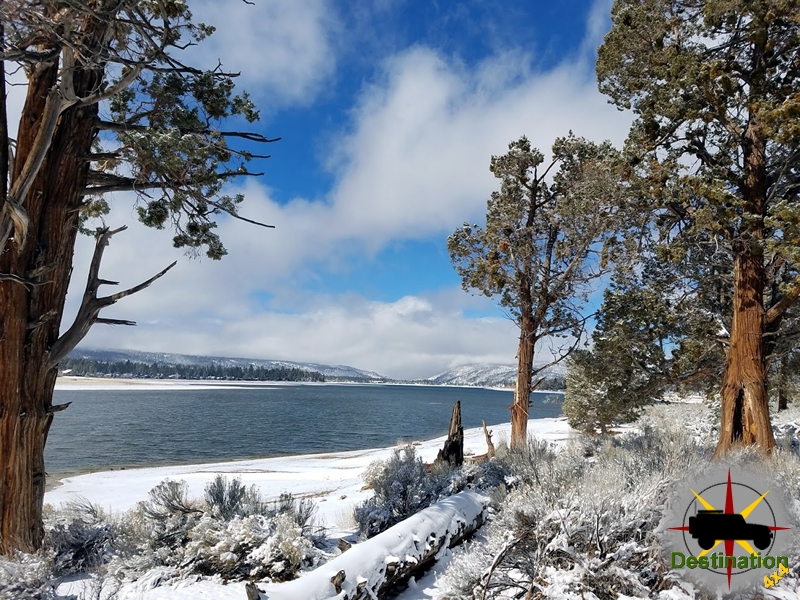
Big Bear, CA
I quiet mountain community full of back country adventure.
The Journey is the destination
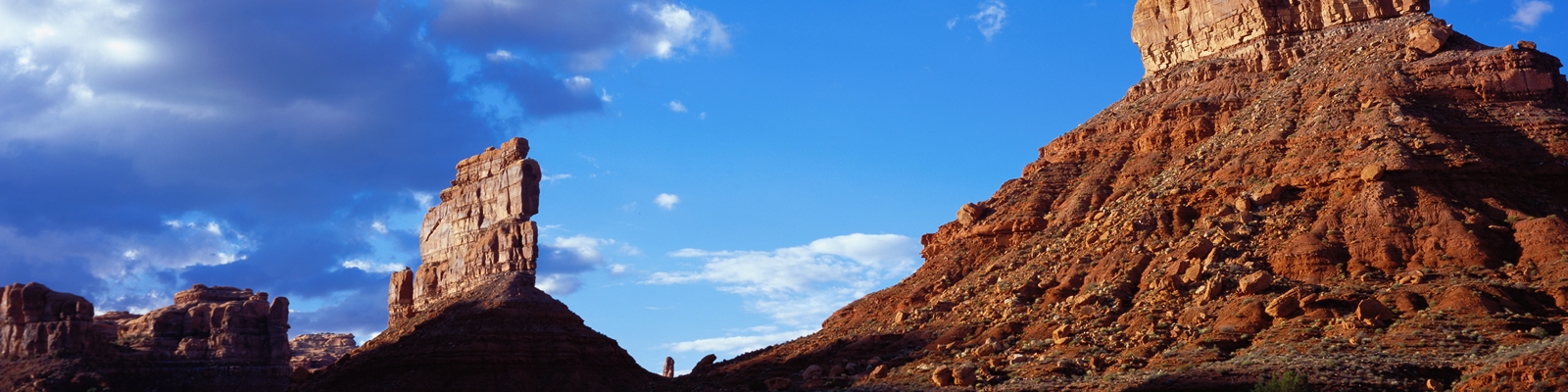
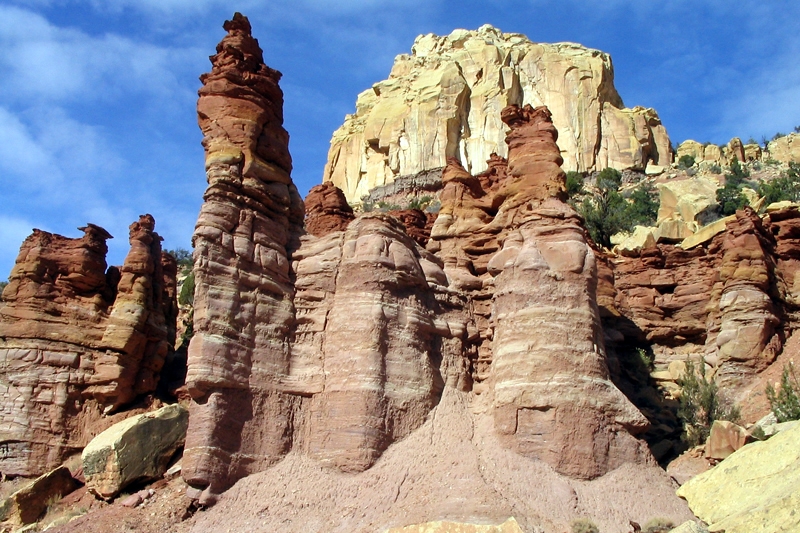
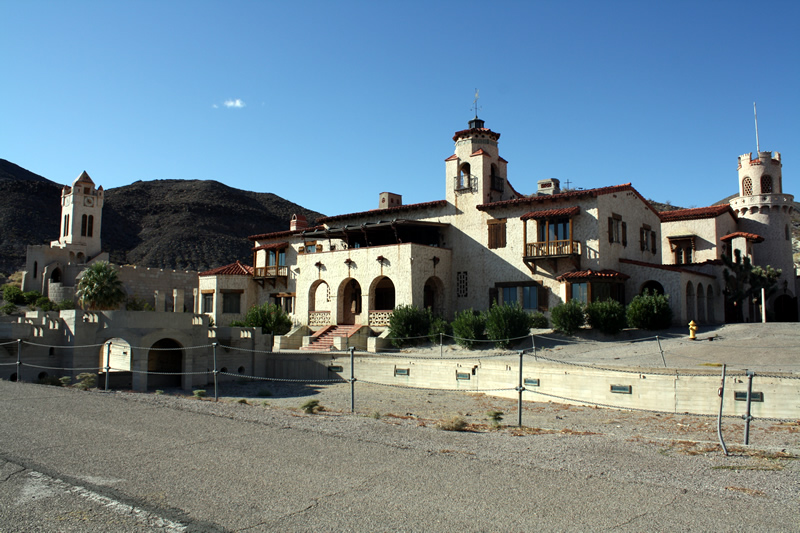
Warner Elmore Scott (1865–1950) was a Kentucky native from a horse farming family who became entangled in his brother Walter “Death Valley Scotty” Scott’s infamous 1906 staged “Battle” of Wingate Pass, a hoax to deceive gold mine investors.
Warner Elmore Scott was born in 1865 in Cynthiana, Kentucky, into a family deeply rooted in the region’s horse farming and harness racing traditions. He was the son of George E. Scott, a horse breeder, and Anna Calhoun (though some records list his mother as Elizabeth Perry, likely due to genealogical discrepancies). Warner was one of at least six children in the Scott family, which included his younger brother Walter Edward Perry Scott (born September 20, 1872), who would later become famously known as “Death Valley Scotty.” Other siblings included brothers Bill (possibly William), Lynn, and George, making Walter the youngest. The family traveled extensively along the harness racing circuit during Warner’s childhood, exposing him to a nomadic lifestyle from an early age.
As a young man, Warner ventured west to seek opportunities in the American frontier. By the early 1880s, he had settled in Nevada, where he worked as a cowhand on the ranch of John Sparks, a prominent cattleman who later became the governor of Nevada (serving from 1903 to 1908). Warner’s brother Bill joined him there, and the two established themselves in the rugged ranching life near Wells, Nevada. This move westward was emblematic of the era’s migration patterns, driven by the promise of land, work, and adventure in the expanding American West. In 1883, at the age of 11, their youngest brother Walter ran away from home in Kentucky to join them, marking the beginning of a lifelong, albeit tumultuous, familial bond. Walter’s arrival led to his first job as a water boy for a survey party on the California-Nevada border, but the brothers’ shared experiences in Nevada laid the foundation for their future entanglements.
Warner’s early career focused on ranching and related labor, including stints as a teamster hauling goods across the arid landscapes of Nevada and California. These roles honed his skills in survival and horsemanship, qualities that would later prove useful in the harsh environment of Death Valley. Little is documented about Warner’s personal life during this period, such as any marriages or children, suggesting he led a relatively private existence compared to his more flamboyant brother. Historical records portray him as a steady, if opportunistic, figure who occasionally collaborated with Walter on ventures that blurred the lines between legitimate prospecting and outright schemes.
Warner’s life became inextricably linked to his brother’s rising notoriety in the early 20th century. Walter Scott, after years as a performer in Buffalo Bill Cody’s Wild West Show and various odd jobs, reinvented himself as “Death Valley Scotty,” a charismatic prospector who claimed to have discovered a fabulously rich gold mine in California’s Death Valley. This persona was largely a fabrication, designed to attract investors through tall tales and publicity stunts. Warner, with his Western experience, became involved in these escapades, serving as both a supporter and, at times, a reluctant participant.
By 1905, Walter had secured investments from prominent figures, including Chicago millionaire Albert Mussey Johnson and banker Edward A. Shedd, who contributed $2,500 for a stake in the supposed mine. When suspicions arose due to the lack of returns, the investors demanded an inspection. Walter, fearing exposure, orchestrated an elaborate hoax to deter them: a staged “ambush” in the remote Wingate Pass area of Death Valley. Warner played a key role in this plan, ostensibly working for Walter but secretly spying for the investors’ side, providing intelligence on the expedition’s progress.
The infamous “Battle of Wingate Pass” unfolded on February 25, 1906, near the California-Nevada border. Walter’s party, which included Warner, mining engineer Daniel E. Owen (representing the investors), Albert Johnson, and others, set out from Daggett, California, with wagons, mules, and supplies. Walter had arranged for accomplices— including Bill Keys, Jack Brody, and Bob Belt—to simulate an attack by “claim jumpers” to scare off the inspectors and preserve the myth of the mine’s dangers. As the group approached Wingate Pass, shots rang out from behind stone breastworks on a nearby cliff. Chaos ensued when Bob Belt, reportedly intoxicated, fired errantly and struck Warner in the groin (some accounts also mention a shoulder wound). The injury was severe, causing significant bleeding and pain.
Walter, in a panic, galloped toward the “ambushers” yelling for them to cease fire, inadvertently revealing the stunt’s fraudulent nature to Owen and the others. The party hastily retreated to Lone Willow Spring and then Daggett, where Warner received initial medical attention before being transported by train to Los Angeles on March 1, 1906, for further treatment under Dr. C.W. Lawton. Remarkably, Warner survived the ordeal, though the wound left him with lasting physical consequences.
The incident had immediate repercussions. Investor Daniel Owen reported the “attack” to the San Bernardino County sheriff, leading to arrest warrants for Walter, Bill Keys, and Jack Brody on charges of assault with a deadly weapon. Walter evaded serious prosecution by cleverly exploiting a jurisdictional loophole: he had secretly moved the Inyo-San Bernardino county boundary marker six miles south, placing the site in Inyo County, where authorities showed little interest in pursuing the case. Walter spent several months in jail on related charges but ultimately confessed to fraud in a 1912 Los Angeles courtroom.
Warner’s response to the shooting further strained family ties. On April 7, 1906, he filed a $152,000 damage suit in Los Angeles Superior Court against Walter, Bill Scott, Bill Keys, A.Y. Pearl, and an unnamed “John Doe.” He later dropped the suit on the condition that Walter cover his medical bills, which exceeded $1,000. Walter agreed but failed to pay, resulting in a court judgment against him that went unenforced due to his lack of assets.
After the Wingate Pass fiasco, Warner largely faded from public view, returning to a quieter existence. Historical records suggest he remained in the Western United States, possibly continuing ranching or other labor in Nevada or California, but details are sparse. Unlike his brother, who continued to captivate the public with stunts—like his record-breaking 1905 train ride from Los Angeles to Chicago funded by ill-gotten gains—Warner avoided the spotlight. He outlived much of the drama surrounding Death Valley Scotty’s legends, passing away in 1950 at the age of 85. His burial details are not well-documented, though family memorials link him to the Scott lineage.
Warner’s legacy is primarily preserved through his association with Death Valley Scotty. The Wingate Pass incident became a cornerstone of Scotty’s mythology, illustrating the lengths to which the brothers went in their cons. It also highlighted the era’s Wild West ethos, where fraud, gunplay, and frontier justice intertwined. Interestingly, some historical newspaper accounts from the time refer to him as “Warren Scott,” likely a typographical error or variant spelling, as seen in a 1906 Carson Daily Appeal report. This discrepancy underscores the challenges in documenting lesser-known figures from the period.
Despite his limited fame, Warner Elmore Scott embodies the supporting cast in the grand tale of American prospecting lore. His life reflects the hardships and opportunism of the late 19th and early 20th-century West, forever tied to the enigmatic figure of Death Valley Scotty and the enduring allure of hidden gold in the desert.
The Silver Star Mine is a small mine site located off of the Zinc Mountain Road in San Bernardino County, California. The site rests at 4931 feet above sea level in the Ivanpah montains. The lonely site features a small humble cabin the miners used to survive and beat the heat. There is also a wrecked automobile near at the site, which has long since given up the battle against rust.

There is not much information available for this location on the Internet and hopefully I will be able to find some eventually. The mine site is also know as the Lucky Lode deposits. The route into the area is reasonably passable and should be suitable for most cars, provided the driver is used to operating on the back roads of the desert.

Some places claim that this mine produced lead, copper and zinc. The fact that this mine is found just off of Zinc Mountain Road offers some credence to a zinc mine. Other online sources claim this is a tungsten mine. A shallow mine shaft is located near the cabin. The shaft contains an old wooden ladder used by the miners and appears to be filled in, collapsed, or suspended after about 20 feet of workings.

This stark hole in the ground reminds us what a challenges the life of a miner must endure. Hot, dry deserts, narrow, dark tunnels in a hostile landscape.

Coyote Melon (Cucurbita palmata), also known as Coyote Gourd, is a flowering plant common in the desert southwest and known to produce spherical yellow – green melons. The vine like plant is commonly found is loose, sandy or gravely, dry, well drained soil which is common in Southern California, Arizona, Nevada and exclusively in Washington County, Utah. The primary characteristic is the growth of a green melon or gourd which is quite startling when you first see them in the hot desert climates.

The gourd was first described in 1876 by Sereno Waston who was a Yale graduate with a degree in Biology, The Coyote Melon features a sprawling stiff vine with rough, stiff-haired stems and leaves. Cucurbita palmata produces a large yellow bell shaped flower, while the melon itself is smooth in appearance. The striped yellow – green colored gourd is known to be quite hard, however, also thin when mature. The melons are very bitter and not edible. This hearty planet can survive the harsh desert landscape through its use of a large and hearty tap root. This root system can extend several feet into the dry soil to supply the plant with nutrients and water required for survival.
The Coyote Melon (Cucurbita palmata) is extremely fibrous and although not edible to humans is known to be on the coyotes diet during the fall, hence its name. It is quite common to find the seeds of this plant in coytoe scat during the fall months.
Despite the fibrous melon being inedible by man, the native american tribes were known to consume the ground seeds of this plant. Additionally, they used the dried gourds as rattles in various dances and other ceremonies. They also utilized the plant was as soap for cleaning.
Alexander Zachariah Borden, affectionately known as “Shorty,” was a quintessential Death Valley prospector whose life embodied the rugged spirit of the American West’s mining era. Standing small in stature but immense in endurance, Shorty became a legendary figure in Death Valley National Park through his relentless pursuit of gold, remarkable survival stories, and contributions to the region’s infrastructure. Though he never struck it rich, his discoveries, such as Shorty’s Well, and his hand-built roads left a lasting mark on the arid landscape. Shorty’s hospitality, storytelling prowess, and deep knowledge of Death Valley made him a beloved “last of the old timers” among locals and visitors alike.
Details about Shorty Borden’s early life are sparse, with no confirmed birth date available in historical records. Based on accounts from the 1930s, when he was reportedly 65 years old while building a road in Hanaupah Canyon, he is estimated to have been born around 1867, likely in the United States. Little is known about his family background or upbringing, but his later life suggests a hardy, adventurous disposition shaped by the frontier.
Before fully committing to prospecting, Shorty served in the U.S. Cavalry during World War I, including duty on the Mexican border. This military experience honed his resilience and survival skills, qualities that would prove invaluable in the unforgiving Death Valley environment. After his service, he transitioned into mining, drawn by tales of riches in the California deserts.
Shorty first arrived in Death Valley in 1887, enticed by the promise of gold during the late 19th-century mining booms. At a time when the region was sparsely populated and notoriously harsh—with extreme temperatures, scarce water, and treacherous terrain—Shorty roamed the surrounding mountains, including the Panamint Range, in search of strikes. He found several minor gold deposits scattered across the area, but none yielded the fortune he sought. These early efforts gave him an intimate knowledge of Death Valley’s geography, from hidden canyons to remote springs.
In the early years, Shorty partnered with fellow prospector Bud Saylor, whom he met in San Francisco. Together, they explored areas near Anvil Spring and Butte Valley, always hunting for a “mother lode.” Their partnership highlighted Shorty’s collaborative nature, as he often teamed up with others to share the burdens of desert life.
One of Shorty’s notable explorations was in Hanaupah Canyon, where he discovered a secluded valley with a perennial brook, watercress, cottonwood trees, and grass suitable for mules. Nearby Indian caves added to the site’s mystique. He even considered developing it as a tourist attraction, showcasing his entrepreneurial side beyond pure mining.
Shorty’s life was punctuated by dramatic near-death experiences that underscored his toughness. In one harrowing incident in Hanaupah Canyon, a sudden flash flood destroyed his camp, sweeping away supplies and leaving him stranded. Barefoot and hatless, he trudged through mud and debris toward Furnace Creek, battling dehydration and heat exhaustion. Delirious from thirst, he hallucinated pools of water before being rescued by Monroe Wagnon, a local who found him collapsed near the road.
Undeterred but not fully recovered, Shorty soon attempted another grueling trek to Anvil Spring to check on Bud Saylor. Underestimating his weakened state, he collapsed near the Eagle Borax mill, surviving only because Wagnon discovered him again, hidden among mesquite bushes. Nursed back to health at Anvil Springs, these episodes earned Shorty a reputation as a “durable walker,” capable of traversing dozens of miles despite his peculiar shuffling gait.
By the 1920s and 1930s, Shorty focused his efforts in the Panamint, Emigrant, and Goldbelt Spring regions. In the late 1920s or early 1930s, he discovered promising silver-lead outcroppings in the South Fork of Hanaupah Canyon. Encouraged by positive assays, he single-handedly constructed a nine-mile road from the Death Valley floor to his mine site at Hanaupah Spring, starting in September 1932 and completing it six months later—at the reported age of 65. Using only basic tools like a pick, crowbar, shovel, dynamite, and burro power, this feat demonstrated his extraordinary determination.
During the road-building process, Shorty dug a well at the junction of West Side Road and Hanaupah Canyon Road, which became known as “Shorty’s Well.” This water source, vital in the water-scarce desert, cemented his legacy and appeared on maps as a key landmark.
Shorty partnered with Bill Price on the Hanaupah mine, but the venture failed when ore shipping costs exceeded its value. Despite this, he continued prospecting. In 1942, he relocated original claims with a partner named Thompson, and in 1943, he located additional claims with Bev Hunter, Roy Hunter, and Hellen Kraft—properties later owned by Victor Materials Company.
Shorty was renowned for his hospitality and friendliness, often sharing stories of Death Valley’s history with anyone who visited. Described as a “toughened desert veteran,” he possessed a wealth of regional knowledge, from hidden water sources to ancient Native American sites. His small frame belied his endurance, and his slight twisting gait became part of his endearing persona.
In his later years, Shorty lived as one of the last surviving old-time prospectors. A 1958 newspaper article noted him as still alive, residing in a rest home in San Bernardino, California. He eventually passed away in that rest home, though the exact death date remains undocumented in available records. Historical accounts confirm his death occurred after 1958, following a life of quiet perseverance.
Shorty Borden’s legacy endures in Death Valley National Park through tangible landmarks like Shorty’s Well, Shorty’s Road, and his mine workings in Hanaupah Canyon. These sites attract hikers, historians, and adventurers, serving as reminders of the prospectors who shaped the region. Though he never achieved wealth, Shorty’s stories of survival and exploration inspire tales of the desert’s harsh beauty. As a symbol of the era’s gritty individualism, he is remembered in park histories, books, and oral traditions as a hospitable guardian of Death Valley’s secrets.
The John Bull Trail 3N10 has the solid reputation as one of the toughest and most challenging trails in the Big Bear mountains of San Bernardino County. This trail should only be done with in a group of well-equipped short-wheelbase vehicles. Lockers are recommended, but not always required. The entire trail is strewn with boulders of various sizes. There are also a number of sharp drop-offs along the way. Be prepared for scratches, dings and flat tires. This trail is not for stock SUV’s.
The trail is part of the “Adopt a Trail” program through the National Forest Service, and has been adopted by the So Cal Broncos (east end) and the Waywegos 4 Wheel Drive Club (west end).
Running the trail west to east is somewhat easier, there is a campground at the western starting point. Most off-roaders prefer to start at the east end of the trail. The official start point is off of the Burnt Flats Trail (3N02), although many catch it at the end of 3N32.
Around April/May 2009 the ends of the John Bull Trail 3N10 has had more boulders pushed in to make more difficult “gateways”, which prevent under-equipped 4x4s from running the trail.
A Forest Service Adventure Passes are required if you plan on stopping along the way. As of September 2016, forest visitors parked in standard amenity recreation fee sites in the four southern California national forests must display a valid recreation pass. This includes sites on the Angeles, Cleveland, Los Padres and San Bernardino National Forests. Such is the once great state of California.
| Name | John bull Trail |
| Location | Big Bear, San Bernardino, California |
| Length | 14.4 Miles |
| Elevation Gain | 1768 feet |
| Route Type | Loop |
| Difficulty | Difficult |