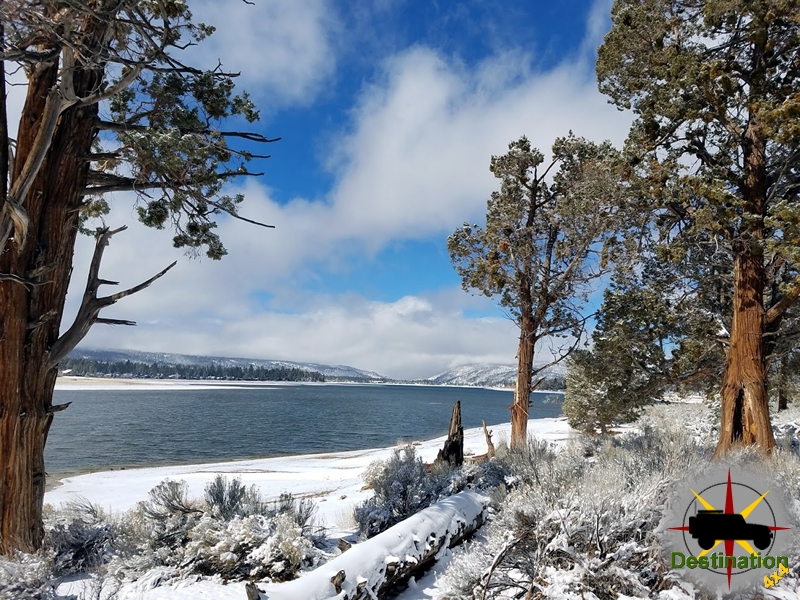
Big Bear, CA
I quiet mountain community full of back country adventure.
The Journey is the destination
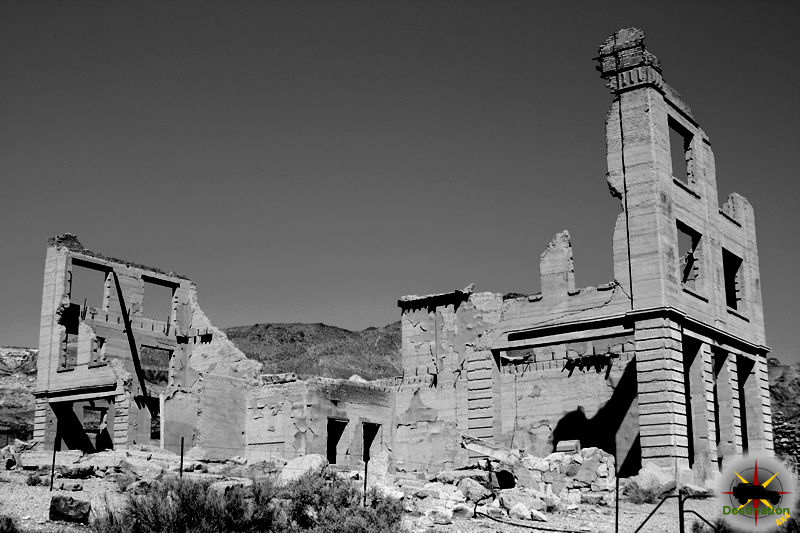
Sutro, Nevada, located in Lyon County near the historic town of Dayton in the Carson River Valley, is a quintessential Western ghost town that owes its existence entirely to one of the most ambitious engineering feats of the Comstock Lode era: the Sutro Tunnel. The town, the tunnel, and the man—Adolph Sutro—are inseparable in Nevada mining history. Planned as a model community and operational headquarters for the tunnel project, Sutro briefly flourished as a well-organized settlement supporting the drainage of the flood-prone silver mines beneath Virginia City and Gold Hill. The tunnel itself, a nearly 4-mile-long drainage adit, addressed critical safety and operational challenges in the Comstock Lode, pioneering large-scale mine drainage techniques in the United States.

The discovery of the Comstock Lode in 1859 transformed the Virginia Range into one of the richest silver and gold districts in American history. As mines deepened—eventually reaching thousands of feet—engineers faced insurmountable problems: sudden floods from underground reservoirs, scalding-hot water inflows, poor ventilation, and skyrocketing costs for surface pumping. Traditional hoisting and pumping systems could not keep pace, endangering lives and limiting production. Disasters like the 1869 Yellow Jacket Mine fire in Gold Hill, which killed dozens partly due to blocked escape routes and flooding, underscored the urgency for a better solution.
Adolph Sutro (1830–1898), a Prussian-born Jewish immigrant and self-taught entrepreneur who had profited from the California Gold Rush as a tobacco merchant and later operated a quartz mill along the Carson River, proposed the tunnel in 1860. His plan was straightforward yet revolutionary: excavate a gently sloping, horizontal adit from the lowlands near Dayton (close to the Carson River) approximately 4 miles southeast, connecting underground to the Comstock mines at a depth of about 1,640–1,750 feet. The tunnel would drain millions of gallons of water daily, provide ventilation, offer an alternative access route for men, supplies, and ore, and serve as a potential emergency escape.
Sutro secured legislative approval from the Nevada state legislature and U.S. Congress by 1865, including a 50-year franchise and land grants. Mining interests initially backed the idea for its safety benefits, but powerful mine owners and banks later opposed it fiercely, fearing it would break their monopoly on underground access and milling.

Construction of the Sutro Tunnel began on October 19, 1869, with ground broken at the Dayton end. The project was initially financed largely by contributions from miners themselves, who recognized its life-saving potential, and later by international bankers through the Sutro Tunnel Company’s stock sales. Crews—often immigrants using hand tools, explosives, and mules—labored for nearly nine years through solid rock. The main tunnel measured 3.88 miles (20,489 feet or about 6.24 km) long, roughly 10–12 feet wide and high (with variations reported up to 17×20 feet in places), and connected precisely to the Savage Mine workings on July 8, 1878 (some accounts note September 1). North and south lateral branches extended the total length to about 4.56 miles and were completed in 1879. The first water was released from the mines on June 30, 1879.
At the tunnel portal, Sutro carefully planned and developed the town of Sutro as the project’s headquarters. What began as a rough construction camp evolved into a well-laid-out community with streets, parks, a church, post office (established March 25, 1872, and operating until October 30, 1920), and its own weekly newspaper, the Sutro Independent. Sutro envisioned it as a miners’ haven where workers could live comfortably and commute underground via the tunnel. The population peaked at 600–800 during construction, including fine residences and Sutro’s own elaborate Victorian mansion (built in 1879 for $60,000, featuring marble fireplaces and a two-story veranda). Tunnel water was even used for irrigation.


Once operational, the tunnel drained up to 3.5 million gallons of water per day in the 1880s, dramatically improving ventilation, reducing pumping costs, and enabling deeper, safer mining. It also facilitated ore and waste removal more efficiently than vertical shafts. The project served as a model for later U.S. drainage tunnels, such as those in Colorado.
Adolph Sutro sold his interest in the company shortly after completion and relocated to San Francisco, where he became a wealthy philanthropist, built the iconic Sutro Baths and Cliff House, and served as mayor (1895–1897). The tunnel company continued under other management, and the town gradually declined as the Comstock Lode’s bonanza faded by the early 1880s. Population dropped to around 375–435 by 1880; most buildings were removed or fell into disrepair. Fires claimed the mansion in 1941 and other structures later. The tunnel operated for about 65 years until the 1940s, when wartime needs, mismanagement, and declining production led to its closure around 1943 (though it continues to drain some water passively).
The Sutro Tunnel stands as an enduring engineering marvel that protected miners’ lives and sustained Comstock operations long after its richest ores were extracted. The town of Sutro, though now a private ghost town with scattered remnants (wooden shacks, mine tailings, and the iconic portal facade), is undergoing active preservation. The nonprofit Friends of Sutro Tunnel is leading restoration efforts, including site cleanup, structural stabilization, and partial reopening for guided tours. Over 1,000 feet of the tunnel have been explored with modern technology, and the site aims to become a public historical attraction highlighting Nevada’s mining heritage.
Today, Sutro serves as a poignant reminder of the ingenuity, labor, and ambition that defined the Comstock era—a town born of necessity that briefly thrived around humanity’s determination to conquer the depths of the earth.
| Name | Sutro Nevada |
| Location | Lyon County, Nevada |
| Latitude, Longitude | 39.28, -119.584167 |
| GNIS | 856145 |
| Elevation | 4,478 ft (1,365 m) |
| Population | 600 – 800 |
| Post Office | March 1872 – October 1920 |
| Newspaper | Sutro Independent Sept 25, 1875 – Nov 22, 1880 |
Ione is a remote ghost town in Nye County, central Nevada, situated in Ione Valley at an elevation of approximately 6,782 feet (2,067 meters). Located roughly 23 miles (37 km) east of Gabbs, it lies in a high desert basin surrounded by the Shoshone Range. Though often classified as a ghost town, Ione has earned the nickname “the town that refused to die” for its repeated cycles of boom and bust while never fully vanishing.

The Ione Valley supported a dense and permanent Native American population for at least 5,000 years. Shoshone and Northern Paiute peoples inhabited the area, practicing unusual property arrangements and agricultural methods adapted to the arid environment. Evidence of their long-term presence underscores the valley’s value as a resource-rich location long before European-American settlement.
Ione’s Euro-American history began in November 1863 when prospector P. A. Havens discovered silver ore in the Shoshone Range. The town initially formed in Ione Canyon as a trade and milling center serving the Union Mining District (whose mines were closer to settlements like Union and Grantsville). Within months, it grew rapidly: the original site boasted nearly 50 buildings, and the population swelled as miners, merchants, and entrepreneurs arrived.
In early 1864, residents petitioned the Nevada Territorial government to create a new county. Nye County was officially organized in April 1864 (named after Territorial Governor James Nye), with Ione designated as its first county seat. The territorial government awarded the town an $800 stipend to build the county’s first courthouse—a modest wooden structure. By late 1864, Ione had over 100 buildings, a population nearing 600, two short-lived newspapers (Nye County News and the Advertiser), a post office (opened 1865), stores, saloons, stables, and a stage line to Austin. Mills soon followed, including the Pioneer 5-stamp mill (1865) and the larger Knickerbocker mill three miles south.
The townsite was relocated out of the canyon in 1864 to a more convenient spot nearer the principal mines.

Ione’s prominence as Nye County’s seat proved short-lived. Richer silver strikes at Belmont, about 50 miles southeast, drew away most of the population by 1865–1866. In February 1867, the county seat officially moved to Belmont. By 1868, Ione’s population had dropped below 200. A brief post-1867 silver resurgence in the 1870s failed to restore its earlier status; by 1880, only about 25 people remained. A major fire in 1887 destroyed many buildings, and the post office was briefly renamed “Midas” in 1882 in a failed attempt to revive fortunes.
Ione experienced intermittent revivals tied to mining. In 1896, the Ione Gold Mining Company built a 10-stamp mill to process ore from the nearby Berlin mine, briefly boosting the population to around 70. In 1897, prominent businessman A. Phelps Stokes (through the Nevada Company) purchased most mining and milling interests in the Union District, injecting new capital. This resurgence ended abruptly in July 1898 when silver prices collapsed. The post office closed in 1903.
A final small boom occurred around 1912–1914 with the discovery of cinnabar (mercury ore) deposits. The population reached about 100, and a telephone line connected the town to Austin. Mercury mining continued sporadically into the 1920s and 1930s, with operations at nearby Shamrock producing thousands of flasks of mercury. These activities helped Ione survive the Great Depression, though the mill was eventually dismantled in 1950. The post office reopened briefly during this period but closed for the final time on April 30, 1959.
Population figures reflect the town’s resilience: it stood at 40 in 1940. In the 1970s, Hugh Marshall acquired most of the townsite and surrounding 24 square miles. A later attempt at large-scale gold mining in the early 1980s by Marshall Earth Resources restored some buildings but ultimately faded.
Ione never became fully abandoned, persisting through mining depressions, milling challenges, and competition from richer strikes elsewhere. Today it remains a living ghost town with a handful of residents (reports from the early 2020s cited around 41; more recent accounts suggest even fewer year-round occupants). A small market once operated, but services are minimal. The remote location—reached via dirt roads off State Route 91—limits tourism, though the site attracts those interested in Nevada’s mining heritage.
Surviving structures include historic wooden and stone buildings, an aged corral, stone cabins, and a barn-like structure rumored to be the original (small wooden) Nye County Courthouse. The Ore House Saloon, a turn-of-the-century building, stands as one of the more visible remnants.
Ione Valley’s prehistoric sites and the town’s layered mining history contribute to its significance. It exemplifies the boom-bust pattern of Nevada’s 19th- and early 20th-century mining camps, yet its unbroken (if tenuous) occupation sets it apart.
Sources draw primarily from Nevada historical markers, mining histories, and local records. For further reading, consult Shawn Hall’s Preserving the Glory Days: Ghost Towns and Mining Camps of Nye County, Nevada. Ione stands today as a quiet testament to the enduring, if modest, spirit of Nevada’s frontier mining towns.
The Evening Star Mine (also known as the Evening Star Tin Mine, Maynard Mine, Bernice Mine, or Rex Tin Mine) is located in the Mescal Mining District at the western base of the Ivanpah Mountains, San Bernardino County, California—within what is now Mojave National Preserve. It sits at approximately 4,961 feet elevation, about 1.5 miles south of the Standard No. 1 Mine, near Cima and not far from the California-Nevada border (outside Primm, NV)..

The mine began modestly in 1935 as a copper prospect staked by lifelong desert miner J. Riley Bembry. Bembry, born in Oklahoma in 1899 and a WWI veteran, had prospected extensively in the eastern Mojave since the late 1920s or early 1930s. Within about a year, he sold the claims to Trigg L. Button and Clarence Hammett of Santa Ana, California. They began sinking the No. 1 shaft.
In 1940, Vaughn Maynard of Santa Ana purchased the claims. The site was developed as a combination surface-underground operation on a small deposit.
The mine entered its main productive phase during World War II, driven by demand for strategic minerals. In 1941, the Tin Corporation of America leased the property. They continued deepening the shaft and, in June 1942, shipped 25 tons of ore to the Tin Processing Corporation in Texas City, Texas.
In 1943, Carl F. Wendrick, Jr. (owner of Steel Sales and Service Company of Chicago, Illinois) leased the mine. He secured a government loan, employed about eight men, constructed a larger headframe, and built a mill at Valley Wells. Operations ran primarily from 1939 to 1944 (with the most intensive work in the early 1940s).
The Evening Star Mine was the only producer of tin ore (cassiterite, or tin oxide) in the eastern Mojave Desert—and reportedly the only one in the broader Mojave. It yielded over 400 tons of tin ore during its life. Several tons of tin concentrates (containing 35.96% tin) were sold to the U.S. government stockpile in Jean, Nevada, just across the border. The deposit also carried minor amounts of copper, tungsten, zinc, and possibly gold.
Nearby claims (just west) produced about 1,000 tons of tungsten ore under a separate lease (1939–1940).
The mine stands out for its 60-foot headframe, which featured a crusher mounted directly on top—one of the few such setups in the Mojave. Ore fed from the headframe into a sorting structure of three tiered towers (the lowest serving as an ore bin). This design was practical for the remote, small-scale operation.
Production ended around 1944 as wartime demand eased and the deposit proved limited. The site was never a large-scale operation but exemplified the many independent, small-scale ventures that dotted the desert.
Today, the Evening Star Mine is a well-preserved historic site within Mojave National Preserve. The impressive wooden headframe and associated structures (outbuildings, shafts, tunnels, and artifacts) remain visible and have been assessed for stabilization to protect historic timber framing. The main shaft is closed for safety (e.g., with cable netting). It serves as a photogenic reminder of WWII-era mining and the rugged life of desert prospectors.
(Note: A few secondary sources occasionally reference earlier 1900s development or conflicting details, but primary accounts consistently date commercial tin-focused work to the 1935–1944 period.)
The Evening Star Mine, though short-lived, highlights the Mojave’s role in supplying critical minerals during national emergencies and contributes to the rich tapestry of over a century of desert mining history. Many similar sites nearby (e.g., Vulcan for iron) underscore how the region supported both economic booms and wartime needs.
The Kokoweef Mine (more accurately known as the legendary caverns or lost river of gold beneath Kokoweef Peak) is not a conventional operating mine but a persistent folk legend tied to a remote mountain in California’s Mojave Desert. Kokoweef Peak (also called Mt. Kokoweef), rising to about 6,037–6,038 feet in the Ivanpah Mountains of San Bernardino County, lies roughly three miles south of Mountain Pass along Interstate 15, near the Nevada border and within or adjacent to the Mojave National Preserve area.

The story blends Native American oral tradition, a prospector’s sworn affidavit, and decades of treasure-hunting fervor. It has inspired mining claims, exploration companies, paleontological digs, and countless seekers—yet no verifiable underground river of gold has ever been confirmed. Real caves exist on the peak (limestone karst formations), and zinc was mined there during World War II, but the core “mine” remains legendary.

The legend traces back to three Southern Paiute (or Piute) brothers—Oliver, George, and Buck Peysert—who reportedly worked as ranch hands at the Dorr family ranch near Colorado Springs, Colorado, in the 1890s–early 1900s during the boyhood of prospector Earl Dorr.
According to the tale, tribal elders had long described a vast underground cavern system beneath a peak (later identified as Kokoweef) containing a subterranean river whose black-sand beaches were laden with placer gold. Around 1903–1905, the brothers left the ranch to search for it. They allegedly rediscovered a narrow passageway leading deep into a labyrinth of caverns. After weeks of exploration, they reached an enormous underground river. They extracted gold worth about $57,000 (at the contemporary price of roughly $20 per ounce) over a six-week period. Tragedy struck when George fell to his death into the river. The survivors cashed in their gold at the U.S. Mint and deposited funds in banks in Needles, California, and Las Vegas, Nevada. Tribal custom supposedly forbade them from returning to the site after the death.
The brothers later shared the story with Earl Dorr (some accounts place this encounter in San Francisco around 1906 after the earthquake; others say he heard it as a youth). One version claims they provided him with a map, though Dorr family members later disputed this.

Earl P. Dorr (born ~1885 near Colorado Springs), a cowboy-turned-prospector and adventurer, became the legend’s central figure. By the early 1920s, he had moved to the Mojave region and reportedly rediscovered an entrance to the cavern system (possibly Crystal Cave or one of the other solution cavities on Kokoweef Peak). In 1927, he enlisted a civil engineer, Mr. Morton from Tempe, Arizona, to help map it. According to Dorr’s later account, the two men spent four days (accounts vary between three and four) exploring over eight miles of passages. They descended thousands of feet into a massive underground canyon hundreds of feet deep, where a 300-foot-wide subterranean river flowed. The river reportedly “breathed,” rising and falling like tides, exposing black-sand beaches and ledges said to be extremely rich in placer gold. Dorr claimed they panned samples that assayed at high values (one report cited $2,144 per cubic yard). They allegedly carried out about 10 pounds each of gold-bearing material.
In 1934, Dorr signed a notarized affidavit detailing these discoveries. He said he dynamited the entrance shut to protect his find while attempting to file a claim. (Some accounts note he could not because earlier claims by a prospector named Pete Ressler—possibly linked to the Hole-in-the-Wall Gang—already covered parts of the area.) Dorr tried to attract investors but never successfully reopened or proved the site. He died in a 1957 mining accident.
The affidavit was later published in the California Mining Journal (1940) and referenced in Desert Magazine and other outlets, turning the story into a classic lost-mine legend. Variations appeared in print as early as the 1930s, sometimes blending it with broader Mojave Desert tales of interconnected cave systems and underground rivers.
The legend drew treasure hunters and small-scale miners to Kokoweef Peak, creating a short-lived shantytown at its base. The Wallace family, inspired by Dorr’s story, formed the Crystal Cave Mining Corporation in the mid-1930s. They acquired claims from Pete Ressler in 1939 and mined zinc (not gold) at the Carbonate King during World War II to fund further searches for the river. The claims were patented in later decades.
Successive groups (including the Schnar family in the 1960s–70s and Legendary Kokoweef Cavern Inc.) continued digging and blasting in known caves like Crystal Cave. Real scientific value emerged in the 1970s: paleontologists from the San Bernardino County Museum, led by Bob Reynolds, excavated over five-and-a-half tons of sediment from Kokoweef Cave. They recovered more than 200,000 Pleistocene-era fossils (deposited less than 11,000 years ago), including dire wolves, camels, horses, deer, pronghorn, coyotes, birds, and smaller mammals. These confirmed the caves’ existence and ancient use as animal traps or dens but found no evidence of a flowing river or gold deposits matching Dorr’s description.
Geologically, Kokoweef Peak consists of ancient Mississippian-Pennsylvanian limestone (300–340 million years old) that formed karst caves along faults, primarily during the Ice Age (~1 million years ago). While underground water systems are possible in such formations, experts note the modern Mojave’s extreme aridity makes a large, persistent subterranean river unlikely, and the claimed gold quantities would be unprecedented.
In 1984–1985, Explorations Incorporated of Nevada (later evolving into Kokoweef Inc.) took over, continuing exploration through drilling, geophysical surveys, and tunneling. The company has found additional caverns, crystals, and mineral veins, and some drilling has encountered traces of gold and sulfides. They maintain mining claims and emphasize both the legendary river and potential commercial deposits. Investors (hundreds over the years) have funded the work, with some visions of trillion-dollar riches, but the river itself remains elusive.
Today, the site features old mine entrances, tailings, and ongoing (low-key) activity. Kokoweef Caverns were briefly a curiosity or tourist draw in earlier decades but are no longer promoted that way. The legend still circulates in books, magazines, forums, and videos, sometimes linking to wider desert lore about hidden caves or ancient civilizations. Skeptics view Dorr’s tale as an imaginative hoax or prospector’s yarn designed to attract backers; supporters point to the consistent details, real caves, and ongoing finds as evidence something extraordinary may still lie undiscovered.
In summary, the Kokoweef “mine” endures as one of California’s most captivating lost-treasure legends—rooted in a purported Native American discovery, amplified by Dorr’s dramatic 1934 affidavit, and kept alive by real geology, fossils, and determined explorers. Whether it conceals a river of gold or remains a desert mirage, it continues to draw dreamers to the Mojave’s rugged peaks.

Tempiute (also spelled Tem Piute, Tempahute, Timpahute, or similar variations) is a ghost town and historic mining district in Lincoln County, Nevada. Its name derives from the Southern Paiute, roughly translating to “rock water people.”
The site includes an older silver mining area (often called Old Tempiute) and a newer tungsten mining complex (Lincoln Mine / New Tempiute) on the north side of the mountain.
Silver was first discovered in the Tempiute Mountain area in 1865 during the broader Pahranagat mining rush. Additional lodes were found in 1868, leading to the organization of the Tem Piute Mining District.
A small mining camp developed, reaching a peak population of about 50 miners by 1870. Ore was shipped to mills at places like Crescent City or Hamilton, but development was severely hampered by a lack of water. Supplies had to be hauled by mule from springs up to 12 miles away.
A post office operated intermittently as “Tem Piute” from 1879–1881 and 1882–1883. Efforts in the late 1870s by companies like the Tem Pahute Land, Mining, and Improvement Co. and Wyandotte Silver Mining Co. included building a water pipeline and planning a stamp mill, but these largely failed. By the mid-1880s, the silver camp was mostly abandoned as miners moved to more promising areas.
Tungsten ore was discovered in the district in 1916, but significant operations waited until later. The Lincoln Mines Company began larger-scale work around 1940, building a mill. Production ramped up during World War II due to demand for tungsten (used in steel alloys and armaments).
After the war, activity declined until the early 1950s when tungsten prices rose. The Wah Chang Trading Company (operating as Black Rock Mining Company) revitalized the district. At its peak in the mid-1950s, the town had a population of around 700, including a school and other amenities. The post office reopened as “Tempiute” from 1953 to 1957.
The Lincoln Mine (also known as Tem Piute Mine, Emerson Mine, etc.) became one of the leading tungsten producers in the United States. Later operators included Union Carbide (1977–1987). Mining was intermittent and ultimately ended in the mid-1980s due to falling prices from cheap imports (especially from China).
Tempiute is an abandoned ghost town. Remains include stone cabin foundations from the silver era, mine shafts, tailings, and larger industrial ruins from the tungsten period (mills, buildings, and underground workings). The site is split into areas, with some accessible by vehicle and others requiring hikes. It is located near restricted or sensitive areas (proximity to Rachel and the Nevada Test and Training Range), so visitors should respect boundaries, obtain permissions if needed, and practice leave-no-trace principles.
Tempiute exemplifies Lincoln County’s boom-and-bust mining cycles — starting with 19th-century silver rushes and shifting to strategic minerals like tungsten in the 20th century. Its history reflects challenges common to Nevada mining towns: water scarcity, fluctuating mineral prices, and dependence on distant markets and transportation.
Sources for this report include Wikipedia, Nevada Expeditions, Rachel-Nevada.com, mining databases, and Lincoln County historical references. If you’d like directions, photos, comparisons to nearby sites (like Rachel or other Lincoln County ghost towns), or more on the geology/minerals, just let me know!