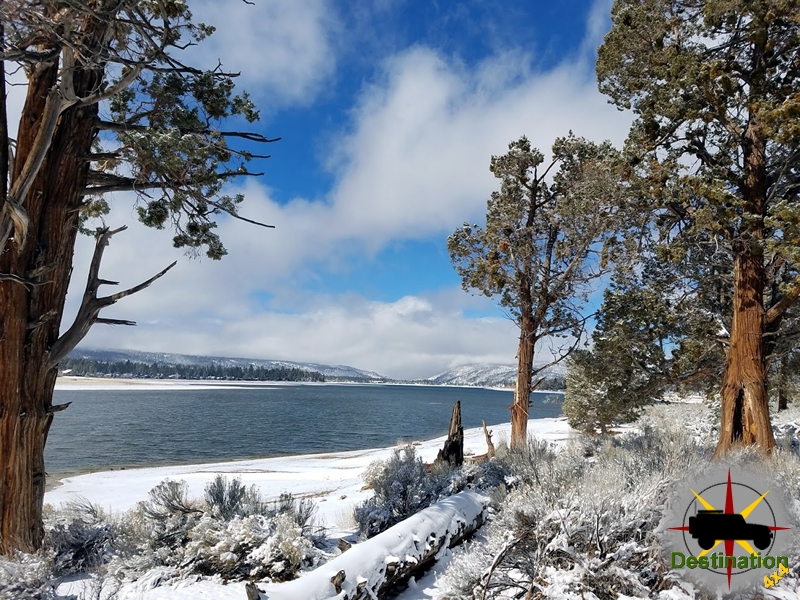
Big Bear, CA
I quiet mountain community full of back country adventure.
The Journey is the destination
On July 4, 1910, in Reno, Nevada, the “Fight of the Century” took place between Jack Johnson, the first African American World Heavyweight Champion, and James J. Jeffries, the former undefeated heavyweight champion who came out of retirement to challenge him. This boxing match was more than a sporting event; it was a cultural and racial flashpoint in early 20th-century America, reflecting deep-seated racial tensions and societal divides. The fight, held in a specially constructed arena, drew unprecedented attention and had far-reaching consequences, including race riots across the United States.

Jack Johnson, known as the “Galveston Giant,” won the heavyweight title in 1908 by defeating Tommy Burns in Sydney, Australia, becoming the first Black man to hold the prestigious title. His victory was a source of pride for African Americans but provoked outrage among many white Americans, who viewed his success as a challenge to racial hierarchies. Johnson’s flamboyant personality, confidence, and refusal to conform to societal expectations further fueled animosity, with the press often portraying him negatively.
James J. Jeffries, nicknamed “The Boilermaker,” was a white former champion who retired undefeated in 1904. Persuaded by promoter Tex Rickard and driven by societal pressure to “reclaim the title for the white race,” Jeffries came out of retirement. He publicly stated his intention was to prove “a white man is better than a Negro,” earning him the moniker “Great White Hope.” At 35 years old, Jeffries had not fought in six years and needed to lose over 100 pounds to return to fighting weight, raising questions about his physical readiness.
The fight was heavily promoted by Tex Rickard and John Gleason, who secured a purse of $101,000, with the winner initially set to receive 75% and the loser 25%, though the split was later adjusted to 60/40 at Johnson’s suggestion. Both fighters also received a $10,000 signing bonus and shares of the film rights, which promised significant revenue. The event was moved from San Francisco to Reno after California’s governor banned it due to moral and religious objections, highlighting the controversial nature of boxing at the time.
The lead-up to the fight was charged with racial rhetoric. The press framed it as a clash of civilizations, with Jeffries as the representative of white supremacy and Johnson as a symbol of Black defiance. Author Jack London, who had covered Johnson’s victory over Burns, called for Jeffries to restore the title to the “white race,” while a New York Times editorial warned that a Johnson victory could embolden African Americans to seek “more than mere physical equality.” Such coverage amplified racial tensions and drew global attention, with over 500 media members reporting from Reno.
The fight attracted a crowd of over 18,000, with estimates ranging up to 22,000, who gathered in a purpose-built wooden amphitheater on East 4th Street in Reno, Washoe County, near the Southern Pacific railroad tracks. Spectators arrived by buggy, automobile, rail, and streetcar, with nine cameramen capturing the event for film distribution. The atmosphere was tense, with strict security measures prohibiting guns, alcohol, and even apples to prevent violence. Betting odds favored Jeffries at 10–7, reflecting public confidence in his victory despite his long hiatus.
Johnson, known for his charisma, soaked up the spotlight during training at Rick’s Resort, often joking with his camp, while Jeffries trained quietly at Moana Springs, avoiding media attention. Prominent figures like John L. Sullivan, who predicted Johnson’s skill would prevail unless he faltered, added to the hype. The stage was set for a historic confrontation.
On July 4, 1910, under the scorching Nevada sun, the fight commenced before a predominantly white crowd of over 12,000, with some estimates suggesting up to 20,000 spectators. Johnson, at 32, was in peak physical condition, while Jeffries, heavier and slower, struggled to keep pace. From the opening bell, Johnson dominated with his superior speed, footwork, and defensive prowess, frustrating Jeffries’ attempts to land significant blows.
By the 12th round, Jeffries was visibly battered, his face swollen and bleeding, with Johnson’s taunts and precise punches wearing him down. Reports suggest Johnson prolonged the fight, possibly to maximize the film’s revenue potential or to punish Jeffries, though he later denied such claims. In the 15th round, Johnson knocked Jeffries down twice for the first time in his career. After a third knockdown sent Jeffries through the ropes, his corner threw in the towel to prevent a knockout, ending the fight. Johnson was declared the victor, retaining his heavyweight title.
Jeffries later admitted, “I could never have whipped Johnson at my best. I couldn’t have hit him. No, I couldn’t have reached him in a thousand years,” acknowledging Johnson’s superior skill. The San Diego Union reported Johnson’s dominance, noting he “played with” Jeffries throughout the match.
Johnson’s victory was a triumph for African Americans but triggered widespread outrage among white communities. Race riots erupted across the United States, with over 20 deaths, predominantly Black individuals, as white mobs attacked Black celebrants. Cities like Chicago, New York, and Atlanta saw violence, and the film of the fight was banned in many states due to fears it would incite further unrest, marking the first instance of racist film censorship in U.S. history. Congress later passed a 1912 ban on interstate transport of fight films, which remained until 1940.
The fight exposed America’s racial fault lines, with Johnson’s victory challenging notions of white supremacy. It became a cultural touchstone, inspiring poems like William Waring Cuney’s, which celebrated Johnson’s triumph, and fueling discussions on race and equality. The event’s legacy endures as a pivotal moment in sports and social history, highlighting both the power of athletic achievement and the deep-seated prejudices of the era.
The Johnson-Jeffries fight of 1910 was a landmark event that transcended boxing, reflecting and reshaping America’s racial dynamics. Jack Johnson’s decisive victory over James J. Jeffries not only solidified his status as a boxing legend but also challenged societal norms, sparking both celebration and violence. The fight’s significance lies in its role as a catalyst for conversations about race, equality, and the power of sport to influence cultural perceptions, making it a defining moment in American history.
On this site on July 4, 1910, Reno hosted ‘The Fight of the Century,” a heavyweight championship boxing match between John Arthur Jack Johnson, the African American title holder, and James J. ‘Jim’ Jeffries, a former champion seeking to regain the title he had vacated in 1904. Jeffries had refereed a previous championship bout between Marvin Hart and Jack Root at this site on July 3, 1905, but the promotion of the ex-champion as “The Great White Hope’ focused worldwide attention on his 1910 contest with the talented Johnson, known as the “Galveston Giant.” Gamblers had their money on Jeffries, but Johnson easily handled his opponent and Jeffries’ trainers called the fight in the fifteenth round to save their man from the disgrace of a knockout.
Organized by famed promoter Tex Rickard, the fight brought over 30,000 fans to Reno, some 22,000 of whom packed the arena here on the day of the fight.
STATE HISTORICAL MARKER NO. 220
STATE HISTORIC PRESERVATION OFFICE
THE WASHOE COUNTY HISTORICAL SOCIETY
THE NEVADA CORRAL WESTERNERS INTERNATIONAL
| Name | The Fight of the Century |
| Location | Reno, Washoe County, Nevada |
| Latitude, Longitude | 39.5332, -119.7964 |
| Nevada State Historic Marker | 220 |
Junction Campground, located in the Inyo National Forest near Tioga Pass, California, is a small, high-altitude campground at approximately 9,600 feet elevation. Situated at the junction of Highway 120 (Tioga Road) and Saddlebag Lake Road, just 2 miles east of Yosemite National Park’s Tioga Pass entrance, this 13-site campground offers a serene alpine retreat in the Eastern Sierra Nevada. Nestled in a lodgepole pine forest with stunning views of surrounding granite peaks, including Mt. Dana and Tioga Peak, Junction Campground provides easy access to Ellery Lake, Tioga Lake, and the recreational opportunities of the Hoover Wilderness and Yosemite’s high country. Its proximity to Lee Vining and Mono Lake makes it an ideal base for campers seeking a quiet escape with access to fishing, hiking, and breathtaking scenery.

Junction Campground features 13 single-family campsites, all available on a first-come, first-served basis with no reservations accepted. The sites are primarily designed for tent camping, though some can accommodate small RVs or trailers up to 30 feet, with limited parking space for additional vehicles. Each campsite includes a picnic table, a fire ring with grill, and a bear-proof food storage locker (typical size: 48″ x 30″ x 36″), mandatory due to active black bear activity in the area. Amenities are limited to one vault toilet, which is generally clean but may see heavy use during peak season. There is no potable water on-site, so campers must bring their own or obtain water from nearby Ellery Lake Campground (0.3 miles away) or Tioga Lake Campground (1 mile away). The campground’s roads and parking spurs are paved but narrow, and sites are closely spaced, offering limited privacy. The cost is $20 per night for a single site, reflecting the lack of water, with an additional $10 per night for extra vehicles. Holders of America the Beautiful Senior or Access Passes receive a 50% discount on single-site fees, applicable only to the site occupied by the pass holder. Quiet hours are enforced from 10:00 PM to 6:00 AM, with a 14-day stay limit. Firewood is available for purchase from nearby campgrounds or Lee Vining. Cell service is nonexistent, enhancing the remote, off-the-grid experience.
Junction Campground offers access to a variety of outdoor activities in the Tioga Pass area:
At 9,600 feet, Junction Campground is nestled in Upper Lee Vining Canyon, surrounded by a dense lodgepole pine forest with open views of towering granite peaks, including the 13,057-foot Mt. Dana and 11,513-foot Tioga Peak. The campground sits near Lee Vining Creek, with its clear, cold waters adding a subtle soundscape. The alpine environment features sagebrush, summer wildflowers, and scattered aspens that turn golden in fall, creating a striking contrast against the rugged granite landscape. Summer daytime temperatures range from the 60s to 70s°F, but nights can drop to the 20s or 30s°F, with snow possible even in June. Visitors should be prepared for strong UV exposure, chilly nights, and potential altitude sickness, as acclimatization may take a day or two. Mosquitoes can be prevalent in early summer, so insect repellent is recommended.
Junction Campground is located 10 miles west of Lee Vining, California, via US Highway 395 and CA Highway 120 (Tioga Road). From Lee Vining, head south on US 395 for 0.3 miles, turn right onto CA 120 west, and drive 9.5 miles to the campground, located at the junction with Saddlebag Lake Road on the right. The campground is 2 miles east of Yosemite’s Tioga Pass entrance, a 4-minute drive. The road is paved, but Tioga Pass is seasonal, typically open from early June to early October (tentative opening June 13, 2025), closing due to heavy snow. For updates, contact the Mono Basin Scenic Area Visitor Center at (760) 647-3044 or check Recreation.gov. The campground is closed for the winter season. Payment is by cash or check only. The Mono Lake Visitor Center (1 Visitor Center Dr, Lee Vining, CA) is open daily from 9:00 AM to 5:00 PM for information.
Lee Vining, 10 miles east, offers fuel, markets, and dining options, including the Whoa Nellie Deli at the Mobil Gas Station, Epic Cafe, Mono Cone, Bodie Mike’s, Nicely’s Restaurant, and the Mono Market. The Tioga Pass Resort, 2 miles west, has a seasonal café. Ellery Lake Campground (0.3 miles) and Tioga Lake Campground (1 mile) provide potable water and additional vault toilets. Nearby campgrounds, such as Ellery Lake, Tioga Lake, Saddlebag Lake, Big Bend, and Lower Lee Vining, offer alternative options if Junction is full.
Campers praise Junction Campground for its stunning alpine setting, proximity to Yosemite, and access to fishing and hiking. Reviews highlight the scenic views of granite peaks and the quiet atmosphere, with one camper noting, “Junction is a perfect stopover before entering Yosemite, with easy access to lakes and trails.” The small size is appreciated for its intimacy, but some mention the lack of privacy due to closely spaced sites and the absence of potable water as drawbacks. The clean vault toilet and convenient location at the Saddlebag Lake Road junction are frequently commended, though mosquitoes in early summer and cold nights are noted challenges. The first-come, first-served policy and high demand make early arrival essential.
Junction Campground is a serene, high-altitude gem near Tioga Pass, offering a small, rustic retreat at 9,600 feet with easy access to Ellery Lake, Tioga Lake, and Yosemite National Park. Its 13 forested sites, stunning alpine views, and opportunities for fishing, hiking, and paddling make it a favorite for tent campers and small RV users seeking an off-the-grid adventure. Despite limited amenities and privacy, the campground’s breathtaking setting and proximity to the Hoover Wilderness and Mono Lake create an unforgettable outdoor experience. Whether exploring historic trails, fishing in alpine lakes, or stargazing under a pristine Sierra sky, Junction Campground delivers a memorable escape in one of California’s most spectacular regions.

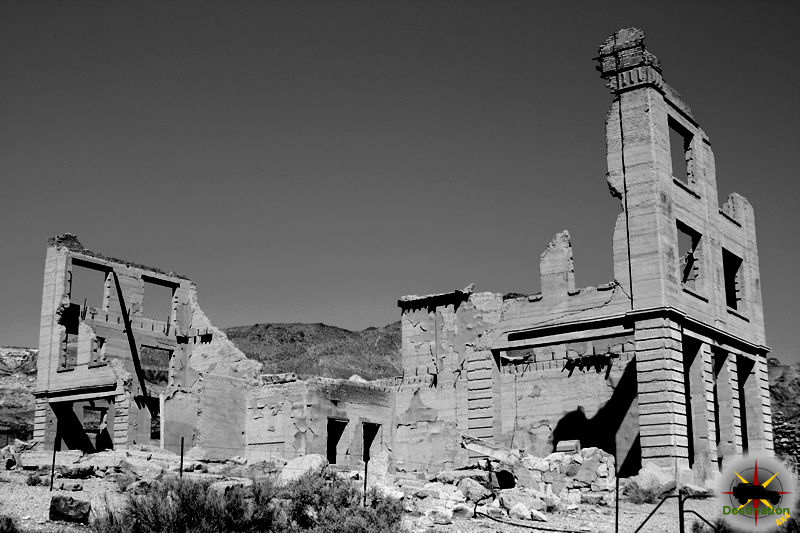
The siren song of Cerro Gordo, a desolate ghost town perched high above Death Valley, has seduced thousands since the 1800s, but few fell harder for it than Brent Underwood, who moved there in March of 2020, only to be immediately snowed in and trapped for weeks.
It had once been the largest silver mine in California. Over $500 million worth of ore was pulled from the miles of tunnels below the town. Butch Cassidy, Mark Twain, and other infamous characters of the American West were rumored to have stayed there. Newspapers reported a murder a week. But that was over 150 years ago.
Underwood bet his life savings—and his life—on this majestic, hardscrabble town that had broken its fair share of ambitious men and women. What followed were fires, floods, earthquakes, and perhaps strangest, fame. Ghost Town Living tells the story of a man against the elements, a forgotten historic place against the modern world, and a dream against all odds—one that has captured millions of followers around the world.
He came looking for a challenge different from the traditional 9-5 job but discovered something much more fulfilling—an undertaking that would call on all of himself and push him beyond what he knew he was capable of. In fact, to bring this abandoned town back to life, Brent had to learn a wealth of new self-sufficiency and problem-solving skills from many generous mentors.
Ghost Town Living is a thrilling read, but it’s also a call to action—to question our too-practical lives and instead seek adventure, build something original, redefine work, and embrace the unknown. It shows what it means to dedicate your life to something, to take a mighty swing at a crazy idea and, like the cardsharps who once haunted Cerro Gordo, go all in.

Brent Underwood is the owner of Cerro Gordo, an original boomtown silver mine, established in 1865. He is also the creator of “GhostTownLiving” where he chronicles his adventures on YouTube. Brent currently lives on the mountain above Death Valley with no running water, seven cats, six goats, and at least one ghost.
| Title | Death Valley Gold Rush (Images of Ghost Town Living: Mining for Purpose and Chasing Dreams at the Edge of Death Valley |
| Author | Brent Underwood |
| Publisher | Harmony Publishing |
| Pages | 228 Pages |
Aspen Campground, located in the Inyo National Forest near Rock Creek and Tom’s Place, California, is a small, high-altitude campground at approximately 8,100 feet elevation. Nestled along Rock Creek in the scenic Rock Creek Canyon of the Eastern Sierra Nevada, this 5-site campground offers a tranquil, intimate retreat surrounded by Jeffrey pines, vibrant aspen groves, and sagebrush, with dramatic granite peaks providing a stunning backdrop. Situated just 1 mile west of Tom’s Place, Aspen Campground is one of the closest campgrounds to Highway 395 in the Rock Creek area, making it highly accessible yet still immersed in nature. Its proximity to Rock Creek Lake, the John Muir Wilderness, and recreational opportunities like fishing and hiking makes it an ideal base for campers seeking a quiet escape in the Eastern Sierra.

Aspen Campground features 5 single-family campsites, all available on a first-come, first-served basis with no reservations accepted. The sites are best suited for tents and very small RVs or trailers (maximum length 16 feet) due to the narrow, unpaved parking spurs and limited turnaround space. Each campsite includes a picnic table, a fire ring with grill, and a bear-proof food storage locker (typical size: 48″ x 30″ x 36″), essential due to active black bear activity in the area. Amenities are minimal, with no potable water or toilets provided directly at the campground; campers must rely on nearby facilities at Tom’s Place or other campgrounds like East Fork or Iris Meadow for water and restrooms. The sites are well-spaced and shaded by Jeffrey pines and aspens, with some offering creek-side views of Rock Creek’s clear, boulder-lined waters. The cost is $20 per night for a single site, reflecting the lack of amenities, with an additional $10 per night for extra vehicles. Holders of America the Beautiful Senior or Access Passes receive a 50% discount on single-site fees. Quiet hours are enforced from 10:00 PM to 6:00 AM, with a maximum stay of 7 days.
Aspen Campground provides convenient access to a variety of outdoor activities in the Rock Creek area:
At 8,100 feet, Aspen Campground is situated in Rock Creek Canyon, surrounded by a mix of Jeffrey pines, aspens, and sagebrush, creating a high-desert ambiance with forested pockets. The aspen groves, for which the campground is named, turn a brilliant gold in the fall, offering a spectacular display that rivals New England’s autumn scenery. Rock Creek flows alongside the campground, its clear, cold waters cascading over boulders, providing a soothing soundscape. The surrounding Eastern Sierra Nevada features steep granite cliffs and towering peaks, offering breathtaking views, especially at sunrise and sunset. Summer daytime temperatures range from the 60s to 80s°F, with nights dropping to the 30s or 40s°F due to the high elevation. Visitors should be prepared for strong UV exposure and potential altitude sickness, with acclimatization possibly taking a day or two.
To reach Aspen Campground, take US Highway 395 to Tom’s Place, approximately 23 miles north of Bishop or 10 miles south of Mammoth Lakes. Turn west onto Rock Creek Lake Road and drive about 1 mile; the campground is on the right, just past Tom’s Place. The road is paved, but the campground’s dirt parking areas are narrow and best suited for smaller vehicles. The campground operates seasonally, typically from late May to late September (May 23 to September 28, 2025, weather permitting), with exact dates subject to snow conditions. For updates, contact the White Mountain Ranger District at (760) 873-2500. Cell service is spotty, with some carriers reporting weak reception (1-2 bars) due to the proximity to Highway 395, but most campers experience limited or no service, enhancing the off-the-grid atmosphere.
Tom’s Place, just 1 mile away, features a rustic lodge with a market, café, and bar, offering convenient access to supplies, meals, and potable water. Rock Creek Lakes Resort, 8 miles up the road, provides a general store, a café serving breakfast and lunch, and cabin rentals. Nearby campgrounds, such as East Fork (1.5 miles away), Iris Meadow, Big Meadow, Upper Pine Grove, Lower Pine Grove, Palisades Group, and Rock Creek Lake, offer alternative camping options with additional amenities like toilets and water if needed.
Campers praise Aspen Campground for its small size, quiet atmosphere, and proximity to Tom’s Place and Rock Creek. Reviews highlight the beauty of the aspen groves, the relaxing sound of the creek, and the campground’s accessibility, with one camper noting, “Aspen is perfect for a quick getaway with just enough seclusion but close to amenities at Tom’s Place.” The lack of on-site water and toilets is a common drawback, but campers appreciate the low cost and intimate setting. The campground’s small size and first-come, first-served policy make it competitive, so early arrival is recommended. The vibrant fall colors and fishing opportunities are frequently cited as highlights.
Aspen Campground is a charming, minimalist retreat in the heart of Rock Creek Canyon, offering a quiet and scenic camping experience for tent campers and small RV users. With its creek-side sites, vibrant aspen groves, and easy access to world-class fishing and hiking in the John Muir Wilderness, it’s an ideal destination for those seeking simplicity and natural beauty. Despite the lack of on-site amenities, its proximity to Tom’s Place and other campgrounds makes it convenient for short stays. Whether fishing in Rock Creek, hiking to alpine lakes, or stargazing under a pristine Sierra sky, Aspen Campground delivers an unforgettable outdoor experience in one of California’s most scenic regions.
Located just one mile west of Lone Pine, California, Portuguese Joe Campground (also known as “Portagee Joe”) is a serene, primitive campground nestled at the foot of the Sierra Nevada mountains. Situated along a small, trout-filled creek fed by runoff from the Los Angeles Aqueduct, this Inyo County campground offers a peaceful base for exploring the surrounding natural wonders. The campground features 20 single-family campsites suitable for tents, trailers, and RVs up to 40 feet. Each site includes a picnic table, fire ring, and grate, with some sites offering partial shade from trees, providing relief during warm summer days.

Amenities are basic but functional, including potable water, two clean vault toilets, and trash/recycling facilities. There are no showers, hook-ups, or dump stations. A modern automated pay station accepts cash and credit cards for convenience, and reservations can be made via ReserveAmerica.com, with some sites available on a first-come, first-served basis. The campground is open year-round, weather permitting, with a fee of $14 per vehicle per night and $5 for additional vehicles.
Portuguese Joe is ideal for outdoor enthusiasts, offering easy access to hiking, fishing for trout in the creek (season: last Saturday in April to November 15, fishing license required for ages 16+), mountain biking, horseback riding, and stargazing under the clear, dark skies of the Eastern Sierra. The sites are relatively close together, offering limited privacy, but the tranquil setting and the gentle sound of the creek create a relaxing atmosphere. Reliable cell service is available for most carriers, and the nearby town of Lone Pine, just a mile away, provides restaurants, shops, and the Museum of Western Film History. As bear country, proper food storage is essential to ensure safety.
Just a short drive from Portuguese Joe Campground, the Alabama Hills is a breathtaking landscape of dramatic rock formations, natural arches, and sweeping desert vistas, set against the towering backdrop of the Sierra Nevada, including the iconic Mt. Whitney. Located on public lands managed by the Bureau of Land Management (BLM), this area is renowned for its unique geological features, formed by millions of years of erosion, creating rounded boulders, spires, and labyrinthine pathways. The Alabama Hills is a haven for photographers, hikers, climbers, and filmmakers, famously serving as a backdrop for countless Western movies, TV shows, and modern films like Iron Man and Django Unchained.
Visitors can explore the area via numerous hiking trails, such as the Mobius Arch Loop Trail, a short, easy hike offering stunning views of the arch framing Mt. Whitney. The Alabama Hills is also a popular destination for bouldering and rock climbing, with routes suitable for all skill levels. Dispersed camping is permitted throughout the area (free, no facilities, 14-day limit), making it a great complement to a stay at Portuguese Joe Campground. The open landscape is perfect for stargazing, with minimal light pollution revealing a dazzling night sky. The Alabama Hills Scenic Area is easily accessible via Whitney Portal Road and Movie Road, with interpretive signs highlighting its film history and natural beauty.
Together, Portuguese Joe Campground and the Alabama Hills offer an unforgettable combination of rustic camping and access to one of California’s most iconic and photogenic landscapes, perfect for adventurers and nature lovers alike.