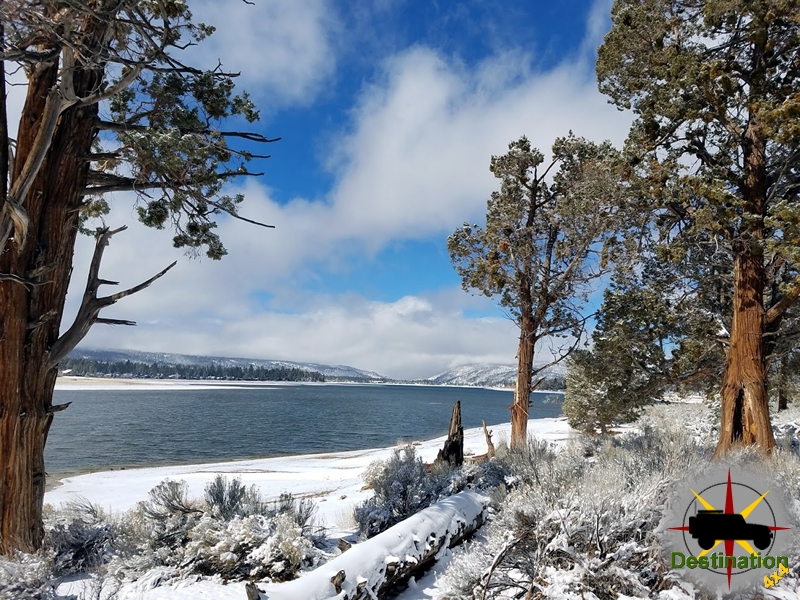
Big Bear, CA
I quiet mountain community full of back country adventure.
The Journey is the destination
In the autumn of 1928, newlyweds Glen and Bessie Hyde embarked on an ambitious honeymoon adventure, aiming to navigate the treacherous rapids of the Colorado River through the Grand Canyon. Their goal was twofold: to set a speed record for the journey and to make Bessie the first documented woman to complete the perilous trip. Yet, the couple vanished without a trace, leaving behind a mystery that has captivated historians, adventurers, and storytellers for nearly a century.

Glen Rollin Hyde, born December 9, 1898, was a farmer from Twin Falls, Idaho, with a passion for river running. He had experience navigating the Salmon and Snake Rivers in Idaho alongside an experienced river runner, “Cap” Guleke, in 1926, and had undertaken a six-month canoe trip through British Columbia and the Pacific Northwest in 1919. Bessie Louise Haley, born December 29, 1905, in Parkersburg, West Virginia, was a bohemian artist and divorcee with a flair for theater and poetry. The couple met in 1927 aboard a passenger ship bound for Los Angeles and married on April 10, 1928, just one day after Bessie’s divorce from her first husband was finalized.
Inspired by the era’s fascination with daring feats—think Charles Lindbergh’s transatlantic flight or George Mallory’s Everest expedition—the Hydes saw their journey as a path to fame and fortune. Glen crafted a 20-foot wooden sweep scow, named “Rain-in-the-Face,” a flat-bottomed vessel designed for river travel but ill-suited for the Grand Canyon’s violent rapids. Bessie, despite her lack of river-running experience, embraced the adventure, hoping to cement her place in history.
On October 20, 1928, the Hydes launched their scow from Green River, Utah, embarking on a journey down the Green and Colorado Rivers toward Needles, California. The couple planned to complete the trip in record time, with Bessie documenting their progress in a journal and with a camera. Their early journey was largely successful, navigating major rapids through Labyrinth, Stillwater, and Cataract Canyons without significant incident, though Glen had once fallen out of the boat, underscoring the river’s dangers.
By mid-November, the Hydes had reached the Grand Canyon, roughly halfway through their journey. On November 15, they hiked the Bright Angel Trail to the South Rim to restock supplies at Grand Canyon Village. There, they visited the studio of famed photographer Emery Kolb, a veteran river runner who had navigated the Colorado twice. Kolb noted Bessie’s apparent exhaustion and apprehension, recalling her comment to his young daughter about her dress: “I wonder if I shall ever wear pretty shoes again.” Kolb offered the couple life jackets and even a place to stay for the winter, but Glen, determined to maintain their schedule, declined both.
The Hydes were last seen on November 18, 1928, as they departed from Hermit Rapid, accompanied briefly by Adolph G. Sutro, a photographer who rode with them for a day before hiking out at Hermit Creek. Sutro may have been the last person to see them alive.
The Hydes were expected to arrive in Needles by December 6, 1928, but they never appeared. Alarmed, Glen’s father, Rollin Hyde, initiated a search before the couple was officially overdue. On December 19, a search plane spotted their scow near river mile 237, upright and intact, with supplies securely strapped in. Emery Kolb and his brother Ellsworth joined the search, recovering the boat, which contained Bessie’s journal, a camera, and other belongings. The journal’s final entry, dated November 30, indicated the couple had reached Diamond Creek, near river mile 226, and had cleared the 231 Mile Rapid. A photograph from the camera, likely taken around November 27 near river mile 165, provided the last visual evidence of their journey.

Despite extensive searches, no trace of Glen or Bessie was found. The pristine condition of the boat, with no signs of capsizing or damage, deepened the mystery. Historian Otis R. Marston, a noted Colorado River expert, suggested the couple likely perished in the heavy rapids near mile 232, where submerged granite rocks had damaged or capsized numerous boats. Yet, the absence of bodies or wreckage left room for speculation.
The Hydes’ disappearance sparked a flurry of theories, fueled by the romantic allure of their honeymoon adventure and the lack of conclusive evidence. The most straightforward explanation, supported by Marston and others, is that the couple drowned after their scow hit treacherous rapids, their bodies swept away by the river’s currents. The absence of life jackets and the unwieldy nature of their homemade scow lend credence to this theory.
However, alternative narratives have persisted. Some speculated that Bessie, weary of the journey and possibly facing an abusive husband, killed Glen and escaped the canyon. This theory gained traction in 1971 when an elderly woman on a commercial rafting trip claimed to be Bessie, alleging she had stabbed Glen during a quarrel and hiked out to start a new life. She later recanted, admitting the story was fabricated, but the tale lingered.
Another theory linked Bessie to Georgie Clark, a famed river runner who died in 1992. After Clark’s death, friends found a copy of the Hydes’ marriage certificate and a pistol among her possessions, and her birth name was revealed to be Bessie DeRoss. However, Clark’s well-documented life, including her marriage and childbirth in 1928, disproves this connection.
In 1976, skeletal remains with a bullet hole in the skull were discovered on Emery Kolb’s property, raising suspicions of foul play. Some theorized Kolb, who had interacted with the Hydes, might have been involved. Forensic analysis later determined the remains belonged to a younger man who likely died in the 1970s, ruling out a connection to Glen.
The disappearance of Glen and Bessie Hyde remains one of the Grand Canyon’s most enduring enigmas. Their story has inspired books, such as Brad Dimock’s Sunk Without a Sound, a novel by Lisa Michaels, and episodes of Unsolved Mysteries and various podcasts. The couple’s ambition, the haunting remark about “pretty shoes,” and the pristine state of their abandoned scow continue to captivate imaginations.
Whether they succumbed to the river’s fury, met with foul play, or orchestrated an escape, the fate of Glen and Bessie Hyde remains unknown. Their tale is a poignant reminder of the Grand Canyon’s beauty and danger, a place where nature can swallow even the boldest adventurers without a trace. As river runners recount their story around campfires, the Hydes’ legacy endures as a haunting chapter in the annals of American exploration.
Lees Ferry, a remote site along the Colorado River in northern Arizona, holds a pivotal place in American history as a vital crossing point, a gateway to exploration, and a launchpad for modern river running. Situated at the confluence of the Paria and Colorado Rivers, just downstream from Glen Canyon and upstream from the Grand Canyon, Lees Ferry has served as a geographic and cultural hinge for centuries, bridging Native American trails, Mormon settlement, and modern adventure.

Long before European settlers arrived, the area around Lees Ferry was a crossing point for Native American tribes, including the Ancestral Puebloans, Navajo, and Paiute. The site’s relatively calm waters and accessible riverbanks made it a natural ford for foot traffic and trade routes across the rugged Colorado Plateau. Archaeological evidence suggests human activity in the region dating back thousands of years, with petroglyphs and artifacts attesting to its significance.
The Colorado River, however, was a formidable barrier, with its steep canyons and turbulent rapids. Lees Ferry stood out as one of the few locations where the river could be crossed safely, earning it a place in the region’s cultural and economic landscape.

Lees Ferry derives its name from John Doyle Lee, a prominent and controversial figure in the history of the Church of Jesus Christ of Latter-day Saints (LDS Church). Born in 1812, Lee was a devout Mormon pioneer who played a significant role in the church’s westward expansion. In 1871, following his excommunication for his involvement in the 1857 Mountain Meadows Massacre, Lee was sent by church leader Brigham Young to establish a ferry service at the site to facilitate Mormon settlement in Arizona.
Lee arrived with two of his wives, Emma and Ann, and several children, building a homestead known as Lonely Dell near the confluence of the Paria and Colorado Rivers. In 1872, he constructed a rudimentary ferry—a flatboat guided by ropes—capable of carrying wagons, livestock, and people across the river. The ferry became a critical link on the “Honeymoon Trail,” a route used by Mormon couples traveling from Arizona settlements to the temple in St. George, Utah, for marriage ceremonies. Lee operated the ferry until his arrest in 1874 for his role in the Mountain Meadows Massacre. He was executed in 1877, but his wife Emma continued running the ferry until 1879.
The ferry operation passed through several hands, including the LDS Church and private operators, until 1928, when it was rendered obsolete by the completion of the Navajo Bridge, located a few miles downstream. The bridge, opened in 1929, provided a more reliable crossing, marking the end of the ferry’s practical necessity.
Lees Ferry’s strategic location made it a key staging point for early exploration of the Colorado River and the Grand Canyon. In 1869, John Wesley Powell, a one-armed Civil War veteran and geologist, launched his historic expedition down the Green and Colorado Rivers from Green River, Wyoming, passing through Lees Ferry en route to the Grand Canyon. Powell’s 1871–1872 expedition again used the site as a critical resupply point, cementing its role in the mapping and scientific study of the American Southwest.

The U.S. Geological Survey later designated Lees Ferry as the official division point between the Upper and Lower Colorado River Basins, a demarcation still used in water management today. The site’s consistent flow and accessibility made it ideal for gauging stations, which have monitored the river’s flow since the early 20th century, providing critical data for dam construction and water allocation in the arid West.
In the 20th century, Lees Ferry transformed into the primary launch point for recreational and commercial river trips through the Grand Canyon. Its gentle waters and proximity to Marble Canyon make it an ideal starting point for navigating the Grand Canyon’s rapids. The site gained fame in the 1920s during the ill-fated honeymoon journey of Glen and Bessie Hyde, who launched their homemade scow from Lees Ferry in 1928, only to vanish downstream, leaving behind one of the canyon’s enduring mysteries.
By the mid-20th century, river running grew in popularity, spurred by figures like Norman Nevills, who pioneered commercial rafting trips, and Georgie Clark, who became a legendary river guide. Today, Lees Ferry is the starting point for thousands of annual river trips, ranging from half-day floats to multi-week expeditions through the Grand Canyon. The National Park Service tightly regulates these trips, with permits highly sought after due to the area’s scenic beauty and challenging rapids.
Now part of the Glen Canyon National Recreation Area, Lees Ferry is a designated historic site, with remnants of its past preserved for visitors. Lonely Dell, the original homestead, includes restored buildings, an orchard, and a small cemetery, offering a glimpse into the harsh life of early settlers. The ferry site itself features a boat launch, camping facilities, and interpretive displays about its history.
Lees Ferry also attracts anglers, drawn to its world-class trout fishery below Glen Canyon Dam, established after the dam’s completion in 1963 altered the river’s ecology. The clear, cold waters released from the dam create ideal conditions for rainbow trout, making the stretch between the dam and Lees Ferry a popular destination.
Lees Ferry’s significance lies in its role as a crossroads—geographic, cultural, and historical. From Native American trails to Mormon pioneers, from Powell’s daring expeditions to modern adventurers, the site has witnessed the unfolding of the American West. Its tranquil setting belies the challenges faced by those who crossed its waters or braved the canyons beyond. Today, as river runners launch from its shores and historians reflect on its past, Lees Ferry remains a testament to human resilience and the enduring allure of the Colorado River.

Emery Clifford Kolb (April 15, 1881 – December 11, 1976) was a pioneering photographer, filmmaker, and adventurer whose work immortalized the Grand Canyon and shaped its early tourism industry. Born in Pittsburgh, Pennsylvania, to Edward and Ella Kolb, Emery was the younger brother of Ellsworth Leonardson Kolb, with whom he formed a legendary partnership. His technical prowess, relentless determination, and lifelong dedication to the canyon made him a central figure in documenting its natural splendor. This article explores Emery’s life, his contributions to photography and Grand Canyon tourism, and his role in the historic 1911–1912 Colorado River expedition, drawing from historical accounts.
Emery Kolb grew up in Pittsburgh, where his early exposure to photography sparked a lifelong passion. Unlike his older brother Ellsworth, who was drawn to adventure, Emery was intense, methodical, and focused on the technical craft of photography. In 1902, at age 21, he joined Ellsworth at the Grand Canyon’s South Rim, lured by his brother’s tales of opportunity at the Bright Angel Hotel. The brothers set up a makeshift photography business at the head of the Bright Angel Trail, capturing images of tourists descending into the canyon on muleback. Operating out of a tent, they developed photos in a crude darkroom—a blanket-covered prospector’s hole—often racing nine miles to Indian Garden for spring water to process their negatives.
Their early years were marked by logistical challenges, including hauling water from distant sources and competing with larger tourism enterprises backed by the Atchison, Topeka & Santa Fe Railway. Emery’s technical expertise complemented Ellsworth’s charisma, enabling them to carve out a niche in the burgeoning tourism industry. By 1904, they built the Kolb Studio, a modest structure on the South Rim overlooking the Bright Angel Trail, which served as their home, studio, and later a theater for their films. This iconic building, now on the National Register of Historic Places, became a cornerstone of Grand Canyon tourism.
The Kolb Studio was the heart of the brothers’ enterprise, where Emery’s photographic skills shone. While Ellsworth handled much of the fieldwork, Emery focused on developing and printing photographs, perfecting techniques to capture the canyon’s dramatic landscapes and the faces of early visitors. Their business model was innovative: they photographed tourists at the trailhead, developed prints during the day, and sold them to returning mule riders, capitalizing on the thrill of the canyon experience. Emery’s meticulous attention to detail ensured high-quality images that became cherished mementos, preserving the early history of Grand Canyon tourism.
The studio grew over the years, expanding into a five-story structure with a small auditorium for film screenings. Emery’s photography not only documented the canyon’s beauty but also its cultural significance, capturing Native American communities, early explorers, and the evolving infrastructure of the park. His archive, now housed at Northern Arizona University’s Cline Library, remains a vital resource for historians. Despite resistance from railroad companies and government entities, Emery’s tenacity helped the brothers maintain control of their studio against corporate pressures, solidifying their place in the canyon’s history.
Emery’s most famous achievement was the 1911–1912 expedition down the Green and Colorado Rivers, undertaken with Ellsworth to produce the first motion pictures of the Colorado River’s rapids. Starting on September 8, 1911, in Green River, Wyoming, the brothers navigated 1,100 miles to Needles, California, in two wooden Galloway-type skiffs. The 101-day journey was grueling, with 365 major rapids, freezing waters, and near-disasters, including flooded boats and a deserting assistant. Joined by miner Bert Lauzon for the final leg, they completed the trip on January 18, 1912, capturing groundbreaking footage with a new motion-picture camera.
Emery’s role was critical: he operated the camera, often filming from precarious positions on cliffs or boats, and maintained the equipment under harsh conditions. The resulting film, The Grand Canyon Film Show, premiered at the Kolb Studio in 1915 and ran nightly until Emery’s death in 1976, earning the distinction of the longest-running movie in history. Ellsworth’s journal from the trip, supplemented by Emery’s photographs, formed the basis of the 1914 book Through the Grand Canyon from Wyoming to Mexico, published by Macmillan and featured in National Geographic. The book and film brought the canyon’s wild beauty to a global audience, establishing the Kolbs as pioneers of adventure filmmaking.
In 1924, Ellsworth sold his share of the Kolb Studio to Emery and moved to Los Angeles, leaving Emery to run the business alone. Emery remained at the Grand Canyon, expanding the studio and continuing to photograph mule trains and visitors. He narrated the expedition film nightly, captivating audiences with tales of their river journey. His commitment to the canyon never wavered, even as he faced ongoing battles with the National Park Service and competitors like the Fred Harvey Company. Emery also contributed to the canyon community, serving as a guide, participating in rescues, and documenting its history.
Emery married Blanche Bender in 1921, and their daughter, Edith, was raised at the studio. After Blanche’s death in 1944, Emery continued his work, maintaining the studio as a cultural hub. He died on December 11, 1976, at age 95, and was buried in the Grand Canyon Pioneer Cemetery alongside Ellsworth, who had passed in 1960. Emery’s photographs and films, preserved through his meticulous care, remain a treasure trove for researchers, offering a window into the canyon’s early days.
Emery Kolb’s legacy is inseparable from the Grand Canyon itself. His technical mastery and unwavering dedication transformed the Kolb Studio into a cultural landmark, now operated by the Grand Canyon Conservancy as a gallery and bookstore. His photographs and films not only popularized the canyon but also inspired conservation efforts and adventure tourism. Works like Roger Naylor’s The Amazing Kolb Brothers of Grand Canyon and William C. Suran’s biography highlight Emery’s role as a visionary who, alongside Ellsworth, turned a rugged frontier into a national treasure. Through his lens, Emery Kolb captured the soul of the Grand Canyon, leaving a visual legacy that continues to inspire awe and wonder.

Ellsworth Leonardson Kolb (January 4, 1876 – January 9, 1960) was a pivotal figure in the early history of Grand Canyon exploration, renowned for his daring adventures and groundbreaking contributions to photography and filmmaking. Born in Pittsburgh, Pennsylvania, to Edward and Ella Kolb, Ellsworth, often nicknamed “Ed,” was the eldest of four sons. His adventurous spirit and fearless attitude led him to the Grand Canyon in 1901, where he and his younger brother, Emery Clifford Kolb, established a legacy that transformed the canyon into a national icon. This article explores Ellsworth’s life, his contributions to Grand Canyon tourism, and his historic 1911–1912 river expedition, drawing from various historical accounts.
Ellsworth Kolb grew up in Pittsburgh, where an accident in a steel mill prompted him to seek lighter work and new horizons. At age 24, he ventured west, initially working on telephone lines in Colorado and operating a snowplow at Pike’s Peak. His plans to sail to China were derailed when he visited the Grand Canyon in 1901. Captivated by its vast beauty, he decided to stay, taking a job chopping wood at the Bright Angel Hotel under Arizona pioneer Martin Buggeln. His hard work earned him a promotion to porter, and by 1902, he sent for his younger brother Emery, an aspiring photographer, to join him. Together, they laid the foundation for a photography business that would shape Grand Canyon tourism.
In 1902, the Kolb brothers set up a tent at the head of the Bright Angel Trail, photographing tourists on muleback as they descended into the canyon. This marked the beginning of their entrepreneurial venture in the fledgling tourism industry, which was gaining traction as the Atchison, Topeka & Santa Fe Railway brought visitors to the South Rim. Their early darkroom was rudimentary—a blanket over a prospector’s hole—and they faced logistical challenges, such as hauling water from a muddy cow tank miles away or sprinting nine miles to Indian Garden for spring water to develop their photographs. Despite these hardships, their innovative approach to capturing the canyon’s beauty set them apart.
By 1904, the brothers had constructed the Kolb Studio, a modest structure perched precariously on the South Rim, overlooking the Bright Angel Trail. Initially a two-room shack, it served as both their home and photographic studio. Over the years, it evolved through two major additions and numerous modifications, becoming a five-story building that included a small theater for showing their films. The studio became a cornerstone of early Grand Canyon tourism, where the Kolbs sold prints to returning mule riders, showcasing their valor against the canyon’s dramatic backdrop. The structure, now listed on the National Register of Historic Places, stands as a testament to their legacy and is operated by the Grand Canyon Conservancy as a gallery and bookstore.
Ellsworth’s easygoing, rakish personality complemented Emery’s intense, combative nature, creating a dynamic partnership. While Emery focused on the technical aspects of photography, Ellsworth’s adventurous spirit drove their bolder exploits. Their studio not only documented the canyon’s landscapes but also captured intimate portraits of early tourists, preserving a visual history of the park’s formative years. Their work faced resistance from the government, railroad companies, and competing tourism enterprises, but their persistence and ingenuity kept their business thriving.
Ellsworth’s most celebrated achievement was the 1911–1912 expedition down the Green and Colorado Rivers, a daring journey inspired by John Wesley Powell’s 1869 exploration. With little whitewater experience, Ellsworth and Emery set out from Green River, Wyoming, on September 8, 1911, in two wooden Galloway-type skiffs, aiming to capture the first motion pictures of the Colorado River’s rapids. The 1,100-mile journey to Needles, California, took 101 days, testing their physical and mental endurance as they navigated 365 large rapids, endured freezing waters, and salvaged equipment from flooded boats. Their first assistant abandoned the trip early, but they were joined by Bert Lauzon, a resilient miner, for the final leg.
The expedition was not just a physical feat but a groundbreaking cinematic endeavor. Using a newly invented motion-picture camera, the Kolbs produced the first moving pictures of the Colorado River, a film that became the longest-running movie in history, shown at their studio from 1915 until Emery’s death in 1976. Ellsworth’s journal from the trip formed the basis of his 1914 book, Through the Grand Canyon from Wyoming to Mexico, published by Macmillan, which included 76 black-and-white photographs and was featured extensively in the August 1914 issue of National Geographic. The book and film brought the Grand Canyon’s majesty to a global audience, cementing the Kolbs’ fame.
In 1913, Ellsworth returned alone to Needles, California, and rowed to the Gulf of California, completing the entire Colorado River journey. This solo trip further showcased his fearless nature and resulted in additional photographs and writings that enriched the Kolbs’ legacy. Their work not only popularized the Grand Canyon but also aided later expeditions, including a 1914 U.S. Geological Survey and Southern California Edison project to survey the river for maps and dam sites.
By 1924, Ellsworth sold his share of the Kolb Studio to Emery and moved to Los Angeles, though he occasionally returned for canyon adventures. Emery continued operating the studio, photographing mule strings and narrating their film nightly until his death in 1976 at age 95. Ellsworth died on January 9, 1960, at age 83, and was laid to rest in the Grand Canyon Pioneer Cemetery, near his brother. Their contrasting personalities—Ellsworth’s carefree adventurism and Emery’s tenacity—made them a formidable team, overcoming corporate and bureaucratic challenges to maintain their business.
The Kolb brothers’ contributions extended beyond photography. They were among the first to accomplish double crossings of the Grand Canyon, served as early guides, and participated in rescues, such as the 1919 search for a missing hiker. Their photographic archive, preserved at Northern Arizona University’s Cline Library, remains a vital historical resource. Their story, detailed in works like Roger Naylor’s The Amazing Kolb Brothers of Grand Canyon and William C. Suran’s biography, highlights their role as pioneers who blended art, adventure, and entrepreneurship to shape the Grand Canyon’s identity.
Ellsworth Kolb’s legacy is one of courage and vision. His fearless exploration and innovative use of photography and film brought the Grand Canyon’s wonders to the world, inspiring generations of adventurers and visitors. Today, the Kolb Studio stands as a monument to his and Emery’s indomitable spirit, inviting visitors to step into the history of two brothers who dared to chase their dreams on the edge of one of the world’s greatest natural wonders.

John Hance (1837–1919) is celebrated as one of the Grand Canyon’s most colorful pioneers, a storyteller, prospector, and trailblazer whose legacy is woven into the fabric of the canyon’s early history. Known as the “Captain,” Hance was among the first non-Native settlers to establish a permanent presence on the South Rim, arriving in 1883. His contributions as a guide, hotelier, and trail builder helped lay the groundwork for the canyon’s transformation into a world-renowned destination. Hance’s larger-than-life personality and tall tales captivated early tourists, earning him a reputation as the Grand Canyon’s first great ambassador. This article explores Hance’s life, his role in developing the Grand Canyon’s infrastructure, and the enduring myths that surround his legacy.
Born in 1837 in Tennessee (some sources suggest 1840), John Hance’s early life was shaped by the tumult of the American frontier. He served as a Confederate soldier during the Civil War, fighting in battles such as Vicksburg, and claimed to have been captured and paroled by Union forces. After the war, Hance drifted west, drawn by the promise of opportunity in the expanding frontier. By the early 1880s, he had settled in Arizona, initially prospecting near Prescott before making his way to the Grand Canyon’s South Rim in 1883. At the time, the canyon was a remote and largely unexplored region, known primarily to Native American tribes like the Havasupai and a handful of prospectors.
Hance staked a claim at the South Rim near what is now Grandview Point, drawn by rumors of mineral wealth. He built a modest cabin and began exploring the canyon’s depths, seeking gold, silver, and asbestos. While his mining ventures yielded little profit, Hance’s intimate knowledge of the canyon’s terrain and his knack for storytelling positioned him as a pivotal figure in its early tourism industry. His arrival coincided with growing interest in the canyon among adventurers, scientists, and artists, spurred by reports from explorers like John Wesley Powell.
Recognizing the need for access to the canyon’s interior, Hance constructed the Old Hance Trail (also called the Hance Trail) around 1884. This rugged path descended from the South Rim near Grandview Point to the Colorado River, following a natural break in the canyon’s geology. Unlike the Bright Angel Trail, later developed by Peter D. Berry and Ralph Cameron, the Hance Trail was steep and precarious, navigating through the Kaibab Limestone and Redwall Limestone layers with tight switchbacks. The trail, approximately 8 miles long, was designed to support Hance’s mining operations, particularly his asbestos claims near Hance Creek and the Colorado River. Despite its difficulty, the trail became a vital route for early prospectors and adventurers.
Hance’s mining efforts focused on asbestos, a mineral in demand for industrial applications in the late 19th century. He filed claims in the canyon’s inner gorge, but the remote location and lack of infrastructure made extraction unprofitable. His claims were later abandoned, and by the 1890s, Hance shifted his focus to tourism, capitalizing on the growing number of visitors drawn to the canyon’s grandeur. The Old Hance Trail, though no longer maintained and considered one of the park’s most challenging routes today, remains a testament to his pioneering spirit. Modern hikers describe it as a “primitive” trail, suitable only for experienced adventurers due to its steep grades and lack of water sources.
As tourism to the Grand Canyon increased in the 1880s, Hance reinvented himself as a guide and host. By 1886, he had established a rudimentary camp near his cabin, offering lodging, meals, and guided tours to visitors. His operation, often referred to as “Hance’s Ranch” or “Hance’s Camp,” was located near Grandview Point, about 12 miles east of present-day Grand Canyon Village. Hance provided tents, home-cooked meals, and mule rides down his trail, catering to hardy travelers willing to brave the frontier. His camp predated other South Rim establishments, such as Peter D. Berry’s Grandview Hotel (1897) and Martin Buggeln’s Bright Angel Hotel (1896), making Hance the canyon’s first tourism entrepreneur.
Hance’s charisma and storytelling were his greatest assets. Known for his outlandish tales, he regaled guests with stories of riding whirlwinds across the canyon, carving its depths with a jackknife, or claiming it was “so deep you could throw a silver dollar down it and never hear it land.” One famous yarn attributed the Bright Angel Trail’s name to a beautiful woman who vanished after frequent visits, dubbed the “Bright Angel.” While likely apocryphal, such stories added a mythical allure to the canyon, enchanting visitors and cementing Hance’s reputation. His tales were so popular that early newspapers, like the Coconino Sun, reported them as part of the canyon’s lore, blending fact and fiction.
In 1894, Hance partnered with stage driver William O. “Buckey” O’Neill to transport tourists from Flagstaff to the canyon, a grueling journey before the Atchison, Topeka and Santa Fe Railway reached the South Rim in 1901. Hance’s camp thrived until the railroad’s arrival shifted tourism to Grand Canyon Village, closer to the Bright Angel Trail. Facing competition from newer establishments, Hance sold his holdings around 1901 and briefly worked as a guide for other operators before transitioning to new ventures.
In the early 1900s, Hance took on various roles, including serving as the first postmaster of the Grand Canyon post office in 1901, a position he held briefly. He also worked as a caretaker for the Bright Angel Hotel and guided tours for the Santa Fe Railway, which had acquired Martin Buggeln’s operations. By 1907, Hance’s health began to decline, and he spent his final years in Flagstaff, living modestly with his wife, Ellen, whom he had married in 1897 after years as a bachelor. He died on January 26, 1919, shortly before the Grand Canyon was designated a national park on February 26, 1919. His death marked the end of an era, as the canyon transitioned from a frontier outpost to a managed park under the National Park Service (NPS).
Hance’s legacy endures in the features named for him, including Hance Rapid on the Colorado River, Hance Creek, and the Hance Trail. His contributions were recognized by contemporaries like George Wharton James, who described him as “one of the most unique characters of the Southwest” in his 1900 book The Grand Canyon of Arizona. The NPS maintains the Hance Trail as a historic route, though it advises caution due to its ruggedness. Hance’s stories, preserved in early travelogues and newspaper accounts, continue to shape the canyon’s cultural history, blending frontier grit with romanticized myth.
Hance’s arrival at the Grand Canyon coincided with a period of growing national interest in the American West. The 1880s saw increased exploration, with figures like Powell and Clarence Dutton publicizing the canyon’s geological wonders. Hance’s trails and camp provided infrastructure for this curiosity, enabling scientists, artists, and tourists to experience the canyon firsthand. His work complemented that of other pioneers, such as Peter D. Berry, who developed the Bright Angel Trail, and Ralph Cameron, who controlled it as a toll road until 1928. Unlike Cameron, who clashed with the NPS over commercial interests, Hance embraced tourism as a communal endeavor, sharing the canyon’s beauty with all who visited.
Hance’s interactions with the Havasupai and other Native American tribes were complex. While he relied on their trails and knowledge, the influx of settlers and tourists he facilitated contributed to the displacement of the Havasupai, who were confined to a reservation in 1882 and later evicted from Indian Garden (now Havasupai Gardens) by 1928. Hance’s stories often romanticized the canyon’s Native history, but his presence marked the beginning of a colonial overlay that reshaped the region.
Hance’s influence extended to popular culture, where his persona as a jovial, tale-spinning guide inspired later depictions of canyon pioneers. While he lacked the business acumen of Berry or the political clout of Cameron, his authenticity and warmth made him a beloved figure. The Arizona Republic noted in 1919 that “Captain Hance’s name is inseparably linked with the Grand Canyon,” a sentiment echoed by modern historians who credit him with humanizing the canyon’s vastness.