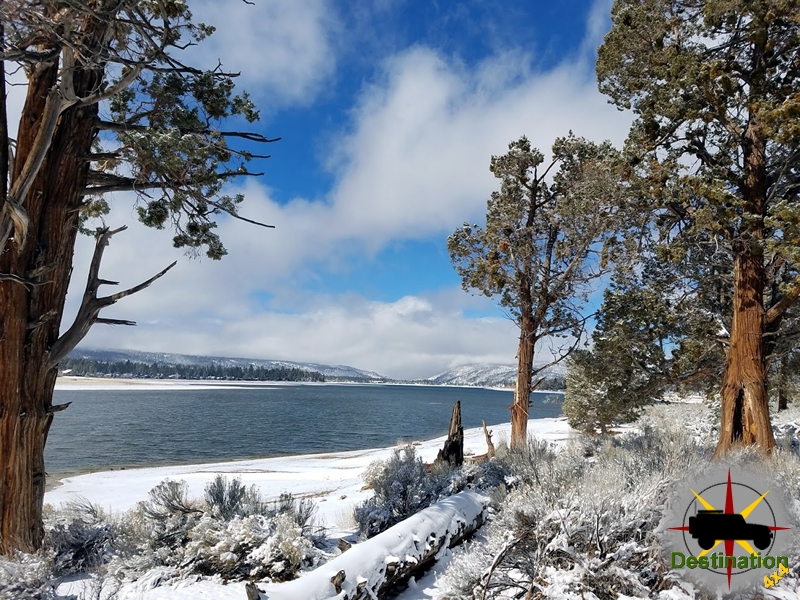
Big Bear, CA
I quiet mountain community full of back country adventure.
The Journey is the destination

Ansel Easton Adams was born on February 20, 1902, in San Francisco, California. A hyperactive child with a restless spirit, Adams found solace in nature, particularly during family trips to Yosemite National Park. At age 12, a visit to Yosemite in 1916 sparked a lifelong passion. Given a Kodak No. 1 Box Brownie camera by his parents, Adams began capturing the park’s dramatic landscapes, igniting his journey as a photographer. His early exposure to Yosemite’s granite cliffs, waterfalls, and vast wilderness shaped his artistic vision, blending technical precision with emotional resonance.
Adams was largely self-taught, both in music (his initial pursuit) and photography. By his late teens, he joined the Sierra Club, a conservation organization, which deepened his connection to Yosemite. He worked as a custodian at the Sierra Club’s LeConte Memorial Lodge in Yosemite Valley during the 1920s, honing his craft while immersing himself in the park’s natural splendor. His early photographs, influenced by the Pictorialist style, emphasized soft focus and romanticized landscapes, but he soon sought a sharper, more precise aesthetic.
In the 1930s, Adams co-founded the f/64 group with photographers like Edward Weston and Imogen Cunningham. Named after the smallest camera aperture for maximum sharpness, the group championed “straight photography,” prioritizing crisp detail and tonal range over manipulative techniques. This philosophy crystallized Adams’ approach to capturing Yosemite’s rugged beauty. His iconic images, such as Monolith, The Face of Half Dome (1927), showcased his mastery of light, shadow, and composition, using large-format cameras and meticulous darkroom techniques.
Adams developed the Zone System, a methodical approach to exposure and development that allowed precise control over tonal values. This innovation, detailed in his later technical books, enabled him to translate Yosemite’s dynamic landscapes into prints with unparalleled depth and clarity. His photographs of El Capitan, Yosemite Falls, and the Sierra Nevada became defining representations of the American wilderness.
Adams’ work transcended art, becoming a powerful tool for environmental advocacy. His photographs of Yosemite, published in portfolios and books like Yosemite and the Sierra Nevada (1948), brought the park’s majesty to a national audience. These images were instrumental in promoting conservation, reinforcing Yosemite’s status as a national treasure. As a Sierra Club board member, Adams lobbied for the preservation of wild spaces, including the expansion of national parks. His 1938 book, Sierra Nevada: The John Muir Trail, influenced President Franklin D. Roosevelt and Congress to establish Kings Canyon National Park in 1940, a testament to his impact on conservation policy.
Adams’ images shaped public perception of Yosemite, emphasizing its spiritual and ecological value. His work inspired generations to visit and protect the park, cementing its role as a symbol of America’s commitment to preserving natural landscapes. By capturing Yosemite’s timeless beauty, Adams helped foster a cultural appreciation for wilderness that resonated far beyond California.


Throughout the 1940s and 1950s, Adams continued photographing Yosemite while expanding his influence through teaching, writing, and exhibitions. His work gained international acclaim, with exhibitions at institutions like the Museum of Modern Art. In the 1960s and 1970s, as environmentalism grew, Adams’ images became synonymous with the movement, amplifying calls to protect places like Yosemite from development and overuse.
Adams died on April 22, 1984, leaving behind a legacy that endures in photography and conservation. The Ansel Adams Gallery in Yosemite Valley remains a hub for his work, and the park’s Ansel Adams Wilderness Area honors his contributions. His photographs continue to inspire artists, environmentalists, and visitors, ensuring Yosemite’s preservation for future generations.
Ansel Adams’ life was intertwined with Yosemite National Park, from his formative experiences as a young photographer to his role as a conservation advocate. His technical innovations and evocative images elevated landscape photography to an art form, while his activism helped safeguard Yosemite’s natural splendor. Through his lens, Adams not only captured the park’s physical beauty but also its enduring significance as a beacon of environmental stewardship.

John Muir (1838–1914) was a Scottish-American naturalist, writer, and conservationist, often called the “Father of the National Parks.” He played a key role in establishing Yosemite National Park and co-founded the Sierra Club. Muir’s explorations of the Sierra Nevada, Alaska, and other wild areas, combined with his influential writings, promoted the preservation of America’s natural landscapes. His work helped shape the modern conservation movement, emphasizing the spiritual and ecological value of wilderness.
John Muir was born on April 21, 1838, in Dunbar, Scotland, a coastal town east of Edinburgh. He was the third of eight children born to Daniel Muir, a strict Presbyterian grain merchant, and Ann Gilrye Muir. Muir’s early years were shaped by a rigorous upbringing, marked by his father’s religious fervor and insistence on hard work. From a young age, Muir displayed a curiosity about the natural world, exploring the rugged Scottish coastline and countryside. He was an avid reader, devouring books on science, literature, and adventure, which fueled his imagination and desire for exploration.
In 1849, when Muir was eleven, his family immigrated to the United States, settling on a farm near Portage, Wisconsin. The transition was challenging; the family faced harsh winters and the demanding labor of clearing land for farming. Muir’s father imposed a grueling work schedule, but young John found solace in the surrounding wilderness. He spent his sparse free time observing the flora and fauna of the Wisconsin landscape, nurturing a lifelong passion for nature. Despite limited formal schooling, Muir educated himself through books and practical experimentation, showing an early aptitude for mechanics and invention.
Muir’s intellectual curiosity led him to the University of Wisconsin in Madison in 1860, where he studied botany, geology, and chemistry. Though he never completed a degree, his time at the university exposed him to influential ideas about natural science and philosophy. He was particularly inspired by the works of Ralph Waldo Emerson and Henry David Thoreau, whose writings on transcendentalism and the spiritual value of nature resonated deeply with him.
After leaving university in 1863, Muir embarked on a series of journeys across the United States and Canada, working odd jobs to sustain himself. He walked hundreds of miles, studying plants, animals, and landscapes, and keeping detailed journals of his observations. In 1867, a pivotal event occurred: while working at a carriage parts factory in Indianapolis, Muir suffered a severe eye injury when a tool slipped and pierced his cornea. The accident temporarily blinded him and forced him to confront his mortality. During his recovery, he resolved to dedicate his life to exploring and protecting the natural world.
In 1868, Muir arrived in California, where he first encountered the Sierra Nevada and Yosemite Valley. The breathtaking beauty of Yosemite, with its towering granite cliffs, waterfalls, and sequoia groves, profoundly affected him. He described it as “the grandest of all the special temples of Nature.” Muir worked as a sheepherder and guide in the region, studying its geology and ecology. His observations led him to develop a theory that Yosemite Valley was formed by glacial activity, a view that challenged prevailing scientific thought but was later validated.
Muir’s time in Yosemite marked the beginning of his career as a writer and advocate. He began publishing articles in magazines, describing the wonders of the Sierra Nevada and urging the preservation of wild spaces. His vivid prose and passionate arguments caught the attention of influential figures, including Emerson, whom Muir met in Yosemite in 1871. Their meeting solidified Muir’s commitment to nature conservation and established him as a prominent voice in the emerging environmental movement.

By the late 1870s, Muir was increasingly focused on protecting America’s natural landscapes from exploitation. The rapid industrialization of the United States, coupled with deforestation and overgrazing, alarmed him. In 1889, he began campaigning for the creation of Yosemite National Park, collaborating with Robert Underwood Johnson, editor of Century Magazine. Their efforts culminated in the establishment of Yosemite National Park in 1890, a landmark achievement in American conservation.
In 1892, Muir co-founded the Sierra Club with a group of like-minded individuals, serving as its first president until his death. The organization aimed to protect the Sierra Nevada and other wild places through advocacy, education, and public engagement. Muir’s leadership helped the Sierra Club become a powerful force in the conservation movement, promoting the creation of additional national parks and forests.
Muir’s advocacy extended beyond Yosemite. He lobbied for the preservation of areas like Sequoia National Park and the Grand Canyon, and he worked to protect forests from unsustainable logging. His writings, including books like The Mountains of California (1894) and Our National Parks (1901), inspired a growing public appreciation for wilderness and influenced policymakers to prioritize conservation.
In 1880, Muir married Louisa Strentzel, the daughter of a wealthy California orchardist. The couple settled in Martinez, California, where Muir managed the family’s fruit ranch. They had two daughters, Wanda and Helen. While Muir’s domestic life provided stability, his passion for exploration often drew him away from home. Louisa supported his work, recognizing its importance, though his frequent absences strained their relationship at times.
Muir’s later years were marked by both triumphs BOTH and challenges. He continued to travel, exploring places like Alaska, where he studied glaciers and advocated for the preservation of areas like Glacier Bay. However, he faced setbacks, notably the loss of the Hetch Hetchy Valley, a part of Yosemite National Park, which was dammed to provide water for San Francisco despite Muir’s fierce opposition. The defeat was a personal blow, but it galvanized further conservation efforts.
John Muir died on December 24, 1914, in Los Angeles, California, at the age of 76, from pneumonia. His legacy endures through the landscapes he helped protect and the organizations he inspired. The Sierra Club remains a leading environmental organization, and national parks like Yosemite and Sequoia stand as testaments to his vision. Muir’s writings continue to inspire environmentalists, and his philosophy of the interconnectedness of nature and humanity remains relevant.
Muir is often called the “Father of the National Parks” for his role in shaping America’s conservation policies. His ability to blend scientific observation with poetic reverence for nature made him a unique and enduring figure. Landmarks like the John Muir Trail in the Sierra Nevada and Muir Woods National Monument near San Francisco honor his contributions. Through his tireless advocacy, Muir helped establish the idea that wild places are essential to human well-being and deserve protection for future generations.

Albert Clay Bilicke was a prominent businessman and hotelier in Tombstone, Arizona, during the late 19th century. Born in 1861 in Missouri, Bilicke moved west during a period when the American frontier was rapidly expanding, and opportunities for entrepreneurial ventures were abundant.
Bilicke arrived in Tombstone in the early 1880s, a time when the town was booming due to the discovery of silver. The town, known for its rough-and-tumble atmosphere and the infamous Gunfight at the O.K. Corral, attracted a variety of characters, from miners and outlaws to entrepreneurs like Bilicke.
Albert Bilicke quickly became involved in the hospitality industry, recognizing the need for lodging and services in the rapidly growing town. He partnered with W. F. Staehle to build the Cosmopolitan Hotel, which became one of the premier establishments in Tombstone. The hotel catered to a range of clients, from miners and cowboys to wealthier visitors and businessmen. It was known for its comfort and amenities, which were somewhat luxurious for a frontier town.
In addition to the Cosmopolitan Hotel, Bilicke was involved in other business ventures in Tombstone, including real estate and mining investments. His ability to adapt and thrive in the challenging environment of a frontier town demonstrated his keen business acumen.
Albert Bilicke was well-regarded in the community for his business sense and contributions to the town’s development. His work helped establish Tombstone as a more permanent settlement rather than just a transient mining camp. He was married to Gladys Huffman, and they had one child together. Eventually, Bilicke and his family moved to Los Angeles, California, where he continued his career in the hotel industry.
After leaving Tombstone, Bilicke went on to co-found the Alexandria Hotel in Los Angeles, which became one of the most famous hotels in the city during the early 20th century. Unfortunately, Bilicke’s life was cut short when he died in the sinking of the RMS Lusitania in 1915, a tragic event that shocked the world and contributed to the United States’ eventual entry into World War I.
Though Albert Clay Bilicke eventually left Tombstone, his impact on the town was significant. His contributions to its early infrastructure and economy helped lay the foundation for its survival beyond the boom-and-bust cycle typical of many mining towns. Today, Tombstone is known as a historic site, attracting tourists interested in its Wild West past, with figures like Bilicke playing a crucial role in its storied history.
In 1847, John Augustus Sutter partnered with James Marshall to construct a sawmill, where Marshall’s 1848 gold discovery sparked the California Gold Rush.

John Augustus Sutter was born Johann August Sutter on February 23, 1803, in Kandern, Baden (then part of the Grand Duchy of Baden, near France). Raised in a family of modest means, Sutter apprenticed as a merchant and briefly served in the Swiss military. In 1834, facing financial difficulties and debts, he left his wife and five children in Switzerland and emigrated to the United States, seeking new opportunities. His ambition and charisma would define his ventures in the American West.
Sutter arrived in New York in 1834 and spent several years traveling across the United States, engaging in trade and commerce in Missouri and New Mexico. In 1838, he set out for California, then under Mexican control, via a circuitous route through Oregon, Hawaii, and Alaska. Arriving in Monterey in 1839, Sutter persuaded Mexican authorities to grant him nearly 50,000 acres in the Sacramento Valley. He established a settlement called New Helvetia (New Switzerland), centered around Sutter’s Fort, which became a hub for trade, agriculture, and immigration.
Sutter envisioned New Helvetia as a self-sufficient agricultural empire. He employed Native Americans and European settlers, cultivating crops, raising livestock, and building infrastructure. His fort served as a trading post and a waypoint for American pioneers crossing the Sierra Nevada. Sutter’s entrepreneurial spirit made him a prominent figure in Mexican California, and he gained Mexican citizenship to secure his land grant. By the mid-1840s, he was a leading landowner and employer in the region, with plans to expand his operations through ventures like a sawmill on the American River.

In 1847, Sutter partnered with James Marshall to construct a sawmill in Coloma, California. On January 24, 1848, Marshall discovered gold at the site, a find that would ignite the California Gold Rush. While the discovery brought global attention to California, it proved disastrous for Sutter. Thousands of prospectors, known as “Forty-Niners,” flooded his land, trampling crops, slaughtering livestock, and squatting on his property. Sutter’s attempts to control the influx or profit from the gold failed, as his workers abandoned their posts to join the rush. The sawmill project collapsed, and his finances deteriorated.
Sutter sought legal recourse to protect his land claims, but the transition of California to American control after the Mexican-American War (1846–1848) complicated his efforts. Courts often ruled against him, and by the 1850s, he was bankrupt. His dreams of a prosperous empire unraveled as he lost much of his land and wealth.
In the 1860s, Sutter moved to Lititz, Pennsylvania, where he lived modestly with his family, supported by a small pension from the California legislature. He spent his final years petitioning the U.S. government for compensation for his lost lands, but his appeals were largely unsuccessful. Sutter died on June 18, 1880, in Washington, D.C., while pursuing his claims.
John Sutter’s life reflects the highs and lows of the California frontier. His establishment of Sutter’s Fort facilitated American expansion, and his land became the epicenter of the Gold Rush, which transformed California into an economic powerhouse. Yet, the very event that cemented his historical significance led to his personal ruin. Sutter’s legacy endures as a symbol of ambition, opportunity, and the unpredictable consequences of the Gold Rush era.

James Wilson Marshall (October 8, 1810 – August 10, 1885) was an American carpenter and millwright whose discovery of gold on January 24, 1848, at Sutter’s Mill in Coloma, California, sparked the California Gold Rush
James Wilson Marshall was born on October 8, 1810, in Hopewell Township, New Jersey. Raised on a farm, he developed practical skills in carpentry and mechanics, which would later define his contributions to history. In his early twenties, Marshall left home, seeking opportunity in the American West. He worked as a carpenter and farmer in states like Ohio, Illinois, and Missouri before heading further west to California in 1844, drawn by the promise of new lands and possibilities.
Marshall arrived in California during the Mexican-American War, settling in the Sacramento Valley. He found work at Sutter’s Fort, owned by Swiss immigrant John Sutter, a prominent entrepreneur and landowner. Marshall’s skills as a carpenter and millwright made him invaluable, and he soon became Sutter’s trusted partner in various ventures. In 1847, Sutter tasked Marshall with constructing a sawmill along the American River in Coloma, California, to supply lumber for the growing settlement.
On January 24, 1848, while inspecting the mill’s tailrace, Marshall noticed something extraordinary: small, shiny flecks in the riverbed. He collected the particles and, after rudimentary tests, confirmed they were gold. This discovery at Sutter’s Mill sparked the California Gold Rush, one of the most transformative events in American history. Marshall and Sutter initially tried to keep the find secret, fearing it would disrupt their operations, but word spread rapidly. By 1849, thousands of “Forty-Niners” flooded California, drawn by the promise of wealth.
While Marshall’s discovery reshaped California and the nation, he personally reaped little reward. The influx of prospectors overwhelmed Sutter’s land, destroying crops and livestock, and the sawmill project collapsed. Marshall struggled to assert mining claims and faced hostility from fortune-seekers who encroached on his land. Legal battles and financial difficulties followed, and he never achieved the wealth his discovery promised. Instead, he turned to farming and later operated a vineyard in Coloma, but these ventures met with limited success.
In his later years, Marshall lived modestly, supported occasionally by small pensions from the state of California, which recognized his role in the Gold Rush. He died on August 10, 1885, in Kelsey, California, largely forgotten by the public. Despite his lack of personal gain, Marshall’s discovery catalyzed California’s rapid growth, transforming it into a global economic hub and accelerating American westward expansion.
James Marshall’s life embodies the paradox of the Gold Rush: a moment of historic fortune that brought prosperity to many but left its discoverer in obscurity. His legacy endures in the story of California’s transformation and the enduring allure of the American Dream.