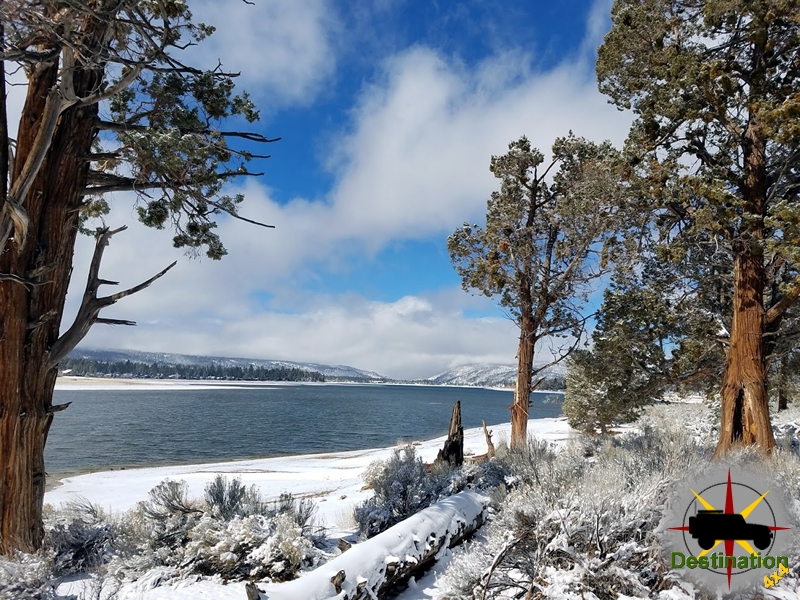
Big Bear, CA
I quiet mountain community full of back country adventure.
The Journey is the destination
The Virginia and Truckee Railroad is a historic railway in Nevada, renowned for its role in transporting ore during the Comstock Lode mining boom of the late 19th century. The railroad connects Reno to Carson City and up to Virginia City and the mines of the Comstock Load, and down to the city of Minden, Nevada. The standard gauge rail consisted of about 60 miles and track. Today, much of the track is removed with a small railway offering passengers a historic experience between Carson City and Virginia City.


Established in 1869, the V&T initially served as a means to transport silver ore from the mines of the Comstock Lode, located near Virginia City, to stamp mills in Carson City for processing. Its construction was driven by the need for efficient transportation of the abundant ore extracted from the rich silver mines of the region.
Under the direction of engineers like William Sharon and Theodore Judah, the V&T rapidly expanded its operations, stretching its lines to reach other mining towns such as Gold Hill and Dayton. The railroad’s success not only facilitated the transport of precious ore but also stimulated the growth of settlements along its route and provided essential passenger and freight services to the burgeoning communities of the Comstock.

The V&T gained renown for its engineering feats, including its crossing of the daunting Carson Range via the scenic and challenging Carson Pass route. The railroad’s iconic trestles, such as the 75-foot-high Crown Point Trestle, became symbols of the daring construction projects undertaken to connect Nevada’s mining districts.
Throughout its operational years, the V&T weathered various challenges, including economic downturns, labor disputes, and the decline of mining activities in the area. However, it continued to adapt and diversify its services, expanding into tourism and freight transportation beyond the mining industry.
The railroad faced a significant setback with the decline of the Comstock Lode and the subsequent closure of many mines in the late 19th and early 20th centuries. However, it found new life through tourism, offering scenic excursions through the picturesque landscapes of the Carson River Canyon and the Virginia City foothills.
In the mid-20th century, the V&T ceased its regular operations due to changing economic conditions and the rise of automobile travel. However, its legacy was preserved through the efforts of preservationists and enthusiasts who worked tirelessly to restore and maintain its historic routes, locomotives, and rolling stock.
Today, the Virginia and Truckee Railroad stands as a beloved historic attraction, offering visitors a glimpse into Nevada’s rich mining heritage and the golden age of railroading in the American West. Its meticulously restored steam locomotives, vintage passenger cars, and scenic journeys continue to captivate passengers, preserving the spirit of adventure and enterprise that defined the railroad’s illustrious past.
| Name | Virginia and Truckee Railroad |
| Location | Washoe County, Carson City, Douglas County |
| Length | Approximately 60 miles |
| Gauge | Standard Gauge – 4 feet 8.5 inches (1,435 mm) |
| Years of Operation | 1870 – 1950 1976 – Current |
Joseph Isaac Clanton, commonly knows as “Ike” Clanton was a notable figure in the American Old West, primarily recognized for his involvement in the notorious gunfight at the O.K. Corral. Born on March 1, 1847, in Calloway County, Kentucky, as Isaac Clanton, he grew up in a tumultuous time marked by the expansion and conflict of the frontier.

Ike Clanton was the eldest of a large family that moved westward, eventually settling in Arizona. His father, Newman Clanton, was a prominent rancher and ranch hand, contributing to Ike’s early exposure to the rough and often violent life of the frontier.
Ike, along with his brothers and other family members, was part of a group known as the Clanton Gang, or the Cowboys. This group was a faction involved in various criminal activities, including cattle rustling and other illicit operations. The Clantons were known to have frequent conflicts with law enforcement and other factions in the region.
Ike Clanton is perhaps best known for his involvement in the famous gunfight at the O.K. Corral in Tombstone, Arizona, which took place on October 26, 1881. The gunfight was a pivotal event in the Earp-Clanton feud and involved notable figures such as Wyatt Earp, Virgil Earp, Morgan Earp, and Doc Holliday.
On the day of the gunfight, Ike Clanton and his brothers, along with other members of their faction, had a violent confrontation with the Earp brothers and Doc Holliday. The altercation lasted only about 30 seconds but became one of the most infamous shootouts in American history. Clanton, who had been verbally threatening the Earps, was disarmed and fled the scene. Although he survived the gunfight, the event marked a significant turning point in the ongoing conflict between the Cowboys and the lawmen.
After the O.K. Corral gunfight, Ike Clanton faced increasing challenges and threats. His involvement in the events surrounding the gunfight made him a target for both law enforcement and rival factions. In 1887, Clanton was killed in a gunfight with a lawman named Frank “Buckskin” Leslie in a dispute over a stolen horse.
Ike Clanton’s life and actions reflect the tumultuous nature of the Old West, characterized by lawlessness, frequent violence, and personal vendettas. His involvement in the O.K. Corral gunfight solidified his place in Western history, often remembered as a symbol of the frontier’s rough and dangerous era.
The Las Vegas and Tonopah Railroad was a standard gauge railroad which operated along 197 miles between the town of Las Vegas and Goldfield, NV. Despite the name of the route, service from Goldfield to Tonopah is complete on the Tonopah and Goldfield Railroad.


Despite a verbal agreement with Francis Marion Smith in April, 1905, William A Clark incorporated the Las Vegas and Tonopah Railroad on September 22, 1905. By this time, Borax Smith graded about 12 miles of the track route for his operations in Lila C, or Ryan as it would later be known.
Following a no-trespassing order served to Smith, Clark initial started laying track up the valley from Las Vegas on the route graded by Borax Smith. Track reached Indian Springs from Las Vegas on March 1st, 1906. By June, 30th, 1906 rail is laid down all the way to Rose’s Well. The route to Rhyolite, Nevada is completed in December 1906. During the height of construction, the track gangs were pushing the track forward at a rate of about 1.5 miles per day and complete the route into Goldfield in November, 1907. A financial panic of 1907 caused the failure of the town of Rhyolite which served a major blow to the newly complete line.
The LV & T is merged with the Bullfrog Goldfield Railroad in 1914 when it operated some 15 locomotives. Between December 1906 and February 1st, 1917, daily train service hauled passengers, mail and freight between Las Vegas and Beatty. After February 1917, only three trains ran per week until 1919 when the railroad is closed and scrapped.
The Las Vegas & Tonopah Railroad laid one mile of track per day, then two miles of track per day, in its hurry to connect Rhyolite with the outside world. The first train from the Las Vegas & Tonopah entered Rhyolite at 7 p.m. on December 14, 1906, with about 100 passengers.
Rhyolite Train Depot Marker

The Las Vegas and Tonapah Railroad was 197 miles long 23 stops along the way. The trip took about 8 hours to complete with food service only being offered at Rhyolite.
| Name | Las Vegas and Tonopah Railroad |
| Location | Clark County, Nevada Nye County, Nevada Esmeralda County, Nevada |
| Gauge | Standard Gauge – 4 feet 8.5 inches (1,435 mm) |
| Length | 197 miles |
| Years of Operation | 1906–1918 |

 Beatty Nevada State Historic Marker #173Beatty NSHM 173 is Nevada State Historical Marker number one hundred and seventy three five and is located just off of highway 95 in the… |
 Las Vegas and Tonopah RailroadThe Las Vegas and Tonopah Railroad was a standard gauge railroad which operated along 197 miles between the town of Las Vegas and Goldfield, NV.… |
 Ralston Station – Las Vegas and Tonopah RailroadRailroad logo from a 1910 Las Vegas and Tonopah Railroad timetable. Ralston was a minor station along the Las Vegas and Tonopah Railroad (LV&T), established… |
 Rhyolite Nevada – Nye County Ghost TownRhyolite is a ghost town location just outside of the Eastern edge of Death Valley National monument in Nye country, Nevada. Founded in 1904 by… |
Rhyolite Train DepotThe town of Rhyolite boasted three train services using the Rhyolite Train Depot which is completed in June, 1908. The depot services the Las Vegas… |
 Tonopah and Tidewater RailroadExplorers of the Mojave Desert in southern California are bound to have heard the stories of the Tonopah and Tidewater Railroad. The Tonopah and Tidewater… |

From the mid-19th century to the 1930s, no place in America was more feared or mysterious than the stretch of desert on the California-Nevada border known as Death Valley.
While today Death Valley National Park is seen as a place of natural beauty and scenic wonders, there were once rumors of vaporous gases so toxic that birds flying overhead would drop dead instantly. One of the first Americans to encounter this dreaded land was William Lewis Manly, who left his Wisconsin home for California’s 1849 Gold Rush and who heroically saved those lost pioneers who would give Death Valley its name. Other pioneers in the early 20th century were Frank “Shorty” Harris, who made Death Valley’s biggest gold strike; the Hoyt brothers, who, in 1908, struck it rich in a place called Skidoo; and in the 1920s, a con man named C.C. Julian, who used the valley’s reputation to scam naive investors. There was a time when the entire country seemed to be consumed with news and tales of the Death Valley Gold Rush.
Ted Faye is a documentary filmmaker, exhibit curator, and historical researcher on stories and people of the Death Valley region. Faye has worked with tourism boards on both the state and local levels to develop materials that tell the stories of their communities. He was a historian at US Borax, and many images from this book are from the Borax collection at Death Valley National Park.

| Title | Death Valley Gold Rush (Images of America) |
| Author | Ted Faye |
| Publisher | Arcadia Publishing |
| Pages | 128 Pages |
Virgil Walter Earp ( July 18, 1843 – October 19, 1905) was born in Lincoln County, Kentucky, was a prominent lawman and frontier figure known for his role in the American Old West. As the eldest of the Earp siblings, Virgil took on a leadership role within the family, guiding his younger brothers Wyatt, Morgan, and James. A seasoned law enforcement officer, Virgil served as a deputy U.S. marshal and, later, as the town marshal of Tombstone, Arizona. His most notable moment came during the infamous Gunfight at the O.K. Corral on October 26, 1881, where he, alongside Wyatt and Doc Holliday, confronted a group of outlaws known as the Cowboys. Despite surviving the gunfight, Virgil’s tenure in Tombstone was marred by violence and personal loss, including the assassination attempt that severely injured him and ultimately led to the death of his brother Morgan. Virgil’s resilience and sense of justice left a lasting imprint on the lore of the Old West.

Virgil Walter Earp was born on July 18, 1843, in Hartford, Kentucky. He was the second of Nicholas and Virginia Ann Cooksey Earp’s five sons. The Earp family moved frequently during Virgil’s childhood, eventually settling in Pella, Iowa. Growing up in a large and adventurous family, Virgil, along with his brothers James, Wyatt, Morgan, and Warren, developed a strong sense of camaraderie and loyalty that would shape their future endeavors.
In 1861, at the age of 18, Virgil enlisted in the Union Army during the American Civil War. He served with the 83rd Illinois Infantry Regiment and later transferred to the 17th Illinois Cavalry. His service was marked by bravery and resilience, traits that would later define his career as a lawman. After the war, Virgil returned to civilian life, married his first wife, Ellen, and started a family. Unfortunately, Ellen died shortly after the birth of their daughter.
Virgil’s career as a lawman began in the 1870s. He held various positions across different towns, working as a constable in Prescott, Arizona, and as a deputy U.S. marshal. His reputation for enforcing the law with determination and fairness quickly spread. In 1879, Virgil moved to Tombstone, Arizona, where he would play a crucial role in one of the most famous events in Western history.
Virgil Earp’s most notable moment came on October 26, 1881, in Tombstone. As the city marshal of Tombstone, Virgil, along with his brothers Wyatt and Morgan, and their friend Doc Holliday, faced off against the Clanton and McLaury brothers in what became known as the Gunfight at the O.K. Corral. The confrontation, which lasted only about 30 seconds, resulted in the deaths of three outlaws and left Virgil seriously wounded. Despite his injuries, Virgil’s leadership and bravery during the gunfight cemented his place in the annals of the American West.
Following the gunfight, Virgil is held for a preliminary trail for his role in the gunfight which led to the death of three men. On November 19th, 1881, Virgil Earp, still seriously injured from the gunfight, testified from his bedside at the Cosmopolitan Hotel. He is exonerated on November 30, 1881 with the finding on Judge Wells Spicer.
Virgil’s troubles were far from over. In December 1881, he was ambushed and shot by unknown assailants, leaving him with a permanently crippled left arm. Despite this setback, Virgil continued to serve as a lawman, moving to California, where he worked as a law enforcement officer in various capacities, including city marshal of Colton and constable in Vanderbilt.
Virgil Earp passed away on October 19, 1905, in Goldfield, Nevada, at the age of 62. He was buried in the Riverview Cemetery in Portland, Oregon. His life, marked by courage, resilience, and a commitment to justice, left a lasting legacy in the history of the American West. Virgil Earp’s story, along with those of his brothers, continues to captivate the imaginations of those fascinated by the era of the Old West.
 Los Angeles Daily Herald – December 30, 1882On December 30, 1881 the Los Angles Daily Herald broke the news of the Assassination attempt on Marshall Virgil Earp The Los Angles Daily Herald… |
 The Tombstone Epitaph, October 27, 1881The following is the original transcript of The Tombstone Epitaph published on October 27, 1881 on the infamous gun fight at the O K Corral… |
 Tombstone Daily Nugget, October 27, 1881The Tombstone Daily Nugget, October 27, 1881 described the the infamous Gunfight at the O K Corral between the Earps and the Clanton faction in… |
 James Cooksey EarpJames Cooksey Earp ( June 28, 1841 - January 25, 1926 ) James Cooksey Earp ( June 28, 1841 - January 25, 1926 ) was… |
 Morgan Seth EarpMorgan Seth Earp, born on April 24, 1851, in Pella, Iowa, was a notable figure of the American Old West, primarily recognized for his association… |
 Virgil Walter EarpVirgil Walter Earp ( July 18, 1843 – October 19, 1905) was born in Lincoln County, Kentucky, was a prominent lawman and frontier figure known for his… |
 Warren Baxter EarpWarren Baxter Earp ( March 9, 1855 - July 6, 1900 ), the youngest of the Earp brothers, was born into a family that would… |
 Wyatt Berry Stapp EarpWyatt Berry Stapp Earp (March 19, 1848 – January 13, 1929) was an American lawman and gambler who became a legendary figure of the Old… |