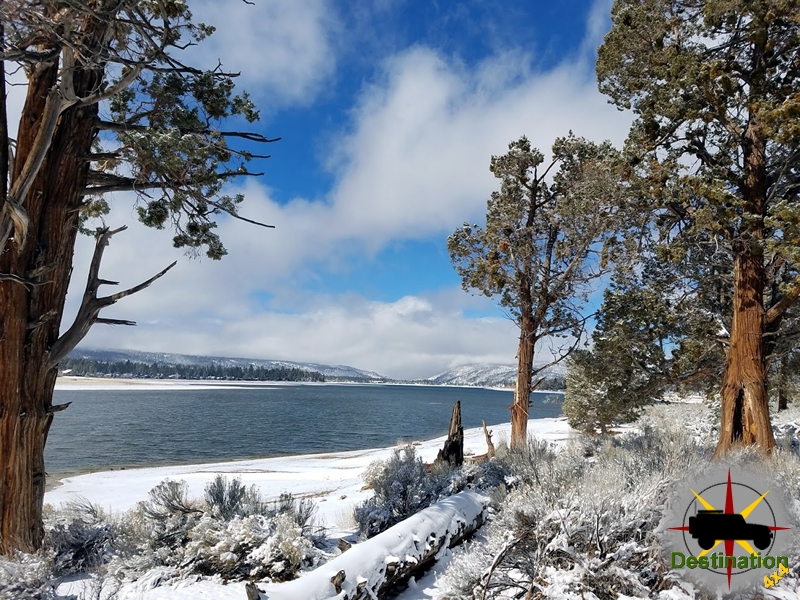
Big Bear, CA
I quiet mountain community full of back country adventure.
The Journey is the destination
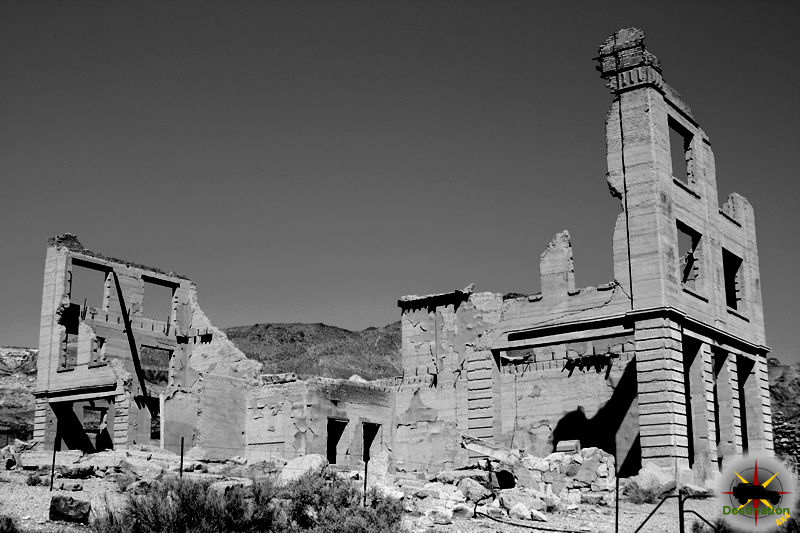
The Rhyolite Daily Bulletin was a newspaper published in Rhyolite, Nevada, during the peak of the Bullfrog Mining District’s gold rush in the early 20th century. As one of several publications in the bustling mining town, it provided daily updates on local events, mining developments, and community life. While less documented than the Rhyolite Herald or Bullfrog Miner, the Rhyolite Daily Bulletin played a significant role in chronicling Rhyolite’s brief but vibrant history. This report explores the newspaper’s origins, operations, community impact, and eventual decline within the context of Rhyolite’s boom-and-bust cycle.
Rhyolite, located in Nye County, Nevada, approximately 120 miles northwest of Las Vegas, was founded in 1904 after prospectors Frank “Shorty” Harris and Ernest L. Cross discovered gold in the Bullfrog Hills. Named for the region’s silica-rich volcanic rock, the town grew rapidly as part of the Bullfrog Mining District. By 1907, Rhyolite’s population reached 5,000–8,000, supported by the Montgomery Shoshone Mine, which industrialist Charles M. Schwab acquired in 1906. The town boasted modern amenities, including electric lights, piped water, telephones, a hospital, schools, an opera house, and three railroads, making it a regional hub.
Newspapers were essential to Rhyolite’s growth, serving as tools for promotion, communication, and community cohesion. The Rhyolite Herald and Bullfrog Miner are the most frequently cited, but sources note that Rhyolite supported “daily and weekly newspapers” by 1907, including the Rhyolite Daily Bulletin. These publications captured the town’s dynamic social, economic, and cultural landscape during its short-lived prosperity.
Specific records about the Rhyolite Daily Bulletin’s founding, editors, and exact publication dates are limited, as no complete archives have been widely preserved. However, historical references suggest it was established around 1906–1907, when Rhyolite’s population and economic activity peaked, creating demand for daily news. Unlike the weekly Rhyolite Herald, the Daily Bulletin likely provided more immediate coverage of events, catering to the fast-paced environment of a booming mining town.
The Daily Bulletin would have been printed in a modest office, possibly on Golden Street, Rhyolite’s main commercial thoroughfare. Early newspapers in the town, such as the Herald, began in tents before moving to permanent buildings, and the Daily Bulletin likely followed a similar path. Its daily publication schedule suggests a small but dedicated staff, possibly led by an editor with experience in frontier journalism, a common trait in mining towns.
Content in the Daily Bulletin likely included mining updates, such as production reports from the Montgomery Shoshone Mine, which drove Rhyolite’s economy, and stock market activity at the Rhyolite Mining Stock Exchange, which opened in March 1907. The newspaper also covered local governance, infrastructure projects, and social events, such as performances at the opera house or gatherings at the Miners’ Union Hall. Advertisements for businesses like the First National Bank of Rhyolite, the Porter Brothers’ Store, and the Gold Center Ice and Brewing Company would have been prominent, reflecting the town’s commercial vibrancy.
The Rhyolite Daily Bulletin served as a critical link in Rhyolite’s diverse and transient community, which included miners, speculators, entrepreneurs, and families. Its daily format allowed it to report breaking news, such as the arrival of the Las Vegas and Tonopah Railroad in December 1906 or the completion of major buildings like the John S. Cook and Co. Bank in 1908. These reports reinforced Rhyolite’s image as a modern, thriving town with limitless potential.
The newspaper also documented civic milestones, such as the Nye County Commissioners’ approval of a $5,000 jail in January 1907 and the passage of a $20,000 bond for a schoolhouse in 1909. Social coverage likely included baseball games, dances, and visits from notable figures, such as author Jack London or Senator William M. Stewart, whose luxurious residence symbolized Rhyolite’s ambitions.
As a daily publication, the Bulletin may have offered a more immediate perspective on the town’s challenges, including labor disputes, crime, and environmental hardships. For instance, it might have reported on incidents like the 1907 arrest of striking miners in nearby Bonnie Claire or gunfights on Golden Street, providing a vivid snapshot of Rhyolite’s rough-and-tumble character.
The Rhyolite Daily Bulletin’s fate was intertwined with Rhyolite’s economic trajectory. The town’s prosperity peaked in 1907–1908 but was undermined by the 1907 financial panic, which disrupted national markets and mining investments. Share values plummeted, and a 1908 report questioning the Montgomery Shoshone Mine’s value accelerated the town’s decline. By 1910, the mine operated at a loss, closing in 1911, and Rhyolite’s population fell to 675. All three banks shut down in 1910, and businesses collapsed.
The Daily Bulletin, reliant on advertising and subscriptions, likely struggled as Rhyolite’s economy contracted. Daily publications were particularly vulnerable in declining towns due to their higher operational costs compared to weekly newspapers. While the Rhyolite Herald persisted until June 1912 and the Bullfrog Miner ceased earlier, the Daily Bulletin probably folded around 1909–1910, as the town’s population and commercial activity dwindled. The lack of surviving issues suggests it was a smaller operation, unable to sustain itself amid Rhyolite’s collapse.
The Rhyolite Daily Bulletin’s legacy is less prominent than that of the Rhyolite Herald, but it remains a part of Rhyolite’s rich media history. As a daily newspaper, it offered a unique, real-time perspective on the town’s rapid growth and abrupt decline, capturing the pulse of a community driven by gold fever. Though no known copies of the Bulletin survive, its role in documenting Rhyolite’s story contributes to the broader narrative of the Bullfrog Mining District.
Rhyolite is now a ghost town, preserved by the Bureau of Land Management, with ruins like the Cook Bank Building and the Tom Kelly Bottle House drawing tourists. The Daily Bulletin is not specifically highlighted in historical markers or exhibits, but its existence underscores the importance of journalism in frontier mining towns. Nearby sites, such as the Goldwell Open Air Museum and the Beatty Museum, preserve Rhyolite’s history, where the Bulletin’s contributions are implicitly woven into the town’s legacy.
The Rhyolite Daily Bulletin was a vital, if short-lived, part of Rhyolite, Nevada’s history, providing daily news during the Bullfrog gold rush of the early 1900s. Operating around 1906–1910, it chronicled the town’s meteoric rise, vibrant community, and rapid decline, reflecting the aspirations and challenges of a mining boomtown. Though overshadowed by the Rhyolite Herald and limited by scarce records, the Daily Bulletin played a key role in uniting Rhyolite’s residents and documenting its fleeting prosperity. Its story, like Rhyolite’s, is a testament to the transient nature of the American West’s gold rush era.
The Death Valley Prospector was a short-lived newspaper published in Rhyolite, Nevada, during the height of the Bullfrog Mining District’s gold rush in the early 20th century. While less documented than its contemporary, the Rhyolite Herald, the Prospector served as a vital source of news and information for the booming mining town. This report examines the history, role, and significance of the Death Valley Prospector within the context of Rhyolite’s rapid rise and fall, drawing on available historical context and the broader newspaper landscape of the Bullfrog Mining District.
Rhyolite, located in Nye County, Nevada, approximately 120 miles northwest of Las Vegas, emerged in 1904 following the discovery of gold by prospectors Frank “Shorty” Harris and Ernest L. Cross in the Bullfrog Hills. Named for the silica-rich volcanic rock in the area, Rhyolite grew from a two-man camp to a bustling town of 5,000–8,000 residents by 1907. The Montgomery Shoshone Mine, acquired by industrialist Charles M. Schwab in 1906, drove the town’s prosperity, supported by infrastructure such as piped water, electric lines, and three railroads. By 1907, Rhyolite boasted concrete sidewalks, telephones, a hospital, schools, an opera house, and a stock exchange, making it a hub of the Bullfrog Mining District.
Newspapers played a critical role in documenting this frenetic growth, promoting the town’s potential, and connecting its diverse population of miners, speculators, and entrepreneurs. The Rhyolite Herald and Bullfrog Miner are frequently cited as the primary publications, but the Death Valley Prospector also contributed to the town’s media landscape, though its history is less well-preserved.
Specific details about the Death Valley Prospector’s founding, editors, and publication dates are scarce, as no complete archives or extensive references to the newspaper have been widely documented. However, it is known that Rhyolite supported multiple newspapers during its peak, with sources indicating that the town had “daily and weekly newspapers” by 1907. The Death Valley Prospector likely emerged around 1905–1906, when Rhyolite’s population and economic activity were rapidly expanding, necessitating additional media outlets to cover local developments.
The Prospector was likely a weekly publication, similar to the Rhyolite Herald, and focused on mining news, local business advertisements, social events, and regional affairs. Its name suggests a focus on the prospecting culture that defined Rhyolite and the broader Death Valley region, appealing to the miners and speculators who flocked to the Bullfrog Mining District. The newspaper would have reported on key events, such as the arrival of the Las Vegas and Tonopah Railroad in December 1906, the opening of the Rhyolite Mining Stock Exchange in March 1907, and the construction of major buildings like the John S. Cook and Co. Bank and the Overbury Building.
Given the competitive media environment, the Prospector may have operated from a modest office or shared printing facilities with other local publications. The Rhyolite Herald, for example, began in a tent before moving to a permanent building, and the Prospector likely followed a similar trajectory, reflecting the town’s evolving infrastructure.
The Death Valley Prospector served as a voice for Rhyolite’s transient but ambitious community, providing news that reinforced the town’s identity as a prosperous mining hub. Like other mining town newspapers, it likely published optimistic reports about ore discoveries, such as assays from the Montgomery Shoshone Mine that suggested values up to $16,000 a ton in 1905 (equivalent to $560,000 in 2024). These reports fueled the “Bullfrog rush” and attracted investors and workers to the region.
The newspaper also covered civic developments, such as the establishment of the Miners’ Union Hall, which supported up to 1,400 members by April 1907, and the construction of a $20,000 schoolhouse in 1909. Social events, including baseball games, dances, and performances at the opera house, would have been featured, fostering a sense of community among Rhyolite’s residents. Advertisements for local businesses, such as the Porter Brothers’ Store or the Gold Center Ice and Brewing Company, likely filled its pages, reflecting the town’s commercial vitality.
The Prospector may have also reported on the challenges of life in Rhyolite, including labor disputes, crime, and the harsh desert environment. For example, the Rhyolite Herald documented incidents like gunfights on Golden Street and the arrest of striking miners, and the Prospector likely covered similar events, providing a gritty portrait of the boomtown’s underbelly.
The Death Valley Prospector’s lifespan was tied to Rhyolite’s economic fortunes, which began to wane after the 1907 financial panic. This nationwide crisis disrupted stock markets and mining investments, causing Rhyolite’s share values to plummet. The Montgomery Shoshone Mine, the town’s economic backbone, operated at a loss by 1910 and closed in 1911. As businesses failed and residents left, Rhyolite’s population dropped to 675 by 1910, and all three banks closed that year.
The decline in population and advertising revenue likely strained the Prospector’s operations. While the Rhyolite Herald continued until June 1912 and the Bullfrog Miner ceased earlier, the Death Valley Prospector probably folded around 1910–1911, as the town’s media market collapsed. The lack of surviving issues or detailed records suggests that the Prospector was a smaller operation compared to its competitors, making it more vulnerable to Rhyolite’s economic downturn.
The Death Valley Prospector’s legacy is overshadowed by the better-documented Rhyolite Herald, but it remains a footnote in the history of Rhyolite’s vibrant media landscape. As one of the newspapers serving the Bullfrog Mining District, it contributed to the historical record of a town that epitomized the boom-and-bust cycle of the American West. Its reports, though lost to time, would have captured the optimism, ambition, and eventual disillusionment of Rhyolite’s residents.
Today, Rhyolite is a ghost town preserved by the Bureau of Land Management, with iconic ruins like the Cook Bank Building and the Tom Kelly Bottle House attracting visitors. The Death Valley Prospector is not explicitly commemorated in historical markers or exhibits, but its role in documenting Rhyolite’s brief existence underscores the importance of local journalism in frontier communities. The nearby Goldwell Open Air Museum and the Beatty Museum offer glimpses into Rhyolite’s past, where the Prospector’s stories might still resonate in the broader narrative of the Bullfrog Mining District.
The Death Valley Prospector was a fleeting but significant part of Rhyolite, Nevada’s history, serving as a chronicle of the town’s meteoric rise and rapid decline between 1905 and 1911. Though less prominent than the Rhyolite Herald, it played a key role in informing and uniting Rhyolite’s residents during the Bullfrog gold rush. The newspaper’s focus on mining, civic life, and community events reflected the aspirations of a town that briefly rivaled major cities in ambition. As Rhyolite faded, so did the Prospector, leaving behind a sparse but meaningful legacy in the annals of Nevada’s ghost towns.
The Rhyolite Herald newspaper was a weekly publication that served as a vital chronicle of life in Rhyolite, Nevada, a booming gold rush town in the early 20th century. Published during the height of the Bullfrog Mining District’s prosperity, the newspaper captured the rapid growth, vibrant community, and eventual decline of one of Nevada’s most iconic ghost towns. This report explores the history, role, and legacy of the Rhyolite Herald within the context of Rhyolite’s brief but intense existence.
Rhyolite emerged in 1904 following the discovery of gold by prospectors Frank “Shorty” Harris and Ernest L. Cross in the Bullfrog Hills, approximately 120 miles northwest of Las Vegas. The town, named after the silica-rich volcanic rock prevalent in the area, grew rapidly as part of the Bullfrog Mining District. By 1907, Rhyolite boasted a population of 5,000–8,000, with infrastructure including electric lights, water mains, telephones, a hospital, schools, an opera house, and a stock exchange. The Montgomery Shoshone Mine, purchased by industrialist Charles M. Schwab in 1906, was the region’s largest producer, fueling the town’s economic and social development.
Amid this prosperity, the Rhyolite Herald was established to document the town’s activities, promote its growth, and connect its residents. The newspaper was one of two publications in Rhyolite, alongside the Bullfrog Miner, reflecting the town’s significance as a regional hub.
The Rhyolite Herald newspaper was first published in May 1905 by Earle R. Clemens, a journalist who became a prominent figure in Rhyolite’s civic life. The newspaper’s initial issue was printed in a modest ten-by-twelve-foot tent on Golden Street, indicative of the town’s early, makeshift conditions. As Rhyolite grew, the Herald moved to more permanent quarters, reflecting the town’s transition from a tent city to a structured community with concrete and stone buildings.
The Herald was a weekly publication, providing news on mining developments, local businesses, social events, and regional affairs. It covered everything from the arrival of prominent figures, such as author Jack London, to the construction of major buildings like the Overbury Building and the Cook Bank. The newspaper also reported on the town’s infrastructure, including the completion of a water system in June 1905 and the arrival of the first Las Vegas & Tonopah Railroad train in December 1906.
As a voice of optimism, the Herald often celebrated Rhyolite’s potential, with headlines touting the town as “the Real Thing” and predicting it would become Nevada’s largest mining camp. It chronicled the economic boom, including the Rhyolite Mining Stock Exchange, which opened in March 1907 and saw 60,000 shares traded on its first day. The newspaper also reported on the region’s challenges, such as labor disputes and the 1907 financial panic, which began to erode the town’s prosperity.
The Rhyolite Herald was more than a news outlet; it was a cultural and social institution that shaped Rhyolite’s identity. Its pages advertised local businesses, such as the Porter Brothers’ store and the First National Bank of Rhyolite, while also promoting community events, including performances at the opera house and gatherings at the Miners’ Union Hall. The newspaper fostered a sense of unity among Rhyolite’s diverse population, which included miners, speculators, entrepreneurs, and families.
The Herald also served as a platform for civic discourse, reporting on local governance, such as the Nye County Commissioners’ approval of a $5,000 jail in January 1907, and the passage of a $20,000 bond for a new schoolhouse in 1907. It documented the town’s law enforcement challenges, including gunfights on Golden Street and the arrest of 49 striking Austrians in nearby Bonnie Claire, highlighting the rough-and-tumble nature of the mining boom.
Politically, the Herald reflected the interests of Rhyolite’s elite, including figures like Senator William M. Stewart, who invested heavily in the town and was celebrated for his luxurious residence. The newspaper’s coverage of such figures reinforced Rhyolite’s image as a place of opportunity and ambition.
The Rhyolite Herald’s fortunes were tied to those of Rhyolite itself. The town’s peak between 1907 and 1908 was followed by a rapid decline triggered by the 1907 financial panic, which disrupted markets and mining investments. The Montgomery Shoshone Mine, once heralded as a “wonder of the world,” operated at a loss by 1910 and closed in 1911, devastating Rhyolite’s economy. A 1908 report by a British mining engineer, which deemed the mine overvalued, further eroded investor confidence, causing share values to plummet from $3 to 75 cents.
As businesses failed and residents left, the Herald struggled to remain viable. By 1910, Rhyolite’s population had dwindled to 675, and all three banks had closed. The newspaper continued to publish, but its tone shifted from boosterism to resignation as the town’s prospects faded. The Rhyolite Herald printed its final issue on March 28, 1911, two weeks after the Montgomery Shoshone Mine shut down. Earle Clemens, the editor, left for the coast shortly thereafter, marking the end of the newspaper’s run. The Bullfrog Miner had already ceased publication, making the Herald the last newspaper to close in Rhyolite, in June 1912.
The Rhyolite Herald left a lasting record of Rhyolite’s meteoric rise and fall, preserving the stories of a town that epitomized the boom-and-bust cycle of the American West. Its articles provide historians with insights into the social, economic, and cultural dynamics of a gold rush community. References to the Herald in contemporary sources, such as the Los Angeles Herald and the Engineering & Mining Journal, underscore its role as a credible chronicler of Rhyolite’s history.
Today, Rhyolite is a ghost town managed by the Bureau of Land Management, with iconic ruins like the Cook Bank Building and the Tom Kelly Bottle House drawing visitors. The Rhyolite Herald is remembered through historical markers and exhibits at sites like the Goldwell Open Air Museum and the Beatty Museum, where artifacts, such as the Miners’ Union Hall emblem, evoke the town’s vibrant past. While no complete archive of the Herald survives, its legacy endures in the narratives of Rhyolite’s brief but remarkable existence.
The Rhyolite Herald newspaper was a cornerstone of Rhyolite, Nevada, during its fleeting golden age. From its founding in 1905 to its closure in 1911, the newspaper documented the town’s transformation from a tent city to a bustling mining hub and its subsequent decline. Through its pages, the Herald captured the optimism, ambition, and challenges of a community driven by the promise of gold. As Rhyolite faded into a ghost town, the Herald’s stories remained, offering a window into a pivotal chapter of Nevada’s history.
The Bodie Evening Miner was a key newspaper in Bodie, California, a bustling gold-mining town in Mono County that reached its zenith in the late 1870s and early 1880s. Bodie, with a peak population of 7,000–10,000, was a vibrant yet volatile boomtown, driven by gold discoveries and characterized by saloons, lawlessness, and a transient workforce. The Bodie Evening Miner, first published on May 9, 1882, by John J. Curry & Co., emerged during the town’s final years of prosperity, joining other newspapers like the Bodie Standard News and Daily Free Press in documenting Bodie’s dynamic social and economic life. This report examines the historical context, content, operational challenges, and legacy of the Bodie Evening Miner, highlighting its role in a fading frontier community.
Bodie’s rise began with W.S. Bodey’s gold discovery in 1859, but the Standard Company’s major strike in 1876 transformed it into a boomtown. By 1879, Bodie boasted around 2,000 buildings, 65 saloons, and a reputation for violence, with frequent shootings and stagecoach robberies. The town’s isolation in the high desert (elevation 8,379 feet) and harsh climate necessitated robust communication channels, making newspapers essential for disseminating news and fostering community cohesion.
The Bodie Evening Miner launched in 1882, as Bodie’s mining output began to wane but while the town still supported a sizable population and commercial activity. Its evening publication schedule distinguished it from competitors like the morning-focused Bodie Standard News or the Daily Free Press, catering to readers seeking updates after the day’s mining and business activities. The newspaper’s debut coincided with significant local developments, such as the completion of the Methodist Church in 1882, reflecting efforts to bring civility to Bodie’s rough streets.
The Bodie Evening Miner provided a mix of local, regional, and national content tailored to Bodie’s mining-driven community. Its evening publication likely allowed it to report on events that unfolded during the day, offering a competitive edge in a town hungry for timely news. Typical content included:
Published daily by July 1890, the Bodie Evening Miner aimed to capture readers with fresh, late-breaking stories, leveraging its evening release to report on the day’s developments in a town where news of a gold strike or a gunfight could shift community focus instantly.
Publishing a daily newspaper in Bodie was a logistical and financial challenge. The town’s remote location required transporting printing presses, paper, and ink over rough terrain from cities like San Francisco or Carson City, often via stagecoach. Bodie’s severe winters, with temperatures dropping to 30–40°F below zero and snow depths of up to 20 feet, disrupted supply chains and printing operations. The Bodie Evening Miner likely operated with a lean staff, including an editor, typesetters, and perhaps a single reporter, relying on local contributors and reprinted content to fill its pages.
Financially, the newspaper depended on subscriptions, single-copy sales (typically a few cents), and advertising revenue. Competition from established papers like the Bodie Standard News (founded 1877) and the Daily Free Press (1879) made profitability difficult, especially as Bodie’s population began to decline in the early 1880s. The Bodie Evening Miner’s evening schedule may have helped it carve a niche, but its reliance on a shrinking reader base posed ongoing challenges.
The Bodie Evening Miner likely ceased publication in the late 1880s or early 1890s, as Bodie’s economic decline accelerated. The depletion of high-grade gold ore and falling gold prices led to mine closures, with the Standard Consolidated Mine shutting down in 1913. By 1882, signs of decline were evident, as miners left for new booms in Butte, Montana, and Tombstone, Arizona. The town’s population plummeted, reducing the demand for daily newspapers. The last known Bodie newspaper, The Bodie Miner, was printed in 1912, suggesting that the Bodie Evening Miner did not survive into the 20th century.
Few copies of the Bodie Evening Miner survive, as frontier newspapers were printed on low-quality, acidic paper prone to deterioration. Fires, including a devastating 1892 blaze that destroyed much of Bodie’s business district, likely claimed additional records. However, the newspaper’s brief run captured Bodie’s final boom years, documenting the town’s vibrancy and volatility. Its evening focus offered a unique perspective, preserving stories of gold, guns, and grit for historians.
Today, Bodie is a California State Historic Park, preserved in a state of “arrested decay” with about 200 structures remaining. The Bodie Evening Miner’s legacy endures through its contribution to Bodie’s historical narrative, reflected in the Miners’ Union Hall museum and accounts of the town’s wild past. Visitors to Bodie can imagine the headlines that once circulated, brought to life by papers like the Bodie Evening Miner.
The Bodie Evening Miner was a vital, if short-lived, voice in Bodie, California, during the town’s waning boom years. Launched in 1882, it delivered timely news to a community shaped by gold and lawlessness, distinguishing itself with its evening publication schedule. Despite logistical and financial hurdles, it chronicled Bodie’s triumphs and turmoil, from mining strikes to vigilante justice. Though its archives are scarce, the Bodie Evening Miner remains a testament to the role of frontier journalism in capturing the spirit of the American West. Bodie’s preserved ghost town stands as a monument to the era the Miner documented, inviting reflection on a community that burned brightly before fading into history.
Harrisburg, California, a now-abandoned ghost town in Inyo County, was a fleeting but significant mining camp in Death Valley’s history. Established in 1905 following a gold discovery, it briefly flourished as a tent camp named after prospector Frank “Shorty” Harris. Located at an elevation of 4,987 feet near Wildrose Canyon, Harrisburg’s story is intertwined with the broader gold rush narrative of the early 20th century American West. This report examines Harrisburg’s origins, brief prosperity, decline, and enduring legacy, drawing on historical accounts and contemporary observations.

Harrisburg’s history began in July 1905, when prospectors Frank “Shorty” Harris and Pete Aguerreberry, traversing the Panamint Range en route to Ballarat, discovered gold-bearing ore on a hill above what would become the townsite. Harris, already a celebrated figure for sparking the Bullfrog rush near Rhyolite, Nevada, and Aguerreberry, a French immigrant who arrived in the U.S. in 1890, staked six claims each, naming their primary find the Eureka Mine. News of the discovery spread rapidly, and within ten days, several hundred prospectors descended on the area, forming the Wild Rose Mining District. The tent camp that emerged was initially called Harrisburg, honoring both discoverers, but newspapers soon adopted “Harrisburg,” a name that stuck despite occasional misspellings.
The townsite, situated on a flat adjacent to the Eureka Mine, consisted primarily of canvas tents, reflecting the transient nature of early mining camps. Its location, roughly 22 miles northeast of Trona and accessible today via the Harrisburg Flats trail off Wildrose Road, placed it in the rugged heart of Death Valley, where water scarcity and extreme conditions shaped daily life.

Harrisburg’s peak was short-lived but intense. By late 1905, the Wild Rose Mining District encompassed a vast area, with Harrisburg as its central hub. The tent camp housed several hundred prospectors, supported by basic amenities like the Emigrant Springs Restaurant, relocated from a nearby camp. The Eureka Mine, operated initially by Harris and Aguerreberry, drove the town’s economy. A 1906 Los Angeles Herald article reported a $15,000 investment in the mine, signaling early optimism about its potential.
The town’s social fabric was shaped by its diverse inhabitants. Shorty Harris, a charismatic storyteller, and Pete Aguerreberry, a determined loner who later worked the Eureka Mine for decades, embodied the era’s prospecting spirit. The camp’s population fluctuated as prospectors arrived hoping to stake claims, but its lack of permanent infrastructure limited growth. Unlike nearby Skidoo, which developed a water pipeline and milling plant, Harrisburg remained rudimentary, relying on scarce local springs and pack mules for supplies.
The discovery of gold at Skidoo in January 1906, just months after Harrisburg’s founding, drew many prospectors away, hastening the camp’s decline. By 1907, the Rhyolite Herald noted Harrisburg’s reduced activity, though the Eureka Mine continued to attract attention. Aguerreberry’s persistence kept the mine operational, and by 1908, the camp still supported a small community, as evidenced by photographs of the tent settlement.
Harrisburg faced numerous challenges that curtailed its longevity. The lack of water, a perennial issue in Death Valley, hindered large-scale mining and settlement. The town’s reliance on tents rather than permanent buildings reflected its precarious existence, as did its vulnerability to the region’s harsh climate—scorching summers and freezing winters. The 1907 financial panic further strained mining ventures across the West, reducing investment in speculative sites like Harrisburg.
By 1909, the town’s population had dwindled significantly. The Los Angeles Mining Review made little mention of Harrisburg after 1908, focusing instead on more productive sites like Skidoo. Harris moved on to other prospects, while Aguerreberry stayed, working the Eureka Mine intermittently until the 1930s. The mine produced modest yields—estimated at a few thousand ounces of gold—but never rivaled the output of larger operations. The tent camp gradually emptied, and by the early 1910s, Harrisburg was effectively abandoned as a town, though Aguerreberry’s solitary presence kept the site alive in local lore.
Harrisburg’s legacy lies in its role as a microcosm of Death Valley’s gold rush era, characterized by fleeting optimism and relentless hardship. The Eureka Mine, adjacent to the former townsite, remains a focal point for visitors, often mistaken for the town itself due to its visible ruins. Scattered tin cans, the Cashier Mill ruins, and Aguerreberry’s later cabin—built in the 1920s—are among the few physical remnants, evoking the camp’s ephemeral nature. The site, now within Death Valley National Park, is accessible via a short trail and offers panoramic views of the Panamint Valley.
Pete Aguerreberry’s enduring connection to Harrisburg adds a personal dimension to its history. After Harris’s departure, Aguerreberry worked the Eureka Mine for nearly 40 years, living in relative isolation until his death in 1945. His cabin, preserved by the National Park Service, stands as a testament to his resilience and is a popular stop for tourists exploring Aguerreberry Point, a nearby scenic overlook named in his honor.
Modern visitors, as noted in Tripadvisor reviews, find Harrisburg’s ruins understated but evocative. The trail to the Eureka Mine and Aguerreberry’s cabin is praised for its historical intrigue, though some note the rough dirt road requires careful navigation. The site’s inclusion in Death Valley’s historical narrative, alongside towns like Skidoo and Rhyolite, underscores its value as a preserved relic of California’s mining past.
Harrisburg, California, was a transient outpost born of the 1905 gold rush, thriving briefly before fading into obscurity by the early 1910s. Named for Shorty Harris and defined by Pete Aguerreberry’s tenacity, it encapsulates the boom-and-bust cycle of desert mining camps. Though little remains of the tent town, its story—preserved through the Eureka Mine, Aguerreberry’s legacy, and Death Valley’s stark landscape—continues to captivate those who seek the echoes of California’s gold rush era.
| Town | Harrisburg |
| Location | Death Valley National Park, California |
| Also Known as | Harrisberry |
| Latitude, Longitude | 36.363889, -117.111389 |
| Elevation | 4,987 |
| Post Office | |
| Population | 300 |
 Frank “Shorty” HarrisFrank “Shorty” Harris (1857–1934) was one of the most colorful and enduring figures of the American desert West—a short-statured, hard-drinking, single-blanket jackass prospector whose 1904… |
 Pete Aguereberry – A Panamint Valley MinerJean Pierre “Pete” Aguereberry (1874–1945), universally known as Pete Aguereberry, was a Basque-born prospector and miner whose four-decade solitary vigil at the Eureka Mine in… |