Potosi, Nevada – Clark County Ghost Town

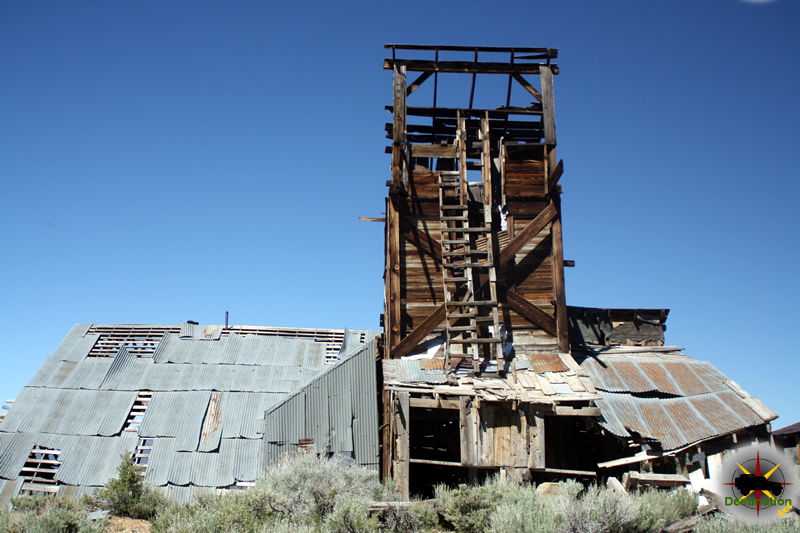
Potosi Nevada is the oldest lode mine in Nevada and the town site is located just off highway 160 between Las Vegas and Pahrump, Nevada.  The site was started in 1856 by some Mormon prospectors who were lead to the location with the help of a Piute guide.  The Mormons found the site in April 1856 and a month latter it was named Potosi after the boyhood home of Nathaniel Jones.  They did not begin mining until August after a return trip to Utah for supplies.  

Potosi mine, south center of sec. 12, T. 23 S., R. 57 E., the mine workings explore a zone at the base of the Yellowpine limestone. Clark County, Nevada. Circa 1921. Plate 33-B in U.S. Geological Survey. Professional paper 162. 1931.

By September, the first wagon of ore sent back to Utah for trading and three months later three wagons returned with supplies including bellows, furnace, and hearths among other things.  On Christmas day 1856, an crude adobe furnace was used to smelt ore.

In the spring of 1861, a larger smelter was setup by the Colorado Mining Company at the Potosi Spring.  News of new silver mine spread all over the west in no time.  The town of Potosi was setup 700 feet below of the Potosi Mine or the Las Vegas Silver Mines as they were called and was soon home to 100 miners.

Carol Lombard was killed on a Douglas DC-3, Jan 16, 1942 on Mt Potosi

The site continued to slowly grow and develop until 1906.  In 1913 the Empire Zinc Company purchased the rights and was soon Potosi was Nevada’s largest producer of Zinc.  After nearly 100 years of production Potosi produced about 4.5 million in lead, silver and zinc.

Potosi is a designated at Nevada State Historic Marker no. 115.

Town Summary

NamePotosi
LocationClark County, Nevada
GNIS849366
Latitude, Longitude35.9708, -115.5408
Elevation5705
Population100

Potosi Trailmap

References

Anniversary Mine and Narrows

The narrows near the Anniversary Mine are a fun place to hike and keep cool.  Lake Mead National Recreation Area, Nevada
The narrows near the Anniversary Mine are a fun place to hike and keep cool. Lake Mead National Recreation Area, Nevada

The Anniversary Mine and Narrows trail is truly a fun place to go and the location has a little bit of everything. This is a very short side trail found off the northern shore of Lake Mead and suitable for almost any vehicle.

Located in the Muddy Mountain Wilderness of the Lake Mead National Recreation Area, the Anniversary Mine was founded in 1921.  The colomanite mine operated at seven years until 1928 and produced an estimation 200,000 tons of ore.  The mine is located a short ways off North Shore Road (167).  There exist some foundations, and tunnels along with some minor infrastructure of the operation.

The narrows near the Anniversary Mine are a fun place to hike and keep cool.  Lake Mead National Recreation Area, Nevada
The narrows near the Anniversary Mine are a fun place to hike and keep cool. Lake Mead National Recreation Area, Nevada

Should you drive down into the wash you have the opportunity to continue on to the left, or you can turn right and drive towards the mine narrows located at the end of the canyon.  The only obstacle is right at the beginning and and easy to get past with some clearance. Once past the trail is just a wash, but do yourself a favor.  Park the 4×4 and take the time to walk it. Just past the beginning obstacle, there are some tunnels about 20 feet up on the side of the canyon wall, which are fun hike up to and explore.

Leaving the side trail from the Anniversary Mine, Lake Mead National Recreation Area.

There are things to explore all along the route to the narrows and it is a great excuse the get out of the truck.  The slot canyon is about 1/4 of a mile in length and a bit tight in the few places. This is a nice place to hike on a hot day.

Anniversary Mine 4×4 Trail and Destination

Silver Star Mine

The Silver Star Mine is a small mine site located off of the Zinc Mountain Road in San Bernardino County, California. The site rests at 4931 feet above sea level in the Ivanpah montains. The lonely site features a small humble cabin the miners used to survive and beat the heat. There is also a wrecked automobile near at the site, which has long since given up the battle against rust.

Silver Star Mine Cabin

There is not much information available for this location on the Internet and hopefully I will be able to find some eventually. The mine site is also know as the Lucky Lode deposits. The route into the area is reasonably passable and should be suitable for most cars, provided the driver is used to operating on the back roads of the desert.

Silver Star Mine
Silver Star Mine rusted out auto

Some places claim that this mine produced lead, copper and zinc. The fact that this mine is found just off of Zinc Mountain Road offers some credence to a zinc mine. Other online sources claim this is a tungsten mine. A shallow mine shaft is located near the cabin. The shaft contains an old wooden ladder used by the miners and appears to be filled in, collapsed, or suspended after about 20 feet of workings.

Silver Star Mine Shaft
Silver Star Mine Shaft with ladder.

This stark hole in the ground reminds us what a challenges the life of a miner must endure. Hot, dry deserts, narrow, dark tunnels in a hostile landscape.

Silver Star Mine Trail Map

Resources

Goodsprings, Nevada

Goodsprings is an unincorporated community and census-designated place (CDP) in Clark County, southern Nevada, located in Goodsprings Valley at the southeastern foothills of the Spring Mountains. Situated along Nevada State Route 161, about five miles northeast of Jean and Interstate 15 (roughly 30-45 minutes southwest of Las Vegas), it sits at an elevation of 3,717 feet in an arid desert environment. Once the heart of one of Clark County’s most productive mining districts, Goodsprings thrived as a boomtown in the early 20th century before declining into a small, semi-preserved settlement often described as a “living ghost town.” As of the 2020 census, its population was 162.

Goodsprings, Nevada - 1924
Goodsprings, Nevada – 1924

Pre-History and Early Settlement (Pre-1900)

The area around Goodsprings has long been a rare water source in the Mojave Desert. Indigenous peoples, including the Ancient Puebloans and later the Paiute, used the natural springs seasonally. White settlers first documented the springs in 1830 along the Old Spanish Trail.

Mining in the broader region began in 1856 when Mormon miners established a lead operation at nearby Potosi Mountain—possibly Nevada’s oldest underground lode mine. Gold was discovered in the area in 1893. In the 1860s, cattleman Joseph Good discovered silver near the springs (sometimes dated to 1861 or 1868) and established a small store while using the water for his herd. The settlement was initially called “Good’s Springs” or “Goods Springs” in his honor. By 1868, additional silver and lead deposits attracted more prospectors, forming a rudimentary mining camp. The Yellow Pine Mining District (also known as the Goodsprings Mining District) was formally organized around 1882 following further gold discoveries.

Before 1900, the area consisted mainly of tent cabins and a small mill. A post office opened in 1899 (initially at the nearby Keystone Mine, later relocated), and Lincoln County established Goodsprings Township. In 1904, Salt Lake City mining interests platted the township. Early structures were limited until transportation improved.

An old water tower located inside Goodspings, Nevada

The Mining Boom and Peak Prosperity (1900s–1920s)

The arrival of railroads transformed Goodsprings. The San Pedro, Los Angeles & Salt Lake Railroad (later Union Pacific) reached nearby Jean in 1905. In 1911, the narrow-gauge Yellow Pine Railroad connected the mines to Jean, drastically reducing ore transport costs and spurring construction of permanent buildings. The Yellow Pine Mining Company consolidated claims in 1909, operating a mill and focusing on oxidized zinc, lead, silver, copper, and gold.

World War I dramatically boosted the economy, as demand for lead (for ammunition) and zinc surged. By 1916–1918, the population peaked at around 800 (some accounts cite up to 1,000), supporting a developed downtown with a hospital, luxury hotel, post office, weekly newspaper (Goodsprings Gazette, 1918–1921), stores, churches, and multiple saloons. The district became Clark County’s most productive, yielding a total of approximately $25 million in minerals—primarily lead and zinc, with lesser amounts of gold, silver, copper, and rarer elements like molybdenum, vanadium, nickel, cobalt, platinum, palladium, and uranium. It represented the greatest variety of minerals in Nevada.

Key Infrastructure and Landmarks Built During the Boom

1916: The 20-room Fayle Hotel (considered one of Nevada’s finest at the time, with modern amenities; destroyed by fire in 1966).

1913: The Pioneer Saloon (built by Clark County Commissioner George Fayle using prefabricated stamped-tin construction), General Store, and Community Church. The saloon, Nevada’s oldest continuously operating bar in southern Nevada, featured an original cherry-wood bar and quickly became the social hub.

1913: Goodsprings Schoolhouse (the oldest school in Clark County built specifically as a school; still in use today and listed on the National Register of Historic Places).

The Pioneer Saloon located in Goodsprings, Nevada is still open and quite busy

Notable events include a 1915 saloon shooting during a card game (miner Paul Coski killed by Joe Armstrong; ruled self-defense, with bullet holes still visible) and the 1942 plane crash of actress Carole Lombard on nearby Mount Potosi. Her husband, Clark Gable, waited at the Fayle Hotel and Pioneer Saloon for news of the tragedy; a memorial to the victims remains in the saloon today.

Decline and Transition (1920s–1950s)

Post-World War I, falling metal prices led to mine closures and population decline (down to about 400 by 1920). The Yellow Pine Railroad ceased operations around 1930 (tracks removed by the mid-1930s). A brief resurgence occurred during World War II due to renewed demand, but mining largely ended by the 1950s. The town contracted but never fully vanished, unlike many desert boomtowns. Fires destroyed several structures, and atomic testing occurred in the region during the 1950s. By the late 20th century, fewer than 100–200 residents remained, living among preserved and restored buildings, mobile homes, and newer structures.

Modern Era and Preservation (1960s–Present)

Goodsprings endures as a quiet desert community with a focus on historic preservation. The Goodsprings Historical Society (established in the 1990s) works to educate the public, restore buildings (e.g., roof repairs), and maintain sites like the 1886 Campbell Stone Cabin (one of the oldest structures), the cemetery, and mill ruins. The Pioneer Saloon continues operating as a tourist draw, hosting events, filming locations (The Misfits, Fear and Loathing in Las Vegas), and even inspiring a recreation in the 2010 video game Fallout: New Vegas (which has boosted visitation through annual festivals since 2022).

In 2010, the Goodsprings Waste Heat Recovery Station (a 7.5 MW geothermal-style plant using pipeline waste heat) opened as Nevada’s first renewable energy facility of its kind. The town remains accessible for day trips from Las Vegas, with the saloon, schoolhouse, and surrounding desert landscape attracting history enthusiasts and off-roaders.

Conclusion

Goodsprings exemplifies the classic Nevada mining town arc: from obscure springs and prospector camps to wartime prosperity and eventual contraction, while retaining its historic character. Its $25+ million in mineral wealth, pioneering infrastructure, and resilient landmarks like the Pioneer Saloon underscore its significance in Clark County’s development. Today, it stands not as a fully abandoned ghost town but as a preserved chapter of the American West—tied to Indigenous heritage, railroad expansion, world wars, Hollywood tragedy, and modern tourism—offering a tangible link to Nevada’s rugged past amid the Mojave Desert.

Goodsprings Mines

  • Alice Mine
  • Argentina Mine
  • Belle Mine
  • Columbia Mine
  • Cosmopolitan Mine
  • Fredrickson Mine
  • Green Copper Mine
  • Hermosa Mine
  • Hoosier Mine
  • Iron gold Mine
  • Lookout Mine
  • Keystone Mine
  • Lavina Mine
  • Middlesex Mine
  • Surprise Mine
  • Table Top Mine
  • Yellow Pine
The mill site located just outside of Goodsprings, Nevada

Goodsprings Nevada Trailmap

Nelson Nevada and Eldorado Canyon – Clark County Ghost Town

Nelson, Nevada, is a small unincorporated community in Clark County, located in the rugged hills of El Dorado Canyon about 45 minutes south of Las Vegas along Nevada Highway 165. The canyon itself drains into the Colorado River (now part of Lake Mohave) and is best known for the historic Techatticup Mine—one of the oldest, richest, and most famous gold mines in southern Nevada. Together, Nelson and El Dorado Canyon represent a classic chapter in Nevada’s mining heritage: from early Spanish exploration and a violent 19th-century gold rush to 20th-century wartime production and today’s preserved tourist site. What began as a remote, lawless mining district became one of the most productive areas in the state’s southern history.

Rock spires carved by erosion located in Eldorado Canyon, Nelson, Nevada.

Pre-European History and Early European Contact

Long before miners arrived, the area was home to Ancestral Puebloans, followed by Paiute and Mojave tribes who lived along the Colorado River corridor for centuries. In 1775, Spanish surveyors exploring the canyon along the Colorado River discovered rich deposits of gold, silver, and lead. They named the canyon “Eldorado” (Spanish for “golden”) and established a small settlement at the river’s mouth, but the silver quantities proved too low to sustain operations, and they soon moved on—missing the far richer gold veins hidden in the canyon walls.

The Southwest Mining Company Quartz mill located just off the Colorado River.

The 19th-Century Mining Boom (1850s–1870s)

Serious prospecting began in the 1850s when American miners sluiced streams feeding the Colorado River. In 1857–1858, steamboat captain George Alonzo Johnson formally named the canyon El Dorado after noting gold and silver deposits. The real rush ignited in April 1861 when Mojave Chief Irataba guided prospector John Moss to a rich silver (and gold/copper) vein. Word spread rapidly, triggering one of the largest mining booms in southern Nevada history and the formation of the Colorado Mining District (later called the Eldorado Canyon District).

The Salvage Vein—a vertically stacked ribbon of ore—became the focus. The most famous operation was the Techatticup Mine (named from Paiute words meaning “hungry” or “bread,” because local Paiutes came to the camps begging for food). Other key mines included the Wall Street, Queen City, Gettysburg, and Savage. These produced millions of dollars in gold, silver, copper, and lead over decades. Ore was initially shipped by steamboat down the Colorado River to Yuma, Arizona, and then to San Francisco. A 10-stamp steam-powered mill (the first in the canyon) was built in 1863 at El Dorado City near the river, cutting transportation costs.

Several mining camps sprang up: San Juan (upper canyon, near modern Nelson), Alturas and Louisville (mid-canyon near Techatticup), and Colorado City/El Dorado City at the river landing. During the Civil War, the area even hosted rival camps—Lucky Jim (Confederate sympathizers) and Buster Falls (Union)—highlighting the national divisions that spilled into the remote desert.

Many structures are still standing, Nelson, Nevada.

Lawlessness and the “Wild West” Reputation

El Dorado Canyon earned a notorious reputation for violence that rivaled Tombstone, Arizona. Its extreme isolation—hundreds of miles from the nearest sheriff in Pioche or Hiko—meant law enforcement rarely ventured in. Claim-jumping, shootings over ownership and labor disputes, greed, and vigilante justice were daily occurrences. Many miners were Civil War deserters seeking anonymity. Murders were so common that they barely made headlines. The U.S. Army established Camp El Dorado in 1867 at the canyon mouth to protect steamboat traffic and deter Paiute raids, but it was abandoned two years later.

Infamous figures included Paiute renegade Ahvote and Cocopah serial killer Queho, who murdered over 20 people in the early 1900s (one victim near the Techatticup Mine in 1919). Locals formed posses for justice when authorities could not respond.

The Rise of Nelson and 20th-Century Operations

The original riverfront town of Eldorado gradually declined after the 1870s. In 1905 a new hub emerged about seven miles up-canyon and was named Nelson (after early settler Charles Nelson). A 50-ton smelter was built, sparking a second boom. Mining slowed in the early 1900s but revived in the late 1930s to supply ore for the U.S. military during World War II. The Techatticup Mine—the longest-lived and most productive in the district—finally closed around 1941–1945 due to rising labor costs.

The construction of Davis Dam in the 1950s created Lake Mohave, flooding the old Nelson’s Landing, stamp mill site, and lower canyon. The historic cemetery was relocated one mile upstream to avoid inundation

The steamboat Mohave departing the landing in El Dorado Canyon.

Modern Era and Tourism

Today, only about 35 people live in Nelson, a quiet cluster of homes and remnants of the mining past. The Techatticup Mine site (51 acres) was purchased in 1994 by Tony and Bobbie Werly and their family. They restored buildings, cleared tunnels, installed lighting and safety features, and opened guided tours that explore both above- and below-ground sections (about 500 feet deep). The site now functions as a museum and living-history attraction with antique vehicles, mining artifacts, a gift shop, and even a wedding chapel. It has also served as a filming location for movies such as Breakdown (1997) and 3000 Miles to Graceland (2001), whose crashed airplane prop remains on display.

El Dorado Canyon is no longer an active mining district but a scenic desert landscape popular with hikers, photographers, and history buffs. Visitors can explore the preserved “ghost town” feel—rusting machinery, weathered buildings, and canyon views—while remembering its turbulent past of riches, bloodshed, and resilience.

Mill in Eldorado Canyon, circa 1890

Founded in 1905 Nelson, Nevada is located some seven miles west at the head of Eldorado Canyon. The town of Nelson slumped for two decades beginning in 1909, but the 1930’s found a resurgence in gold production. By 1941, the three cyanide mills processed 220 tons of ore daily. The population reached 600 persons, however increased costs caused the gold production to slow and eventually cease. The Techatticip mine produced over half of the total gold produced in the area. The gold produced by the region has an estimated valued at $10,000,000.00.

In 1951, Davis Damn is completed. The original town site in Eldorado canyon was buried and drowned by the rising waters of Lake Mojave.

A visitors center and store are open to those who travel here.  Nelson, Nevada
A visitors center and store are open to those who travel here. Nelson, Nevada

Today

Today, the town of Nelson hosts some 37 people in the 2010 census. The older section of town hosts many old buildings, ruins, cars, mining equipment and all in all is an eclectic collection of mining and western history. The current occupants have a wonderful collection of old mining gear and western history, mixed with an eclectic collection of art.

Nelson, Nevada

Conclusion

From Spanish dreams of El Dorado in 1775 to the chaotic gold rush of the 1860s, Civil War tensions, and World War II production, Nelson and El Dorado Canyon encapsulate the boom-and-bust cycle of Nevada mining. The Techatticup Mine’s millions in precious metals helped shape the American West, even as lawlessness and isolation defined daily life. Today, the restored site offers a safe window into that wild history—just a short drive from Las Vegas—preserving the stories of the miners, outlaws, and dreamers who once called this canyon home. For those interested in touring, reservations are required through Eldorado Canyon Mine Tours.

Nelson, Nevada is a quiet destination worthy of a few hours if you are in the area.

Nelson and El Dorado trail map