Ely Forging The Link – Nevada State Historic Marker

The “Forging the Link” historical marker in Ely, Nevada, encapsulates the story of a town that became a vital hub in the American West due to its strategic location and economic contributions. The marker, part of Nevada’s historical marker program overseen by the State Historic Preservation Office (SHPO), commemorates Ely’s role in connecting the region through mining, transportation, and community development.

Early Exploration and Mapping (1859)

James H. Simpson (1813–1883)

The story of Ely begins with its placement on the map by James H. Simpson during his 1859 exploration of the Great Basin. As a U.S. Army officer, Simpson conducted surveys to identify potential routes for communication and travel across the vast, arid region. His work highlighted Ely’s strategic position, laying the groundwork for its future development as a regional center. This initial mapping was critical, as it introduced Ely to the broader narrative of westward expansion and connectivity in the United States.

Mining Boom and Economic Growth (1860s–1890s)

In the 1860s, the discovery of silver and gold deposits in the nearby Robinson Mining District spurred interest in the area. These discoveries attracted prospectors and settlers, transforming Ely into a burgeoning hub. By 1887, Ely had grown sufficiently to become the county seat of White Pine County, solidifying its administrative importance. The real economic surge came in the early 1890s with the discovery of significant copper deposits. Copper mining became the backbone of Ely’s economy, drawing investment and labor to the region and necessitating infrastructure to support the industry.

The Nevada Northern Railway (1900s)

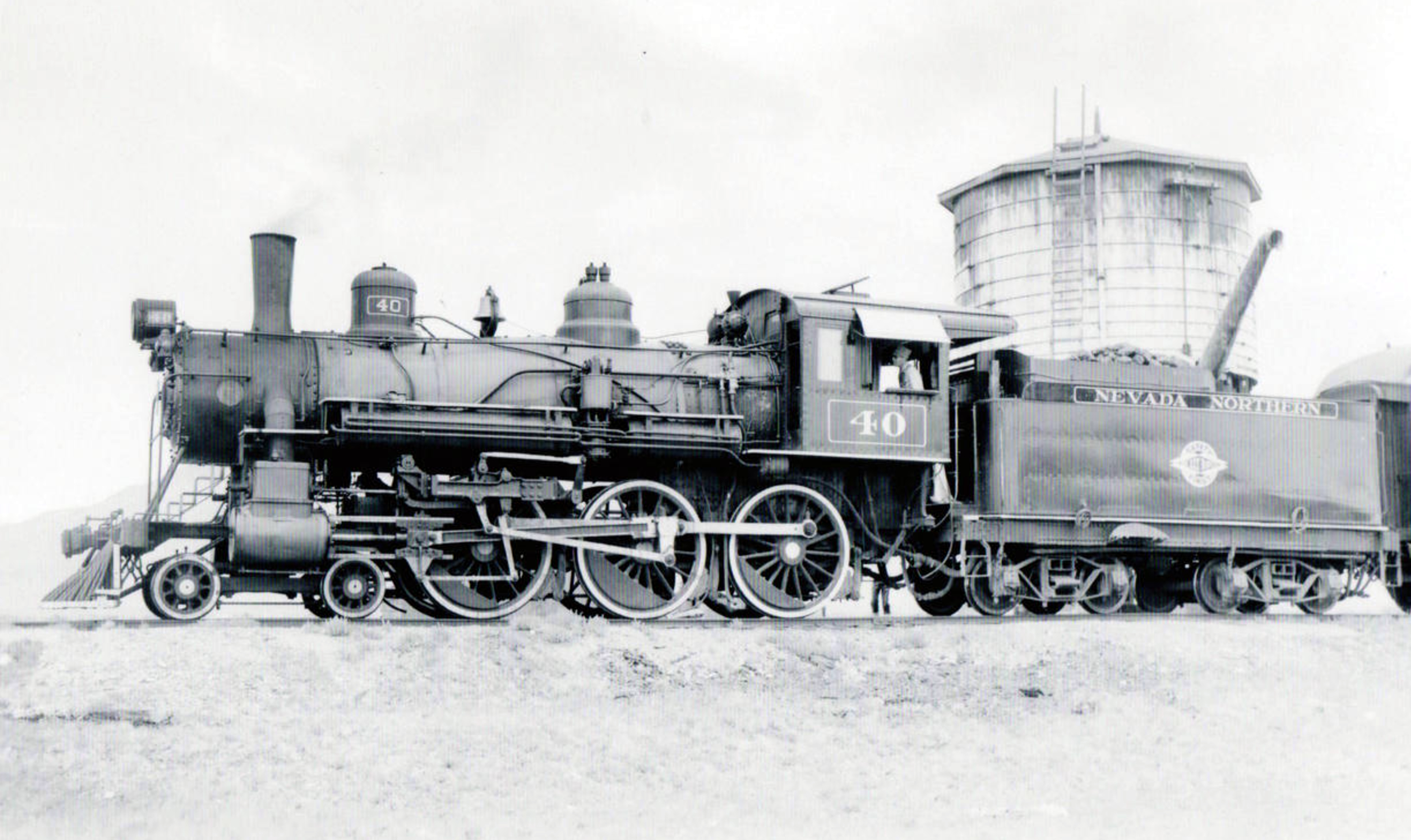
A pivotal development in Ely’s history was the establishment of the Nevada Northern Railway, headquartered in East Ely. Completed in the early 20th century, this 150-mile railway connected Ely’s mines in Ruth to a smelter in McGill and linked the town to the transcontinental railroad to the north. The railway was instrumental in transporting copper ore and other goods, effectively “forging the link” between Ely and national markets. This connectivity not only boosted Ely’s economy but also positioned it as a critical node in the supply chain of the American West, facilitating trade and communication across vast distances.

Nevada Northern Railway

The Lincoln Highway and Road Networks (1913–1922)

Ely’s role as a transportation hub was further cemented in 1913 when the transcontinental Lincoln Highway, one of America’s first coast-to-coast automobile routes, was routed through the town. Although the road was not paved until 1922, its inclusion of Ely underscored the town’s importance as a stopping point for travelers crossing the Great Basin. By the late 19th century, Ely was already connected by a network of wagon roads, but the Lincoln Highway elevated its status. Additionally, two other major roadways—U.S. Route 6 (designated in 1937, formerly the Midland Trail) and U.S. Route 93—converged at Ely, making it a crossroads for travelers moving between Canada, southern California, and beyond. With over 2,000 residents by the early 20th century, Ely offered essential services, making it an ideal stop for weary travelers.

The Historical Marker’s Creation

The “Forging the Link” marker, erected by the Nevada State Historic Preservation Office, was designed to capture Ely’s multifaceted role in connecting the Great Basin through exploration, mining, and transportation. While the exact date of the marker’s installation is not specified in available records, it is part of a broader initiative to document Nevada’s history through physical markers. The marker’s title, “Forging the Link,” reflects Ely’s historical significance as a connector—geographically, economically, and socially—in a region characterized by its isolation.

The marker likely emerged from a collaborative effort involving local historians, community members, and the SHPO, which oversees Nevada’s historical marker program. Such markers are typically proposed by local groups or agencies, such as the Bureau of Land Management’s Ely District, to highlight significant historical narratives. The content of the marker emphasizes Simpson’s exploration, the mining boom, the Nevada Northern Railway, and the Lincoln Highway, weaving together the threads of Ely’s development into a cohesive story of regional importance.

Significance and Legacy

The “Forging the Link” marker serves as both an educational tool and a point of pride for Ely’s residents. It highlights the town’s resilience and adaptability, from its origins as a mapped point in the Great Basin to its growth into a mining and transportation hub. The marker also underscores Ely’s enduring role as a service center for travelers, a legacy that continues with its position at the intersection of major highways. For visitors, the marker offers a glimpse into the challenges and triumphs of life in the American West, particularly in a region as remote as White Pine County.

Today, the marker stands as a testament to Ely’s historical contributions and its ongoing relevance. It invites reflection on how infrastructure and economic activity can transform a small town into a vital link in a larger network, a theme that resonates with Nevada’s broader history of connectivity and development.

James H. Simpson put the future site of Ely on the map during his 1859 exploration through the Great Basin.  In the 1860s, silver and gold deposits were discovered nearby in what became the Robinson Mining District.  Ely developed as a regional center, becoming the White Pine County seat in 1887.  The area grew dramatically in the early 1890s with major copper discoveries.  The Nevada Northern Railway, headquartered in East Ely, carried ore from the mines in Ruth to the McGill smelter, as well as connecting Ely to the world on its 150 mile route north to the transcontinental railroad.

The towns of eastern Nevada were joined during the late nineteenth century by a network of wagon roads.  In 1913, the road through Ely was incorporated into the transcontinental Lincoln Highway, though it was not paved until 1922.  Ely had over 2,000 residents and offered many services, making it an excellent stopping place on the long road across the Great Basin.  When the copper industry declined after World War I, the struggling town turned to travelers for income.

The Lincoln Highway was designated U.S. 50 in 1926.  By mid-century the popularity of the Victory Highway, now Interstate 80, reduced U.S. 50 to the status of “The Loneliest Road in America.”

In addition to the Lincoln Highway, two other major national roadways converge at Ely.  The Midland trail, designated Route 6 in 1937, was an early coast to coast automobile road that also connected Ely to Tonopah and southern California.  U.S 93, which passes north-south through Ely takes travelers from Canada almost to the Mexican border.

STATE OF NEVADA HISTORIC PRESERVATION OFFICE

AT&T

Land Services, Inc.

MACTEC Engineering and Consulting, Inc.

Ely Renaissance Society

Bureau of Land Management, Ely District

Nevada State Historic Marker 269 Map

Nevada State Historic Marker Summary

NameEly Forging The Link
LocationEly, White Pine County, Nevada
Latitude, Longitude39.2488, -114.8902
Nevada State Historic Marker269

John Wesley Powell

John Wesley Powell, a remarkable American explorer, geologist, and ethnologist, was born on March 24, 1834, in Mount Morris, New York. His expeditions through the uncharted territories of the American West not only added to scientific knowledge but also provided invaluable insights into the land’s geological and cultural diversity. Powell’s legacy as a pioneer of exploration and his tireless efforts in promoting conservation measures have left an indelible mark on American history.

Powell served as the second Director of the United States Geological Survey, a post he held from 1881 to 1894. This photograph dates from early in his term of office.

Early Life and Education

Powell grew up in rural New York, where his love for nature and the outdoors was nurtured from an early age. Although he lost his right arm in a childhood accident, Powell’s determination and thirst for adventure were undeterred. He developed a keen interest in natural sciences and geography and pursued higher education at Illinois College and later at Oberlin College, where he focused on geology.

Grand Canyon Expeditions

Powell’s most famous and daring expedition was his 1869 journey down the Colorado River, known as the Powell Geographic Expedition. With a team of nine men, Powell set out to explore the largely uncharted canyons and rapids of the Colorado River and gather valuable scientific data. The expedition faced numerous hardships, including treacherous rapids, scarce food supplies, and hostile encounters with Native American tribes. Miraculously, Powell and his crew successfully navigated the treacherous river and completed the journey, providing unprecedented knowledge of the Grand Canyon and its geological formations.

First camp of the John Wesley Powell expedition, in the willows, Green River, Wyoming, 1871. - E. 0. Beaman - War Department. Office of the Chief of Engineers. Powell Survey. (1869 - ca. 1874)
First camp of the John Wesley Powell expedition, in the willows, Green River, Wyoming, 1871. – E. 0. Beaman – War Department. Office of the Chief of Engineers. Powell Survey. (1869 – ca. 1874)

Powell’s subsequent expeditions further solidified his reputation as a fearless explorer. He embarked on multiple journeys across the American West, including explorations of the Green and Colorado Rivers, the Rocky Mountains, and the Uinta Mountains. Powell’s meticulous record-keeping and scientific observations greatly expanded the understanding of the region’s geology, hydrology, and ethnography.

Scientific Contributions

Powell’s expeditions were not merely adventurous endeavors but also scientific ventures aimed at advancing knowledge in various fields. He published numerous papers and reports detailing his findings, including “Exploration of the Colorado River of the West and its Tributaries” and “Canons of the Colorado.” These works significantly contributed to the geological understanding of the American West, shaping subsequent research and studies in the region.

Additionally, Powell’s expertise in ethnology led him to conduct extensive research on Native American tribes. He documented their cultures, languages, and customs, recognizing the importance of preserving their heritage. His ethnographic studies formed a crucial foundation for future anthropological research in the United States.

Conservation Advocacy

John Wesley Powell was not only a scientist and explorer but also an early advocate for conservation. Recognizing the fragile nature of the American West’s ecosystems, he became a vocal proponent of sustainable land use practices and preservation efforts. Powell believed that the arid region’s limited water resources necessitated careful management and planning.

In 1879, Powell presented his influential “Report on the Lands of the Arid Region of the United States” to Congress. This groundbreaking report emphasized the need for responsible irrigation and land development strategies, urging policymakers to consider the long-term consequences of uncontrolled resource exploitation. Powell’s report laid the groundwork for the eventual establishment of the U.S. Forest Service and the Bureau of Reclamation, both crucial agencies in land and water management.

Legacy and Impact

John Wesley Powell’s contributions to exploration, science, and conservation continue to resonate today. His expeditions not only unveiled the wonders of the American West but also inspired future generations of explorers and scientists. Powell’s emphasis on interdisciplinary research and his understanding of the intricate relationships between humans and their environment remain

References

Jarbidge Community Hall – Nevada State Historic Marker 153

The Jarbidge Community Hall is a central gathering place for the residents of Jarbidge, Nevada. Built in 1939, the hall has served as a venue for community events, meetings, and social gatherings for more than 80 years. The hall is located on the main street of Jarbidge, and its distinctive Art Deco design makes it a landmark in the town.

The history of the Jarbidge Community Hall is intertwined with the history of the town itself. Jarbidge was founded in the late 19th century, during Nevada’s mining boom. The town was named after a nearby creek, and its population grew rapidly as miners flocked to the area in search of gold and silver.

Jarbidge Community Hall, Jarbidge, Elko county, Nevada

By the early 20th century, Jarbidge had become an important mining town, with several mines operating in the area. The town’s population peaked in the 1920s, with around 1,500 residents. During this time, the town was home to several businesses, including hotels, saloons, and general stores.

However, the Great Depression hit Jarbidge hard, and the town’s mining industry began to decline. By the late 1930s, many of the mines had closed, and the town’s population had dwindled to just a few hundred people.

Despite the difficult times, the residents of Jarbidge remained committed to their community. In 1939, they came together to build a place to gather within the town. The building was designed by local architect Paul Revere Williams, who was one of the few African American architects working in the United States at the time. Williams was known for his Art Deco designs, and the Jarbidge Community Hall is one of his few surviving buildings in Nevada.

The Jarbidge Community Hall was built using local materials, including stone from a nearby quarry and wood from the surrounding forests. The hall’s Art Deco style is evident in its streamlined design, geometric shapes, and use of decorative elements such as the zigzag patterns on the building’s façade.

Over the years, the building has served as a venue for a wide range of events. In the early days, it was used for dances, social gatherings, and community meetings. During World War II, it was used as a venue for USO shows and other events to support the war effort. In the decades that followed, it continued to be a central gathering place for the residents of Jarbidge, hosting everything from weddings and birthday parties to town meetings and political rallies.

Today, the Jarbidge Community Hall remains an important part of the town’s identity. It is still used for community events and social gatherings, and it serves as a reminder of the town’s rich history and strong sense of community. The hall has been listed on the National Register of Historic Places since 1990, and it is considered one of the most significant Art Deco buildings in rural Nevada.

In recent years, the Jarbidge Community Hall has undergone several renovations to ensure that it remains a functional and attractive venue for the town’s residents. The building’s stone façade has been restored, and the interior has been updated with new flooring and lighting. The hall is now fully accessible, with a wheelchair ramp and updated restrooms.

Despite its small size, the Jarbidge Community Hall is a testament to the resilience and determination of the people of Jarbidge. It is a symbol of the town’s enduring spirit and its commitment to preserving its history and traditions for future generations.

Nevada State Historic Marker Text

Gold discoveries by Dave Bourne in 1909 created the town of Jarbidge.

With 1,500 population in Jarbidge Canyon by 1910, citizens built this pioneer-type community hail with a “floating” maple floor.  Support from the Nevada Commission for Cultural Affairs and the community funded the restoration of the building.

STATE HISTORIC MARKER NO.  153
STATE HISTORIC PRESERVATION OFFICE
JARBIDGE COMMERCIAL HALL FUND AND IMPROVEMENT CLUB

Nevada State Historic Marker 153 Location

Jarbidge Community Hall Summary

NameJarbidge Community Hall
LocationJarbidge, Elko County, Nevada
Latitude, Longitude41.8783, -115.4303
Nevada State Historic Maker 153

References

Methodist Church of Carson City – Nevada State Historic Marker

Carson City’s Methodist Church is a historic church located in the city of Carson City, Nevada and recognized with Nevada State Historic Marker number 71. The church was established in 1862 and has been an integral part of the community since then. Over the years, the church has undergone several renovations and additions to accommodate the growing congregation.

History

Carson City’s Methodist Church was established in 1862, shortly after the city was founded. The church was initially a small wooden structure that could accommodate only a handful of people. As the congregation grew, the church underwent several renovations and expansions. In 1906, a new church building was constructed, which included a sanctuary, classrooms, and an office.

The church played an important role in the community, providing a place for worship, social events, and community gatherings. During the Great Depression, the church provided assistance to the needy, including food and clothing. The church continued to be an important part of the community through the 20th century and into the present day.

Architecture

Carson City’s Methodist Church is a beautiful example of Gothic Revival architecture. The church’s exterior features pointed arches, steeply pitched roofs, and elaborate tracery. The church’s bell tower is a prominent feature of the building and can be seen from several blocks away.

The interior of the church is equally impressive, with stained glass windows, a vaulted ceiling, and wooden pews. The sanctuary is the focal point of the interior, with a beautiful altar and a pipe organ.

Community Involvement

Carson City’s Methodist Church has always been actively involved in the community. The church has provided assistance to the needy, supported local charities, and hosted community events. The church’s outreach programs have included a food pantry, a clothing drive, and a summer camp for children.

The church has also been involved in promoting social justice issues, including racial and gender equality, affordable housing, and healthcare access. The church’s advocacy work has included lobbying elected officials and organizing protests and demonstrations.

Carson City’s Methodist Church has been an integral part of the community for over 150 years. The church’s Gothic Revival architecture is a beautiful example of the style, and the church’s community involvement and advocacy work have made it an important institution in the city.

Nevada State Historic Marker Text

Dedicated in 1867, this church serves a congregation that dates to 1859.  Like many other buildings in Carson City, the stone used in its construction was quarried at the nearby State Prison.  Reverend Warren Nims (Pastor 1863-1866) was responsible for much of the original construction.  Altered extensively over the years, the structure, with its octagonal porch posts and pointed-arch windows, is one of Nevada’s oldest religious structures.

STATE HISTORICAL MARKER NO.  71
STATE HISTORIC PRESERVATION OFFICE
NEVADA LANDMARK SOCIETY

Nevada State Historic Marker Summary

NameMethodist Church of Carson City
LocationCarson City, Nevada
Nevada State Historic Marker 71
Latitude, Longitude39.1645, -119.7693

Nevada State Historic Marker Location

Nevada State Historic Marker number 71 is in Carson City, Nevada on North Division Street. The church building is located on the Northwest corner at the intersection of North Division Street and West Musser Street. The Marker is mounted Methodist Church to the left of the entrance doors. 

References

Chollar Mine – Nevada State Historic Marker

The Chollar Mine is a historic gold mine and Nevada State Historic Marker Number 209, located in Virginia City, Nevada, United States. The mine was discovered in 1859 during the famous Comstock Lode, which was the first major silver deposit discovery in the United States. The Chollar Mine was primarily a gold mine, and is located on the eastern slope of Sun Mountain.

"Mining on the Comstock", depicting the headframes and mills of the various mines, and mining technology used at Comstock, most prominently the method of square-set timbering developed there to work the veins. -T.L. Dawes (drawing); Le Count Bros., San Fransisco (lithographers)
“Mining on the Comstock”, depicting the headframes and mills of the various mines, and mining technology used at Comstock, most prominently the method of square-set timbering developed there to work the veins. -T.L. Dawes (drawing); Le Count Bros., San Fransisco (lithographers)

The Chollar Mine was one of the most productive mines during the Comstock Lode era, and it operated continuously until 1942. The mine was known for producing high-grade gold ore, which was extracted using traditional mining methods such as pick and shovel, as well as dynamite. The mine reached a depth of over 1,600 feet, and had extensive underground workings.

The mine is open for guided tours, which take visitors deep into the underground workings of the mine. Visitors can see the original equipment used to extract gold ore, such as air-powered drills and ore carts. The tour also provides information on the history of the Comstock Lode, the miners who worked at the Chollar Mine, and the mining techniques used during that era.

One of the highlights of the Chollar Mine tour is the view of the impressive “Glory Hole.” This was a large vertical shaft that was used to extract ore from the deep levels of the mine. Visitors can see the shaft and the surrounding structures that supported the mine.

The Chollar Mine is a fascinating piece of American mining history, offering visitors an opportunity to learn about the challenges and triumphs of the early miners who worked there. The mine tour is a must-see for anyone interested in mining history or the American West, and Virginia City provides a charming backdrop to this important piece of history.

Nevada State Historic Marker Text

Nevada State Historical Markers identify significant places of interest in Nevada’s history. The Nevada State Legislature started the program in 1967 to bring the state’s heritage to the public’s attention with on-site markers. Budget cuts the program became dormant in 2009.

First located in 1859, the Chollar was consolidated with the Potosi in 1865. As the Chollar-Potosi, it was one of the leading producers on the Comstock. The Nevada Mill was erected here in 1887 to process low-grade Chollar ore. It was the last to use the Washoe Pan Process, but the first on the Comstock to generate and utilize electric power.

State Historical Marker Number 209

Nevada State Historic Marker Summary

NameChollar Mine
LocationVirginia City, Storey County, Nevada
Nevada State Historic Marker209
Latitude, Longitude39.3016, -119.6502

Chollar Mine Location

The Nevada State Historic Marker number 209 is found in Virginia City, Storey County, Nevada. The Chllar Mine Marker is located at the intersection of F Street and Nevada Route 341 on F Street. Marker is at or near this postal address: 615 South F Street, Virginia City NV 89440, United States

References