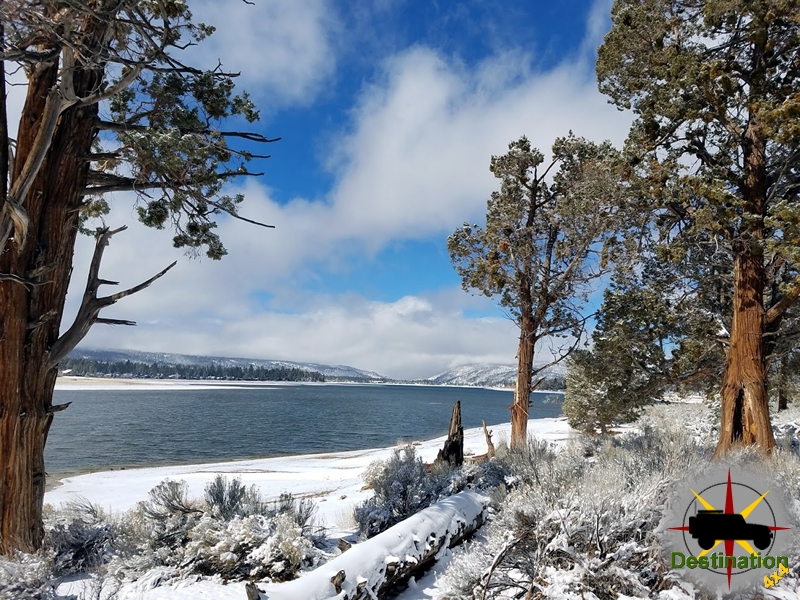
Big Bear, CA
I quiet mountain community full of back country adventure.
The Journey is the destination
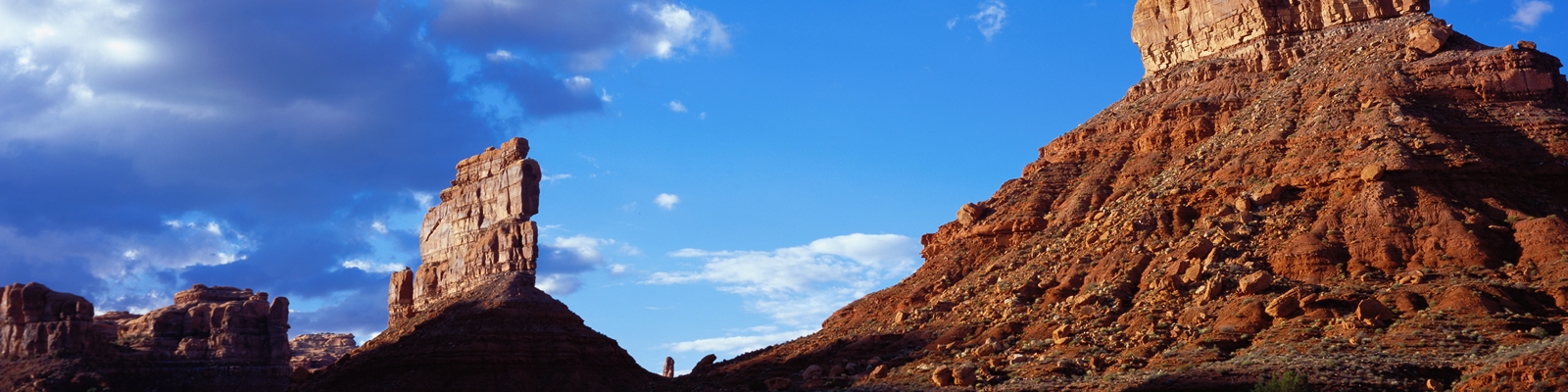
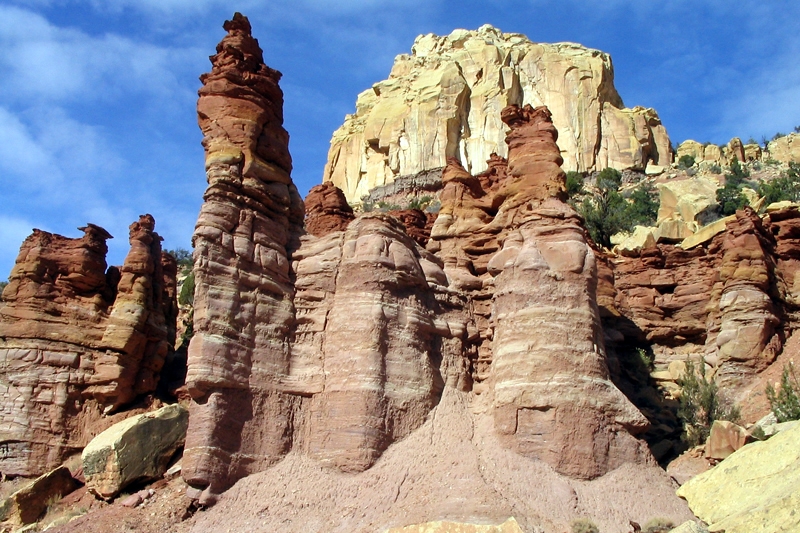
Balanced Rock is an iconic natural feature located in Arches National Park, Utah, USA. This geological formation consists of a large boulder balanced precariously on top of a much smaller pedestal rock. The rock formation is an example of a natural geological process known as erosion and has become a popular destination for tourists from around the world.

Balanced Rock is situated in an area known as the Entrada Sandstone Formation. This formation was created around 180 million years ago, during the Jurassic Period, when the region was a vast desert. Over time, layers of sediment accumulated on the desert floor, which eventually became compressed and turned into rock. The Entrada Sandstone Formation is composed of a soft, red sandstone, which is prone to erosion.
Erosion is a natural geological process that occurs when wind, water, and other natural forces wear away at the surface of the Earth. In the case of Balanced Rock, the pedestal rock is made of a harder, more erosion-resistant sandstone than the boulder on top. As the softer sandstone eroded away, the harder rock was left behind, forming a pedestal. Over time, the boulder on top was also eroded, creating the balanced formation that we see today.
Balanced Rock has become an iconic symbol of Arches National Park and a popular destination for tourists from around the world. The formation is an excellent example of the natural geological processes that shape our planet and provides a unique window into the history of the Earth.
Balanced Rock is also significant from a cultural perspective. For centuries, the land that is now Arches National Park was home to indigenous people, including the Ute and Paiute tribes. These tribes believed that the rock formations in the park held spiritual significance and would often conduct ceremonies and rituals in the area.
In addition to its cultural significance, Balanced Rock is also an important habitat for a variety of plants and animals. The area around the formation is home to a variety of desert plants, including cacti and sagebrush, as well as a variety of small mammals and birds.

Arches National Park was established in 1971 to protect the unique geological and cultural features of the area, including Balanced Rock. The park is managed by the National Park Service and is dedicated to preserving the natural beauty of the region for future generations.
Conservation efforts in the park are focused on maintaining the delicate balance between human use and environmental preservation. Visitors to the park are encouraged to stay on designated trails and follow the “Leave No Trace” principles to minimize their impact on the natural environment.
In addition to visitor education, the National Park Service also conducts ongoing research to monitor the health of the park’s ecosystems. This research helps to identify potential threats to the park’s natural resources and develop strategies to mitigate those threats.
Balanced Rock is a natural wonder that has captured the imagination of people from around the world. This iconic formation is a testament to the power of natural geological processes and provides a unique window into the history of the Earth. Its cultural and ecological significance make it an important part of Arches National Park, and conservation efforts are underway to ensure that this unique feature remains protected for future generations to enjoy.

Four Jeffrey Campground (often called “4 Jeffrey”) is a popular, large developed campground in Inyo National Forest near Bishop, California. It sits along the South Fork of Bishop Creek in a scenic valley between Grouse Mountain and Table Mountain at approximately 8,100–8,300 feet elevation.
The campground offers a mix of shaded sites (under aspens, Jeffrey pines, and other trees) and more open areas, with many sites providing beautiful views of the surrounding Sierra Nevada peaks. It feels relatively secluded despite its size due to the stepped layout and vegetation. The South Fork Bishop Creek runs nearby or through parts of the area, creating a peaceful, creekside atmosphere ideal for relaxing, fishing, and enjoying nature.
It typically operates from late April through mid-to-late October (weather and snow permitting), with some sites reservable and others first-come, first-served. It’s about a 15–25 minute drive west from Bishop via Highway 168 and South Lake Road.
Four Jeffrey offers solid facilities for a USFS campground:
Fees are typically around $34–$35 per night (discounts often available with America the Beautiful passes). Reservations are recommended for peak summer months via Recreation.gov.
The area is a hub for outdoor recreation in the Eastern Sierra:
The Eastern Sierra and Inyo National Forest around Bishop Creek Canyon host diverse wildlife. Common or possible sightings include:
Note: Always practice bear safety, store food properly, and maintain distance from wildlife. The area is also home to pinyon-juniper, aspen groves, and wildflowers in season.
Four Jeffrey is praised for its convenience to Bishop (for supplies), stunning high-elevation scenery, and access to world-class hiking and fishing while still feeling immersive in nature. It’s a favorite for families, RVers, anglers, and hikers exploring the Bishop Creek Canyon area. For current conditions, availability, or fire restrictions, check Recreation.gov or the Inyo National Forest website.
The Jarbidge Community Hall is a central gathering place for the residents of Jarbidge, Nevada. Built in 1939, the hall has served as a venue for community events, meetings, and social gatherings for more than 80 years. The hall is located on the main street of Jarbidge, and its distinctive Art Deco design makes it a landmark in the town.
The history of the Jarbidge Community Hall is intertwined with the history of the town itself. Jarbidge was founded in the late 19th century, during Nevada’s mining boom. The town was named after a nearby creek, and its population grew rapidly as miners flocked to the area in search of gold and silver.

By the early 20th century, Jarbidge had become an important mining town, with several mines operating in the area. The town’s population peaked in the 1920s, with around 1,500 residents. During this time, the town was home to several businesses, including hotels, saloons, and general stores.
However, the Great Depression hit Jarbidge hard, and the town’s mining industry began to decline. By the late 1930s, many of the mines had closed, and the town’s population had dwindled to just a few hundred people.
Despite the difficult times, the residents of Jarbidge remained committed to their community. In 1939, they came together to build a place to gather within the town. The building was designed by local architect Paul Revere Williams, who was one of the few African American architects working in the United States at the time. Williams was known for his Art Deco designs, and the Jarbidge Community Hall is one of his few surviving buildings in Nevada.
The Jarbidge Community Hall was built using local materials, including stone from a nearby quarry and wood from the surrounding forests. The hall’s Art Deco style is evident in its streamlined design, geometric shapes, and use of decorative elements such as the zigzag patterns on the building’s façade.
Over the years, the building has served as a venue for a wide range of events. In the early days, it was used for dances, social gatherings, and community meetings. During World War II, it was used as a venue for USO shows and other events to support the war effort. In the decades that followed, it continued to be a central gathering place for the residents of Jarbidge, hosting everything from weddings and birthday parties to town meetings and political rallies.
Today, the Jarbidge Community Hall remains an important part of the town’s identity. It is still used for community events and social gatherings, and it serves as a reminder of the town’s rich history and strong sense of community. The hall has been listed on the National Register of Historic Places since 1990, and it is considered one of the most significant Art Deco buildings in rural Nevada.
In recent years, the Jarbidge Community Hall has undergone several renovations to ensure that it remains a functional and attractive venue for the town’s residents. The building’s stone façade has been restored, and the interior has been updated with new flooring and lighting. The hall is now fully accessible, with a wheelchair ramp and updated restrooms.
Despite its small size, the Jarbidge Community Hall is a testament to the resilience and determination of the people of Jarbidge. It is a symbol of the town’s enduring spirit and its commitment to preserving its history and traditions for future generations.
Gold discoveries by Dave Bourne in 1909 created the town of Jarbidge.
With 1,500 population in Jarbidge Canyon by 1910, citizens built this pioneer-type community hail with a “floating” maple floor. Support from the Nevada Commission for Cultural Affairs and the community funded the restoration of the building.
STATE HISTORIC MARKER NO. 153
STATE HISTORIC PRESERVATION OFFICE
JARBIDGE COMMERCIAL HALL FUND AND IMPROVEMENT CLUB
| Name | Jarbidge Community Hall |
| Location | Jarbidge, Elko County, Nevada |
| Latitude, Longitude | 41.8783, -115.4303 |
| Nevada State Historic Maker | 153 |
On December 10, 1963, Chuck Yeager, a legendary test pilot, crashed while flying an F-104 Starfighter at Edwards Air Force Base in the Mohave Desert of California. The incident resulted in serious injuries for Yeager and the grounding of the entire NF-104 fleet.

The NF-104 and F-104 are both variants of the Lockheed F-104 Starfighter aircraft, but they have some significant differences.
The F-104 is a supersonic jet fighter aircraft that was developed in the late 1950s for the United States Air Force (USAF). It was widely used by many countries, including Canada, Italy, Germany, and Japan. The F-104 had a single engine and was designed to be a high-performance interceptor aircraft. It had a maximum speed of Mach 2.2 and was capable of flying at high altitudes.
The NF-104, on the other hand, was a modified version of the F-104 that was used for high-altitude flight training. The “NF” stands for “NASA Flight” because it was used by the National Aeronautics and Space Administration (NASA) for astronaut training. The NF-104 was fitted with a rocket engine that allowed it to climb to higher altitudes than the F-104. The ceiling of the aircraft was supposed to be 125,000 feet. It was also equipped with a reaction control system (RCS) that allowed it to simulate the handling characteristics of a spacecraft.
Overall, the main differences between the F-104 and the NF-104 are that the latter had a rocket engine and RCS, which made it suitable for high-altitude flight training, while the former was a high-performance interceptor aircraft.
Chuck Yeager, on the other hand, was a highly experienced test pilot with a distinguished career. He was the first person to break the sound barrier in level flight, flying the Bell X-1 in 1947. Yeager was also known for his contributions to the development of several other aircraft, including the F-86 Sabre, the F-100 Super Sabre, and the B-58 Hustler.
On December 10, 1963, Yeager was conducting a test flight of an NF-104 Starfighter equipped with a rocket engine at Edwards Air Force Base in California. The purpose of the flight was to evaluate the aircraft’s performance at high altitudes and high speeds. Yeager was flying at an altitude of 80,000 feet and a speed of Mach 1.5 when he experienced a loss of control.
According to Yeager’s account of the incident, he had just completed a steep climb to 108,000 feet and was beginning to level off when the aircraft suddenly pitched up and rolled to the left. Yeager attempted to recover the aircraft using the reaction control thrusters on. and applying opposite rudder and aileron, but the NF-104 continued to roll and dive and eventually fell into a flat spin.. Yeager ejected from the aircraft at an altitude of around 8,500 feet and landed safely, but he suffered several injuries, including a broken collarbone, several ribs, a punctured lung and severe burns to his face.

Following the crash, the United States Air Force launched an investigation to determine the cause of the incident. The investigation revealed that the F-104 had a notoriously difficult flight envelope, with a high stall speed and a tendency to enter a flat spin at high angles of attack. The investigation also revealed that Yeager had been flying with a faulty attitude indicator, which may have contributed to the loss of control.
However, the investigation ultimately concluded that the cause of the crash was pilot error. The investigation found that Yeager had exceeded the aircraft’s design limitations by flying at an altitude and speed that were beyond the F-104’s safe operating range. The investigation also found that Yeager had not received adequate training on the F-104 and had not been briefed on the risks associated with flying the aircraft at high altitudes and speeds.
The consequences of the NF-104 crash were significant. The incident highlighted the dangers of flying high-performance aircraft without adequate training and briefing. As a result, the United States Air Force grounded the entire NF-104 fleet until additional training and safety measures could be implemented. The incident also led to changes in the way that test pilots were trained and briefed on new aircraft.
In 1922, the movie Top Gun: Maverick featured a similar incident written into the story of the movie. Tom Cruise’s character, Maverick is attempting to reach a new speed record or Mach 10, when, at high alititude he is forced to bail our of the experimental plane he was piloting.
Chuck Yeager’s NF-104 cam to rest in the Mohave Desert, just west of I-14 and south of California City Blvd.
| Name | Chuck Yeagers NF-104 Crash Site |
| Location | Mojave Desert, Los Angles County, California |
| Date of Incident | December 10th, 1963 |
| Latitude, Longitude | 35.1236, -118.1469 |

Johnny Behan was a notable figure in the American Old West, best known for his role as sheriff of Cochise County, Arizona, during the turbulent era of the Gunfight at the O.K. Corral. Born in 1844 in Missouri, Behan moved to Arizona in the early 1870s and quickly became involved in politics and law enforcement. As sheriff, he was a controversial character, often criticized for his alleged connections with the outlaw Cowboys and his rivalry with the Earp brothers. Behan’s tenure was marked by accusations of corruption and inefficiency, culminating in his failure to control the lawlessness that plagued Tombstone. Despite his tarnished reputation, he continued to serve in various public roles until his death in 1912.
John Harris “Johnny” Behan
Birth: October 24, 1844, Westport, Missouri, USA
Death: June 7, 1912, Tucson, Arizona, USA
John Harris Behan, commonly known as Johnny Behan, was born on October 24, 1844, in Westport, Missouri. Behan moved with his family to California in the mid-1850s during the Gold Rush era. He later relocated to Prescott, Arizona, where he began his career in law enforcement and politics.
Behan’s entry into law enforcement began in 1866 when he became the Sheriff of Yavapai County, Arizona Territory. His reputation as a capable lawman grew, and he soon entered politics, serving as a member of the Arizona Territorial Legislature.
In 1880, Behan moved to Tombstone, Arizona, a booming silver-mining town. He was appointed Sheriff of Cochise County in 1881, a position that put him at the center of one of the most famous episodes in the American Wild West—the Gunfight at the O.K. Corral.
As Sheriff of Cochise County, Behan was involved in the conflict between the Earp brothers—Wyatt, Virgil, and Morgan—and the Clanton-McLaury gang. The feud culminated in the legendary gunfight on October 26, 1881. Behan, who had a contentious relationship with the Earps, was accused of favoring the Clantons and McLaurys. Despite his attempts to maintain order, the shootout resulted in the deaths of three members of the Clanton-McLaury gang.
Following the gunfight, Behan’s reputation suffered due to his perceived partiality and his inability to prevent the violence. His popularity waned, and he lost the re-election for sheriff to Wyatt Earp’s ally, Johnny Ringo, in 1882.
After his tenure as sheriff, Behan continued to work in various law enforcement roles, including as a U.S. Customs Inspector in Nogales, Arizona. He also served as a police officer and later as a night watchman in Tucson.
Behan married Victoria Zaff in 1869, and the couple had one son, Albert. However, the marriage ended in divorce in 1880. Behan later married Josephine Sadie Marcus, although this union was also short-lived.
Johnny Behan passed away on June 7, 1912, in Tucson, Arizona, at the age of 67. He was buried in the city’s Evergreen Cemetery.
Johnny Behan remains a controversial figure in the history of the American West. While he was a dedicated lawman and politician, his involvement in the events leading up to and following the Gunfight at the O.K. Corral has cast a long shadow over his legacy. Behan’s life and career continue to be a subject of fascination for historians and Wild West enthusiasts, reflecting the complex and often tumultuous nature of frontier justice and law enforcement in the late 19th century.