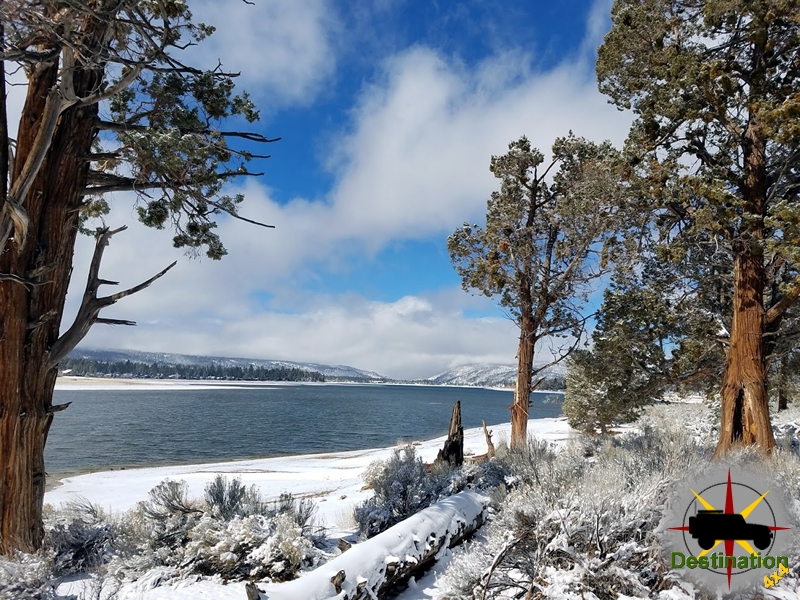
Big Bear, CA
I quiet mountain community full of back country adventure.
The Journey is the destination
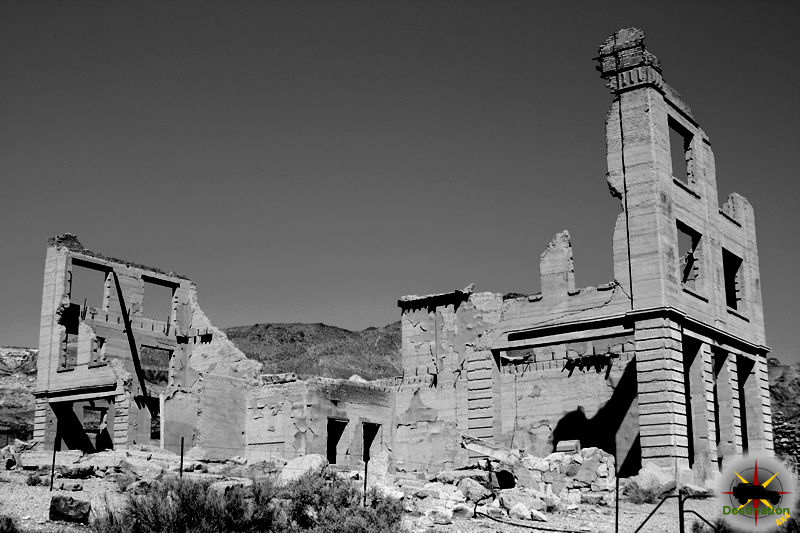
Following the discovery of silver in 1862, La Plata Nevada is a ghost town locate in and the second county seat of Churchill County, Nevada. The site is found on the eastern slope of the Still Water Range about thirty miles East of Fallon. The town was founded at the convergence of La Plata Canyon and Silver Wave Canyon. The name of the town and the canyon is derived from the Spanish word for silver.

The mines of La Plata were not overly successful. Despite investment from eastern capitalists, wide area prospecting resulted in discouraging results. The Silver Wave Mining Company owned the townsite and a 1500-acre ranch. The mining company start a small mill in anticipation of profitable ore.
The town was the second county seat of Churchill County from 1864 until 1868. The court house was a converted structure purchase for $700 from Anton Kaufman on on October 15, 1864. The townsite climate was described as “delightful, atmosphere pure, bracing, and wholesome” by the Hon. George W. Stein, of Easton, Pennsylvania, President of the “Silver Wave Company,”
The town hosted a Post Office, the mills and a few businesses, including the Warren House, the La Plata Hotel and Pioneer Saloon. The town was V-shaped due its location at the convergence of two canyons. Plans were made for a much larger townsite, however, the ore simply did not support the plans. A special election was held on October 22, 1867 and as a result the county seat was was moved to the town Stillwater, in 1868.
There was a short revival of La Plata mines in the spring of 1906, but a revival was not in the forecast for this location.
| Name | La Plata |
| Location | Churchill County, Nevada |
| Latitude, Longitude | 39.449350216615784, -118.31154064991719 |
| Eleation | 5280 ft |
| Post Office | April 13, 1865 – November 25, 1867 |

The Anniversary Mine and Narrows trail is truly a fun place to go and the location has a little bit of everything. This is a very short side trail found off the northern shore of Lake Mead and suitable for almost any vehicle.
Located in the Muddy Mountain Wilderness of the Lake Mead National Recreation Area, the Anniversary Mine was founded in 1921. The colomanite mine operated at seven years until 1928 and produced an estimation 200,000 tons of ore. The mine is located a short ways off North Shore Road (167). There exist some foundations, and tunnels along with some minor infrastructure of the operation.

Should you drive down into the wash you have the opportunity to continue on to the left, or you can turn right and drive towards the mine narrows located at the end of the canyon. The only obstacle is right at the beginning and and easy to get past with some clearance. Once past the trail is just a wash, but do yourself a favor. Park the 4×4 and take the time to walk it. Just past the beginning obstacle, there are some tunnels about 20 feet up on the side of the canyon wall, which are fun hike up to and explore.

There are things to explore all along the route to the narrows and it is a great excuse the get out of the truck. The slot canyon is about 1/4 of a mile in length and a bit tight in the few places. This is a nice place to hike on a hot day.
Hunter Mountain Road is a lightly used moderately difficult road which delivers you to one of the most remote and beautiful parts of Death Valley National Park, California. Starting at Teakettle Junction, the twenty four mile route climbs up over 7,128 feet about sea level over a high mountain pass. 4×4 is recommended and you will encounter loose rock, sand, washes and wash boards.

Racetrack valley is one of the most remove portions of Death Valley, and Hunter Mountain Road is empty compared to it. It is likely that you will not encounter another vehicle while in this area. The route is technically not difficult, however it is possible to find deep sand in a few places. There are no services in this route, so be sure to plan accordingly. Cell phones will probably not work in the area, so you are on your own.
The trail is an excellent route to see some beautiful back county. There are many places of historical interest such as mines shafts and mining camps. This is an excellent area for nature lovers, bird watching and just a great scenic drive.

From the Hunter Mountain trail, you can visit other fun destinations to explore, including:

Our last trip to up the trail was cut short by thunderstorms. We did an overnight at Home Stake Dry Camp and watched lightening strikes all night. When we drove the trail, it was a bit muddy and the sand was saturated with water. We had no issues from the overnight showers, but when it started to rain on us again at Goldbelt Springs, we opted to be cautious and turned around. I really would like to spend more time exploring this area.
| Name | Hunter Mountain Road |
| Location | Death Valley National Park |
| Distance | 24.7 miles |
| Difficulty | Easy to Moderate |
A discovery by the famous prospector “Shorty Harris“, led to the founding on the Goldbelt Springs mining district off Hunter Mountain Road in Death Valley National Park, California. The earliest known occupants of this area were a seven member family Saline Valley Panamint Indians who, despite the higher elevation, would winter in the area.
Gold was discovered in the area, just a few miles away by Frank “Shorty” Harris in the later half of 1904. Following “Shorty”, miners migrated into the area utilizing a route from Ubehebe via Willow Springs. Soon, small claims were staked out on the northwest slope of Hunter Mountain. Harris, L.P. McGarry, E.G. Padgett (Pegot or Paggett), Joseph Simpson, and W.D. Frey were among the first credited with strikes. In January, 1902 the Gold Belt Mining District was established and recorded.

Initially the site looked good for mining development. There was a water source and fuel to facilitate mining operations. High grade gold ore with small silver veins was discovered on four foot ledges prompted optimism in the sight. The ore was assayed at $8 – $176 or $38 to $240 in gold depending upon the source. On this news, plans for a town were starting to be developed.

In February of 1905, enough capital was available from investors from San Francisco to allowed expanded exploration of the area. Not much is available of this exploration, however by the fall of 1905 and exploration was abandoned. It could be inferred that the ore quantity and quality was not sufficient to justify the expense to those investors.
Regardless, smaller operations continued in the area of Goldbelt Sprints, from 1905 to 1910 including operations by Annetta Rittenhouse of Los Angeles, H.W. Eichbaum of Venice, L.P. McGarry of Pioneer, and W.S. Ball of Rhyolite.

In 1916, “Shorty” Harris again road into the area near Hunter Mountain. World War I had increased the price of tungsten. Harris pulling from his previous exploration probably knew of the mineral, and soon found a tungsten mine. By March, he had produce several hundred pounds of tungsten ore worth some $1500.00.

Throughout the 1940s and 1960’s various small operations were mining the area. This would include mines called Calmet and also nearby Quackenbush. The site today has smaller ruins. A truck and mine are still visible and an ore sorting platform is standing at the Calmet location. The wooden structures are completely flattened by time and the elements.

| Name | Goldbelt Springs |
| Location | Hunter Mountain, Death Valley National Park, California |
| Latitude, Longitude | |
| Production | Gold, Silver, Copper, Tungsten, Talc |
| Year Productive | 1904 – |
Located at the intersection of Hunter Mountain Road and Race Track Valley Road, Teakettle Junction is a unique point of interest in Death Valley National Park, California.

Aside from the mile post at the intersection, the only thing which causes you to take note is the odd tradition of hanging teakettles from the sign. Typically, teakettles are decorated with fun messages and greeting along with the date of their trip. Our family participated in this tradition and it was a big hit with my son. The National Park Service will periodically remove the teakettles, where, I am sure the send them to the National Archives.

The origin of the tradition and name of the site is not completely known. There are rumor’s around that it could be so named because the roads in the area will bounce you around like a teakettle.
The site is located about 21 miles from Ubehebe Crater and offers access to Hunter Mountain Road, Racetrack Valley, Lippincott Mine Road and Saline Valley beyond.