Homestake Dry Camp

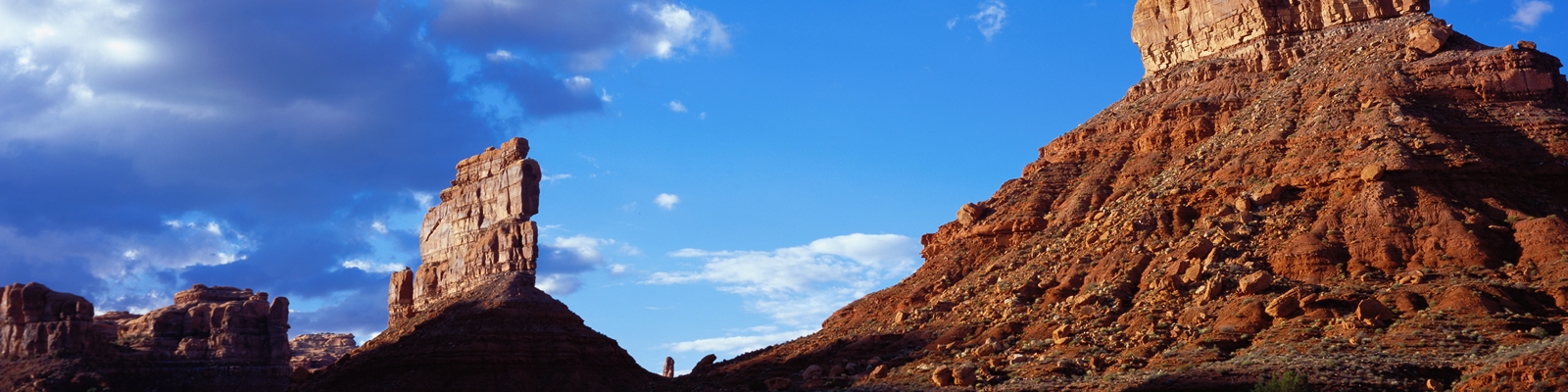
The Homestake Dry camp is a primitive campground located in Racetrack valley inside Death Valley National Park. It contains four very large and reasonably flat campsites which could accommodate multiple vehicles for larger groups.
The mine site as no amenities beyond a single chemical toilet at the North end of the location and a few wide spots in the road denote the camp sites. The toilet is in reasonable condition, but it does have some rodent damage and the odd spider web.
There are fire rings, but no fires or wood gather is not allowed. There is no trash bins, no water, no tables.

Homestake Dry Camp is however the only camping near the Racetrack playa and is arguably some of the most remote camping in the national park. The campground was very clean during out last visit and the night sky on a moonless night was second to none.
This is certainly well worth a stop over if you are so inclined and the campground offers a great point to explore the Lippincott Mine Road, the Lippincott Mine, Ubehebe Lead mine and of coarse the racetrack.

On our trip, we were offered the best of remote primitive camping. While we stayed dry, the night boomed with thunder from Saline Valley. The moonless night sky gave us an opportunity to see the Milky Way. There was a constant breeze which did not offer us a sound sleep, however, we will return which is the best endorsement one can provide.
Directions
The campground is located at the southern end of the Race Track Valley Road.
Campground Summary
| Camp Ground Name | Homestake Dry Camp |
| Latitude, Longitude | 36.6372892,-117.5745213 |
| Sites | 4 |
| Elevation | 3780 |
| Amenities | No Water, No Fires, No tables |
Homestake Dry Camp Trail Map
Mesquite Springs Campground

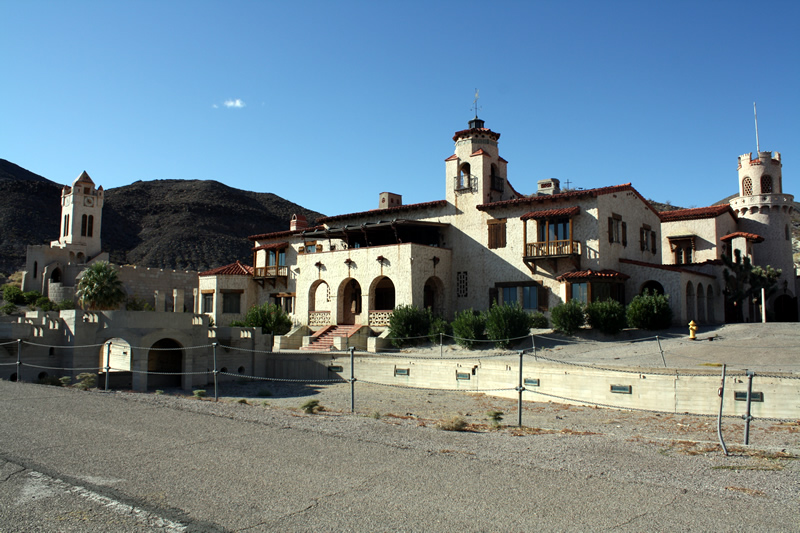
Mesquite Springs is a campground in Death Valley National Park, Located just a few short miles from Scottys castle. Mesquite springs offers a nice refuge for the traveler. Not far from the main north – south highway running the length of Death valley.

The campground is typically open all year round and cooler than Furnace Creek. There is a small fee to stay here, but well worth it to stay in this little oasis. There may be a campground host, but you should not count on this for your planning with regards to firewood. There is little undergrowth, so you do feel a little exposed to your neighbor.
Typically a quiet little outpost used by campers who want access to the northern section of the national park. Mesquite Springs offers a great launching point for the northern dunes, racetrack valley, Ubehebe Crater and parts beyond.

This is a great place to enjoy your beer and smores in the evenings while the Kangaroo Rats play around your feet. The remote area and dark skies allow for great star viewing.

| Campground Name | Mesquite Springs Campground |
| Latitude, Longitude | 36.96303, -117.36840 |
| Address | P.O. Box 579 Death Valley, CA 92328 |
| Number of Sites | 40 |
| Elevation | 1800 |
| Reservations | No |
| Amenities | Flush Toilets, Fire Rings, Tables |
| Website | https://www.nps.gov/deva/planyourvisit/mesquite-spring-campground.htm |
Mesquite Springs Campground Map
Camping Tents

My wife and I just got back from a camping trip in Death Valley National Park a few weeks ago. During this trip, for the first time we used a new “Family Sized” doom tent. The camping tents sleeps 6 people, is tall enough for me to stand up, came with a rain fly and outside vestibule. The new tent certainly had it all, which also caused me to think back to all the tents I have used and known.
Pup Tents
The earliest and oldest tent I have used was a 1950’s era pup tent my father used in the Boy Scouts during the late 1950’s. The tent was nothing more than a piece of green canvas, two polls, wooden stakes and some string. The tent had no floors and no doors at either end. I used this tent once when I was about 9 years old, in my back yard. My dad helped me set it up in our backyard. From what I remember, it took about 10 hours to set. Most of this was watching my confused dad trying to remember how it was supposed to work. As I recall several of the wooden stakes split in the touch enriched soil of our backyard lawn. Once erected, and musty and the smell of mildew filled the air, but after a few hours it was aired out enough to crawl underneath. There was only enough room for my sleeping bag, and the tent was just tall enough that I could crawl underneath looking much like a WW2 G.I. going underneath the barbed wire.
That night, I slept under the “stars” in Los Angeles, CA. It was a mild fall evening as I recall, yet somehow my dads old pup tent managed to make it colder. Now having any doors meant that our cat could wander in during the night and scare me, which he did. I woke up early in the morning, went inside the house and finally got some sleep. I do not know whatever happened to this tent. It was better than nothing, but just barely.

Family Tents
During the late 70’s my family went camping a lot with my cousins. I don’t recall the true “owner” of tent, but the group had a family style tent. This thing was huge and seemed perfectly suited to host a sultan and his harem. Anyways, this thing was a beast and required a troop of 6 to move it into place. I know for a fact that when it was collapsed from the previous trip my mom and/or aunt would spend a hour sweeping out all the dust,dirt and grime brought in by four boys, It always confused me that each time we setup the tent again, we unfolded it to a cloud of dust and it was dirty inside.
These were great tents if weight was no object, but I suspect that these tents would not do well in a breeze yet alone a windy night. There was a complex exoskeleton of polls which could never be assembled unless you had a masters in engineering. There was one large door, and a floor, which is a much needed feature over my dads pup tent. I don’t remember any windows, but I do recall that unlike my dads pup tent which “cooled the air”, this tent always ran HOT.
Modern Pup Tent
Prior to a spot horse packing trip in the early 1980’s. Dome tents had yet to come into their own. My folks purchased two pup tents for the trip. The modern version of the pup tent was constructed with rip stop nylon and did include a floor, short side walls, a closed off back along with a door and screen door. The tent did not include any sort of rain fly, so my folks made one witch attach using a three inch standoff my dad built on his lathe. This proved very important as during the trip we were deluged with rain.
Dome Tents
Dome tents have dominated the market since they were introduced to the market. They range in size from small two man models to large family sized. They may contain multiple rooms, vestibules and some have a small door to access an ice chest to gain access to a much needed beverage. All in all they are the best of the best, strong, flexible and lightweight.

Many years ago I was camping with a boy scouts at the annual desert caravan, which was a large camp out with scouts from around southern CA. There were probably 800 campers there that weekend. The previous year high winds buffeted our campsite, and learning from the previous year I came prepared. During the day I erected my dome tent which was about six feet tall. Knowing the winds were coming, I ran a guy wire from each of the polls out 50 feet. Whenever possible, I would tie it down to a sage bush. So, I effectively had my tent anchored to the earth in a 50 foot radius all around. A few of my friends made fun of me for my setup.
And then the winds came….
Throughout the night, the winds howled. It was far, far worse than any previous year. It was difficult to sleep with the sound of the wind buffeting the tent. After a long and sleepless night, I emerged from my tent to discover the damage done by the winds that night. It wipe out the camp, the entire dessert caravan. Outhouses were lifted and thrown 100 feet, and broke car windshields. Worst of all, every tent was broken, torn and shattered by the wind. Tent poles were split, bowed and broken. Every tent was wiped out…. except mine.
Maps and Communications
In the days of tablet computers and smart phones, it is trendy to rely on the latest technology rather than maps and communications. There is nothing wrong with that, however, it is still important to maintain a backup plan. For example, any device that relies on cell phone tower will be virtually useless in the back country.
There are methods with image caching, that you can utilize these types of devices when the cell signal is unavailable, which is great. But if you plan for the eventuality that at some point that device will fail, or the batteries die or you visit Death Valley, you will be significantly better off carrying maps and communications radio gear with you.
Maps
The best backup plan is a quality map of the area you are going to be in. Part of any good trip into a new area involvces planning, what better way to plan a trip, is to lookup the area and learn more about it. There are a variety of websites which offer topomaps, such as mytopo.com not to mention that you can order high quality Topograph maps online. Maps such as these offer a valuable look into the area, and provide a level of detail not found on most tablets or GPS units.
Compass
It is always a good idea to carry a compass. A compass makes it easier to use the maps you have, or with general familiarity of the area area valuable tool to get unlost. Should you be willing to drop $400 on an iPhone or the latest tablet, spend another $4 and have a backup, which is probably more useful.
Radio

Family Radio, CB and HAM radios are huge assets in the back country. Locations such as Death Valley’s Racetrack valley don’t even try to offer cell service. Turning a cell phone on in locations like this, will just drain your battery turning your phone into a poor paper weight.
Family Radio (FRS) – Family Radio is very popular, and the radios can be purchase in pairs from almost any large department store for about $50. The radios are small, cheap and light weight and has no licensing requirements. They are limited to short little antannes and .5 watts of power. As a result, the range is limited, but work well in open areas over short distances.
Citizens Band (CB) – Citizens Band or CB radio is probably the standard communication system with many backraoding groups. Frequently, clubs will require a CD radio in order to join. The Radios can be purchased online or from some electonics stores, starting at $75. There is no regulartory limit on the antannae systems, unlike the FRS. In the United States, the Radios are limited to 4 Watts for AM service. There is no license requirement for CB Radio
Amatuer or HAM Radio – If you really what to reach out and touch someone, then Ham Radio is the way to go. However you are required to get a license and pass a test to operate these radios. Ham Radio’s may be purchased online or from a local electronics store. Mobile UHF/VHF units start at about $180 and can come with up to 75 Watts of power. Additionally the use of repeaters allow the HAM operator to bounce their radio signal thousands of miles.
Additionally licenses for HAM Radio opens up the HF bands. Mobile HF radios tend to start at $500 for the radio, and the car may need to be modified to operated the radio correctly. One of the many benefits of HF Radio is the ability to communicated beyond the horizon without the need for a repeater. Maps and communication gear is important, if you know how to use it.
For those interested in getting a HAM radio license, the practices tests can be found at: https://hamexam.org/exam/12-Technician.
Old Mojave Road Trip Report
After our recent trip to the center section of the Old Mojave Road, my wife Heather was really excited to run the western section and complete the entire length of the trail. Her idea was to drive the western section on our way to our annual trip to Big Bear, CA over the Memorial Day holiday. I worried that such a trip during this time of year could be a rough trip due to high temperatures in the desert. In late April we finished the center section in Baker, CA and the air temperature was only 107 degrees. Despite my concerns, we gladly planned our trip and embraced her good idea.

As we prepared for our trip, gathered our gear, food, and checked out the mechanics of the jeep, I decide to check the local weather report. To my surprise, weather.com predicted the temps in the mid 80s with clear sky’s and light wind. The weather could not be any better.
Another interesting development, is that Heather kept offering to drive in the event I got tired of driving. She didn’t just offer once, but several times per day for several days before our departure. Being the good husband that I am, after about twenty or thirty offers, I started to get the idea that, subconsciously, Heather might want to drive this run. So after some arm twisting and bartering, I finally convinced her and Heather agreed to take the wheel. This of course, would be a great source of confusion for me during the trip, however I am certain I can persevere this new dynamic. This is not to imply that Heather is not one of the finest drivers I know, far from it.
An old trail leads off through the lava and into the great unknown.
All packed up, we left the Las Vegas area at 7:00 am on Saturday morning, and headed towards Baker. A quick stop in Baker, we topped off the fuel tank and took our respective bathroom breaks. Once Heather reminded me that she was driving this trip, I took my seat on the right had side of the jeep and we headed down Kelbaker Road.
It took me a few miles, but soon I became used to having my coffee cup on the wrong side, no pedals, eta… This must be what it is like in England. The map and guide-book took some getting used to as well, but somehow I managed to get us to the trail head. It certainly didn’t hurt that we were here just a few weeks before. A quick turn on to the trail, and we stopped to air down the tires for some ride comfort.
After dreaming of this trip for the past few weeks we are finally on our way. We followed the trail around 17 mile point and then turned southwest into the Mojave. The road steadily looses elevation as it cross a fallout zone of lava and start to head down into the valley.