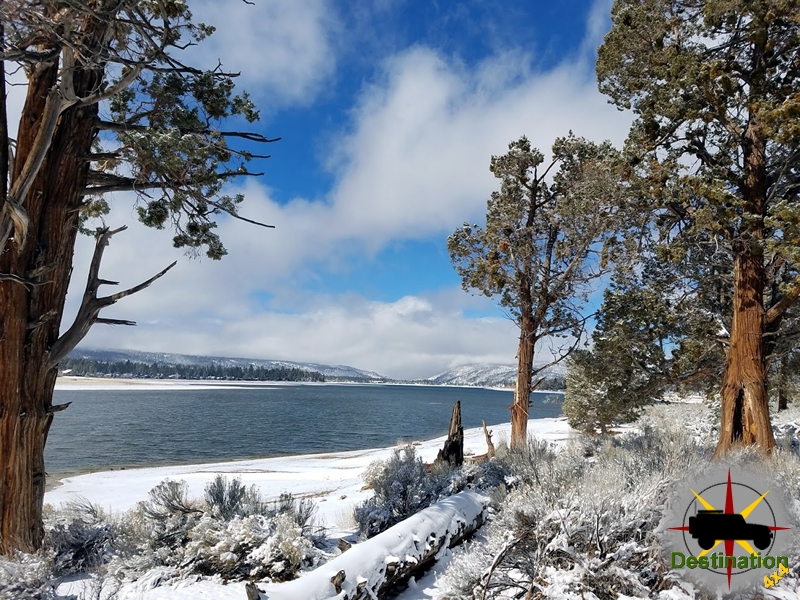
Big Bear, CA
I quiet mountain community full of back country adventure.
The Journey is the destination
The Wild Mustang (Equus caballus), an enduring symbol of the American frontier, roams the vast, arid expanses of the desert southwest United States as a feral horse population descended from domesticated Spanish horses introduced in the 16th century. These hardy equines, often romanticized in folklore and media, have adapted through natural selection to survive in harsh environments, exhibiting remarkable resilience amid sparse resources and extreme conditions. With populations managed by the U.S. Bureau of Land Management (BLM) to balance ecological sustainability, mustangs embody a complex interplay of history, biology, and conservation in regions like Nevada, Arizona, and New Mexico.

The Wild Mustang is classified within the kingdom Animalia, phylum Chordata, class Mammalia, order Perissodactyla, family Equidae, genus Equus, and species caballus. Though often referred to as “wild,” mustangs are technically feral horses, descendants of domesticated equines rather than a truly wild subspecies like the extinct North American horses that evolved on the continent millions of years ago. Their ancestry traces primarily to Colonial Spanish horses from the Iberian Peninsula, with mitochondrial DNA studies confirming high frequencies of Iberian haplotypes, though admixtures from other breeds like Thoroughbreds, Quarter Horses, and drafts have occurred over time. Distinct strains, such as the Spanish Mustang or Kiger Mustang, retain stronger Spanish bloodlines, while isolated herds in the desert southwest may exhibit unique genetic traits shaped by geographic separation and natural selection.
Mustangs are compact, medium-sized horses, typically standing 14 to 15 hands high (56 to 60 inches or 142 to 152 cm at the withers) and weighing around 800 pounds (360 kg). They possess a light-riding build with muscular bodies, strong bone structure, and exceptional hardiness, featuring flat or slightly convex head profiles, broad foreheads tapering to fine muzzles, and eyes set slightly higher on the face. Necks are well-defined and attach smoothly to sloping shoulders, with moderately narrow chests, short strong backs, deep heart girths, well-sprung ribs, and smooth round hindquarters. Legs are straight and sound, supported by durable hooves with thick walls, ideal for rugged terrain. Coat colors vary widely, including bay, sorrel, dun, appaloosa, paint patterns, and primitive markings like stripes, though some registries exclude certain patterns like tobiano. Movement is smooth and rhythmic, with the ability to gallop at 25–30 mph (40–48 km/h), and up to 55 mph (88 km/h) in short bursts. In the desert southwest, natural selection favors traits like surefootedness, endurance, and agility for navigating arid landscapes.
Wild mustangs are social animals that form structured groups known as bands or herds, typically comprising one dominant stallion (over 6 years old), around eight mares, and their young, led by a head mare who guides the group to safety in threats while the stallion defends from behind. Stallion leadership is dynamic, with challenges from rivals promoting genetic diversity. Communication relies on body language, such as ear positioning, tail swishing, and vocalizations, to convey emotions and maintain hierarchy. They exhibit intelligence, curiosity, and a strong fight-or-flight response honed by survival in harsh environments, making them cautious yet resilient. In the desert southwest, mustangs travel long distances for resources, adapting foraging strategies and mixing with other herds during dangers. Isolated populations may show unique behaviors, like gaited movements or curly coats in Nevada herds, influenced by genetic admixtures. Without significant predators, populations can grow rapidly, leading to overgrazing if unmanaged.

As herbivores and hindgut fermenters, mustangs primarily consume grasses, brush, shrubs, and other native vegetation, extracting nutrients from low-quality forage via their cecum—a adaptation allowing survival in arid regions where ruminants like cattle struggle. In the desert southwest, they graze close to the ground on sparse plants, ranging 5–10 times farther than cattle to access food and water, often digging for hydration in dry areas. Their diet requires about 1.5 animal units (AUM) of forage, focusing on soluble fiber while avoiding excess sugars to prevent digestive issues. An average mustang needs around 16 pounds of grass daily, supplemented by minerals and salts in harsh environments. This opportunistic foraging supports their easy-keeper nature, enabling them to thrive on limited resources in deserts and grasslands.
Mustangs are viviparous, with mares carrying foals for an 11-month gestation period, typically giving birth in spring (April to June) to align with milder weather and abundant forage for growth. Breeding occurs within isolated herds, where dominant stallions mate with mares, and dynamic challenges ensure genetic diversity, though inbreeding in small populations can lead to issues like reduced heterozygosity and diseases such as PSSM Type 1. Unmanaged herds can grow by up to 20% annually, prompting BLM interventions like fertility control to prevent overpopulation and starvation. Foals are born precocial, able to stand and nurse shortly after birth, and remain with the herd for protection. In the desert southwest, breeding success ties to resource availability, with natural selection favoring resilient offspring in arid conditions. Lifespans in the wild reach up to 36 years, shorter than in captivity.

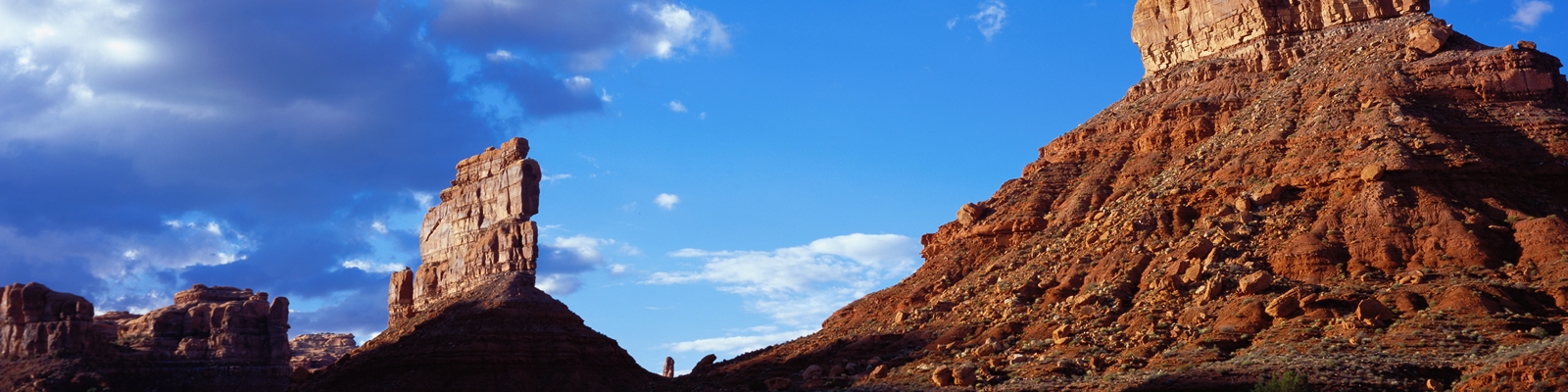
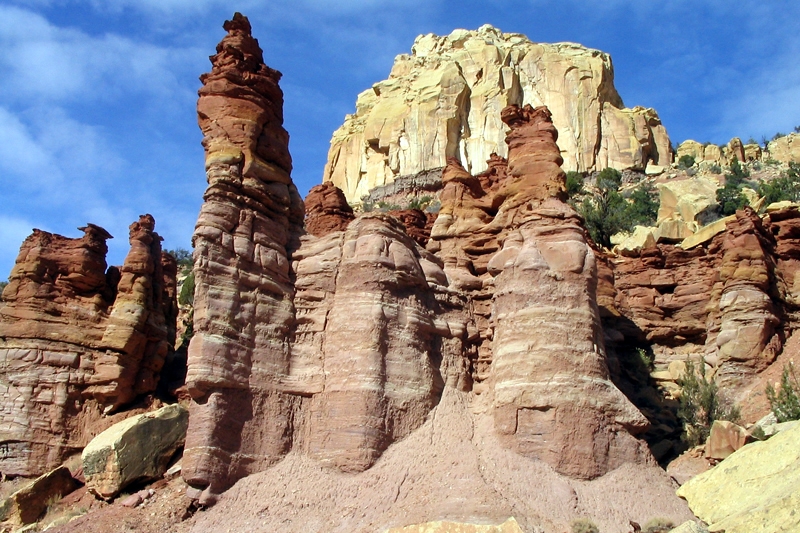
Wild mustangs inhabit arid and semiarid public rangelands west of the Continental Divide, including deserts, grasslands, and mountainous terrains, where they adapt to extreme temperatures, scarce water, and sparse vegetation. In the desert southwest United States, populations thrive in states like Nevada (hosting over half of North America’s free-roaming mustangs), Arizona, New Mexico, Utah, and California, managed across 26.9 million acres in Herd Management Areas (HMAs) by the BLM. These areas encompass ecosystems from the Great Basin to the Colorado Plateau, with herds digging for water and migrating seasonally for forage. Total free-roaming numbers exceed 72,000, protected under the 1971 Wild Free-Roaming Horses and Burros Act as living symbols of the West, though overpopulation challenges lead to roundups and adoptions.

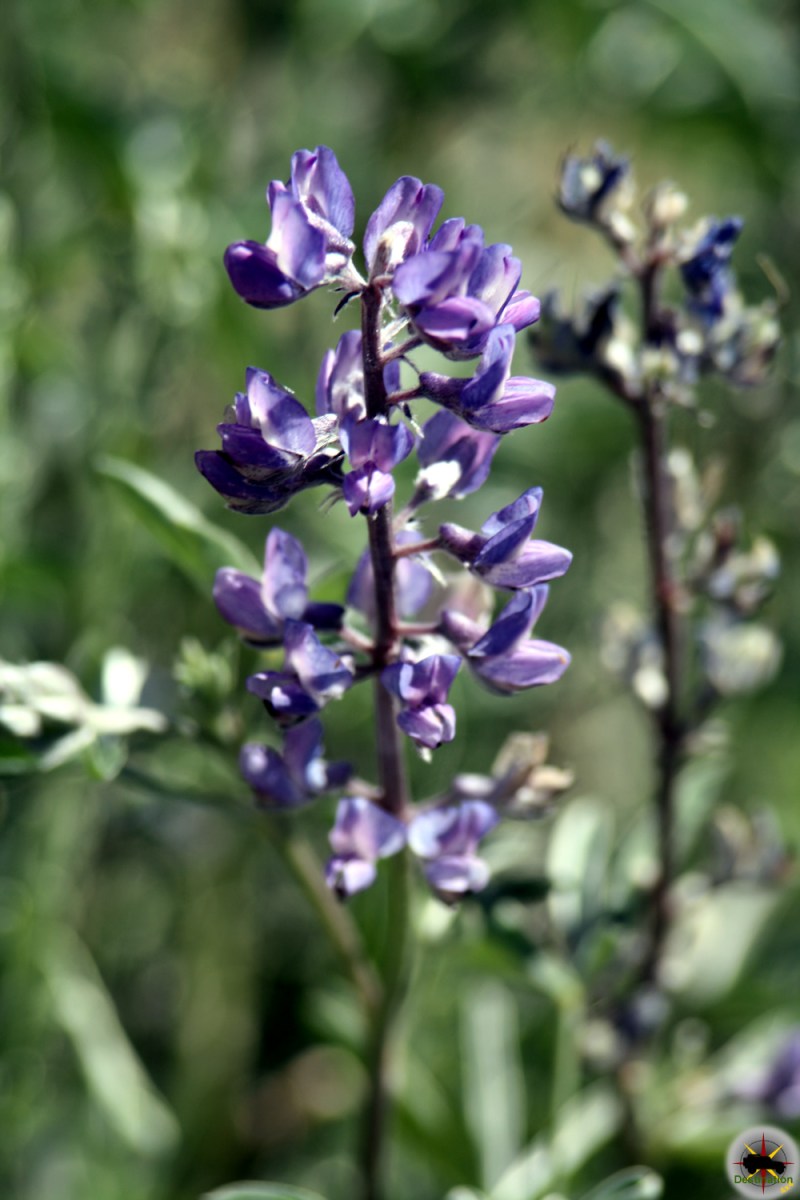
Silvery Lupine (Lupinus argenteus) is a fairly common vibrant purple wild flower and is common in much of Western North America including Arizona, California, Nevada and Utah. Deriving its name from the fine silvery hair found on its stalks, which are reddish in color.
Lupine is a stalked plant which grows up to four feet tall. The Lupine thrives in higher elevations and may be commonly found between 3,300 and 10,000 feet. It is quite common for the flower to be found along roadways, stream valleys, rocky prairies and in open pine woods.
The Lupine typically blooms in June to October, however like many wild flowers, this period will vary dependent upon water and location. The violet colored flowers are typically arranged around a spike which may reach up to eight inches in length.
The Silvery Lupine grows quickly and in bunches and considered a member of the pea family. Although toxic to humans, this beautiful flowering plant is known to attach butterflies, birds and hummingbirds.
The Navajo people used the Silvery Lupine as a natural treatment for Poison Ivy blisters. The Lupine is commonly found in clearings in the countries of Apache, Coconino, and Mohave, and Navajo in Arizona.

The California Wild Rose (Rosa californica) is a native species of Rose, which is found in California and Oregon and most commonly found in the foot hills of the High Sierra Mountain Range. This is a hearty little planet which can survive the droughts of California, and typically found near water sources.
This plant can be found at elevations up to 6,000 feet. It seeks shady areas at lower elevations but as the altitude increases so does the likelihood to find this little plant in sunny areas.
The California Wild Rose is a low lying shrub which can grow in tall thickets. The plant produces a fragrant pink or magenta colored five petaled flowers with yellow stamen. The delicate looking flower is edible and the hibs of the plant may be used in teas. During WWII, the hips were used as a source of vitamins.
The wild rose is one of the few flowers that blooms cheerfully through the long summer days, lavishing its beautiful clusters of deliciously fragrant flowers as freely along the dusty roadside as in the more secluded thicket. In autumn it often seems inspired to a special luxuriance of blossoming, and it lingers to greet the asters and mingle its pink flowers and brilliant scarlet hips with their delicate lilacs.
Mary Elizabeth Parsons
Like many roses, the wild rose also grows throws for protection for itself, along with shelter for many smaller mammals and birds.
The Mojave Yucca is a small evergreen tree which flourishes in the Mojave and Sonoran deserts of California, Arizona and Nevada. The Yucca’s most noticeable characteristic is its large branches and bayonet like leaves. The rigid leaves are typically dark green in color and can reach up to 4 feet in length. I can also personally attest that they are sharp at the pointy end.

The Mojave Yucca can reach a height of 16 feet and that mass is supported by a trunk which is up to 12 inches in diameter. The Yucca is typically found on rocky slopes and below 4,000 feet in elevation. The plant blooms are very similar the Joshua Tree and it will send up a cluster of white bell shaped flowers from the top of the stem. This cluster is short lived, but can reach and additional 120 cm in length.
Also like the Joshua Tree, the Mojave Yucca depends upon the white pronuba moth for pollination. This moth will deposit its eggs in the ovary of the Yucca Flower and there by cross pollinate the tree. The moth lavae hatch and consume some the the seeds in a wonderful example of natures balance.
The Mojave Yucca also provided utilitarian purpose for the Native Americans. They utilized the leaves as a source of cordage, which could be woven into blankets, rope, hats and mattresses. The roots of the Yucca contains high levels of saponin, and could be made into a pulp and used as soap The flowers and fruit were a food source and could be eaten both raw and roaster. The black seeds could be ground into flour.
The yucca, with its sharp pointed leaves offer wonderful defensive habitat for snakes, lizards, rabbits, birds and other desert animals.
The Barrel Cactus (Ferocactus cylindraceus) is a commonly seen resident of the desert southwest and its range includes California, Nevada, Utah and New Mexico. The cactus gets its name from its short stocky appearance which is said to resemble a barrel. Despite its name, this succulent can grow over 6 feet tall and thrives in gravelly, rocky and / or sandy soils and are typically seen below 5000 feet in elevation.

The succulent is covered in spines which when new, are straight and red in appearance, and will turn gray in color and curve as they age. This species blooms yellow or red flowers on the top of the plant, which typically happens in the spring. Like its name sake, this desert nomad will swell with fluid during the monsoons to survive the long dry periods of the desert heat.

Some Native Americans utilized this plant as a cooking vessel. It is said that they would remove the top of the plant and remove the pulp from the interior. Hot stones were place inside along with the food. Additionally, the long heavy spins were utilized as needles.
There are fifteen different species of this cactus.