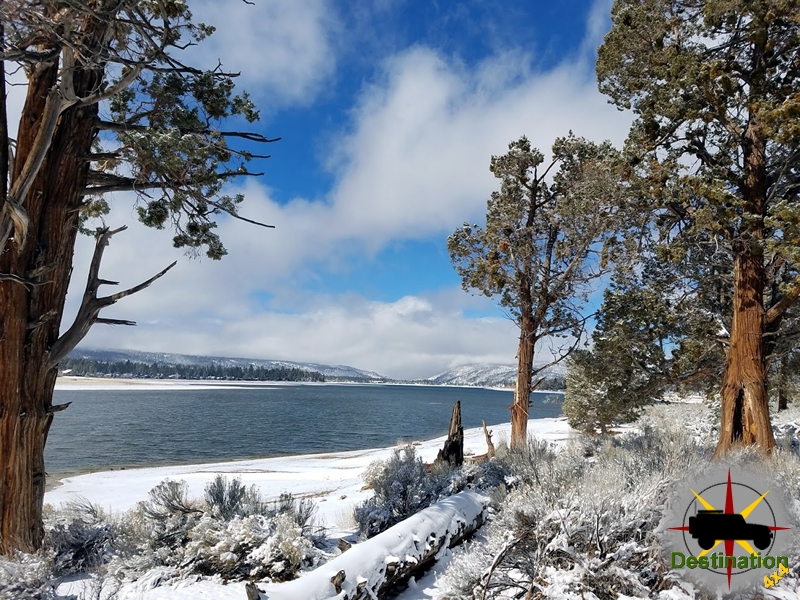
Big Bear, CA
I quiet mountain community full of back country adventure.
The Journey is the destination
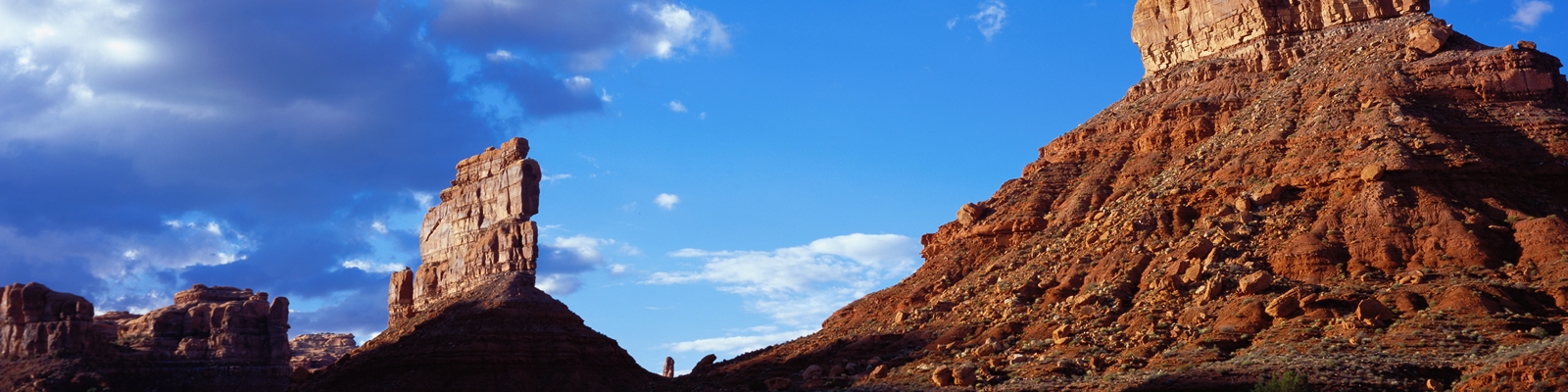
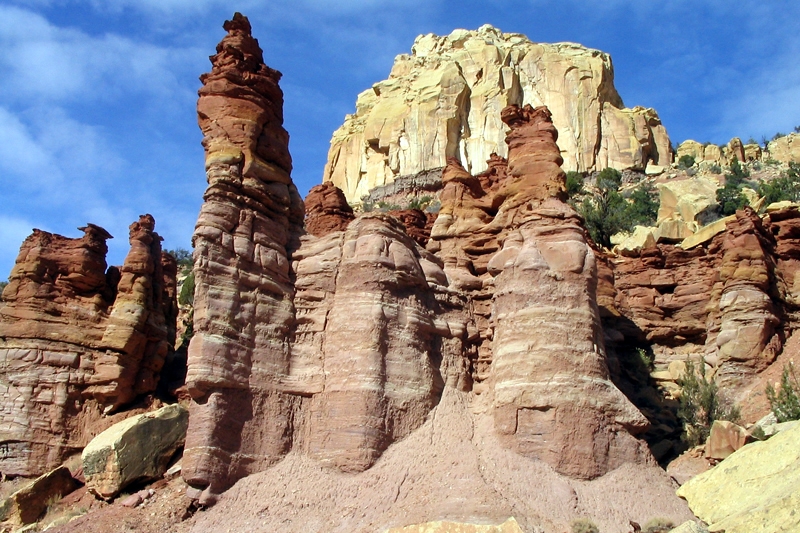
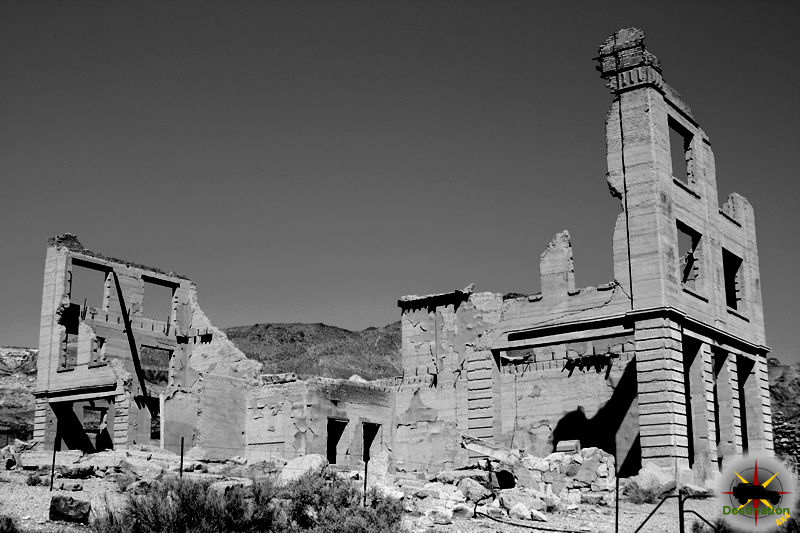

Paria (also spelled Pahreah), a ghost town in central Kane County, Utah, sits on the Paria River within Grand Staircase–Escalante National Monument. It was occupied primarily from about 1870 to 1929 and later became a notable Western film location. The name derives from Southern Paiute or Ute terms associated with the river, often rendered as meaning “muddy water” or similar.
The broader area was first settled by Euro-American pioneers in 1865. A Mormon group led by Peter Shirts (sometimes spelled Shurtz) established a small community known as Rockhouse, named for Shirts’s substantial sandstone dwelling. Settlement accelerated after the end of the Black Hawk War around 1867. Early farming yielded decent crops for a time, but irrigation proved extremely difficult—spring runoff soaked into the desert soil too quickly to sustain fields effectively. Native American raids and water challenges also pressured the community.
In 1870, residents decided to relocate. They split into groups; roughly half moved about five miles upstream and founded the town of Pahreah (later standardized as Paria). Under local Church of Jesus Christ of Latter-day Saints leadership (including figures such as William Meeks in some accounts), the new site developed with homes, a church, a school, and eventually a general store. By the 1870s the population reached about 47 families (roughly 100–130 people in some reports), including a number of Paiute residents. Residents raised livestock and farmed, with vegetable gardens, orchards, and cattle.
In 1871, John D. Lee (fleeing scrutiny related to the Mountain Meadows Massacre) arrived in the Paria area. He helped construct a dam and irrigation ditches, assisted by local settlers and even members of John Wesley Powell’s second Colorado River expedition. These efforts temporarily improved water management.
The town grew through the 1870s with sandstone and log houses. Hard times began in the 1880s. The Paria River flooded repeatedly from 1883 through 1888 (and in other years), washing away fields, irrigation works, and some buildings. Flooding deposited alkaline/salty soils, entrenched arroyos, and made sustained agriculture increasingly difficult. Drought compounded the problems. Population declined sharply; by 1892 only about eight families remained.
Despite the decline, a post office opened in 1892 (some sources say 1893) under the name Paria. A small gold-mining effort began around 1911–1912 but was destroyed by flooding within about a year. The post office closed in 1914 (or 1915 in some accounts). A lone prospector reportedly stayed until 1929, after which the site was abandoned. By the 1930s it was a true ghost town, with photographs from that era documenting the empty village. A small pioneer cemetery with roughly 20 graves (many with faded or illegible markers) remains nearby.
Beginning in the 1940s, the scenic canyon setting and remaining structures attracted film crews. Scenes for the 1944 biopic Buffalo Bill were shot there (crews battled flooding). The location continued in use for Westerns and television through the 1950s. In 1961–1962, the Rat Pack film Sergeants 3 (the largest Western filmed in Kane County at the time) used the area; producers built an imitation Old West town about a mile west of the original site because so little of the real town remained. This movie set was later used for other productions, including scenes from The Outlaw Josey Wales (1975–1976, starring Clint Eastwood). Episodes of shows such as Gunsmoke were also associated with the broader area.
Flash floods severely damaged the set in 1998. Volunteers and Bureau of Land Management personnel dismantled the wreckage and reconstructed structures (with interpretive signs distinguishing the movie set from the original townsite) around 1999–2001. In 2006 a suspicious fire destroyed the rebuilt set. A temporary facade was built in 2007 for the independent film The Attic Door and later moved. Little of either the original town or the movie sets survives today—mainly stone foundations, fence remnants, and the cemetery.
The original townsite lies across the river from the main access area and has been heavily eroded by the Paria River. Access is via a roughly 5-mile dirt road turning north from U.S. Highway 89 near milepost 31 (about 33–35 miles east of Kanab). The road can be rough, steep, and washboarded; high-clearance vehicles are preferable, and it can become impassable when wet. The colorful banded cliffs (Chinle Formation and related strata) and surrounding landscape remain striking. The site is a day-use area within the national monument; there are no services, and visitors should respect remaining historic features, avoid the riverbed when flash-flood risk exists, and follow Leave No Trace principles.
Paria’s history reflects the broader challenges of Mormon pioneer settlement on the Colorado Plateau—tenuous irrigation, isolation, flooding, and soil problems—followed by a second life as a cinematic backdrop that helped define Kane County’s “Little Hollywood” reputation. Today it offers a quiet, visually dramatic reminder of both frontier struggle and Western mythmaking.
Johnson is a ghost town in Kane County, southern Utah, located about 12 miles east of Kanab in what is now known as Johnson Canyon (historically Spring Canyon). Its coordinates are approximately 37°05′11″N 112°22′31″W. It was a Mormon pioneer agricultural and stock-raising settlement rather than a mining town.
In January 1871, while visiting St. George, Brigham Young suggested to members of the Johnson family that they take over the Spring Canyon Ranch, about 12 miles north/east of Kanab, as a stock ranch and settlement site for those of the family who wished to live there. Joel Hills Johnson recorded the suggestion and the family’s subsequent exploration of the site. They found a beautiful canyon roughly half a mile wide and several miles long, with grass, small springs along the bluffs, a stream at the mouth, and extensive meadow and range land. The family accepted the offer and planned a cooperative stock association for herding, stock raising, and dairy purposes.
Settlement began in the spring of 1871. The four Johnson brothers—Joel Hills Johnson, Joseph (Ellis), Benjamin (Franklin), and William (Derby)—established the community, which was named for them. Joel Hills Johnson (1802–1882), a prominent early Latter-day Saint convert, inventor, missionary, poet and hymn composer (including “High on the Mountain Top”), politician, judge, and patriarch, was a key figure. Other family members and associates soon joined. A post office named Johnson opened the same year and operated until 1937. Residents built a brick schoolhouse that also served for church meetings and social gatherings, along with a general store and other basic infrastructure focused on agriculture and ranching.
Church leadership of the local branch began under Sixtus Ellis Johnson (a son of Joel) until 1877, when he became bishop; William Derby Johnson succeeded him in 1879. The settlement reflected typical Mormon pioneer patterns of the era, including family networks, communal cooperation, and (in some cases) plural marriage.
Johnson functioned as a modest ranching and farming community in a scenic but isolated canyon bordered by sand bluffs, opening onto desert toward the Buckskin (Kaibab) Mountains. Families raised livestock, grew crops where water and soil allowed, and maintained a branch of the Church of Jesus Christ of Latter-day Saints. Joel Hills Johnson moved more permanently to the area later in life (around 1880 from Bellevue) and died there on September 24, 1882; he is buried in the local cemetery. Other families, including Shumways and Laws, also settled and intermarried in the community.
Exact peak population figures are not well documented in available sources, but the settlement supported multiple families, a post office, school, and store for several decades. It never grew into a large town.
Like many remote southern Utah agricultural settlements, Johnson faced challenges from isolation, limited water, harsh climate, and economic pressures. By June 1901 only a few families remained. Ranching continued in scattered form, but the formal community dwindled. The post office closed in 1937, widely regarded as marking the end of the town as a functioning settlement. By the mid-20th century only a few ranches were scattered through the canyon. Natural factors (flooding, weather, and environmental hardship) and the pull of better opportunities elsewhere contributed to the decline; it was not a classic boom-and-bust mining failure.
Today the primary remnant of the original settlement is the Johnson Cemetery, which contains graves of Johnson family members, Shumways, Laws, and others dating to the 19th century (more than 60 pioneers by some counts). A monument was later erected by the Sons of Utah Pioneers. The cemetery is on or near former LDS Church ranch land (now private) and is accessible via Johnson Canyon Road, though visitors should respect private property. Little else of the original town structures remains beyond weathered ruins.
Johnson Canyon itself later gained separate fame as part of “Little Hollywood.” Hollywood used the dramatic scenery extensively for Western films and television from the 1930s–1970s (and beyond), including many episodes of Gunsmoke. A dedicated movie set was built in the canyon (distinct from the original pioneer townsite); its deteriorating buildings are visible from the road but are on private land and not open for close access. The area continues to attract visitors interested in both pioneer history and film locations.
Johnson exemplifies the pattern of late-19th-century Mormon colonization of southern Utah: family-based settlements encouraged by church leaders, focused on self-sufficient agriculture and ranching in challenging desert-canyon environments. Its association with Joel Hills Johnson ties it to broader early Church history, hymnody, and pioneer leadership. The surviving cemetery and the canyon’s dual identity (pioneer settlement + Hollywood backdrop) preserve its place in Kane County and Utah history.
Primary sources include Joel Hills Johnson’s journals, local histories such as Our Pioneer Heritage, post office records, and secondary compilations of Utah ghost towns. The site remains remote; access is via Highway 89 east of Kanab, then north on Johnson Canyon Road. Always respect private property and be cautious of wildlife (including rattlesnakes) and deteriorating structures.
Georgetown, Kane County, Utah, was a small Mormon pioneer settlement (later a ghost town) on Yellow Creek, a tributary of the Paria River, roughly three miles south of Cannonville.
Settlement began in the spring of 1886 when Seth Johnson and his sons Joseph and Eleazer built homes there. It formed part of the broader expansion into the upper Paria River country in the 1870s–1880s, after earlier nearby efforts such as the 1874–75 founding of what became Cannonville (initially involving sites like Clifton). Both Georgetown and Cannonville were named for George Q. Cannon, a prominent local Latter-day Saint (LDS) leader.
The community grew into a modest village of about 100 people. It supported basic institutions including a store, a school, and a post office. Like many Southern Utah settlements of the era, it depended on unreliable water sources for farming and livestock in an arid landscape.
Kane County (created 1864 and named for Thomas L. Kane, a non-Mormon supporter of the Mormon pioneers) saw initial mid-1860s settlement attempts that were disrupted by Native American conflicts (primarily involving Southern Paiute groups and related hostilities). Permanent resettlement accelerated after 1870, with communities such as Kanab (reestablished under Levi Stewart at Brigham Young’s direction), Glendale, Orderville (notable for its United Order communal experiment), and others. The upper Paria area followed in the mid-to-late 1870s as settlers sought farmland and grazing.
Ranching and limited agriculture dominated early economies across the county. Water scarcity, isolation, and environmental challenges were constant themes. Nearby developments included irrigation efforts (such as later canal projects feeding Tropic) and the growth of Cannonville and Henrieville.
Unreliable water supplies—typical of the region—led to Georgetown’s abandonment. It became a ghost town by the late 1940s. Remaining features include a small abandoned cabin and a nearby cemetery with headstones. The Georgetown Cemetery (sometimes associated in records with the Cannonville/Garfield County border area due to proximity and historical boundary considerations) holds pioneer burials; one documented figure connected to the broader Johnson family history in the region is Seth Guernsey Johnson (1839–1927).
Today the site is a minor historic remnant in the scenic landscape near Bryce Canyon National Park and Kodachrome Basin, reflecting the pattern of many short-lived Southern Utah pioneer villages that rose with Mormon colonization and faded under environmental and economic pressures. Sources for its history include local place-name studies (such as John W. Van Cott’s Utah Place Names), ghost-town documentation, and regional histories of Kane and Garfield counties.
Upper Kanab was a 19th-century Mormon pioneer settlement in Kane County, Utah, in the high mountain valley near the headwaters of Kanab Creek (also associated with the East Fork of the Virgin River drainage). It lay roughly three miles northeast of the present-day town of Alton, at an elevation of about 7,000–7,200 feet. The site is now considered a ghost town; the original community faded as residents shifted to the nearby planned town of Alton in the early 20th century.
In the spring of 1865, Lorenzo Wesley Roundy (a Utah pioneer of 1847) and other families from the north, including Jerad C. Roundy, Myron S. Roundy, William Ford, members of the Smith and Partridge families, and others, settled in the upper Kanab Creek valley. They built log cabins (Roundy constructed two) just west of what later became the site of a Kane County dairy. The area offered tall grass for hay, clear streams, timber, wildlife, and wild fruit, though the high altitude brought colder conditions than the lower “Dixie” settlements of southwestern Utah.
The stay was brief. In spring 1866, amid broader Indian hostilities (related to the Black Hawk War period and Navajo/Paiute conflicts that also forced the temporary abandonment of Kanab and Long Valley settlements), Apostle Erastus Snow called the Upper Kanab settlers to move to Berryville and Winsor (present-day Glendale and Mount Carmel) to strengthen those communities. Lorenzo Roundy did not return; he later settled in Kanarraville and served as bishop there until his death by drowning in the Colorado River in 1876 while ferrying supplies.
Upper Kanab remained abandoned until May 1872, when Lorenzo’s nephew Byron (Bye) Donalvin Roundy, his wife Matilda Ann (Lorenzo’s daughter), and their baby moved into one of the earlier cabins. They spent the first winter largely alone. Byron’s brother William Heber Roundy and others later joined, establishing permanent homes and 160-acre homesteads. The brothers were involved in cattle operations.
A sawmill operated in the area (with Graham Duncan Macdonald serving as bookkeeper). Macdonald acquired land nearby, married Annie Gardner of St. George in 1875, and became a pioneer of the nearby Ranch settlement (several miles southwest of present Alton). Mail for Upper Kanab and Sink Valley was addressed to Ranch, Utah, and held at Macdonald’s. The Canaan Cooperative Stock Company (headquartered in St. George) bought up many claims, though the Roundys declined to sell theirs. Dairy and livestock operations thrived due to the excellent grass and water; contemporary accounts praised the location for dairying.
In spring 1882, the David (or Daniel) Seegmiller and Edwin D. Woolley families arrived; Woolley had been called to manage the Church ranch. Mary Woolley (later Chamberlain) described a picturesque valley at the head of the Rio Virgin with lakes (including Levanger and Macdonald Lakes), pink cliffs (the same formation as Bryce Canyon), and community life that included a schoolhouse/church at a road fork and a recreation hall where dances lasted until daylight, with local musicians.
The settlement supported ranching, dairying, lumbering, and limited agriculture. It remained a scattered, primarily agricultural community rather than a densely built townsite.
By the late 19th and early 20th centuries, Upper Kanab was one of three small communities in the high mountain area (alongside Ranch and what became Alton). Residents sought better homes and a more formal town layout. In 1901, Jonathan Heaton bought significant land (including the Seegmiller estate) and moved his large family there. He had the “Oak Flat” area surveyed and lots sold. A schoolhouse was completed around 1908.
In 1908–1912 the new community adopted the name Alton (drawn from a hat containing suggestions including Heatonville, Oaktown, Snowville, and Klondyke; the winning name was inspired by Norway’s Alton Fjord and the local high elevation). Alton was formally planned in the Mormon village style, incorporated in 1935, and persisted as a ranching and agricultural town. Upper Kanab itself ceased to function as a distinct community and became a ghost town, with the original site largely abandoned in favor of Alton a few miles away.
Little remains of Upper Kanab beyond possible scattered foundations, cabin remnants, or landscape features associated with the early ranching and dairy operations. The high valley near the Sunset Cliffs / Paunsaugunt Plateau edge retains its scenic character. Alton continues as a small community (population historically fluctuating, around 100–200 in recent decades) focused on ranching and agriculture, serving as a quiet base near Bryce Canyon and other southern Utah attractions.
Upper Kanab’s history reflects typical patterns of southern Utah pioneer settlement: initial exploratory colonization, interruption by Indian conflicts in the mid-1860s, resilient return and economic focus on livestock and dairy suited to the high country, and eventual consolidation into more permanent townsites. Primary accounts come from local pioneer histories, family recollections (including Roundy and Woolley descendants), and Kane County histories. Note that some popular “ghost town” summaries occasionally conflate Upper Kanab details with the better-known history of Kanab itself (settled/abandoned/resettled on a different timeline farther south).
A Family’s Vanishing and the Discovery That Closed a 13-Year Mystery

In the searing July heat of 1996, a family of four German tourists from Dresden disappeared into the remote southwestern corner of Death Valley National Park. Their fate remained unknown for more than 13 years until amateur searchers uncovered skeletal remains and personal effects that finally explained what had happened.
Egbert Rimkus, a 34-year-old architect, was traveling with his 11-year-old son Georg Weber, his girlfriend Cornelia Meyer, 27, and her 4-year-old son Max Meyer. The group arrived in the United States on July 8, 1996, flying into Seattle and then continuing to Los Angeles. There they rented a green 1996 Plymouth Voyager minivan. After time in the San Clemente area and a stay at the Treasure Island Hotel in Las Vegas, they entered Death Valley National Park on July 22.
At the Furnace Creek Visitors Center they purchased a German-language guide to the park. That night they camped in Hanaupah Canyon. The next day they visited sites including an abandoned mining camp at Warm Springs, where Cornelia signed a visitor log with the names of all four family members and noted they were “going over the pass”—likely a reference to the rugged Mengel Pass. They also stopped at the Geologist’s Cabin in Butte Valley, taking an American flag labeled “Butte Valley Stone Cabin” that was later found in their van.
The family never returned. They had booked a flight home for July 27 but did not board it. Rimkus’s ex-wife, Heike Weber, grew concerned and contacted authorities. An Interpol alert was issued.
On October 21, 1996, a park ranger on a helicopter flight searching for illegal drug labs spotted the minivan in Anvil Spring Canyon, an extremely remote area closed to vehicles. The van had three flat tires and damaged rims; tracks showed it had been driven more than two miles in that condition over rocky terrain. Inside were camping gear, a Coleman sleeping bag, tent, toys, empty water and juice containers, beer bottles, a camera with exposed film, and the American flag from the cabin. Passports, wallets, money, and airline tickets were gone, indicating the family had left on foot intending to seek help.
An extensive search involving more than 45 searchers, helicopters, and horses covered hundreds of square miles at a cost of roughly $80,000. The only significant find was a single Bud Ice beer bottle under a bush about 1.7 miles from the van, beside a cleared ledge with a seat mark suggesting someone had rested in the shade. On October 26, 1996, the official search was called off. The family was presumed dead from heat exposure and dehydration in temperatures that routinely exceeded 110–115°F (43–46°C) in July.
For 13 years the case remained open but dormant, spawning internet speculation. In 2009, Tom Mahood, a volunteer with the Riverside Mountain Rescue Unit who had become interested in the case, and his search partner Les Walker conducted independent explorations. Mahood theorized that after the van became stranded, the family walked south toward the perimeter of Naval Air Weapons Station China Lake—about eight miles away—expecting a well-patrolled, fenced military boundary of the kind common in Germany. Instead they encountered open desert.
On November 12, 2009, Walker and Mahood discovered scattered skeletal remains of two adults in a remote section of Goler Wash, several miles southeast of the van site. Nearby were Cornelia Meyer’s passport, bank identification, wallet, pages from a German-language journal or planner containing business cards from places the family had visited, a wine bottle, another beer bottle matching those in the van, a toothbrush, and the sole of a small shoe that may have belonged to a woman or child. The remains and items were scattered over roughly 150 meters, appearing to radiate from the base of a small cliff.
Authorities recovered additional remains in follow-up searches. DNA testing positively identified Egbert Rimkus. Cornelia Meyer was identified through the personal effects found with the remains and the overall circumstances. Smaller bones recovered near the site were believed to belong to the two boys, but decades of extreme sun and weather had degraded them too severely for definitive DNA identification. The children have never been positively identified and remain listed as missing persons with Interpol.
Investigators and the medical examiner concluded there was no evidence of crime. The family most likely became stranded when their vehicle was disabled, then attempted to walk for help and succumbed to heat stroke, dehydration, and lack of shelter in the extreme midsummer desert conditions. Average high temperatures in the area in July approach 116.5°F (46.9°C).
The discovery by Mahood and Walker brought official closure to one of Death Valley’s most enduring modern mysteries. It stands as a stark reminder of the park’s unforgiving environment, where even prepared visitors can quickly face life-threatening conditions far from help. The adult remains were identified; the precise final resting places of the two young boys remain unknown.