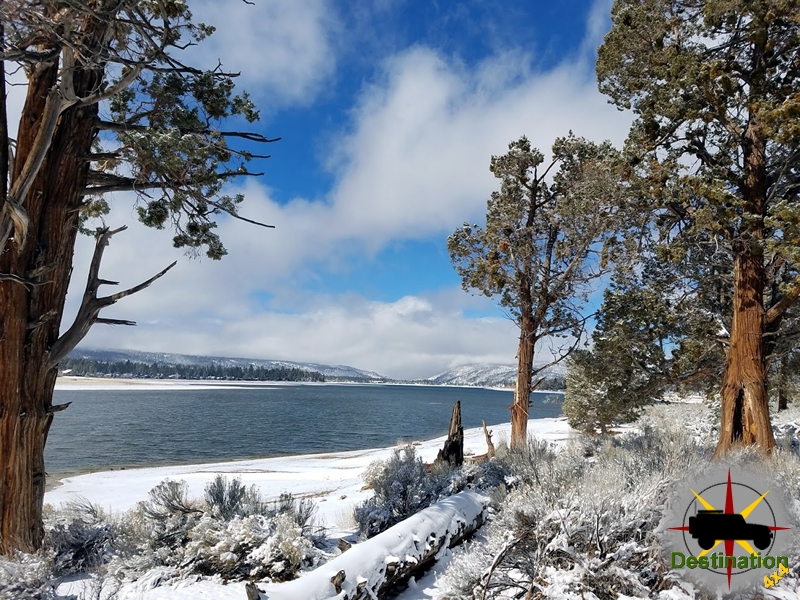
Big Bear, CA
I quiet mountain community full of back country adventure.
The Journey is the destination

On this first day of November, 1881, on the hearing of the above entitled cause of the examination of Wyatt Earp and J. H. Holliday; William Allen, a witness of lawful age, being produced and sworn, deposes and says as follows:
The deposition of William Allen. He resides in Tombstone. He is not in any business at this time. He knew all the participants in one degree or another. He says that on the morning of the difficulty he heard there had been some trouble between Isaac Clanton and Doc Holliday. He says he walked down the street and saw there was, “Quite a stir.” On meeting Henry Fry, he learned Tom McLaury had been hit with a pistol by Wyatt Earp.
[Objected to by the Defense. Sustained.]
I first saw Frank McLaury on that day pretty near the Grand Hotel as they were riding in. Frank McLaury, Bill Clanton, and an old gentleman who I am not acquainted with. This was about 2 o’clock in the afternoon. At first, Doc Holliday went out and shook hands with one of them in a pleasant way, and said, “How are you?” or something of that kind. Holliday left them there and Frank McLaury, Billy Clanton, and the old man went on to [the] Grand Hotel. I left them then. This was near the middle of the street, nearly opposite the Alhambra Saloon. I crossed the street, and went over to them. The boys were about to take a drink, and asked me to join them. I called Frank off to one side and asked him if he knew what was going on. [Objection and motion to strike.]
The boys, Frank McLaury, Billy Clanton, and the old gent, after the statement I made to them, got on their horses and rode down the street. I have heard the old gentleman’s name was Frick.
After I told them what I had heard, that Tom McLaury had been hit on the head by Wyatt Earp, Frank says, “What did he hit Tom for?” I said I did not know. He says, “We won’t drink.” That is the last words I ever heard him say. They got on their horses and rode off. Before that he said, “I will get the boys out of town.” The glasses were on the counter when he said this. They did not drink. I saw them after they crossed the street, going through the O.K. Corral. I was going down Allen Street. [Defense moves to strike.]
He continues to relate that he saw the boys walking, one of them leading a horse. They were crossing the street from the direction of the Dunbar Stable [Behan and Dunbar Stable], going through the O.K. Corral. He says he went on and passed through the O.K. Corral with Mr. Coleman. He then saw Doc Holliday and the Earp party coming down the sidewalk on Fremont Street. He says he followed in behind the Earps. He saw Ike and Billy Clanton and Tom and Frank McLaury and Johnny Behan near Fly’s building. He heard Behan tell the Earps not to go down to the Clan tons. He did not use any very great exertions, but he told them not to go.
When the Earp party got down to the Clantons, the Earp party said “You sons-of-bitches, you have been looking for a fight!” The same instant, Virgil said, “Throw up your hands!”
Tom McLaury threw his coat open and said, “I ain’t got no arms!” He caught hold of the lapels of his coat and threw it open. William Clanton said, “I do not want to fight!” and held his hands out in front of him [witness shows how]. He had nothing in his hands when he held them in this position. I did not notice what Frank McLaury did. I did not notice him or Ike. Just as William Clanton said, “I do not want to fight!” and Tom McLaury threw open his coat and said, “I ain’t got no arms,” the firing commenced by the Earp party.
I think it was Doc Holliday who fired first. Their backs were to me. I was behind them. The smoke came from him. I could not tell who fired the second shot; they came in such quick succession. I think the first was a pistol shot and the next a double barrel shotgun. These two shots were from the Earp side, before any other shots were fired.
At the time the first shots were fired, Frank McLaury was holding his horse. He had no gun in his hand. He had a gun on him. I saw it. A pistol on him. I think it was Frank McLaury. At the moment of the first fire, I cannot tell whether Billy Clanton had the horse or Frank [both men had horses]. I think he was standing on the ground [meaning standing in the vacant lot]. I have stated that Billy held out his hands, in this position, and said,”I do not want to fight!” He was in this position when the firing commenced. I saw Thomas McLaury when the first two shots were fired slap his hand on his breast, like this, and went onto the vacant lot by Fly’s building, where I could not see him. I went in this side of Fly’s building. Billy Clanton dropped down at [the] first two shots.
I kept in between the building after this. I saw Frank McLaury across the street when he fell. I picked Tom McLaury up and carried him in the house, where he died. He must have walked clean around the house. I did not see any guns in the hands of any of the Clan tons or McLaurys shotguns or rifles, I mean. I saw sometime before the shooting-I saw Virg with a shotgun at the gunsmith’s on Fourth Street. Next time, he was standing in the door.
I could not see whether the Earp party had guns on their persons down Fremont Street. They passed down too quick. The first I saw of weapons was when the fight commenced.
I picked up Thomas McLaury and helped carry him into the house. I did not see any weapons on him. No cartridge belt. I pulled his shirt down to see where he was shot. He was breathing yet. I got in between the buildings after the two first shots were fired and did not see anymore of the shooting. If the McLaurys shot at all, it was after I got in behind the building.
I do not recollect of any reply the Earps made to Behan when he told them to go back-did not hear any remarks afterwards.
Discusses Tom McLaury’s wounds. “It was a buckshot wound.” It was an hour or an hour and a half or two after I met the boys at the Grand Hotel, where we proposed to take a drink but did not, that the shooting took place. Did not see Isaac Clanton at the Grand Hotel nor after that time of the difficulty, except as I saw him pass the street to the O.K. Corral with the others-not to speak to him. The first time I saw Thomas McLaury was at a distance as they crossed the street, about twenty minutes or half an hour before the shooting. At the time, I was on Allen Street walking down the street between third and fourth. Thomas McLaury was crossing the street from Dunbar’s Corral. I think it was him. Only knew him by sight-no personal acquaintance. The other parties were with him-meaning Ike Clanton, William Clanton, Frank McLaury and another man they call Billy the Kid.5 I think Frank McLaury was leading a horse, or Billy Clanton, one of the two, was leading a horse.
After seeing them pass through the O.K. Corral, I stood on the sidewalk awhile with Mr. Coleman, then told him I did not want to see it. He said, “Come on, let’s go see it.” And so I went into the O.K. Corral and passed through it with Coleman onto Fremont Street.
When I reached Fremont Street, I walked down to the upper corner-the corner of Fly’s building, the photograph gallery-to a point eight or ten feet from the sidewalk on the street. I stopped only about a minute on the way there.
When I reached Fremont Street, the Earps were between Fly’s building and the next house on the vacant lot between. The Earps had already passed down Fremont Street when I came onto the street.
I was standing in the little place near Bauer’s butcher shop, just this way from it, when I heard Behan tell the Earps not to go down there. The Earps were near the front of this butcher shop when Behan told them not to go down, and had already passed me.
When I first saw the McLaurys and Clantons, they were on the vacant lot next to Fly’s building. Thomas McLaury was-I could not tell how they stood. They were pretty much together. I think Billy was off to the right. I won’t be sure. The horse was right there. One of them had him on the bridle. Billy Clanton or Thomas McLaury had the bridle. I think it was one of the two [Billy Clanton]. I think the horse was facing towards the lot. At the time I heard Thomas McLaury say, “I haven’t got any arms.” I was standing ten feet away, in front of Fly’s building. I could not state how McLaury and they with him were standing. I could place them [possibly on the diagram the court had]. When Thomas McLaury said, “I haven’t any arms,” he held the lapels of his coat open. I think he was facing in towards Fly’s building. They were between the two buildings. Billy Clanton, then he said, “I don’t want to fight with them,” I cannot state where they were standing. He was facing towards Fly’s building, when he held out his hands. The man who held the horse was facing towards Fly’s building. All three men were about 20 feet from me at the time-20 or 25 feet.
The Earps and Holliday at this time were close to the other portion. The Earps were 15 feet or so from me. I have told where I was and where the other party was. I was in front of Fly’s building at [the] time, ten feet out, and both the other parties were around the corner, by the corner of Fly’s building, on the vacant lot. I think Wyatt only got to the corner. [Follows more opinion as to where the various combatants stood.]
He says the first shot was from a pistol. “The shot came from the Earp party. The smoke came from Doc Holliday.” More talk about where they stood. He says he saw Doc swing his hand up and then saw the smoke come from him, and from the sound believes the first shot came from the Earp party-from hearing the shot and seeing the smoke.
I did not see it, but I know from the sound that the second shot was fired from a shotgun. He says when the shotgun went off, Tom McLaury threw his hands up to his breast. Tom McLaury was then only four or five feet from the nearest of the Earp party-might have been Morg. I did not see anyone with a shotgun then. After these “two first” shots, he ducked between the buildings. I got out of the way quick.
At the time I said to Mr. Coleman that I did not want to see it, I meant I did not want to see the quarrel. I knew there would be one. At least I considered there would be one from the appearance of things, and I did not want to see it. But I went with Coleman.
I have resided in Tombstone two years. My relations with the Earps have been the best, always-always friendly. Before I came here, I lived in Colorado-Denver-Cheyenne-Georgetown-Cheyenne in Wyoming. I have never had any other name than William Allen. They have called me other names, but this is my true name here. A man gets a nickname around the mountains.
(Q) Did you not call yourself by, and pass under, another name than William Allen in Colorado?
(A) I decline to answer.
[The court instructs the witness of his legal right to decline to answer. The attorney’s for the prosecution objected to the question on the grounds of being irrelevant, etc. Overruled, exceptions noted.]
(Q) Did you not, when residing in Colorado, and during your residence there, call yourself, and pass by the name of L. Brand? And were you not under that name indicted in Georgetown, Colorado, for larceny? And did you not immediately after such indictment escape and flee from Colorado and come from there to Tombstone?
(A) I never went by that name and never [heard] it.
[Same objection as above.]
(Q) Were you not indicted in Colorado for larceny prior to your coming to Arizona? [Overruled and excluded. Defense accepts.] The question is again asked. The Court refuses to put it to the witness. Defense accepts. Deposition is read over to the witness, and he adds that by guns he meant pistols, in that connection.
[Signed] William Allen
Crotalus helleri is a venomous pit viper species commonly known as the Southern Pacific rattlesnake. It is part of the family Viperidae, which includes venomous snakes known for their long, hinged fangs that allow them to deliver venom deep into their prey.

Crotalus helleri typically ranges from 60 to 120 centimeters (2 to 4 feet) in length, although some individuals can grow larger. The snake exhibits a variety of color patterns depending on its geographical location. Common colors include brown, olive, gray, and occasionally greenish tones. The body is marked with dark, diamond-shaped blotches running along the length of its back, often bordered by lighter scales. These blotches may be less defined in older individuals. The snake’s head is triangular with a distinct neck, and it has a characteristic rattle at the end of its tail, which it uses as a warning signal.
Crotalus helleri is primarily found in Southern California, extending into Baja California, Mexico. Its range includes a variety of habitats such as coastal sage scrub, chaparral, grasslands, woodlands, and deserts. The snake is adaptable and can be found at elevations from sea level to over 2,000 meters (6,600 feet).
This species is generally diurnal in the cooler months and becomes more nocturnal during the warmer summer months to avoid the heat. Crotalus helleri is a sit-and-wait predator, typically ambushing its prey, which includes small mammals, birds, lizards, and amphibians. The snake’s heat-sensing pit organs, located between the eyes and nostrils, allow it to detect warm-blooded prey even in total darkness.
Crotalus helleri is ovoviviparous, meaning that the females give birth to live young rather than laying eggs. Mating occurs in the spring, and after a gestation period of about 5 to 6 months, the female gives birth to a litter of 4 to 12 young, usually in late summer or early fall. The newborn snakes are independent from birth and are capable of hunting and defending themselves immediately.
The venom of Crotalus helleri is highly toxic and is composed of a mixture of hemotoxins, neurotoxins, and myotoxins. This potent combination can cause significant tissue damage, disrupt blood clotting, and lead to paralysis. Envenomation in humans requires immediate medical attention, as the venom can be life-threatening if untreated. Antivenom is effective, but the severity of the bite varies depending on the amount of venom injected.
As of now, Crotalus helleri is not listed as endangered or threatened. However, like many species, it faces threats from habitat destruction, human encroachment, and intentional killing due to its venomous nature. Conservation efforts focus on habitat preservation and public education to reduce unnecessary killings.
Crotalus helleri plays a crucial role in its ecosystem as both predator and prey. As a predator, it helps control the populations of small mammals and other prey species, which in turn influences the population dynamics of these animals. As prey, it provides food for larger predators such as hawks, eagles, and some mammalian carnivores.
Encounters between humans and Crotalus helleri are relatively common in Southern California, especially in areas where urban development encroaches on natural habitats. While the snake is generally not aggressive and prefers to avoid confrontation, it will defend itself if threatened. Public education on rattlesnake behavior and safety is essential to minimize negative interactions and ensure the safety of both humans and snakes.
Crotalus helleri is a fascinating and important species within its range. Understanding its biology, behavior, and ecological role is essential for promoting coexistence between humans and wildlife in regions where this rattlesnake is found. Conservation efforts should focus on habitat protection and educating the public about the importance of this species in maintaining ecological balance.
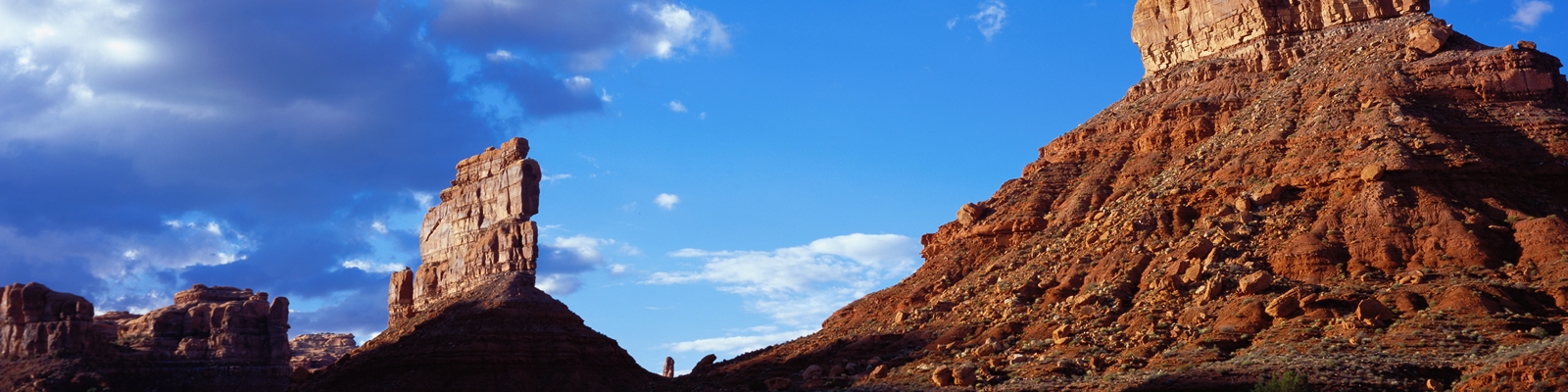
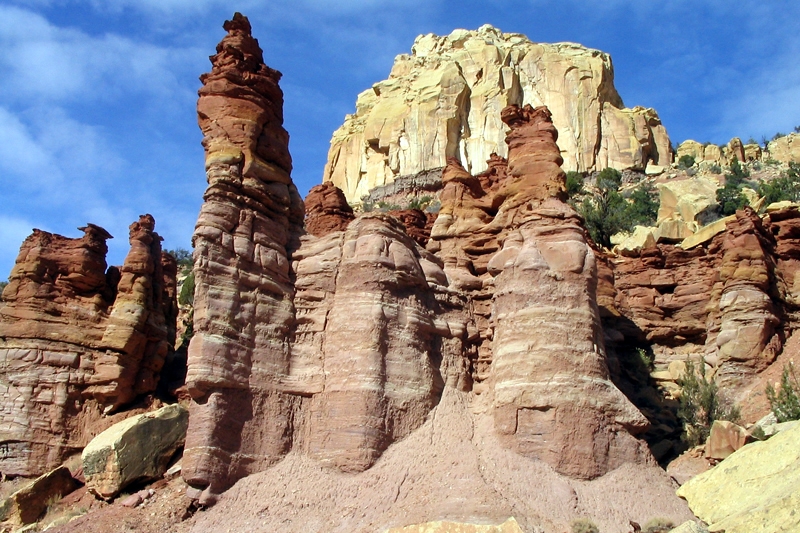
Johnson Canyon Road, located in the southern Panamint Range of Death Valley National Park, is a remote backcountry route that functions as both a challenging 4×4 road and a hiking trail. This rugged path leads through a dramatic canyon with steep walls, alluvial fans, and lush oases, offering opportunities to explore historic mining sites, Native American heritage, and wildlife such as bighorn sheep or desert tortoises. Less crowded than frontcountry trails like Golden Canyon, it provides solitude and stunning views of the valley floor. The road starts from West Side Road and ascends into the canyon, with options for day hikes to Willow Spring or Hungry Bill’s Ranch, or longer backpacking trips. High-clearance 4×4 vehicles are required for driving, but hiking is often preferred to avoid damage from rough terrain. Note that while called a “road,” it becomes increasingly trail-like beyond the initial miles.
| Aspect | Details |
|---|---|
| Length | Full out-and-back: ~20 miles (10 miles one-way to road’s end); shorter options: 6-8 miles round-trip to Willow Spring; add 2-4 miles for hike to Hungry Bill’s Ranch from road end. AllTrails lists it as 23.1 miles out-and-back for the full route. |
| Elevation Gain | ~3,000-4,000 feet overall (starting ~200 feet below sea level, reaching ~5,000 feet at Hungry Bill’s Ranch); steady climb up the alluvial fan. |
| Difficulty | Moderately challenging to strenuous; rocky, eroded sections with loose gravel, steep inclines, and potential washouts. 4×4 high-clearance required for driving; hiking involves boulder-hopping and brushy areas. |
| Time Required | 6-10 hours for full road out-and-back hike; 3-5 hours for shorter day hikes; multi-day for backpacking with explorations. |
| Best Time to Visit | October to April to avoid extreme heat (over 120°F in summer); year-round access, but flash floods possible July-September. |
| Access | Junction 7.7 miles from northern end of West Side Road (via Badwater Road). Unmarked—use GPS or park maps. No day-use permit; free backcountry permits for overnight (from visitor centers or online). Dispersed camping allowed 1 mile off West Side Road. |
| Water and Amenities | Willow Spring and upper canyon springs (treat water); carry 1+ gallon per person per day. No facilities; nearest at Furnace Creek (~30 miles away). |
The route begins on a gravelly road from West Side Road, climbing tediously up the alluvial fan with loose rocks and ruts—drivable with caution in 4×4 for the first 5-7 miles, but often hiked to preserve vehicles. The canyon narrows, revealing colorful geologic layers, narrow washes, and views of the Panamint Mountains. Around 3-4 miles in, Willow Spring offers a shaded oasis with cottonwoods and year-round water. Continuing, the road ends at a parking area (~10 miles), where a foot trail leads 1-2 miles to Hungry Bill’s Ranch—featuring historic stone walls, remnant orchards (apples, figs), and Shoshone village sites. Side explorations include old mining tunnels and talc prospects. The terrain includes brushy sections (watch for rattlesnakes) and steep scrambles, with profound desert silence and starry skies for campers. Flash floods can alter the path, creating sand traps or debris.
This low-use trail suits adventurers seeking history and isolation, but demands preparation—no cell service, and self-rescue may be necessary.
Johnson Canyon Road is open and accessible for hiking and 4×4 travel, following repairs to West Side Road after 2023-2024 floods. Recent reports from late 2024 indicate good conditions, with some rutted alluvial fan sections and brushy areas harboring rattlesnakes, but no major closures. West Side Road is fully open, though high-elevation roads elsewhere in the park reopened in April 2025 after historic flooding. Summer heat remains extreme (temperatures often exceed 110°F), and flash flood risks persist during monsoons—avoid during storms. Check the NPS website or Furnace Creek Visitor Center for updates, as conditions can change rapidly. Tire punctures are common on gravel approaches; carry spares and emergency gear.
Johnson Canyon’s history intertwines Indigenous heritage, ranching, and mining, emblematic of Death Valley’s resource-rich but harsh landscape. The area was an ancestral village site for the Timbisha Shoshone (also known as Panamint Shoshone), who utilized its reliable springs and canyons for seasonal habitation, hunting, and gathering for centuries. In the late 1800s, Euro-American settlers arrived; rancher William Johnson established a homestead in the canyon around the 1870s, giving it his name, though he clashed with Native residents over land use.
A key figure was Hungry Bill (real name Bah-Vanda-Sada), a Timbisha Shoshone leader who filed a homestead claim in 1907 on 160 acres in upper Johnson Canyon, planting orchards with apples, figs, and grapes using traditional irrigation. He never received the patent due to bureaucratic hurdles, but his family maintained the ranch into the 1920s, producing crops amid the desert. Mining activity surged in the early 1900s, with gold, silver, and talc claims; prospectors and Natives alike filed claims, extracting minerals from tunnels and open pits. Operations were small-scale due to isolation, peaking during World War eras for strategic minerals like talc, but declined by mid-century as deposits dwindled.
Today, remnants include Hungry Bill’s stone walls, fruit trees, and mining ruins, preserved as cultural sites. The Timbisha gained federal recognition and land rights in the 1980s-2000s, including areas near Furnace Creek, marking a reclamation of ancestral lands.
Death Valley’s human history dates back over 10,000 years, with Native American groups like the Timbisha Shoshone inhabiting the region since at least 1000 CE, adapting to its extremes through migratory patterns and using resources like mesquite pods and pinyon nuts. European-American exploration began infamously in 1849, when the “Lost ’49ers”—a group of gold rush pioneers—became trapped en route to California, enduring hardships that inspired the name “Death Valley” despite most surviving.
Mining booms defined the late 19th and early 20th centuries: borax extraction in the 1880s (famous for 20-mule teams), gold and silver rushes around 1900 (birthing ghost towns like Rhyolite and Skidoo), and later talc, lead, and tungsten mining. Tourism emerged in the 1920s with resorts like Furnace Creek Inn. In 1933, President Herbert Hoover designated it a national monument to protect against unchecked exploitation, with the Civilian Conservation Corps building roads and facilities in the 1930s. Expanded dramatically under the 1994 California Desert Protection Act, it became the largest national park in the contiguous U.S., spanning 3.4 million acres.
The park now draws over a million visitors annually for its geologic wonders—like Badwater Basin (-282 feet, North America’s lowest point) and record heat (134°F in 1913)—while addressing modern challenges such as climate change, flash floods, and cultural preservation.

The Panamint Mountains, forming the western boundary of Death Valley National Park in California, offer some of the most rugged and scenic off-road and hiking adventures in the region. Among the standout routes is the Pleasant Canyon to South Park Canyon loop, a challenging trail that combines steep ascents, narrow shelf roads, and stunning views of the surrounding valleys and peaks. This trail is primarily an OHV (Off-Highway Vehicle) route but can also be hiked in sections, though it’s demanding due to its length and terrain. It’s managed by the Bureau of Land Management (BLM) and borders Death Valley National Park, requiring high-clearance 4WD vehicles for full traversal. Always check for permits, road closures, and weather conditions before heading out, as the area is prone to flash floods and rockslides.
Based on available reports, the trail remains open but is susceptible to damage from storms, with potential washouts in steep sections of both canyons. Rockslides and erosion are common, especially after heavy rains—repairs are typically made promptly by BLM, but always verify status via the Ridgecrest BLM Field Office or apps like onX Offroad. No major closures were noted in early 2025 searches, but users report the “stair-step” obstacle in South Park Canyon as particularly tricky, requiring spotters for vehicles. Water may flow in Pleasant Canyon’s lower waterfalls during wet seasons, adding to the challenge. For hikers, the trail is dry with no reliable water sources—carry at least 1 gallon per person per day. Recent user feedback emphasizes the need for high-clearance vehicles and airing down tires for better traction.
If planning a trip, cross-reference with Death Valley National Park updates, as portions border the park, and consider guided tours for first-timers.
The Panamint Mountains have a rich and rugged history spanning millennia, shaped by Native American inhabitants, mining booms, and environmental extremes. Indigenous peoples, including the Timbisha Shoshone and Southern Paiute, have occupied the area for thousands of years, using the canyons as trade routes and seasonal hunting grounds. They adapted to the harsh desert with knowledge of water sources and edible plants, leaving behind petroglyphs and artifacts that hint at their deep connection to the land.
European exploration intensified in the mid-19th century during the California Gold Rush, but the Panamints’ remote location delayed major activity. Mining began slowly in the late 1850s or early 1860s, focusing on silver and lead, though the arid conditions and difficult access made operations challenging. The big break came in 1872-1873 when prospectors Richard C. Jacobs, William L. Kennedy, and Robert B. Stewart discovered rich silver veins in Surprise Canyon (near Pleasant Canyon), leading to the founding of Panamint City—a boomtown that swelled to over 2,000 residents by 1874. Infamously, some early miners were outlaws fleeing justice, earning the town a reputation as a “hard-boiled hellhole” with saloons, brothels, and vigilante justice. The Panamint Mining District formed in 1873, and by the mid-1870s, mills processed ore hauled by mule teams. However, flash floods in 1876 destroyed much of the infrastructure, and declining silver prices led to the town’s abandonment by the 1880s, leaving it a ghost town accessible via nearby Surprise Canyon Trail.
Sporadic mining revived in the early 20th century, including operations in the 1920s, but never matched the initial frenzy. The region also served as outlaw hideouts and later military testing grounds during World War II. Today, the Panamints are protected within Death Valley National Park (established 1994), preserving ruins like those in Pleasant and South Park Canyons as windows into this boom-and-bust era. The trails themselves follow old mining roads, a testament to the area’s enduring allure for adventurers.
This trail offers a perfect blend of adventure and history, but respect its challenges for a rewarding experience in one of California’s most dramatic landscapes.
Frank C. Stilwell (1856–March 20, 1882) was a complex figure in the American Old West, known as an outlaw, sometime deputy sheriff, and businessman in Arizona Territory. Born in Iowa, Stilwell moved with his family to Kansas Territory along the Santa Fe Trail. After his parents’ divorce in 1863, he was raised by his father, a Union Army veteran who participated in Sherman’s March to the Sea. Stilwell’s early life was marked by frontier instability, which shaped his later path as a man entangled in violence and crime.
By 1877, Stilwell had arrived in Arizona with his brother Simpson Everett “Comanche Jack” Stilwell, a noted Indian fighter and scout who took a more honorable path. Frank, however, became associated with the notorious Cochise County Cowboys, a loosely organized group involved in cattle rustling and other illicit activities. He worked as a teamster, miner, and entrepreneur, owning interests in mines, a saloon, a wholesale liquor business, a stage line, and livery stables in Charleston and Bisbee. He also partnered with ex-Texas Ranger Pete Spence in a Bisbee saloon.
Stilwell’s criminal record began to take shape in 1877 when he shot and killed Jesus Bega near Miller’s Ranch in Prescott, Arizona, after an argument over Bega serving tea instead of coffee. He was acquitted on grounds of self-defense. In 1879, Stilwell was charged with the murder of Col. John Van Houten in a dispute over claim-jumping in Pima County. Van Houten was beaten to death with a rock, but Stilwell and co-defendant James Cassidy escaped indictment due to insufficient evidence. These incidents established Stilwell’s reputation as a violent man, though he avoided legal consequences.
In 1881, Stilwell briefly served as a deputy sheriff under Cochise County Sheriff Johnny Behan, a key figure in the escalating feud with the Earp brothers—Wyatt, Virgil, and Morgan—and their ally, Doc Holliday. Stilwell’s association with Behan and the Cowboys placed him in direct conflict with the Earps, who represented law enforcement and opposed the Cowboys’ criminal activities. Stilwell was also implicated in the September 8, 1881, Bisbee stage robbery alongside Pete Spence, though both were acquitted due to lack of evidence. This event further strained relations with the Earps, particularly after Wyatt, acting as a deputy U.S. marshal, arrested Stilwell and Spence.
The tensions between the Earps and the Cowboys culminated in the infamous Gunfight at the O.K. Corral on October 26, 1881, in Tombstone, Arizona. Although Stilwell was not present at the gunfight (he was in jail in Tucson at the time), his close ties to the Cowboys, including Ike Clanton and the McLaury brothers, made him a suspect in subsequent events. The shootout left three Cowboys—Tom and Frank McLaury and Billy Clanton—dead, intensifying the feud.
Following the gunfight, threats against the Earps escalated. Cowboy Frank McLaury warned Morgan Earp that the McLaurys would kill the Earps if they attempted further arrests of Stilwell, Spence, or their allies. The Tombstone Epitaph reported “veiled threats” against the Earps, fueled by misreports that Stilwell and Spence had been arrested for a separate stage robbery near Contention City, which added to perceptions that they were being unfairly targeted.
On December 28, 1881, Virgil Earp was ambushed and severely wounded, losing the use of his left arm. The Earps suspected Cowboy involvement, including Stilwell. Then, on March 18, 1882, Morgan Earp was assassinated while playing billiards in Tombstone. Shot through a window, he died within an hour. A coroner’s inquest, led by Dr. H. M. Mathews, named Stilwell, Pete Spence, Indian Charlie, Frederick Bode, and an unnamed “half-breed” as suspects, based partly on testimony from Spence’s wife, Marietta Duarte, who said the group returned home an hour after the shooting and that Spence threatened her to remain silent. Despite the suspicions, there was insufficient evidence to prosecute Stilwell or the others.

The assassination of Morgan Earp set the stage for Wyatt Earp’s vendetta, a campaign to exact revenge on those he believed responsible. On March 20, 1882, Wyatt, his brother Warren, Doc Holliday, Sherman McMaster, and “Turkey Creek” Jack Johnson escorted the crippled Virgil Earp and his wife, Allie, to Tucson to board a train for California, where they could find safety. The group traveled by buckboard to Contention City, then by train to Benson, and finally to Tucson, arriving at dusk. Tucson was celebrating the activation of its first gaslights, and the festive atmosphere was punctuated by celebratory gunfire, which masked the violence about to unfold.
According to Wyatt Earp’s later accounts, he received word—likely via telegraph in Benson—that Stilwell and Ike Clanton were in Tucson, possibly planning to ambush the Earps. Clanton later claimed they were at the train station to meet a witness, McDowell, for a grand jury hearing, but Wyatt believed they were armed and waiting to attack Virgil. As the train approached the Tucson Southern Pacific Depot, near the Porter Hotel (later renamed the San Xavier Hotel), Wyatt’s posse spotted Stilwell and Clanton on a flatcar in the train yard, allegedly armed with shotguns under their coats.
What followed was a chaotic and brutal encounter. As the Earp party confronted Stilwell and Clanton, both men fled. Stilwell, running in the dark train yard, dropped his weapon and stumbled. Wyatt pursued him and, according to his 1926 account with John H. Flood, caught up to Stilwell, who tried to fend off Wyatt’s shotgun with his hands. Wyatt fired both barrels at close range, striking Stilwell under the ribs. The coroner’s report detailed a gruesome scene: Stilwell’s body, found the next morning 100 yards north of the station, was riddled with two rounds of buckshot (one in the leg, one in the chest with powder burns) and four additional bullet wounds, suggesting multiple shooters. Wyatt later claimed Stilwell’s last words were “Morg! Morg!,” possibly referencing Morgan Earp. Other accounts, including Virgil’s March 1882 interview with the Arizona Daily Star, alleged Stilwell confessed to Morgan’s murder before dying, naming his accomplices. However, the reliability of this confession is debated, as it aligns with the Earps’ narrative.

The Arizona Daily Star on March 22, 1882, condemned the killing as an act of “desperadoes” seeking vengeance, noting its boldness in a busy depot and suggesting Stilwell was targeted as a friend of Ike Clanton, whom the Earps may have initially sought. The Tombstone Epitaph and other newspapers reported the coroner’s jury verdict that Stilwell died from shots fired by Wyatt Earp, Warren Earp, Doc Holliday, and others. The severity of Stilwell’s wounds—described as “the worst shot-up man” some had ever seen—underscored the vengeful nature of the attack.
The killing of Stilwell marked the beginning of the Earp Vendetta Ride, a series of retaliatory killings targeting suspected Cowboys. Arrest warrants were issued by Pima County Sheriff Bob Paul for Wyatt Earp, Doc Holliday, Warren Earp, Sherman McMaster, and Jack Johnson, and a grand jury indicted them for murder. However, Cochise County Sheriff Johnny Behan, a Cowboy ally, did not serve the warrants when he had the chance, possibly intimidated by Wyatt’s armed posse. Wyatt initially agreed to turn himself in but instead fled to Colorado, where he and his men evaded prosecution.


Stilwell’s body was buried in Tucson’s old cemetery with, according to some reports, only Ike Clanton as a mourner. His brother, Comanche Jack, traveled to Tombstone seeking revenge but left without confronting the Earps. The killing fueled public outrage, with newspapers like the Arizona Weekly Citizen decrying the lawlessness of the Earps’ actions, though some viewed it as frontier justice.
The killing of Frank Stilwell is a pivotal moment in the lore of the American West, epitomizing the violent feuds and blurred lines between law and vengeance in Arizona Territory. It is commemorated by life-sized statues of Wyatt Earp and Doc Holliday at the site of the former Tucson Southern Pacific Depot, now part of the Southern Arizona Transportation Museum, which offers tours of the historic site. The original depot and Porter Hotel were destroyed by fire and demolition in the early 20th century.
Stilwell’s life and death have been depicted in popular culture, notably in the 1993 film Tombstone (played by Tomas Arana) and the 1994 film Wyatt Earp (played by John Dennis Johnston). He also appeared in Season 5 of The Life and Legend of Wyatt Earp (played by John Baxter). A fictionalized version of Stilwell, spelled “Stillwell,” is the antagonist in Disney’s 1975 film The Apple Dumpling Gang, loosely inspired by the historical figure.
Stilwell’s story reflects the duality of the frontier: a man who was both a businessman and an outlaw, caught in a deadly conflict between rival factions. While the Earps framed his killing as retribution for Morgan’s murder, critics argue it was an extrajudicial execution, highlighting the lawlessness of the era. The lack of definitive evidence against Stilwell for Morgan’s murder leaves open questions about the justice of his death, making it a subject of ongoing debate among historians.
 Charleston ArizonaCharleston, Arizona, now a ghost town in Cochise County, was a short-lived but vibrant settlement in the Arizona Territory from the late 1870s to the… |
 Grand Jury Indictment for the Killing of Frank StilwellFrank Stilwell The following is the Grand Jury Indictment for the Killing of Frank Stilwell which charges Doc Holliday, Wyatt Earp, Warren Earp, Sherman McMasters… |
 Morgan Seth EarpMorgan Seth Earp, born on April 24, 1851, in Pella, Iowa, was a notable figure of the American Old West, primarily recognized for his association… |
 The Tombstone Epitaph – March 27, 1882Frank Stilwell On March 27, 1882, The newspaper the Tombstone Epitaph announced the murder of Frank Stilwell in Tucson Arizona. Frank Stilwell was an outlaw… |
 Warren Baxter EarpWarren Baxter Earp ( March 9, 1855 - July 6, 1900 ), the youngest of the Earp brothers, was born into a family that would… |
 Wyatt Berry Stapp EarpWyatt Berry Stapp Earp (March 19, 1848 – January 13, 1929) was an American lawman and gambler who became a legendary figure of the Old… |
