In the spring on 2020 I was photographing along the Morning Star Mine Road, we happened upon Palmers Penstemon ( penstemon palmeri ). This species is the most surprising and beautiful wild flowers I have seen in the Mojave Desert.

The Journey is the destination
California, located on the west coast of the United States, is renowned for its diverse landscapes, vibrant culture, and significant economic influence. From the sun-kissed beaches of Southern California to the majestic Sierra Nevada mountains, the state offers a range of natural beauty. The state is home to iconic cities like Los Angeles, known for Hollywood and the entertainment industry, and San Francisco, famous for its tech innovation and the Golden Gate Bridge. The state’s economy is one of the largest in the world, driven by sectors such as technology, agriculture, entertainment, and tourism. With its rich cultural diversity and pioneering spirit, California continues to be a land of opportunity and innovation.
In the spring on 2020 I was photographing along the Morning Star Mine Road, we happened upon Palmers Penstemon ( penstemon palmeri ). This species is the most surprising and beautiful wild flowers I have seen in the Mojave Desert.
Pencil Cholla ( Cylindropuntia ramosissima ), also known as Diamond Cholla, is a medium sized cacti species which is mainly categorized from long narrow body segments and sparse spine density. The stems are green in appearance and dry grey in color. This species is commonly found in Arizona, California and Nevada at elevations below 4,000 feet.
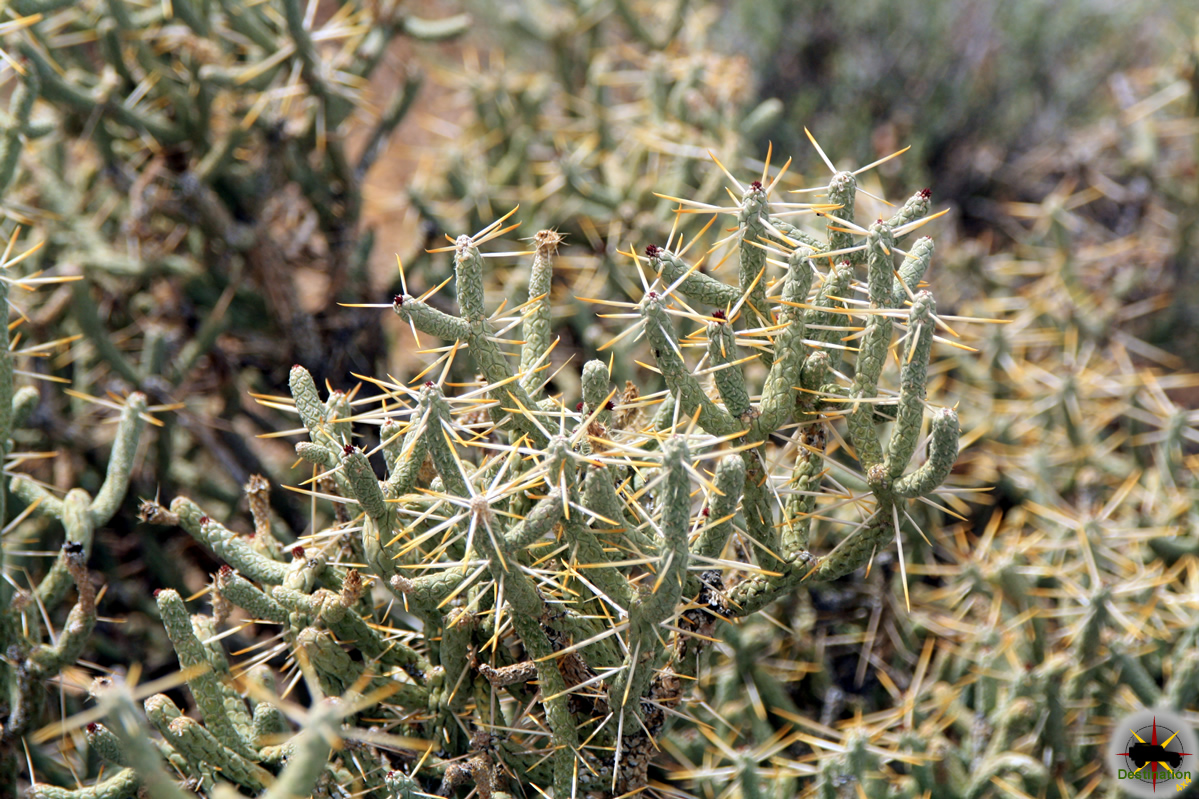
This species of cactus typically grows between three and five feet tall. It is found in well-drained sandy, or rocky soils on flats, bajadas, and moderate slopes in the lower mountains. The skin surface if green in appearance and the surface had a cross-hatch or diamond pattern which give this plant its alias, diamond cholla. Pencil Cholla will bloom in early summer and boasts a smaller flower which is orange, yellow or red in color. The flowers are about the size of a quarter and compared with other cactus species are rather unassuming. This cactus is common in Creosote Bush Scrub and Joshua Tree Woodlands.
The pencil cholla is perhaps the best representative of the harsh desert. Compare to other species, it is harsh and dry in appearance and looks like it is baked in the desert heat.
Mojave prickly pear ( Opuntia erinacea ), or grizzlybear prickly pear, is a fairly common cactus with a wide spread distribution across the desert south. Although their are varieties, this cactus is characterized by the high density of its spines. The spines may be white or pale yellow and reddish in color at the base. The spines may vary is length between one and seven inches in length.

The pads of this cactus are medium in size at three to fives inches across and grey-green in appearance. The plant flowers in the spring between May and July. The flowers boast color varieties of yellow to rose.
The cactus is low lying and grows in medium sized clumps which are no more the two feet in height. The reach of the cacti is known to grow up to ten feet across. This plant flourishes in Creosote Bush Scrub, Pinyon-Juniper and Joshua Tree woodlands and are known to grow at up to 7,000 feet in elevation. Typically, this plant is found in well-drained, sandy or gravel soil types. They can be found in washes, canyons and along the slopes of lower mountains.
One of the more unique and quite frankly cool animals found in the Mojave Desert is the Desert Tortoise ( Gopherus agassizii ). My family has a connection with this nomad of the dessert in that during the spring of 1942, my grand parents inherited three desert tortoises when they purchased and moved into a house in Ontario, CA.

My grandmother quickly named and adopted her new pets. She and my grandfather struck up a deal with a local grocery store to donate lettuce and other vegetables to my grandmother to care for the tortoises. By the time I was born, the three tortoises became a populations of about 20 animals. Some of my earliest memories was to help her wake up the “turtles” from their hibernation, during which she stored the animals in a large box along with a bunch of news paper clippings to help insulate them a little bit from the California winters.
Over the years, those three tortoises expanded their family and ours into a breeding population of over 70 animals. Eventually, we donated the captive born tortoises to several zoo’s, shelters, and rescue to care for the animals. All in all, my family raised and cared for desert tortoises for about 60 years, the ownership of which was legal because family documentation and the fact that all of the animals were born in captivity.

Oddly enough, despite my best efforts I did not a desert tortoise in the wild until the late 1990s when I ran into the one emerging from a den during one of the Toyota Four Runner Jamborees which was located out of Stoddard Wells Road. Surrounded by others, most of whom I did not know, I quietly photograph the tortoise and pointed him out to my brother and two friends. I chose not to point him out for fear of someone in the group would take it after we left.

Since this initial sighting, I have found four more in the wild. One sighting occurred while driving the old Mojave Road with my father. The animal was just walking down the trail. We stopped and waited about 45 minutes for the animal to clear the road. The other animal were spotted while driving at speed along various highways in the Mojave. One animal I found walking down the middle of the road and had I not stopped and moved the animal off the road, it surely would not have survived long.

When born, the tortoises shell is thin and fragile which makes it an easy food source for Ravens, Gila monsters, kit foxes, roadrunners, coyotes, and fire ants. Only about 2% are expected to reach maturity and the population in the Mojave is listed as threatened. Should you be lucky enough to see one in the wild, take your time. Enjoy the moment. Snap a photograph and then leave the tortoise along. I can tell you the exact spot of each of the five sightings I have had the good fortune to have experienced. Each sighting of this timeless desert nomad is unique, and should be protected.
Arizona Thistle ( Cirsium arizonicum ) is a member of the sunflower family and common across the south west. The thistle has a two year live span. For the first year, it thrives as a low lying rosette of thorns. The second year of life, the plant springs into action and can grow up to four feet tall and grows a flower stalk to hold a purple colored flower head high into the air. The flower is known to bloom in red, pink and purple in color.
