Camp Independence

Camp Independence in 1871 — in the Owens Valley, eastern California. A U.S. Army fort/post (active 1862-1877), formerly located below the Eastern Sierra near Independence. The Inyo Mountains are in the distance to the east. - 
Timothy H. O'Sullivan - U.S. National Archives and Records Administration
Camp Independence in 1871 — in the Owens Valley, eastern California. A U.S. Army fort/post (active 1862-1877), formerly located below the Eastern Sierra near Independence. The Inyo Mountains are in the distance to the east. – Timothy H. O’Sullivan – U.S. National Archives and Records Administration

Camp Independence, later known as Fort Independence, was a significant U.S. Army post in the Owens Valley, Inyo County, California, active from 1862 to 1877. Established during the Owens Valley Indian War, it played a crucial role in the region’s settlement and interactions between settlers, Native Americans, and the military. This report examines the establishment, operations, key events, and legacy of Camp Independence, drawing on historical records and accounts.

Establishment and Early Years (1862–1864)

Camp Independence was founded on July 4, 1862, by Lieutenant Colonel George S. Evans of the 2nd California Volunteer Cavalry, at the request of settlers fearing hostilities from local Paiute and Shoshone tribes. Located on Oak Creek, approximately three miles north of present-day Independence, the camp was named in honor of Independence Day. The initial setup was rudimentary, with soldiers living in tents and caves along a nearby ravine due to limited resources. A 50-foot flagpole was erected, and a salute was fired to mark the occasion, though a cloudburst dampened the ceremony.

The camp’s primary purpose was to protect miners and settlers from perceived threats by Native Americans, who were defending their lands against encroachment. Early conditions were harsh, and in September 1862, during Evans’ temporary absence, some troops attempted to abandon the post in a near-mutinous state, only to be intercepted and returned. By late 1862, the camp began to stabilize, with the construction of basic buildings. Hostilities with the Owens Valley Paiute temporarily ceased by December 1864, leading to the camp’s brief abandonment.

Reoccupation and Fort Independence (1865–1877)

Renewed conflicts with the Paiute in early 1865 prompted the reoccupation of the camp by Nevada Volunteers in March, and it was officially designated Fort Independence. The post became a more permanent fixture, with improved infrastructure despite setbacks like the 1872 Owens Valley earthquake, which destroyed many original adobe buildings. By 1875, the fort was described as a healthy post with light duties, pure air, and excellent food, reflecting improved conditions.

A significant and controversial event occurred on July 10, 1863, under Captain Moses A. McLaughlin’s command. Over 1,000 Native Americans were gathered at the camp’s parade ground, where McLaughlin announced their forced removal to Fort Tejon, 200 miles southwest. The operation was executed with troops strategically positioned to prevent resistance, highlighting the coercive tactics used against the Paiute. This event remains a dark chapter in the region’s history, remembered with bitterness by Native American communities.

Military operations continued, including patrols to counter Native resistance. In 1867, First Sergeant F. R. Neale led a 250-mile patrol through a snowstorm, engaging Paiute forces and killing or wounding several. By the late 1860s, a “perfect understanding” was reported between the military and remaining Native groups, though tensions persisted.

Closure and Aftermath (1877–Present)

Fort Independence was abandoned on July 5, 1877, as the need for a military presence diminished. The military reservation was transferred to the Interior Department on July 22, 1884. On November 3, 1883, the fort’s buildings were sold at auction for less than $3,000, despite their original cost of over $50,000. Notable structures, such as the hospital (purchased for $290) and the commander’s quarters ($345), were relocated to Independence and repurposed as residences or historical landmarks.

The land formerly occupied by the fort became part of the Fort Independence Reservation, established in 1915 and 1916 through executive orders, providing 360 acres for the Paiute and Shoshone communities. Today, the reservation is home to approximately 140 members of the Fort Independence Indian Community of Paiute Indians. Little remains of the original camp, but a historical marker on Highway 395, dedicated in 1981 by the Slim Princess Chapter of E Clampus Vitus, commemorates its significance.

The camp’s cemetery, initially reserved for soldiers, also served civilians. After the fort’s closure, soldiers’ graves were relocated to the Presidio in San Francisco, while civilian graves remained. The cemetery, located on private property, is maintained sporadically, with reenactors visiting annually around July 4.

Cultural and Historical Significance

Camp Independence facilitated early white settlement in the Owens Valley by providing security for miners and homesteaders, enabling the growth of communities like Independence, which became the Inyo County seat in 1866. However, its establishment and operations came at a significant cost to the Native Paiute and Shoshone, whose displacement and loss of land reshaped the region’s demographic and cultural landscape.

The Eastern California Museum in Independence preserves artifacts, photographs, and records related to the camp, offering insights into its history. Dorothy Clora Cragen’s book, The Boys in the Sky-Blue Pants, provides a detailed account of the camp’s role in Owens Valley history and is recommended for further reading. The museum holds copies of this out-of-print work.

Conclusion

Camp Independence was a pivotal institution in the Owens Valley, reflecting the complex interplay of military, settler, and Native American histories in 19th-century California. While it enabled the region’s development, it also contributed to the marginalization of indigenous peoples. Its legacy endures through the Fort Independence Reservation, historical landmarks, and ongoing efforts to document and understand its impact.

Sources

  • Historical Marker Database (hmdb.org)
  • Sierra Nevada Geotourism
  • Owens Valley History (timenspace.net)
  • California Military Museum (militarymuseum.org)
  • California State Parks (ohp.parks.ca.gov)
  • NoeHill in California (noehill.com)
  • MojaveDesert.net
  • FortWiki

Bishop Park Campground – Inyo National Forest

Bishop Park Campground is a scenic, high-elevation campground in Inyo National Forest along the Middle Fork of Bishop Creek, just west of the town of Bishop, California. Situated at approximately 8,400 feet in the beautiful Bishop Creek Canyon of the Eastern Sierra Nevada, it offers a serene alpine setting with grassy lawns, direct creek access, and many walk-in tent sites right along the water.

The campground is popular with families, anglers, and outdoor enthusiasts due to its peaceful creekside location, proximity to trailheads into the John Muir Wilderness, and easy access to nearby lakes and attractions. It features a mix of sites, though it is best suited for tents and smaller RVs (large rigs and trailers are generally not recommended). Many sites have beautiful views of the surrounding mountains and aspen groves, which turn vibrant in the fall.

Amenities

Bishop Park Campground typically includes the following facilities:

  • 21 single-family campsites (many walk-in tent sites; a few suitable for smaller vehicles/RVs).
  • Picnic tables, fire rings with grills, and tent pads at each site.
  • Bear-proof food storage lockers (essential, as this is an active bear area).
  • Flush toilets.
  • Potable drinking water.
  • Trash collection.
  • Grassy areas and creekside access.
  • Group camping options are available nearby at the Bishop Park Group site.

No hookups, showers, or dump stations are available. Reservations are strongly recommended (often required) through Recreation.gov, especially during peak summer months. Firewood may be available for purchase, and camp hosts are usually on site.

Activities

The campground and surrounding area support a wide range of outdoor recreation:

  • Fishing: Excellent creek fishing right from many campsites for rainbow, brown, brook, and Alpers trout. Intake Lake II is just upstream for additional opportunities. Nearby Lake Sabrina is also popular.
  • Hiking: Direct access to trails into the John Muir Wilderness, with routes leading to alpine lakes, glaciers, and backcountry terrain. Popular nearby trails include those toward Bishop Pass and other high Sierra destinations.
  • Horseback riding: Available via local pack stations; trails are suitable for riders.
  • Wildlife viewing: Prime location for observing animals in their natural habitat.
  • Other activities: Picnicking, photography (especially fall colors), stargazing (dark skies at elevation), relaxing by the creek, and exploring nearby lakes and aspens. The area also serves as a great base for day trips to Mammoth Lakes, Ancient Bristlecone Pine Forest, or Mono Lake.

Wildlife in the Area

The Eastern Sierra around Bishop Park is rich in biodiversity. Common and notable wildlife includes:

  • Mammals: Mule deer (very common), black bears (frequent visitors—proper food storage is mandatory), coyotes, bobcats, mountain lions (less commonly seen), marmots, jackrabbits, and occasionally bighorn sheep (Sierra and Desert varieties in the broader region).
  • Birds: Various songbirds, raptors like golden eagles, and waterfowl near lakes and streams.
  • Other: Wild mustangs (in certain nearby areas), and smaller rodents/reptiles typical of the alpine and high-desert transition zones.

Note: Always practice bear safety—keep a clean camp and use provided bear boxes. Pets must be leashed, and feeding wildlife is prohibited.

Bishop Park Campground makes an ideal base for exploring the Eastern Sierra’s natural wonders, combining convenient amenities with immersive wilderness access. It’s especially lovely in summer for escaping valley heat and in autumn for fall foliage. Always check current conditions, fire restrictions, and availability on Recreation.gov or the Inyo National Forest website before planning your trip.

Darwin California – Inyo County Ghost Town

Darwin is a unincorporated community, gold mining town and ghost town located in Inyo County, California about 22 miles from Keeler. The town was named for Darwin French, who lead a party of prospectors into Death Valley in 1860 looking for the mythical gunsight lode. This prospecting eventually lead to the wash, canyon and town named in his honor.

The site which became Darwin was formed in 1874 following a discovery of lead and silver. The overall grwoth of the town was limited by its water supply which is piped from over eight miles away. This discovery coincided with near by Panamint, although the rush to Darwin was more muted. Darwin has a population of about 700 at this time.

The Coso Mining News published weekly from 1875 – 1878 by T.S. Harris. The newspaper closed in September 1878 and the publisher moved up north to Bodie. The moved of the newspaper is symptomatic and followed by many others including miners seeker greener pastures. The town of Darwin had a remaining population of about 250 people. Despite the plunging population the town still supported six saloons, four stores, three restaurants and a drug store. Between the years of 1874 and 1877 newspapers reported at least 80 murders.

Darwin is a rarity and survived its original boom. The town remained viable until World Was I, when larger mining operations could profit of lower yielding ores. A post office opened in 1875 and closed in 1902. Eventually, the post office reopened and remains open today.

The Darwin Store run by Reynolds and Etcharren Partners, 1906.  |  Photo: Courtesy of the Eastern California Museum.
The Darwin Store run by Reynolds and Etcharren Partners, 1906. | Photo: Courtesy of the Eastern California Museum.

Darwin Today

In 2011, a documentary called Darwin is available on Amazon Prime. The documentary is described, “Propelled from society by tragic turns, the isolated community of Darwin, Death Valley (population 35) must now find ways to coexist in a place without a government, a church, jobs, or children.” I did watch the documentary and found it interesting. However, its focus was on the people living there now and not much on the history.

Recently, Brent Underwood, owner of Cerro Gordo featured Darwin on his youtube channel. He was scrounging old boards from buildings in Darwin to help rebuild Cerro Gordo. I am not sure how I feel about damaging one old town to rebuild another…

Darwin Town Summary

NameDarwin, California
LocationInyo County, California
Latitude, Longitude36.268056 -117.591667
Elvation4,790 ft ( 1460 m )
GNIS241269
Population3500
Post OfficeOpen
NewspaperCoso Mining News ( Nov. 6, 1875 – Sept. 4, 1878 )

Darwin Town Map

Resources

Scottys Castle – The Death Valley Ranch

Scotty's Castle located in Grapevine Canyon in Death Valley.
Scottys Castle located in Grapevine Canyon in Death Valley.

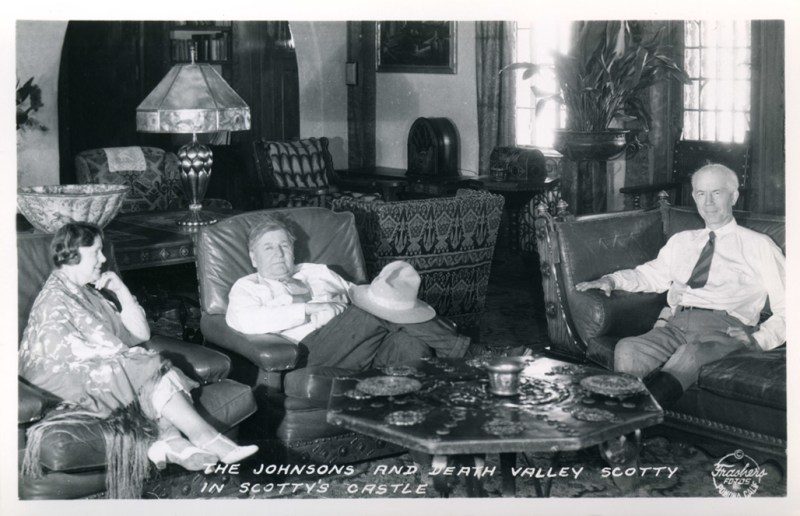
Named after Walter Scott AKA “Death Valley Scotty”, Scottys Castle or the Death Valley Ranch is located on some 1500 acres in Grapevine Canyon in Death Valley.

Built by Scott’s benefactor Albert Johnson in 1922, the Death Valley ranch cost between 1.5 – 2.5 million to construct at that time.  The stock market crash of 1929 cost Johnson a considerable amount of money, and the ranch was never finished.

Scotty was a prospector, stunt rider and con man who used to con investors in to backing his “mining” adventures.  It was reported that when the investor’s delegation wanted the view their new mine, Scotty would march them around the hot valley until they forgave or forgot about their investment.

Death Valley Scotty and the Johnsons

On March 11, 1906 Scotty stared as himself in a play which opened in Seattle to a full house.   We was arrested after his only performance and the charged for his crimes, the publicity exposed him to new investors.  In spite of this Albert Johnson maintain interested in his “mine”. Another investigator was sent, who reported back that the mine did not exist. Johnson refused to believe this, and the following year he visited the mine himself, but left without seeing the mine.  He was later sued by his investors in 1915 and ended up in jail.

A welcoming view when travelling the hot distances of Death Valley.

In 1922, Johnson started building Scotty’s castle as a vacation home.  When the size and scope of the property was realized, people assumed Scotty used the proceeds for his gold mine to pay for the Ranch.  Scotty, ever the promoter did nothing to correct the record and soon The Johnson’ vacation home is associated with him

The Death Valley Ranch was know as “Scotty’s Castle  in spite of the fact that Scotty rarely stayed over, rather living and sleeping at a 5 room cabin in lower vine canyon a short distance away

A unique perspective of the Death Valley Ranch.

Due to its remote location, the Death Valley Ranch needed to maintain its own power station and water supply and evaporation cooling system. Despite the conditions, Scotty’s Castle boasts a 1,121 pipe theater organ, fountains, clock tower and a massive unfinished swimming pool.

Water "Death Valley Scotty" Scott's grave overlooks the Death Valley Ranch
Water “Death Valley Scotty” Scott’s grave overlooks the Death Valley Ranch

There is no longer gas available at Scotty’s castle or grapevine canyon.

Scottys Castle was flooded in 2015 and not currently open to the public. The opening date has been pushed many times and currently scheduled for 2022. The flood was the result of over 3 inches in rain in just over 5 hours. The flash flood left debris in the visitors center over one foot deep and washed out the road.

Scotty’s Castle Summary

NameScotty’s Castle
LocationDeath Valley National Park, California
National Register of Historic Places78000297

Further Reading

Scotty’s Castle Map

Scotty’s Castle Personalities

Leadfield California – A Death Valley Ghost Town

Leadfield California is a ghost town located in Inyo County and Death Valley National Park and found on the Titus Canyon Trail. The town boom in 1925 and 1926, however, Leadfield is a town that was started on fraud and deceit.

Leadfield Gost Town, Death Valley, California

According to Legend and an article in Desert Magazine, and shameless promoter C. C. Julian wandered into Titus Canyon and started blasting tunnels. He then discovered lead ore which he purchased and brought down from Tonopah, Nevada. Julian then produced maps and other promotional materials and found investors from the East coast. The town of Leadfield was born and died on the imagination of this one man.

Photograph of an exterior view of the Leadfield Hotel in Death Valley's Titus Canyon, [s.d.]. The hotel is a simple wooden structure with a slanted roof and a rectangular façade. The upper left corner of the façade is missing, revealing the interior of the building. Three large rectangular windows and two doors alternate across the front of the building. There are three people standing on a caved-in porch in front of the hotel. A large rocky mountain rises up behind the hotel. The hotel was part of C. C. Julian's Leadfield boomtown, the hey day of which was in 1925. Photo Credit “University of Southern California. Libraries” and “California Historical Society” as the source. Digitally reproduced by the USC Digital Library.
Photograph of an exterior view of the Leadfield Hotel in Death Valley’s Titus Canyon, [s.d.]. The hotel is a simple wooden structure with a slanted roof and a rectangular façade. The upper left corner of the façade is missing, revealing the interior of the building. Three large rectangular windows and two doors alternate across the front of the building. There are three people standing on a caved-in porch in front of the hotel. A large rocky mountain rises up behind the hotel. The hotel was part of C. C. Julian’s Leadfield boomtown, the hey day of which was in 1925. Photo Credit “University of Southern California. Libraries” and “California Historical Society” as the source. Digitally reproduced by the USC Digital Library.

The truth of the tale is not quite as interesting or spectacular. According the the National Park Service, Leadfield ore was first worked in 1905. During the Bullfrog boom, which took place outside of Beatty, prospectors worked the land looking for the next big hit. In the fall of 1905, nine mine sights were identified and claimed by W. H. Seaman and Curtis Durnford. The ore from these sites was assayed in Rhyolite at $40 per ton. The men bought out a local consortium and the Death Valley Consolidated Mining Company was incorporated which released promotional material and sold shares for 2.5 cents each.

The mine and its ore did produce, however the Death Valley Consolidated Mining Company soon discovered that the expense of hauling the ore to Rhyolite and then the frieght costs to ship the material to smelters further off caused the ore to be not profitable. After six months of operation the Death Valley Colisidated Mining Company disappeared.

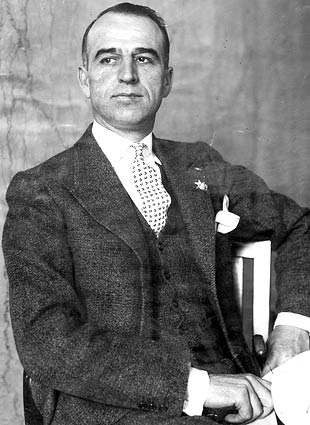
C. C. Julian
C. C. Julian

Despite early failures, in March of 1924 three prospectors wandered into the canyon and staked several claims. Ben Chambers, L. Christensen and Frank Metts worked their claims of lead ore for over one year before selling the claims to John Salsberry. Mr. Salsberry saw enough promise to form the Western Lead Mines Company and started to raise capital via stock sales at $0.10 per share. By the end of 1925, the Western Lead Mines Company was working 50 claims in the valley and soon began in invest in infastructure in the form of a compressor plant. A long steep road was constructed for LeadField to the Beatty Highway.

In early 1926, the Western Lead Mines Company build a boarding house and piped in water from a nearby spring. The town of Leadfield was named officially January 30th, 1926. Stock from the Western Lead Mines Company went on sale in January and within a 24 hour period, 40,000 share of stock were sold at $1.57 per share.

In February 1926 it became known to the public that C. C. Julian purchase shares and was now President of Western Lead Mines Company. Almost immediately the California State Corporation Commission began an investigation into the stock sale because a permit was not granted for the stock sale. The promoter went to work, along with several other mine operations, raise interest and money for the town. City plans were filed with Inyo County, however the spectre of investigation loomed.

Julian at the Western Lead Mine located in Leadfield, California - Photo Los Angeles Times
Julian at the Western Lead Mine located in Leadfield, California – Photo Los Angeles Times

Despite the arrival of a post office, investment into the location, and hundreds of feet of tunnel, C. C. Julian was ordered to cease sale of stock by the California State Corporation Commission. Around the same time, the primary tunnel of the Western Lead Mines Company penetrated to the ledge which experts predicted the highest quality ore. This ore was assayed at 2% and far too low for profit considered freight costs.

"The Last Days of C. C. Julian," Los Angeles Times, 29 Sept. 1935
“The Last Days of C. C. Julian,” Los Angeles Times, 29 Sept. 1935

Leadfield and the surrounding mines where gone months later. Mr. Julian was blamed despite the facts that he did not start the venture, there was ore at the location, and he invested money and time towards the venture. Once his Leadfield venture faltered, he moved onto to Oklahoma and was caught up in yet another scam. Julian later fled the country for Shanghai in March of 1933 m where he committed suicide in 1923 after several more failed schemes. Julian was buried in a beggers coffin and his funeral was attended by nine people.

Mr. Julian is responsible for the road through Titus Canyon, which many is a favorite route of visitors every year.

Leadfield Sign, Death Valley, California

For a detailed history, the NPS offers a great article.

Leadfield Town Summary

NameLeadfield
LocationInyo County, Death Valley, California
Latitude, Longitude36.8466107,-117.0592307
GNIS1658952
Elevation4000 feet
Newspaper Leadfield Chronicle ( 192?-19?? )
National Register of Historic Places75000221

Further Reading

Leadfield Map

Resources