The Needles Campground

Needles Campground, also known as Squaw Flat Campground, is the primary developed camping area within the Needles District of Canyonlands National Park in southeastern Utah. Situated about 3 miles west of the Needles Visitor Center along the main park road (UT-211), it provides a convenient base for exploring the district’s iconic sandstone spires, hiking trails, and backcountry routes. The campground is open year-round and offers a rustic desert camping experience amid red rock formations, piñon-juniper woodlands, and expansive views of the surrounding canyons. It’s ideal for tent campers, small RVs (up to 28 feet in length due to tight turns and limited maneuvering space), and groups seeking immersion in the park’s remote beauty, though it lacks modern conveniences like hookups or showers to preserve the natural environment.

The campground features 26 individual sites divided into two loops (A and B), plus three group sites for larger parties. Loop A operates on a first-come, first-served basis year-round, while Loop B allows reservations during peak seasons (March 15–June 30 and September 1–October 31) up to six months in advance via Recreation.gov. Group sites accommodate 11–50 people and are also reservable. Each individual site includes a picnic table, fire ring with grill, and space for up to 10 people and 2 vehicles. Amenities are basic: vault toilets are available, but there is no potable water on-site (visitors must fill up at the visitor center), no electricity, no dump station, and no showers. Trash and recycling collection is provided, and firewood gathering is prohibited—bring your own or purchase it locally. Generator use is restricted to specific hours (typically 8 a.m.–10 a.m. and 4 p.m.–8 p.m.) to minimize noise.

Fees are $20 per night for individual sites and range from $90 (11–20 campers) to $135 (21–30 campers) for group sites, with a $10 discount for holders of Interagency Senior or Access passes. Check-in is after 8:30 a.m., and check-out is by 10 a.m., with a 7-day camping limit during peak seasons. Reservations can fill quickly, especially in spring and fall when temperatures are mild (daytime highs 60–80°F), so booking early is recommended; otherwise, arrive early for first-come sites. Regulations emphasize low-impact practices: pets must be leashed (and are not allowed on trails), quiet hours are 8 p.m.–8 a.m., and all food must be stored properly to avoid attracting wildlife like ravens or rodents. Visitors should prepare for extreme weather—hot summers (over 100°F with no shade), cold winters (below freezing), and potential flash floods—and carry ample water (at least 1 gallon per person per day). The campground’s proximity to trails like Chesler Park and Elephant Hill makes it a hub for day hikes, but its remote location (75miles from Moab) means no nearby services; stock up on supplies in Monticello or Moab..

Campground Map

Description and History of the Needles Region of Canyonlands National Park

The Needles District, encompassing the southeastern portion of Canyonlands National Park, is renowned for its striking landscape of multicolored sandstone spires, towers, and fins formed from Cedar Mesa Sandstone, creating a maze-like terrain of red-and-white banded rock formations that resemble needles piercing the sky. Covering about 74 square miles, it’s the most accessible yet least crowded district of the park, located roughly 40 miles south of Moab or 14 miles north of Monticello via US-191, then 35 miles west on the paved UT-211 (which dead-ends in the park). The area features dramatic canyons, grassy meadows like Chesler Park, ancient ruins, and panoramic overlooks such as Confluence Overlook, where the Green and Colorado Rivers meet. Elevation ranges from 4,500 to 6,000 feet, supporting sparse desert vegetation including yucca, prickly pear cactus, and piñon pines, with wildlife like bighorn sheep, coyotes, and golden eagles commonly spotted.

Activities center on exploration: over 60 miles of hiking trails (from short loops like Slickrock Foot Trail to multi-day backpacks into Salt Creek), 50 miles of challenging four-wheel-drive roads (e.g., Elephant Hill, one of the toughest in Utah with steep switchbacks and rock ledges), and rock climbing on the sandstone features. Backcountry permits are required for overnight stays outside developed areas, and ranger-led programs (evening talks at the campground April–June and September–November) educate on geology, ecology, and history. The Needles Visitor Center, open spring through fall, provides exhibits, maps, permits, and a year-round water filling station. The district’s remoteness fosters solitude, but visitors must prepare for limited cell service, no fuel or food in the park, and variable weather—flash floods in monsoon season (July–September) or snow in winter.

Human history in the Needles spans over 10,000 years, beginning with Paleoindians who hunted big game and gathered plants in the post-Ice Age era. By 2,000 years ago, Ancestral Puebloans (formerly called Anasazi) thrived here, farming corn, beans, and squash in the fertile canyons, constructing granaries, dwellings, and rock art panels (petroglyphs and pictographs) that remain visible today, such as at Tower Ruin or Newspaper Rock nearby. These peoples left around 1300 CE due to drought or resource depletion, with later Ute, Paiute, and Navajo groups using the area seasonally. European exploration began in the 19th century, notably with John Wesley Powell’s 1869 and 1871 expeditions down the Green and Colorado Rivers, which mapped the canyons but bypassed much of the Needles interior.

In the early 20th century, cowboys grazed cattle in the grassy parks, and the 1950s uranium boom brought prospectors who built primitive roads (now used for 4WD trails) while searching for ore, inadvertently opening the area to outsiders. The park’s creation stemmed from the 1950s advocacy of Bates Wilson, superintendent of nearby Arches National Monument, who explored the Needles in 1959 and pushed for protection amid growing interest in desert preservation under President Kennedy’s administration. Canyonlands National Park was established on September 12, 1964, by President Lyndon B. Johnson, encompassing the Needles as one of its three districts (along with Island in the Sky and The Maze). Early controversies in the 1960s–1970s centered on development: initial plans for extensive roads (e.g., to Chesler Park) clashed with wilderness advocates, leading to limited access and a focus on backcountry preservation. Today, the Needles embodies this balance, protecting cultural sites under the Antiquities Act while offering low-impact recreation, with ongoing efforts to collaborate with Tribal nations on heritage management.

Bullfrog Miner

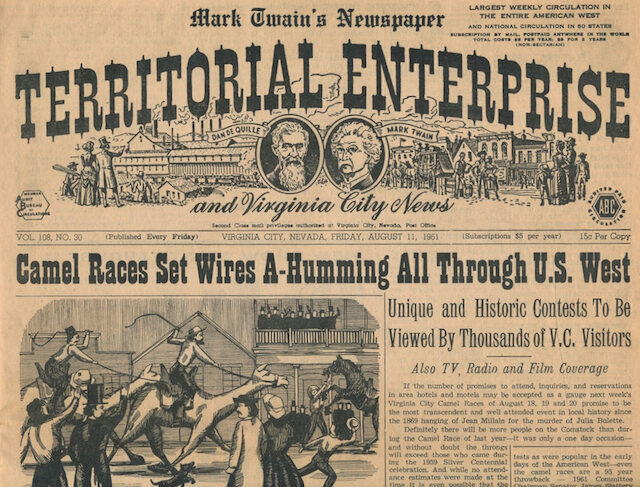
The Bullfrog Miner newspapers published in 1907

The Bullfrog Miner was a weekly newspaper that served the burgeoning mining communities of the Bullfrog Mining District in Nye County, Nevada, during the early 20th century. Published between 1905 and 1909, the newspaper chronicled the rapid rise and eventual decline of the region’s gold and silver mining boom, providing a vital source of local news, mining updates, and community developments. This report explores the historical context, publication details, content, and significance of The Bullfrog Miner, drawing on available archival information.

Historical Context

The Bullfrog Mining District, located in the Bullfrog Hills of southern Nevada, emerged as a significant mining hub following the discovery of gold in 1904. The initial strike sparked a rush that led to the establishment of settlements such as Bullfrog, Rhyolite, and Beatty. By 1905, the region was bustling with activity, with an estimated 3,000 residents, numerous mining companies, and infrastructure developments like railroads and telegraph lines. The economic prosperity, however, was short-lived, as the San Francisco earthquake of 1906 and subsequent financial challenges led to a decline in mining activity by 1909.

The Bullfrog Miner was launched at the peak of this boom to serve the informational needs of the district’s residents, miners, and investors. It competed with other local newspapers, such as the Rhyolite Herald and the Beatty Bullfrog Miner, in a region where media played a critical role in promoting optimism and attracting investment.

Publication Details

  • Publication Period: March 31, 1905, to September 25, 1909.
  • Frequency: Weekly.
  • Locations:
    • Initially published in Bullfrog, Nye County, Nevada, by the Bullfrog Miner Print Company.
    • Later moved to Rhyolite, Nevada, by March 1906, reflecting the shift of economic activity to the larger town.
  • Publisher: F.P. Mannix is noted as a key publisher during its run.
  • Volume and Issues: The newspaper began with Volume 1, Number 1, on March 31, 1905, and ceased with Volume 5, Number 27, on September 25, 1909.
  • Availability: Microfilm copies are available from Bay Microfilm, and some issues may be held by libraries, as noted in the Library of Congress records.

A notable error in the newspaper’s publication occurred in the January 12, 1906, issue, which was misdated as January 12, 1905, likely due to a typesetting mistake.

Content and Role

The Bullfrog Miner covered a wide range of topics relevant to the mining district:

  • Mining News: Reports on mine developments, such as the West Extension Mine’s progress and ore discoveries, were central to the newspaper’s content. For example, it documented the West Extension’s shift to large-scale development in 1906 and its later financial troubles in 1909.
  • Local Events: The newspaper reported on community activities, including the establishment of post offices, banks, and businesses, as well as social events like the formation of the Rhyolite Symphony Orchestra.
  • Infrastructure Developments: It highlighted significant projects, such as the completion of telephone lines to Bullfrog and Rhyolite in 1906 and the Bullfrog-Goldfield Railroad’s operations.
  • Economic Optimism: Like many boomtown newspapers, The Bullfrog Miner maintained a positive tone to sustain investor confidence, rarely reporting discouraging news even as the district’s fortunes waned.

The newspaper also reflected the competitive dynamics of the region. As Rhyolite emerged as the district’s metropolis, The Bullfrog Miner relocated there, and its coverage increasingly focused on Rhyolite’s growth, including the construction of major buildings like the Overbury building and the establishment of a miners’ union hospital.

Significance

The Bullfrog Miner was more than a local news outlet; it was a cultural and economic artifact of the Bullfrog Mining District’s brief but intense boom. Its significance lies in several areas:

  • Historical Record: The newspaper provides a primary source for understanding the daily life, economic activities, and social dynamics of the Bullfrog Mining District. It captures the optimism of the 1905–1906 boom and the challenges faced during the decline.
  • Community Identity: By reporting on local achievements and developments, The Bullfrog Miner fostered a sense of community among the district’s diverse population of miners, promoters, and settlers.
  • Economic Promotion: The newspaper played a role in attracting investment by highlighting the district’s potential, even as financial difficulties mounted after the 1906 San Francisco earthquake.
  • Archival Value: Despite its short run, the newspaper’s surviving issues offer valuable insights for historians studying Nevada’s mining history, particularly the boom-and-bust cycle that characterized the state’s economy.

Decline and Closure

The Bullfrog Miner’s closure in September 1909 was emblematic of the broader decline of the Bullfrog Mining District. Several factors contributed to its demise:

  • Economic Downturn: The San Francisco earthquake and fire of 1906 disrupted financial markets, weakening investor confidence in mining ventures. By 1909, many mines, including the West Extension, were idle or facing lawsuits.
  • Population Decline: As mining operations slowed, residents left the district. The 1909 tax rolls revealed that 28% of property owners abandoned their holdings, followed by 44% in 1910.
  • Competition: The Rhyolite Herald and other local publications outlasted The Bullfrog Miner, which struggled to maintain relevance as Rhyolite’s dominance grew.
  • Closure of Local Institutions: The failure of two Rhyolite banks and the closure of the Rhyolite Daily Bulletin in May 1909 signaled the district’s economic collapse, leaving The Bullfrog Miner with a dwindling readership.

Conclusion

The Bullfrog Miner was a vital voice of the Bullfrog Mining District during its brief but vibrant existence. From its first issue in 1905 to its final publication in 1909, it documented the hopes, achievements, and challenges of a community driven by the promise of gold and silver. While its optimistic reporting could not forestall the district’s decline, the newspaper remains a valuable historical resource, offering a window into Nevada’s mining frontier. Researchers can access its microfilm archives to explore the stories of a boomtown era that shaped the region’s identity.

References

  • Library of Congress, Chronicling America: The Bullfrog Miner (Bullfrog, Nye County, Nev.) 1905–1909.
  • Legends of America: Bullfrog Mining District, Nevada.
  • Rhyolite.org: The Bullfrog and Its Associated Mining Districts.
  • Mindat.org: Bullfrog Mining District, Bullfrog Hills, Nye County, Nevada, USA.

Bishop Park Campground – Inyo National Forest

Bishop Park Campground is a scenic, high-elevation campground in Inyo National Forest along the Middle Fork of Bishop Creek, just west of the town of Bishop, California. Situated at approximately 8,400 feet in the beautiful Bishop Creek Canyon of the Eastern Sierra Nevada, it offers a serene alpine setting with grassy lawns, direct creek access, and many walk-in tent sites right along the water.

The campground is popular with families, anglers, and outdoor enthusiasts due to its peaceful creekside location, proximity to trailheads into the John Muir Wilderness, and easy access to nearby lakes and attractions. It features a mix of sites, though it is best suited for tents and smaller RVs (large rigs and trailers are generally not recommended). Many sites have beautiful views of the surrounding mountains and aspen groves, which turn vibrant in the fall.

Amenities

Bishop Park Campground typically includes the following facilities:

  • 21 single-family campsites (many walk-in tent sites; a few suitable for smaller vehicles/RVs).
  • Picnic tables, fire rings with grills, and tent pads at each site.
  • Bear-proof food storage lockers (essential, as this is an active bear area).
  • Flush toilets.
  • Potable drinking water.
  • Trash collection.
  • Grassy areas and creekside access.
  • Group camping options are available nearby at the Bishop Park Group site.

No hookups, showers, or dump stations are available. Reservations are strongly recommended (often required) through Recreation.gov, especially during peak summer months. Firewood may be available for purchase, and camp hosts are usually on site.

Activities

The campground and surrounding area support a wide range of outdoor recreation:

  • Fishing: Excellent creek fishing right from many campsites for rainbow, brown, brook, and Alpers trout. Intake Lake II is just upstream for additional opportunities. Nearby Lake Sabrina is also popular.
  • Hiking: Direct access to trails into the John Muir Wilderness, with routes leading to alpine lakes, glaciers, and backcountry terrain. Popular nearby trails include those toward Bishop Pass and other high Sierra destinations.
  • Horseback riding: Available via local pack stations; trails are suitable for riders.
  • Wildlife viewing: Prime location for observing animals in their natural habitat.
  • Other activities: Picnicking, photography (especially fall colors), stargazing (dark skies at elevation), relaxing by the creek, and exploring nearby lakes and aspens. The area also serves as a great base for day trips to Mammoth Lakes, Ancient Bristlecone Pine Forest, or Mono Lake.

Wildlife in the Area

The Eastern Sierra around Bishop Park is rich in biodiversity. Common and notable wildlife includes:

  • Mammals: Mule deer (very common), black bears (frequent visitors—proper food storage is mandatory), coyotes, bobcats, mountain lions (less commonly seen), marmots, jackrabbits, and occasionally bighorn sheep (Sierra and Desert varieties in the broader region).
  • Birds: Various songbirds, raptors like golden eagles, and waterfowl near lakes and streams.
  • Other: Wild mustangs (in certain nearby areas), and smaller rodents/reptiles typical of the alpine and high-desert transition zones.

Note: Always practice bear safety—keep a clean camp and use provided bear boxes. Pets must be leashed, and feeding wildlife is prohibited.

Bishop Park Campground makes an ideal base for exploring the Eastern Sierra’s natural wonders, combining convenient amenities with immersive wilderness access. It’s especially lovely in summer for escaping valley heat and in autumn for fall foliage. Always check current conditions, fire restrictions, and availability on Recreation.gov or the Inyo National Forest website before planning your trip.

Wells Spicer

Wells Spicer (1831–1885 or 1887) was an American journalist, lawyer and judge whose over saw the trial after the gunfight at the O.K. Corral in Tombstone Arizona.

Historical photo of Wells Spicer, 1875. Cropped from group photo of John D. Lee's defense team for Lee's second murder trial.
Historical photo of Wells Spicer, 1875. Cropped from group photo of John D. Lee’s defense team for Lee’s second murder trial.

Early Life and Education

Wells Spicer was born in 1831 in Chemung, Tioga County, New York, to William and Seba Spicer, Presbyterian farmers. He had two siblings: an older brother, George, and a younger sister, also named Seba. Around 1840, when Wells was nine, the family relocated to Tipton, Cedar County, Iowa. As a young man, Spicer clerked for respected lawyer, banker, and merchant William H. Tuthill, under whose guidance he was admitted to the Iowa bar in 1853. That same year, Spicer, with associates, launched the Cedar County Advertiser, becoming its sole publisher and editor by 1854. He sold the successful newspaper four years later.

Early Career and Family

Spicer’s early career was multifaceted. In 1854, he ran unsuccessfully as a Democrat for county prosecutor but switched to the Republican Party and won election as county judge in 1856. That July, he married Abbie Gilbert, and they welcomed a son, Earnest, in 1857. The couple faced marital difficulties, separating in 1876, though Spicer considered himself married years later. After a brief stint in Onandaeg City, Colorado, Spicer moved to the Utah Territory in 1869 with former publishing colleague Charles Swetland, settling in Corinne City, a non-Mormon enclave. Admitted to the Utah bar, Spicer specialized in mining suits and claims and opened a hotel. Abbie and Earnest joined him around this time.

Utah Ventures and the Mountain Meadows Massacre Trial

In 1871, Wells Spicer and his family moved to Ophir City, Utah, where he continued legal work, prospected, and founded a tunneling company. He contributed to the Salt Lake Daily Tribune and Utah Mining Gazette. By 1872, the family settled in Salt Lake City, where Spicer was appointed U.S. Commissioner by the Supreme Court, handling cases primarily in Bingham. In 1874, he leased the Rollins Mine in the Lincoln Mining District near Minersville, striking a profitable lead and gold vein that revitalized the area.

Through his Beaver connections, Spicer became entangled in the infamous Mountain Meadows Massacre trial. In November 1874, Sheriff William Stokes arrested John D. Lee for his role in the 1857 massacre, where a Mormon militia killed approximately 120 emigrants in southern Utah. Spicer defended Lee in two trials. The first, in 1875, ended in a hung jury—eight Mormons voted for acquittal, four non-Mormons for conviction. Spicer faced backlash: non-Mormons labeled him a “jack Mormon” for defending Lee, while Mormons criticized his defense tactics. The second trial in 1876, with a Mormon-heavy jury, convicted Lee, who was executed by firing squad on March 22, 1877. Spicer’s reputation suffered, with both sides vilifying him in the press, often referring to him derisively as “One Spicer.”

Move to Tombstone and the O.K. Corral Hearing

In 1878, Spicer relocated to Tombstone, Arizona, where he worked as an attorney, mining broker, and U.S. Commissioner for Deeds. He was appointed Justice of the First District Court in June 1880, overseeing customs, internal revenue, and U.S. criminal cases. Related to the Earp brothers, Spicer’s most notable role came after the Gunfight at the O.K. Corral on October 26, 1881. The 30-second shootout pitted Marshal Virgil Earp, his brothers Wyatt and Morgan, and Doc Holliday against outlaws Billy Claiborne, Ike and Billy Clanton, and Tom and Frank McLaury. Billy Clanton and the McLaury brothers were killed.

As Justice of the Peace, Spicer presided over the preliminary hearing to determine if the Earps and Holliday should face murder charges, following complaints filed by Ike Clanton. The month-long “Spicer Hearing,” held in a building near the Tombstone Epitaph office, generated intense debate. Spicer’s rulings, including allowing Kate Holliday’s testimony despite her allegations against Doc Holliday, sparked accusations of bias, especially given his business ties with Wyatt Earp in liquor and tobacco sales. On November 29, 1881, Spicer ruled that the evidence would not support a murder conviction, citing the defendants’ actions as justified in their official duties. He noted the lawlessness of the frontier and the Earps’ role in maintaining order, though he acknowledged the Grand Jury could revisit the case. The Grand Jury upheld his decision, and the Earps and Holliday were released.

The bodies of Tom & Frank McLaury and Bill Clanton after the shoot-out in Tombstone

The ruling was polarizing. The Tombstone Epitaph praised Spicer, while the Tombstone Nugget and the Cowboy faction condemned him. In December 1881, Spicer received a threatening letter from “A Miner,” warning him to leave or face violence. Unintimidated, he remained in Tombstone but faced ongoing scrutiny for alleged partisanship.

Later Years and Mysterious Disappearance

The O.K. Corral decision effectively ended Spicer’s legal career in Tombstone. He shifted focus to prospecting, first in Pima County, Arizona, then in Ures, Sonora, Mexico. In the mid-1880s, he invested heavily in a silver mine in the Quijotoa Mountains near Tucson, but the shallow veins led to financial ruin. Destitute and reportedly despondent, Spicer’s final days are shrouded in mystery. In January 1887, while en route to Covered Wells, he visited Bill Haynes and attempted suicide twice. He then wandered into the Arizona desert and vanished. Some believe he died of exposure, while others speculate he faked his death to escape creditors and fled to Mexico, possibly Ures. A report suggests his body was found in Ajo, Arizona, in 1885, but no definitive evidence confirms his fate.

Legacy

Wells Spicer’s life encapsulates the complexities of the American frontier. A lawyer, journalist, prospector, and judge, he navigated the volatile worlds of mining, politics, and justice. His involvement in the Mountain Meadows Massacre trials and the O.K. Corral hearing placed him at the heart of two defining frontier events, earning him both fame and infamy. Criticized for bias yet praised for his legal reasoning, Spicer’s decisions reflected the blurred lines between law and lawlessness in the Wild West. His mysterious disappearance only adds to his enigmatic legacy, leaving historians to debate whether he met a tragic end or slipped away to a new life.

Thomas Long Smith

Thomas Long Smith known as "Peg Leg Smith" image from a woodcut in Hutchings' California Magazine, October 1860
Thomas Long Smith known as “Peg Leg Smith” image from a woodcut in Hutchings’ California Magazine, October 1860

Early Life and Beginnings

Thomas Long Smith, known as “Peg Leg” Smith, was born on October 10, 1801, in Crab Orchard, Kentucky. As a teenager, he left home seeking adventure, finding work on a flatboat navigating the Mississippi River. By the time he reached St. Louis, Missouri, Smith joined the ranks of fur trappers employed by John Jacob Astor, working alongside legendary mountain men like Kit Carson, Jim Bridger, and Milton Sublette. His early years were marked by a restless spirit and a knack for survival in the rugged American frontier.

Adventures as a Mountain Man

In the 1820s, Smith established himself as a skilled trapper and scout, joining expeditions that explored the American Southwest, including present-day New Mexico. He accompanied Alexandre Le Grand’s expedition as a scout, learning several Native American languages and adapting to the harsh environments of the frontier. His ability to navigate and communicate with Indigenous peoples made him a valuable guide for early expeditions.

In 1827, during a trapping expedition in North Park, Colorado, Smith’s life took a dramatic turn. Wounded in the left leg during a skirmish with local Indigenous people, he faced a dire situation. With no medical help available, Smith, assisted by fellow trapper Milton Sublette and fortified by a jug of “Taos Lightning” (a potent whiskey), amputated his own leg below the knee. Sublette sawed through the bone, and the wound was cauterized with a heated rifle barrel. Taken in by Ute women who treated his wound with traditional remedies, Smith recovered and crafted a wooden leg, earning the nickname “Peg Leg.” He adapted remarkably, learning to ride horses and even using his detachable wooden leg as a weapon in barroom brawls, cementing his reputation as a fierce and resourceful frontiersman.

A Life of Diverse Ventures

Smith’s career as a fur trapper thrived despite his disability, but by the 1840s, the decline of the fur trade pushed him toward less savory pursuits. He turned to horse theft, targeting large Mexican haciendas in California. In 1839, alongside mountain man Jim Beckwourth and Ute chief Walkara, Smith orchestrated a massive theft, rustling 3,000 horses from California ranches and driving them to New Mexico for profit. His partnership with Walkara also involved guiding 150 Utes across the Sierra Nevada, stealing hundreds of horses in daring raids. These exploits, while lucrative, drew the ire of authorities, forcing Smith to abandon horse thieving by the late 1840s.

During the late 1840s, Smith operated a trading post along the Oregon Trail near the Idaho-Wyoming border, assisting emigrants with supplies and repairs. Travelers described him as a “jolly one-legged man,” a testament to his charisma and resilience. He also engaged in prospecting, particularly in the Borrego Badlands of southeastern California, where his most enduring legend was born.

The Legend of the Lost Peg Leg Mine

A Map of Henry E. W. Wilsons search area published in Desert Magazine

Smith’s greatest claim to fame—and controversy—revolves around the so-called Lost Peg Leg Mine. According to legend, in 1829, while traveling from Yuma to Los Angeles, Smith attempted a desert shortcut and lost his way. Climbing a hill to regain his bearings, he noticed black, burned-looking rocks sprinkled with yellow particles. He collected samples, later learning in Los Angeles that these were gold nuggets. Despite repeated attempts, Smith could never relocate the hill, and the tale of his “lost mine” grew into a frontier myth. He sold maps and claims to the mine until his death, capitalizing on the 1849 California Gold Rush fever, though many doubted his story due to his reputation for embellishment and drinking.

Historical accounts cast doubt on the mine’s existence. Research by the Legend Detectives, a historical team, suggests that the gold mine story may belong to another “Pegleg,” possibly John Smith, active after Thomas Smith’s death. Interviews with Smith’s contemporaries, including trapping partner George Yount, and Smith’s own statements late in life, indicate he never claimed to have found gold. Nonetheless, the legend persists, fueling treasure hunts and the annual Pegleg Smith Liars Contest in Borrego Springs, where storytellers compete in his honor.

Later Years and Legacy

By the 1860s, Smith’s health and fortunes declined. He spent his final years in a veterans’ home in San Francisco, where he died penniless in October 1866 at a hospital, likely at Yerba Buena Cemetery. Conflicting reports, such as a 1930 newspaper claiming he died in a Los Angeles bar fight in 1880, reflect the muddled lore surrounding his life.

Smith’s legacy endures through cultural touchstones. The Peg Leg Smith Monument, established in 1948 by artist Harry Oliver in Anza-Borrego Desert State Park, invites visitors to add ten rocks to a pile for luck in finding the lost mine. Designated California Historical Landmark No. 750 in 1960, the site remains a draw for adventurers and history buffs. Smith appears in historical novels like Louis L’Amour’s The Lonesome Gods and Robert Lewis Taylor’s A Roaring in the Wind, as well as the 1995 game Oregon Trail II, where he runs a trading post. The annual Liars Contest, now held at American Legion Post 853, celebrates his storytelling prowess.

Historical Significance

Peg Leg Smith embodies the contradictions of the American frontier: a trailblazer who helped map the Southwest, a survivor who overcame immense hardship, and a rogue whose questionable deeds fueled his legend. While the Lost Peg Leg Mine may be more myth than reality, Smith’s life as a mountain man, trapper, and larger-than-life character captures the untamed spirit of the Wild West. His story, blending fact and fiction, continues to captivate, reminding us of the era’s rugged individualism and the allure of the unknown.

References