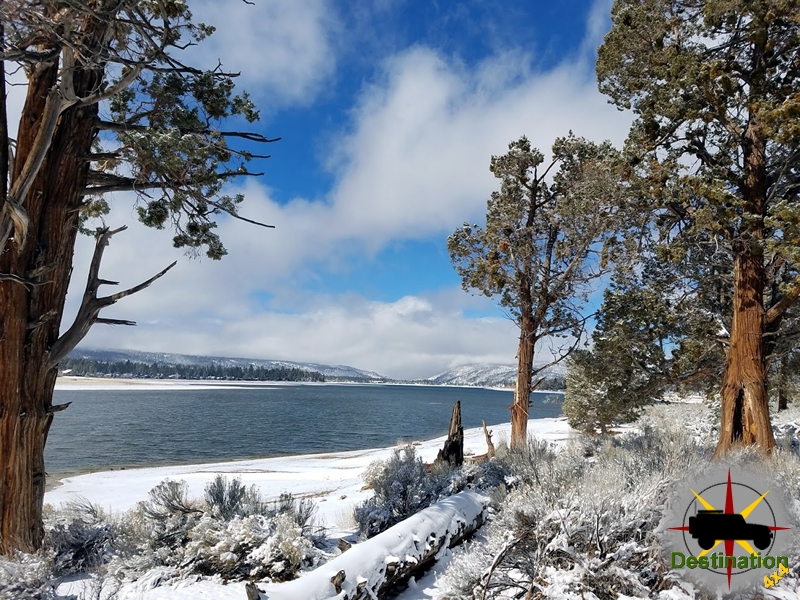
Big Bear, CA
I quiet mountain community full of back country adventure.
The Journey is the destination
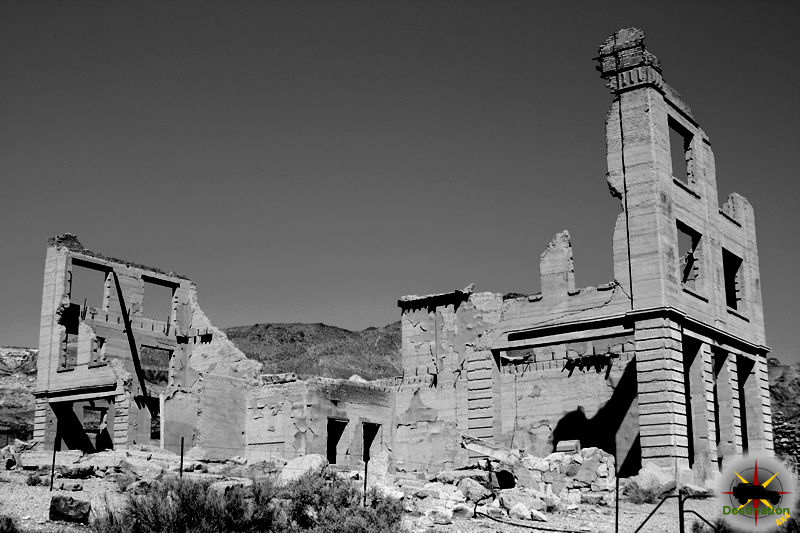
The Sutro Tunnel was a drainage adit into the Comstock Load, which is located in Lyon County, Nevada. Following Silver discovers and in the Comstock Load, a rush of people came into Nevada. Production from the Comstock is hindered by water flooding the tunnels at depth.

In 1865, Sutro’s tunnel gained traction and had gained approval from the federal and state governments. The Sutro Tunnel Company is formed and started selling stock certificates to raise funds. Construction began in 1869 and connected to the Savage Mine on July 8th, 1878. On June 30th, 1879, the tunnel is connected all of the mines and the first water is released.
Adolph Sutro sold his interest in the company following the completion of the project, however he stayed on the board of the organization. Later, he moved to San Fransic The tunnel is 3.88 miles in length and runs from Dayton to Virginia City.
Sutro was a town, a tunnel and a man. The orderly town was headquarters for the Sutro drainage tunnel. Adolph Sutro, German born, came to the Comstock in 1860. He advocated a drainage tunnel, visualizing development of the Comstock resource by a system long used to drain and explore mineral deposits.
By 1865, his vision gained approval of state and federal legislation. However, the mining interests, having at first supported the tunnel, became strongly opposed.
When construction began in 1869, it was first financed by the mine workers, since the tunnel would improve mine safety. Later, the funding came from international bankers.
The main tunnel broke through in 1878. Lateral tunnels were extended and the project drained, ventilated and serviced the Comstock as planned. When the tunnel was proven, Adolph Sutro sold his interest in the tunnel company and returned to San Francisco. A “magnificent hole in the ground” remains.
| Name | Sutro Tunnel |
| Location | Lyon County, Nevada |
| Nevada State Historic Marker | 85 |
| Latitude, Longitude | 39.2744, -119.5645 |
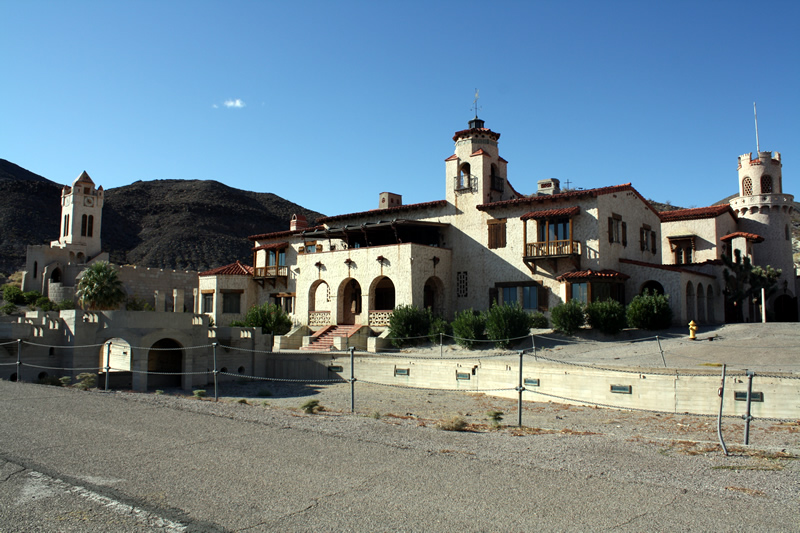
Stokes Castle is a point of interest and Nevada Start Historic Marker number fifty nine located in Lander County, Nevada. The granite rock tower is located on a hillside just outside of Austin, Nevada.
![Stokes Castle - Julie Nicoletta, "Stokes Castle", [Austin, Nevada], SAH Archipedia, eds. Gabrielle Esperdy and Karen Kingsley, Charlottesville: UVaP, 2012—, http://sah-archipedia.org/buildings/NV-01-CE10.](https://i0.wp.com/www.destination4x4.com/wp-content/uploads/2022/09/StokesCastle.jpg?ssl=1)

Stokes Castle is a three-story stone tower named for Anson Phelps Stokes who was a banker, investor and railroad man who built the tower as a summer home. The design of his summer home is inspired painting which pictures a tower in Roman Campagna, Italy.
Construction is started in 1896 and completed the following year. The hand-hewn granite stones were lifted into place using a hand winch and secured with a rock and clay mortar. The first floor of the tower consisted of a dining room and kitchen. The living room was located on the second floor, while the third floor houses two bedrooms. Each floor benefitted from a fireplace and the second and third floors boasted balconies along with plate glass windows to accentuate the view of the valley below..
Despite the money and time investment, the Stokes family only occupied the granite towerN for a few short weeks. Stokes sold his interest is some of the local mining operations, and moved further west. After which the structure fell into disrepair.
Today, the stone tower is a privately owned property and recognized as Nevada State Historic Landmark. The structure is surrounded by a chain link fence to prevent unauthorized access.
Anson Phelps Stokes, mine developer, railroad magnate and member of a prominent eastern family, built Stokes Castle as a summer home for his sons. After the castle (or the tower, as the
Stokes family always referred to it) was completed in June 1897, the Stokes family used it for two months. Since then, with one possible exception, the structure has remained unoccupied.
Stokes Castle is made of huge, granite stones, raised with a hand winch and held in position by rock wedging and clay mortar. The architectural model for the castle was a medieval tower Anson Stokes had seen and admired near Rome. This building originally had three floors, each with a fireplace, plate glass windows, balconies on the second and third floors, and a battlemented terrace on the roof. It had plumbing and sumptuous furnishings.
Stokes Castle has served for decades as an iconic Nevada building often photographed by enthusiasts of Western history.
STATE HISTORICAL MARKER NO.59
STATE HISTORIC PRESERVATION OFFICE
AUSTIN CHAMBER OF COMMERCE
| Name | Stokes Castle |
| Location | Lander County, Nevada |
| Nevada State Historic Mark | 59 |
| Latitude, Longitude | 39.4936, -117.07986 |
Located at 5,354 above sea level, Tenabo Nevada is a gold mining camp and ghost town located in Lander County, Nevada

In 1907, silver is discovered in the Bullion mining district. The discovery lead to the formation of Tenabo on the eastern slope of the Shoshone Range. The townsite is platted out and located just east of the mining district. Several wooden structures are built and with months a population of about 1,000 people called the town home.
The citizens of Tenabo ran and were serviced by several businesses including a hotel, restaurant, assay office, grocery store, school, post office. Saloons and “Sporting Houses” kept the men inline and happy. Goods and services along with people are delivered with tri-weekly stage service from Beowawe. Automobiles and a steam traction service also provided access to the town.
For three years, several active mines kept the mill running in Mill Gultch. After 1911, the high cost of goods and water hauling hampered continued mining operations. The post office is closed on July 31st, 1912.
About 1916, A. E. Raleigh finds placer gold in Mill Gulch and soon a camp is named for him. Placer mining continue in the surrounding ravines for the next twenty years. In the 1930’s a floating dredge continue placer mining operations and recovered significant amounts of gold until the 1940’s
In 1972, the mines near Tenabo are purchased by the Mid-West Oil Corporation. Mid-West Oil in turn sold the mining rights to the Tenabo Gold Placers Limited Partnership. Today the mines are still actively worked by the Flowery Gold Mines Company of Nevada.
| Name | Tenabo Nevada |
| Location | Lander County, Nevada |
| Latitude, Longitutude | 40.314444, -116.676667 |
| Elevation | 5,354 |
| GNIS | 844209 |
| Post Office | December 7, 1906 – July 31, 1912 |
| Population | 1,000 |
Tenabo Nevada is located about twenty five miles south east of Battle Mountain, Nevada just off I-80 at the Beowawe exit.
Founded in 1851, Carson City is Nevada’s Birthplace the state capitol of Nevada and the subject of Nevada State Historic Marker number 12. Carson City is a wonderful little city to visit with a lot of history to explore. The city features a very high density of Nevada State Historic Markers and is a must do if you are trying to visit the complete list.

Nevada State Historical Markers identify significant places of interest in Nevada’s history. The Nevada State Legislature started the program in 1967 to bring the state’s heritage to the public’s attention with on-site markers. These roadside markers bring attention to the places, people, and events that make up Nevada’s heritage. They are as diverse as the counties they are located within and range from the typical mining boom and bust town to the largest and most accessible petroglyph sites in Northern Nevada Budget cuts to the program caused the program to become dormant in 2009. Many of the markers are lost or damaged.
Carson Valley is the Birthplace of Nevada. By 1851, people settled at a place they called Mormon Station, renamed Genoa in 1856. With the early establishment of a post office and local government, the community can lay claim to the title of “Nevada’s first town.”
Thousands of emigrants moved over the old road skirting the west bank of the Carson River as they prepared to cross the Sierra, feeding their livestock on grass cut along the river. At Genoa; at Mottsville, settled in 1852; and at Sheridan, settled by Moses Job about ’54; emigrants stopped to enjoy produce of the region’s first gardens. Pony Express riders used this route in 1860, switching a year later to the shorter Daggett Trail, now Kingsbury Grade.
NEVADA CENTENNIAL MARKER No. 12
STATE HISTORIC PRESERVATION OFFICE
| Name | Nevada’s Birthplace |
| Location | Douglas County, Nevada |
| Latitude, Longitude | 39.0038, -119.7604 |
| Nevada State Historic Marker | 12 |
The Upper Lake Campground is a free camp ground which features lakeside camping along the shore of Upper Lake Pahranagat, in Lincoln County, Nevada.

The Pahranagat National Wildlife Refuge is managed as a sanctuary where present and future generations of people can discover a connection to the rhythms of life. In spring, indigo bush and beavertail cactus bloom at the edges of verdant meadows and wetlands, fed by brimming lakes. The vital, spring-fed waters of this Mojave Desert oasis attract thousands of migratory birds each year. Pahranagat NWR’s seasonal marsh, wet meadows, and alkali flats provide high quality resting and foraging habitat for wintering and migrating waterfowl, shorebirds, and other waterbirds along the Pacific Flyway. Riparian gallery forests of willow, cottonwood, and associated plant communities support a flourishing population of the endangered southwestern willow flycatcher as well as a rich diversity of migratory and resident songbirds, colonial nesting species, and birds of prey. Coveys of Gambel’s quail emerge at dusk along with abundant cottontails and jackrabbits as nighthawks, coyotes, and owls begin to hunt. Each fall brings returning waterfowl and waterfowl hunters, while mountain lions follow mule deer down into the valley.
The Upper Lake Campground is situated along the easter shore of Upper Lake Pahranagat between the lake Nevada Highway 93.
| Name | Upper Lake Campground |
| Location | Paharagat Valley, Lincoln County, Nevada |
| Latitude, Longitude | 37.3018, -115.1231 |
| Number of Sites | 15 |
| Cost | Free |