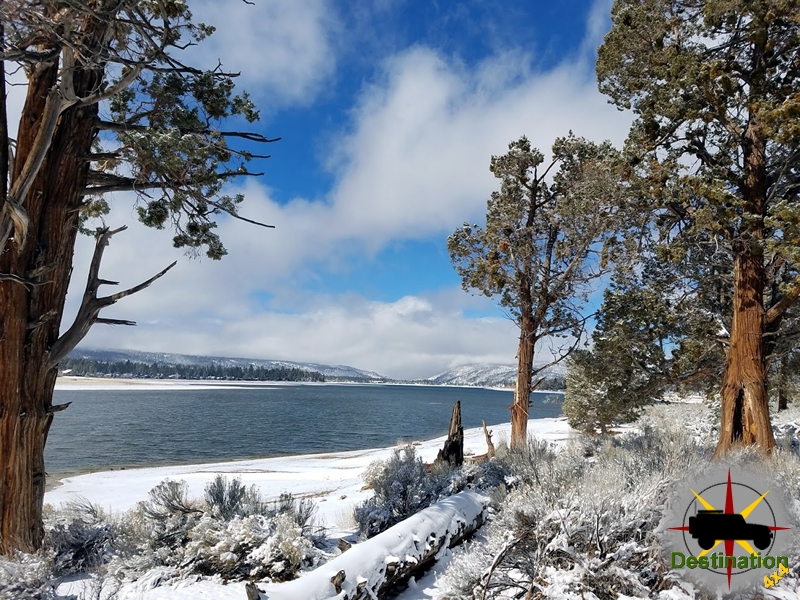
Big Bear, CA
I quiet mountain community full of back country adventure.
The Journey is the destination
Aphonopelma iodius, commonly known as the Desert Tarantula (also called Great Basin blonde, Mojave Desert tarantula, northern blonde, or similar regional names in the pet trade), is a medium to large-bodied tarantula. Adults typically have a diagonal leg span of 3–5 inches (7.6–12.7 cm), with a body length (carapace to abdomen) of about 1.5–2.5 inches. Females are generally stockier and larger overall than males, while males have longer, more slender legs and a slimmer abdomen.

The coloration is usually dark brown to blackish or grayish-brown, with a covering of lighter (blondish, reddish-brown, or golden) hairs, giving it a somewhat “blonde” appearance in many individuals—especially noticeable on the carapace and legs. Like other New World tarantulas, it possesses urticating hairs on the abdomen, which it can kick off as a defensive mechanism to irritate predators’ skin, eyes, or respiratory system. The spider has small eyes clustered on a raised tubercle, powerful chelicerae (fangs), and a robust, hairy build typical of theraphosids. Its venom is mild and not medically significant to humans, causing pain similar to a bee sting at most.
| Kingdom: | Animalia |
| Phylum: | Arthropoda |
| Subphylum: | Chelicerata |
| Class: | Arachnida |
| Order: | Araneae |
| Infraorder: | Mygalomorphae |
| Family: | Theraphosidae |
| Genus: | Aphonopelma |
| Species: | A. iodius |
The taxonomy of the genus Aphonopelma has been complex and subject to multiple revisions due to morphological similarities among species. A major 2016 integrative taxonomic revision (using phylogenomic, morphological, and geospatial data) consolidated several previously described species or synonyms (such as A. brunnius, A. chamberlini, A. icenoglei in some contexts, A. melanium, A. nevadanum, A. zionis, among others) into A. iodius, resulting in a broader species concept. This species is now recognized as valid in current classifications, including the World Spider Catalog.
A. iodius is a reclusive, nocturnal ambush predator that spends the majority of its life in a silk-lined burrow dug into the soil, often under rocks, logs, or in desert flats. The burrow entrance may have a webbed mat or silken collar. It emerges primarily at night to hunt, ambushing passing prey such as insects (crickets, beetles, grasshoppers), other arthropods, and occasionally small vertebrates like lizards.
This species is generally docile and avoids confrontation. When threatened, it may rear up to display its fangs, kick urticating hairs, or flee rather than bite. Bites are rare and not dangerous to humans. A notable behavioral trait is the seasonal activity of mature males: during late summer through fall (typically August–October, depending on region), males leave their burrows and wander openly during daylight or twilight hours in search of receptive females. This leads to frequent sightings of males crossing roads or open ground during this mating period. Females remain in or near their burrows. Lifespan varies significantly by sex—males live around 3–7 years (often dying shortly after mating), while females can live 15–20+ years or longer in captivity.
Aphonopelma iodius is native to the arid southwestern United States, primarily inhabiting desert and semi-arid environments. Its range includes:
It is particularly common in the Mojave Desert west of the Colorado River, extending into parts of the Great Basin and adjacent arid zones. Habitats consist of dry, open areas with sandy or rocky soils suitable for burrowing, including desert scrub, grasslands, and rocky hillsides. It avoids extremely hot, low-elevation Sonoran Desert cores (where the related A. chalcodes, the Desert Blonde Tarantula, predominates). Populations are often localized but can be abundant in suitable microhabitats.
This species is well-adapted to desert conditions, remaining in burrows during extreme heat or cold to conserve moisture and avoid predators such as tarantula hawks (Pepsis wasps), birds, and mammals.

Oh! Ridge Campground is the first campground in the June Lake Loop located in the Eastern High Sierra in Mono County, California.
The campgrounds is at an elevtion of 7,600 feet. Campsites are a ridge in an open area above the shoreline of scenic June Lake. There is a day use area which has a a swimming beach located adjacent to the campground.
The outstanding lake and mountain views at this campground are a favorite spot for both families and anglers. Every campsite has a bear locker for food storage. Active bear area, bear boxes are provided and must be used (typical bear box size 48″x 30″x 36″).
June Lake serves as a wonderful place to camp and can be a great jumping off point to explore many of the Central Sierra’s attractions including Tioga Pass, Yosemite National Park , Mono Lake, Lee Vining, Bodie State Historic Park, Bridgeport, Green Lakes, Devil’s Postpile National Monument, Mammoth Lakes, Crowley Lake and the Long Valley Caldera, Lundy Canyon, Virginia Lakes, Big Springs and the Upper Owens River, the Mono Craters, the Inyo Craters, and the Benton Hot Springs
| Name | Oh! Ridge Campground |
| Location | June Lake Loop, Mono County, California |
| Latitude, Longitude | |
| Elevation | 7,600 feet |
| Number of Sites | 143 |
| Amenities | Bear Locker, Water, Flush Toilets |
June Lake Campground is nestled next to June Lake In the Sierra Nevada of California and the scenery of the Ansel Adams Wilderness. The Campground is located in the Eastern Sierra, near the town of June Lake, at an elevation of 7,600 feet.
This campground has 28 campsites which are situated in an aspen grove and pine forest and the lake is easily accessible for each campsites. The high mountains which form the valley walls in which the lake is situated offers some majestic views and the long light of the late afternoon.
June Lake fishing has world class fishing, a marina, and boat rentals make this a favorite spot for both families and anglers.
This is a wonderful location to camp and can be a great jumping off point to explore many of the Central Sierra’s attractions including: Mono Lake, Lee Vining, Bodie State Historic Park, Bridgeport, Green Lakes, Devil’s Postpile National Monument, Mammoth Lakes, Crowley Lake, Lundy Canyon, Big Springs and the Upper Owens River, the Mono Craters, the Inyo Craters, and the Benton Hot Springs
Bear activity is very high in the area. A bear-proof locker is located at each site at campsites. All food and scented items must be stored in the lockers. All trash must be disposed of in the bear proof trash receptacles. Do not store food, trash or scented items in your vehicle.
| Name | June Lake Campground |
| Location | June Lake Loop, Mono County, California |
| Latitude, Longitude | 37.7819488,-119.0761371 |
| Elevation | 7,600 |
| Number of Sites | 29 |
| Amenities | Bear Boxes, Table, fire rings |
Gull Lake Campground is a small, shaded and private campground in the June Lake Loop of the Sierra Nevada Mountains. Gull lake is just over 60 acres in area the the smallest of the four roadside lakes on the June Lake Loop. Despite its diminutive size the lake is popular for anglers and those who enjoy the majestic views of the towering mountains which make up the valley.

The campsites are well shaded, set beautifully amongst willow tress which also offer a large amount of privacy. The campground is situated near the lake and some of the campsites have lake front access.
Gull Lake offers some amazing fishing and its population of Rainbow trout, Brown trout, cutthroat and brook trout offer a nice diversity for such a small lake. There is a nice little marina for boat access and rental. A popular playground also is located near the marina.
This campground is located in bear county, so prepare accordingly and camp responsibly. Bear boxes are provided and must be used (typical bear box size 48″x 30″x 36″). The campground is typically open from the last weekend in April until November 1. each year
| Name | Gull Lake Campground |
| Location | June Lake Loop, Mono County, California |
| Latitude, Longitude | 37.7731237,-119.0841089 |
| Elevation | 7,600 feet |
| Number of sites | 16 |
| Amenities | Tables, Flush Toilets, Fire Rings, shade tress |

Grant Lake Campground and marina is the northern most campground of the June Lake Loop located in Mono County, California. The lake is also the largest of the four lakes in the June Lake area and home of the brown trout. The German Brown Trout is a native species is highly sought after by anglers around the world. Grant Lake’s German Brown Trout are 100% native to this lake.

The lake offers a full service marina and has snacks, refreshment, tackle, gasoline and boat launching. Grant Lake is the only lake of the four to allow water-skiing, wake-boarding and personal watercraft are allowed after 10:00 am.
The campsites are nestled among Aspen trees and features high sierra mountains, lake views, tables, fire rings and flush toilets. The campground observes quiet time beginning at 10pm and ends at 7am daily. During this time, please refrain from loud talking and partying, playing radios, running generators, or any other loud activities that may disturb other guests.
This campground is located in bear county, so prepare accordingly and camp responsibly. The campground is open from last Saturday in April through mid October.
| Name | Grant Lake Campground |
| Location | June Lake Loop, Mono County, California |
| Latitude, Longitude | 36.2373876,-115.3430201 |
| Elevation | 7,200 feet |
| Number of Sites | 70 |
| Amenities | Showers, Water, Tables, Sewer, Fire Rings – No Electricity |