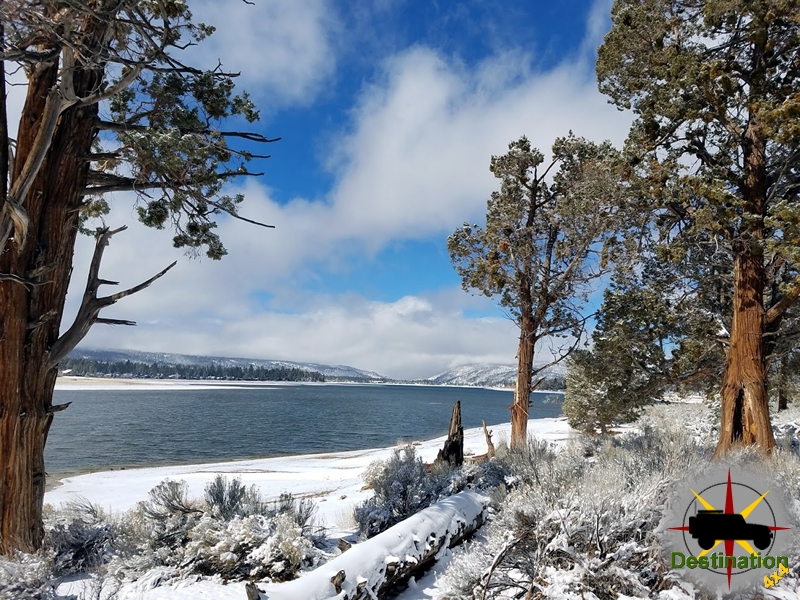
Big Bear, CA
I quiet mountain community full of back country adventure.
The Journey is the destination
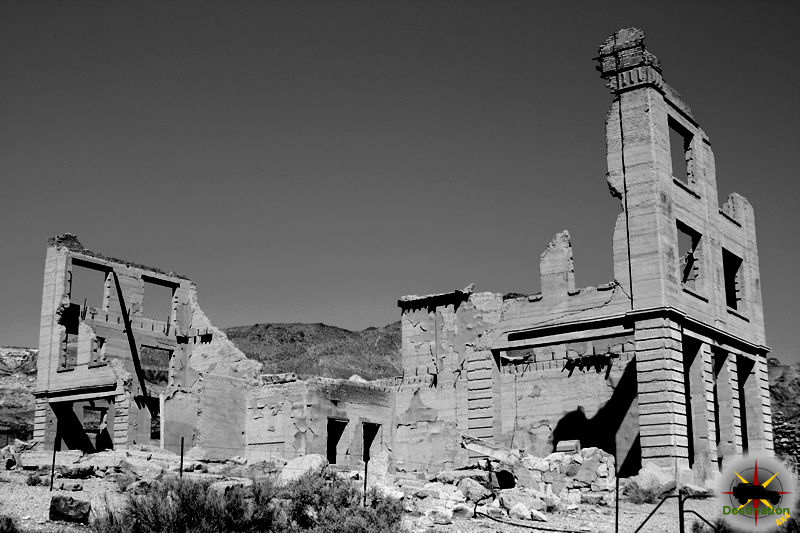
The Millers Nevada State Historic Marker 101 can be found at a rest area along Highway 6, situated a few miles to the west of Tonopah, within Esmeralda County, Nevada. Historically, Millers served as both a train station and a watering point for the Tonopah and Goldfield Railroad, playing a significant role in the region’s transportation network.

Following a mining boom in Tonopah in 1901 and construction of the Tonopah and Goldfield Railroad, Millers was first founded in 1904 as a station and watering stop. The name honored Charles R. Miller, a director of the railroad and former governor of Delaware. He also served as vice-president of the Tonopah Mining Company and instrumental in having its 100-stamp cyanide mill built here in 1906.

In 1901, a mining boom occurred in Tonopah, leading to the establishment of the Tonopah and Goldfield Railroad. This development set the stage for the founding of Millers in 1904, which began as a station and watering stop. The name “Millers” was chosen to honour Charles R. Miller, who was a director of the railroad and had previously served as the governor of Delaware. Additionally, he held the position of vice-president of the Tonopah Mining Company and played a crucial role in the construction of its 100-stamp cyanide mill, which was built in the area in 1906.
The year 1907 saw a significant boom for the town, attributed to the establishment of the Tonopah and Goldfield Railroad’s repair shops and another substantial mill. By 1910, the population of Millers had risen to 274, and the town featured a business district along with a post office. Despite its relatively small size, Millers was proud of its modest business district and claimed to have a large park that included a baseball diamond and a grandstand for spectators.
However, by 1911, the railroad shops and the mill relocated, marking the beginning of a decline for Millers. The town ultimately became abandoned in 1947 when the railroad ceased operations.
As a result of mining excitement at Tonopah in 1901 and subsequent construction of the Tonopah and Goldfield Railroad, Millers was first founded in 1904 as a station and watering stop on that line. The name honored Charles R. Miller, a director of the railroad and former governor of Delaware. He was also vice-president of the Tonopah Mining Company and was instrumental in having its 100-stamp cyanide mill built here in 1906. In 1907, the town boomed with the construction of the T. & G. R.R.’s repair shops and another large mill. The population grew to 274 in 1910, when the town boasted a business district and post office. By 1911, the railroad shops and a mill had been moved away, and Millers began to decline. It was abandoned in 1947 when the railroad went out of business.
STATE HISTORICAL MARKER No. 101
STATE HISTORIC PRESERVATION OFFICE
AMERICAN LEGION, NEVADA DEPT.
| Name | Millers |
| Location | Esmeralda County, Nevada |
| Nevada State Historic Marker | 101 |
| Latitude, Longitude | 38.1402, -117.4539 |
| Elevation | 4,800 Feet |
| GNIS | 856083 |
| Population | 275 |
| Post Office | 1906 – |
Eureka, Nevada, a picturesque town nestled within the vast and rugged landscape of the American West, has a rich and colorful history that dates back to the mid-19th century. Located in Eureka County, this once-thriving mining town was born from the silver boom of the late 19th century, and its history is intertwined with the rise and fall of the mining industry that defined the region.

Eureka’s history can be traced back to 1864 when silver ore was discovered in the nearby Ruby Mountains. This discovery ignited a rush of prospectors and miners to the area, hoping to strike it rich. The town itself was officially founded in 1869, and it was named after the Greek word “eureka,” which means “I have found it,” reflecting the optimism and excitement of the time.
The silver boom in Eureka was propelled by the rich deposits of silver and other precious metals found in the area. The Eureka Mining District became one of the most productive silver mining regions in the United States, attracting thousands of fortune seekers from all over the country. The district’s mines, including the Ruby Hill Mine and the Eureka and Palisade Mine, produced millions of dollars worth of silver, lead, and gold.

As silver mining operations expanded, Eureka flourished. The town quickly developed into a thriving community with a population that swelled to over 9,000 residents at its peak. Eureka boasted a robust economy, with numerous businesses, saloons, and even an opera house. The town also became known for its well-maintained streets, impressive buildings, and a sense of cultural refinement uncommon in many frontier towns.
Eureka was not just a mining town; it was also a hub of innovation. The Eureka and Palisade Railroad, completed in 1875, connected the town to the Central Pacific Railroad hub in nearby Palisade, Nevada. The rail connection facilitated the transport of ore and supplies. The town also had its own newspaper, the Eureka Sentinel, which documented the local events and served as a source of news for the region.

The late 19th century brought both prosperity and challenges to Eureka. The Silver Panic of 1893, combined with falling silver prices, led to a significant economic downturn in the region. Many mines closed, and the population dwindled as miners left in search of new opportunities. However, some mining operations persisted, and Eureka continued to be a center of commerce and trade.
Nevada State Historical Markers identify significant places of interest in Nevada’s history. The Nevada State Legislature started the program in 1967 to bring the state’s heritage to the public’s attention with on-site markers. These roadside markers bring attention to the places, people, and events that make up Nevada’s heritage. They are as diverse as the counties they are located within and range from the typical mining boom and bust town to the largest and most accessible petroglyph sites in Northern Nevada Budget cuts to the program caused the program to become dormant in 2009. Many of the markers are lost or damaged.
“Eureka!” a miner is said to have exclaimed in September, 1864, when the discovery of rich ore was made here–and thus the town was named. Eureka soon developed the first important lead-silver deposits in the nation and during the furious boom of the 80’s had 16 smelters, over 100 saloons, a population of 10,000 and a railroad, the colorful Eureka and Palisade that connected with the main line 90 miles to the north.
Production began to fall off in 1883 and by 1891 the smelters closed, their sites marked by the huge slag dumps seen at both ends of Main Street.
| Name | Eureka, Nevada |
| Location | Eureka County, Nevada |
| Latitude, Longitude | 39.5003, -115.9582 |
| Nevada State Historic Marker | 11 |
Darwin is a unincorporated community, gold mining town and ghost town located in Inyo County, California about 22 miles from Keeler. The town was named for Darwin French, who lead a party of prospectors into Death Valley in 1860 looking for the mythical gunsight lode. This prospecting eventually lead to the wash, canyon and town named in his honor.

The site which became Darwin was formed in 1874 following a discovery of lead and silver. The overall grwoth of the town was limited by its water supply which is piped from over eight miles away. This discovery coincided with near by Panamint, although the rush to Darwin was more muted. Darwin has a population of about 700 at this time.
The Coso Mining News published weekly from 1875 – 1878 by T.S. Harris. The newspaper closed in September 1878 and the publisher moved up north to Bodie. The moved of the newspaper is symptomatic and followed by many others including miners seeker greener pastures. The town of Darwin had a remaining population of about 250 people. Despite the plunging population the town still supported six saloons, four stores, three restaurants and a drug store. Between the years of 1874 and 1877 newspapers reported at least 80 murders.
Darwin is a rarity and survived its original boom. The town remained viable until World Was I, when larger mining operations could profit of lower yielding ores. A post office opened in 1875 and closed in 1902. Eventually, the post office reopened and remains open today.

In 2011, a documentary called Darwin is available on Amazon Prime. The documentary is described, “Propelled from society by tragic turns, the isolated community of Darwin, Death Valley (population 35) must now find ways to coexist in a place without a government, a church, jobs, or children.” I did watch the documentary and found it interesting. However, its focus was on the people living there now and not much on the history.
Recently, Brent Underwood, owner of Cerro Gordo featured Darwin on his youtube channel. He was scrounging old boards from buildings in Darwin to help rebuild Cerro Gordo. I am not sure how I feel about damaging one old town to rebuild another…
| Name | Darwin, California |
| Location | Inyo County, California |
| Latitude, Longitude | 36.268056 -117.591667 |
| Elvation | 4,790 ft ( 1460 m ) |
| GNIS | 241269 |
| Population | 3500 |
| Post Office | Open |
| Newspaper | Coso Mining News ( Nov. 6, 1875 – Sept. 4, 1878 ) |
Located along the banks of the Humboldt River in Eureka County lies the remains of a railroad town critical to the construction of the Transcontinental Railroad. The townsite was named for Palisade Canyon and located west of town. The narrow canyon is a major barrier in the construction of the railroads. The townsite was plotted in 1868 and served as a train station for the Central Pacific Railroad. Soon the town became a transportation hub which served Mineral Hill, Eureka, Hamilton and other mining camps in the region.

In May, 1870, the town establishes a Post Office. Shortly thereafter, in 1874, the Eureka and Palisade Railroad in established. Following the formation of this transportation conduit to Eureka, the population of Palisade flourished. By the end of the 1870’s the town boasted commercial stores, houses, two churches, a school along with a multitude of hotels and saloons.
Although the town has a low crime rate and a sheriff, it did maintain the pretext of the wild western town. It is common, when a train arrived, the the residents would stage “gunfights” and “bank robberies” in order to boost tourism. In 1885, the town builds a new train telegraph office and train station, which services both railroads.

Nearby, the mines in Eureka begin to fail in 1885. As the mines declined so did the railroads, jobs and population.
In 1908, the Western Pacific Railroad travels through the town and serviced Northern Nevada. Following flooding of the Humboldt River in 1910, all three railroads are damaged and the town never recovers to its previous acclaim.
Rail Watchman Shot as He Fights 2 Men With Dynamite at Nevada Bridge
Both Suspects Escape
17 Sticks of Explosive are Found on Right of Way
Elko, Nev. November 8, 1932 – What Southern Pacific officials said they believed was an attempt to wreck President Hoover’s special train was frustrated near Palisade, west of here, last night, when a watchman surprised and frightened away two men carrying sticks of dynamite near the railroad right-of-way.
New York Times – November 9, 1932
Palisade Nevada lies along the banks of the Humboldt River just west of Nevada State Route 278. The town site is about 10 miles (16 km) south of Carlin, and about 33 miles (53 km) southwest of Elko.
Nevada State Historical Markers identify significant places of interest in Nevada’s history. The Nevada State Legislature started the program in 1967 to bring the state’s heritage to the public’s attention with on-site markers. These roadside markers bring attention to the places, people, and events that make up Nevada’s heritage. They are as diverse as the counties they are located within and range from the typical mining boom and bust town to the largest and most accessible petroglyph sites in Northern Nevada Budget cuts to the program caused the program to become dormant in 2009. Many of the markers are lost or damaged.
The Nevada State Historic Marker is located near the intersection of Nevada Route 278 and Palisade Ranch Road.
Located in the tank-like depths of Palisade Canyon, Palisade—first named Palisades—was surveyed and laid out by the Central Pacific Railroad in February 1870. During the 1870s, it rivaled Elko and Carlin as a departure point on the Central Pacific for wagon, freight, and stage lines to Mineral Hill, Eureka, and Hamilton.
In October 1875, with completion of Eureka and Palisade Railroad, Palisade became the northern terminus and operating headquarters for this little, ninety-mile narrow-gauge line stretching southward to Eureka. Between 1875 and 1930, the town was the principal transfer and shipping point on the Central Pacific (which later became the Southern Pacific) and on the Western Pacific Railroad after its 1909 completion.
At its peak, the town boasted a population of 300. It was a self-contained community, and railroading was its business. There were passenger and freight stations, sidings on both the Southern Pacific and Western Pacific Railroads, and a large ore transfer dock between the narrow gauge and standard gauge lines. All Eureka and Palisade (Eureka-Nevada after 1912) headquarters facilities were situated here.
After the narrow-gauge line ran its last train in September 1938, Palisade went into a long decline. The post office was finally closed in 1962.
STATE HISTORICAL MARKER NO. 65
STATE HISTORIC PRESERVATION OFFICE
NORTHWESTERN NEVADA HISTORICAL SOCIETY
| Name | Palisade Nevada |
| Also Known by | Palisades, 10-Mile Canyon, 12-Mile Canyon |
| Location | Eureka County, Nevada |
| Latitude, Longitude | 40.6102, -116.1986 |
| Elevation | 4,850 feet |
| GNIS | 847450 |
| Nevada State Historic Marker No | 65 |
| Population | 300 |
| Post Office | May 1870 – 1961 |
Jawbidge, Nevada is a small town located in the northeastern part of the Nevada in Elko County. The discovery of gold and silver in the region brought an influx of miners and prospectors to the area, and Jawbidge quickly became a center of mining activity. “Jarbidge” is a name derived from the Shoshone language meaning “devil”. Native American Tribes believed the nearby hills were haunted.

Jarbidge, Nevada is a small town located in the northeastern part of the state with a rich mining history. The discovery of gold and silver in the region brought an influx of miners and prospectors to the area, and Jarbidge quickly became a center of mining activity.
The first miners in the area were individual prospectors who panned for gold along the Jawbidge River and its tributaries. The early miners found small deposits of gold, but it was not until the 1870s that larger deposits were discovered. These deposits were located in the hills and mountains surrounding the town.
In 1874, a group of miners discovered a rich vein of silver in the nearby Jarbidge Mountains. The discovery sparked a mining rush, and thousands of miners flocked to the area. The miners established camps and small settlements along the rivers and streams that ran through the region. The Jarbidge River, which runs through the town, was a particularly rich source of gold and silver.
The mining industry in Jawbidge was characterized by a boom-and-bust cycle. In the early days, the mining was done using simple tools like pickaxes and shovels. The miners worked long hours in dangerous conditions, and many of them died from accidents or from diseases like silicosis. Despite the dangers, the lure of gold and silver kept the miners coming.
In the 1880s, the mining industry in Jarbidge underwent a period of rapid expansion. New mines were opened, and new technologies were introduced that allowed for more efficient extraction of gold and silver. One of the most important innovations was the introduction of the stamp mill. This machine used heavy steel stamps to crush the ore, which was then separated from the waste material. The stamp mill allowed for large-scale mining operations, and it became the backbone of the mining industry in Jarbidge.

During this period, the town of Jarbidge grew rapidly. New businesses were established to support the mining industry, including supply stores, saloons, and boarding houses. The town’s population grew, and it became a center of commerce in the region.
In the 1890s, the mining industry in Jarbidge began to decline. Many of the mines had exhausted their deposits of gold and silver, and the cost of extracting the remaining ore became too high. The decline of the mining industry had a ripple effect on the town’s economy. Many businesses closed, and the population began to shrink.
Despite the decline of the mining industry, a few mines continued to operate in the area. In the early 1900s, a new mineral was discovered in the Jawbidge Mountains – tungsten. Tungsten was used to make steel alloys, and it became a valuable commodity during World War I. Several tungsten mines were opened in the area, and they helped to sustain the local economy.
In the 1920s, a new mining boom began in Jarbidge. This boom was fueled by the demand for copper, which was used in the construction of electrical wiring and other products. Several large copper mines were opened in the area, and they brought new jobs and prosperity to the town.
During World War II, the mining industry in Jarbidge played a critical role in the war effort. The mines produced copper, tungsten, and other minerals that were used to build weapons and other military equipment. The town’s population swelled as miners and other workers were brought in to support the war effort.
After the war, the mining industry in Jarbidge began to decline once again. The demand for copper dropped, and the mines began to close. The town’s economy shifted toward tourism and other industries.
As early as 10000 years ago, Native American hunting parties camped near horn to hunt game. About a thousand years ago, Shoshone-speaking people entered the region, where they continue to live today. The name Jarbidge comes from a Shoshone word meaning “a bad or evil spirit”.
Dave Bourne discovered gold in this isolated area in 1909 and production eventually totaled 59 million. Population size varied, but in the early l920s, the Jarbidge district replaced fading Goldfield as the premier gold-producing area in Nevada. The Jarbidge mines railed beginning in the tale 1920s.
On a stormy December 5, 1916, the last stagecoach robbery and murder in the history of the West took place in Jarbidge Canyon, ¼ mile south of the town.
STATE HISTORICAL MARKER NO. 69
STATE HISTORIC PRESERVATION OFFICE
NORTHEASTERN NEVADA HISTORICAL SOCIETY
| Name | Jarbidge, Elko County, Nevada |
| Other Names | Ja-ha-bich |
| Location | Elko County, Nevada |
| Latitude, Longitude | 41.8728, -115.4446 |
| Elevation | 1932 meters / 6339 feet |
| GNIS | 860185 |
| Nevada State Historic Marker | 69 |