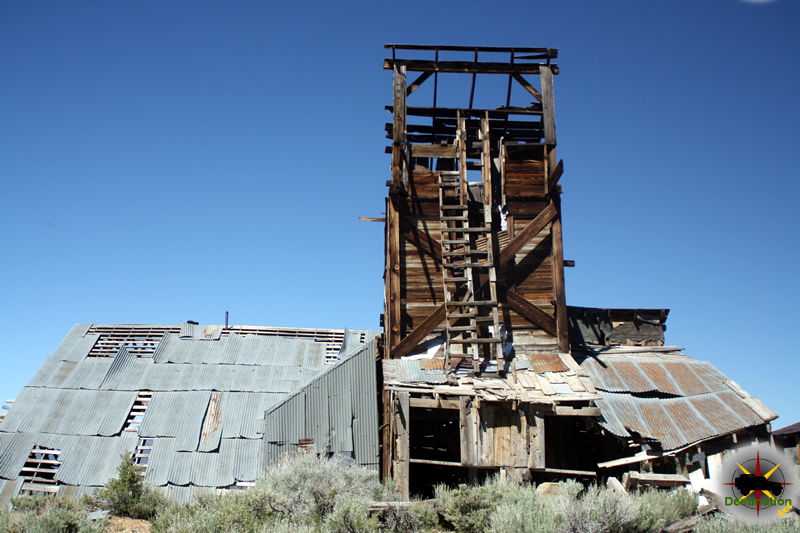
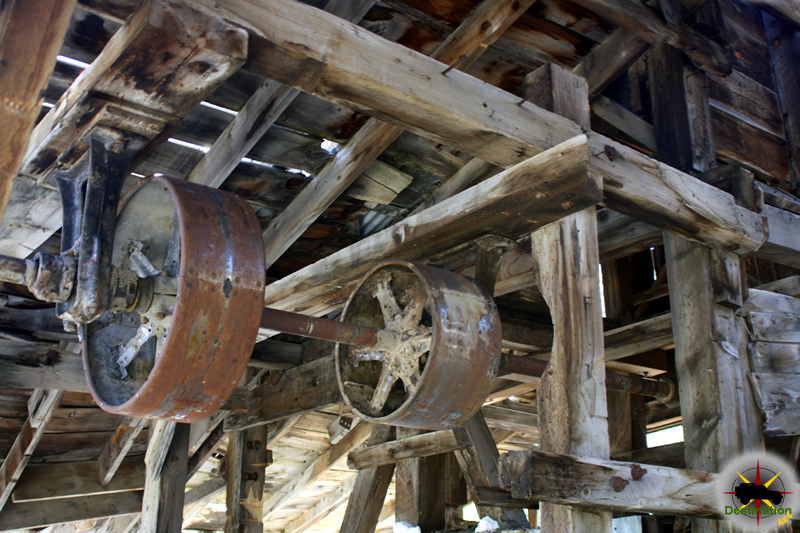
Harrisburg California – Inyo County Ghost Town

Harrisburg, California, a now-abandoned ghost town in Inyo County, was a fleeting but significant mining camp in Death Valley’s history. Established in 1905 following a gold discovery, it briefly flourished as a tent camp named after prospector Frank “Shorty” Harris. Located at an elevation of 4,987 feet near Wildrose Canyon, Harrisburg’s story is intertwined with the broader gold rush narrative of the early 20th century American West. This report examines Harrisburg’s origins, brief prosperity, decline, and enduring legacy, drawing on historical accounts and contemporary observations.

"Shorty" Harris founder of Harrisburg Ghost Town, photographed in Ballarat.
“Shorty” Harris founder of Harrisburg, photographed in Ballarat.

Origins and Establishment

Harrisburg’s history began in July 1905, when prospectors Frank “Shorty” Harris and Pete Aguerreberry, traversing the Panamint Range en route to Ballarat, discovered gold-bearing ore on a hill above what would become the townsite. Harris, already a celebrated figure for sparking the Bullfrog rush near Rhyolite, Nevada, and Aguerreberry, a French immigrant who arrived in the U.S. in 1890, staked six claims each, naming their primary find the Eureka Mine. News of the discovery spread rapidly, and within ten days, several hundred prospectors descended on the area, forming the Wild Rose Mining District. The tent camp that emerged was initially called Harrisburg, honoring both discoverers, but newspapers soon adopted “Harrisburg,” a name that stuck despite occasional misspellings.

The townsite, situated on a flat adjacent to the Eureka Mine, consisted primarily of canvas tents, reflecting the transient nature of early mining camps. Its location, roughly 22 miles northeast of Trona and accessible today via the Harrisburg Flats trail off Wildrose Road, placed it in the rugged heart of Death Valley, where water scarcity and extreme conditions shaped daily life.

Cashier Mill ruin and Pete Aguereberry, 1916. From Dane Coolidge Collection,

Brief Prosperity (1905–1909)

Harrisburg’s peak was short-lived but intense. By late 1905, the Wild Rose Mining District encompassed a vast area, with Harrisburg as its central hub. The tent camp housed several hundred prospectors, supported by basic amenities like the Emigrant Springs Restaurant, relocated from a nearby camp. The Eureka Mine, operated initially by Harris and Aguerreberry, drove the town’s economy. A 1906 Los Angeles Herald article reported a $15,000 investment in the mine, signaling early optimism about its potential.

The town’s social fabric was shaped by its diverse inhabitants. Shorty Harris, a charismatic storyteller, and Pete Aguerreberry, a determined loner who later worked the Eureka Mine for decades, embodied the era’s prospecting spirit. The camp’s population fluctuated as prospectors arrived hoping to stake claims, but its lack of permanent infrastructure limited growth. Unlike nearby Skidoo, which developed a water pipeline and milling plant, Harrisburg remained rudimentary, relying on scarce local springs and pack mules for supplies.

The discovery of gold at Skidoo in January 1906, just months after Harrisburg’s founding, drew many prospectors away, hastening the camp’s decline. By 1907, the Rhyolite Herald noted Harrisburg’s reduced activity, though the Eureka Mine continued to attract attention. Aguerreberry’s persistence kept the mine operational, and by 1908, the camp still supported a small community, as evidenced by photographs of the tent settlement.

Challenges and Decline

Harrisburg faced numerous challenges that curtailed its longevity. The lack of water, a perennial issue in Death Valley, hindered large-scale mining and settlement. The town’s reliance on tents rather than permanent buildings reflected its precarious existence, as did its vulnerability to the region’s harsh climate—scorching summers and freezing winters. The 1907 financial panic further strained mining ventures across the West, reducing investment in speculative sites like Harrisburg.

By 1909, the town’s population had dwindled significantly. The Los Angeles Mining Review made little mention of Harrisburg after 1908, focusing instead on more productive sites like Skidoo. Harris moved on to other prospects, while Aguerreberry stayed, working the Eureka Mine intermittently until the 1930s. The mine produced modest yields—estimated at a few thousand ounces of gold—but never rivaled the output of larger operations. The tent camp gradually emptied, and by the early 1910s, Harrisburg was effectively abandoned as a town, though Aguerreberry’s solitary presence kept the site alive in local lore.

Legacy and Modern Significance

Harrisburg’s legacy lies in its role as a microcosm of Death Valley’s gold rush era, characterized by fleeting optimism and relentless hardship. The Eureka Mine, adjacent to the former townsite, remains a focal point for visitors, often mistaken for the town itself due to its visible ruins. Scattered tin cans, the Cashier Mill ruins, and Aguerreberry’s later cabin—built in the 1920s—are among the few physical remnants, evoking the camp’s ephemeral nature. The site, now within Death Valley National Park, is accessible via a short trail and offers panoramic views of the Panamint Valley.

Pete Aguerreberry’s enduring connection to Harrisburg adds a personal dimension to its history. After Harris’s departure, Aguerreberry worked the Eureka Mine for nearly 40 years, living in relative isolation until his death in 1945. His cabin, preserved by the National Park Service, stands as a testament to his resilience and is a popular stop for tourists exploring Aguerreberry Point, a nearby scenic overlook named in his honor.

Modern visitors, as noted in Tripadvisor reviews, find Harrisburg’s ruins understated but evocative. The trail to the Eureka Mine and Aguerreberry’s cabin is praised for its historical intrigue, though some note the rough dirt road requires careful navigation. The site’s inclusion in Death Valley’s historical narrative, alongside towns like Skidoo and Rhyolite, underscores its value as a preserved relic of California’s mining past.

Conclusion

Harrisburg, California, was a transient outpost born of the 1905 gold rush, thriving briefly before fading into obscurity by the early 1910s. Named for Shorty Harris and defined by Pete Aguerreberry’s tenacity, it encapsulates the boom-and-bust cycle of desert mining camps. Though little remains of the tent town, its story—preserved through the Eureka Mine, Aguerreberry’s legacy, and Death Valley’s stark landscape—continues to captivate those who seek the echoes of California’s gold rush era.

Harrisburg Summary

TownHarrisburg
LocationDeath Valley National Park, California
Also Known asHarrisberry
Latitude, Longitude36.363889, -117.111389
Elevation4,987
Post Office
Population300

Harrisburg Trail Map

Harrisburg Personalities

Frank "Shorty" Harris

Frank “Shorty” Harris

Frank Harris was a prospector, desert rat and perhaps the best known character in western mining history. He looked the part, often travelling the desert…
Pete Aguereberry

Pete Aguereberry – A Panamint Valley Miner

Pete Aguereberry was a prospector and miner who operated around Death Valley National Park, for whom Aguereberry is named. Born in the Basque Region of…

Vanderbilt California – San Bernardino County Ghost Town

A metal headframe marks a vertical shaft in the mining district outside of Vanderbilt California.

Vanderbilt, California, was a fleeting but vibrant gold mining town located in the New York Mountains near the California-Nevada border, approximately 40 miles north of Goffs, California, within what is now the Mojave National Preserve. Existing primarily between 1891 and 1895, Vanderbilt epitomized the boom-and-bust cycle typical of late 19th-century Western mining settlements. Named optimistically after the wealthy Vanderbilt family in hopes of mirroring their fortune, the town’s history reflects the rapid excitement and subsequent abandonment that characterized many gold rush communities.

Old Plumbing remains in the town of Vanderbilt, CA

Discovery and Founding (1891–1892)

The story of Vanderbilt begins in January 1891, when a Native American prospector named Robert Black discovered gold ore on the north slope of the New York Mountains. This initial strike sparked interest, and a small mining camp soon formed near Vanderbilt Spring, a vital water source in the arid region. The camp remained modest until the fall of 1892, when additional gold-rich veins were uncovered, triggering a rush to the area. By January 1893, the settlement had grown to approximately 150 residents, living in a makeshift community of 50 tents, supported by two stores, a saloon, three restaurants, a lodging house, a blacksmith shop, and a stable.

The town’s name, “Vanderbilt,” was chosen to evoke the prosperity of the prominent American industrialist family, signaling the miners’ ambitions for wealth. The discovery of gold in the Gold Bronze, Sagamore, and Boomerang mines fueled optimism, drawing prospectors, merchants, and adventurers to the remote desert location.

Vanderbilt Business District

Peak Prosperity (1893–1894)

Virgil Earp 1843 -1905

Vanderbilt reached its zenith in 1894, with a population estimated at around 400 residents. During this period, the town developed into a bustling hub with a well-defined business district. Historical accounts describe a lively community featuring three saloons, two barbers, a Chinese restaurant, two additional eating houses, two meat markets, a stationery and fruit store, one lodging house, two blacksmiths, and three general stores. William McFarlane, a pioneer from nearby Ivanpah, operated one of these stores, which also housed the post office and a drugstore.

A notable figure associated with Vanderbilt was Virgil Earp, the older brother of Wyatt Earp and a survivor of the infamous Gunfight at the O.K. Corral. According to Earp family historians, Virgil owned the town’s only two-story building, a combination hotel and saloon. His wife, Allie Earp, later recalled that the structure also hosted church services and dances, suggesting a semblance of community life amid the rough mining environment.

In 1894, two ten-stamp mills were constructed to process ore from the Gold Bronze and Boomerang mines, marking the height of Vanderbilt’s industrial activity. These mills were essential for crushing ore and extracting gold, and their completion signaled the town’s economic peak. However, this prosperity was short-lived, as geological challenges soon emerged.

Decline and Abandonment (1895–Late 1890s)

Vanderbilt’s downfall began almost as quickly as its rise. Around the same time the mills were completed in 1894, miners struck water in the shafts of the principal mines. Flooding rendered the underground operations unworkable, halting gold extraction and undermining the town’s economic foundation. Without a sustainable source of wealth, residents began to abandon Vanderbilt, seeking opportunities elsewhere.

By 1895, the population had dwindled significantly, and the once-thriving town faded into obscurity. The exact date of its complete abandonment is unclear, but by the late 1890s, Vanderbilt had become a ghost town. Its brief existence left little behind beyond scattered mining relics, such as a metal headframe marking a vertical shaft, and remnants of old plumbing, which hint at its former activity.

A horizontal mine shaft in Vanderbilt

Legacy and Modern Context

Today, Vanderbilt lies within the Mojave National Preserve, a protected area that preserves the region’s natural and historical features. The town’s coordinates are approximately 35°19’38.20″N, 115°14’59.14″W, near the modern gambling hub of Primm, Nevada. While no standing structures remain, the site serves as a testament to the transient nature of mining boomtowns in the American West.

Exploring the ghost town of Vanderbilt, CA

Vanderbilt’s history reflects broader themes of the late 19th-century gold rush: speculative ambition, rapid growth fueled by mineral wealth, and abrupt collapse due to environmental and economic realities. Though short-lived, the town contributed to the lore of the Wild West, with its connection to figures like Virgil Earp adding a layer of historical intrigue.

Vanderbilt, California, encapsulates the ephemeral nature of mining settlements in the American frontier. From its founding in 1891 to its peak in 1894 and its decline by 1895, the town’s trajectory mirrors countless others that rose and fell with the fortunes of the earth. Though little remains of Vanderbilt today, its story endures as a snapshot of a bygone era, preserved in historical records and the stark desert landscape it once briefly animated.

Town Summary

Town NameVanderbilt
LocationSan Bernardino County, California
Latitude, Longitude35.327222, -115.249722
Population500
Elevation4350 Feet
NewspaperThe Shaft
Post OfficeFebruary 1893 – 1910

Vanderbilt Trail Map

Further Reading

Peg Legs Lost Gold

“Back in the 1960s. Desert Magazine published a letter by a person who claimed to have found Peg Legs Lost Gold or treasure in the Colorado Desert. Interesting, was the fact that the writer included some sample gold nuggets with his letters. The nuggets were coated with a black coating that seemed to match the original legend, Numerous letters were exchanged between the “finder”, the “doubters”, and “interested others”. Some even though is was a second mine owned by the Peralta Family with the Lost Dutchman in Arizona.”

A folder of Desert Magazine Articles about Peg Legs Lost Treasure given to me by my dad.

This message was scribbled by my dad, on the outside of a manilla folder, which contained numerous articles from Desert Magazine on the Lost Treasure of Peg Leg Smith. At the time of Publication in 1965, my dad loved exploring the desert southwest in his International Scout, and like many others, collect magazine articles on places to explore. This is how I learned about the Lost Peg Leg Treasure.

Peg Leg Smith
(1801–1866)

Thomas L. Smith, widely known as “Peg Leg” Smith, was an American mountain man, trapper, explorer, and storyteller who became a legendary figure of the American West. Born in Crab Orchard, Kentucky, in 1801, Smith’s life was characterized by adventure, resilience, and a penchant for tall tales, which helped cement his place in frontier folklore.

Early Life and Career

Little is known about Smith’s early years, but by his late teens, he had ventured westward, drawn by the opportunities of the burgeoning fur trade. He joined trapping expeditions in the Rocky Mountains and quickly developed a reputation as a skilled trapper and resourceful frontiersman. However, his life took a dramatic turn when, during an expedition, he lost part of his leg in a skirmish with Native Americans or possibly from an infection after an accident (accounts vary). Undeterred, Smith fashioned a wooden prosthetic leg, earning him the nickname “Peg Leg.”

Gold and Storytelling

A Map of Henry E. W. Wilsons search area published in Desert Magazine

In the 1830s and 1840s, Smith shifted his focus from trapping to guiding and trading with Native American tribes. By the 1850s, he had gained notoriety for his tales of adventure and his claims of discovering a rich gold deposit in Southern California’s Colorado Desert. According to his story, Smith stumbled upon a series of gold-laden black rocks while traveling through the region. Unable to carry much, he filled his bandana with the gold nuggets which were laying on the ground. He marked the location mentally, intending to return later. Despite numerous attempts by others to find this so-called “Peg Leg Mine,” its exact location remains one of the enduring mysteries of the West.

Smith capitalized on his fame by entertaining travelers and settlers with his colorful storytelling, often exaggerating or inventing details to captivate his audience. He operated trading posts and was known for his charisma and humor, though some viewed him as a conman who exploited the gullibility of gold-seekers.

Later Years and Death

As the West grew more settled, Smith’s lifestyle became increasingly precarious. He spent his later years wandering between towns and trading posts, regaling listeners with his tales and living off their generosity. He died in 1866 near San Bernardino, California, reportedly from complications related to his leg or alcoholism.

Peg Leg Smith is remembered as a symbol of the adventurous and often eccentric spirit of the Old West. His name remains associated with the fabled Lost Peg Leg Mine, which continues to intrigue treasure hunters and historians. Annual events and gatherings, such as the Peg Leg Smith Liars’ Contest held in Borrego Springs, California, celebrate his legacy as one of the West’s most colorful characters.

Smith’s life, blending fact and fiction, captures the essence of a time when the American frontier was a land of boundless opportunity, danger, and mystery.

Desert Magazine March 1965

Peg Legs Lost Gold, Desert Magazine, March 1965

In March, 1965, Desert Magazine published a letter from one of their subscribers, who claimed to have found Peg Legs Lost Gold. To add some gravitas to the claim, the author included several gold nuggets tarnished with a dark desert varnish, which matches the claims for Peg Leg Smith from over one hundred and thirty years prior.

Dear Desert Editor:

Although the enclosed story has no byline, I believe it and the photographs will be of interest to you. After you have read the story, you will understand why the reasons for my remaining anonymous are too obvious to enumerate.

You have my full permission to publish the story and this letter if you wish. They may be of minor interest to the readers of Desert Magazine.

More important, I am also enclosing two of the Peg Leg’s nuggets. One is still black, exactly as found, and the other has had the black copper oxides removed by the process mentioned in the story and is now native “gold” in color. You will have these nuggets to show one and all who have doubted the story of Peg Leg’s black nuggets. You may keep them with my compliments for Desert Magazine’s collection of desert artifacts, in this case you can start a new collection of items from lost mines that have been found.

Very sincerely yours,

The Man Who Found
Peg Leg’s Black Gold

The author of the article mentions that he spent six days out at the site of the Lost Gold and removed about 720 ounces of nuggets. He claimed that all of the easy gold was removed by him and that he was sure other gold existed below the reach of his metal detectors.

For the next ten years articles and letters are published in Desert Magazine debating the claim along with reassertions of his claims.

No matter what your thoughts are on the story of Peg Legs Lost Treasure, it is without a doubt, that the lure of blacked gold nuggets just laying about on the desert floor near the Salton Sea is without doubt.

References

Lucy Grey Goldmine

The Lucy Grey Goldmine trail is a short 4×4 trip out of Primm, Nevada up to an old mine site.  The route is fairly accessible and almost any SUV or 4×4, but the route finding can be tricky is you are not careful.  A slight mistake in navigation and you will be in some rough country.  To find the trail head, exit and head past the outlet stores and the Lotto Store. The trail head is the dirt road where the paved road turns left.

Lucy Grey gold mine - An old truck marks the trail up to the mine. Built rigs might be able to make it, but I choose to hike. Photo by James L Rathbun
Lucy Grey gold mine – An old truck marks the trail up to the mine. Built rigs might be able to make it, but I choose to hike. Photo by James L Rathbun

The trail heads straight out into the desert. When you reach the railroad tracks, turn right and follow the road next to tracks until you reach a railroad signal station. There is a pass through under the train track and a nice little sign which reads Lucy Grey to let you know you are on your way.

From the railroad signal station the trail heads up an alluvial fan into the hills. Once you reach the gully and head into the hills, the trail becomes hard to follow, so pay attention to GPS coordinates, or your map. The trek is mostly easy with one or two small sections that will require you to pay a little more attention. The most difficult part of this trail is the route finding up to the mine and town site.

Continue Reading →

Chemung Mine

Located off the Masonic Road between Bridgeport, CA and the Masonic town site, are the remains of the Chemung gold mine.  The Chemung gold mine operated from from 1909 to 1938 and produced over one million dollars in gold.  In the 1920s, the Chemung mine was producing low grade and high grade ore.  The ore was processed onsite, and then shipped to near by Bodie for smelting.

The Chemung Mine located just outside of Bridgeport, CA. Photograph by James L Rathbun

Along with the increase cost of mining supplies which reduced growth, a poor gold market and the cost of hauling the ore to Bodie over the poor roads for smelting and little mine was doomed and closed its doors in 1938.

The Chemung mine history is not a mining failure, but a failure of management and litigation.  During its time of production, the mine built and tore down three mills.  During the last year of operation in 1938, 20 men worked the site and less than one year later the mine was closed.  The mine itself produced well, however endless litigation for various reasons doomed the mine.

The Chemung gold mine over looking the Bridgeport Valley.. Photograph by James L Rathbun

Throughout the 1950s and 1960s new life was found in the mine with the efforts of Elton “Heinie” Heinemeyer.  Heinemeyer mined for years but never struck it big.  Well liked by the town of Bridgeport, CA Heinemeters well being was the source of concern for the people of Bridgeport and it is reported that he would always find time to visit and entertain those who traveled to check up on him.

Currently, the mill building structure is intact but the years of harsh weather have taken its toll.  A mild wind will cause some of the walls to shake or shudder, and the lower outer wall is leaning outward.  In June 2016, bars restricted access to the mines themselves although the mines do offer a cold breeze on a warm day to cool you down.

The Chemung mine still maintains and impressive structure. Photograph by James L Rathbun

There are stories that the site is haunted by a spirit or ghost, but only on Saturday nights, which seems a bit odd to me.

The Chemung Mine working still seem ready to go. Photograph by James L Rathbun

On a personal note, the Chemung mine surprised me.  I have been to Aurora three times, Masonic at least three times, and Bodie… at least ten.  My last visit to Bodie was in 2013. Afterwards this last trip, I was looking in Google Earth when I “discovered” the Chemung gold mine.  How had this mine, such an impressive structure, evaded my radar for so many years?  It took me three years from that day to make my first visit to Chemung, and this place is definately on my list for a repeat visit.

Time, weather and gravity have taken its toll on the structure of the Chemung Mine.. Photograph by James L Rathbun
Time, weather and gravity have taken its toll on the structure of the Chemung Mine. Photograph by James L Rathbun

Chemung Mine Trailmap

Resources