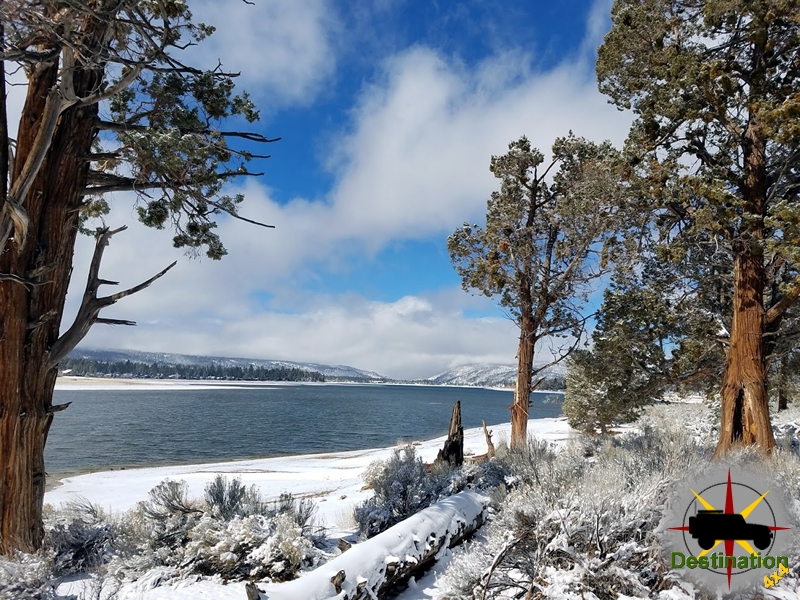
Big Bear, CA
I quiet mountain community full of back country adventure.
The Journey is the destination

Frederick G. “Fred” White was born around 1849 in New York City, as recorded in the 1880 Census. Little is known about his early life before he arrived in the Arizona Territory, but his journey westward likely reflected the ambitions of many young men drawn to the opportunities of the American frontier during the late 19th century. By the late 1870s, White had settled in Tombstone, a burgeoning silver mining boomtown in Pima County, Arizona Territory, founded in 1879 by prospector Ed Schieffelin.
On January 6, 1880, Fred White was elected the first town marshal of Tombstone, a role equivalent to chief of police, at a time when the town had fewer than 1,000 residents. Tombstone was a rough-and-tumble frontier settlement, filled with miners, gamblers, and outlaws, where violence and lawlessness were common. Despite these challenges, White quickly established himself as a likable, professional, and impartial lawman. Unlike many of Tombstone’s residents, including the Earp brothers, who were entangled in the town’s business and political rivalries, White remained uninvolved in such conflicts, relying solely on his marshal’s salary and earning widespread respect for his fairness.
White formed a strong alliance and friendship with Wyatt Earp, who was then deputy undersheriff for the southern portion of Pima County, which included Tombstone. He also maintained a surprisingly amicable relationship with members of the Cochise County Cowboys, a loose band of outlaws and cattle rustlers, including their leader, William “Curly Bill” Brocius. White’s ability to arrest Cowboy members without significant resistance—sometimes even with Brocius’s cooperation—underscored his diplomatic approach to law enforcement. His reputation for using force only when necessary made him a stabilizing presence in a volatile town.

On the night of October 28, 1880, White’s tenure as marshal came to a tragic end. Several Cowboys, including a drunken Curly Bill Brocius, were causing a disturbance by firing their pistols into the air in various parts of Tombstone. White, following his usual practice, confronted each group to disarm them, and all complied voluntarily without incident. Late that night, he encountered Brocius and others in a dark vacant lot on Allen Street, near where the Bird Cage Theatre now stands. As White instructed Brocius to surrender his pistol, Brocius handed it over barrel-first. During the exchange, the gun discharged, striking White. The exact circumstances remain debated, but evidence suggests the shooting was accidental, possibly due to the pistol being fired from a half-cock position.
Wyatt Earp, witnessing the incident but unable to see clearly in the dark, believed Brocius was still armed and pistol-whipped him, knocking him unconscious before arresting him along with Morgan Earp, both serving as Pima County sheriff’s deputies. White, mortally wounded, was taken to a doctor but died two days later on October 30, 1880, at the age of 31 or 32. Before his death, White provided a deathbed statement, asserting that he believed the shooting was accidental and that Brocius had not intended to kill him. This testimony, combined with Wyatt Earp’s support and a demonstration that Brocius’s pistol could discharge from half-cock, led to Brocius’s acquittal on the grounds of “homicide by misadventure.”
Fred White was laid to rest in Boot Hill Cemetery, Tombstone’s original graveyard, where his grave remains a point of historical interest. His death marked a turning point in Tombstone’s history, escalating tensions between the Earps and the Cowboys. Brocius, despite his regret over the incident and White’s testimony in his favor, harbored resentment toward Wyatt Earp for the pistol-whipping, contributing to the growing animosity that culminated in the Gunfight at the O.K. Corral on October 26, 1881. Following White’s death, Virgil Earp succeeded him as town marshal, further entrenching the Earps in Tombstone’s law enforcement.
White’s brief tenure as marshal left a lasting impression on Tombstone. His impartiality and professionalism stood in contrast to the complex rivalries that defined the town, and his death underscored the precarious balance of law and order in the Wild West. Though often overshadowed by the more famous figures of Tombstone, such as Wyatt Earp and Doc Holliday, Fred White’s story is a poignant reminder of the challenges faced by early lawmen in maintaining peace on the frontier. His grave in Boot Hill, alongside other notable figures of the era, continues to draw visitors to Tombstone, a town that preserves its Wild West legacy through historic sites and reenactments.
Newton Jasper Earp was born on October 7, 1837, in Ohio County, Kentucky, to Nicholas Porter Earp and his first wife, Abigail Storm. As the eldest child of the Earp family, Newton’s early life was marked by tragedy; his mother died on October 8, 1839, shortly after giving birth to his sister, Mariah Ann, who also passed away two months later. Following Abigail’s death, Nicholas married Virginia Ann Cooksey in 1840, and their union produced Newton’s half-siblings, including James, Virgil, Wyatt, Morgan, and Warren Earp, who would later become iconic figures of the American Old West. Newton remained particularly close to his half-brothers James and Virgil, naming two of his sons after them.
With the outbreak of the Civil War in 1861, Newton, along with his half-brothers James and Virgil, enlisted in the Union Army on November 11, 1861. He served with Company F of the Fourth Cavalry, Iowa Volunteers, demonstrating steadfast commitment through several battles in the eastern theater. Newton rose through the ranks, achieving the position of fourth corporal by January 1, 1865, and mustered out of the army on June 26, 1865, in Louisville, Kentucky. Unlike James, who was wounded early in the war and returned home, Newton and Virgil served the entirety of the conflict.
After the war, Newton married Nancy Jane “Jennie” Adam on September 12, 1865, in Marion County, Missouri. The couple joined Nicholas and other Earp family members in San Bernardino, California, where Newton briefly worked as a saloon manager. By 1868, they returned to the Midwest, settling in Lamar, Missouri, where Newton took up farming. Over the years, Newton and Jennie had five children: Effie May (born 1870), Wyatt Clyde (born 1872), Mary Elizabeth (born 1875, died 1885), Alice Abigail (born 1878), and Virgil Edwin (born 1879). Newton named his sons Wyatt and Virgil after his half-brothers, reflecting their close familial bonds.
In 1870, Newton ran against his half-brother Wyatt for the position of constable in Lamar, Missouri, in a contest that may have been an attempt to keep the role within the family. Wyatt won with 137 votes to Newton’s 108, though their father, Nicholas, lost a concurrent election for justice of the peace. This episode highlights the Earp family’s engagement in local civic life, even as they navigated internal rivalries.
Newton’s life was characterized by frequent relocations, reflective of the restless spirit of the American frontier. In 1871, he moved his family to Sterling, Rice County, Kansas, where he continued farming and became a pioneer settler. By 1873, he was reportedly hunting buffalo near Peace, Kansas. In the early 1880s, Newton settled in Garden City, Kansas, where he was appointed the town’s first city marshal on January 13, 1883, serving until his resignation on August 6 of the same year. This brief stint in law enforcement aligns with the Earp family’s broader association with peacekeeping roles, though Newton never pursued it as extensively as his half-brothers Wyatt, Virgil, and Morgan.
Newton’s travels took him to Wyoming and Nevada, likely residing in towns such as Casper and Paradise, before he returned to California. Following Jennie’s death on March 29, 1898, in Paradise Hill, Nevada, Newton settled in northern California and northwestern Nevada, where he worked as a carpenter, building homes. Unlike his more famous half-brothers, Newton avoided the high-stakes world of law enforcement and gunfights, opting instead for a quieter life focused on family and manual labor.
Newton Jasper Earp lived a long life, passing away at the age of 91 on December 18, 1928, in Sacramento, California. He was laid to rest at East Lawn Memorial Park. Of his siblings, only Wyatt and Adelia outlived him, with Wyatt dying just a month later on January 13, 1929. Newton’s life, while less documented than those of his half-brothers, offers a lens into the broader Earp family narrative, one rooted in resilience, adaptability, and familial loyalty.
Though overshadowed by the legendary exploits of Wyatt, Virgil, and Morgan—most notably their involvement in the 1881 Gunfight at the O.K. Corral—Newton’s contributions as a soldier, farmer, marshal, and carpenter reflect the diverse roles required to build and sustain communities in the American West. His story underscores the less glamorous but equally vital experiences of countless pioneers who shaped the frontier.
 James Cooksey EarpJames Cooksey Earp ( June 28, 1841 - January 25, 1926 ) James Cooksey Earp ( June 28, 1841 - January 25, 1926 ) was… |
 Morgan Seth EarpMorgan Seth Earp, born on April 24, 1851, in Pella, Iowa, was a notable figure of the American Old West, primarily recognized for his association… |
 Virgil Walter EarpVirgil Walter Earp ( July 18, 1843 – October 19, 1905) was born in Lincoln County, Kentucky, was a prominent lawman and frontier figure known for his… |
 Warren Baxter EarpWarren Baxter Earp ( March 9, 1855 - July 6, 1900 ), the youngest of the Earp brothers, was born into a family that would… |
 Wyatt Berry Stapp EarpWyatt Berry Stapp Earp (March 19, 1848 – January 13, 1929) was an American lawman and gambler who became a legendary figure of the Old… |
The Gunfight at the O K Corral, one of the most iconic events in American Old West history, occurred on October 26, 1881, in Tombstone, Arizona Territory. This brief but deadly confrontation, lasting approximately 30 seconds, pitted lawmen against a loosely organized group of outlaws known as the “Cowboys.” The shootout resulted in three deaths and several injuries, cementing its place in popular culture as a symbol of frontier justice and lawlessness. This report examines the background, events, aftermath, and historical significance of the gunfight, providing a detailed account as of March 12, 2025.

Tombstone, founded in 1877 after prospector Ed Schieffelin discovered silver in the Goose Flats area, rapidly grew into a bustling mining town. By 1881, it boasted a population of around 7,000–10,000, fueled by the riches of the Tough Nut Mine and others in the San Pedro Valley. The town’s prosperity attracted a mix of miners, merchants, and a rough element of cattle rustlers and outlaws, including the Cowboys—a gang of about 50–100 men involved in smuggling, rustling, and robbery across the U.S.-Mexico border.
Tensions in Tombstone were exacerbated by political and economic rivalries. The Earp brothers—Virgil, Wyatt, Morgan, and James—arrived in 1879–1880, seeking opportunities in the booming town. Virgil became Tombstone’s city marshal in June 1881, while Wyatt, a former lawman and gambler, served as a deputy sheriff for Pima County and later worked for Wells Fargo. They were aligned with Tombstone’s business elite and Republican interests, often clashing with the Cowboys, who were tied to rural ranchers and Democratic factions.
The Cowboys, including figures like Ike and Billy Clanton, Tom and Frank McLaury, Billy Claiborne, and Johnny Ringo, were notorious for their lawless activities. By mid-1881, their confrontations with the Earps escalated. A key incident occurred on October 25, 1881, when Ike Clanton, drunk and armed despite a town ordinance banning firearms, threatened the Earps and their friend, John H. “Doc” Holliday, a dentist-turned-gambler with a volatile reputation. Virgil arrested Ike, pistol-whipping him, and fined him $27.50, further inflaming tensions.

On the morning of October 26, 1881, the Cowboys gathered near the O.K. Corral, a livery and horse stable owned by John Montgomery, located on Fremont Street between Third and Fourth Streets. Reports indicated they were armed and possibly planning to leave town or confront the Earps. Virgil, as marshal, decided to disarm them to enforce the no-weapons ordinance, enlisting Wyatt, Morgan, and Doc Holliday (temporarily deputized) to assist.
Around 2:30 p.m., the four lawmen approached the Cowboys—Tom and Frank McLaury, Ike and Billy Clanton, and Billy Claiborne—in a narrow lot west of the O.K. Corral’s rear entrance, adjacent to Fly’s Photography Studio. The exact sequence of events remains disputed, with conflicting testimonies from survivors and witnesses. According to most accounts, Virgil demanded the Cowboys surrender their weapons, shouting, “Throw up your hands; I want your guns!” What followed was a chaotic exchange of gunfire.
Wyatt later claimed the Cowboys drew first, with Frank McLaury and Billy Clanton firing simultaneously. Virgil testified that he fired only after being shot at. Ike Clanton and Billy Claiborne fled early in the fight, leaving the McLaury brothers and Billy Clanton to face the lawmen. The shootout involved an estimated 30 shots fired in 30 seconds. Tom McLaury was killed by a shotgun blast, likely from Holliday, who wielded a double-barreled coach gun. Frank McLaury and Billy Clanton, despite being wounded, exchanged fire with the Earps and Holliday before succumbing to their injuries.
The lawmen were not unscathed: Virgil took a bullet in the calf, Morgan was shot through the shoulder, and Holliday was grazed. Wyatt emerged unharmed. By 3:00 p.m., the shooting ceased, leaving three Cowboys dead and the lot strewn with blood and spent cartridges.

The gunfight sparked immediate controversy. The Cowboys’ allies, including Cochise County Sheriff Johnny Behan, a political rival of the Earps, accused the lawmen of murder, claiming the Cowboys were ambushed. Behan arrested Virgil, Wyatt, Morgan, and Holliday, but a preliminary hearing before Justice of the Peace Wells Spicer began on October 31, 1881. After weeks of testimony from over 30 witnesses, Spicer ruled on November 30 that the evidence was inconclusive and the lawmen acted within their authority to enforce the ordinance. No formal charges were filed.
Public opinion remained divided. The pro-Cowboy Tombstone Nugget decried the Earps as killers, while the Tombstone Epitaph, supportive of the lawmen, framed it as a necessary stand against lawlessness. The Cowboys sought revenge, ambushing Virgil on December 28, 1881, crippling his left arm, and assassinating Morgan on March 18, 1882, while he played pool. Wyatt, now a deputized U.S. Marshal, led a vendetta ride with Holliday and others, killing several Cowboys, including Frank Stilwell and Curly Bill Brocius, in the following months.
The Earps and Holliday eventually left Tombstone. Wyatt died in 1929 in Los Angeles, Holliday in 1887 in Colorado, and Virgil in 1905 in Nevada. The Cowboys’ power waned as federal authorities cracked down on border crime.

The Gunfight at the O.K. Corral was a minor skirmish in its immediate context—only three deaths in a town accustomed to violence—but its legacy looms large. It epitomized the clash between law and disorder in the frontier, reflecting broader tensions over control of resources and governance in the post-Civil War West. Tombstone’s silver boom faded by the late 1880s, but the gunfight endured as a cultural touchstone.
Hollywood amplified its fame, beginning with Stuart N. Lake’s 1931 biography Wyatt Earp: Frontier Marshal, which romanticized the Earps as heroic lawmen. Films like Gunfight at the O.K. Corral (1957) and Tombstone (1993) further mythologized the event, often exaggerating its scale and simplifying its moral complexities. Historians, however, note its ambiguity: the Earps were not unblemished heroes, nor were the Cowboys mere villains; both sides operated in a gray area of frontier ethics.
As of March 12, 2025, the O.K. Corral site in Tombstone is a preserved historic landmark, part of the Tombstone Historic District, designated a National Historic Landmark in 1961. The original corral burned in 1882, but the adjacent lot and Fly’s Studio remain, managed as a tourist attraction with daily reenactments. Artifacts like Doc Holliday’s shotgun and period photographs are displayed in local museums, such as the Tombstone Courthouse State Historic Park. Archaeological digs have uncovered bullets and casings, corroborating witness accounts of the fight’s location and intensity.
The Gunfight at the O.K. Corral was a fleeting yet pivotal moment in Tombstone’s history, encapsulating the volatile spirit of the American West. Its blend of documented fact and embellished legend has ensured its place in the national imagination. Countless books and movies feature the story and the legend castes a long shadow across the history of Arizona. Beyond the gunfire, it reveals the fragility of order in a lawless land and the enduring human drive to impose it—or resist it. As a historical event, it remains a lens through which to view the complexities of justice, power, and survival on the frontier.

Tom McLaury, born as Thomas McLaury, was a key figure in the tumultuous environment of the American frontier during the late 19th century. His involvement in the infamous Gunfight at the O.K. Corral and his role in the broader context of frontier lawlessness and conflict make him a significant, though controversial, figure in Western history.
Tom McLaury was born in 1853 to a Southern family in Texas. He grew up in a post-Civil War environment that was marked by economic challenges and social changes. Details about his early life are sparse, but it is known that McLaury, along with his family, moved westward in search of better opportunities. His family settled in various frontier towns and became involved in ranching and other activities typical of the expanding West.
McLaury, like many others, was drawn to Tombstone, Arizona, by the promise of wealth from the booming silver mines. He and his brothers became prominent figures in the region, engaging in ranching and business.
Tom McLaury, along with his brothers Frank and Ike, became known as part of the “Cowboys,” a loose group of outlaws and rustlers. The McLaurys were involved in various activities that brought them into conflict with law enforcement and other local figures.
The Gunfight at the O.K. Corral took place on October 26, 1881. Tom McLaury was present during the gunfight, which erupted between the Cowboys and the lawmen led by Wyatt Earp, his brothers Virgil and Morgan, and their ally Doc Holliday.
Tom McLaury, along with his brother Frank and fellow Cowboys Billy Clanton and Ike Clanton, was involved in the gunfight. During the confrontation, Tom McLaury was shot and killed. The gunfight lasted only about 30 seconds but had significant repercussions for both sides.
The aftermath of the gunfight saw the surviving Cowboys and their sympathizers rallying against the Earps and their allies. The gunfight deepened the rift between the law-abiding citizens and the outlaws in Tombstone, with ongoing tensions and conflicts.
Tom McLaury was known to be a rugged frontier individual, characteristic of many who lived during this turbulent period. His involvement with the Cowboys placed him in direct opposition to law enforcement, reflecting the broader lawlessness and instability of the frontier. His Legacy is intertwined with the broader history of the American West. His involvement in the Gunfight at the O.K. Corral and his role as part of the Cowboys has cemented him as a notable figure in Western folklore. The gunfight remains one of the most famous and mythologized events in Western history.
Tom McLaury’s life was emblematic of the harsh and often violent realities of frontier life. His death in the gunfight at the O.K. Corral marked a significant moment in the history of the American West, illustrating the intense conflicts that characterized the period and the complex nature of law and order in the frontier towns.
Charles W Friend was a scientist and astronomer who resided in Carson City, Nevada for forty years. The site of his home honors Friend with Nevada State Historical Marker number 258.


Born in Prussia on July 7th 1835, Charles Friend migrated from the old county to Folsome, California with his father during the California gold rush. Friend apprenticed as a jeweler and optician before moving to Carson City in 1867.
Between 1875 and 1876, Friend constructed the first Observatory in Nevada at his house on Stewart street, in Carson City. Utilizing the help of Nevada’s U.S. Senator William Stewart, Friend obtained a six-inch equatorial mount telescope and other instruments from the U. S Naval Academy.
Friend outfitted his observatory with a series of weather observations instruments, including rain gauges, thermometers, barometers an anemometer to measure wind speed. He took great care to ensure that all of his scientific instruments were properly calibrated and that his observations were as accurate as possible.
“All the thermometers are placed in an instrument shelter, made of lattice blinds and projecting 20 inches from a large pane of glass in the north wall of the observatory, 12 inches from the window and at the height of the eye of the observer. The thermometers are placed on wooden bars one inch square, and while there is free access of air to the shelter, all radiant heat and rain or snow are effectually excluded.”
Friend recorded observational readings from his instruments daily at 7 am, 2 pm and 9 pm to compile a climate record of Carson City. His observations were forwarded to the U. S. Army’s Signal Office.
Charles W. Friend House, Observatory, and Weather Station
This is the site of the house and observatory of Nevada’s first weatherman, astronomer, and seismologist, Charles William Friend. Born in Prussia in 1835, Friend immigrated by way of South America to California during the 1849 Gold Rush. In 1867, he moved from Folsom to Carson City where he set up his own jewelery and optical store.
Friend built Nevada’s first observatory located southwest of his house and east of the Nevada State Capitol. Nevada’s U.S. Senator William Stewart helped him obtain the use of a six-inch equatorial mount telescope and other instruments from the federal government.
Charles Friend also established Nevada’s first weather service. In 1887, the Nevada Legislature passed authorization for a weather service station in Carson City. Friend became its director and created volunteer weather stations throughout the state. He compiled the data into reports that are still referenced today.
Charles W. Friend died in 1907. Since his death, the Association of Weather Services has recognized him as a pioneer in weather service west of the Rockies.
STATE HISTORIC MARKER No. 258
STATE HISTORIC PRESERVATION OFFICE, NEVADA STATE MUSEUM, THE BRETZLAFF FOUNDATION,
NEVADA STATE LIBRARY AND ARCHIVES, THE CARSON CITY HERITAGE COALITION
BUILDINGS AND GROUNDS
| Name | Charles W. Friend House, Observatory, and Weather Station |
| Location | Carson City, Nevada |
| Latitude, Longitude | 39.1642, -119.7637 |
| Nevada State Historic Marker | 258 |
Nevada State Historical Markers identify significant places of interest in Nevada’s history. The Nevada State Legislature started the program in 1967 to bring the state’s heritage to the public’s attention with on-site markers. These roadside markers bring attention to the places, people, and events that make up Nevada’s heritage. They are as diverse as the counties they are located within and range from the typical mining boom and bust town to the largest and most accessible petroglyph sites in Northern Nevada Budget cuts to the program caused the program to become dormant in 2009. Many of the markers are lost or damaged.