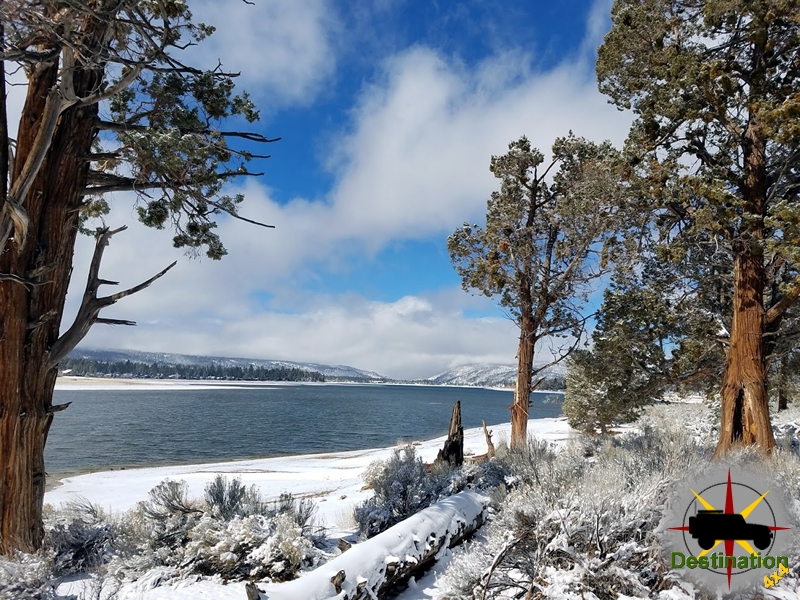
Big Bear, CA
I quiet mountain community full of back country adventure.
The Journey is the destination
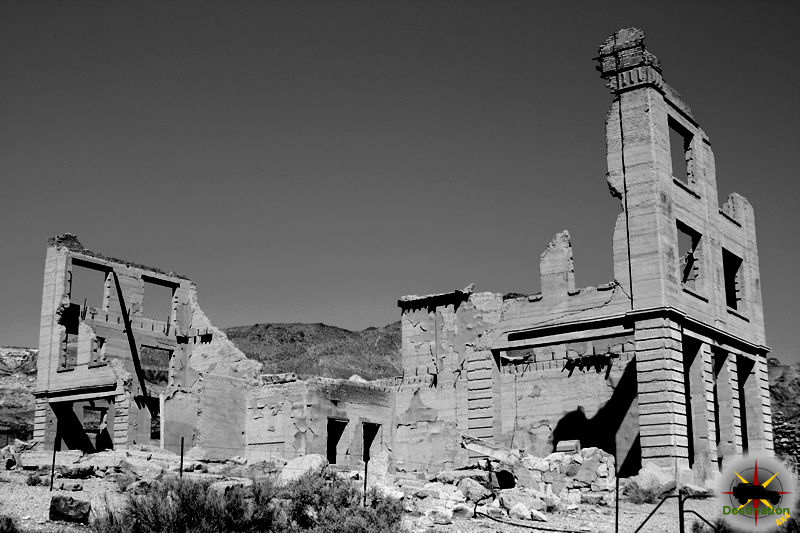

On this twenty-eighth day of November, 1881, on the hearing of the above entitled cause, on the examination of Wyatt Earp and J. H. Holliday; Addie Bourland, a witness of lawful age, being produced and sworn, deposes and says as follows;
Addie Bourland, a dressmaker, of Tombstone, Arizona.
(Q) [No written question.]
(A) I live on the opposite side of Fremont Street from the entrance to Fly’s lodging house.
(Q) Questioned on the difficulty.
(A) I saw first five men opposite my house, leaning against a small house [the Harwood house] west of Fly’s Gallery and one man was holding a horse [Frank McLaury], standing a little out from the house. I supposed them to be cowboys, and saw four men [the Earps and Doc Holliday] coming down the street towards them, and a man with a long coat on [Doc Holliday] walked up to the man holding the horse and put a pistol to his stomach and then he, the man with the long coat on, stepped back two or three feet, and then the firing seemed to be general. That is all I saw.
(Q) Where were you at the time you saw this?
(A) I was in my house at the window.
(Q) How long after the two parties met, did the firing commence?
(A) It was very shortly, only a few seconds.
(Q) Which party fired first?
(A) I don’t know.
(Q) Were you looking at both parties when the firing commenced?
(A) I was looking at them, but not at anyone in particular. I did not know there was going to be a difficulty.
(Q) Did you know, or do you know now, the man with the long coat on?
(A) I did not know him then. I recognize Doctor Holliday, the man sitting there writing, as the man to the best of my judgment.
(Q) Did you notice the character of weapon Doc Holliday had in his hand?
(A) It was a very large pistol.
(Q) Did you notice the color of the pistol?
(A) It was dark bronze.
(Q) Was it or was it not, a nickel-plated pistol?
(A) It was not a nickel-plated pistol.
(Q) Did you see at the time of the approach of the party descending Fremont Street, any of the party you thought were cowboys, throw up their hands?
(A) I did not.
(Q) Did you hear any conversation or exclamation between the two parties after they met, and before the firing commenced?
(A) I did not, for my door was closed.
(Q) How long did you continue to look at the parties after they met?
(A) Until they commenced to fire and I got up then and went into my back room.
(Q) What did these men that you speak of as cowboys’ first do when the other party approached them?
(A) They came out to meet them from the side of the house, and this man with the long coat on stepped up and put his pistol to the stomach of the man who was holding the horse, and stepped back two or three feet and the firing seemed to be general.
(Q) About how many shots were fired before you left the window?
(A) I could not tell; all was confusion, and I could not tell.
(Q) Were all the parties shooting at each other at the time you were looking at them?
(A) It looked to me like it.
(Q) Had any of the parties fallen at the time you left the window?
(A) I saw no parties fall.
[Signed] Addie Bourland
ADDIE BOURLAND IS RECALLED BY THE COURT
[Inserted loose part of page reads: “The prosecution objects to the further examination of the witness Addie Bourland after she has been examined by the defense, and cross-examined by the prosecution, her testimony read to her and signed by her and not brought before the court at the solicitation of counsel on either side. The court voluntarily states that after recess, and the witness had retired, he went to see the witness at her house and talked with her about what she might further know about the case, and that he, of his own motion, says that he believed she knew more than she had testified to on her examination, now introduces her upon the stand for the purpose or” further examination without the solicitation of either the prosecution or defense.]
[Objection overruled, and questions asked of witness by the court as follows:]
(Q) You say in your examination in chief, that you were looking at parties engaged in [the] fatal affray in Tombstone on the 26th of October last, at the time the firing commenced. Please state the position in which the party called the cowboys held their hands at the time the firing commenced; that is, were they holding up their hands, or were they firing back at the other party. State the facts as particularly as may be.
[Counsel for the prosecution objects to court questioning witness after he admits he has talked with the witness, etc., crossed out.]
(A) I didn’t see anyone holding up their hands; they all seemed to be firing in general, on both sides. They were firing on both sides, at each other; I mean by this at the time the firing commenced.
RE-CROSS EXAMINATION
(Q) Did you say this morning, that you did not see who fired the first shot?
(A) I did say so.
(Q) Did you say this morning, there were two shots fired close together?
(A) I did not.
(Q) Did you say there were any shots fired at all?
(A) I did.
(Q) Did you say this morning, that when the first two or four shots were fired, you were excited and confused, and got up from the window and went into the back room?
(A) I didn’t say how many shots were fired, for I didn’t know when I went into the other room.
(Q) What conversation did you have with Judge Spicer, if any, with reference to your testimony to be given here since you signed your testimony this morning?
(A) He asked me one or two questions in regard to seeing the difficulty, and if I saw any men throw up their hands, whether I would have seen it, and I told him I thought I would have seen it.
(Q) Did you not testify this morning that those men did not throw up their hands that you saw?
(A) Yes sir, I did.
signed Addie Bourland
The Gunfight at the O.K. Corral is one of the most famous events in the history of the American Wild West. It occurred on October 26, 1881, in Tombstone, Arizona Territory, and was a culmination of long-standing tensions between two groups: the Earp brothers—Wyatt, Virgil, and Morgan—along with their ally, Doc Holliday, and the Clanton-McLaury faction, which consisted of cowboys Ike and Billy Clanton, Tom and Frank McLaury, and Billy Claiborne. The confrontation lasted just 30 seconds but left three men dead—Tom McLaury, Frank McLaury, and Billy Clanton—and became a symbol of the lawless nature of the American frontier.

The gunfight was sparked by a series of disputes over cattle rustling, stagecoach robberies, and political control in Tombstone. The Earp brothers, who were lawmen, and Doc Holliday, a gambler and gunman, sought to maintain order, while the Clanton-McLaury group represented the lawlessness that plagued the region. Although the gunfight took place near the O.K. Corral, it actually occurred in a narrow lot on Fremont Street, a detail often overlooked in popular culture. The aftermath of the shootout led to a complex legal battle and further violence, cementing the event’s place in American folklore and solidifying Wyatt Earp’s reputation as a legendary figure of the Old West.
Testimony of Martha King in the Preliminary Hearing in the Earp-Holliday Case,Heard before Judge Wells Spicer
On this fourth day of November, 1881, on the hearing of the above entitled cause of the examination of Wyatt Earp and J. H. Holliday; Mrs. Martha J. King, a witness of lawful age, being produced and sworn, deposes and says as follows:
Mrs. Martha J. King, a housewife of Tombstone, says she was in Bauer’s butcher shop on Fremont Street at the time the shooting commenced, and heard it. She saw some armed parties pass the door. She could not say they were all armed. “I saw one man, Mr. Holliday, with arms. He had a gun. I mean a gun, not a pistol. I cannot tell the difference between a shotgun and a rifle. Do not know whether he had a shotgun or a rifle.”
She identifies Holliday. She says he had an overcoat and his gun on the left side, with his arm thrown over it, and the gun under his coat. “I saw the gun under the coat as he was walking and his coat would fly open.” She saw the Earp party first between the butcher shop and the Post Office, going down Fremont Street toward Third Street. She only knew the Earp brothers by sight. She says Holliday was on the side next to the building. She heard them say something. The one on the outside looked around to Holliday and said, “Let them have it!” He [Holliday] replied, “All right.” She heard nothing else. She did not see any of the fight. She ran back in the shop. She does not know the Sheriff by sight. She did not see anyone talking to the Earps. She says the one who said, “Let them have it!” has been pointed out to her as one of the Earp brothers.
(Q) Did you know what was meant by the words? “Let them have it!”?
(A) I suppose I did. saw a man just previous to that holding a horse and he said to another man, “If you wish to find us, you will find us just below here.”
(Q) How long before the men passed the door was it that you heard the man holding the horse say, “You will find us just below here.”?
(A) I don’t think it was more than four or five minutes. Witness gives more detail of the various positions of the men and where she was [just inside the folding doors of the market]. She did not hear any other words other than those already quoted.
(Q) Was the hearing of those words the only reason you had for knowing who was meant by the word, “them?”
(A) When I first went in the shop, the parties who keep the shop seemed to be excited and did not want to wait on me. I inquired what was the matter, and they said there was about to be a fight between the Earp boys and the cowboys, and they said the party who had the horse was one of the cowboys.
[Objected to. Overruled, exception noted.]
Further questioning as to whether she was frightened. Then to query says she did not see anyone speak to the Earp party to try to stop them. She believes she would have seen any person that had come close to them.
The following is an article written by famous U. S. Marshall Wyatt Earp, which is printed by the San Francisco Examiner on August 9th, 1896. The publication is a recount of the killing on Bud Philpot. The killing of Bud Philpot set off a chain of events, which culminated in the Gunfight at the O K Corral, and ended with Wyatt Earps vandetaa ride to revenge the murder of his brother Morgan Earp.
The killing of Bud Philpot occurred on the night of March 15, 1881, during a stagecoach robbery near Tombstone, Arizona Territory. Philpot was a stagecoach driver for the Wells Fargo Company, tasked with transporting mail and passengers along the dangerous routes of the Wild West. On that fateful night, Philpot was driving a stagecoach from Tombstone to Benson when it was ambushed by a group of outlaws intent on robbing the coach. Philpot, attempting to defend his passengers and cargo, exchanged gunfire with the robbers. Tragically, he was shot and killed in the skirmish, along with a passenger named Peter Roerig.
The killing of Bud Philpot is significant because it played a role in escalating tensions in the region, contributing to the growing lawlessness that characterized the area. His death was one of the events leading up to the infamous Gunfight at the O.K. Corral later that year, as the stagecoach robbery was linked to members of the Clanton-McLaury gang, who were central figures in the confrontation. The violent death of Philpot highlighted the dangers of the time and underscored the need for stronger law enforcement in the frontier towns of the American West.

With his gun across his knee, his treasure-box under his feet and his eyes peering Into every patch of chaparral by the roadside, the shotgun messenger played an humble but. Important part In the economy of frontier life. Humble, did I nay? Well, yes; for there was far more of danger than of profit or honor attached to the work.
And yet such a man as a big express company would be sure to single out for the safeguarding of the treasure entrusted to It must needs be a man fitted to fight his way to the top In a community where the sheer scorn of death was the only safeguard of life. So, at least, it would seem. But of the many daring spirits I have known to Imperil their lives In the Wells-Fargo messenger service I can recall only one who clambered to any eminence out of the hurly-burly of frontier life. And even then It was no very dizzy height that he reached. Bob Paul, as fearless a man and as fast a friend as I ever knew, graduated from a messengership to the Shrievalty of Pima county, Arizona, and from that to the United States Marshalship of the Territory. And now he has reft himself from the rugged road of officialism to pursue the primrose path of bourgeois contentment.
Lucky Bob Paul! In fancy I see him, his always well-nourished frame endowed with “fair round belly with fat capon lined,” overseeing his smelting works In Tucson, and telling a younger generation about the killing of Bud Philpott.
Bud Philpott used to drive the stage from Tombstone to Tucson, when that was the terminus of the Southern Pacific. Later, when the railroad reached as far as Benson, Bud’s daily drive was only twenty-eight Instead of 110 miler. for which, you may be sure, Bud was duly thankful. The worst part of the road was where it skirted the San Pedro river. There the track was all sandy and cut up, which made traveling about as exhilarating as riding a rail. But that didn’t perturb Bud half so much as the prospect of a hold-up. That prospect Increased by an alarming arithmetical ratio when the boom struck Tombstone and the worst, cut-throats on the frontier poured into the camp by hundreds.
Come to think of It, It takes some sand to drive a stage through that kind of country, with thousands of dollars in the front boot and the chance of a Winchester behind every rock. Of course, the messenger has his gun and his six-shooters, and he is paid to fight. The driver is paid to drive and it takes him all his time to handle the lines without thinking of shooting. That was why I always made allowances for Bud as I sat beside him, admiring the accuracy with which he would flick a sandfly off the near leader’s flank or plant a mouthful of tobacco juice In the heart of a cactus as we jolted past It, but never relaxing my lookout for an ambuscade. Indeed, I often wondered that we were such good friends, considering that I, as the custodian of the treasure box, would Infallibly draw what fire there was around Bud Philpott’s massive pink ears.
That Is part of the cursedness of the shotgun messenger’s life the loneliness of It. He Is like a sheep dog, feared by the flock and hated by the wolves. On the stage he Is a necessary evil. Passengers and driver alike regard him with aversion. Without him and his pestilential box their lives would be 90 per cent safer and they know It. The bad men, the rustlers the stage robbers actual and potential hate him. They hate him because he is the guardian of property, because he stands between them and their desires, because they will have to kill him before they can get their hands Into the coveted box. Most of all they hate him because of his shotgun the homely weapon that makes him the peer of many armed men In a quick turmoil of powder and lead.
The Wells-Fargo shotgun is not a scientific weapon. It is not a sportsmanlike weapon. It is not a weapon where with to settle an affair of honor between gentlemen. But, oh! In the hands of an honest man hemmed In by skulking outlaws. It Is a sweet and a thrice-blessed thing. The express company made me a present of the gun with which they armed me when I entered their service, and I have it still. In the severe code of ethics maintained on the frontier such a weapon would be regarded as legitimate only in the service for which It was designed, or in defense of an innocent life encompassed by superior odds. But your true rustler throws such delicate scruples to the winds. To him a Wells-Fargo shotgun is a most precious thing, and if by hook or by crook mostly crook he can possess himself of one he esteems himself a king among his kind. Toward the end of my story last Sunday I described the killing of Curly Bill. By an inadvertency I said that he opened fire on me with a Winchester. I should have said a Wells-Fargo shotgun. Later I will tell you where Curly Bill got that gun.
The barrels of the important civilizing agent under consideration are not more than two-thirds the length of an ordinary gun barrel. That makes It easy to carry and easy to throw upon the enemy, with less danger of wasting good lead by reason of the muzzle catching in some vexatious obstruction. As the gun has to be used quickly or not at all. this shortness of barrel is no mean advantage. The weapon furthermore differs from the ordinary gun In being much heavier as to barrel, thus enabling it to carry a big charge of buckshot. No less than twenty-one buckshot are loaded into each barrel. That means a shower of forty-two leaden messengers, each fit to take a man’s life or break a bone If It should reach the right spot. And as the buckshot scatters liberally the odds are all In its favor. At close quarters the’ charge will convert a man into a most unpleasant mess, whereof Curly Bill was a conspicuous example. As for range well, at 100 yards, I have killed a coyote with one of these guns, and what, will kill a coyote will kill a stage-robber any day.
I have said that I made allowances for poor Bud Philpott. What I mean Is that I forgave him for his well-defined policy of peace at any price. Whereof I will narrate an example not wholly without humor at the expense of us both. We were bowling along the road to Benson one morning when four men jumped suddenly out of the brush that skirted the road a short distance ahead of us, and took their stations, two on one side of the road and two on the other.
“My God, Wyatt, we’re in for it!” gasped Bud, ducking forward instinctively and turning an appealing look on me. “What shall we do?”
“There’s only one thing to be done,” I said. He saw what I meant by the way I handled the gun.
“Ye ain’t surely goln” to make a fight of it, are ye, Wyatt?” he said, anxiously, ‘it looks kinder tough.”
“Certainly I am,”, I said, feeling to see that my six-shooters were where I wanted em. “Now listen. The minute they holler ‘Halt! you fall down in the boot, but for God’s sake keep hold of the lines. I’ll take the two on the left first, and keep the second barrel for the pair on your side.”
Now, all this had passed very quickly and we were bearing down on the strangers at a steady lope. Bud groaned. “I’ll do what you say, he protested, “but if I was you I’d let ’em have the stuff, and then catch ’em afterwards.”

As we got within range of the four men I threw my gun on them. Even as I did so it flashed across me that -they wore no masks; that their faces were wondrously pacific, and that no sign of a gun peeped out among them. Just as I realized that we had been fooled, the four threw up their hands with every appearance of terror, their distended eyes fastened on the muzzle of my gun, their lips moving In voluble appeals to for mercy. Bud jammed down the brake and Jerked the team onto their haunches, showering valiant curses on the men whom he had proposed to surrender a moment before.
They were harmless Mexicans who had been searching the brush for some strayed bronchos. The impulse that led them to plant themselves by the road on the approach of the stage was sheer idiocy, and they were lucky that it did not cost them their lives. What they really had Intended was to ask us If we had seen any horses back along the road.
This opera bouffe situation was the nearest approach to a hold-up that came within my experience. My brother Morgan, who succeeded me, was equally fortunate. After he left the service the post was resumed by Bob Paul, whom I had succeeded at the time when he retired in order to run for Sheriff of Pima County. Ana it was then that Bud Philpott ran Into the adventure which capped with tragedy our comedy encounter with the Mexicans.
It was in 1881. The stage left Tombstone at 7 o’clock in the evening, with a full load of passengers Inside and out, and a well-filled treasure-box in the front boot. They changed teams as usual at Drew station, fifteen miles out. About three hundred yards further on the road crosses a deep ravine. Just as the horses had started in the opposite side of this ravine, the coach following them by its own momentum, there came a shout of “Halt there!” from some bushes on the further bank. Before the driver could have halted, even if he had wanted to, they started In with their Winchesters, and poor Bud Philpott lurched forward with a gurgle in his throat. Before Bob Paul could catch hold of him, he fell down under the wheels, dragging the lines with him.
“Halt there!” shouted the robbers again.
“I don’t halt for nobody,” proclaimed Paul, with a swear word or two, as he emptied both barrels of his gun in the direction the shots came from. His Judgment was superior to his grammar, for we learned afterwards that he. had wounded one of the rustlers. Now, things happen quickly on the frontier, where bullets count for more than words, and the greatest difficulty I have encountered In the task of writing these recollections, Is that of trying to convey an idea of the rapidity with which one event follows another.
The moment the first shots were fired and Philpott fell, the horses plunged ahead so viciously that nothing could have stopped them. In missing the messenger and killing the driver the rubbers had defeated their ow n plans. As Bob fired he moved over into Phippott’s seat to get his foot on the brake, thinking that it could not possibly improve matters to have the coach overturned while it was under fire. Imagine all these things happening while you could count ten. Imagine the horses yanking the coach out of the ravine and tearing off down the road at a breakneck gallop, with the lines trailing about their hoofs. And Imagine Bob Paul with his foot on the brake hearing shots and the cries of frightened passengers behind him and wondering what was going to happen next.
What did happen was this: The rustlers had made such elaborate plans for the holdup that they never dreamt of the coach getting away from them. Hence they had tied up their horses in a place where they could not be reached with the speed necessary to render pursuit practicable. With all hope of plunder vanished, and with poor Bud Philpott lying dead in the ravine, those ruffians squatted in the middle of the read and took pot shots at the rear of the coach. Several bullets hit the coach and one mortally wounded an outside passenger.
Such were the coyotes who kenneled in Tombstone during the early ’80’s. They did this thing deliberately. It was murder for murders’s saks – for the mere satisfaction of emptying their Winchesters.
To return to the coach. The horses ran away for two miles, but luckily they kept the road, and when they pulled up Bob Paul recovered the lines and drove the rest of the way into Benson, with the dying passenger held upright by his companions on the rear outside seat. The man was a corpse before the journey ended.
At Benson, Bob mounted a swift horse and rode back to Tombstone to notify me of the murders. I was dealing faro bank in the Oriental at the time, but I did not lose a moment in getting out on the trail, although faro bank meant anything upwards of $1,000 a night, whereas manhunting meant nothing more than hard work and cold lead. You see, an affair like that affected me In a double capacity, for I was not only the Deputy United States Marshal for the district, but I continued in the service of the express company as a “private man.”
So I organized a posse which included my two brothers, Doc Holliday, Bob Paul and the renowned Bat Masterson I may have something to say about that prince of frontiersmen at another time and lost no time in reaching the scene of the shooting. There lay Bud Philpott’s body, mangled by the wheels of the coach he had driven so long. And there, among the bushes, were the masks the robbers had worn. In the middle of the road we found nearly forty cartridge shells, showing how many shots had been fired in cold blood after the receding coach.
It was easy enough to find the place where their horses had been tied, and from there the trail into the mountains was plain enough. But the story of that chase is too long to be told here. I mentioned last Sunday that It consumed seventeen days, and those who read that narrative will remember that this very holdup and that man hunt were the prologue to the bitter and bloody feud that is the central, sombre episode of my thirty years on the frontier.
And now for the story of how Curly Bill became the proud proprietor of a Wells-Fargo shotgun. Charlie Bartholomew was a messenger who used to run on the couch from Tombstone to Bisbee. Once every month he was the custodian of a very tidy sura of money sent to pay off the miners. Naturally enough such a prize as that did not escape the attention of such audacious artists in crime as Frank Stilwell. Pete Spence, Pony Deal and Curly Bill. In fact. the four desperadoes I have named, with one other, planned a masterly hold-up whirb they executed with brilliancy and dash. It happened this way:
The coach carrying the miners’ wages had got out of Tombstone about twenty miles when the industrious quintette made their appearance on horseback, three on one side of the road and two on the other. They did not come to close quarters, but kept pace with the coach at a distance of 300 or 400 yards on either side of the road, pumping Into It with their Winchesters, and aiming to kill the horses and the messenger. Of course Bartholemew’s shotgun might just as well have been a blowpipe at that range, and if he had a Winchester with him be did not use it to any effect.
These Indian tactics proved eminently successful in breaking down the nerve of the men of the stage, for after they had run for a mile with an occasional lump of lea l knocking splinters out of the coach. Bartholomew told the driver to stop an injunction which he obeyed very gladly. The robber came up and made them all throw up their hands. They took everything there was u. be taken, which amounted to J 10,000 a:d sundries. Among the sundries was Charlie iiaricoiomew s snotsun, with which Curly Bill afterwards tried to fiil me fuil of buik-shot, with results fatal to himself. Havir-g marched all hands into the brush the rustlers rode off.
It was not many hours before my brother Morgan and I were on the trail. Two of the men had tied gunny sacks round their horses’ hoofs and ridden In the direction of Bisbee, which was twelve miles away. The trail was a difficult one at first, after a few miles of hard riding the gunny sacks had worn out, and at that point the hoof marks became quite plain. They led directly into Bisbee, to the livery stable kept by Frank Stilwell and Pete Spence. Of course we arrested the pair of them, and they were identified readily enough. As the mails had been robbed I was able to lay a Federal charge against them. Stilwell and Spence were still under bonds for trial when my brother Morgan was murdered. And Stillwell was the man who fired the shot. It will be recalled that Stilwell was one of a gang that waylaid me at the depot in Tucson when I was shipping Morgan’s body to California, and that he was killed in the attempt. As for Pete Spence, it is only a short time ago that he was released from the penitentiary in Yuma after r serving a term for killing a Mexican.
Pony Deal escaped from the scene of stage robbery into New Mexico, where ha was afterward killed while stealing cattle by the gallant Major Fountain, at the head of his rangers. The story of Major Fountain’s murder is so recent that I need not repeat it.
There is such an appalling amount of killing in the foregoing two paragraphs that I will turn for what stage folk call “comic relief” to a stage robber whom I had the pleasure of knowing slightly in former years. I met him first in Dodge City. Kansas, and always regarded him as a meritorious and not especially interesting citizen, who was afflicted with a game knee and who spoke with a brogue. Afterward he turned up in Deadwood, when I was there. There were a great many stage robberies around Deadwood at that time, and all the reports had for their a central figure a lone road agent, tightly marked, who walked with a limp.
The story one shotgun messenger told be that when the roach had halted in response to a summons from behind a tree, he plucked up courage to ask the identity of the stranger. Whereupon there came the answer, in the richest of brogues;
“It’s Lame Bradley, Knight of the Road, Throw out that box.”
The messenger still hesitated whereupon Lame Bradley shot a hole in his ear. The box was thrown down a momment later.
Lame Bradley robbed coach after coach around Deadwood, and then when suspicion was directed toward him, he returned to Dodge, where he spent the money very freely. Afterward he moved to the Panhandle of Texas, where he was killed and robbed by a chum. The chum, by the way, was duly captured and hanged.
Heihgo! More killing! And who would ever have expected such garrulity from an old frontiersman? I actually Astonish myself.
-WYATT EARP.
References
Ghost Towns of Arizona is a nice little book to pick up if you are interested in old western history from the state of the dessert south west. This tomb is in my own personal collection and originally purchased in the 1980s from a book store on Bumble Bee, Arizona.

Arizona’s ghost towns exemplify man’s courage, tenacity, and perhaps even foolishness in his search for wealth. Inevitable by-products of the development of gold, silver, copper, and other mineral deposits in Arizona, some of these communities mushroomed overnight into a hodgepodge of tents and makeshift homes, while others developed over a period of years into tidy, well-planned townsites. Whatever their design, intent, or purpose, when their existence was no longer profitable they slipped into the category of ghost towns.
Photographs included show ghost towns, newspaper advertisements, and portraits of people related to the towns, but a few show mining and other activities of active towns. Photographs in the 1960s taken by the Shermans show abandoned buildings, mining equipment, and cemeteries. These photographs and note cards are not part of a collection stored at the University of Arizona.

| Name | Ghost Towns of Arizona |
| Author | James E. Sherman, Barbara H. Sherman |
| Publisher | University of Oklahoma Press |
| Pages | 220 Pages |

James E. Sherman was a professor of engineering at Pima College in Tucson, Arizona. His wife, Barbara, graduated from the University of Arizona. An interest in travel, camping, and photography led them to collect this material and write two books on ghost towns in Arizona and New Mexico between 1964 and 1974.

Monte Cristo Campground is a serene camping destination located in the Angeles National Forest, just outside of Los Angeles, in the San Gabriel Mountains of Southern California. The campground is situated in a beautiful natural setting, surrounded by towering pine trees and offering a peaceful escape from the city. The campground is situated at an elevation of 6,300 feet (1,920 meters) above sea level and is surrounded by towering pine trees.
The campground offers 19 campsites that can accommodate tents, trailers, and RVs up to 22 feet in length. Each campsite is equipped with a picnic table, a fire ring, and a grill, making it easy for campers to cook and enjoy meals outdoors. The campground also has vault toilets, drinking water, and trash collection facilities.
One of the main draws of Monte Cristo Campground is its proximity to outdoor recreation activities. The campground is located near several hiking trails, including the Pacific Crest Trail, which offers stunning views of the surrounding mountains and valleys. The nearby Monte Cristo Creek is also stocked with trout for fishing, making it a popular spot for anglers.
Overall, Monte Cristo Campground offers a peaceful and enjoyable camping experience for anyone looking to escape the city and enjoy the outdoors. The campground’s proximity to Los Angeles makes it a convenient destination for city dwellers looking for a quick getaway, while its natural setting provides a serene and beautiful backdrop for camping and outdoor recreation activities.
| Name | Monte Cristo Campground |
| Location | San Gabriel Mountains, Los Angeles County, California |
| Latitude, Longitude | 34.3422, -118.1081 |
| Elevation | 6,300 feet (1,920 meters) |
| Number of sites | 19 |
| Amenities | picnic tables, fire rings & grill, vault toilets, drinking water, and trash collection facilities. |