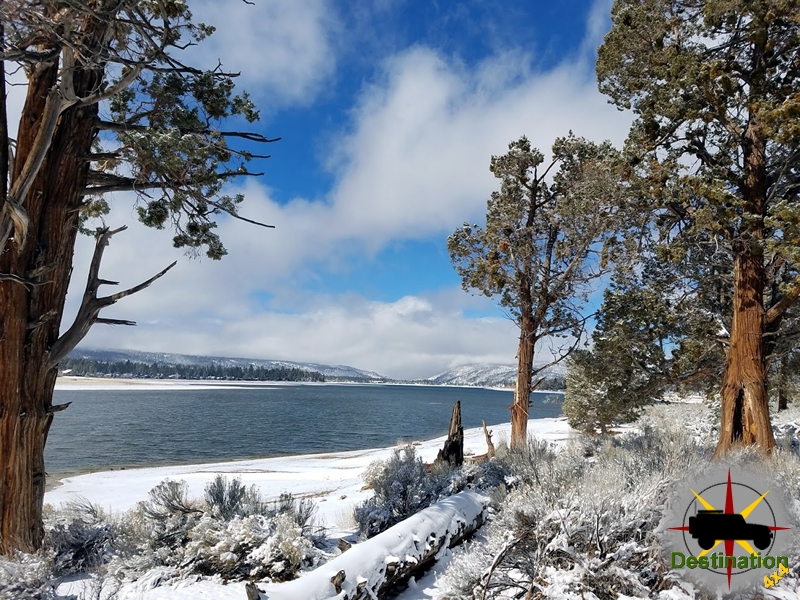
Big Bear, CA
I quiet mountain community full of back country adventure.
The Journey is the destination
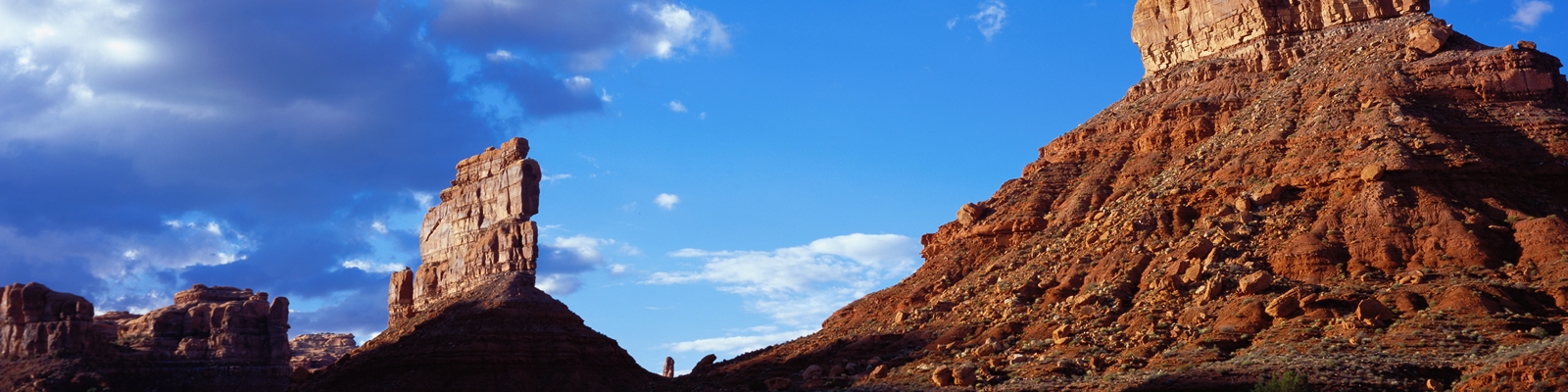
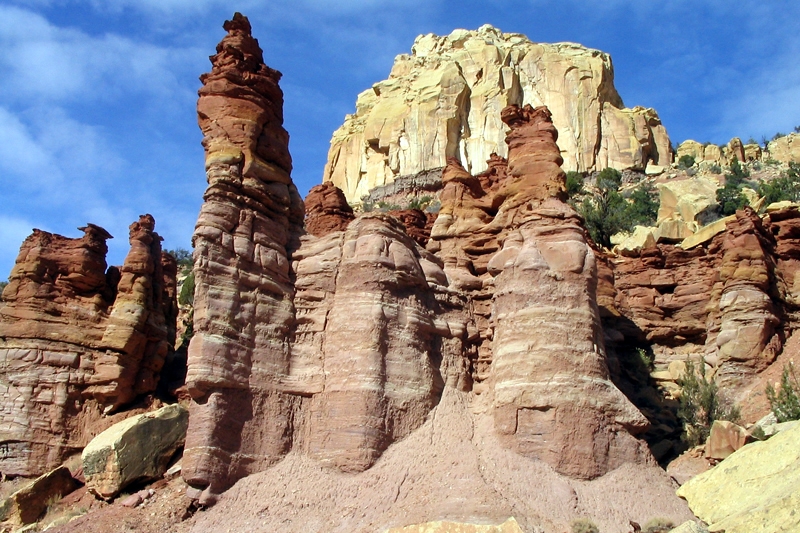
Achy-Breaky is a very difficult, trail which circumnavigates Watkins Peak in San Bernardino County, California. This trail is one of many on the Stoddard Wells OHV. The trail requires a well built 4×4 and a GPS to even stay on the trail which a network of difficult to navigate trails.

Located south of Barstow, in the Stoddard Wells OHV Area. The trail is quite a popular destination for people who are looking to test their 4×4, and not suitable for stock vehicles. Skid plates, differential lockers, high ground clearance and a capable truck are required to navigate the desert terrain with numerous steep, rocky climbs. Tire damage is a real possibility from the large, sharp rocks. Although technically challenging, the trail does not offer much in the scenery department, unless you hike up towards to top of the peak.
The trail is best run from November to March each year due to the high heat of the Mohave Desert. More information on Stoddard Wells OHV Area can be found at the Barstow Field office of the Bureau of Land Management at 760-252-6000.
Locathed in Inyo County, the White Mountain Road is a high altitude road that travels north from Highway 168 out of Big Pine and into the Bristle Cone Pine Forest of the White Mountains. The road is partial paved as far as the Schulman Grove visitors center and beyond the road is graded dirt.

As the White Mountain roads winds north, it follows the ridge line of the White Mountains climbing higher in elevation and offers up amazing vistas of Owens Valley to the west.

The bristlecone pine tree is found in this mountain range, and is the oldest living thing on the planet and are known to live 5,000 years. The bristlecone pine trees live in groves in arid sub alpine mountain tops in the western United States, including the White Mountains in California and around Mount Charleston just north of Las Vegas. The harsh environment, high elevations over 12,000 above sea level, dry conditions, high winds twist a bend the trees and they slowly grow across the millennium.

The very high elevation takes its toll on car and driver a like. While climbing the route, the power of the jeep was quite noticeable. I did not notice the elevation until I got out for a bit of a hike among the Bristle Cones. Once must be careful to catch their breathe, and the suns intensity was rather noticable.

The Henry Wade Escape Route is an easy 4×4 trail suitable for almost any vehicle and connects highway 127 to Badwater Road. The route is usually dry and easily passable, however can be rough going in the wet. The spring wildflowers may offer amazing scenery for those who travel at this time.

Henry Wade like many men of his time, sought his fortune in California on the news of the gold discover which lead to a historic gold rush. In 1849, a group of about one hundred wagons, led by Jefferson Hunt entered Death Valley en route from Utah. The caravan was searching for a shortcut from the Old Spanish Trail to the booming gold rush of California. Soon discovered they were in real trouble, bogged down in the sane and heat of the Mojave. Several men died, which may have provided Death Valley with its name. Henry Wade led the expedition from Death Valley roughly along the trail which now bears his name and eventually found their way through Cajon Pass into Southern California. Although the exact route is debated, Henry Wade led is group out of Death Valley via the south entrance.

Harry Wade Exit Route – Some 100 wagons found themselves in Salt Lake City too late to cross the Sierra Nevada. They banded together under the name of Sand Walking Co. and started for the gold fields in California over the Old Spanish Trail. After being in Death Valley with the ill-fated 1849 caravan, Harry Wade found this exit route for his ox-drawn wagon, thereby saving his life and those of his wife and children. At this point the Wade party came upon the known Spanish Trail to Cajon Pass.
Highway Placard on Hgwy 127

The Fish Canyon Escape Trail is a route discovered by William Manly as an escape route from Death Valley in 1849. The group tried to navigate the hot and dry Mojave desert with hand drawn maps, which supposedly showed short cuts across the desert. After being lost of months in the wilderness of Death Valley, William Manly and a group of emigrants headed to California. William Mandy set off and finally discovered a route out of Death Valley.
William Many was like many man of the era. He made his living as a guide, fur hunter, farmer and later in life a writer. In 1849, he followed thousands of other young men and travelled to California to join the Gold Rush. He was 29 years old at the time.
Near Provo Utah he joined other travels to cross the great basin to Southern California. In December, the group became lost following the inaccurate maps which they brought with them. For three weeks they struggled in Death Valley. With food supplies depeleted. Manly and John Haney Rogers walked the Mojave for 250 miles, finally reaching Rancho San Fernando.
On his return with food and horses, he discovered that only two families, the Bennett and Arcane, survived his absence. This trail is part of his route.
The trail is mildly rocky and suitable for most SUV’s
Bitter Springs is a 28 miles back country road which connects I-15 to the North shore Road highway 167 located inside Lake Mead National Recreation Area near Echo Bay. The trail takes you by old mining roads and washes throughout the Muddy Mountains.
To reach the trail head, head North on the I-15 from Las Vegas. Exit the Valley of Fire offramp (exit 75), and turn right towards the state park, Valley of Fire. There is a lot of excellent camping in Valley of Fire.
Unless you have a need for fireworks or booze, proceed past the Moapa Indian Reservation store. After three miles the paved road bends left. The trail is the dirt road heading straight into the dessert towards the mountains.
Once you hit the Muddy Mountains, you will be greeted with large red rock out cropping. Keep on eye out on the right side of the tail for a small damn and water hole. Should you visit at the correct time, you will see tadpoles and frogs in the water.
As you proceed into and through the muddy mountains, there are numerous places to stop and picnic or camp. There is a small quarry that sits on the trail, so be sure to travel carefully if there are workers.
Once you are through the pass, the trail gradually follows the alluvial fan into a drainage. Once in the drainage section, the trails turns into pure sand. Be sure to check the weather when travelling this portion of the trail and keep an eye open for Big Horn sheep and wild horses.