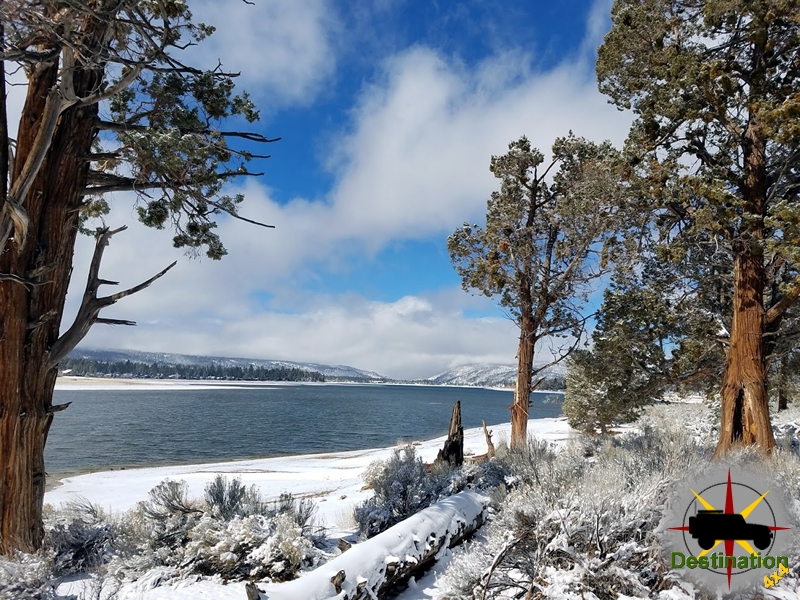
Big Bear, CA
I quiet mountain community full of back country adventure.
The Journey is the destination
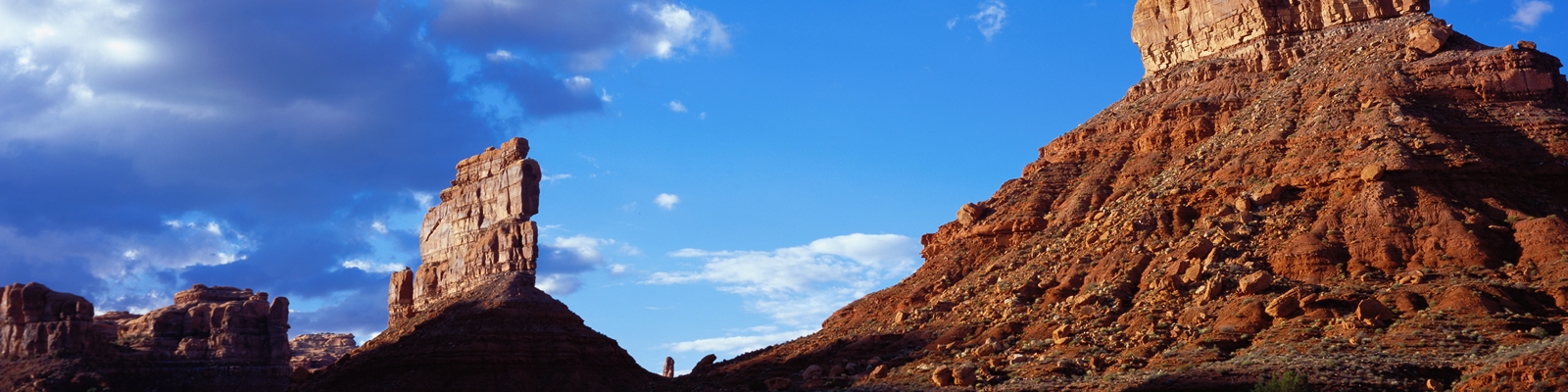
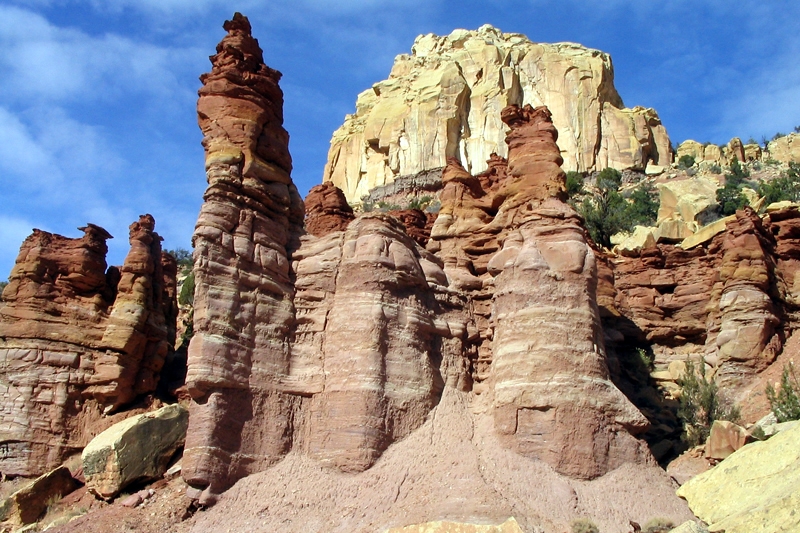
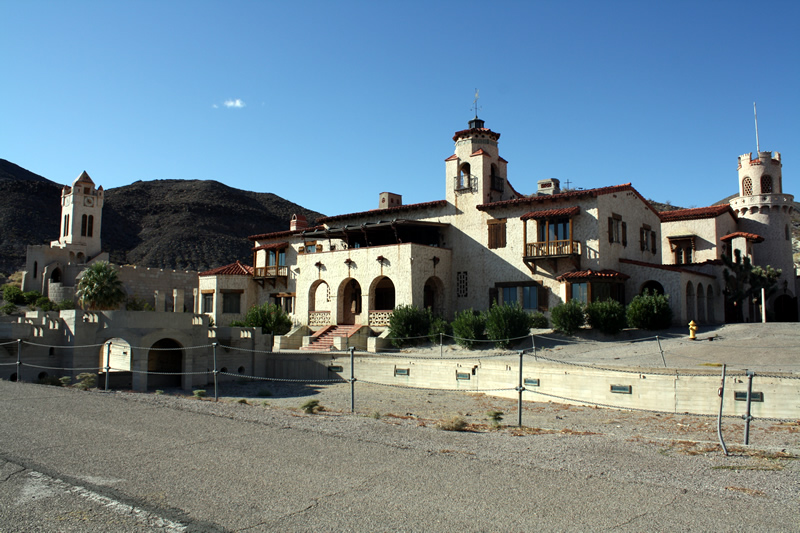
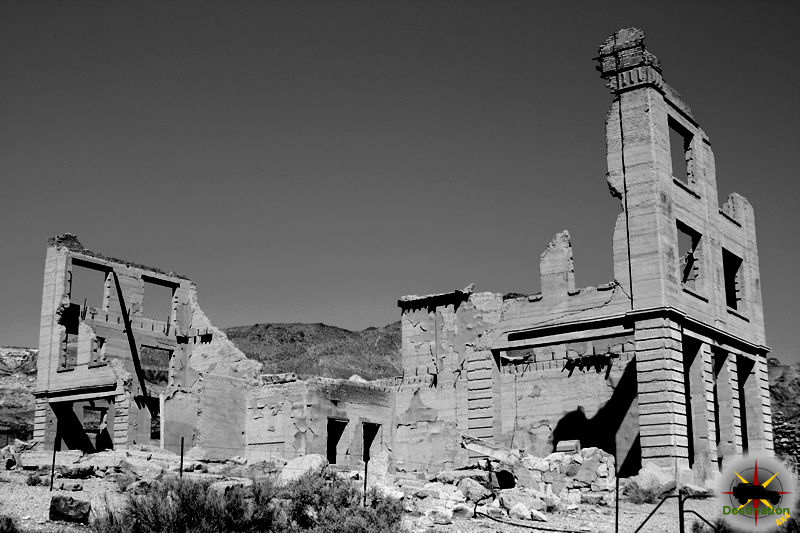
The Ubehebe Lead Mine is located just west of theRacetrack Playa Road off of the Bonnie Claire Road. Discovered in 1906, the mine is located on the west side of the Racetrack valley just south of Teakettle junction. The site was started as a copper mine and during to coarse of its operation would produce lead, copper, gold and zinc.

The deposit was first discovered by copper prospectors in 1875, with surface samples reportedly assaying as high as 67% copper. However, the extreme remoteness, lack of water, and poor transportation made development unfeasible at the time. The area saw little activity until the early 1900s, when rising copper demand (driven by widespread electrification) sparked renewed interest in Death Valley’s mineral prospects.

The modern era began in 1906, when the site gained attention amid the broader mining excitement in the region (including the short-lived Greenwater copper boom). Promoter Jack Salsberry (who later had Salsberry Pass named after him) acquired the property, built access roads from Ubehebe Crater, and promoted ambitious plans — including a proposed Bonnie Claire & Ubehebe Railroad to haul ore to Nevada rail lines. Some hype even linked it to legendary “Lost Spanish Mine” tales.
In February 1908, miners uncovered a thick vein of lead ore (described as up to eight feet wide), shifting focus from copper to lead and prompting the name change to Ubehebe Lead Mine. The first recorded production came that year, with shipments including 491 ounces of silver. Enthusiasm led to stockpiling 26,000 pounds of supplies for an eight-man crew, but assays and processing yielded far lower values than expected.

Production remained sporadic due to isolation, high transport costs, and inconsistent ore grades. Key highlights include:
The nearby area also saw World War II use for aerial gunnery practice.
Operations wound down by the mid-20th century, with some reports of activity into the late 1960s. The mine never became a major producer due to logistical challenges. It is now within Death Valley Wilderness on National Park Service land — closed to mining, with no plans for reopening. The site serves as a fascinating (but dangerous) historical remnant of Death Valley’s mining era.

The Ubehebe Lead Mine exemplifies the boom-and-bust pattern typical of Death Valley mining: high hopes fueled by rich surface showings, dashed by the desert’s unforgiving realities. Access requires high-clearance (often 4×4) vehicles via the rough Racetrack Road — check current conditions with the National Park Service before visiting!
 Emigrant CampgroundEmigrant Campground is a tent only campground located next to CA Route 190 near the boundary of Death Valley National Park, California. The campgrounds is… |
Eureka Dunes Dry CampEureka Dunes Campground is near a small localize sand dunes formation with Death Valley National Monument. Eureka Dunes Dry Camp is located next to the… |
 Furnace Creek CampgroundFurnace Creek Campground is located at -200 below sea level in Death Valley National Park, California. The campground is the most popular in the Death… |
 Homestake Dry CampHomestake Dry Camp - A primative campsite at Racetrack Valley The Homestake Dry camp is a primitive campground located in Racetrack valley inside Death Valley… |
Mahogany Flat CampgroundMahogany Flat Campground lies at 8,200 feet in the Panamint Mountain Range in Death Valley National Parl. The campground provides access to hiking and backpacking,… |
 Mesquite Springs CampgroundMesquite Springs Campground located near Scotty's Castle in Death Valley Mesquite Springs is a campground in Death Valley National Park, Located just a few short… |
 Stovepipe WellsStovepipe Wells Campgound is located in Stovepipe wells just off the 190 highway in Death Valley National Park. Located about 25 miles away from Furnace… |
 Sunset CampgroundSunset Campground is another large, flat parking lot campground primary for RV camping located near Furnace Creek in Death Valley National Park, California. The Campground… |
Texas Springs CampgroundTexas Springs Campground is another large campground, primarilyy for RV and trailer camping within Death Valley National Park. The campground a mile of the Furnace… |
Thorndike CampgroundThorndike campground is located at 7,400 feet in the Panamint Mountains in Death Valley National Park. The campground is accessible to high clearance vehicles only… |
Wildrose CampgroundWildrose Campground is located at 4100 feet above sea level in the Paramint Mountains within Death Valley National Park. This semi-primative campground is located off… |
 Artist DriveArtist Drive is perhaps one of the most popular and scenic drives through a colorful palette of geology, located in Death Valley National Park, California.… |
 Badwater BasinBadwater Basin, located in Death Valley National Park, Inyo County, California, is the lowest point in North America, sitting at 282 feet (86 meters) below… |
 Ballarat California – Inyo County Ghost TownBallarat, California Located in Inyo County, Ballarat California is a ghost town which supposedly has a few residents living their dream within the town. Ballarat… |
 Barker RanchThomason/Barker Ranch is a five-acre property within Death Valley National Park. This historic site is located off of Goler Wash in the southern Panamint Range… |
 Cerro Gordo California – Inyo County Ghost TownLocated in the Inyo Mountains on the eastern side of Owens Valley, Cerro Gordo California is a currently a ghost town after almost 100 years… |
 Chloride City California – Inyo County Ghost TownChloride City is a remote ghost town and historic mining site located in the Funeral Mountains on the eastern side of Death Valley National Park,… |
 Darwin FallsThe waterfalls of Darwin are located on the western edge of Death Valley National Park near the settlement of Panamint Springs, California. Although there exists… |
 Death Valley RailroadThe Death Valley Railroad (DVRR) was a historic 3 ft (914 mm) narrow-gauge railroad that once operated in Death Valley. Built primarily to support mining… |
 Goldbelt SpringsA discovery by the famous prospector "Shorty Harris", led to the founding on the Goldbelt Springs mining district off Hunter Mountain Road in Death Valley… |
 Greenwater California – Inyo County Ghost TownIn the scorched embrace of the Funeral Mountains, where the Mojave Desert meets the unrelenting heat of Death Valley, lies the spectral outline of Greenwater—a… |
 Harrisburg California – Inyo County Ghost TownHarrisburg, California, a now-abandoned ghost town in Inyo County, was a fleeting but significant mining camp in Death Valley’s history. Established in 1905 following a… |
 Henry Wade Escape RouteThe Henry Wade Escape Route is an easy 4x4 trail suitable for almost any vehicle and connects highway 127 to Badwater Road. The route is… |
 Leadfield California – A Death Valley Ghost TownLeadfield California is a ghost town located in Inyo County and Death Valley National Park and found on the Titus Canyon Trail. The town boom… |
 Lost Burro MineThe Lost Burro Mine is one of the best-preserved historic gold mining sites in Death Valley National Park, California. Located in a remote draw at… |
 Myers RanchMyers Ranch is a privately owned ranch located in Goler Wash in the Panamint Mountains of Death Valley National Park, California. The forty acre ranch… |
 One Tree Hill, A trip to the U2 Joshua TreeA trip to the U2 Joshua Tree brought back a life time of memories. There was never a point in time that I was not… |
 Panamint City California – Inyo County Ghost TownPanamint City is one of the most legendary ghost towns in the Panamint Range of Death Valley National Park, California. Perched high in Surprise Canyon… |
 Racetrack ValleyTeaKettle Junction lets you know you are starting to get close to the Racetrack. Racetrack valley is a rough graded road which departs the Ubehebe… |
 Rhyolite Nevada – Nye County Ghost TownRhyolite is a ghost town location just outside of the Eastern edge of Death Valley National monument in Nye country, Nevada. Founded in 1904 by… |
 Ryan California – Inyo County GhosttownPerched precariously on the steep eastern flanks of the Amargosa Range at an elevation of 3,045 feet (928 meters), Ryan, California—once a thriving borax mining… |
 Schwab CaliforniaSchwab is a gold mining camp and ghost town located in Echo-Lee Mining District of Death Valley National Park in California. The little townsite of… |
 Scottys Castle – The Death Valley RanchScottys Castle located in Grapevine Canyon in Death Valley. Named after Walter Scott AKA "Death Valley Scotty", Scottys Castle or the Death Valley Ranch is… |
 Skidoo California – Inyo County Ghost TownSkidoo, California, once a bustling gold mining town in the early 20th century, now stands as a ghost town within Death Valley National Park. Located… |
 Teakettle JunctionLocated at the intersection of Hunter Mountain Road and Race Track Valley Road, Teakettle Junction is a unique point of interest in Death Valley National… |
 The Amargosa Opera HouseRecently, on a whim, my wife and I loaded up the jeep and opt to just explore the desert West of our home town of… |
 Ubehebe CraterUbehebe Crater (pronounced "you-bee-HEE-bee") is one of the most striking and geologically dramatic features in Death Valley National Park, California. Located in the northern part… |
 Ubehebe Lead MineThe Ubehebe Lead Mine is located just west of theRacetrack Playa Road off of the Bonnie Claire Road. Discovered in 1906, the mine is located… |
 Warm Springs RoadA short side trip from the Saline Valley Road to the Saline Valley Warm Springs in Death Valley National Park, California. The road is used… |
 Zabriskie PointZabriskie Point is perhaps one of the best known and popular overlooks in the entire Death Valley National Park, California. The landmark is named for… |
Today it is difficult to imagine, but at one time not so long ago, Owens Lake Steamships ferried supplies and silver ore across Owens Lake from the booming silver town of Cerro Gordo, California. Cerro Gordo was a booming silver town located at high elevations in the White Mountains above the tree line. Water and fuel are hauled up the mountain utilizing freight wagons to support the silver mines.

Owens Lake, nestled in the Owens Valley of California, was once a shimmering gem nestled beneath the towering Sierra Nevada mountains. Spanning over 100 square miles, it was a vital oasis for diverse wildlife and a haven for migratory birds. Its glassy surface reflected the surrounding peaks, creating a picturesque landscape beloved by locals and travelers alike. With its abundant water and fertile shores, it supported Native American communities for centuries. However, as Los Angeles began to grow in the late 19th century, demands for water led to the diversion of the Owens River, gradually desiccating Owens Lake and leaving behind a vast salt flat.

Cerro Gordo was a silver mining town located high in the White Mountains east of Owens Lake. The elevation of the town offered some unique challenges in terms of supplies, such as water and fuel. Infrastructure to support the mines and the community needed to be built by Mortimer Belshaw. These supplies are staged in Keeler, CA and hauled up to the town using teams of wagons and a tramway. It is a natural step to build a ferry system to facilitate the transfer of goods, services and more importantly silver bars produce at Cerro Gordo.
Owens Lake itself faced a significant transformation in the 20th century. The Los Angeles Aqueduct, completed in 1913, diverted water from the Owens River, which fed the lake, to Los Angeles. This diversion caused Owens Lake to dry up, transforming it into a largely dry lakebed with environmental and health issues due to dust storms.

The Bessie Brady made its maiden voyage on July 4, 1872. Measuring about 85 feet in length with a 19-foot beam, the vessel could carry up to 100 tons of cargo, significantly reducing the time and cost of transporting ore. The ship’s route ran from the town of Swansea, near the western shore of Owens Lake, to Cartago on the southern shore. From Cartago, the ore was transported to Los Angeles. The steamer was actually so efficient in hauling silver ore to Cartago Landing, near Olancha, Ca, that the bullion began to pile up. The teamsters who hauled the Silver Ore from Olancha to Los Angeles, simply could not keep up with the vessel.
The introduction of the Bessie Brady revolutionized transportation in the Owens Valley. It provided a more reliable and faster means of moving ore from the Cerro Gordo Mines to markets, boosting the local economy. The steamship also transported supplies and passengers, further integrating the remote mining community with the rest of California.
The success of the Bessie Brady was relatively short-lived. By the mid-1870s, the completion of the Carson and Colorado Railroad reduced the need for lake transport. The railroad provided an even more efficient means of moving goods and people, leading to a decline in the use of the steamship.
Despite its decline, the Bessie Brady continued to operate for several years, serving various purposes, including transporting salt from the lake’s evaporative salt works.
| Name | Bessie Brady |
| Other Names | “The Pioneer inland steamer of the Pacific Coast” |
| Years of Operation | June 27, 1872 – May 11, 1882 |
| Length | 85 feet |
| Beam | 16 feet |
| Propulsion | 20 HP Single Cylinder Oscillating Type Steam 10 inch cylinder bore and 10 inch stroke |
| Propeller | 54 inches |

The Molly Stevens was a steamboat built in the late in 1877 and launched on in May of that year by Colonel Sherman Vanderventer Stevens. It was named after Molly Stevens, in honor of his daughter Molly.. The vessel was is smaller than the Bessie Perl, but does boast of more powerful powerplant. A few days after its’ maiden voyage, the steamship is swamped in the heavy wind driven lake waters. She is raised again to the surface with the help of the Bessie Brady.
By 1878, the Molly Stevens is only making the occasional trip across the Lake and spends the majority of her time moored. In 1881, the vessels is hauling from $6,000 in bullion a week, which is produced by nearby mills. Due to lack of hauling efficiency, the Molly Stevens is again moored and eventually scrapped in the spring of 1882.
On May 11th, 1882, during a refitted of the more powerful steam plant from the Molly Stevens to the Bessie Brady a fire breaks. The fire is started spontaneously by a combination of the Oakum, oil, paint and tar. The inferno quickly takes hold and destroys the last of the steamships on Owens Lake.
The Molly Stevens and Bessie Brady played a crucial role in the economic development of the Owens Valley. By transporting ore efficiently across Owens Lake, these vessels helped boost the mining industry, which was the backbone of the local economy. The presence of the two steamships reduced the time and cost associated with overland transport, making mining operations more profitable.
| Name | Molly Stevens |
| Years of operation | 1877 – 1882 |
One other incident, which is not documented, is the alleged existence of a lost treasure in Owens Lake. Allegedly, a wagon load of bullion hauled by the Bessie Brady is swept overboard during a high wind storm. The tale is told that the heavy bullion-filled wagon was not correctly chained to the deck and simply swept over the side.
The story could be from a combination of events, such as the swamping and sinking of the Molly Stevens.
Seemingly a rumor, the Lost Treasure of the Bessie Brady seems to always originate from a person who allegedly heard from someone who knew the captain.
Lake Manly is a rare and ephemeral lake that occasionally forms in Badwater Basin, the lowest point in North America at 282 feet (86 meters) below sea level, located in Death Valley National Park, California. This temporary body of water revives an ancient Pleistocene lake that existed during the Ice Age, when it reached depths of up to 700 feet and stretched nearly 100 miles long.

In recent years, including dramatic appearances after Hurricane Hilary in 2023, atmospheric rivers in 2024, and record-breaking fall rains in late 2025 (with more precipitation than an entire typical year), the basin has flooded to create a shallow lake — sometimes just inches deep, other times up to a few feet — allowing rare reflections and even temporary kayaking opportunities.
Badwater Basin itself is a surreal, otherworldly landscape dominated by expansive salt flats covering nearly 200 square miles. The surface is primarily sodium chloride (table salt), along with minerals like calcite, gypsum, and borax. The name “Badwater” comes from a small spring-fed pool near the road that’s extremely salty and undrinkable.
Lake Manly, gets its name from William Lewis Manly, a pioneer and hero of the 1849 California Gold Rush era.
In late 1849, a group of emigrants (known as the “Lost ’49ers”) took a risky shortcut to reach the gold fields and became stranded in the brutal heat and dryness of what would later be called Death Valley. William Lewis Manly, along with John Rogers, volunteered to walk out of the valley on foot to seek help. They trekked hundreds of miles across harsh desert terrain, eventually reaching safety, obtaining supplies, and returning to rescue the remaining group (including families like the Bennetts and Arcans) — saving their lives.
In honor of his bravery and lifesaving efforts, geologists named the prehistoric pluvial lake that once filled much of Death Valley after him. The name “Lake Manly” was formally coined in 1932 (sometimes misspelled as “Manley” in older sources, but Manly is correct). There’s even a proposed alternate name “Lake Rogers” for a potential northern section, after his companion, but “Manly” became the standard term used in scientific literature and by the National Park Service.
The lake itself is a remnant of wetter Ice Age periods (especially around 185,000–128,000 and 35,000–10,000 years ago), when glacial meltwater fed massive inland waters. Today, it only reappears briefly after extreme rainfall events — like the record storms in recent years that turned Badwater Basin into a shallow, reflective lake again.
It’s a fitting tribute: the name connects one of the valley’s most famous human survival stories to its deep geological past of water in a place infamous for being bone-dry!

Death Valley is one of the driest and hottest places on Earth, averaging only about 2 inches of rain per year with evaporation rates exceeding 150 inches annually. This extreme aridity normally keeps Badwater Basin as a dry salt pan.
The lake forms only during rare, extreme rainfall events — such as remnants of tropical storms (e.g., Hurricane Hilary in 2023), powerful atmospheric rivers, or record-setting seasonal storms — that deliver several inches of rain in a short time. Runoff from surrounding mountains floods the endorheic (closed) basin, which has no outlet, creating a temporary lake. The water eventually evaporates rapidly under the intense heat and low humidity, returning the area to its characteristic salt flats — often within months.
This fleeting phenomenon highlights how even the harshest deserts can dramatically change with unusual weather patterns!

Lake Manly is formed following several days of rain, so we opted to drive out to the park for a visit. Our first visit is cut short from a rain storm and flash floods which caused the road to be covered with flood levels. We made the drive from Vegas the next weekend, and were floored by the views of Lake Manly covering the salt flats of Badwater Basin. The walk out to the lake shore is about 1/4 of a mile from the Badwater parking lot.
On our visit, the lake surface is deathly still and the other visitors were silent giving us the feeling of isolation despite their being other travelers. This is my first visit to Lake Manly, and will certainly not be my last, if I am able to arrange the trip.

The Billie Mine (also known as Billie I and Billie II) is a former underground borate mine located in the Furnace Creek Mining District of Death Valley National Park, Inyo County, California. Situated on the eastern slopes of the Black Mountains overlooking Death Valley, the mine’s surface structures—including the prominent steel headframe, shaft collar, support buildings, and waste rock dumps—are positioned just outside the park boundary along the paved Dante’s View Road, approximately 1.5 miles northwest of the historic ghost town of Ryan and 12 miles southeast of Furnace Creek. However, the rich borate ore body itself extends underground into park lands, with the mine portal offset about 1,500 feet west on Bureau of Land Management property to comply with environmental regulations under the Mining in the Parks Act of 1976.
The site sits in a stark, arid landscape typical of Death Valley: barren alluvial fans sloping down from rugged, basalt-capped ridges, dotted with creosote bush and sparse desert vegetation. The ore body, embedded in the Miocene-Pliocene Furnace Creek Formation, consists primarily of calcium borates such as colemanite, along with probertite and ulexite. Geologically, the deposit is lens-shaped, striking northeast with a southeast dip of 20–40 degrees, averaging 700 feet wide, 3,700 feet long down-dip, and 150 feet thick. Mining involved deep vertical shafts (reaching depths of around 1,200 feet) and long-hole stoping methods with backfilling to maintain stability, leaving tall, narrow pillars critical to the underground structure.
Today, the abandoned mine features a towering headframe silhouetted against the vast valley panorama, evoking the industrial intrusion into this remote wilderness. Visitors driving to Dante’s View often pause for photos, but the site is gated and off-limits—mines in the park are hazardous due to unstable shafts, toxic tailings, and potential collapses.
The Billie Mine’s history is intertwined with Death Valley’s long borax legacy, but it represents a modern chapter amid growing conservation efforts. Borate deposits in the Furnace Creek area were known since the late 19th century, exploited by the Pacific Coast Borax Company at nearby sites like the Lila C. and Widow mines near Ryan. However, after discovering richer sodium borates (kernite) at Boron in 1926–1927, operations in Death Valley largely ceased as companies shifted to more profitable locations.
Interest in the Billie deposit revived in the mid-20th century. In 1958, the Kern County Land Company staked claims and conducted drilling. Development accelerated in the 1970s: after the Mining in the Parks Act of 1976 restricted new claims and imposed strict environmental reviews, valid pre-existing operations like Billie were allowed to proceed with mitigation. Construction began in 1977 under a partnership that became the American Borate Company (initially involving Owens Corning Fiberglass and Texas United, later fully Owens Corning).
The mine reached ore in 1980 and became fully operational shortly after, extracting high-quality colemanite crystals (some large and collectible) alongside probertite and ulexite. Ore was trucked to processing plants in Dunn Siding, California, or Lathrop Wells, Nevada. For over a decade following the 1994 expansion of Death Valley to national park status, the Billie Mine was the only active mine within park boundaries, operating under rigorous National Park Service oversight to minimize surface disturbance.
Production continued into the early 2000s, but economic factors, declining demand, or resource depletion led to closure in 2005—marking the end of all mining in Death Valley National Park. In 2011, American Borate donated related patented claims (including parts of the Billie and nearby Boraxo sites) to the NPS, further securing the area’s protection.
The Billie Mine stands as a poignant reminder of Death Valley’s mining era: born from persistent exploration in a protected landscape, it bridged historic borax booms with modern environmental constraints, ultimately yielding to preservation in one of America’s most extreme and iconic wildernesses.
Belmont is a historic ghost town in Nye County, central Nevada, located in the Toquima Range along former State Route 82, about 45 miles northeast of Tonopah. Today, it remains a well-preserved “living ghost town” with a handful of residents, restored buildings, and ruins that attract history enthusiasts. The entire town site was added to the National Register of Historic Places in 1972, and it is Nevada Historical Marker number 138.

Discovery and Boom Years (1865–1880s)
Silver ore was discovered in the area in 1865 by Native American prospectors, leading to a major strike that established the town in the Philadelphia (or Silver Bend) mining district. High-grade surface ores, assaying up to $3,000 per ton, sparked a rush in 1866, drawing miners from camps like Austin and Ione.
By 1867, Belmont had grown rapidly and became the Nye County seat, a role it held until 1905. The town boasted substantial brick and wood-frame buildings—uncommon in arid Nevada—thanks to local access to wood, water, rock, and clay. Amenities included:
It also featured a Chinatown, red-light district, racetrack, churches, and the famous Cosmopolitan Saloon and Music Hall, which hosted entertainers from across the country.
Population estimates at its peak in the 1870s varied widely, from 2,000 to as high as 15,000 (though the latter is likely exaggerated, as Nye County’s total population remained low).

Belmont’s economy centered on silver mining, with additional production of copper, lead, and antimony. The district’s ores were high-grade but shallow, primarily silver chloride (cerargyrite) above the water table.
Key operations included:
A 20-stamp mill was built early on, and by 1868, five sawmills supported construction and mining. Total production from the district is estimated at $15 million (in 19th-century values), with the bulk occurring between 1866 and 1887. The mines dominated Nye County’s silver output during the peak.
The town gained a rowdy reputation, with saloon brawls, shootings, vigilante actions, and feuds common in its early days.
A brief lull hit in 1868–1869 as miners chased new rushes (e.g., White Pine district), but production revived in the 1870s. By the late 1880s, falling silver prices, lower-grade ores, and dewatering costs forced most mines to close around 1887–1890.
The county seat moved to Tonopah in 1905 after that town’s boom. Minor revivals occurred:
By 1900, only a few businesses remained, and the population dwindled. Unlike many Nevada ghost towns, Belmont was never fully abandoned—a small population prevented vandalism and salvaging.
In the mid-20th century, Rose Walter, a tough local resident known as the “Lady Guardian,” watched over the town; an unconfirmed story claims she once evicted Charles Manson and his followers from the courthouse.
Today, Belmont has a tiny year-round population, seasonal businesses like Dirty Dick’s Belmont Saloon, and ongoing preservation efforts.
| Name | Belmont Nevada |
| Location | Nye County, Nevada |
| Newspaper | Silver Bend Reporter Mar 30, May 11, 25, 1867;July 29, 1868 Mountain Champion June 3, 1868 – Apr 24, 1869 Belmont Courier Feb 14, 1874 – Mar 2, 1901 |
Several notable Nevadans tied their early careers to Belmont’s mining scene:
The town’s iconic 1876 Nye County Courthouse, a two-story brick structure, stands partially restored (efforts by the Friends of the Belmont Courthouse after Nye County took ownership in 2012). Nearby mill ruins, like the tall Monitor-Belmont chimney (once used for target practice), and preserved buildings like the Philadelphia House evoke its silver rush heyday.
Belmont exemplifies Nevada’s classic boom-and-bust mining story: a brief, prosperous era fueled by silver, followed by quiet preservation amid the desert landscape.
Belmont sits at an elevation of 7,400 feet. A spring flowing year round made this a gathering site of the Shoshone Indians for rabbit drives and celebrations.
In 1865, silver ore discoveries led to the development of an attractive tree-shaded mercantile community. East Belmont became the mining and milling center. A wide range of nationalities worked the mines, operated businesses, and provided services. At its height, Belmont had schools, churches, a post office, and a newspaper, as well as a Chinatown, a red-light district, and a racetrack. The town was the Nye County seat from 1867 to 1905, and a courthouse survives from this period.
Belmont had a reputation as a rowdy town. Incidents of saloon brawls, vigilante actions, shootings, hangings, and feuds made the town notorious. Well known Nevadans such as Jack Longstreet, Tasker Oddie, Jim Butler, and Andrew Maute all participated in local early history.
Silver production totaling four million dollars was from high grade but shallow ore. By 1890, most mines ceased to be profitable and were forced to shut down. Belmont’s population dwindled as most residents left for new discoveries in nearby mining towns.
STATE HISTORIC MARKER No. 138
STATE HISTORIC PRESERVATION OFFICE
| Name | Belmont |
| Location | Nye County, Nevada |
| Nevada State Historic Marker | 138 |
| Latitude, Longitude | 38.5959, -116.8755 |
Belmont Courier NewspaperThe Belmont Courier newspaper was a weekly newspaper published in Belmont, Nye County, Nevada, from February 14, 1874, to March 2, 1901. Operating during the… |
Mountain Champion NewspaperThe Mountain Champion Newspaper was a short-lived but significant newspaper published in Belmont, Nevada, during the late 1860s. Operating in a bustling mining region, it… |
Silver Bend Reporter NewspaperThe Silver Bend Reporter newspaper emerged in Belmont, Nevada, a mining town in Nye County that became a hub of activity following the discovery of… |